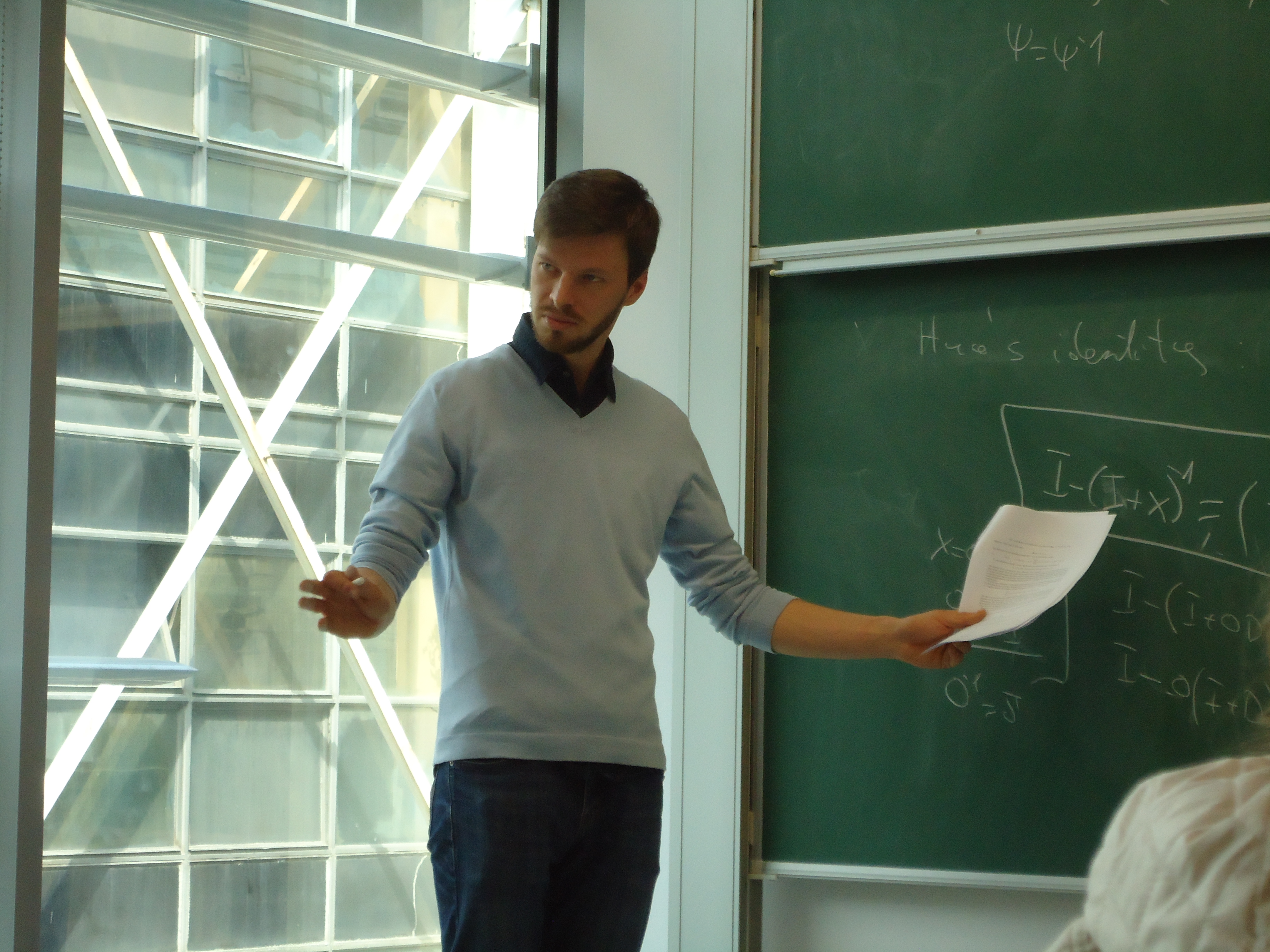
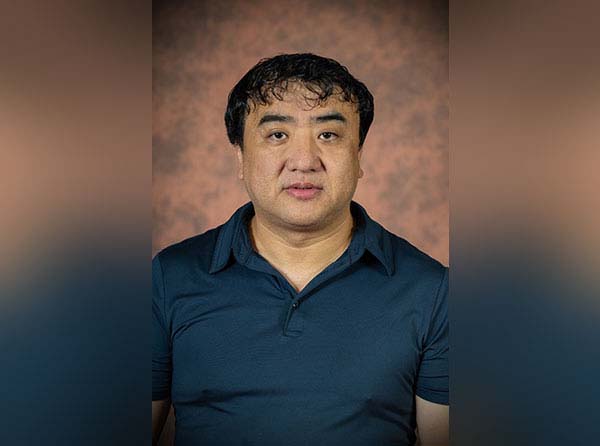
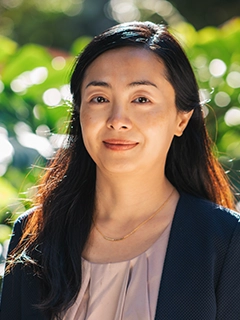
Merrill Liechty is a Clinical Professor in the Decision Sciences and MIS department at Drexel University's LeBow College of Business . While his primary responsibility involves teaching statistics, his research emphasizes Bayesian statistics applied to portfolio selection, higher moment estimation, and social interaction analysis using functional Near-Infrared Spectroscopy (fNIRS). Research interests span Bayesian statistical modeling, financial econometrics, and computational methods for multivariate analysis. He has also pioneered studies on face-to-face human communication through non-obfuscated fNIRS data, co-founding Brytfish to translate these findings into practical conversation skill training. Publication trends reveal expertise in Bayesian portfolio optimization, MCMC algorithms, and statistical modeling for finance and supply chain reliability. His work frequently integrates theoretical rigor with real-world financial applications. 2016 : Fellow of the Institute of Strategic Leadership (LeBow College of Business) 2015 : Fellow of the Institute for Strategic Leadership 2004-2005 : Mini-Grant recipient (LeBow College Center of Teaching Excellence) Liechty has also served as a statistical consultant at Duane Morris LLP and Zeichner Ellman & Krause LLP, and previously held a corporate role as Chief Data Officer at Old Dominion Racing.
Laurent Donzé is a Professor of Applied Statistics and Modelling at the Department of Informatics, Faculty of Economics and Social Sciences, University of Fribourg. He is also a Research Professor at KOF ETH Zurich and a Professor of Econometrics at the University of Neuchâtel. He leads the ASAM research group and has extensive experience in teaching mathematics, econometrics, and statistics. His educational background includes a Ph.D. in Econometrics from the University of Fribourg, followed by research roles at IRE and KOF ETH Zurich. His academic journey reflects deep engagement with statistical methodology and applied economic research. Donzé's primary research interests lie in applied statistics, particularly survey methodology, fuzzy statistics, imputation, causal inference, matching techniques, and wage discrimination analysis . He has made significant contributions to the development and application of fuzzy statistical tools, especially in defuzzification and fuzzy regression. His recent publications (2019–2025) demonstrate a consistent focus on fuzzy confidence intervals, fuzzy p-values, fuzzy ANOVA, and fuzzy regression models , often applied to real-world datasets like SHARE and Swiss SILC. These works emphasize robust statistical inference under uncertainty and contribute to both theoretical and applied advancements in fuzzy statistics. Among his scientific recognitions is the Best Student Paper Award at IJJCI 2020 . He has also edited special issues and contributed to leading journals and conferences in computational intelligence and fuzzy systems. Donzé has been involved in numerous research and teaching initiatives, including grants from the Swiss National Science Foundation, mentoring at the Swiss Study Foundation, and leadership in statistical societies. He has supervised research projects and collaborated with institutions such as Nestlé, the Swiss Federal Statistical Office, and pharmaSuisse. He is actively involved in academic and professional communities, serving as president of the Education and Research section of the Swiss Statistical Society and contributing to the development of statistical infrastructure in social sciences.
Bartosz Kołodziejek is an Associate Professor at the Faculty of Mathematics and Information Science, Warsaw University of Technology. His research lies at the intersection of probability theory and mathematical statistics, with a focus on stochastic fixed point equations, free probability, and graphical models. He actively publishes in top-tier journals and maintains a strong collaborative network. His research interests include: Stochastic fixed point equations and their applications Characterizations of probability distributions on symmetric and homogeneous cones Free probability and free convolution Graphical models and high-dimensional statistics Symmetry in Gaussian models and model selection Perpetuities and tail behavior of stochastic recursions The analysis of his recent publications reveals a consistent trend in theoretical probability and statistical methodology, particularly in high-dimensional inference, random matrix theory, and invariant models. His work often involves deep analytical techniques and connections across fields such as convex analysis, exponential families, and stochastic processes. He has no listed scientific awards on his homepage. While no students or grants are explicitly mentioned, his active publication record and software contributions (such as the gips R package) suggest ongoing research leadership. He collaborates with prominent researchers in probability and statistics across Europe. He is involved in the development of statistical software, notably contributing to the theoretical foundations of the gips package for Gaussian models with permutation symmetry, used in high-dimensional data analysis.
Andreas Kurz is a Senior Scientist at the Department of Psychology, University of Salzburg, where he conducts research in psychological diagnostics and psychometric modeling. His work focuses on statistical inference in small sample contexts and conditional likelihood methods, particularly in educational assessment and admission procedures. Position: Senior Scientist Institution: University of Salzburg Department: Department of Psychology Research Group: Admission Procedure for Teaching Professions in the Central Cluster Andreas Kurz holds a Master of Science in Psychology from UMIT TIROL (2021) and a Diploma in Civil Engineering (equivalent to MSc ETH) from ETH Zurich (1995). His academic journey includes roles as a Student Assistant at UMIT TIROL (2019–2022) and a Scientific Assistant at ETH Zurich (2007–2009). His research lies at the intersection of psychology and statistics, with a strong emphasis on methodological rigor in psychometric testing. He develops and applies advanced statistical techniques for small sample inference, particularly using resampling and conditional likelihood frameworks. His work supports valid and reliable assessment in educational and psychological settings. The publications and software tools developed by Andreas Kurz reflect a consistent trend in advancing statistical methodology for psychometrics. His contributions include peer-reviewed articles on the gradient test and conditional inference, as well as R packages like tcl and tclboot that implement these methods for practical use in research and assessment. Andreas Kurz has actively participated in international conferences such as IMPS 2021 and IMPS 2022, presenting on statistical testing in conditional likelihood frameworks. His work is supported by research in psychometrics and statistical computing, with no explicit mention of external grants or advising roles. He is involved in the development of admission procedures for teaching professions, indicating applied research with societal impact in education. His technical expertise bridges civil engineering, psychology, and statistical programming, contributing to robust assessment systems.
Florian Schuberth is an Associate Professor at the Chair of Product–Market Relations within the Faculty of Engineering Technology at the University of Twente. His research focuses on composite-based structural equation modeling (SEM), particularly Partial Least Squares (PLS) methods, with applications across Information Systems, Social Sciences, and Computer Science. He actively contributes to quantitative research methodology and open science. Bachelor's and Master's in Business Administration and Economics, University of Würzburg PhD in Econometrics, summa cum laude, University of Würzburg (2017) His research interests center on advancing composite-based SEM, including model specification, fit assessment, higher-order constructs, and robust estimation techniques. He emphasizes methodological rigor and reproducibility in social science research. His recent work, reflected in publications and software development, demonstrates a strong trend toward improving the transparency, validity, and accessibility of composite modeling techniques, particularly through R-based tools. He has made significant contributions to model evaluation, measurement invariance, and endogeneity correction in PLS-SEM. Florian Schuberth is a passionate educator, coordinating and teaching courses on quantitative research methods. He is also deeply committed to open science, serving as coordinator of the Open Science Community Twente. Notable contributions include the development and maintenance of the cSEM R package, which enables researchers to perform composite-based SEM in R, promoting open, reproducible research practices. Maintainer of the R package cSEM Coordinator, Open Science Community Twente (since 2022) Active contributor to methodological software and open science infrastructure
Nicolai Bissantz is a Senior Lecturer in the Department of Stochastics at Ruhr University Bochum's Faculty of Mathematics. His research focuses on statistical inverse problems, applied statistics in science and technology, and medical imaging reconstruction. He contributes to interdisciplinary projects in cybersecurity, astrophysics, and biophotonics. PhD supervision: Advises on statistical methods in interdisciplinary applications. Grants: Collaborates on BMBF-funded projects improving diagnostic precision in medical imaging. Recent work includes a 2024 Distinguished Paper Award for advancing software fuzzing evaluation methodologies. His statistical methods address challenges in internet security, medical imaging, and astrophysical modeling.
Ingrid VAN KEILEGOM is a Full Professor at the Catholic University of Louvain (UCL), affiliated with the Institute of Statistics, Biostatistics and Actuarial Sciences. Her research spans survival analysis, econometrics, nonparametric methods, and copula theory, with significant contributions to statistical methodology for censored data and regression models. Research Expertise Professor Van Keilegom's work focuses on developing innovative statistical methods for complex data structures. Key areas include: Survival/duration analysis with cure models and dependent censoring Econometric techniques for instrumental variables and frontier models Semiparametric regression for measurement error problems Copula-based dependence modeling in multivariate settings Publication Trends Her recent publications (2015-2016) demonstrate a strong focus on semiparametric methods for censored data, frontier estimation in econometrics, and goodness-of-fit testing. Common themes include developing robust inference procedures for survival models, addressing endogeneity in econometric applications, and creating validation techniques for complex regression structures. Awards and Honors Fellow, Institute of Mathematical Statistics (2008) Fellow, American Statistical Association (2013) ERC Advanced Grant (2016-2021): Semiparametric inference for complex structural models ERC Starting Grant (2008-2014): M-/Z-estimation in semiparametric statistics Academic Leadership She supervises 5 doctoral students and has graduated 7 PhDs since 2005. Her editorial leadership includes serving as Joint Editor for Journal of the Royal Statistical Society - Series B (2012-2015) and associate roles in 6 other statistical journals. Research is supported by major grants including two European Research Council awards.
John E. Kolassa is a Professor of Statistics at Rutgers, the State University of New Jersey. He is affiliated with the Department of Statistics, where he conducts research and teaching in asymptotics and biostatistics. His academic credentials include a Ph.D. from the University of Chicago, and he maintains an active research profile with numerous publications and contributions to statistical methodology. Ph.D., University of Chicago Dr. Kolassa's research is centered on asymptotic theory, nonparametric statistics, and biostatistical methods. His work includes the development and analysis of saddlepoint approximations, Edgeworth expansions, and inference techniques for complex data. He has a strong focus on theoretical statistics, with applications in medical and biological contexts. His expertise spans categorical data analysis, life data analysis, and regression models, as reflected in his teaching of graduate courses such as 960:555 (Nonparametric Statistics) and 960:583 (Methods of Inference). The 15 most recent publications, spanning from 2021 to 2013, demonstrate a consistent focus on statistical theory and methodology. Key themes include the refinement of approximation techniques (e.g., Edgeworth and saddlepoint), inference in complex models (e.g., posterior densities, penalized likelihood), and nonparametric methods. His work often addresses foundational issues in statistical inference, such as the validity of expansions, the reliability of p-values, and the handling of zero-event studies in meta-analysis. The research bridges theoretical development with practical application in biostatistics and health sciences. Fellow of the American Statistical Association (ASA) Fellow of the Institute of Mathematical Statistics (IMS) Elected member of the International Statistical Institute (ISI) Editor, Stat Dr. Kolassa is an active advisor and researcher, contributing to the academic community through his editorial role for the journal Stat . He has received significant recognition through his fellowships in the ASA and IMS, highlighting his impact on the field. His work has been supported through academic appointments and professional activities, though specific grant details are not provided in the source material. He is also involved in the development of statistical software, having created R packages for nonparametric methods and infinite estimates. Dr. Kolassa leads a research team focused on theoretical and applied statistics, with a particular emphasis on developing and validating statistical methodologies. He has mentored students and collaborated on interdisciplinary research, particularly in biostatistics and health outcomes. His laboratory or research group is centered on computational and theoretical statistics, utilizing tools like R for simulation and analysis.
Paul Marriott is a Professor in the Department of Statistics and Actuarial Science at the University of Waterloo. His research focuses on integrating geometric principles, particularly differential and convex geometry, into statistical methodologies, with a recent emphasis on mixture models and information geometry. He has published extensively across diverse journals such as Biometrika, Annals of Statistics, and Psychological Medicine, bridging theoretical and applied statistics. Education: PhD, University of Warwick (1989) MA, University of Oxford (1984) Research Trends: His work explores geometric frameworks for statistical inference, mixture model parameterization, and robustness analysis. Recent publications highlight causal modeling, neural spike train analysis, and high-dimensional data applications. Contact: Office: Mathematics & Computer Building (M3) 4204, Phone: 519-888-4911 x35545, Email: pmarriot@math.uwaterloo.ca
Dr. Wei Yang is a Professor and Chair at Florida State University, where he leads research in computational biophysics. He earned his Ph.D. from the State University of New York at Stony Brook in 2001. His laboratory develops advanced atomistic simulation techniques to study complex biomolecular systems, with interdisciplinary applications spanning biochemistry, materials science, and biophysics. Research Focus: Dr. Yang's work centers on three pillars: First-principles protein/ligand design using quantum mechanical approaches Multi-scale simulation of biochemical events (DNA repair, enzyme kinetics, biomolecular recognition) Development of efficient computational methods including QM/MM, free energy sampling, and conformational analysis His recent publications demonstrate strong emphasis on methodological innovations in molecular dynamics (e.g., free energy surface construction, polarizable force fields) with applications to protein dynamics, membrane transport, and catalytic mechanisms. Work frequently integrates machine learning resampling techniques and experimental validation. Dr. Yang directs an active computational research group (Wei Yang Lab) focused on pushing boundaries in biomolecular simulation. While no specific awards or grants are detailed in available sources, his scholarly output reflects sustained contributions to computational chemistry methodology.
Geordie Richards is an Assistant Professor in the Department of Mathematics and Statistics at the University of Guelph. He holds a PhD in Mathematics from the University of Toronto (2012) and has held academic positions at the University of Minnesota, University of Rochester, Utah State University, and the University of Toronto Mississauga. PhD in Mathematics, University of Toronto (2012) NSERC Graduate Scholarship (2006) Richards' research focuses on the analysis of deterministic and stochastic nonlinear partial differential equations (PDEs) arising in physics and engineering, particularly those modeling fluid dynamics and dispersive wave phenomena. His work integrates techniques from probability theory and dynamical systems to address questions of well-posedness, ergodicity, and uncertainty quantification in PDEs. Key themes include random data Cauchy theory, ergodicity of stochastic PDEs, singular stochastic dispersive equations, and applications to engineering uncertainty analysis. Recent publications highlight his contributions to stochastic hydrodynamic stability, surrogate modeling for nuclear energy systems, and ergodic theory for dispersive equations. His work bridges rigorous PDE analysis with practical applications in turbulence and nuclear reactor design. Mechanical & Aerospace Engineering Teacher of the Year, Utah State University (2019) NSERC Graduate Scholarship (2006) Richards has secured significant research funding including the NRC Faculty Development Grant (2019-2022) as Co-PI and NSF Conference Grant (2017). He teaches with active learning strategies, covering courses from first-year Calculus to advanced research topics.
Lan Wang is a Centennial endowed chair professor and Department Chair of the Department of Management Science at the Miami Herbert Business School, University of Miami. She holds secondary appointments as Professor in the Department of Health Management and Policy within the Miami Herbert Business School and as Professor in the Department of Public Health Sciences at the Miller School of Medicine. Dr. Wang earned her Ph.D. in Statistics from Pennsylvania State University and her Bachelor's degree in Applied Mathematics from Tsinghua University, China. Prior to joining the University of Miami, she was a Professor of Statistics at the School of Statistics, University of Minnesota. Dr. Wang's research spans several interrelated areas including high-dimensional statistical learning, quantile regression, reinforcement learning, optimal personalized decision recommendation, survival analysis, and business analytics. Her work is characterized by strong methodological development with applications in business, economics, healthcare, and other domains. She is particularly interested in interdisciplinary collaboration that addresses real-world problems through innovative statistical approaches. Her research has significant implications for precision medicine, where she develops methods to identify optimal individualized decision rules to improve patient outcomes. Dr. Wang's recent publications demonstrate a consistent focus on advancing statistical methodology for high-dimensional data analysis and personalized decision making. Her work bridges theoretical statistics with practical applications, particularly in healthcare analytics. She has made significant contributions to quantile regression theory, high-dimensional regression techniques, optimal treatment rules, and statistical learning frameworks. A notable theme across her publications is the development of robust methods that maintain performance even with heavy-tailed error distributions. Fellow of the American Statistical Association Fellow of the Institute of Mathematical Statistics Member of the International Statistical Institute Dr. Wang has served as Co-Editor for Annals of Statistics (2022-2024) and as associate editor for several leading statistical journals including Journal of the American Statistical Association, Annals of Statistics, Journal of the Royal Statistics Society, and Biometrics. Her editorial leadership reflects her standing in the statistical community and her commitment to advancing methodological research. While specific grant details aren't provided, her extensive publication record in top-tier journals suggests substantial research funding supporting her work.
Jörg Breitung is a Professor of Econometrics and Statistics at the Institute of Econometrics and Statistics within the Faculty of Management, Economics and Social Sciences (WiSo Faculty) at the University of Cologne since 2014. He also serves as a Research Professor of the German Bundesbank in Frankfurt since 2002. Research Focus: Panel Data Analysis Time Series Analysis Forecasting Financial Econometrics Scientific Contributions: Developed advanced GMM estimators for spatial regression models Innovative approaches for assessing causality in frequency domains Created robust tests for slope homogeneity in panel data Pioneered methods for serial correlation testing in fixed effects models Contributed to nonlinear panel data modeling and bootstrap techniques Honors and Editorial Roles: Associate Editor of International Journal of Forecasting (2019-) Associate Editor of Journal of Business and Economic Statistics (2017-) Associate Editor of Econometric Reviews (2014-) Contributed to leading journals like Econometrica and Journal of Econometrics
Guillaume MAILLARD is a permanent member of CREST (Center for Research in Economics and Statistics) at ENSAI (National School of Statistics and Economic Administration), where he joined in September 2024. His academic career includes a PhD from Université Paris-Saclay (2020) and three years as a post-doctoral researcher at the University of Luxembourg. Research Interests: Resampling and model selection techniques Non-parametric and robust estimation methods Statistical learning applications Academic Affiliation: CREST, a renowned research center in economics and statistics, is the institutional framework guiding his research activities.
Ying Zhang is a Professor in the Department of Mathematics and Statistics at Acadia University, maintaining an office in Huggins Science Hall, Room 151. She earned her BSc from Shandong Normal University and advanced degrees (MA, MSc, PhD) from Western University, complemented by P.Stat. certification (Certificate #78) from the Statistical Society of Canada. Her educational background includes: BSc from Shandong Normal University MA, MSc, PhD from Western University Professor Zhang's research centers on Time Series Analysis and Applied Statistics , extending to Statistical Computing, Symbolic Algebra Computing, and Statistical Consulting in Biostatistics, Survey Design, and Research Methodology. Her work demonstrates significant applications in environmental science (water resources trend analysis), health sciences (drug safety and utilization studies), and ecological modeling (wildlife population dynamics), with methodological innovations in nonparametric testing and hierarchical modeling. Analysis of her 2013-2018 publications reveals a dominant focus on developing novel time series methodologies for environmental and health contexts, particularly seasonal trend detection, medication utilization patterns, and ecological data analysis. Her work consistently bridges theoretical statistics with practical applications across disciplines. She actively contributes through the Statistical Consulting Centre and the CANSSI Maritime Statistical and Health Sciences Collaborating Centre , holding P.Stat. designation from the Statistical Society of Canada. While her collaborative publications indicate interdisciplinary engagement, specific details of grant funding and student advising are not documented in available sources.