Norwegian University of Science And TechnologyNorway
Bjørn Olav Åsvold, MD, PhD, is a Professor of Medicine (Epidemiology) and Center leader at the HUNT Centre for Molecular and Clinical Epidemiology (HUNT MCE), Department of Public Health and Nursing, Norwegian University of Science and Technology (NTNU). He also serves as a Consultant at the Department of Endocrinology, St. Olavs Hospital, Trondheim University Hospital. His research spans epidemiology, genetics, and clinical medicine. MD, Norwegian University of Science and Technology, 2001 PhD, Norwegian University of Science and Technology, 2008 Specialist in internal medicine, 2014 Specialist in endocrinology, 2015 Åsvold's research focuses on thyroid dysfunction and diabetes , investigating their interplay with cardiometabolic diseases and pregnancy complications . He utilizes Mendelian randomization studies to explore causal relationships between genetic factors and health outcomes, including sleep traits , autoimmune thyroid disease , and kidney function . His work also addresses global health issues like obesity in Nepal and diabetic complications in Norway. Recent publications highlight his contributions to understanding hip fracture risk prediction , cardiovascular implications of sleep patterns , and genetic determinants of trace elements . Åsvold's collaborations span multiple international institutions, including the HUNT Study and HUNT MCE in Norway.
Arnoldo Frigessi is Professor of Statistics at the University of Oslo, where he leads the Oslo Center for Biostatistics and Epidemiology and serves as director of BigInsight—a Centre of Excellence for Research-Based Innovation. This consortium unites industry, business, public actors, and academia to develop model-based machine learning methodologies for big data, with strong emphasis on health applications. His research centers on statistical methodology driven by real-world scientific challenges, specializing in stochastic models for complex dependence structures and computationally intensive inference algorithms. Core application domains include: Genomics and personalized cancer therapy (particularly breast and lung cancer) Infectious disease modeling (including pandemic response) eHealth, sensor data analysis, and recommender systems Personalized marketing and viral diffusion dynamics Analysis of his 15 most recent publications (2024-2025) reveals dominant themes in cancer systems biology , where he integrates multi-omics, single-cell transcriptomics, and computational modeling to decode tumor evolution under therapy. Parallel work advances infectious disease epidemiology through time-varying reproduction number estimation and mobility-based transmission modeling, while methodological innovations span synthetic data generation (TVineSynth), causal inference via target trial emulation, and Bayesian ranking models for recommender systems. Scientific Awards: No specific awards mentioned in source materials Frigessi actively supervises graduate students, including a Department of Informatics project on "Utilizing covariate information in recommender systems." His leadership of BigInsight—funded as a Research-Based Innovation Centre by the Research Council of Norway—secures major grants supporting interdisciplinary collaborations with industrial partners (e.g., Telenor, DNB) and public health institutions. Current projects integrate real-world clinical data with mechanistic models for treatment optimization. He directs BigInsight's multidisciplinary team of statisticians, computer scientists, and domain experts, while leading the Oslo Center for Biostatistics and Epidemiology's efforts in developing statistical frameworks for complex health data. These initiatives drive Norway's national strategy for data-driven health innovation.
Sundeep Sahay is a Professor at Digital Innovation (University of Oslo) with affiliate roles at Sustainable Healthcare Education (UiO Faculty of Medicine), The Information School (University of Sheffield), and HISP India . His research bridges technology and global health, focusing on Antimicrobial Resistance (AMR) , climate-health intersections, and digital health systems in low- and middle-income countries (LMICs) , particularly India. He employs Action Research and social science theories to address health inequities, structural violence, and the realities of digital personal data in maternal/childcare. Research Themes : AMR through health inequity lens, digital identity work in community health, data governance in LMICs, and sociotechnical design for global health. Geographic Focus : Spanning 30+ countries in Africa, Asia, Latin America, and Europe, with emphasis on India, Ethiopia, Jordan, and Mozambique.
Håvard Kauserud is a Professor at the Department of Genetics and Evolutionary Biology, University of Oslo. His research spans molecular ecology, evolutionary biology, and fungal genetics with a focus on mycorrhizal and endophytic fungi, climate change impacts, and habitat fragmentation effects. Section of Genetics and Evolutionary Biology Teaches advanced courses in fungal evolution and bioinformatics Research projects include: Molecular ecology of mycorrhizal fungi Speciation mechanisms in forest fungi Climate change effects on mushroom phenology Comparative genomics of Serpulaceae Endophytic fungi in boreal mosses Recent work explores fungal community dynamics across boreal forests, indoor mycobiomes, and genome expansion patterns in Mycena . Collaborative studies investigate arthropod dispersal of fungal spores, climate adaptation signatures, and trait-based fungal ecology databases.
Sunniva Engh is a Professor of Modern History at the Department of Archaeology, Conservation and History , University of Oslo. Her research bridges political, social, and medical history with transnational and international dimensions. Education: D.Phil. (2006) and M.Phil. (2000) in Modern/Economic History from the University of Oxford. Her expertise spans: International development cooperation and global health governance Scandinavian-Indian family planning collaborations Nordic model of society and its global export India-China-Myanmar strategic dynamics Recent work focuses on Nordic civil society (co-edited 2025 Routledge book), population control in Cold War contexts, and Norway's transition from aid recipient to donor. She leads the Nordic Civil Societies project (UiO-funded) and co-leads The Sustainability Lab (HK-dir funding). Teaching includes courses on international history, Nordic model, and global health. Active in media communication and public debates on Asian security, global governance, and sustainable development.
Susanna Röblitz is a Professor at the Department of Informatics within the Computational Biology Unit at the University of Bergen. Her research focuses on mathematical modeling of high-dimensional dynamical systems in life sciences, including molecular conformation dynamics, systems biology, and pharmacology. She specializes in rare event sampling, meshfree methods, clustering algorithms, and uncertainty quantification, with a particular emphasis on oscillatory systems such as hormonal rhythms. Her teaching includes courses such as BINF100 Introduction to Bioinformatics and BINF305 Systems Biology . Her research has been supported by grants from the Research Council of Norway and Nordforsk, including projects like Markov State Models for Cellular Phenotype Switching and RAS-TOOLS . Key research areas include hormonal regulation (e.g., menstrual cycle modeling), gene regulatory networks, and applications in pharmacokinetics and aquaculture. Recent work highlights include the development of Markov state models for gene networks and spectral clustering techniques for analyzing complex biological systems. She has supervised students such as Anna Kristina Fredheim Grandma, whose master’s thesis focused on pharmacokinetic modeling in personalized dosing. Her interdisciplinary collaborations span computational biology, veterinary medicine, and clinical pharmacology.
Norwegian University of Science And TechnologyNorway
Torbjørn Moe Eggebø is affiliated with the Norwegian University of Science and Technology (NTNU). He is a prominent researcher in obstetrics and gynecology, specializing in fetal monitoring, labor mechanics, and ultrasound applications in clinical practice. His work focuses on improving diagnostic accuracy through ultrasonography, preventing obstetric injuries, and understanding fetal positioning during labor. Key research interests include fetal head rotation patterns, the role of transabdominal/transperineal ultrasound in labor management, and outcomes of pregnancies achieved via assisted reproductive technology. He has contributed extensively to clinical guidelines, such as the WAPM/PMF recommendations for intrapartum ultrasound use. Eggebø’s publications analyze labor progression, maternal body mass index effects on delivery duration, and prevention strategies for obstetric anal sphincter injuries. His collaborative studies often address global health challenges, such as misdiagnosis of fetal head position in sub-Saharan populations. He has advised on numerous studies, including doctoral dissertations on labor dynamics and pelvic floor assessment. His work emphasizes integrating technology (e.g., AI-driven fetal position detection) with clinical practice to enhance patient outcomes.
Anniken Sørlie serves as an Associate Professor of Law at the Department of Social Sciences within the Faculty of Social Sciences at Oslo Metropolitan University. Her academic career spans multiple institutions including the University of Oslo and Østfold University College, with expertise in human rights law, particularly focusing on vulnerable populations. Sørlie holds leadership roles in professional organizations including JURK – Legal Advice for Women and The European Commission on Sexual Orientation Law (ECSOL), where she contributes to shaping legal frameworks for gender and sexual diversity in Norway and internationally. Doctorate in Law, University of Oslo (2018) - Thesis: "The Right to Gender Identity: A Grounded Life Cycle Perspective" Master's Degree in Law, University of Oslo (2012) Bachelor's Degree in European and American Studies, University of Oslo (2009) Professor Sørlie's research primarily focuses on the legal rights of LGBT individuals in Norway, with special emphasis on transgender rights and the intersection of gender identity with legal frameworks. Her work critically examines how laws impact people in vulnerable situations, particularly regarding privacy rights, protection against discrimination, and access to healthcare. She has made significant contributions to understanding compensation mechanisms for victims of violence following extreme events and the legal aspects of welfare benefits. Her scholarship bridges theoretical legal analysis with practical implications for policy development and social justice initiatives. Sørlie's recent publications demonstrate a consistent focus on gender identity, transgender rights, and inclusive legal frameworks. Her work spans children's rights, elderly care, workplace inclusion, and reproductive justice, revealing how cisnormative structures within legal systems create barriers for transgender individuals. The publications show a progression from foundational legal analysis toward practical interventions for creating more inclusive societies, with increasing attention to intersectional approaches that consider how gender identity intersects with other aspects of identity and social position. His Majesty the King's Gold Medal (2019) for doctoral thesis "The Right to Gender Identity: A Grounded Life Cycle Perspective" As an educator, Sørlie teaches human rights, administrative law, and welfare law at both bachelor's and master's levels, with specific focus on children's rights, social security, and health law. She serves as an examiner at the University of Oslo's Faculty of Law and other educational institutions, contributing to the development of future legal professionals. Her external engagements include board membership with JURK – Legal Advice for Women, active participation in the European Commission on Sexual Orientation Law, and previous service on Norway's Equality and Discrimination Board, demonstrating her commitment to applying academic expertise to real-world legal challenges. Sørlie participates in the "Living conditions, health, work and social inequality" research group at OsloMet, contributing to interdisciplinary work that connects legal scholarship with broader social science perspectives. Her involvement in projects like "LAW22JULY: RIPPLES" demonstrates her engagement with research teams addressing the legal aftermath of significant societal events. She collaborates with researchers across institutions including the University of Oslo and Oslo Pride to advance understanding of transgender experiences in Norwegian society.
Thorsten Gerstner is a Lecturer affiliated with the University of Oslo's Faculty of Medicine, based at the Campus South in Kristiansand. His research focuses on neurology and pediatrics, particularly neurodevelopmental disorders, epilepsy, and fetal alcohol spectrum disorders (FASD). He investigates EEG patterns in children with FASD, sleep disturbances in pediatric populations, and the clinical impact of genetic mutations associated with epilepsy and intellectual disabilities. Gerstner collaborates with institutions like Sørlandet Hospital HF and has published extensively in journals such as Neuropediatrics , Epilepsy Research , and Alcoholism: Clinical and Experimental Research . His work emphasizes translational research bridging clinical neurology and molecular genetics. Key research areas: FASD, pediatric epilepsy, EEG analysis, neurodevelopmental genetics Notable contributions: Quantitative EEG studies in FASD, cannabinoid treatment surveys in pediatric epilepsy Gerstner’s clinical expertise includes antiepileptic drug safety and valproate-related complications. He contributes to regional health initiatives, including the South-Eastern Norway Resource Centre for children exposed to prenatal alcohol/drug use.
Bernt Bratsberg is a Senior Research Fellow at the Frisch Centre and an Adjunct Professor at ESOP, Department of Economics, University of Oslo. With a Ph.D. in Economics from the University of California at Santa Barbara (1991), he has established himself as a leading researcher in labor economics, immigration, wage inequality, and education. Dr. Bratsberg's educational background includes a Ph.D. in Economics from the University of California at Santa Barbara (1991), an M.A. in Economics from the same institution (1987), and a Cand. Mag. in Computer Science from the University of Bergen, Norway (1984). His research spans several interconnected areas including labor market dynamics, immigration economics, wage inequality patterns, and education outcomes. A significant portion of his recent work focuses on the intersection of cognitive ability, education, and labor market outcomes, with particular attention to demographic trends and long-term societal implications. His research often utilizes large-scale Norwegian population data, particularly from the HUNT study, to examine relationships between early life factors and later-life outcomes. Dr. Bratsberg's work on cognitive ability and earnings has revealed important insights about how cognitive skills relate to economic outcomes, particularly at the top of the earnings distribution. His research on immigration has examined how immigrant groups integrate into the labor market and how this is affected by social insurance systems and economic conditions. More recently, his work has expanded into understanding how occupational factors influence cognitive health in later life. Among his notable contributions are studies on the social gradients in employment during the COVID-19 pandemic, the relationship between cognitive function at age 18 and dementia risk, and the impact of automation risk on electoral behavior with gendered consequences. Dr. Bratsberg has been actively involved in numerous research projects at the Frisch Centre, particularly those related to labor market, welfare, and education themes. His work often involves collaboration with other prominent Norwegian economists including Ole Røgeberg, Oddbjørn Raaum, and Knut Røed.
Norwegian University of Science And TechnologyNorway
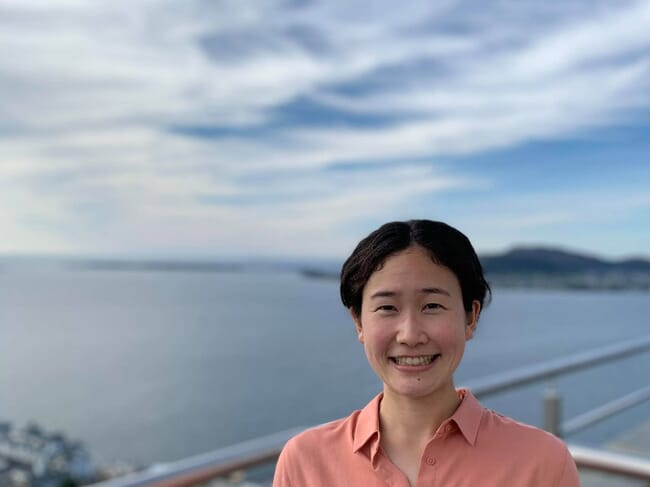
Kana Banno is a PhD Research Fellow at the Department of Biological Sciences Ålesund, Faculty of Natural Sciences at the Norwegian University of Science and Technology (NTNU). Her research focuses on salmon aquaculture, with particular emphasis on fish behavior and welfare in commercial sea cages. She utilizes advanced technologies including underwater cameras, ROVs, echosounders, and sonars for aquaculture monitoring. Banno earned her PhD in Biology from NTNU in 2025, following an MSc in Biology with a focus on aquaculture and genetics from UiT The Arctic University of Norway in 2019. Her educational background includes: PhD in Biology, NTNU (2025) MSc in Biology (Aquaculture & Genetics), UiT The Arctic University of Norway (2019) Banno's research interests center around understanding fish behavior as an indicator of welfare and health in aquaculture settings. She investigates how environmental factors affect the distribution and behavior of Atlantic salmon in commercial sea cages. Her work bridges biology and engineering through the integration of technology for monitoring purposes. She has particular expertise in using computer vision and artificial intelligence to identify growth-stunted salmon and monitor wild fish interactions around aquaculture sites. Her research contributes to developing more sustainable and welfare-conscious aquaculture practices. Analysis of her publication record reveals a strong focus on technological applications in aquaculture monitoring, with particular emphasis on computer vision, sonar technology, and multi-sensor integration. Her work spans both practical applications for the aquaculture industry and fundamental research on fish behavior. The publications show a progression from molecular genetics (her master's work on salmon lice) to more applied technological solutions for monitoring fish welfare in commercial settings. Her notable achievements include: Featured in 'Women in aquaculture' series by The Fish Site (2021) Research on AI for wild fish monitoring highlighted by Norwegian SciTech News (2021) Banno teaches BIA3003 Introduction to scientific method (2024 Autumn) and has been actively involved in the InnoSEA project (Innovations for Sustainable sEabased Aquaculture). Her fieldwork involves regular visits to salmon farms approximately 1.5 hours from her base, where she monitors salmon behavior using underwater cameras and remotely operated vehicles. She collaborates extensively with researchers from multiple countries including Argentina, China, Germany, Japan, and Norway. She maintains strong connections with the aquaculture industry, having previously worked at FRD Japan, a land-based RAS facility producing rainbow trout, where she gained practical experience in fish farming operations before transitioning to research.
Hugo Lewi Hammer er professor ved Oslo Metropolitan University, tilhørende Faculty of Technology, Art and Design og Department of Information Technology – Mathematical Modeling . Hans forskning fokuserer på forbedring av pålitelighet og transparens i maskinlæring, forsterkende læring og dyb læringsmodeller gjennom metodikk innen modelltolkning, usikkerhetskvantifisering, robust statistikk og kausal inferens. Hans nylige arbeid inkluderer: AI-drevet optimering i assistert reproduksjonsteknologi (embryoutvalg og sædcelleanalyse) Medisinsk bildebehandling (polypdeteksjon, meibomkertutgang) Neural nettverkstolkning og usikkerhetsmodellering i EEG-analyse Biomekanisk prediksjon av muskelutmatting Hans publikasjoner viser mangfoldige anvendelser av AI i medisin og teknologi, med spesialvekt på: Explainable AI (XAI) i diagnostikk og behandling Usikkerhetskvantifisering i dyb læring Automatisering av medisinske prosedyrer (ICSI, embryoanalyse) Stokastisk simulering og kausal inferens Hammer er engasjert i forskningsgruppene Applied Artificial Intelligence og Mathematical Modeling og har publisert over 130 vitenskapelige artikler og 7 forskningsrapporter.
Marita Jenssen is a Senior Lecturer in Skin and Venereological Diseases at the Department of Clinical Medicine , UiT The Arctic University of Norway. Her research focuses on inflammatory skin disorders, particularly psoriasis, and the interplay between vitamin D metabolism and disease epidemiology. Recent studies highlight her work in: Genetic and environmental risk factors for psoriasis miRNA profiling in psoriatic skin Vitamin D supplementation trials for skin disease management Her research spans molecular biology, clinical dermatology, and population health in Arctic regions. Key collaborative efforts include: Dermatoplastic Imaging Research Group Chronic Disease Epidemiology Group
Kari Stefansen is a Research Professor in the Youth Research department at OsloMet – Storbyuniversitetet, affiliated with the Centre for Welfare and Labour Research. She holds a PhD in Sociology from the University of Oslo (2011), focusing on parenthood as a classed phenomenon. Her research spans parenthood, sexual violence, domestic violence, and youth culture, with a strong emphasis on institutional mechanisms and policy implementation. Key projects include the KnowMo project on parenting, studies on masculinity and youth inequality, and the Barnahus Model evaluation. She leads the Digital Sexual Violence and Sexual Culture in Youth projects, examining digital risks and sexual health. Ongoing work includes FRAGMEN (masculinity studies) and LIFECHANCES (inequality processes). Her publications explore institutional barriers in Barnahus, sexual assault narratives, and youth sport dynamics. She co-authored Seksuell vold: En samfunnsvitenskapelig innføring (2018) and edited Justice and Recovery for Victimised Children (2024). Projects like UngVold 2023 provide national data on youth violence trends. Stefansen’s work bridges criminology, sociology, and policy, addressing societal challenges through empirical research. She collaborates with CURE Oslo and NOVA’s Domestic Violence Program, contributing to evidence-based interventions and legal reforms.
Norwegian University of Science and TechnologyNorway
Imre Janszky is a Professor at the Department of Community Medicine and Nursing, Faculty of Medicine and Health Sciences, Norwegian University of Science and Technology (NTNU). His research focuses on cardiovascular epidemiology, public health, and the interplay between mental health and cardiac outcomes. He leads studies on atrial fibrillation risk factors, including lifestyle, environmental stressors, and life events such as bereavement. Key contributions include analyses of the HUNT study cohort, examining associations between invasive medical procedures and cardiovascular events. His work emphasizes methodological rigor in causal inference and global health trends. Recent articles explore the impact of prenatal stress on heart failure, insomnia on atrial fibrillation, and the role of reproductive lifespan in cardiovascular risks. He collaborates internationally on projects addressing obesity and underweight trends, as well as pandemic-related health outcomes like the link between tonsillectomy and COVID-19 risk. His research bridges epidemiology with clinical practice, informing policies on chronic disease prevention and healthcare system preparedness. Dr. Janszky has advised numerous population-based studies and contributes to global health initiatives through collaborative networks. His lab focuses on longitudinal health tracking, with particular attention to developmental origins of disease and intergenerational health effects.