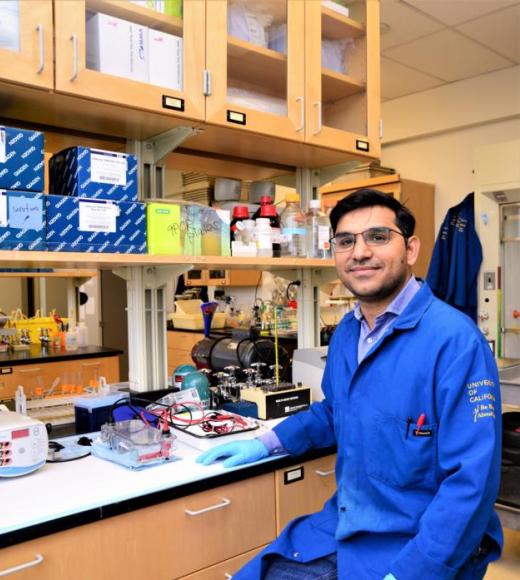
Charlah Robinson, MD is a Clinical Professor at the University of California San Francisco (UCSF) School of Medicine , affiliated with the Maternal-Fetal Medicine & Reproductive Genetics division. She completed her medical education at the University of Pennsylvania , earning a B.A. in Art History (1982), M.D. in Medicine (1990), followed by an Internship and Residency in Obstetrics and Gynecology (1994) and a Fellowship in Maternal-Fetal Medicine (1996). Her clinical and research focus centers on complex fetal abnormalities and maternal complications , with expertise in gestational diabetes and hypertension in pregnancy . Her work addresses critical challenges in high-risk pregnancies, including pharmacological interventions and obstetric outcomes. While her published research includes studies on fetal positioning during labor, neonatal risks of maternal treatments, and infectious disease implications in obstetrics, no scientific awards or students are explicitly mentioned in the provided text.
Prof. Dr. habil. Katrin Giller leads the Department of Molecular Nutrition Science (140a) at the University of Hohenheim, Garbenstraße 30, Bio Building I, Room 151, Stuttgart. Her research focuses on livestock nutrition, with specific interests in methane mitigation, antioxidant mechanisms, and metabolic syndrome in agricultural animals. Department: Molecular Nutrition Science (140a) Contact: katrin.giller@uni-hohenheim.de Office Hours: By appointment Her work spans nutritional biochemistry , ruminal fermentation , and sustainable livestock systems , often examining interactions between dietary compounds (e.g., spirulina, polyphenols, n-3 fatty acids) and animal physiology. Recent studies investigate antioxidant gene expression , transgenerational metabolic impacts , and feed efficiency . Current advisees include B.Sc. Viola Gauly, Fernando Giugno, Jana Kornherr, Mira Kühn, Daniel Obermüller, and Helen Pötzsch. The department's website details research projects, teaching events, and publications.
Dr. Monica P. Colaiacovo is a Professor of Genetics at Harvard Medical School, where she leads research in the Department of Genetics within the Blavatnik Institute. Her laboratory is located in the New Research Building in Boston, Massachusetts. Dr. Colaiacovo's research focuses on the molecular mechanisms of meiosis, chromosome dynamics, and DNA repair in the Caenorhabditis elegans model system. Her work examines how environmental toxicants impact germline function and reproductive health, with particular emphasis on chromosome segregation, recombination, and the synaptonemal complex. Her publications reveal a consistent research trajectory examining critical aspects of meiotic chromosome behavior, including double-strand break formation and repair, crossover designation, and chromosome movement during prophase I. Her laboratory has made significant contributions to understanding how environmental exposures like bisphenol A and phthalates disrupt normal meiotic progression and lead to germline dysfunction. Dr. Colaiacovo's work demonstrates strong interdisciplinary connections between basic chromosome biology, environmental health sciences, and reproductive medicine. Her research group employs advanced genetic, molecular, and imaging techniques to dissect the complex mechanisms ensuring accurate chromosome segregation during gamete formation. Her laboratory actively collaborates with researchers studying aging, DNA repair pathways, and environmental toxicology, as evidenced by publications spanning multiple high-impact journals including Nature, PLoS Genetics, and Genetics.
Bérénice Benayoun, PhD is an Associate Professor at the USC Leonard Davis School of Gerontology , with secondary appointments in the Department of Molecular and Computational Biology (USC Dornsife College of Letters, Arts and Sciences) and the USC Norris Comprehensive Cancer Center . Her research bridges aging biology , epigenetics , and sex differences using vertebrate models like the African turquoise killifish and machine learning . Education : École Normale Supérieure (BSc, MSc), Paris Diderot-Paris 7 University (PhD in Genetics and Cell Biology) Her lab investigates epigenome and transcriptome remodeling during aging , focusing on how biological sex influences these processes. Key themes include inflamm-aging , genomic instability , and immune senescence , with applications in neurodegeneration and reproductive longevity . Recent publications highlight sex-dimorphic gene regulation in neutrophils , macrophages , and brain aging , alongside novel insights into transposable elements and MOTS-c mitochondrial signaling . She pioneers the use of single-cell transcriptomics and multi-omics in aging research. Scientific awards include: 2024 Vincent Cristofalo Rising Star in Aging Research Award 2023 AGHE Rising Star Early Career Faculty Award 2023 USC Mentoring Award 2023 Rising Star in Reproductive Biology 2021 Nathan Shock New Investigator Award 2019 Rosalind Franklin Young Investigator Award Her editorial roles include Geroscience , Translational Medicine of Aging , and eLife . She mentors students across PhD programs in Biology of Aging , Neuroscience , and Molecular Medicine , as well as Master's and undergraduate trainees.
Dr. Erica Garcia is a Senior Lecturer in Environmental Science at Charles Darwin University’s Faculty of Science and Technology, specializing in aquatic ecology. She leads research on river, wetland, and groundwater ecosystems, focusing on food web dynamics and biodiversity in changing environments. Her current projects include citizen science initiatives for groundwater security and wetland condition assessments. Dr. Garcia holds a PhD from Michigan State University (2006) and a B.A. from the University of California, Berkeley (1999). She teaches courses in ecology and resource management and collaborates on interdisciplinary projects addressing water sustainability in Northern Australia. Her research spans observational, experimental, and molecular methods to understand ecosystem processes. Education: PhD in Zoology/Ecology, Evolutionary Biology and Behavior, Michigan State University (2000–2006) Bachelor of Science in Integrative Biology, University of California, Berkeley (1995–1999) Research Interests: Dr. Garcia’s work emphasizes freshwater ecosystems, including food web interactions, groundwater ecology, and the impacts of human activities on riverine systems. She employs eDNA, isotopic analysis, and remote sensing to assess ecosystem health and biodiversity. Current projects investigate groundwater resources and citizen science approaches to environmental monitoring. Grants & Projects: Co-lead on the Northern Australian Community Groundwater Security Project (citizen science) Principal Investigator for the Adelaide River Aquatic Ecosystem Mapping project (2023–2024) Collaborator on the Water Security for Northern Australia Program (2023–2026) Labs/Teams: She is affiliated with the Research Institute for the Environment and Livelihoods at CDU and collaborates with international networks on global river ecology and climate change impacts.
Matteo Bolner is a Post-Doctoral Research Fellow at the University of Bologna's Department of Agricultural and Food Sciences, specializing in livestock genomics and metabolomics. He holds a PhD in Agricultural and Food Sciences (defended March 2025) and an International Master in Bioinformatics from the University of Bologna. His research integrates genomic and metabolomic data to improve livestock sustainability, particularly in pig production systems. Key focuses include identifying metabolic pathways influencing production traits, analyzing pig viromes for disease outbreaks, and leveraging big data for One Health applications. His educational background includes a Biological Sciences degree (2018) and a bioinformatics master's (2021). He interned at CINECA's SCAI department, focusing on HPC software containerization. Current affiliations include membership in the Animal and Food Genomics group, where he explores genomic solutions for breed conservation and sustainable production. Research trends in his articles emphasize multi-omics integration to understand pig metabolism, stress responses, and breed-specific adaptations. He also applies genomics to authenticate food products and enhance conservation strategies for endangered livestock breeds like the Mora Romagnola pig. His work bridges animal science, computational biology, and agricultural sustainability. Notable contributions include developing genomic tools for honey bee population analysis and creating a catalog of mitochondrial insertions in pig genomes. Future directions involve advancing metabolomics-based precision livestock farming and applying big data analytics to livestock One Health challenges.
Philippe Christe is an Associate Professor in the Department of Ecology and Evolution at the University of Lausanne (UNIL), Faculty of Biology and Medicine. His research centers on host-parasite interactions, with a focus on bats, birds, and their ectoparasites, integrating behavioral, physiological, and genetic approaches. He leads the Christe Group, which investigates evolutionary and ecological dynamics in host-parasite systems, particularly avian malaria and bat-mite relationships. He is actively involved in conservation initiatives, including the Jorat Peri-Urban Nature Park, and collaborates with KORA on human-wildlife interactions. Bachelor's degree in biology, UNIL (1989) PhD in Zoology and Animal Ecology, UNIL (1994) Philippe Christe’s research interests lie at the intersection of parasitology, evolutionary ecology, and conservation biology. He investigates how host defenses evolve in response to parasitic pressures, examining trade-offs between immunity and life history traits such as reproduction and survival. His work often integrates field studies with experimental and molecular techniques. Key model systems include Parus major (great tit) and Culex pipiens in avian malaria, and bat species with their ectoparasitic mites. He also explores broader ecological interactions, including predator-prey dynamics and wildlife conservation in human-modified landscapes. His recent publications reflect a strong emphasis on disease ecology, wildlife conservation, and molecular methods. Articles span topics such as avian malaria transmission, lynx population dynamics, snow leopard behavior, and habitat fragmentation effects on insects. These works employ advanced techniques like DNA metabarcoding, spatial modeling, and long-term monitoring, demonstrating a trend toward interdisciplinary, data-driven ecological research with direct conservation applications. Dubois Foundation Prize for an educational CD-Rom on bats (2004) Communication Award from the Faculty of Biology and Medicine of UNIL (2017) Philippe Christe has supervised numerous PhD and Master’s students, contributing significantly to training the next generation of ecologists and evolutionary biologists. His group collaborates widely with institutions such as the Museum of Zoology in Lausanne and KORA, and participates in large-scale conservation projects involving snow leopards, lynx, and bats. He has been involved in research grants related to host-parasite coevolution, wildlife monitoring, and conservation strategies. His leadership in establishing the Jorat Peri-Urban Nature Park and involvement in the UNIL Interdisciplinary Center for Mountain Research highlight his commitment to applied science and environmental stewardship. He leads the Christe Group, which conducts research on host-parasite coevolution, with a focus on bats and their ectoparasites, and birds affected by avian malaria. The group combines fieldwork, laboratory experiments, and molecular analyses, and includes post-docs, PhD students, and technical staff. Collaborations extend to researchers in Bern, Paris, and Spain, fostering an international and interdisciplinary research environment.
Jessica Mayhew is an Associate Professor in the Department of Anthropology at Central Washington University. She specializes in primate behavior, biological anthropology, and cognitive ethology, with a focus on social play, dominance hierarchies, and communication patterns in primates such as chimpanzees, macaques, lemurs, and gorillas. Her research integrates field studies, captive observations, and interdisciplinary approaches to understand primate social dynamics and conservation challenges. Her work extends to historical analysis, such as interpreting Bronze Age wall paintings depicting primates, and modern contexts like examining the impact of human caregivers on captive primates and the portrayal of nonhuman primates in digital media. She has conducted studies in diverse locations including China, Madagascar, and sanctuaries in the United States. Mayhew’s publications span topics like lateralization in lemurs, dominance behavior in Tibetan macaques, and paternal care in orangutans. She teaches courses on biological anthropology, primate origins, nonverbal communication, and primatology, reflecting her expertise in both academic instruction and applied research. Her advising and grants focus on primate behavior studies, with notable projects including camera trap deployments in China and collaborative work at sanctuaries. No specific labs or teams are listed, though her collaborative nature is evident through joint publications with institutions like Duke Lemur Center and international field collaborations.
Nancy Kass is a Professor in the Department of Health Policy and Management at the Johns Hopkins Bloomberg School of Public Health, where she also holds the Phoebe R. Berman Professorship in Bioethics and Public Health. She serves as Vice Provost for Graduate and Professional Education at Johns Hopkins University and is the Interim Chair of the Department of Health Policy and Management. Additionally, she is Deputy Director for Public Health at the Johns Hopkins Berman Institute of Bioethics and co-directs the Johns Hopkins Fogarty African Bioethics Training Program. ScD, Johns Hopkins University, 1989 BA, Stanford University Postdoctoral Fellowship, Kennedy Institute of Ethics, Georgetown University Dr. Kass’s research focuses on the ethical dimensions of public health policy and research, with particular expertise in bioethics, research ethics, public health ethics, informed consent, learning health systems, and global health ethics . Her work addresses ethical challenges in HIV/AIDS, obesity prevention, genetics, and international research. She has developed influential frameworks for ethical oversight in public health and clinical research. Her recent publications (2024–2025) reflect a strong focus on modernizing clinical research ethics, including optimizing informed consent, integrating clinical trials with medical practice, and enhancing data infrastructure. These works emphasize ethical governance, patient-centered decision-making, and the alignment of research with real-world healthcare delivery. Her scholarship spans high-impact journals such as JAMA and Implementation Science , demonstrating sustained scholarly leadership. GBFFR Annual Award, Global Forum on Bioethics in Research, 2016 Member, National Academy of Medicine (formerly Institute of Medicine), 2008 Fellow, Hastings Center, 2007 Delta Omega Honorary Society in Public Health, 1996 AMTRA (Advising, Mentoring, and Teaching Award), Johns Hopkins, 1996 Dr. Kass has played a pivotal role in education and mentorship, having directed the PhD program in Bioethics and Health Policy for 15 years. She currently leads the Fogarty-funded African Bioethics Training Program, advancing global bioethics capacity. She has served on numerous national and international advisory bodies, including the National Cancer Institute’s central IRB, the National Academy of Medicine, and the WHO Ethics Review Committee. Her leadership extends to chairing the national Precision Medicine Initiative central IRB. She is actively involved in research projects such as the CDC Informed Consent Project, Bioethics of Quality Improvement, and Demonstrating Respect and Acceptable Consent Strategies in patient-centered outcomes research. These initiatives underscore her commitment to ethical innovation in public health and clinical practice.
Lonny R. Levin is a Professor of Pharmacology at Weill Cornell Medical College , where he has worked since 2009. Collaborating extensively with Dr. Jochen Buck, he pioneered research on bicarbonate-regulated soluble adenylyl cyclase (sAC) , a critical enzyme in cAMP signaling. Education : B.S. from Cornell University (1983), Ph.D. from State University of New York at Stony Brook (1989) His research focuses on: cAMP signaling microdomains in mammalian cells Mitochondrial metabolism and pH sensing Sperm capacitation and energy regulation Nonhormonal contraceptive development via sAC inhibition Recent publications (2025-2023) highlight: Structural insights into sAC activation Metabolic adaptations during sperm capacitation Emerging role in corneal endothelium signaling Drug discovery for on-demand male contraception Grants from NIH (NIAID, NICHD) support his work on: Intravaginal rings for dual HIV/herpes prevention and contraception Metabolic communication in reproductive systems Signalosome regulation in mitochondria He maintains collaborations with institutions like EMD Millipore Corporation and co-founded Sacyl Pharmaceuticals, Inc. , holding proprietary interests in sAC-related intellectual property.
Kelsey Swingle is an Assistant Professor of Bioengineering at Rice University, where she leads the Swingle Lab at the intersection of biomaterials science, immune engineering, and reproductive biology. Her research focuses on engineering therapeutic and vaccine technologies with translational potential. Ph.D. in Bioengineering from the University of Pennsylvania B.S.E. in Biomedical Engineering from Case Western Reserve University Dr. Swingle’s research explores the design of lipid nanoparticles (LNPs) and nucleic acid therapeutics for women’s health applications, including pre-eclampsia, preterm birth, and gynecologic cancers. Her work integrates bioengineering principles with immune modulation strategies to develop targeted therapies. The trends in her publications highlight advancements in LNP elasticity optimization for placental mRNA delivery, targeted systemic RNA delivery to the brain, and in utero gene editing applications. Her lab prioritizes interdisciplinary approaches to overcome biological barriers in women’s health. 2025 Solomon R. Pollack Award for Excellence in Graduate Bioengineering Research 2024 Muriel Joan Drew Hege Award for Women in Cellular Immunotherapy Research 2024 Penn Engineering Outstanding Teaching Award 2023 Gordon Research Conference Travel Award 2022 Society for Biomaterials STAR Award 2020 NSF Graduate Research Fellowship The Swingle Lab collaborates with the Texas Medical Center to develop precision nanomedicines. Her team employs in vitro, ex vivo, and in vivo models to study biomaterial interactions with female-specific tissues, emphasizing translational research and inclusive scientific communication.
Bryan Watts is the Director of the Center for Conservation Biology and holds the Mitchell A. Byrd Research Professorship in Conservation Biology at William & Mary. He has a B.S. in Biology from Virginia Tech, an M.A. in Biology from William & Mary, and a Ph.D. in Ecology from the University of Georgia. His research focuses on avian conservation, wetland ecosystems, and the impacts of environmental changes on bird populations, particularly in coastal regions. He leads long-term monitoring programs for species like ospreys, red knots, and black rails, emphasizing habitat conservation and population dynamics. His work integrates citizen science, toxicology assessments, and climate adaptation strategies for vulnerable species. Watts collaborates with federal agencies and NGOs to inform policy decisions and habitat management. His projects include the Virginia Marshbird Survey, Whimbrel migration tracking, and assessments of contaminants in apex predators like peregrine falcons and bald eagles. Key areas of focus include the demographic responses of birds to fluctuating fish stocks, the effects of human activity on nocturnal roosting behaviors, and the development of conservation strategies for coastal wetlands under climate change. His research outputs span over three decades, addressing both applied and theoretical questions in conservation biology. Watts also advises on wildlife management policies, such as landfill use by bald eagles and wind energy siting to minimize bird collisions.
Samuel Johnston is a Lecturer in Probability Theory at the Department of Mathematics, King's College London, affiliated with the Faculty of Natural, Mathematical & Engineering Sciences. He joined King's in 2022 after postdoctoral roles at the University of Bath, University of Graz, and University College Dublin. MMath, University of Oxford (2014) PhD in Probability, University of Bath (2017) Johnston's research spans probability theory, with a focus on stochastic processes involving branching, coalescence, and fragmentation. He actively explores free probability, random matrices, integrable combinatorics, and combinatorial approaches to the Jacobian conjecture. His work intersects with statistical physics and asymptotic geometric analysis. Recent publications highlight coalescent structures in heavy-tailed branching processes, integrable probability models, free probability via entropic transport, and convexity in high dimensions. Keywords include universality classes, Berry-Esseen bounds, and fragmentation-scaling limits. Samuel has not been mentioned to have received specific scientific awards or honors. He advises PhD students Rohan Shiatis (2023-) and Neil Mukerji (2024-). Collaborations span institutions in the UK, USA, Mexico, Austria, and Poland, with invited talks at global conferences including Xiangtan University, Imperial College London, and UCLA.
Shahid Siddique is an Associate Professor in the Department of Entomology and Nematology at the University of California, Davis. His research focuses on understanding molecular and applied aspects of plant-parasitic nematode interactions with host plants. He aims to develop sustainable strategies to mitigate nematode-induced crop losses through genetic, biochemical, and biotechnological approaches. His lab is particularly interested in host resistance mechanisms, nematode effector proteins, and biocontrol solutions. Education: MSc, Bahauddin Zakariya University, Multan, Pakistan PhD, University of Natural Resources and Life Sciences, Vienna, Austria Habilitation, University of Bonn, Germany Research Interests: Siddique’s work bridges basic and applied research, including cell surface signaling in plant-parasitic nematode interactions, functional characterization of secretory proteins, molecular diagnostics for nematodes, and biocontrol strategies. Current projects explore recombination hotspots in nematode genomes, CRISPR-based resistance engineering, and redox signaling mechanisms. Teaching: General Plant Nematology (NEM100) in Spring 2020 Labs/Teams: The Siddique Lab focuses on translating molecular discoveries into practical pest management solutions. Collaborations involve genomic analysis, proteomics, and field trials to address global agricultural challenges.
Angelica Lindén Hirschberg is a Professor of Obstetrics and Gynecology (specializing in reproductive medicine) at Karolinska Institutet and a Senior Consultant in gynecological endocrinology at Karolinska University Hospital. She holds dual roles in academic leadership and clinical practice, focusing on disorders of reproductive function, endocrine-metabolic dysfunction, and hormonal conditions in women. Her affiliations include the Department of Women’s and Children’s Health, Reproductive Endocrinology and Metabolism Research Group, and the Division for Neonatology, Obstetrics, Gynaecology, and Reproductive Health. Education and Career: MD (Karolinska Institutet, 1984) PhD (Karolinska Institutet, 1989) Professor in Obstetrics and Gynecology (2007) Board member of international societies (ISGE, EMAS) Research Focus: Her translational research spans PCOS, obesity-related reproductive dysfunction, premature ovarian insufficiency, and disorders of sex development. Projects include hormonal impacts on athletic performance, immune therapy for ovarian dysfunction, and endometrial cell biology. Collaborations involve national/international networks and clinical trials (e.g., PROBES trial). Publications: Recent work emphasizes PCOS pathophysiology, menopausal health, and hormonal interventions in athletes. Key trends include single-cell profiling of endometrium, immunomodulatory therapies for POI, and non-hormonal treatments for vasomotor symptoms. Awards: King’s Seraphim Medal (2018) 2016 Grand Prize in Sport Science Appointed Royal Gynecologist (2009) Teaching and Mentorship: Coordinates courses on reproductive endocrinology, supervises PhD students (e.g., Esin Ylmaz), and chairs the PhD Study Director at her department. Authored over 25 book chapters on women’s health and sports medicine. Grants and Labs: Secured Swedish Research Council funding for POI trials. Her lab integrates experimental (Bioclinicum) and clinical (Women’s Health Research Unit) research.