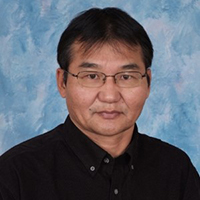
Dr. Roselina Angel is a Professor in the Department of Animal and Avian Sciences at the University of Maryland's College of Agriculture and Natural Resources. With expertise in poultry nutrition, she holds a PhD in Poultry Nutrition from Iowa State University and has been with the university since 1998, initially joining as an Assistant Professor. Research Focus Areas Calcium and phosphorus metabolism in poultry Phytase and enzyme supplementation Environmental impact reduction Nutritional strategies for exotic animals Feed additive efficacy Mineral utilization optimization Her recent publications (2025–2023) concentrate on mechanistic modeling of mineral digestibility, circadian nutrient regulation in laying hens, and the environmental implications of poultry nutrition. These studies frequently examine interactions between dietary calcium/phosphorus ratios, phytase application, and ingredient selection across broilers and laying hens.
Dr. Ali Nazmi is an Assistant Professor in the Department of Animal Sciences and the Food for Health Discovery Theme at The Ohio State University. He holds affiliations within the College of Food, Agricultural, and Environmental Sciences (CFAES). His research focuses on nutritional immunology, host-pathogen interactions in poultry and pigs, and the metabolic roles of intestinal immune cells. Nazmi obtained his B.Sc. in Poultry Production and M.Sc. in Poultry Breeding from Ain Shams University (Egypt), followed by a Ph.D. in Animal Biology from UC Davis (2017). He completed postdoctoral training in mucosal immunology at Vanderbilt University Medical Center before joining OSU in 2021. His recent work includes studies on intraepithelial lymphocytes in intestinal health, enteric disease resistance in poultry, and swine T cell biology. Key publications address mechanisms of necrotic enteritis in chickens, unconventional T cell subsets, and cytokine regulation in colitis models. Collaborations span avian immunology, swine immunology, and semen cryopreservation techniques. Education: B.Sc. (Ain Shams), M.Sc. (Ain Shams), Ph.D. (UC Davis) Postdoc: Vanderbilt University Medical Center (mucosal immunology) Key Research Themes: Nutritional Immunology, Mucosal Immunity, Avian/Porcine Health
Dr. Joseph Cassady serves as the South Dakota Corn Endowed Dean of the College of Agriculture, Food and Environmental Sciences at South Dakota State University (SDSU). Previously, he held the rank of Professor and Head of the Department of Animal Science at SDSU (2013–2022) and North Carolina State University (2001–2013). His research focuses on food animal genetics and genomics, particularly improving production efficiency in swine and beef cattle. Education: B.S. in Animal Science (Iowa State University, 1993), M.S. and Ph.D. in Animal Science (University of Nebraska-Lincoln, 1995 and 1999). Professional roles include past-president of the National Swine Improvement Federation and executive director of the Beef Improvement Federation (2009–2015). Research emphasizes genetic and genomic advancements to enhance livestock productivity, with notable work on heat stress mitigation, swine behavior, and genomic selection in cattle. Awards include the 2019 Harold and Barbara Bailey Award for Academic Leadership and recognition for service to the Beef Improvement Federation. Administrative responsibilities include leading the College of Agriculture, Food and Environmental Sciences, overseeing accreditation processes, and participating in industry boards such as the South Dakota Poultry Industries Association and American Angus Foundation. Key research themes span animal genomics, livestock environmental adaptation, and precision agriculture. Over 150 peer-reviewed publications address topics like swine feeding behavior, cattle genetics, and genomic tools for improving meat quality and production efficiency.
Dr. Martin Zuidhof is a Professor in the Department of Agricultural, Food & Nutritional Science at the University of Alberta. His primary research focus is on Poultry Systems Modeling and Precision Feeding, particularly in optimizing broiler breeder management and energy partitioning. He holds a PhD in Animal Science from the University of Alberta and has pioneered transformative precision feeding systems that achieve unprecedented flock uniformity ( Education: PhD, Animal Science, University of Alberta Research Interests: Dr. Zuidhof’s work centers on advancing precision livestock systems through mathematical modeling (e.g., multiphasic growth models), optimizing pullet body weight for reproductive efficiency, and addressing societal concerns about animal welfare in poultry production. His innovations in precision feeding systems reduce nutrient waste while enabling precise metabolic studies. Publications: Over 50 peer-reviewed articles since 2004, spanning topics from energy partitioning to smart farming technologies. Recent work emphasizes low-cost sensor applications and Big Data integration in poultry systems. Teaching: Instructs courses like Applied Poultry Science (AFNS 571/AN SC 471) and Principles of Animal Agriculture , emphasizing experiential learning and critical scientific thinking. Grants/Advising: No explicit grants listed, but his research has received institutional support. No advisee names found in provided texts.
Oluwole O. Oni is a Lecturer in Intensive Animal Health and Production at the University of Surrey's School of Veterinary Medicine. He holds academic qualifications including DVM, MVSc, and PhD. His research focuses on avian and poultry health, with a strong emphasis on infectious diseases, molecular diagnostics, zoonotic transmission, and biosecurity practices. Key studies include avian influenza seroprevalence in Benin, mycoplasma characterization in Nigerian poultry, and the impact of natural toxins like aflatoxin on poultry health. He has also contributed to understanding NDV and Marek's disease virus in Nigeria, and evaluates traditional herbal remedies on animal physiology. Research highlights include the design of efficient PCR primers for rotavirus detection and investigations into the epidemiology of avian pathogens across diverse farming systems. His work underscores the importance of gender-inclusive strategies in biosecurity for smallholder poultry farming in Benin, and he advocates for improved vaccination and diagnostic protocols in resource-limited settings. No scientific awards were explicitly mentioned in the text. His collaborative efforts span international teams, particularly in Nigeria and Ethiopia, and he emphasizes molecular approaches to disease control and poultry management. No specific grants or advisees are listed, but he has conducted studies on poultry vaccines, toxin mitigation, and haemoparasitic infections in livestock.
Prof. Dr. Aziz ŞAHİN is a Professor in the Department of Animal Science at the Faculty of Agriculture, Kirşehir Ahi Evran University, Turkey. With over two decades of academic experience, he has progressed from Research Assistant to Professor, holding positions at both Gaziosmanpaşa University and Ahi Evran University. His scholarly contributions span numerous research areas within animal science, with particular emphasis on biometrics, genetics, and breeding of both large and small livestock. Dr. ŞAHİN earned his Bachelor's degree in Animal Science from Ondokuz Mayıs University (1996-2000), followed by a Master's degree in Animal Science from Gaziosmanpaşa University (2001-2004), and completed his PhD in Animal Science at the same institution (2004-2010). His academic journey reflects a consistent dedication to advancing knowledge in animal breeding and genetics. His research primarily focuses on Biometrics and Genetics, Cattle Breeding and Improvement, and Small Animal Breeding and Improvement . Analysis of his publication record reveals a strong emphasis on buffalo and cattle breeding, with particular attention to lactation curves, genetic parameter estimation, meat quality characteristics, and environmental factors affecting dairy production. His work bridges theoretical genetic principles with practical applications in livestock management. Dr. ŞAHİN has received significant recognition for his scholarly contributions, including the prestigious TÜBİTAK Yayın Teşvik award in both 2012 and 2014. His research impact is evident through substantial citation metrics across multiple platforms: UNIS (389 citations, h-index 10), Web of Science (174 citations, h-index 7), Scopus (207 citations, h-index 8), and Google Scholar (747 citations, h-index 15). As an academic mentor, Dr. ŞAHİN has supervised numerous graduate students, serving as primary advisor for 9 Master's theses and 1 Doctoral dissertation. His research program has been supported by 21 funded projects from higher education institutions and public organizations, including significant work on Anatolian buffalo genetics, DNA banking, and lactation parameter analysis. He has also held important administrative roles including Head of Department (since 2024) and Faculty Board Member (since 2018). Dr. ŞAHİN maintains active collaborations with researchers across Turkish institutions, particularly with colleagues at Ondokuz Mayıs University and other agricultural research centers. His ongoing work continues to advance understanding of livestock genetics and breeding practices in the Turkish context.
Stamen Radulović is an Associate Professor at the Department of Nutrition and Botany within the Faculty of Veterinary Medicine. His academic role focuses on advancing research in animal nutrition and feed science, with affiliations centered on veterinary biosciences and agricultural technology. His research examines critical areas in animal husbandry, including: Feed Technology : Optimization of nutrient digestibility, alternative protein sources (e.g., insect meal), and selenium/vitamin supplementation in poultry and swine. Food Safety : Mycotoxin contamination in feeds, heavy metal bioaccumulation in animal products, and risk mitigation strategies. Sustainable Practices : Use of phytobiotics, essential oils, and prebiotics as growth promoters and antibiotic replacements. Radulović's publications (2012–2022) reflect a consistent focus on enhancing animal health and product quality through nutritional interventions. Key trends include feed additive efficacy, contaminant detection in animal products, and biotechnology applications in feed formulation. His work frequently involves collaborative studies with colleagues across veterinary and environmental sciences.
Dr. Darko Davitkov is a researcher at the Department of Diseases of Ruminants, Carnivores, Poultry and Game within the Faculty of Veterinary Medicine, University of Belgrade. His academic career spans various clinical and molecular research areas in veterinary medicine, with a focus on parasitic, infectious, and systemic diseases in domestic and wild animals. Veterinary Internal Medicine Molecular Pathology Clinical Parasitology Equine Infectious Diseases Canine Hematology Wildlife Forensic Genetics His research has produced significant publications in journals like Parasites & Vectors and Veterinary Journal , covering topics from DNA-based species identification to oxidative stress in infected animals. While no explicit awards are listed, his work includes book authorship and collaborations on complex clinical cases involving rare diseases and parasitic interactions. Dr. Davitkov's recent work emphasizes parasitology, oxidative stress, and forensic applications in veterinary contexts.
Dr. hab. Danuta Majewska is a Professor at the West Pomeranian University of Technology in Szczecin, Faculty of Biotechnology and Animal Breeding, Department of Monogastric Animal Sciences. She specializes in ratite breeding and poultry nutrition research, with particular focus on emus, ostriches, and quails. Her educational background includes: 1995: Master of Science in Animal Science, Agricultural University of Szczecin 1999: PhD in Agricultural Sciences, Agricultural University of Szczecin 2012: Habilitation in Agricultural Sciences, West Pomeranian University of Technology Professor Majewska's research focuses on breeding utility and improvement of techniques for emus and ostriches, evaluation of egg quality across various ratites, and assessment of commercial ratite products. Her work in poultry nutrition explores the use of oligosaccharides from lupin and pea seeds as natural productivity and immunity stimulators, along with quail nutrition optimization. Her research bridges theoretical knowledge with practical applications in modern poultry farming. Analysis of her publication record shows consistent research focus on ratite biology, particularly emu and ostrich reproduction and product quality. Her work demonstrates strong interdisciplinary connections between animal science, nutrition, and food chemistry, with increasing emphasis on practical applications for commercial poultry production. Her scientific contributions have been recognized through various academic achievements, though specific awards are not detailed in the available information. Professor Majewska has been actively involved in academic mentorship and research supervision, contributing to the development of young scientists in the field of animal science and biotechnology. Her research activities are closely associated with the Poultry Workshop at the Department of Monogastric Animal Sciences, where she conducts experimental studies on ratite breeding and nutrition.
Tomas Norton is a Senior Lecturer at the Faculty of Bioscience Engineering, Department of Biosystems at KU Leuven. He is actively affiliated with multiple research units including the Division of Bio-Environmental Control, the KU Leuven Brain Institute (LBI), and the KU Leuven Institute for Integration of Micro- and Nano-scale Technologies (LIMNI). His work is centered at the Animal and Human (A2H) research unit located at Castle Park Arenberg. Dr. Norton's research focuses on precision livestock farming with particular expertise in computer vision, machine learning, and sensor technologies applied to animal monitoring. His current projects span sustainable agriculture, animal vocalization analysis, and bio-response monitoring systems across multiple species including poultry, pigs, and buffalo. He serves as promotor on numerous research initiatives funded through 2028-2029 that address critical challenges in sustainable food production while improving animal welfare. His recent publications demonstrate a strong trend toward AI-driven solutions for animal monitoring, with particular emphasis on behavior recognition, health assessment through sound analysis, and robotic management systems. These works appear primarily in agricultural technology journals with a focus on practical implementation of advanced computational methods in farming contexts. As an academic leader, Dr. Norton serves on the Faculty Council of Bioscience Engineering, the Doctoral Committee for Bioscience Engineering, and the Departmental Council for Biosystems. He teaches courses including Modelling of Biosystems, Bioresponse Measurements and Process Control, and Sustainable Precision Livestock Farming, integrating his research expertise directly into his educational practice. His laboratory work within the A2H unit represents a multidisciplinary approach that bridges engineering, computer science, and animal science to develop practical technological solutions for modern agricultural challenges, with particular emphasis on sustainability and welfare improvements in livestock production systems.
Dr. John Michael Gonzalez is a Professor in the Department of Animal and Dairy Science at the University of Georgia's College of Agricultural & Environmental Sciences. He joined UGA in April 2019 with a 20% teaching and 80% research appointment after serving on the faculty at Kansas State University from June 2011 to March 2019. PhD in Animal Sciences from University of Florida (2008) MS in Animal Sciences from Sul Ross State University (2005) BS in Agricultural Economics from Texas A&M University (2002) Dr. Gonzalez's research program focuses on three main areas: cellular influencers of muscle growth related to meat quality (particularly muscle fiber size/type and collagen crosslinks); novel technologies for manipulating muscle growth through feed additives, management strategies, and breeding; and cellular mechanisms of muscle fatigue during livestock transportation. His work has significant implications for improving meat quality, animal welfare, and production efficiency. His recent publications (2023-2025) show a strong emphasis on nicotinamide riboside supplementation across various species, meat quality assessment, and participation in the National Beef Quality Audit. These works span beef, pork, and poultry production systems with a consistent focus on muscle biology and meat science applications. Student Career Success Influencer Award (2023) Student Career Success Influencer Award (2024) Dr. Gonzalez has secured substantial funding from diverse sources including USDA NIFA, Georgia Commodity Commission for Beef, Huvepharma, Genus PIC, and various industry partners. His research program includes multiple ongoing projects focused on nicotinamide riboside applications, heat stress impacts, vitamin D supplementation, and meat quality analysis. While specific lab details aren't provided in the text, his work involves extensive collaboration with other researchers across multiple institutions as evidenced by his numerous co-authored publications.
Dr. Scott Carter is an Associate Professor in the Department of Animal and Food Sciences at Oklahoma State University. He holds a B.S. in Animal Science from Oklahoma State University and a Ph.D. in Swine Nutrition from the University of Kentucky. His primary research focuses on swine nutrition, with emphasis on optimizing dietary strategies to enhance growth performance, reduce environmental impact, and improve feed efficiency. Dr. Carter also investigates the effects of dietary components on gut microbiota, nutrient metabolism, and immune response. He has contributed to cooperative studies on mineral requirements in pigs and the utilization of alternative feed ingredients like bakery byproducts and distillers grains. His work includes studies on probiotics, trace mineral supplementation, and the environmental implications of swine waste management. Dr. Carter has advised Ishtar Silva Lara in a shared graduate research assistantship. He has secured grants for projects such as evaluating probiotic bacteria for feed utilization and assessing zinc sources in nursery pig diets. His research spans multiple states and institutions, addressing both practical and applied challenges in livestock production.
Alper GÜNGÖREN is a Lecturer in the Department of Food Hygiene and Technology at the Faculty of Veterinary Medicine, Kastamonu University since 2022. He holds a PhD in Food Hygiene and Technology from Fırat University (2016-2022) and a Bachelor's degree in Veterinary Medicine from Selçuk University (2009-2015). Current affiliation: Kastamonu University, Faculty of Veterinary Medicine, Department of Food Hygiene and Technology Past affiliation: Research Assistant at Bingöl University (2016-2022) His research focuses on Food Microbiology , Food Safety , and Animal Products Technology , with recent work on antimicrobial packaging, natural additives in food preservation, and microbial quality of meat and dairy products. The 15 most recent articles highlight his expertise in Food Science , Veterinary Medicine , and Biotechnology . Key trends include applications of chitosan films, propolis, and Borago officinalis in food safety, and studies on diabetes-induced insulin resistance in animal models. Collaborations with 52 researchers across institutions like Fırat University, Dicle University, and Harran University Active in projects related to food quality, antimicrobial agents, and poultry health His work contributes to Sustainable Development Goals related to responsible consumption and production, with a focus on green packaging and food safety innovations.
Daalkhaijav Damiran is a Researcher in the Department of Animal and Poultry Science at the University of Saskatchewan, affiliated with the College of Agriculture and Bioresources. His work focuses on beef cattle nutrition, forage management, and rangeland ecology, with an emphasis on improving feed efficiency and sustainable livestock practices. Damiran holds a Ph.D. in Animal Science/Rangeland Ecology and Management from Oregon State University, a Doctor of Agricultural Sciences from Mongolian Agricultural University, and a B.Sc. in Chemistry/Biology from Mongolian State Pedagogical University. His research interests include diet selection, hull-less barley utilization, livestock-wildlife interactions, and the application of synchrotron technology. He has extensively studied Mongolian rangelands, focusing on monitoring and modeling nutrient supply dynamics. Recent publications explore topics such as forage system impacts on methane emissions, biochar supplementation effects, and genetic analysis in beef cattle breeding programs. His work often integrates agronomic, environmental, and economic dimensions to optimize livestock production systems.
Dr. Vanaja Kankarla is an Assistant Professor of Soil Science in the Department of Marine & Earth Sciences at Florida Gulf Coast University (FGCU), Fort Myers, Florida. She holds a PhD in Plant and Environmental Science from New Mexico State University (2019), an MS in Plant and Soil Sciences from Tennessee State University (2013), and a BSc in Agriculture from Acharya N. G. Ranga Agricultural University, India. Her research integrates agronomy, soil science, and crop-weed nutrient management to address agricultural and environmental challenges, emphasizing decision support tools for sustainable practices. Education: PhD: New Mexico State University (Plant and Environmental Science, 2019) MS: Tennessee State University (Plant and Soil Sciences, 2013) BSc: Acharya N. G. Ranga Agricultural University (India, 2009) Research Interests: Soil salinity management Crop-weed competition dynamics Precision agriculture tools Soil fertility and nutrient cycling Dr. Kankarla’s work has been recognized with prestigious awards, including the 2022 Postdoctoral Research Award (Texas A&M University) and the 2018 Women Economic Forum’s ‘Young Innovators’ award. She actively contributes to academic governance as a Review Editor for Agrosystems, Geosciences, and Environment and Associate Editor of the Journal of Environmental Quality . Her teaching focuses on introductory courses in soil science, environmental science, and precision agriculture. Awards: 2022 Postdoctoral Research Award (Texas A&M) 2019 Dean’s Award of Excellence (NMSU) 2018 ‘Young Innovators’ Award (WEF) Grants & Leadership: Travel grants from AGU (2014) Editorial roles in major agronomy journals Committee member, ASA societies Her research portfolio spans over 20 peer-reviewed publications and conference presentations, addressing topics like microplastic impacts, PFAS contamination, and saline irrigation strategies. Dr. Kankarla advocates for women in STEM and mentors students passionate about agricultural innovation.