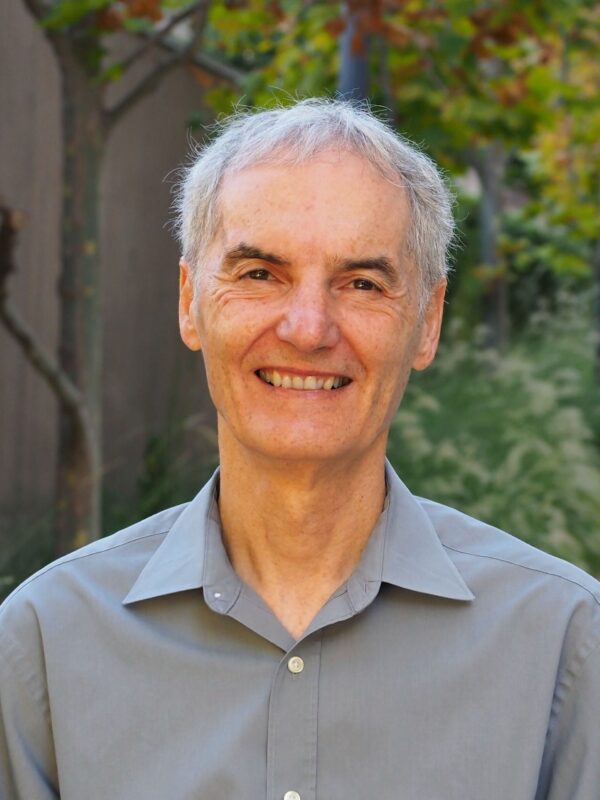
Jacob Krüger is an Assistant Professor at Eindhoven University of Technology , specializing in the development and evolution of variant-rich software systems. He holds a PhD from Otto-von-Guericke University Magdeburg (2021) and has held academic and research positions at institutions including Ruhr-University Bochum, Chalmers University of Technology, and the University of Toronto. His research focuses on the interplay between human cognition and software quality, particularly in complex systems requiring frequent adaptation. Education: PhD in Computer Science, Otto-von-Guericke University Magdeburg (2021) MSc Business Informatics, Otto-von-Guericke University Magdeburg (2016) Research Interests: Variant-Rich Systems Program Comprehension Software Product Lines Human Factors in Software Engineering Architecture Smells and Quality Assurance Articles Trends: Recent work emphasizes fork ecosystem visualization (VisFork tool), the impact of AI on scientific practices, and crisis-driven software development (e.g., Corona-Warn-App). Key themes include empirical studies, tool development, and industry collaboration. Awards: Best Dissertation Award (2022) Frank Anger Memorial Award (2019) Multiple conference best-paper and review awards Advising & Grants: Supervises 12+ PhD students across multiple institutions. Active in funding projects like INKleSS (German Research Foundation) and FOSD Meeting 2024 (NWO). Leads collaborations with ASML, Danfoss, and Axis AB. Labs/Teams: Member of the Software Engineering and Technology (SET) group at TU Eindhoven, focusing on industrial-strength software systems and cognitive aspects of development.
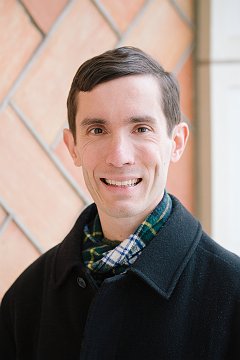
Joe Pitt-Francis is Associate Professor of Computer Science and Tutorial Fellow in Computer Science at St Edmund Hall, University of Oxford . Since 1999 he has tutored Oxford computer-science students and formally became a Tutorial Fellow of St Edmund Hall in 2024. His research lies at the intersection of computational biology and mathematical biology . Using sophisticated numerical techniques he constructs and analyses models of the heart , cancer and blood flow . A central strand of his work is software development for biological simulation; he is an active contributor to Chaste ( Cancer, Heart and Soft-Tissue Environment ), a large-scale C++ library that supports multiscale computational models in physiology and medicine. Across more than 60 peer-reviewed publications since 1998, his work has progressively advanced from foundational software-engineering papers describing Chaste’s architecture to highly-cited studies on cardiac electrophysiology , tumour-induced angiogenesis , microvascular haemodynamics and cell-cycle dynamics under hypoxia . The 2024-2025 corpus shows strong emphasis on multiscale frameworks , open benchmarking , and radiotherapy-induced vascular remodelling , positioning his group at the forefront of translational in-silico oncology. Contact: Email: Joe.Pitt-Francis@seh.ox.ac.uk
Helena Webb is a Visiting Lecturer in the Department of Computer Science at the University of Oxford, where she contributes to research and teaching within the Human Centred Computing theme. Her work bridges social science and computer science, focusing on responsible innovation, AI ethics, and user interactions with digital technologies. PhD in Social Sciences, University of Nottingham Bachelor’s in Social and Political Sciences, University of Cambridge Former Senior Researcher, University of Oxford Department of Computer Science Researcher at Work, Interaction and Technology (WIT) Research Centre, King’s College London (2009–2014) Her research interests include human-computer interaction, algorithmic fairness, privacy in smart homes, and ethical design of social robots. She specializes in qualitative research methods and interdisciplinary collaboration to understand how technology shapes and is shaped by social practices. She has led and contributed to major projects such as Digital Wildfire , UnBias , ReEnTrust , and RoboTIPS , all focused on responsible governance and design of digital systems. Her recent publications span topics from algorithmic accountability to ethical black boxes in robotics, reflecting a strong trend toward integrating ethical considerations into the technical design of AI and interactive systems. These works emphasize participatory design, transparency, and societal impact. Scientific Awards and Recognition: Named one of the Brilliant Women working in AI Ethics She actively supervises and co-supervises students, contributes to ethics education, and is involved in outreach and diversity initiatives at Oxford. She has also served on the Departmental Equality and Diversity Committee and the Research Ethics Committee. Helena is a member of the advisory board for the ReEnTrust project and continues to develop the ethical hackathon model with colleagues. Her work exemplifies a deep commitment to interdisciplinary, socially responsible research in computing.
Laurie Williams serves as a Goodnight Distinguished University Professor in the Computer Science Department within the College of Engineering at North Carolina State University. She co-directs both the NCSU Secure Computing Institute and the NC State Science of Security Lablet, demonstrating deep institutional leadership in cybersecurity research. With over 260 refereed publications, her work establishes her as a prominent figure in software security academia. Her research spans critical areas including software security, agile development practices (particularly continuous deployment), software reliability, and software supply chain security. Williams focuses on practical security solutions addressing modern challenges like malicious dependencies in open-source ecosystems, AI-generated code vulnerabilities, and runtime protection mechanisms. Her work bridges theoretical security principles with industry-relevant applications. Recent publications reveal strong trends toward software supply chain security, with multiple 2024-2025 papers addressing vulnerability exploitability, malicious commit detection, and metrics-driven security control selection. Her research increasingly incorporates machine learning for threat detection while maintaining focus on human factors in secure development practices. IEEE Fellow (2018) National Science Foundation CAREER Award (2004) ACM SIGSOFT Influential Educator Award (2009) Multiple IBM Faculty Awards (2002-2012) NCSU Alumni Association Outstanding Research Award (2015-2016) Williams leads multiple major NSF-funded projects including the $5.7M SaTC Frontiers grant on secure software supply chains and the Science of Security Lablet with $3.6M in DoD funding. Her research emphasizes practical industry impact through collaborations with Cisco and Laboratory for Analytic Sciences. She actively mentors through the NCSU Research Leadership Academy and maintains significant educational outreach in software security. Her laboratory work centers on the Secure Computing Institute and Science of Security Lablet, where her team develops frameworks for vulnerability prediction, supply chain risk assessment, and secure development methodologies. Current projects focus on machine learning integrity, cognitive modeling for security decisions, and empirical analysis of build/deployment logs for anomaly detection.
Kwantae Kim is an Assistant Professor at the Department of Electronics and Nanoengineering within Aalto University's School of Electrical Engineering . He leads the Tiny Systems and Circuits (TSirc) Group , focusing on power-efficient analog/mixed-signal ICs for biomedical and neuromorphic sensor systems. IEEE Senior Member (2025) Collaborates with institutions across Europe, Asia, and America Specializes in ultra-low-power AI-embedded IoT platforms His research emphasizes Tiny, Sensory, Intelligent, and Wireless IoT systems through: Development of energy-efficient IC architectures Democratizing access to advanced chip design Hardware-software co-design for edge computing Recent publications highlight innovations in: Spoken-language-understanding SoCs Temporal-sparsity-aware keyword spotting Open-source silicon frameworks Awards include: 2025 IEEE Senior Member 2023 Best Poster Award (AICAS) 2019 Samsung HumanTech Silver Award Research partnerships span: Prof. Tobi Delbruck (UZH/ETH Zurich) Prof. Hoi-Jun Yoo (KAIST) Prof. Shih-Chii Liu (UZH) Prof. Sohmyung Ha (NYU Abu Dhabi)
Mark S. Handcock is a Distinguished Professor in the Department of Statistics and Data Science at the University of California, Los Angeles (UCLA), where he leads research at the intersection of statistical methodology and applied problems in social sciences, epidemiology, and environmental science. His work bridges theoretical statistics with real-world challenges through innovative methodological development. His primary research interests encompass statistical models for social networks, network inference, methodology for hard-to-reach population surveys, spatial processes, demography, and environmetrics. Handcock has pioneered advances in exponential-family random graph models (ERGMs) and developed foundational R packages like ergm and tergm within the statnet suite, enabling sophisticated network analysis across disciplines. Analysis of his recent publications (2023-2025) reveals three dominant research thrusts: (1) Antarctic sea ice modeling using Bayesian reconstruction and temporal variability analysis, (2) epidemiological modeling of infectious disease transmission dynamics (particularly COVID-19), and (3) methodological innovations in network inference and causal analysis over stochastic networks. His work consistently integrates advanced computational statistics with domain-specific applications in climate science, public health, and social systems.
Dr. John Hastings is a Professor in the Department of Computer Science at Dakota State University, part of the Beacom College of Computer & Cyber Sciences. With nearly 35 years of experience, he specializes in teaching and curriculum development in computer science, combining academic rigor with industry insights from his roles as an AI/ML engineer, team leader, and business owner. Education: Ph.D., Computer Science, University of Wyoming M.S., Computer Science, University of Wyoming B.S., Computer Science, University of Wyoming Research interests include machine learning, AI applications in natural language processing (LLMs), generative AI, computer vision, ecological/environmental AI, AI in games, and gamification in education. Recent publications focus on cybersecurity challenges, AI ethics, and insider threat detection. His work has been recognized with awards such as the AAAI’s Innovative Applications of Artificial Intelligence (IAAI) Award and an International IPM Award for Excellence related to the CARMA AI tool. Teaching emphasizes active learning and practical skills, including courses on programming, data structures, AI, and cybersecurity. He advocates for gamification in education to enhance student engagement and success.
Thomas Pasquier is an Assistant Professor in the Department of Computer Science at the University of British Columbia, affiliated with the Systopia Lab and UBC Security & Privacy Group. His research focuses on digital provenance, system auditing, intrusion detection, and performance optimization. He investigates systems security through provenance graph analysis, developing practical frameworks for intrusion detection (including PROVNET and Kairos) and provenance summarization tools. His work combines machine learning with systems research to enhance cybersecurity transparency. Recent Publications (2022-2025) Provenance-based intrusion detection systems analysis Whole-system provenance for practical security eBPF kernel extension security enhancements LLM-driven provenance summarization Research code quality assessment Scientific Awards Incredible Instructor Awards Amazon Science Research Award He supervises graduate students in systems security research and teaches courses on security & privacy and operating systems. His lab welcomes diverse students for thesis-based research opportunities.
Tomaso A. Poggio is the Eugene McDermott Professor in the Department of Brain and Cognitive Sciences at the Massachusetts Institute of Technology , an investigator at the McGovern Institute for Brain Research , a member of the Computer Science and Artificial Intelligence Laboratory (CSAIL) , and the director of both the MIT Center for Biological and Computational Learning (CBCL) and the multi-institutional Center for Brains, Minds and Machines (CBMM) . Research Interests Poggio’s research is fundamentally interdisciplinary, sitting at the intersection of computational neuroscience , machine learning , and computer vision . His work is driven by the conviction that learning is the core gateway to both biological intelligence and artificial systems. Current themes include: Mathematical foundations of statistical learning theory Engineering applications in computer vision, graphics, bioinformatics, and intelligent search Computational neuroscience of visual object recognition and the ventral stream of the visual cortex Scientific Awards & Honors Eugene McDermott Professorship, MIT Advising & Grants Over three decades, Poggio has advised a large cohort of doctoral and master’s students whose theses span machine learning, computer vision, neuroscience, and bioinformatics. Representative graduates include H. Jhuang, Stanley Bileschi, Jacob Bouvrie, Jennifer Louie, M. Kouh, Sayan Mukherjee, Ryan Rifkin, Alexander Rakhlin, Thomas Serre, Gene Yeo, and many others. His research has been continuously supported by major federal and private funding initiatives, most recently through the multi-institutional Center for Brains, Minds and Machines (CBMM) headquartered at the McGovern Institute since 2013. Laboratories & Teams Poggio directs the Poggio Lab (CBCL) at MIT, an interdisciplinary group comprising neuroscientists, computer scientists, mathematicians, and engineers. The lab collaborates closely with experimental neuroscientists to develop predictive computational theories of visual cortex function and to translate those insights into practical algorithms for computer vision and machine learning.
Lev Sarkisov is a Professor of Chemical Engineering at the University of Manchester, leading the Sarkisov Research Group. His work focuses on advancing porous materials for carbon capture, energy storage, drug delivery, and sensing through multiscale computational workflows integrating molecular simulation, machine learning, and process modeling. He holds a Ph.D. from the University of Massachusetts Amherst (2001) and held roles at the University of Edinburgh, including Head of Chemical Engineering. Notable achievements include securing a £1M Wolfson Foundation grant for sustainable engineering (2022) and receiving the 2013 Royal Academy of Engineering/Leverhulme Trust Senior Research Fellowship. Education: Ph.D., Chemical Engineering, University of Massachusetts Amherst, 2001 M.Sc./B.Sc., Moscow Lomonosov Academy of Fine Chemical Technologies, 1995-1997 Research Interests: The group develops porous materials using AI-driven approaches for carbon capture, energy-efficient separations, and material informatics. Key areas include MOFs, adsorption phenomena, and open-source software for reproducible research. Grants & Awards: £1M Wolfson Foundation Grant (2022) Royal Academy of Engineering/Leverhulme Trust Senior Research Fellowship (2013) Edinburgh University Student Union Teaching Award (2019) Labs & Collaborations: The group collaborates globally, emphasizing open-source tools and reproducibility. Projects include CRAFTED (MOF adsorption database) and PoreBlazer v4.0.
Dimitris Mitropoulos is an Assistant Professor at the National and Kapodistrian University of Athens (NKUA) in the Department of Business Administration, where he teaches courses on Distributed Ledger Technologies, Data Security and Privacy, Algorithms and Business Analytics, and Introduction to Programming. He also serves as Head of the Reliability Engineering Directorate at the National Infrastructures for Research and Technology (GRNET), Greece's national research and education network organization. Previously, he was a Postdoctoral Researcher in the Computer Science Department at Columbia University. Dr. Mitropoulos received his Ph.D. degree in Secure Software Development Technologies from the Athens University of Economics and Business (AUEB) in 2014. His doctoral research was supported by the Heracleitus II Scholarship, co-financed by the European Union and Greek national funds. He is a member of prestigious professional organizations including ACM, IEEE, and USENIX. Dr. Mitropoulos conducts pioneering research at the intersection of software engineering and cybersecurity, with particular expertise in secure software development, vulnerability analysis, and blockchain security. His work spans multiple dimensions of software security including code injection attacks, infrastructure as code security, smart contract analysis, and dependency management in software ecosystems. His research methodology combines static and dynamic analysis techniques with empirical studies of real-world software systems, particularly focusing on Java, Python, and Solidity ecosystems. His recent work has made significant contributions to understanding security vulnerabilities in modern software development practices and infrastructure management. Dr. Mitropoulos has received numerous prestigious awards for his research contributions, including the Research Excellence Award from NKUA (2025), Distinguished Paper and Artifact Awards at PLDI '22, Best Data Showcase Award at MSR 2018, and multiple postdoctoral research funding scholarships. His work on "Finding typing compiler bugs" was recognized with both Distinguished Paper and Artifact Awards at PLDI '22, highlighting the significance and reproducibility of his research. He has also received recognition for his service to the academic community, including a Certificate of Appreciation from ESEC/FSE '21 for his contributions to conference organization. Dr. Mitropoulos has been actively involved in securing research funding and leading significant research projects. He currently serves as Principal Investigator for the SecOPERA project (2023-Today), funded by the European Commission under Horizon Europe. Previously, he contributed to several major EU and US-funded projects including eSSIF-Lab (2019-2022), FASTEN (2019-2022), PRIViLEDGE (2018-2021), CERTCOOP (2017-2020), PANORAMIX (2016-2019), and TREDISEC (2016-2018). His research has been supported by diverse funding sources including the European Commission's Horizon 2020 program, the National Science Foundation, and the Defense Advanced Research Projects Agency (DARPA). Dr. Mitropoulos plays an active role in the international research community through various leadership positions. He serves on program committees for top-tier conferences including OOPSLA (2026), ICSE (2026), ESEC/FSE (2025), and ISSTA (2025). He has previously served as Workshop Co-Chair for ISSTA 2025 and Student Volunteer Chair for ESEC/FSE 2021. His contributions to mentoring the next generation of researchers include serving as a mentor for the ICSE Student Mentoring Workshop (2022) and supervising Google Summer of Code projects (2017).
Amir Shaikhha is an Associate Professor (Reader) in the School of Informatics at the University of Edinburgh. He was previously an Assistant Professor (Lecturer) at the same institution from 2020 to 2024 and a Departmental Lecturer at the University of Oxford until August 2020. He is also a Junior Research Fellow at University College, Oxford. His academic journey began with a Ph.D. from EPFL in 2018, where he was awarded the Google Ph.D. Fellowship in structured data analysis and a Ph.D. thesis distinction. His research centers on the design and implementation of data-analytics systems, drawing upon techniques from databases, programming languages, compilers, and machine learning. He develops high-performance systems such as SDQL.py, StructTensor, and VecHT, focusing on the compilation of data science workloads and optimization of tensor operations. His work bridges the gap between high-level abstractions and efficient execution, particularly in sparse and probabilistic computing domains. The recent publications highlight a strong trend in compiler-driven optimizations for data-intensive applications, including automatic differentiation, loop fusion, probabilistic programming, and domain-specific language (DSL) restaging. His research integrates machine learning for systems decisions and emphasizes reproducibility and performance. He has published consistently in top venues like PLDI, OOPSLA, SIGMOD, and CGO, reflecting sustained impact in programming languages and database systems. Dahl-Nygaard Junior Prize, 2025 Google Research Scholar Award, 2025 Most Influential Paper Award, GPCE 2024 Best Paper Award, GPCE 2017 Most Reproducible Paper Award, SIGMOD 2017 Google Ph.D. Fellowship, 2017 Amir Shaikhha has advised PhD students including Hesam Shahrokhi and has been nominated for Best Supervisor of the Year at the University of Edinburgh. He leads research projects that have received recognition and support through awards and grants, including the Google Research Scholar Award. He actively serves the community through program committees (e.g., GPCE, DBPL, DRAGSTERS), editorial roles, and peer review for premier journals. His leadership in organizing workshops and conferences underscores his role as a central figure in the programming languages and databases research communities. He leads a research group focused on compiler and database systems, with recent open-source releases such as StructTensor and VecHT. His team collaborates with researchers from institutions like MIT, EPFL, and TU Berlin, and he co-chairs workshops like Sparse@PLDI and DRAGSTERS. His lab emphasizes innovation in how data-intensive programs are compiled and executed efficiently across modern hardware.
Bryan Parno is a Professor at Carnegie Mellon University in the Departments of Electrical & Computer Engineering and Computer Science . He is the recipient of the Kavčić-Moura Chair and leads the Secure Foundations Lab , focusing on end-to-end secure systems through formal verification. Research spans secure systems , applied cryptography , distributed systems , and zero-knowledge proofs Developed Verus (verified Rust systems) and Project Everest (verified HTTPS stack) Key contributions include Ironclad , Flicker , and Pinocchio , with impacts on Intel CPUs and Windows/iOS security models His work emphasizes open-source tools and reproducibility , often published in top venues like POPL, PLDI, and IEEE S&P. Recent projects address WebAssembly security and formal verification of complex distributed systems . Major Awards Jay Lepreau Best Paper Award (OSDI 2025) IEEE Cybersecurity Award for Practice (2024) Sloan Research Fellowship (2018) Test-of-Time Awards (IEEE S&P 2023, IEEE S&P 2020) Best Paper Awards at USENIX Security, OOPSLA, and PLDI
Brendan Dolan-Gavitt is an Associate Professor in the Computer Science and Engineering Department at NYU Tandon School of Engineering and part of the NYU Center for Cybersecurity (CCS). He holds a Ph.D. in Computer Science from Georgia Tech (2014) and a BA in Math and Computer Science from Wesleyan University (2006). His research spans cybersecurity, program analysis, virtualization security, memory forensics, and embedded/cyber-physical systems, focusing on automating the understanding of large software systems to develop novel defenses. Research interests include developing techniques for static and dynamic analyses of real-world software to reveal hidden design assumptions. His work has been presented at top security conferences like USENIX Security, ACM CCS, and IEEE Security & Privacy. He led the development of the open-source PANDA platform for dynamic analysis. His publications primarily focus on AI-driven security solutions, vulnerability discovery, and automated testing tools. Recent work explores LLMs in offensive security, fuzzing enhancements, and secure code generation, emphasizing practical applications in cybersecurity. Scientific Awards: NSF CAREER Award for improving software vulnerability testing and education He leads the OSIRIS Lab, a student-run cybersecurity group, and collaborates on interdisciplinary projects addressing emerging security challenges through grants and industry partnerships.
Hans Bihs is a Professor in the Department of Civil and Environmental Engineering, Faculty of Engineering. His research focuses on computational fluid dynamics (CFD), wave hydrodynamics, and wave-structure interaction using the open-source framework REEF3D. Key Research Areas: CFD simulations, wave modeling, floating body dynamics, ocean wave energy, aquaculture hydrodynamics, sediment transport, and high-performance computing. Projects: ERC Consolidator Grant PARTRES (2023-2028), EEA Grants Portugal SurfWave (2023), NFR KPN IPIRIS (2021-2025), EEA Baltic SolidShore (2021-2024), NTNU's MAPLE (2022-2025), and DigiCoast (2021-2024). Email: hans.bihs@ntnu.no His recent publications (2025-2020) analyze fluid-structure interaction, ship-induced waves, floating offshore wind turbines, submerged vegetation, and coastal structures using advanced CFD techniques. Topics include wave hydrodynamics, turbulence, and numerical modeling for marine and aquaculture systems.