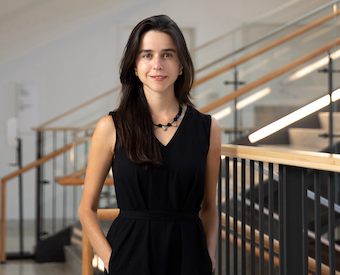
Deborah McGuinness is a Professor of Computer Science, Cognitive Science, and Industrial and Systems Engineering at Rensselaer Polytechnic Institute (RPI), holding the Tetherless World Senior Constellation Chair. She leads research in semantic web technologies, ontology engineering, explainable AI, and applications in health and environmental informatics. Her work emphasizes semantic technologies to enhance human-machine collaboration through knowledge representation and reasoning. Education: B.S./B.A. (Computer Science & Mathematics, Duke University, 1980), M.S. (Computer Science, UC Berkeley, 1981), Ph.D. (Knowledge Representation, Rutgers University, 1997). Research interests include: ontology creation/evolution, commonsense AI, machine learning fairness, clinical decision support systems, knowledge graphs for scientific data, and policy modeling. Recent work focuses on AI explainability, semantic data dictionaries for public health surveys, and leveraging knowledge graphs for personalized health recommendations. Her publications span semantic web standards, AI commonsense benchmarks, clinical informatics applications, and policy frameworks. Notable projects include the Explanation Ontology for user-centered AI and the CHEAR Data Repository for environmental health research. McGuinness has pioneered semantic technologies for data integration across diverse domains like nanomaterials science and stroke care policy analysis.
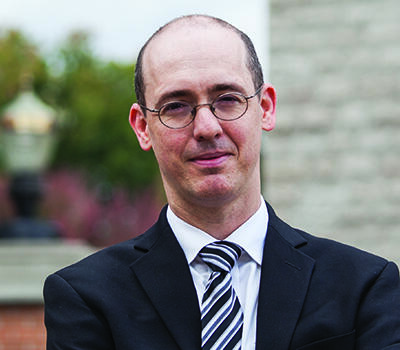
Timothy Menzies is a full Professor in the Department of Computer Science at North Carolina State University's College of Engineering. He serves as the director of the Irrational Research lab (mad scientists r'us) and holds editorial positions as editor-in-chief of the Automated Software Engineering journal and associate editor for IEEE Transactions on Software Engineering. With over 300 publications and more than 24,000 citations, Menzies is a globally recognized leader in software engineering research. Menzies' research focuses on developing computer systems that make optimal decisions with minimal data, specializing in artificial intelligence, intelligent agents, data sciences, analytics, and software engineering. His pioneering work in data-driven, explainable, and minimal AI for software systems has redefined defect prediction, effort estimation, and multi-objective optimization. He is particularly known for his contributions to empirical software engineering, emphasizing transparency and reproducibility. As the co-creator of the PROMISE repository, he helped establish modern empirical software engineering by demonstrating that small, interpretable AI models can outperform larger, more complex ones. Menzies' recent publications reveal several key trends in his research: a growing emphasis on ethical considerations in AI deployment, particularly in sensitive domains like legal systems; continued innovation in software analytics with a focus on hyperparameter optimization tailored specifically for software engineering tasks; exploration of causal relationships in software analytics; and development of techniques that work effectively with limited data, including landscape analysis, surrogate learning, and active learning approaches. Mining Software Repositories Foundational Contribution Award (2017) Carol Miller Graduate Lecturer Award (2016) IBM Faculty Award (2016, 2017) ACM Fellow (2025) ASE Fellow (2024) IEEE Fellow Professor Menzies has advised 24 Ph.D. students throughout his career, with recent completions including Andre Motta (April 2025) and Xueqi Yang (October 2024). His research has secured over $19 million in funding from prestigious agencies including NSF, DARPA, and NASA, as well as industry partners like Meta, Microsoft, and IBM. Current grants focus on improving machine learning model efficiency, adapting empirical software engineering methods to computational science, vulnerability detection, and software analytics at scale using transfer learning across 10,000+ GitHub projects. Menzies has developed innovative approaches to help developers navigate the challenges of AI implementation while maintaining ethical standards and practical effectiveness. As director of the Irrational Research lab, Menzies leads a team focused on creating AI tools that are not only intelligent but also fair, transparent, and trustworthy. The lab's work emphasizes practical applications of AI in software engineering while addressing the human factors involved in developer-AI collaboration. Current projects include developing methods for better fuzzing with L3harris, improving vulnerability detection through smart pruning techniques, and creating AI platforms for workforce empowerment through credential gap diagnostics.
Deborah L. McGuinness is the Tetherless World Senior Constellation Chair and Professor of Computer, Cognitive, and Web Sciences at Rensselaer Polytechnic Institute (RPI). She serves as founding director of the Web Science Research Center, focusing on next-generation ontology-enabled research infrastructure for interdisciplinary applications. Leaders in Semantic Web and AI research Bridging AI with eScience and healthcare Developer of semantic frameworks for data-intensive resource efforts Her research spans artificial intelligence, knowledge representation, clinical decision support systems, and ontology engineering. She investigates how semantic technologies can enhance AI explainability, data interoperability, and interdisciplinary science. Her recent publications highlight trends in AI explainability frameworks Knowledge graph construction Clinical decision support Commonsense reasoning benchmarks Health informatics Data harmonization Scientific awards include Fellow of the American Association for the Advancement of Science (AAAS) Robert Engelmore Award from the Association for the Advancement of Artificial Intelligence (AAAI) She leads large data-intensive research efforts and has contributed to projects involving blockchain integration with semantic web standards, FAIR data principles, and incentivized research data sharing mechanisms.
Maria De-Arteaga is an Assistant Professor at the Information, Risk and Operation Management Department within the McCombs School of Business at the University of Texas at Austin. She holds joint appointments as a core faculty member in the Machine Learning Laboratory and as a researcher for Good Systems. She earned her PhD in Machine Learning and Public Policy from Carnegie Mellon University. Her research focuses on algorithmic fairness, human-AI complementarity, and the societal impacts of machine learning. Key areas include characterizing how historical biases are reproduced in ML systems, developing bias mitigation techniques, and improving human-AI collaboration frameworks. Her work bridges technical ML methods with public policy considerations. Recent publications demonstrate trends in fair decision-making systems, including studies on label indeterminacy problems, expert consistency modeling, and toxicity detection. Her interdisciplinary work spans healthcare, social computing, and human-AI interaction. She advises multiple graduate students including Terry Neumann (IROM), Yunyi Li (IROM), and Soumyajit Gupta (CS), along with undergraduate student Riya Cyriac. Previously advised researchers include postdoc Jakob Schoeffer and undergraduate Jennifer Mickel.
Matthias Hagen is Professor of Databases and Information Systems at Friedrich-Schiller-Universität Jena. His research focuses on information retrieval (query understanding, conversational search, comparative questions, known-item search, user simulation), natural language processing (clickbait, argumentation), and web data mining. He earned his Ph.D. from Friedrich-Schiller-Universität Jena with a thesis on algorithmic complexity, and previously led research groups at Bauhaus-Universität Weimar and Martin-Luther-Universität Halle-Wittenberg. His current work develops novel methods for retrieval-augmented generation evaluation, neural information retrieval efficiency, and user-centered search systems. Recent publications examine crowdsourcing for RAG evaluation, LLM-based relevance assessment, corpus subsampling techniques, and child-friendly web search evaluation frameworks. He contributes to open web search initiatives and develops tools like the TIREx Tracker for experimental reproducibility in IR research. Dr. Hagen serves on program committees for major conferences including SIGIR, ECIR, and ACL. His research group participates in competitive evaluations such as TREC, CLEF, and Touché. Recent projects explore axiomatic approaches to retrieval, argumentation systems, and the impact of search result quality on decision-making.
Jiajia Sun is an Associate Professor of Geophysics in the Department of Earth and Atmospheric Sciences at the University of Houston. Her research focuses on advancing subsurface imaging, uncertainty quantification, and mineral exploration through interdisciplinary approaches combining geophysics, machine learning, and computer vision. Education : PhD in Geophysics (2015, Colorado School of Mines); BS in Geophysics (2008, China University of Geosciences, Wuhan). Research Interests : Jiajia specializes in deep learning for geophysical inversion, multi-physics data integration, and probabilistic geological modeling. Her work leverages computational resources like GPUs and clusters to solve inverse problems and tackle magnetic remanence challenges. Recent Publications : Her research includes applying Bayesian frameworks, deep generative models, and joint inversion algorithms to airborne geophysics for critical mineral mapping and hydrogen reservoir detection. She emphasizes open-source tools like SimPEG for reproducibility. Awards : J. Clarence Karcher Award (SEG) Advising & Collaborations : She mentors PhD students in geophysics and collaborates with institutions like Amazon’s Generative AI Innovation Center, Stanford University, and University College Dublin. Her team also tests drones and magnetometers at the UH Coastal Center.
Stephen Ramsey, an Associate Professor at Oregon State University, holds dual appointments in the School of Electrical Engineering and Computer Science (College of Engineering) and the Department of Biomedical Sciences (Carlson College of Veterinary Medicine). With a PhD in Physics from the University of Maryland, his postdoctoral training in computational genomics at the University of Washington, and professional experience at the Institute for Systems Biology and Center for Infectious Disease Research, Ramsey bridges computational methods with biomedical applications. Education : Ph.D., Physics, University of Maryland; M.S., Physics, University of Maryland; Sc.B., Mathematical Physics, Brown University Ramsey specializes in computational systems biology , focusing on bioinformatics , biomedical knowledge graphs , and precision medicine . His research integrates machine learning , gene regulatory network modeling , and multi-omics data analysis to address challenges in rare disease diagnostics , drug monitoring , and inflammatory disease mechanisms . Current work includes AI-driven biomedical translation and electrochemical biosensor development for non-invasive diagnostics . Recent publications highlight knowledge graph applications in translational biomedicine , causal network inference in clinical-environmental data integration , and cross-species cancer transcriptomics . His team develops tools like RTX-KG2 and PloverDB to standardize biomedical data sharing and semantic reasoning . Scientific Awards : 2019 Zoetis Award (Carlson College of Veterinary Medicine) 2016 NSF CAREER Award 2016 PhRMA New Investigator Award 2010 NIH K25 Mentored Quantitative Research Award Ramsey advises in computational biology courses (CS 446/546) and contributes to biomedical AI through projects like mediKanren for rare disease diagnostics . His NSF-funded research explores gene expression noise and regulatory network dynamics , while NIH and PhRMA grants support his translational medicine initiatives. He leads the Ramsey Laboratory , which develops graph-based reasoning tools for biomedical data translation and multi-omics integration . The lab's work spans comparative oncology models, electrochemical biosensors , and knowledge graph infrastructure for clinical decision support .
Daniel Braun is a Researcher at the Digital Society Institute , affiliated with Technical University of Munich . His work bridges Artificial Intelligence , Natural Language Processing , and LegalTech , focusing on automated legal assessment of contracts, ethical dimensions of AI, and consumer protection in the digital era. Education: Bachelor in Artificial Intelligence at Saarland University PhD in Automated Semantic Analysis, Legal Assessment, and Summarization of Standard Form Contracts at Technical University of Munich Master in Creating Textual Driver Feedback from Telemetric Data at University of Aberdeen Research Interests revolve around applying NLP to legal and engineering domains. Key areas include machine learning for contract analysis , ethical AI frameworks , and consumer protection through automated systems . His recent work explores adversarial attacks on text detectors, lexical alignment in chatbots, and robustness in generative AI detection. Publications (2024-2025) highlight advancements in German consumer contract analysis , disagreement handling in legal datasets , and regulatory debates around AI . Notable outputs include the AGB-DE corpus and studies on black-box neural text detectors . Technical Expertise spans data mining , process mining , and domain-specific NLP . He has contributed to smart contract analysis , conversational AI , and language models for engineering and legal contexts .
Pratik D Jagtap serves as a Research Assistant Professor in the Department of Biochemistry, Molecular Biology, and Biophysics at the University of Minnesota. He has been instrumental in managing the Galaxy-P project since its inception and currently holds the position of Research Professional 6 with focus areas in Metabolic and Systems Biology (TMED), Genetics, and Mechanisms of Cancer. Dr. Jagtap's research focuses on developing analytical workflows for complex data analysis, with particular emphasis on MS-based proteomics applications in metaproteomics, proteogenomics, and data-independent acquisition (DIA) data analysis. His work spans multiple interdisciplinary fields including bioinformatics, microbiome research, and cancer biology. The fingerprint analysis of his research shows strong expertise in Proteomics (100%), Metatranscriptomics (96%), Mass Spectrometry (80%), Galaxies (70%), Microbiome (52%), Proteogenomics (50%), and Bioinformatics (46%). His publication record shows consistent productivity with research outputs spanning from 1998 to 2025, with significant activity in recent years (6 publications in 2025, 6 in 2024, and 7 in 2023). His work demonstrates a clear trajectory toward increasingly sophisticated multi-omic analyses applied to complex biological systems, particularly focusing on host-microbiome interactions in disease contexts. Dr. Jagtap has received recognition as Chair of the Proteomics Research Group at the Association of Biomolecular Research Facilities from August 2018 to July 2020, highlighting his standing in the proteomics community. His current research portfolio includes multiple active projects funded by NIH, National Jewish Health, and the American Society for Microbiology, with several projects extending through 2025 and beyond, including an NIH-funded project on deep metaproteomic characterization of microbial contributors to tumorigenesis running through 2028. He collaborates extensively with researchers like Timothy J. Griffin and others across various institutions. Dr. Jagtap's work contributes to UN Sustainable Development Goals, particularly in areas related to health and well-being, reflecting the broader impact of his research on global challenges.
Theresia Ziegs is a Research Associate at the Tübingen Center for Digital Education (TüCeDE) and serves as the link to the AI Makerspace , an extracurricular learning center for innovative technologies. She focuses on developing AI-supported methods for adaptive teaching within the MINT-ProNeD project and coordinates courses on robotics and AI for students, alongside designing teacher training programs in these fields. Education : Dr. rer. nat. in Neuroscience (2017–2023), Max Planck Institute for Biological Cybernetics, Tübingen M.Sc. in 2016, University of Rostock B.Sc. in Physics (2011–2014), University of Rostock Her research centers on neuroscience , particularly using 1H/13C FID-MRSI at ultra-high magnetic fields (9.4T) to study brain metabolism, including glutamate and glucose dynamics . Her work emphasizes methodological optimization for improved reproducibility and spatial resolution in metabolic imaging. Her publications highlight expertise in metabolic mapping , signal processing , and machine learning-enhanced imaging techniques , with applications in human brain metabolism and neuroimaging . She has received the ISMRM Magna Cum Laude Merit Award (2022) for her contributions. Scientific Awards : ISMRM Magna Cum Laude Merit Award (2022) Theresia actively collaborates on AI integration in education and teacher training , bridging advanced neuroimaging research with pedagogical innovation at the University of Tübingen.
Christian Heine is a researcher at the Institute of Computer Science , University of Leipzig. His work focuses on advanced data visualization techniques, particularly those grounded in topological and geometric analysis of scalar fields, ensemble data, and high-dimensional datasets. Key Research Areas: Topological visualization, scalar field analysis, medical imaging, and uncertainty quantification. Methodologies: Bayesian inference, fiber trajectories, volume rendering, and dynamic workflows. Applications: Meteorological data analysis, medical diagnostics, and interactive visualization systems. He has published extensively on these topics, with recent work addressing spatio-temporal trends in climate data and noise-robust visualization techniques. His research often integrates interdisciplinary approaches, bridging computer science and applied sciences.
Hari Arthanari is an Associate Professor in the Department of Biological Chemistry and Molecular Pharmacology at Harvard Medical School . His research focuses on protein-protein interactions and transcriptional Regulation in disease contexts, utilizing NMR spectroscopy , biophysical assays , and cell-based models . He operates the Arthanari Laboratory at Dana-Farber Cancer Institute, with a lab size of 5-10 members. Develops novel NMR methods for fragment screening and metabolite analysis Investigates transcriptional condensates and translation machinery dysregulation in cancer Applies integrative structural biology to therapeutic target discovery Research trends in his publications highlight therapeutic targeting of protein interactions across diverse diseases including cancer and viral infections . His work spans method development for NMR experiments, metabolomics marker identification , and structural characterization of both viral and human proteins. Articles frequently employ techniques like fluorine NMR , 15N TROSY experiments , and computational screening for drug candidate discovery. Scientific awards or formal recognition were not explicitly mentioned in the provided texts. His lab's publications emphasize collaborative multi-institute research and open-source drug discovery platforms , though no specific student advising or grant details were extracted. The Arthanari Lab (website: artlab.dana-farber.org) maintains focus on structural and functional characterization of proteins involved in disease mechanisms, particularly through NMR-derived metabolomics data and protein-ligand interaction identification .
Matthew Lease is a Professor at the School of Information, University of Texas at Austin, where he serves as Director of Doctoral Studies and Assistant Graduate Advisor. He is a Distinguished Member of the Association for Computing Machinery (ACM), a Senior Member of the Association for the Advancement of Artificial Intelligence (AAAI), and an Amazon Scholar. Lease co-directs the $20M NSF-Simons AI Institute for Cosmic Origins (CosmicAI) and is a faculty founder and leader of UT's Good Systems, an eight-year, $20M university-wide Grand Challenge aimed at designing responsible AI technologies. In 2023-2024, he was invited four times to address the Texas Legislature on responsible AI. Ph.D. Computer Science, Brown University, 2010 M.Sc. Computer Science, Brown University, 2004 B.Sc. Computer Science, University of Washington, 1999 Lease directs the UT Austin Laboratory for Artificial Intelligence and Human-Centered Computing (AI&HCC), where his research spans artificial intelligence modeling and human-computer interaction design. His work focuses on creating novel datasets, building AI models, and evaluating both model performance and their impact on end-users. When automated AI falls short, his team designs human-in-the-loop approaches, leveraging AI model explanations and creative user interfaces. To promote fair AI, they focus on better annotation techniques to avoid bias and develop modeling strategies to mitigate dataset biases. Their work tackles real-world problems as part of UT Austin's Good Systems Grand Challenge, with an ongoing emphasis on content moderation—exploring automated, human-in-the-loop, and human-safe practices to combat disinformation, hate speech, and online polarization. Lease's recent publications (2021-2024) demonstrate a strong focus on human-centered AI, particularly in the areas of fair and explainable AI, content moderation, fact-checking, and crowdsourcing. His research integrates technical AI development with human factors considerations, emphasizing the importance of designing AI systems that work effectively with human users. The publications reveal a consistent theme of addressing bias in AI systems, improving human-AI collaboration, and developing methods to ensure the ethical deployment of AI technologies in sensitive domains like content moderation and misinformation detection. His work shows progression from foundational techniques in crowdsourcing and human computation toward more sophisticated approaches that consider psychological impacts and ethical implications. 2024 Test of Time Paper Award, AAAI Conference on Human Computation and Crowdsourcing (HCOMP) 2024 Most Influential Paper Award, IEEE/ACM International Conference on Automated Software Engineering (ASE) 2024 Best Paper Honorable Mention, ACM Conference on Computer Supported Cooperative Work (CSCW) 2022 Best Student Paper, Conference on Information Systems and Technology (CIST) 2020 Conference Award Track, Journal of Artificial Intelligence Research (JAIR) 2019 Best Student Paper, European Conference for Information Retrieval (ECIR) Early Career awards from DARPA, NSF, and IMLS Lease has secured significant funding for his research, including the $20M NSF-Simons AI Institute for Cosmic Origins and the $20M Good Systems Grand Challenge. His lab, AI&HCC, has developed numerous tools and methodologies for human-AI collaboration, particularly in the context of content moderation and fact-checking. He has advised numerous students who have gone on to publish in top-tier conferences and journals in AI, HCI, and NLP. Lease actively collaborates with industry partners including Amazon, where he serves as an Amazon Scholar, and has served on advisory boards for JASIS&T, Texas Advanced Computing Center (TACC), and UT Austin-Amazon Science Hub. His research has led to practical tools like SQUARE for aggregating crowd responses and methods for transparent AI evaluation. Lease leads the UT Austin Laboratory for Artificial Intelligence and Human-Centered Computing (AI&HCC), which has developed innovative approaches to human-AI collaboration. The lab's work on content moderation addresses critical challenges in online safety, including the psychological well-being of content moderators who face traumatic material. Their research on fair and explainable AI has produced methods for detecting toxic speech while maintaining accuracy across demographic groups. The lab actively collaborates with fact-checking organizations through co-design processes to create tools that meet real-world needs. As part of UT Austin's Good Systems initiative, the lab is developing AI technologies that prioritize human values and social responsibility from the outset of the design process.
Dr. Stephanie Hicks is an Associate Professor in Biomedical Engineering and Biostatistics at Johns Hopkins University, with affiliations in multiple centers including the Malone Center for Engineering in Healthcare and the Center for Computational Biology. Her research focuses on developing computational methods and open-source software for analyzing single-cell and spatial transcriptomics data to enhance understanding of human health and disease. She holds a PhD from Rice University and completed postdoctoral training at Dana-Farber Cancer Institute and Harvard. Education: B.S. Mathematics (LSU), M.A./Ph.D. Statistics (Rice University), Postdoc in Biostatistics/Data Science (Dana-Farber/Harvard). Research interests span scalable computational methods, machine learning, and biomedical data science. Notable contributions include tools like SpotSweeper for spatial transcriptomics quality control and the spatialLIBD package for spatial data visualization. Awards include Fellow of the American Statistical Association, COPSS Emerging Leader Award, and Myrto Lefkopoulou Lectureship. She co-hosts the Corresponding Author podcast and actively promotes open science through initiatives like R-Ladies Baltimore. Labs/Teams: Leads the Hicks Lab, collaborates across departments at Johns Hopkins, and engages in interdisciplinary projects in spatial genomics and computational biology.
Simon Kasif is a Professor of Biomedical Engineering at Boston University. He co-founded the Center for Advanced Genomic Technology (CAGT), COMBREX (Computational Bridges to Experiments), and is a member of the I2B2 Center. His work spans computational biology, systems biology, and AI applications in healthcare. He contributed to the Human Genome Project, co-developed tools like Glimmer and Mummer, and pioneered probabilistic networks for gene function prediction. Education: M.S. & Ph.D., Computer Science, University of Maryland B.Sc., Mathematics, Tel Aviv University Research Interests: Dr. Kasif focuses on integrating computational methods with biological data to understand disease mechanisms, particularly diabetes and cancer. His work emphasizes AI ethics, network biology, and translational research. He has developed methodologies for protein interaction networks, genomic data analysis, and systems biology modeling. Key Contributions: Co-developed Glimmer, a widely used gene prediction tool Pioneered functional linkage networks for gene function prediction Advocated Bayesian networks in computational biology Investigated disease network signatures, including diabetes and Alzheimer’s Lead projects on AI safety, SARS-CoV-2 interaction mapping, and metabolic pathway analysis Grants & Collaborations: Active in interdisciplinary projects, including the COMBREX initiative for protein function annotation and I2B2’s clinical data integration. His work bridges computational methods with clinical applications, fostering open science and reproducible research practices. Labs & Teams: Directs research at CAGT and I2B2, collaborating across institutions to advance genomic technologies and systems biology approaches.