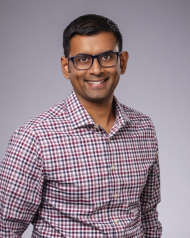
Tim Althoff is an Associate Professor at the Paul G. Allen School of Computer Science & Engineering, University of Washington, specializing in Artificial Intelligence and Human-Centered Computing. His research focuses on behavioral data science, combining Data Science Natural Language Processing Social Computing Human-Centered AI Ethics & Fairness to extract insights about health and well-being. Recent publications highlight advancements in: Mental health support through AI Wearable sensor health monitoring Online community analysis Reproducibility in data science Public health interventions with notable papers in ACL, Nature Machine Intelligence, and NeurIPS. Scientific recognition includes: ACL 2023 Outstanding Paper Award WWW 2021 Best Paper Award Double ICWSM 2021 Best Paper Awards SIGKDD Dissertation Award 2019 Fulbright Scholarship German National Merit Foundation Actively mentoring postdoctoral researchers and seeking PhD students in areas like neural representation learning, NLP applications to psychology, and mobile health technologies through his Behavioral Data Science Group .
Charles Rahal is an Associate Professor in Data Science and Informatics at the University of Oxford, with additional affiliations as an Associate Member of Nuffield College and Researcher at the Gradel Institute, New College. He serves as a Co-Investigator at the ESRC Centre for Care and sits on the Steering Group of Reproducible Research Oxford. His academic career includes previous roles as a Senior Departmental Research Lecturer at the Leverhulme Centre for Demographic Science and a British Academy Postdoctoral Fellow. Dr. Rahal completed his PhD in 2016 and has established himself as a prominent social science methodologist and applied social data scientist with expertise in high-dimensional econometrics. His research spans multiple domains, focusing particularly on unique Big Data origination processes and their relationship to social inequality, mobility, and stratification. He is deeply engaged in machine learning methods, civic technology, spatial and time series econometrics, model uncertainty, and scientometrics. His recent publications reveal a strong trend toward computational social science, with significant contributions to understanding prediction limits, pandemic impacts, healthcare systems, and environmental sustainability. The articles demonstrate his interdisciplinary approach, bridging traditional social science with cutting-edge computational methods, particularly in the analysis of large-scale datasets and development of novel metrics like the InterModel Vigorish for model comparison. Dr. Rahal is actively involved in teaching and mentoring, co-convening courses in Demographic Analysis, Life Course Research, and the Oxford Partner site of the Summer Institute in Computational Social Sciences. He has developed workshops on machine learning, command line interfaces, and LaTeX, reflecting his commitment to methodological training in social science. He leads the Metrics and Models lab and maintains several open-source projects including the GWAS Diversity Monitor and RobustiPy. His editorial roles include Associate Editor-in-Chief at the Journal of Social Computing and Associate Editor at ACM Transactions on Social Computing, highlighting his influence in shaping computational social science methodology.
Arvind Narayanan is a Professor of Computer Science at Princeton University and Director of the Center for Information Technology Policy (CITP). His research focuses on the societal impact of digital technologies, particularly artificial intelligence, with emphasis on policy implications, fairness, and privacy. He leads interdisciplinary efforts connecting technical research with real-world policy challenges. Dr. Narayanan earned his Ph.D. from the University of Texas, Austin in 2009. His academic journey has established him as a leading voice in the critical examination of AI systems and their societal consequences. Narayanan's research spans multiple domains where technology intersects with society. His work on AI includes critical analysis of AI capabilities versus marketing claims (AI Snake Oil), fairness in machine learning systems, and the reproducibility crisis in ML-based science. In privacy research, he led the Princeton Web Transparency and Accountability Project which uncovered how companies track users online, developing the OpenWPM tool used in over 100 studies. His early work demonstrated fundamental limits of de-identification techniques and how machine learning reflects cultural stereotypes. His recent publications reveal a consistent focus on demystifying AI capabilities while identifying genuine opportunities and risks. Narayanan's work bridges technical computer science with policy relevance, emphasizing the importance of evidence-based approaches to AI governance. His research increasingly addresses the limitations of prediction systems, the challenges of evaluating AI systems, and the need for transparency in foundation models. Presidential Early Career Award for Scientists and Engineers (PECASE) Privacy Enhancing Technologies Award (twice recipient) Privacy Papers for Policy Makers Award (three-time recipient) TIME's inaugural list of 100 most influential people in AI 2025 Graduate Mentoring Award Narayanan is recognized as an exceptional mentor, receiving Princeton's Graduate Mentoring Award in 2025. His policy engagement extends to congressional testimony, advisory roles, and frequent media commentary. He has secured significant research funding supporting his work on web transparency, AI policy, and cryptocurrency analysis. His research group has produced influential tools like OpenWPM for web privacy studies and contributed to foundational textbooks on cryptocurrencies and fairness in machine learning. At Princeton, Narayanan leads the Web Transparency and Accountability Project, a major research initiative that has conducted large-scale measurements of online tracking across millions of websites. He also co-founded and directs the CITP's AI Policy Initiative, which brings together researchers from multiple disciplines to address pressing AI governance questions. His work frequently involves collaboration with social scientists, legal scholars, and policymakers to develop practical solutions to technology governance challenges.
Jan G. Voelkel is an Assistant Professor at the Jeb E. Brooks School of Public Policy and the Department of Sociology at Cornell University. His research explores how micro-level preferences for equality and unity translate into macro-level political decisions, focusing on democratic attitudes, partisan dynamics, and moral framing. Ph.D. and M.A. in Sociology, Stanford University M.S. in Social and Behavioral Sciences, Tilburg University B.S. in Social Sciences, University of Cologne Voelkel’s work spans political psychology, metascience, and social policy, with a focus on interventions to reduce anti-democratic attitudes, partisan animosity, and gender bias in political leadership. His recent articles emphasize large-scale collaborations, reproducibility, and cross-partisan empathy. Scientific awards include: New Investigator Award (Behavioral Science & Policy Association) Public Sociology Award (American Sociological Association) Open Science Innovator Award (Stanford) Centennial Teaching Assistant Award (Stanford)
Professor Dinusha Mendis is a leading academic in Intellectual Property and Innovation Law at Bournemouth University, where she serves as Director of the Centre for Intellectual Property Policy and Management (CIPPM). Her expertise bridges copyright law with emerging technologies like 3D printing, AI, blockchain, and the Metaverse, informed by extensive research and consultation with entities such as the European Parliament, UKIPO, and corporations like HP and Chanel. She holds a PhD from Edinburgh University and has authored seminal works on the intersection of technology and IP. BSc in Law from Aberdeen University LLM and PhD from Edinburgh University Called to the Bar of England and Wales Her research focuses on copyright challenges in immersive environments , AI-generated content regulation , and blockchain/NFTs . She led major studies for the European Commission and UKIPO , including the first peer-reviewed work on 3D printing and IP. Her 2019 co-edited book with Stanford and QUT scholars established foundational frameworks for additive manufacturing legal analysis. Recent publications highlight AI copyright disputes (2024 The Conversation ), NFT legal ambiguities (2022), and pandemic-era 3D printing (2020). Trends show increasing emphasis on decentralized IP systems and machine learning's impact on creative industries . Scientific Awards & Grants JSPS Visiting Professorship (2023) Daiwa Anglo-Japanese Foundation Grant (2024) EU Commission Research Funding (2020) AHRC Grant for 3D Jewellery Study (2017) As a PhD supervisor, she mentors researchers on AI copyright (Benjamin White), crypto-art (Bahar Dagli), and music creation law (Elizabeth Bailey). She contributes to global IP policy through the World Economic Forum's Metaverse Governance Team and EU IPR Enforcement Projects .
Gavan J. Fitzsimons is the Edward S. & Rose K. Donnell Distinguished Professor of Marketing and Psychology at Duke University's Fuqua School of Business , with a secondary appointment in the Department of Psychology & Neuroscience. He is a Faculty Network Member of the Duke Institute for Brain Sciences . His research bridges consumer psychology, behavioral decision-making, and social cognition, focusing on nonconscious influences on consumption patterns. Education: Ph.D., Columbia University (1995) Key research themes include subconscious consumer behavior , brand relationships , health-related consumption , and social dynamics in purchasing decisions . Recent work examines financial stress effects on purchase satisfaction, secret consumer behaviors in relationships, and pandemic-related decision-making. Notable trends in his 2023-2025 publications involve Marketing's subconscious influence (2025: Quality-Quantity Tradeoffs) Brand teasing as relationship-building (2025: Humor in Branding) Financial constraint effects on consumer happiness (2024: Opportunity Cost Analysis) Crisis behavior during pandemics (2024: Prosociality Across 39 Countries) Health behavior spillovers in families (2024: Parental Food Choices) Scientific Contributions include Foundational work on nonconscious consumer psychology (2008 JCP editorial) Methodological innovations in moderated regression analysis (2013 JMR ) Behavioral economics of brand sincerity effects (2015 JCR )
Vivek Srikumar is an Associate Professor in the Kahlert School of Computing at the University of Utah, co-leading the Utah NLP group and affiliated with the Utah Center for Data Science. His research focuses on Machine Learning and Natural Language Processing, particularly in structured prediction, bias mitigation, and healthcare NLP applications. He teaches Machine Learning (CS 6350/DS 4350) and has been supported by NSF, NIH, and corporate grants from Intel, Google, and others. Education: Ph.D. in Computer Science, University of Illinois at Urbana-Champaign (2013) Postdoctoral Researcher at Stanford University's NLP Group (2013-2014) Visiting Researcher at Allen Institute for Artificial Intelligence (2022 sabbatical) Research Interests: Srikumar explores text understanding, structured learning, and robust AI systems. His work addresses challenges in table-based reasoning, adversarial robustness, and ethical AI. He develops methods to ensure models use appropriate evidence and mitigate biases in representations. Grants & Collaborations: Supported by NSF, NIH, BSF, and industry partnerships with Intel, Google, Verisk, Bloomberg, and Nvidia. Notable projects include table QA systems (TempTabQA), bias mitigation (OSCaR/VERB), and crisis counseling NLP tools (ClientBot). Advising: Supervised over 30 students, including 15+ Ph.D./M.S. alumni now in academia and industry (e.g., Google, Amazon, Microsoft). Current advisees focus on multimodal reasoning, healthcare NLP, and AI ethics. Labs/Teams: Utah NLP Group and Utah Center for Data Science. Active in reproducibility efforts (LogFlux) and open-source tools (CogCompNLP/Pylon frameworks).
Jacob Krüger is an Assistant Professor at Eindhoven University of Technology , specializing in the development and evolution of variant-rich software systems. He holds a PhD from Otto-von-Guericke University Magdeburg (2021) and has held academic and research positions at institutions including Ruhr-University Bochum, Chalmers University of Technology, and the University of Toronto. His research focuses on the interplay between human cognition and software quality, particularly in complex systems requiring frequent adaptation. Education: PhD in Computer Science, Otto-von-Guericke University Magdeburg (2021) MSc Business Informatics, Otto-von-Guericke University Magdeburg (2016) Research Interests: Variant-Rich Systems Program Comprehension Software Product Lines Human Factors in Software Engineering Architecture Smells and Quality Assurance Articles Trends: Recent work emphasizes fork ecosystem visualization (VisFork tool), the impact of AI on scientific practices, and crisis-driven software development (e.g., Corona-Warn-App). Key themes include empirical studies, tool development, and industry collaboration. Awards: Best Dissertation Award (2022) Frank Anger Memorial Award (2019) Multiple conference best-paper and review awards Advising & Grants: Supervises 12+ PhD students across multiple institutions. Active in funding projects like INKleSS (German Research Foundation) and FOSD Meeting 2024 (NWO). Leads collaborations with ASML, Danfoss, and Axis AB. Labs/Teams: Member of the Software Engineering and Technology (SET) group at TU Eindhoven, focusing on industrial-strength software systems and cognitive aspects of development.
Dr. John Hastings is a Professor in the Department of Computer Science at Dakota State University, part of the Beacom College of Computer & Cyber Sciences. With nearly 35 years of experience, he specializes in teaching and curriculum development in computer science, combining academic rigor with industry insights from his roles as an AI/ML engineer, team leader, and business owner. Education: Ph.D., Computer Science, University of Wyoming M.S., Computer Science, University of Wyoming B.S., Computer Science, University of Wyoming Research interests include machine learning, AI applications in natural language processing (LLMs), generative AI, computer vision, ecological/environmental AI, AI in games, and gamification in education. Recent publications focus on cybersecurity challenges, AI ethics, and insider threat detection. His work has been recognized with awards such as the AAAI’s Innovative Applications of Artificial Intelligence (IAAI) Award and an International IPM Award for Excellence related to the CARMA AI tool. Teaching emphasizes active learning and practical skills, including courses on programming, data structures, AI, and cybersecurity. He advocates for gamification in education to enhance student engagement and success.
Michael C. Hughes ("Mike") is an Assistant Professor in the Department of Computer Science at Tufts University's School of Engineering, where he develops statistical machine learning methods for healthcare applications. His work focuses on building predictive models that extract actionable insights from complex clinical data, including electronic health records and medical imaging. PhD, Computer Science, Brown University (2016) MS, Computer Science, Brown University (2012) BS, Computer Science, Franklin W. Olin College of Engineering (2010) Research interests center on: Bayesian hierarchical models for documents, sequences, and medical images Optimization algorithms for approximate inference Model fairness and interpretability in clinical contexts Semi-supervised learning for medical diagnostics Recent publications demonstrate these capabilities through applications in cardiovascular disease diagnosis, opioid overdose forecasting, and ICU risk prediction. His lab emphasizes reproducibility through open datasets like TMED-2 and open-source tools like BNPy. Grants include NIH R01 funding for heart valve disease detection, NSF CAREER support for model interpretability, and NSF GCR funding for educational uncertainty research. Scientific awards include: NIH R01 Award (PI) for heart valve disease detection (2025) NSF CAREER Award (2024) NSF GCR Grant (2024) Best Poster Award at Time Series Workshop (ICML 2021) Top 10% Reviewer Awards at AISTATS (2023, 2022) Teaching activities include courses on Bayesian Deep Learning, Introduction to Machine Learning, and Statistical Pattern Recognition. He previously served as postdoctoral fellow at Harvard SEAS.
Thierry Warin is a Full Professor of Data Science for International Business at HEC Montréal, directing the Department of International Business. He holds the Professorship in Data Science for International Business and is a Principal Investigator at CIRANO, leading the World Economy theme. His roles include affiliations with Harvard Business School’s Microeconomics of Competitiveness program and the International Trade and Finance Association presidency (2020-2022). Education: PhD from ESSEC Business School (France, 2000). Professional development includes the Harvard Business Analytics Program (2018-2020) and GIS training at Harvard. Research Interests: Data science applications in global economic transformations, including network theory, natural language processing, and computational methods. Focus areas: algorithmic collusion, platform economies, and metadata-driven analyses. He develops open-source tools like the statcanR package and advocates for reproducible research. Articles Trends: Recent work explores AI regulation, algorithmic competition, climate transition plans, and central bank speech analysis. Methodologies span structural topic modeling, social media analytics, and entropy-based frameworks. Awards: Honored with the Highly Commended Paper Award (2017-2018) and Emerald Literati Award (2018) for reverse innovation research. Recognized for contributions to computational social science and regulatory frameworks. Advising & Grants: Supervised 16 master’s projects since 2019, focusing on data science applications in global business challenges. Active in interdisciplinary initiatives like the St. Lawrence–Great Lakes corridor data hub. Labs & Philanthropy: Founded quantum simulations and leads Ed’Haîti , an NGO addressing education in Haiti. Collaborates on Science des données au féminin en Afrique , empowering 200 African women with data science skills.
Joel Greenhouse is a Professor of Statistics at Carnegie Mellon University (CMU), affiliated with the Department of Statistics & Data Science. He has been on the faculty since 1983 and held leadership roles, including serving as Associate Dean of the College of Humanities and Social Sciences from 1997 to 2002. He also holds an adjunct appointment as Professor of Epidemiology and Psychiatry at the University of Pittsburgh. His expertise spans statistical methodology, clinical trial design, and meta-analysis, with a focus on integrating data from multiple sources to address complex healthcare and public health challenges. Greenhouse earned his Ph.D. in Biostatistics from the University of Michigan and completed a postdoctoral fellowship at CMU. His research emphasizes developing statistical tools for observational studies, clinical trials, and meta-analytic frameworks, particularly in neurology, mental health, and public policy contexts. Notable contributions include analyzing the impact of media on youth suicide rates, improving aphasia classification through automated speech analysis, and evaluating highway safety through driver health data. Education: Ph.D. in Biostatistics, University of Michigan Affiliations: Adjunct Professor at University of Pittsburgh, Member of National Academy of Sciences’ committees Professional Service: Data and safety monitoring boards for NIH/VA studies, co-chair of Federal Motor Carrier Safety Administration review panels His awards include CMU’s Doherty Award for Education, Ryan Teaching Award, and E. Dunlop Smith Award for teaching excellence. His work bridges theoretical statistics with real-world applications, particularly in interdisciplinary collaborations across medicine, psychology, and public policy. Greenhouse’s recent articles highlight trends in leveraging large datasets for clinical insights (e.g., aphasiaBank), re-evaluating environmental and behavioral health associations, and advancing causal inference methods. His interdisciplinary approach ensures statistical rigor addresses societal challenges, from suicide prevention to highway safety.
Dr. Radu Jianu is a Lecturer in the Department of Computer Science at City, University of London , where he has been a faculty member since 2016. He is affiliated with the giCentre , a leading research group in information visualization. He earned his PhD and MSc in Computer Science from Brown University, USA, and a Diploma in Engineering from the Polytechnic University of Timisoara, Romania. His academic career includes a previous role as Assistant Professor at Florida International University (2012–2016). His research focuses on Data Visualisation, Visual Analytics, and Human-Computer Interaction . He conducts interdisciplinary collaborations with domains such as biology, food policy, and energy decarbonisation, aiming to develop interactive visual tools that enhance data understanding and decision-making. His methodological approach includes user studies, eye-tracking, and the design of novel visualization techniques. Dr. Jianu teaches Programming in Java and Cognition and Technologies , and he coordinates the Programming Bootcamp. He also holds administrative responsibilities as the Progression and Support Director in the Computer Science Department and is a member of its Executive Committee (ExCo). His recent publications reflect a growing interest in LLM-assisted visual analytics, gaze-aware systems, and collaborative human-AI analytical frameworks . He has published in top venues such as IEEE TVCG, CHI, EuroVis, and Nature Immunology, with several best paper awards. His work on the RAMPVIS project highlights his contributions to visualization in public health emergencies. Scientific Awards: Best Paper Award, Symposium on Graph Drawing (2018) Best Short Paper Award, EuroVis (2020) Advising and Grants: Dr. Jianu supervises multiple PhD and MSc students, including Dany Laksono (Energy Decarbonisation) and Maeve Hutchinson (NLP-mediated Visualization). His students have co-authored high-impact, award-winning papers. He has been involved in funded research initiatives such as RAMPVIS, which received support from UKRI/EPSRC for developing visual analytics infrastructure during the COVID-19 pandemic. Labs and Teams: He is an active member of the giCentre at City, University of London, a hub for visualization research. He also collaborates with interdisciplinary teams in epidemiology, immunology, and computer science, contributing to large-scale projects like the Immunological Genome Project and RAMPVIS.
Etienne Ollion is a Professor of Sociology at École Polytechnique and a Research Director at the Centre national de la recherche scientifique (CNRS). He maintains dual appointments that position him at the intersection of traditional political sociology and emerging computational methods. His academic work spans both French and international institutions, with teaching invitations at ENS-Paris, Berkeley, University of Chicago, Sciences Po Paris, and other leading universities worldwide. His research program focuses on two interconnected domains: the sociology of politics and power, and computational social sciences. Ollion's work examines political professionalization, parliamentary dynamics, and the transformation of political fields, particularly through his ethnographic study of the 2017 French National Assembly documented in his book The Candidates: Amateurs and Professionals in Politics (Oxford University Press, 2024). Simultaneously, he pioneers methodological innovations applying machine learning and natural language processing to social science research. Ollion's recent publications reveal a trajectory increasingly focused on the intersection of AI and social science methodology, with numerous 2024-2025 publications addressing LLM applications, text annotation, and the ethical considerations of proprietary AI systems in research. His work demonstrates how computational methods can enhance traditional social science approaches while maintaining critical awareness of technological limitations. As an academic leader, Ollion directs the Computational Social Sciences initiative at the IPP and has developed educational resources including online courses and the aweSOM software for data analysis. He regularly organizes summer schools (SICSS-Paris) and workshops to disseminate computational methods across the social sciences. Ollion serves on the editorial board of Actes de la recherche en sciences sociales and maintains an active public presence through media appearances, including a notable interview on France Inter about AI and Social Sciences in September 2024. His upcoming book talk at The Seminary Co-op in Chicago on March 7, 2025 further demonstrates his active engagement with the international academic community.
Natalia Villanueva-Rosales is an Associate Professor in the Department of Computer Science at The University of Texas at El Paso (UTEP). As Co-Principal Investigator at the NSF-funded Cyber-ShARE Center of Excellence, she leads the iLink Research Group focusing on semantic technologies and smart city initiatives. Ph.D. in Computer Science, Carleton University (2011) M.Sc. in Artificial Intelligence, University of Edinburgh (2005) B.Sc. in Computer Science & Statistics, Universidad Panamericana & CINVESTAV-IPN (2002) Her research bridges Semantic Web technologies with Smart Cities applications, particularly in Water Sustainability and Senior Mobility . Key projects include ontology-based frameworks for freight performance data integration and community-driven smart mobility solutions. Recent publications demonstrate her interdisciplinary approach across Environmental Informatics (2022-2025) and Urban Mobility (2019-2022). She holds editorial and leadership roles in semantic science initiatives while actively mentoring through the ACM-W WICS student group. 2019 HEENAC Education Award 2019 NCWIT Undergraduate Research Mentoring Award Her NSF grants include IRES-1658733 for US-Mexico Smart Cities collaboration and OAC-1835897 for the SWIM water sustainability project. The iLink Research Group under her leadership develops ontological frameworks for cross-domain data integration and trust establishment in collaborative environments.