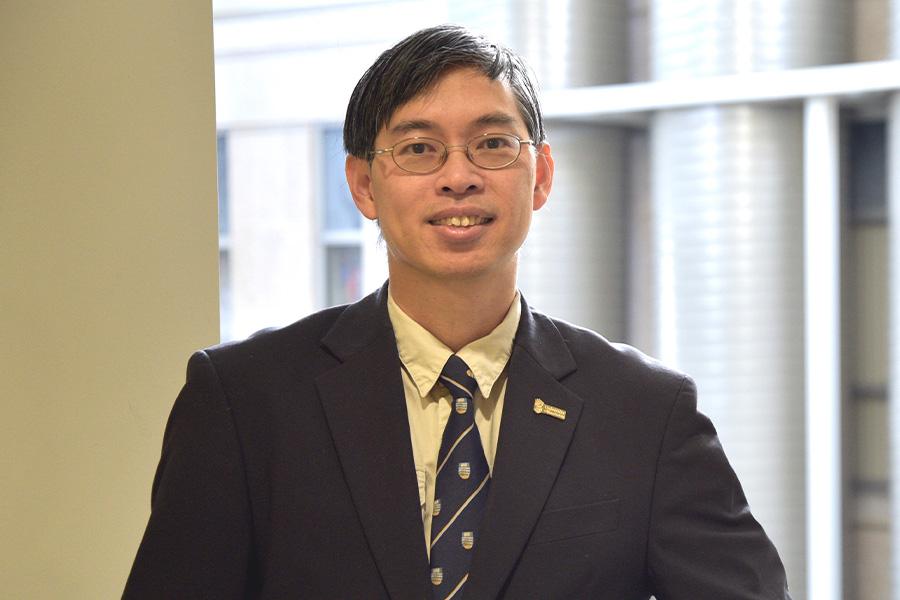
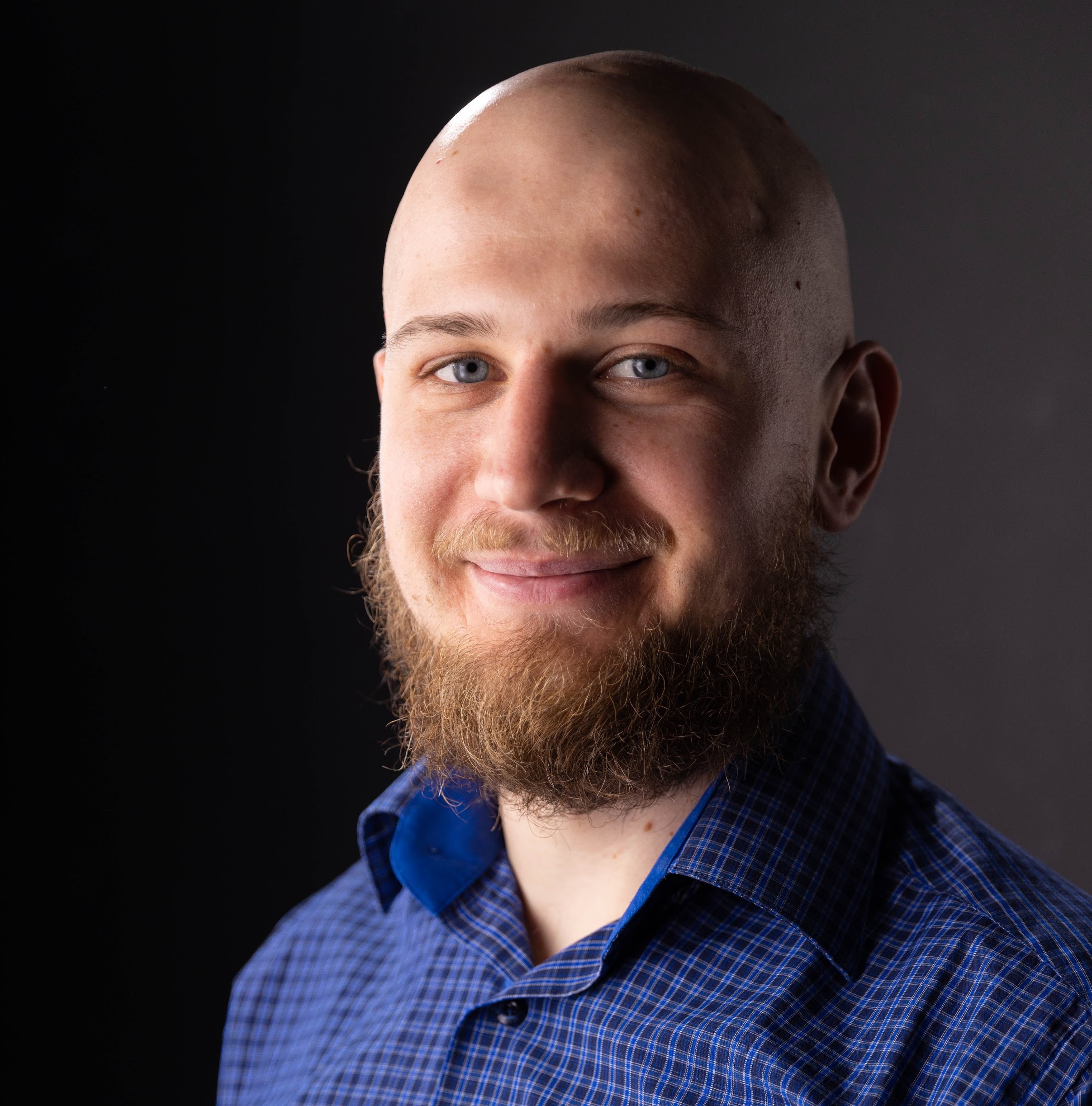
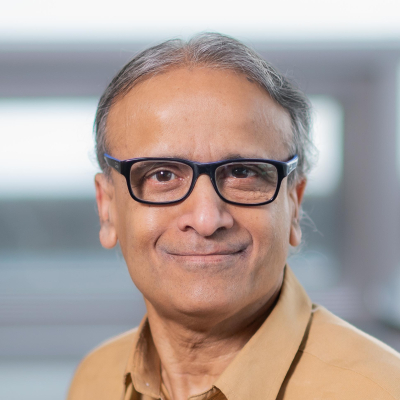
Romain Raveaux is an Associate Professor at the LIFAT Computer Science Laboratory, University of Tours, affiliated with Polytech Tours. His research focuses on Image Analysis, Machine Learning, Structural Pattern Recognition, Graph Matching, Graph Neural Networks, Discrete Optimization, Reinforcement Learning, and Transfer Learning . Email: romain.raveaux@gmail.com , romain.raveaux@laposte.net Address: 64 av. Jean Portalis, Tours, France, 37200 Phone: +33 (0)2 47 36 14 27 Research Interests Graph Matching and Neural Networks Discrete Optimization for Pattern Recognition Transfer Learning in Graph-Based Models Historical Document Analysis Scientific Trends His recent work bridges Graph Neural Networks with Mixed-Integer Programming , focusing on Image Semantic Segmentation and Graph Cycle Detection . Earlier studies emphasize Genetic Algorithms for graph classification and Graph Edit Distance optimization in pattern recognition.
Antonio Rago is a Researcher in the Department of Computing at Imperial College London. He specializes in Explainable Artificial Intelligence (XAI) with a focus on computational argumentation frameworks and their integration with data-driven AI systems. His work bridges symbolic AI and machine learning to enhance transparency and societal benefit in AI applications. Education: PhD in Computing (2019) from Imperial College London, supervised by Prof. Francesca Toni and Dr. Marco Aurisicchio, with an MEng in Automotive Engineering from Loughborough University (2012). Research: Explores explainable AI through argumentation semantics, counterfactual reasoning, and hybrid symbolic-statistical methods. Application domains include e-learning, Formula One race strategy, healthcare, and mechanical engineering. Workshops: Organizer of international workshops like Arg&App 2025 and ArgXAI-25, and co-organizer of previous events at KR, ECAI, and COMMA conferences. Publications: Active in top AI venues (KR, IJCAI, AAAI, AAMAS) with over 25 publications since 2016, emphasizing argumentation-based explanations and robust AI systems. Industry Experience: Former Race Strategy Engineer at Mercedes AMG Petronas F1 Team (2012-2014) and Project Manager at Green Lifting Ltd. (2014-2017).
Dr. Nirav Ajmeri is a Senior Lecturer in Artificial Intelligence at the University of Bristol's School of Computer Science. He holds a PhD and MS from North Carolina State University and a BE from Sardar Vallabhbhai Patel Institute of Technology. His work focuses on socially intelligent multiagent systems, ethics in AI, privacy-preserving technologies, and socio-technical systems design. Education: PhD and MS in Computer Science, North Carolina State University B.E. in Computer Engineering, Sardar Vallabhbhai Patel Institute of Technology Research Interests: Dr. Ajmeri explores ethical AI frameworks, normative multiagent systems, privacy in socio-technical environments, and human-agent collaboration. His work bridges technical innovation with societal impacts, focusing on fairness, accountability, and transparency in autonomous systems. Recent Trends in Publications: Recent work emphasizes ethical governance in AI (Rawlsian fairness, macro ethics), graph-based social network modeling, and multiagent simulations of polarization. He also investigates practical applications like misuse audits in mobile apps and cybersecurity hygiene promotion through normative systems. Awards: Best Blue Sky Paper Award at AAMAS 2020 Most Influential Paper Award (2024) for 2013 JSS publication on agile requirements Advising & Grants: Supervises PhD students in AI ethics, interactive AI, and cybersecurity. Co-developed the UKRI AI for Collective Intelligence Hub and contributed to national AI strategy frameworks. Engaged in tool development (e.g., Coco ASP implementation for norm reasoning). Labs & Teams: Active in Bristol's Interactive AI research group, leading projects on ethical AI design and multiagent system dynamics. Collaborates with interdisciplinary teams across computer science, social sciences, and policy domains.
Risi Kondor is an Associate Professor in the Departments of Statistics and Computer Science at the University of Chicago. His research focuses on machine learning, group theory applications, and equivariant neural networks. He develops algorithms respecting geometric and physical symmetries, with contributions to graph learning, quantum mechanics modeling, and multiresolution matrix factorization. Key projects include the development of Covariant Compositional Networks (CCNs) for graph-structured data and N-body networks for molecular simulations. He has created software tools like GraphFlow, SnOB (FFT for symmetric groups), and Mondrian for high-performance computing. His work bridges algebraic methods (e.g., Fourier analysis on permutation groups) with machine learning, addressing challenges in multi-object tracking, computer vision, and materials science. Risi Kondor holds grants including a DARPA Young Faculty Award ($500K, 2016–2018) and NSF funding for non-commutative harmonic analysis in machine learning. His research emphasizes theoretical foundations and practical applications, advancing areas like equivariant architectures, multiscale analysis, and symmetry-aware machine learning systems.
Farshid Hajati is a Lecturer in Data Science at the University of New England's School of Science and Technology. He holds a PhD from Western Sydney University and has industry experience as a Senior Data Scientist at Australian government health agencies. His expertise spans machine learning, medical AI, and computer vision. Dr. Hajati's research develops deep learning solutions for medical applications including retinal disease detection, cardiac arrhythmia classification, and fungal infection diagnosis. He has secured significant funding including $433,000 for an intracranial pressure assessment device and $100,000 from Google Research. His publications demonstrate consistent innovation in multimodal medical AI, with recent advances in interpretable graph networks for biomedical data and handheld retinal imaging. Earlier foundational work established methods for 3D face recognition and dynamic texture analysis.
Ivano Bilenchi is a postdoctoral researcher at the Polytechnic University of Bari's Information Systems Laboratory (SisInf Lab). He holds a Master's in Computer Science Engineering (2020) and a Ph.D. in Electrical and Information Engineering (2024) from the same institution. His research focuses on AI, Semantic Web technologies, edge computing, and IoT applications, with notable contributions to embedded OWL reasoners and cloud-edge intelligence frameworks. He teaches courses such as Formal Languages and Compilers, Secure Programming, and Information Systems Security. His work bridges academic research with practical applications, including iCleaner (iOS system cleaner), Tiny-ME (Semantic Web reasoner), and AI-LMD (fleet optimization tool). He actively participates in conferences like ICWE and I-CiTies, and has contributed to initiatives like the sustainable development project HowtUyoga. His awards include a First Prize at the Sustainable Development Festival (2018). Research highlights include developing Cowl (lightweight OWL library for edge devices) and proposing innovative architectures for cloud-edge AI in sensor networks. Collaborations span semantic blockchain marketplaces (RideMATCHain) and UAV autonomy using knowledge representation.
David Peebles is Professor and Director of the Centre for Cognition and Neuroscience at the University of Huddersfield's School of Human and Health Sciences. His research develops computational cognitive models to understand human interaction with external information representations, using the ACT-R cognitive architecture to investigate diagrammatic reasoning and problem-solving. Peebles' work examines how people interpret complex visualizations like graphs, maps, and interfaces, with applications in healthcare training, legal decision-making, and autonomous systems. His recent research explores dementia assessment methodologies, lie detection paradigms, and immersive technologies for medical education. The work integrates experimental psychology with computational modeling to understand high-level cognitive processes.
Dr. Ali Ghorbani is a Professor and Tier 1 Canada Research Chair in Cybersecurity at the University of New Brunswick's Faculty of Computer Science, where he served as Dean from 2008-2017. He is the founding Director of the Canadian Institute for Cybersecurity (CIC), established in 2016. Ghorbani holds BSc (Tehran), MSc (George Washington University), and PhD (UNB) degrees. With 42+ years in academia, his research spans cybersecurity, machine learning, adaptive systems, and critical infrastructure protection. Ghorbani has co-founded three cybersecurity startups (Sentrant Security, EyesOver Technologies, Cydarien Security) and co-invented four awarded patents. He has published 300+ peer-reviewed papers and supervised 250+ researchers. Professional roles include co-founding the National Cybersecurity Consortium (NCC) and serving as co-editor-in-chief of Computational Intelligence journal. Awards & Honors: Canada Research Chair in Cybersecurity Startup Canada Senior Entrepreneur Award (2017) RBC Top 25 Canadian Immigrants (2019) CAIAC Lifetime Achievement Award (2024)
Dr. Hy Truong Son is an Assistant Professor in the Department of Computer Science at the University of Alabama at Birmingham (UAB), affiliated with the College of Arts and Sciences. He holds a Ph.D. in Computer Science from the University of Chicago and has prior experience as a Lecturer and Postdoctoral Fellow at the Halicioglu Data Science Institute, UC San Diego. His research focuses on AI-driven solutions for science and engineering, particularly deep learning applications in drug discovery, repurposing, and biomedical problem-solving through his HySonLab group. Dr. Son’s educational background includes a Ph.D. from the University of Chicago, emphasizing foundational training in computer science. His postdoctoral work at UC San Diego further solidified his expertise in data science and interdisciplinary AI applications. Research interests span AI for drug discovery, generative AI, multimodal learning, and healthcare technologies. His lab’s work integrates AI with molecular biology, medical imaging, and wearable sensor data to address challenges in precision medicine and environmental science. Notable projects include DrugPipe for drug repurposing and SilVar-Med for explainable medical imaging analysis. His recent publications highlight advancements in generative models, speech synthesis, protein design, and scalable graph neural networks. These works reflect a focus on bridging AI with real-world biomedical and engineering applications. While no awards are explicitly listed, his prolific publication record and active lab indicate significant contributions to the field. He advises students and engineers in his team, fostering collaborative research environments. Ongoing projects include wearable device datasets for mental health and multimodal biomedical knowledge graph development. Dr. Son’s HySonLab group emphasizes translational research, aiming to deploy AI solutions in clinical and scientific settings. Current efforts include optimizing molecular interactions via large language models and enhancing drug discovery pipelines through interdisciplinary computational methods.
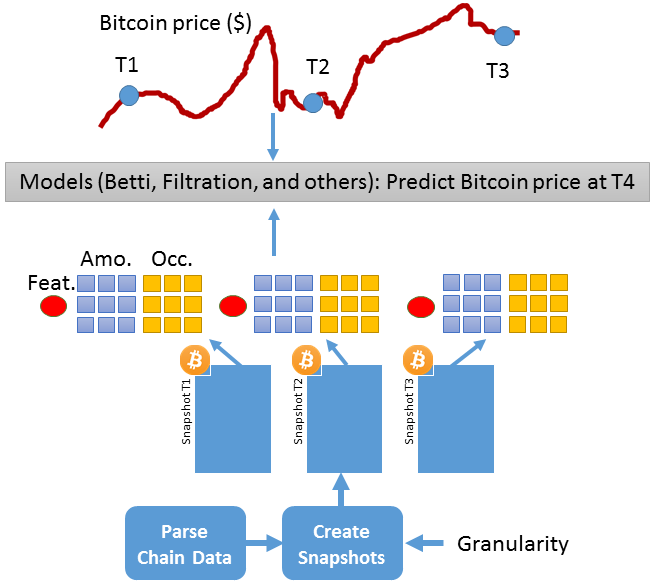
Cuneyt Gurcan Akcora is an Associate Professor of Computer Science at the University of Central Florida (UCF) and an Adjunct Professor in Computer Science and Statistics at the University of Manitoba, Canada. He holds a Ph.D. from Università degli Studi dell’Insubria (Italy) and an M.S. from SUNY Buffalo (USA) as a Fulbright Scholar. His research focuses on data science applied to complex networks and graph mining, particularly in blockchain and online social networks. He has collaborated with institutions like Yahoo! Research Barcelona, Qatar Computing Research Institute, and Huawei. Education: PhD in Computer Science, 2014 – Università degli Studi dell’Insubria, Italy MEng in Computer Science, 2010 – SUNY Buffalo, USA BSc in Electrical & Electronics Engineering, 2008 – Karadeniz Technical University, Turkey Research Interests: Explainable AI and Graph Machine Learning Topological Data Analysis (TDA) for Blockchain Networks Large-Scale Graph Analysis and Anomaly Detection Nonparametric Statistical Methods Key Contributions: His work includes developing chainlet theory for Bitcoin price prediction, scalable TDA algorithms for blockchain forensics, and interdisciplinary grants exploring blockchain applications in insurance. Notable projects include the Chartalist Dataset for blockchain network analysis and ChainNet , a topological graph learning framework. Awards & Grants: NSERC Discovery Grant (2020) UCF Interdisciplinary Grant for Blockchain in Insurance (2020) Fulbright Scholarship (M.S., SUNY Buffalo) Labs & Teams: Active in UCF’s FData Lab and leads blockchain data analytics initiatives. His work bridges academia and industry through collaborations with Huawei, QCRI, and others.
Dr. Carson Kai-Sang Leung is a Full Professor in Computer Science at the University of Manitoba's Faculty of Science. He founded and directs the Database & Data Mining Lab. His research focuses on big data science, data mining, machine learning, health informatics, and visual analytics. He holds SMIEEE and SMACM fellowships, reflecting his contributions to the field. Education: B.Sc., M.Sc., and Ph.D. from the University of British Columbia (UBC). Research interests include human-centered exploratory data mining, image databases, and scalable algorithms. He emphasizes user-driven constraints in mining processes and has developed techniques like the segment support map and OSSM for optimized frequency counting. His work on subimage queries in large image databases addresses real-world challenges in visual data retrieval. Publications span data mining, healthcare analytics, and transportation systems. His lab collaborates on projects like visual analytics for motor vehicle accidents and environmental data science for smart cities. He is affiliated with institutions such as the Institute of Industrial Mathematical Sciences (IIMS) and TRLabs. Key awards: Senior Member of IEEE (SMIEEE) and Senior Member of ACM (SMACM).
Igor Molybog is an Assistant Professor at the University of Hawai'i at Manoa, holding joint appointments in the Departments of Electrical and Computer Engineering and Information and Computer Sciences. His research focuses on advancing artificial intelligence, particularly through large language models (LLMs), multimodal modeling, and core machine learning optimization. He leads the HawAII research group, exploring applications like LLM alignment, efficient inference systems, and scaling properties of foundation models. Education: Ph.D. in Engineering from UC Berkeley (2022), specializing in optimization algorithms for complex systems. Previously worked at Meta AI on LLaMa model development. Research Interests: Efficient LLM development and evaluation frameworks Multimodal AI integration (video/audio + text) Scalable optimization for large models Computational efficiency in training/ inference Recent Work: Presented REAL alignment method (2024), developed long-context scaling techniques (2023), contributed to Llama 2 chat models (2023). Collaborates with organizations like Epoch AI on scaling challenges. Teaching: Offers courses in AI, machine learning, and optimization across ECE and ICS departments. Labs/Teams: Leads HawAII Initiative fostering AI collaboration at UH Manoa, organizes paper reading seminars, and hosts technical talks with industry experts.
Dr. Masoud Makrehchi is an Associate Professor in the Department of Electrical, Computer and Software Engineering at Ontario Tech University, part of the Faculty of Engineering and Applied Science. His research focuses on Natural Language Processing, Artificial Intelligence, Machine Learning, and Social Computing, with a strong emphasis on applications in network science and moral AI. He holds a PhD from the University of Waterloo (2007), along with earlier degrees from Shiraz University and Iran University of Science and Technology. Prior to academia, he worked as a Senior Research Scientist at Thomson Reuters (2008–2012) and completed a postdoctoral fellowship at the University of Waterloo (2007–2008). His research expertise includes text mining, social network analysis, and network science, addressing challenges such as signed social network analysis, document classification, and crime trend prediction using social media data. He has received several awards, including the NSERC Postgraduate Scholarship and the SBP Challenge Award (2012). His work spans over 50 peer-reviewed publications in journals like Expert Systems with Applications, Social Network Analysis and Mining, and Web Intelligence, with contributions to conferences such as GECCO and IEEE/ACM. Dr. Makrehchi’s publications highlight innovations in feature selection, text segmentation, and AI-driven frameworks for requirements elicitation. His recent work explores coherence graphs for text segmentation, generative AI in education, and bias detection in medical datasets. He has also contributed to patent applications related to sentiment analysis and text extraction systems.
Laks V.S. Lakshmanan is a Professor in the Department of Computer Science at the University of British Columbia (UBC), within the Faculty of Science. His research focuses on data management, graph computing, machine learning, and algorithms, with notable contributions to dense subgraph discovery, influence maximization, and healthcare informatics. He teaches advanced courses on databases and data management, including CPSC 404 (Advanced Relational Databases) and CPSC 534L (Topics in Data Management). His awards include the ACM SIGMOD Research Highlight Award, the IEEE Data Science Best Paper Award, and recognition as an ACM Distinguished Scientist (2016). His work bridges theoretical algorithm design with practical applications in social networks, bioinformatics, and healthcare. Key research themes include optimizing graph algorithms for large-scale data, combating misinformation through network analysis, and developing efficient methods for subgraph enumeration and influence propagation. His recent publications explore topics like clinical event prediction (TRACE), cost-effective LLM selection (ThriftLLM), and cross-modal consistency in AI systems. Education: Details not explicitly provided in sources. Grants & Funding: Recipient of NSERC Discovery Accelerator Supplements. Labs/Teams: Engaged in UBC's data management research groups and collaborative initiatives with industry partners.
Aldo Faisal is a Professor of AI & Neuroscience at Imperial College London's Department of Bioengineering and Faculty of Engineering. He is also the Founding Director of the UKRI Centre for Doctoral Training in AI for Healthcare (£20M), leading the Faisal Lab. His roles include associate investigator at the MRC London Institute of Medical Sciences and affiliation with the Gatsby Computational Neuroscience Unit (UCL). His research bridges AI, neuroscience, and healthcare, focusing on neurotechnology, human behavior analysis, and clinical applications. Education: Studied Computer Science and Physics in Germany, followed by Biology at the University of Cambridge (Emmanuel College). Earned a PhD in Neuroscience under Simon Laughlin, and postdoctoral work with Daniel Wolpert on sensorimotor control. Prior professional experience includes roles at McKinsey & Co. and Credit Suisse. Research Interests: Combines cross-disciplinary approaches to study brain-behavior relationships, developing technologies for neurological disorders and amputees. Key labs include the Brain & Behaviour Lab (neurotechnology) and Behaviour Analytics Lab (behavioral data science). Techniques include machine learning, robotics, and neuroimaging (EEG/fNIRS). Publications: Over 100+ peer-reviewed articles, spanning AI in healthcare, motor learning, and neurotechnology. Recent work emphasizes safety of AI in critical care, wearable biomarkers for neuromuscular diseases, and human-AI collaboration. Awards: UKRI Turing AI Fellowship, Toyota Mobility Prize ($50k), Rosetree Interdisciplinary Award (£300k), and fellowships from German National Merit Foundation and Böhringer-Ingelheim Foundation. Elected to Global Futures Council (WEF, 2016). Grants & Labs: Leads £20M CDT in AI for Healthcare, £2M Turing Fellowship project, and manages labs at Imperial and University of Bayreuth (Germany). Collaborates with institutions like CRUK Convergence Science Centre and Data Science Institute.