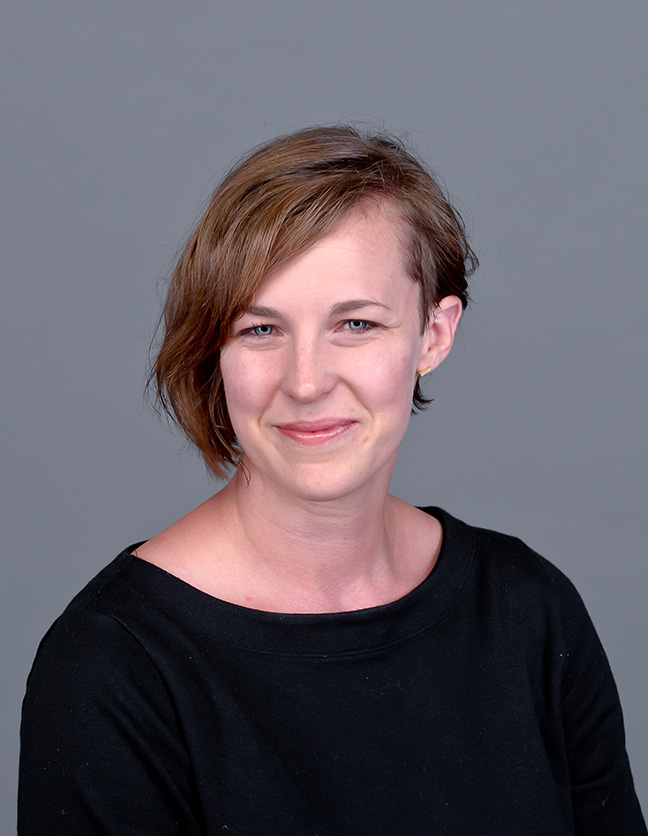
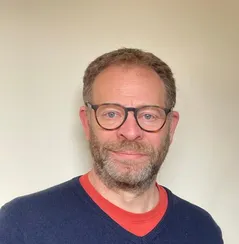
Dr. Frances Smith is an Associate Professor in Film Studies at the University of Sussex's School of Media, Arts and Humanities. She holds a PhD in Film and Television Studies from the University of Warwick (2013), an MA in Management from Durham University (2008), and a Master of Modern Languages in French/Italian from Manchester University (2007). Her research focuses on teen cinema, female authorship, Hollywood and European cinema, and gender studies, with current work on Céline Sciamma's Girlhood. She authored Rethinking the Hollywood Teen Movie (2017) and co-edited Refocus: The Films of John Hughes (2021). Teaching includes convening Analysing Film, American Teen Cinema, and Working with Film modules. She has taught Gender and Representation, British Cinema, and Study Skills. Her awards include Fellowship of the Higher Education Academy (2016). Active in PhD supervision focusing on teen cinema, female authorship, and gender in cinema. Publications span over 25 articles/chapters addressing topics like queer youth representation, transatlantic media comparisons, and directorial authorship in John Hughes and Amy Heckerling films. Research explores intersections of gender, space, and cultural identity in global popular cinema.
Lisa Walcott is an Associate Professor of Art at Hope College, where she has been a faculty member since 2018. She teaches sculpture courses, the capstone course for art majors, and a First-Year Seminar on artistic processes. Her studio practice focuses on kinetic sculptures and installations that explore themes of home, the everyday, and the feminine experience. MFA in Sculpture from Cranbrook Academy of Art (2010) B.A. from Trinity Christian College (2005) Walcott’s research intersects sculpture, installation art, and kinetic design, often recontextualizing domestic objects to investigate themes of interdependence, repair, and the unseen forces in everyday life. Her work frequently involves mechanical components and materials like wax, motors, and household items to create immersive, motion-driven installations. Her recent artworks, such as Making a Mountain (2024) and A Soft Punch to the Gut (2024), exemplify her focus on transforming utilitarian structures into emotive, kinetic pieces. These works, alongside digital collages like The Way I Figure It (2023), reveal a trajectory toward blending physical materials with conceptual frameworks to explore domestic ingenuity and tension. Walcott actively mentors students through faculty research collaborations and founded the Hope College Art Club. She exhibits nationally at institutions like the Eli and Edythe Broad Art Museum and The Sculpture Center, with solo exhibitions at venues including Manifest Gallery (Cincinnati) and the Urban Institute for Contemporary Art. Her studio practice integrates material investigations and workshops to refine techniques, which she translates into both pedagogy and art. Notable solo exhibitions include Swarm (2013) at the Broad Art Museum and Tight Spots (2021) at Saugatuck Center for the Arts.
Kyle Bellucci Johanson serves as a Visiting Critic in Cornell University's College of Architecture, Art, and Planning, Department of Art. Holding an MFA from California Institute of the Arts and a BA in Art and Reconciliation Studies from Bethel University, he merges artistic practice with critical theory through performance architecture and collaborative media. Whitney Independent Study Program (2022–23) Founding fellow at land's edge free school (Los Angeles) Teaching experience at SAIC, UIC, CUNY, and Cooper Union His research investigates: Power structures through spatial interventions Critical theory applications in art practice Post-capitalist imaginaries Hauntology and historical materialism Transdisciplinary approaches to social critique Project trends reveal: Reinterpretation of Soviet design principles Investigation of worker identity in post-industrial contexts Temporal and spatial dislocation in artistic practice Monument critique through performative methods Quantum theory-inspired architectural concepts Reimagining of common spaces as political sites Scientific awards include: Creative Research Grant (2025) Whitney ISP participation (2022–23) Automata Studio Residency (2022) Artists Run Chicago Grant (2021) BOLT Residency (2020–21) Through projects like KLUB WRKR —a nomadic workers' club reimagined for the gig economy—and table (2018–2022), a Chicago-based experimental space for artistic practice, he interrogates institutional frameworks while fostering community through discursive meals and collaborative exhibitions.
Matthias Parey is a Professor in the Department of Economics at the University of Surrey. He holds additional roles as a Research Fellow at the Institute for Fiscal Studies (IFS) and the Institute for the Study of Labor (IZA), a Researcher at the ESRC Research Centre on Micro-Social Change (MiSoC), and a Research Associate at ZEW. His research spans Labour economics Economics of education Micro-econometrics Inequality Economics of innovation . His recent publications analyze high-skilled migration selection, trade shocks, cannabis market size estimation, and gasoline demand elasticity. He has contributed to journals like Review of Economics and Statistics , Economica , and Journal of the European Economic Association . Scientific awards include fellowships at IFS and IZA. His work on trade shocks examines gender-specific labor supply responses to Chinese import competition, while his cannabis market research introduces a forensic economics approach using legal inputs. Earlier studies focus on maternal education impacts on child development and the long-term labor market effects of Erasmus student exchanges.
Michael Lampson is Professor of Biology at the University of Pennsylvania's School of Arts and Sciences, with secondary appointments in the Department of Cell and Developmental Biology. He serves as faculty in the Cell and Molecular Biology (CAMB) and Biochemistry and Molecular Biophysics (BMB) Graduate Groups, and is affiliated with the American Society for Cell Biology (ASCB). Ph.D., Cornell University, Weill Medical College, 2002 AB, Harvard College, 1994 Dr. Lampson's research program focuses on fundamental mechanisms of chromosome biology, with particular emphasis on cell division, centromere inheritance, and meiotic drive. His lab investigates how selfish genetic elements can violate Mendel's First Law through meiotic drive, the stability of centromere chromatin through the germline, and the role of repetitive satellite DNA in chromosome segregation. Using innovative approaches including mouse model systems, optogenetic tools, and biochemical techniques, his work bridges cell biology, genetics, and evolutionary biology to address questions with implications for reproductive biology, cancer, and genetic inheritance. Analysis of Dr. Lampson's recent publications reveals a strong focus on the intersection of centromere biology, meiotic drive, and chromosome segregation mechanisms. His work increasingly incorporates computational approaches alongside experimental systems to study evolutionary aspects of centromere function. The research demonstrates consistent innovation in methodology, particularly in developing optogenetic tools for precise manipulation of cellular processes. Key themes include the role of satellite DNA variation, mechanisms of non-Mendelian inheritance, and the stability of chromatin structures through cell division and development. Searle Scholar Award American Association for the Advancement of Science (AAAS) fellow Dr. Lampson's research is supported by multiple NIH grants including from NIGMS, NHGRI, NICHD, and NCI, as well as University of Pennsylvania funding sources including the University Research Foundation, Abramson Cancer Center, and several specialized research centers. He collaborates extensively with researchers across disciplines, including Ben Black (Biochemistry), Dennis Discher (Chemical Engineering), Dave Chenoweth (Chemistry), and Roger Greenberg (Cancer Biology), reflecting the interdisciplinary nature of his work. His lab has trained numerous graduate students and postdocs who have gone on to successful careers in academia and industry. The Lampson Lab maintains state-of-the-art facilities for cell biological, genetic, and biochemical research, with specialized equipment for live-cell imaging, optogenetic manipulation, and mouse genetics. The lab fosters a collaborative environment that bridges molecular, cellular, and evolutionary perspectives on chromosome biology.
Associate Professor Mustafa GulTekin serves at Gaziantep University in the Faculty of Arts and Sciences , affiliated with both the Department of Turkish Language and Literature and the Department of Turkish Folklore . He holds a Doctorate in Turkish Folklorics (2010) from Ege University and has been teaching since 2004. Education: PhD in Turkish Folklorics, Ege University (2004-2010) MA in Turkish Language and Literature, Gaziantep University (2002-2004) Bachelor in Turkish Language and Literature, Balikesir University (1997-2001) Research Focus: Specializes in Turkic world fairy tales, oral literature analysis, minstrelsy traditions, and intangible cultural heritage. His work intersects folklore methodology with performance studies and cultural anthropology. Projects: Led/managed national projects including TUBITAK-funded research on Diyarbakir Alevi ocaks (2013-2016), Uzbek cultural studies in Gaziantep (2012-2015), and applied Karagöz education programs (2009-2010). Administrative Roles: Head of Department (2014-2017, 2012-present) Deputy Head of Department (2017-present, 2011-2012) Director of Research and Application Center (2012-2016)
Katherine Hubbard is an Associate Professor of Art and Director of the MFA Program at Carnegie Mellon University School of Art. Her practice integrates photography, writing, and performance to explore the intersection of social politics, history, and narrative through a lens of bodily engagement. Hubbard's work emphasizes analog photography as a medium that mimics and interrogates the body's relationship to visual processes, often staging performances where participants' physical positioning becomes integral to the artwork's temporal experience. Education: MFA from the Milton Avery Graduate School of the Arts at Bard College (2010). Research focuses on the politics of looking, the malleability of vision, and bridging the imaginary with the familiar through interdisciplinary projects. Notable collaborations include the Poetry Parade series (2012–ongoing), a migratory feminist reading action performed in institutions like the Whitney Museum, and cyclops & slashes (2015), a participatory performance addressing social dynamics through photography and text. Awards: 2020 Guggenheim Fellowship in Photography. Hubbard has exhibited widely, including solo shows at Higher Pictures (New York) and Company Gallery (NY), with works featured in Frieze Magazine . Her projects often involve site-specific installations, such as Four shoulders and thirty five percent everything else (2014), which interrogates landscape and perception in Utah's desert.
Mimi Yiengpruksawan is a Professor of History of Art at Yale University, affiliated with the Department of East Asian Languages and Literatures, the Council on East Asian Studies, the Council on Southeast Asian Studies, and the Program in Medieval Studies. She holds a Ph.D. from UCLA (1988) and joined Yale in 1990, achieving tenure in 1998. Her research focuses on Buddhist art in nonmodern Japan and Eurasian cultural exchanges, emphasizing cross-regional and interdisciplinary approaches to study contact-driven cultural formation. Her academic work includes two major manuscripts: Michinaga’s Peacocks: A Heian World in Transition (examining exogenous influences on Kyoto’s art) and Kyoto in the Twilight of the Dharma (focusing on eschatological patronage). She also explores early modern Japanese global interactions, analyzing visual production during the 'Nanban' period. Recent research bridges environmental history with art, linking the 1006 supernova and Buddhist prophecies to artistic developments. Key publications include analyses of Buddhist iconography, transnational art networks, and transcultural architecture. She is a leading figure in rethinking Heian Japan’s cultural interconnectedness, challenging isolationist narratives through material evidence and primary sources.
Eduardo Mercado III is a Professor in the Department of Psychology at the University at Buffalo, College of Arts and Sciences. His research focuses on bioacoustics, cognitive psychology, and marine ecology, particularly the vocal behavior of humpback whales and its implications for understanding human impact on marine ecosystems. He is also known for his work in perceptual learning, autism spectrum disorder, and comparative cognition. Scientific Awards Guggenheim Fellowship Harvard Radcliffe Institute Fellowship Research Trends His recent publications emphasize bioacoustic analysis of humpback whale songs, including their spectral entropy, cyclical variations, and adaptive adjustments to anthropogenic noise. Additional work explores perceptual learning mechanisms in autism, neural network modeling for acoustic classification, and cognitive processes in canines and rodents. Projects Mercado’s “Singers as Sentinels” project combines acoustic analysis of humpback whale songs with public awareness initiatives about ocean noise pollution. The project will produce a book, Why Whales Sing and Dolphins Don’t , and a web-based interface for public engagement.
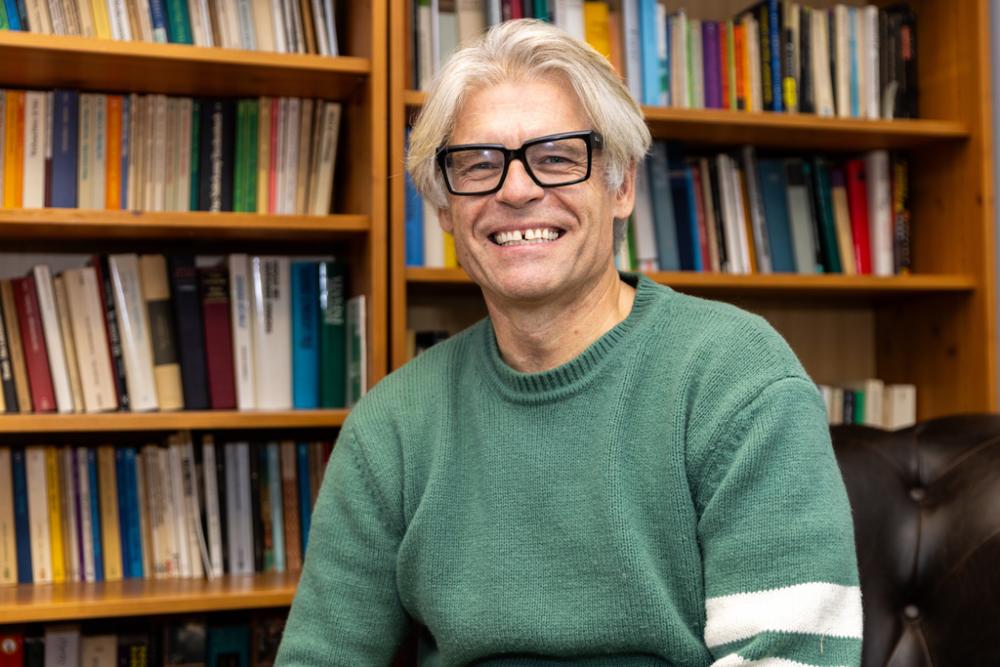
Professor Daniel Katz is a faculty member at the University of Warwick's Faculty of Arts, affiliated with the English and Comparative Literary Studies program. His research focuses on modernism and its aftermath, with a special interest in poetry and poetics. BA (Reed College) PhD (Stanford University) His work spans psychoanalysis, critical theory, transatlantic literary studies, and multilingualism. He has published extensively on Jack Spicer, Samuel Beckett, and Ezra Pound, including the edited volume Be Brave to Things: The Uncollected Poetry and Plays of Jack Spicer (2021). Current projects include a monograph The Big Lie of the Personal: Poetry, Politics, and the Lyric Subject (Oxford UP, forthcoming). Recent publications analyze subjects such as sublimation in psychoanalysis, materialist poetics, and the politics of avant-garde movements. He is a founding editor of the Bloomsbury Studies in Critical Poetics series and co-directed Warwick's Centre for Research in Philosophy, Literature and the Arts. He supervises doctoral research in modernism (especially Beckett and Pound), American poetry, and critical theory, including psychoanalysis and post-Derridean thought. Teaching includes undergraduate modules like US Writing and Culture, Modern American Poetry, and Twentieth-Century Avant-Gardes, as well as MA options in American Poetry and Modernist Psychoanalysis. Office hours: Monday 14.30-15.30, Tuesday 13.00-14.00, and by appointment.
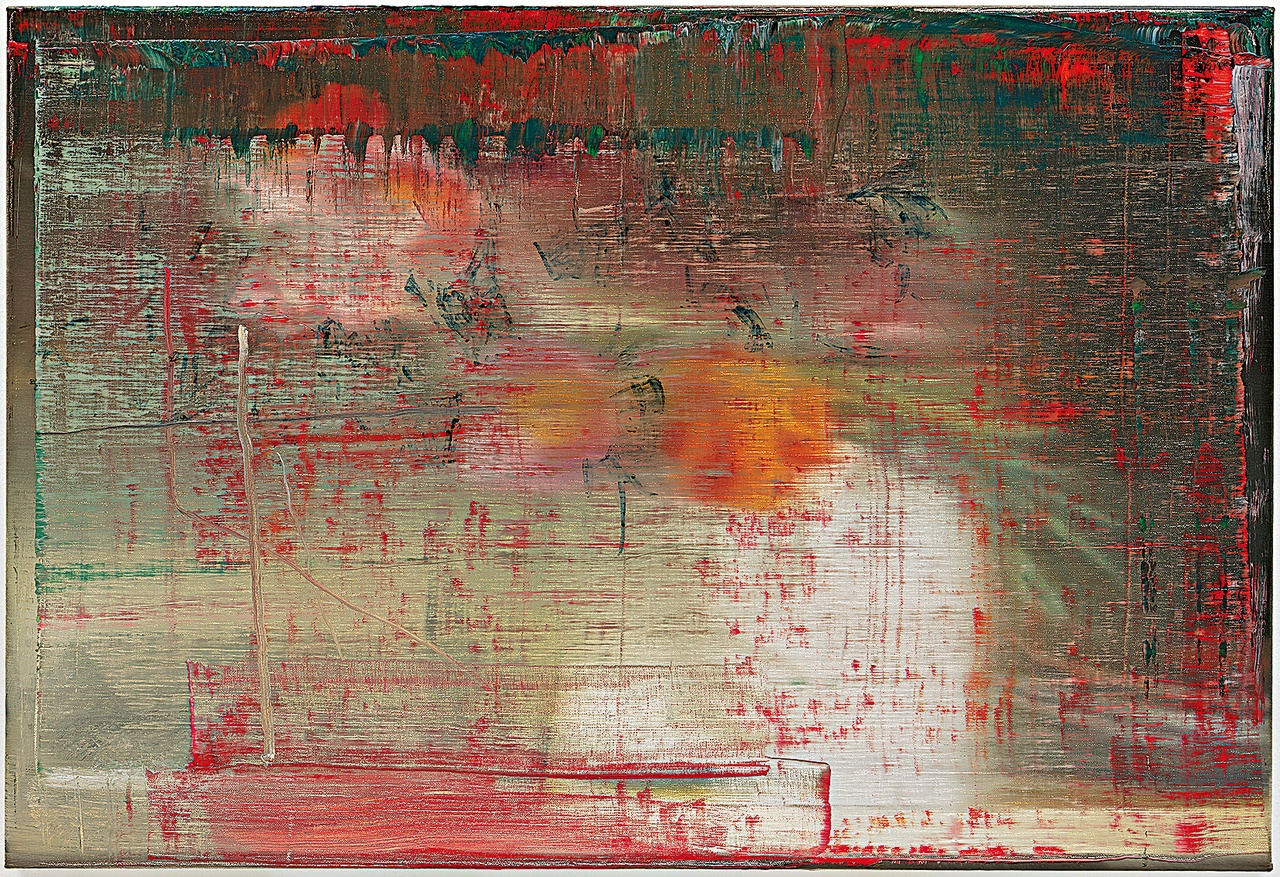
Julia Gelshorn is a full professor of modern and contemporary art history at the University of Fribourg , Switzerland, since 2013. She specializes in strategies of appropriation, repetition, and translation in art, with a focus on 21st-century practices and 18th-century French art theory. Her research explores artistic subjectivity, realism, and the intersection of art, politics, and economy. Education: Art History, Theater Science, and Italian Literature at the Universities of Cologne and Bern. Key Roles: Post-doctoral fellow at the German Center for Art History (2006-2008); visiting professor at HfG Karlsruhe (2008-2010); professor at Universities of Vienna (2010-2011) and Hamburg (2011-2013). Research Interests center on: (1) artistic appropriation as a critical and affective tool; (2) realisms across historical contexts; (3) artist interviews as legible texts; (4) art’s engagement with political and economic systems; (5) theoretical frameworks for visual culture. Her current Real Abstractions project (2023-2027) rethinks realism through social abstractions like financialization and digital networks. Scientific Contributions include the Lazarus Prize from the University of Bern’s Faculty of Humanities (2003) for her dissertation on Richter and Polke. Her publications span books like Aneignung und Wiederholung (2012) and edited volumes on artists such as Jean Tinguely (2016), while her recent articles address Martin Kippenberger, Rosemarie Trockel, and Benjamin Buchloh’s historiography. Notable Projects include the completed SNSF-funded Cinema in Art and Literature (2016) and the ongoing Real Abstractions initiative, which also involves a traveling exhibition and interdisciplinary workshops.
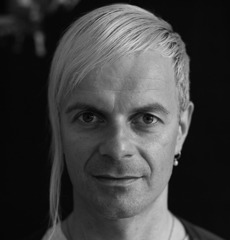
Wolfgang Mayer is a Professor for Performative Practice at the State Academy of Fine Arts Stuttgart , teaching collaborative artistic processes. He co-founded the art group Discoteca Flaming Star (DFS) in 1998 with Cristina Gómez Barrio, focusing on performative works that challenge memory and institutional frameworks. 1990–1995: Studied at Academy of Fine Arts Munich 1996–1997: DAAD scholarship at School of Visual Arts NYC 2005–2006: Whitney ISP participant Mayer’s research integrates performative practice , body theory , and collaborative art . His works interrogate memory , feminist narratives , and public space dynamics through sculptures , performances , and experimental music . Recent projects like Momentum:synthesize.r (2024) and Love Any Out of (90 Seconds) End (2023) explore temporal structures and emotional labor . Scientific honors include: 2013 Fundacion Estrenos Grant 2006–2007 Pollock-Krasner Scholarship 1993 Salzburg Summer Academy scholarship He emphasizes non-formalized artistic development through Sound & Body modules, public space interventions , and critical response protocols . Mayer’s DFS collective has shown globally at institutions like The Kitchen , Whitney Museum , and Tate Modern , often collaborating with figures like Rita McBride and Jeremiah Day.
Carsten Strathausen is a Professor of German and English at the University of Missouri's College of Arts and Science. He holds appointments in both the Departments of German and English, bridging interdisciplinary research and teaching. His work spans literary theory, visual culture, digital humanities, and bioaesthetics, with a focus on Kafka adaptations and evolutionary theory's influence on aesthetics. Research Interests: Dr. Strathausen’s interdisciplinary research explores the interplay of science, art, and media. Central themes include the word-image relationship in literature, posthumanism, and the digital humanities. His current projects include a global database analyzing Kafka adaptations (Adapting Kafka) and a monograph on Kafka’s adaptations through evolutionary and media frameworks. Earlier works like Bioaesthetics and The Look of Things established his reputation in interdisciplinary cultural studies. Teaching: In German studies, he teaches graduate seminars on 20th-century literature and Kafka. In English, he offers courses on contemporary literary theory, posthumanism, and digital humanities. He also mentors undergraduate and graduate students in digital humanities research. Collaborations: Collaborations include work with Dr. Verena Kick on the Adapting Kafka project. His research often intersects with film, visual arts, and science studies, reflecting his commitment to cross-disciplinary inquiry.
Dina Danish (b. 1981, Paris) is an Egyptian-Danish artist and educator working at the intersection of language, historical reinterpretation, and conceptual practice. She holds a Lecturer position at the Fine Arts department of KABK in The Hague and serves as a teaching mentor at the Rietveld Academy, Amsterdam . Guest teaching roles include the Sandberg Institute and American University in Cairo . Education : BA from American University in Cairo; MFA from California College of the Arts (San Francisco) Residencies : Rijksakademie Amsterdam, Spinola Banna Italy, PiST/// Istanbul, A.i.R. Dubai, Affiliated Fellow at American Academy in Rome Her research explores humor, mistranslation, and overlooked historical moments , often through video art, performance, and text-based installations . Key themes include linguistic structures, cultural memory, and Dadaist methodologies . Recent projects examine ancient motifs in contemporary art (e.g., Jean-Baptiste Maitre) and political commentary through playful abstraction . Notable exhibitions at SFMOMA, Stedelijk Museum Schiedam, and Kunsthall Oslo highlight her focus on translation errors, sound poetry, and archival interventions . Volkskrant Award finalist Abraaj Art Prize nominee Illy Present Future Prize recipient Celeste Award nominee Barclay Simpson Award nominee Dina collaborates with institutions like Hotel Maria Kapel and De Nederlandsche Bank , and co-curated a Rijksakademie anniversary exhibition. Her work is represented by galleries in Amsterdam, Milan, and Zurich.
Gloria Sutton is an Associate Professor of Contemporary Art History and New Media at Northeastern University, with an affiliation in the Art, Culture, and Technology Program at MIT. She holds a PhD from UCLA and has held fellowships at the Getty Research Institute and Whitney Museum. Her research focuses on durational media’s impact on visual art since the 1960s, with particular attention to expanded cinema, digital networks, and post-internet art. Primary affiliations: Northeastern University (main appointment), MIT (affiliate) Key roles: Carpenter Center Scholar-in-Residence (2017-2018), co-curator of How Many Billboards Education: Doctorate in Art History from UCLA (specific year not stated). Research interests include: Critical analysis of network culture in visual art Material histories of time-based media Intersection of art, architecture, and technology (e.g., Le Corbusier studies) Publications include The Experience Machine (MIT Press) and edited volumes on Sara VanDerBeek and Renée Green. Current projects explore immersive art critique and Shigeko Kubota’s work. Awards: Andy Warhol Foundation Arts Writers Grant (recent) Emily Hall Tremaine Award (2008) Grants and residencies: Carpenter Center residency (2017-2018) Whitney Museum Independent Study Program fellowship Lecturing and collaborations include engagements at SFMoMA, Walker Art Center, and Harvard’s Carpenter Center for Visual Arts.