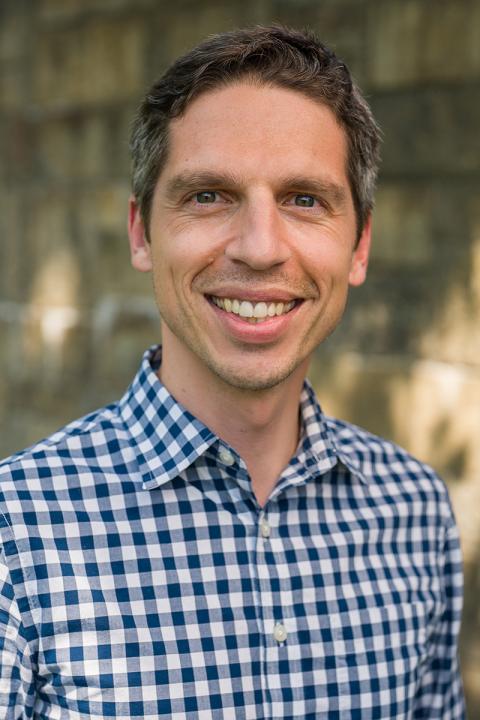
Iris Yu is an Assistant Professor in the Civil and Environmental Engineering department at the National University of Singapore (NUS) . Her research focuses on green chemistry and biomass conversion , particularly utilizing microwave-assisted processing and green solvents to transform food and biomass waste into sustainable chemicals and materials. She actively contributes to teaching courses like Green Catalysis and Circular Economy , while leading a team of researchers in biorefinery and waste valorization projects. Her scientific awards include the L'Oréal-UNESCO for Women in Science Singapore Award 2024 MIT Technology Review Innovator Under 35 (TR35) Asia Pacific 2023 Fellow of the Royal Society of Chemistry (2023–Present) Clarivate Highly Cited Researcher (Cross-Field) 2022–2023 World's Top 2% Scientist by Stanford University 2023 Yu’s research interests span biomass upcycling microwave technology bioresource utilization catalysis fundamentals green and sustainable chemistry platform chemical production . Her publications frequently address microwave-assisted biorefineries , catalytic hydrogenation mechanisms , and sustainable solvent impacts on biomass conversion. She serves on editorial boards for journals like Science of the Total Environment and ACS Sustainable Chemistry & Engineering , and mentors students in the IRIS@NUS internship program. Her lab’s work has been recognized in awards such as the Best Student Poster at SIWW2024, highlighting innovative approaches like microalgae-based food waste valorization .
Professor Atul Jain is a distinguished faculty member in the Department of Climate, Meteorology & Atmospheric Sciences at the University of Illinois at Urbana-Champaign. He leads a prominent research group focused on understanding Earth's climate system through advanced computational modeling and has established himself as one of the world's leading climate scientists with extensive contributions to IPCC assessments. Dr. Jain earned his Ph.D. in Atmospheric Sciences from the Indian Institute of Technology. His educational background provided the foundation for his pioneering work in climate modeling and biogeochemical cycles. Professor Jain's research centers on climate interactions with land physical processes (hydrology and energy), biological processes (carbon and nitrogen), and land use/cover changes including agricultural intensification. His lab developed the Integrated Science Assessment Model (ISAM), a global model-data integration framework that combines satellite and ground-based observations to examine biogeochemical cycles, water, and energy fluxes. His recent work has focused on the impact of land use changes on biogeophysics and biogeochemistry, permafrost carbon storage, methane and nitrous oxide emissions, climate impacts on agricultural production, and spatially explicit greenhouse gas emissions from food systems. His research has gained significant international attention, particularly his 2021 study on food production emissions which was widely covered by major media outlets including The Guardian, The New York Times, and Scientific American. Dr. Jain has received numerous prestigious awards including the National Science Foundation's Faculty Early Career Development Award. He has been consistently recognized as a "Most Highly Cited" Researcher by Clarivate Analytics One of the "World's Top Climate Scientists" by Reuters Fellow of the American Association for the Advancement of Science (AAAS) Fellow of the American Geophysical Union (AGU) Recipient of the Distinguished Alumni Award from IIT Delhi (2024) Professor Jain has mentored numerous graduate students and postdoctoral researchers who have gone on to successful careers in academia and research institutions. His research group has secured substantial funding from NSF, NASA, and other agencies to support their work on climate change modeling and assessment. He has served as a lead and contributing author for major IPCC assessments and has been instrumental in shaping climate science policy. His research group maintains the ISAM modeling framework and has developed extensive datasets on historical land-cover change and land-use conversions. The group actively collaborates with international researchers and institutions to advance understanding of Earth's climate system and its response to human activities.
Professor Jo Smith is a Personal Chair at the University of Aberdeen ’s School of Biological Sciences , specializing in systems modelling, soil organic matter dynamics, and nutrient management. With over two decades at Aberdeen and prior roles at Rothamsted Research and British Petroleum, Smith focuses on carbon sequestration, greenhouse gas emissions, and agricultural sustainability. Research interests include: Soil organic matter and nutrient dynamics in tropical, temperate, and nutrient-depleted soils Climate-smart agriculture across global regions Decision support systems for nitrogen fertilizer optimization Impact of organic resource use on poverty alleviation in Sub-Saharan Africa Machine learning applications in predicting soil nutrient losses Recent publications highlight trends in: Stable isotope analysis for agricultural water management Modelling carbon-nitrogen interactions in data-limited agroforestry systems Policy frameworks for regenerative agriculture and net-zero transitions Tropical peatland emissions and exclosure-based soil restoration High-lignin biofuel byproduct utilization for soil sustainability Collaborations span institutions including: Centre for Ecology and Hydrology (nitrogen cycles, GHG measurements) Nanjing Agricultural University (biochar applications in China) Addis Ababa University (nutrient recycling in Ethiopia) Scottish Government (wind farm carbon calculator development) Makerere University (biogas impact studies in Uganda) Teaching responsibilities include coordinating the Honours Essay course (BI4017/BI4517) and contributing to modules in ecology, environmental science, and risk assessment.
Jennifer Dunn is a Professor of Chemical and Biological Engineering at Northwestern University, with a courtesy appointment in Mechanical Engineering. She serves as Director of the Center for Engineering Sustainability and Resilience and Associate Director of the Northwestern-Argonne Institute of Science and Engineering. Her research focuses on sustainability, energy systems, and environmental impacts of emerging technologies such as hydrogen, biofuels, and nutrient recovery. Dunn leads the Systems Analysis Research Group, applying techno-economic, life-cycle, and materials flow analyses to evaluate low-carbon technologies and circular economy strategies. Education includes a Ph.D. in Chemical Engineering from the University of Michigan, an M.S.E. in Sustainable Chemical Engineering Systems from the University of Michigan, and a B.S. in Chemical Engineering from Purdue University. Her research interests span sustainable mineral supply chains, water treatment innovations, and decarbonization pathways. Recent work emphasizes methane reduction strategies, critical mineral policy, and circular nitrogen economies. Dunn has contributed to National Academies committees and serves as an Associate Editor for the SAE International Journal of Sustainable Transportation. Labs/Teams: Dunn Lab, Center for Engineering Sustainability and Resilience, and the Northwestern-Argonne Institute of Science and Engineering.
Margarita Portnykh is a Professor of Economics at the Tepper School of Business, Carnegie Mellon University. She holds a PhD from Clemson University (2008-2014), an M.S. in Mathematics from Voronezh State University (2005-2007), and completed postdoctoral fellowships at CMU's Heinz College (2016-2018) and the University of California, Santa Barbara (2014-2016). Her research focuses on Applied Microeconomics with emphases on Environmental and Natural Resource Economics, Health Economics, and Finance. Teaching activities span courses like Econometrics I/II , International Energy Market and Sustainable Development , and multiple iterations of Principles of Microeconomics , reflecting her commitment to both foundational and specialized economic education. Notable publications analyze geopolitical impacts on energy trade, political risks in financial markets, and environmental health consequences of lead exposure. She has collaborated with institutions like the Bren School of Environmental Science and the Heinz College. Her work bridges theoretical economic frameworks with real-world policy applications, particularly in environmental and health sectors. Current research trends emphasize interdisciplinary approaches to global economic challenges, leveraging data science and econometric methods.
Daniel Beat Müller serves as Professor at the Industrial Ecology Programme within the Department of Energy and Process Engineering at the Norwegian University of Science and Technology (NTNU), Trondheim. His office is located at Realfagbygget Gløshaugen (E4-120) with contact details daniel.mueller@ntnu.no and +4791897755. His research centers on analyzing human needs in relation to material/energy flows and environmental impacts, with two primary focus areas: (i) urban evolution and associated material flows for managing building/infrastructure stocks, and (ii) national/global metal cycles to identify supply constraint reduction strategies. His methodology integrates design, modeling, and decision-making through transdisciplinary stakeholder engagement. Müller teaches Material Flow Analysis and Systems Analysis of the Built Environment for Industrial Ecology and Civil Engineering Master's students. His research outputs demonstrate strong trends in circular cities, critical mineral management, and urban metabolism, with recent publications emphasizing building information modeling, electric vehicle battery systems, and phosphorus cycling. His work consistently addresses resource criticality within energy transition contexts. As (ad interim) chair of the International Society of Industrial Ecology’s MFA-ConAccount section, he contributes to methodological standardization. He previously served on the U.S. National Research Council’s Committee on Defense Stockpiles and remains active in Switzerland's National Research Programme 65 "New Urban Quality". Müller supervises numerous Master's and doctoral students, with thesis topics spanning lithium-ion battery recycling, building stock dynamics, and urban resource flows. His projects frequently involve industry collaboration for practical implementation of material stewardship strategies.
John Anthony (Tony) Byrne is Professor of Photocatalysis and Research Director in the School of Engineering at Ulster University. He leads the Clean Technology research theme within the Nanotechnology and Integrated BioEngineering Centre (NIBEC) and heads the Photocatalysis Research team. Byrne earned his 1st class honors degree in biology and chemistry at Ulster University, followed by a DPhil in chemistry under Dr. Brian Eggins. Appointed as a lecturer in the School of Engineering in 2005, he was rapidly promoted and made Professor in 2012. Professor Byrne's research focuses on photocatalytic nanomaterials for environmental remediation and renewable energy applications, with particular emphasis on metal oxides. His work significantly contributes to UN Sustainable Development Goals, especially in clean water and sanitation. He has developed expertise in titanium dioxide-based photocatalysis, water disinfection technologies, and nanomaterial fabrication and characterization. His recent publications demonstrate a strong trend toward practical water treatment applications, particularly in household and rural settings. The research spans photocatalytic, photoelectrocatalytic, and UVC-based disinfection methods, with increasing focus on contaminants of emerging concern and waterborne pathogens in diverse water matrices. Fellow of the Higher Education Academy Fellow of the Royal Society of Chemistry Byrne serves on multiple professional committees including the RSC Northern Ireland Section Committee, the Chemical Nanoscience and Nanotechnology Interest Group, and chairs the Professional Bodies Forum supporting the All Party Group on Science and Technology in the NI Assembly. He is a founding Board Member of the Northern Ireland Science Festival. His research portfolio includes numerous projects such as SAFEWATER POC, funded by Invest Northern Ireland, focusing on commercializing water treatment technologies. Professor Byrne leads the Photocatalysis Research team at Ulster within the Nanotechnology and Integrated BioEngineering Centre (NIBEC), where he directs the Clean Technology research theme. His laboratory work focuses on developing and testing photocatalytic nanomaterials for water treatment applications, with strong emphasis on practical implementation in real-world settings.
Dr. Jesus Barrio Hermida is an Imperial College Research Fellow in the Department of Chemical Engineering within the Faculty of Engineering at Imperial College London. His research focuses on designing and synthesizing advanced electrocatalytic materials for sustainable energy applications, particularly single-atom catalysts for energy conversion processes. Barrio Hermida completed his Bachelor of Science in Chemistry (2009-2014) and Master in Nanoscience and Molecular Nanotechnology (2014-2016) at Universidad Autónoma de Madrid. He earned his PhD in Chemistry from Ben-Gurion University of the Negev (2016-2020), followed by a Research Associate position at Imperial College London (2020-2023) before being awarded the prestigious Imperial College Research Fellowship in 2023. His research interests center on electrocatalysis , particularly the development of single-atom catalysts for sustainable energy technologies. His work spans carbon nitride materials , Fe-N-C catalysts for fuel cells, ammonia synthesis , and biomass valorization . Barrio Hermida's group investigates the fundamental mechanisms of electrocatalytic processes while designing novel materials with enhanced performance for practical applications in energy conversion and storage. His publication record shows a strong focus on electrocatalyst design and characterization , with recent work emphasizing single-atom catalysts , fuel cell materials , and sustainable ammonia production . His research bridges fundamental understanding of catalytic mechanisms with practical applications in energy technologies, particularly in replacing precious metal catalysts with earth-abundant alternatives. Barrio Hermida has received several prestigious awards including the Israel Chemical Society Excellent PhD Student Award (2019), Faran Mid Way Negev Scholarship for Outstanding PhD Students (2018), and the Adama award for research excellence (2018). As an Imperial College Research Fellow, he leads an independent research group focused on designing single-atom electrocatalysts for sustainable energy technologies, working within Maria-Magdalena Titirici's research environment while developing his own independent research direction.
Sirui Li is a Postdoctoral Researcher in the Department of Chemical Engineering and Chemistry at Eindhoven University of Technology, specializing in plasma-based technologies for sustainable chemical processes. Their research focuses on carbon capture and utilization, plasma catalysis, and reactor design for CO 2 conversion and nitrogen fixation. Research interests center on plasma-assisted CO 2 conversion , with key areas including: Plasma-sorbent systems for simultaneous CO 2 capture and conversion Gliding arc and DBD reactor design for NO x synthesis and methane conversion Techno-economic analysis of plasma-based sustainable processes Dielectric materials and nanoparticle synthesis for catalytic applications Recent publications demonstrate a clear trend toward integrated plasma-reactor systems for carbon management, with emphasis on process intensification, thermal effects analysis, and scalability. The work bridges fundamental plasma chemistry with industrial application feasibility, particularly in renewable energy integration and fertilizer production. Award highlights include: Baldur Eliasson Award (2022) Best oral presentation award for 'Plasma-sorbent system for CO 2 capture and conversion' (2022) IEEE NPSS Young Professional Travel Grant (2024) Li actively contributes to major research projects including PLACHEM (plasma-assisted CO 2 conversion), GICO (gasification with CO 2 capture), and LEAP-Agri (on-site fertilizer production), while serving as guest editor for Frontiers of Chemical Science and Engineering and participating in international symposia on plasma technology.
Dr. Lin Wei is a Professor and Graduate Coordinator in the Department of Agricultural and Biosystems Engineering at South Dakota State University (SDSU). He holds a B.S. in Agricultural Engineering from China Agricultural University, M.S. in Mechanical Engineering (Guangxi University), and M.S./Ph.D. in Biological Engineering (Mississippi State University). His research focuses on biomass conversion, bioenergy production, smart agriculture, and food safety. He leads projects on biochar-based fertilizers, cold plasma food safety technologies, and AI-driven precision farming. Dr. Wei has authored over 80 peer-reviewed papers and secured $7M+ in grants. He chairs multiple professional committees (ASABE Renewable Energy, USDA-S1075, ISO-WG6) and serves as editor for journals like Agricultural Engineering and Transactions of the ASABE. Recent grants include biochar soil health studies ($583K USDA) and nanobubble dairy waste management ($22K SD WRI). His team develops smart sensors for crop monitoring and biopolymer nanocomposites for food packaging. Notable awards include 2024 Outstanding Researcher (College of Agriculture) and 2022 Excellence in Editing (ASABE). Ongoing work integrates thermochemical processes with AI to enhance biofuel production efficiency and environmental sustainability.
Albert Guisasola Canudas is an Assistant Professor at the Autonomous University of Barcelona (UAB), specializing in environmental engineering with a focus on wastewater treatment and nutrient recovery. He holds a PhD from UAB (2005), an MSc in Environmental Sciences (2003), and a Chemical Engineering degree (2001). His research emphasizes bioelectrochemical systems, enhanced biological phosphorus removal, and microbial electrolysis cells. Key projects include TRAMPOLINe (2025–2028), promoting industrial adoption of microbial electrochemical technologies, and BINAFET (2022–2025), addressing sustainable agriculture through local resource utilization. Collaborative work spans international institutions like the University of Queensland and the University of Girona. He leads or co-leads 18 research projects, including nutrient recovery initiatives and CO2 valorization programs. His lab focuses on developing innovative solutions for ecological transition, such as fertilizer recovery from urine and carbon capture via electrochemical processes. Despite no explicit awards listed, his extensive publication record (138+ outputs) and project leadership reflect significant contributions to environmental sustainability. Supervised 37 works, though specific student names are not detailed here.
Rainer Quitzow is a Research Group Leader at the Research Institute for Sustainability (RIFS) at GFZ Helmholtz Centre for Geosciences and an Honorary Professor (Honorarprofessor) of Sustainability and Innovation at Technische Universität Berlin . His career spans academia, international development, and policy research. Education: PhD in Political Science (Freie Universität Berlin, 2012-2015); M.A. in Development Studies (Erasmus University Rotterdam, 2003-2004); B.A. in Metropolitan Studies (New York University, 1998-2001) Professional Background: World Bank (2005-2008); Environmental Policy Research Centre (2009-2013); Technical University Berlin (2013-2014) Research Focus includes geoeconomic competition in climate-friendly industries , hydrogen economy governance , and policy strategies for industrial decarbonization . His work bridges energy transition geopolitics , renewable technology markets , and sustainability governance frameworks . Publications Trends highlight hydrogen as a decarbonization vector , policy experimentation in emerging economies , and multilateral governance challenges . Key themes include certification standards , infrastructure trade-offs , and geopolitical-economic interdependencies . Projects include Geopolitics of the Energy Transformation and Climate Action in National and International Processes . He contributes to the Science Platform Sustainability 2030 , advising on Germany’s National Sustainable Development Strategy.
Anton Bekkerman is a Professor in the Department of Agriculture, Nutrition, and Food Systems at the University of New Hampshire, serving as Associate Dean for Research and Director of the New Hampshire Agricultural Experiment Station. He holds a Ph.D. and M.S. in Economics from North Carolina State University and a B.B.A. from Loyola University Maryland. His research spans agricultural marketing, price forecasting, policy analysis, and risk management, with specific expertise in: Commodity price dynamics (grain and fertilizer markets) Agricultural insurance and policy design Farm decision-making and risk analysis Spatial economic modeling Recent publications examine quality-based wheat pricing, biofuel policy impacts on fertilizer markets, crop insurance distributions, and economic dimensions of pest management. His work integrates economic theory with empirical analysis of agricultural systems. Dr. Bekkerman leads research initiatives addressing agricultural sustainability and economic resilience in changing climates.
Prof. Dr. Göksel N. Demirer is a Professor at the Department of Environmental Engineering, Middle East Technical University (METU), Ankara, Turkey. His academic career spans over two decades, holding roles from Lecturer to Chairperson of the Department (2006-2012). He specializes in Anaerobic Biotechnology, Wastewater Engineering, and Sustainable Production systems. Education: Ph.D. in Environmental Engineering, Vanderbilt University (1996) M.Sc. and B.Sc. in Environmental Engineering, METU (1991, 1989) Research Interests: Focuses on anaerobic digestion of organic wastes, bioenergy generation, cleaner production, nutrient recovery (struvite precipitation), and industrial symbiosis. His work bridges environmental biotechnology with sustainable industrial practices, emphasizing waste-to-resource转化 and pollution prevention. Awards & Recognition: Recipient of METU's Academic Performance Award (2001-2012) Mustafa Parlar Educator of the Year Award (2000-2001, 2005-2006) Australian Endeavour Research Fellowship (2007) Professional Roles: President of Water Environment Association of Turkey (2001-2003) Editorial Board Member of Journal of Cleaner Production and International Journal of Environmental Sciences Lead over 25 research projects as PI, including EU-funded collaborations on nutrient recovery and bioenergy Advising & Capacity Building: Supervised 26 Ph.D./M.Sc. theses, developed METU's Cleaner Production course, and conducted nationwide training programs for municipalities and industries. Labs & Collaborations: Active in anaerobic digestion and bioenergy research through METU's Environmental Engineering labs. Collaborates with institutions like RMIT University (Australia), Trier University (Germany), and Villanova University (USA).
Dr. Yasemin Dilşad Yılmazel is an Associate Professor in the Department of Environmental Engineering at Middle East Technical University (METU) in Ankara, Turkey, with a concurrent position as Assistant Professor at Rochester Institute of Technology. She earned her PhD from Villanova University in 2014 and has built a distinguished career in environmental biotechnology. Her educational background includes: Ph.D. in Civil and Environmental Engineering from Villanova University (2014) M.S. in Environmental Engineering from Middle East Technical University (2009) Dual B.S. degrees in Chemical Engineering and Environmental Engineering from Middle East Technical University (2007-2008) Dr. Yılmazel's research focuses on developing innovative bioprocesses that integrate anaerobic digestion with bioelectrochemical systems for sustainable wastewater management and bioenergy production. Her work with hyperthermophilic microorganisms represents a unique niche in the field, as these high-temperature processes offer advantages over conventional mesophilic systems. She investigates microbial electrochemical processes, biohydrogen production, environmental microbiology, and nutrient recovery from waste streams. Her laboratory work spans from fundamental microbial studies to applied engineering solutions for real-world environmental challenges. Her publication record demonstrates consistent contributions to the fields of bioelectrochemical systems and anaerobic digestion, with a particular emphasis on utilizing hyperthermophilic microorganisms for enhanced biohydrogen and biomethane production. Recent publications focus on carbon-based conductive materials for enhancing biomethane recovery, nutrient recovery through struvite precipitation, and the role of electroactive microorganisms in anaerobic processes. Her scientific achievements have been recognized through several awards: Grant Writer's Boot Camp, Rochester Institute of Technology University (2017) Honorable Mention, Link Foundation Energy Fellowship (2012) A&WMA Graduate Student Scholarship (2010) M.Sc. Scholarship from TÜBİTAK (2007-2009) First-ranking Graduate in Environmental Engineering at METU (2007) Dr. Yılmazel actively mentors a diverse group of students, including PhD candidates, MSc students, and undergraduates. Her research group BIOERG has secured substantial funding from organizations including TÜBİTAK, METU, and international partners. Current projects focus on utilizing electrostatically flocked electrodes for hydrogen and methane production, enhanced biohydrogen production from agro-industry wastes, and sustainable urbanization through innovative technologies. She also serves as a board member at METU's Climate Center, contributing to national sustainability initiatives. Her laboratory, the Bioprocess Engineering Research Group (BIOERG), conducts cutting-edge research on bioenergy systems, with particular expertise in integrating anaerobic digestion and bioelectrochemical systems for more efficient methane production from agro-wastes. The group investigates the utilization of hyperthermophilic microorganisms for biohydrogen production and studies the role of direct interspecies electron transfer in anaerobic processes.