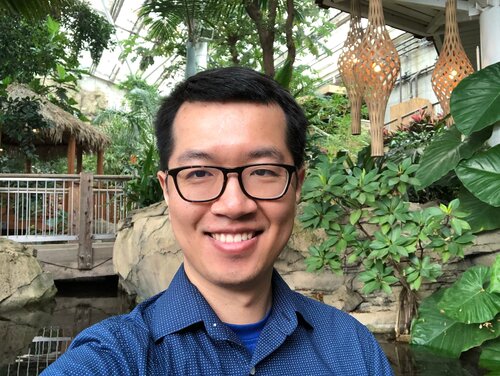
Tossapon Boongoen is a Professor in the Department of Computer Science at Aberystwyth University, with over a decade of experience in artificial intelligence and machine learning. Previously, he served as Associate Professor at Mae Fah Luang University (2017-2022) and Royal Thai Air Force Academy (2011-2017), where he also directed the MFU Research and Innovation Institute. His research spans ensemble clustering for privacy-preserving data fusion deep learning in remote sensing and sky survey data network security applications for ransomware and intrusion detection forest fire risk modeling using spatial-temporal data Recent publications focus on convolutional neural networks, adversarial attack classification, and collaborative filtering algorithms. He leads international projects funded by the British Council, FCDO, and Academy of Medical Sciences, including collaborations with institutions in Thailand, Korea, Vietnam, France, and Czech Republic. Professional engagements include editorial roles in journals like Knowledge-Based Systems Frontiers in Neurorobotics PeerJ Computer Science ICT Express and partnerships with GISTDA, GOTO Observatory, and Imperial College London.
Professor John Shi Wen-zhong is Chair Professor of Geographical Information Science and Remote Sensing at The Hong Kong Polytechnic University, where he serves as Head of the Department of Land Surveying and Geo-Informatics. He also holds leadership positions as Director of the Otto Poon Charitable Foundation Smart Cities Research Institute and Director of the PolyU-Shenzhen Technology and Innovation Research Institute (Futian). Professor Shi is recognized as an international leader in uncertainty modeling and quality control for spatial data and spatial analyses, with contributions dating back to the 1990s. He currently serves as President of the International Society for Urban Informatics and Editor-in-Chief of the international journal Urban Informatics. Professor Shi's research focuses on urban informatics for smart cities, geographical information science and remote sensing, artificial intelligence-based object extraction and change detection from satellite imagery, intelligent analytics and quality control for spatial big data, and mobile mapping and 3-D modelling based on LiDAR and remote sensing imagery. His work has solved fundamental uncertainty issues in spatial data and spatial analyses, making significant contributions to geographical information science. He has authored over 300 research articles in Web of Science-indexed journals and 20 books, and has been granted 44 patents as of July 2023. Professor Shi has received numerous prestigious awards for his groundbreaking work: ESRI Award for Best Scientific Paper by the American Society for Photogrammetry and Remote Sensing (2006) State Natural Science Award (Second Award), China's highest award for fundamental research (2007) Wang Zhizhuo Award by the International Society for Photogrammetry and Remote Sensing (2012) Founder's Award by the International Spatial Accuracy Research Association (2020) CPGIS Distinguished Scholar Award (2021) Gold Medals at both the 2021 and 2023 Geneva Invention Expos Smart 50 Awards (2021) Gold Medal in Asia International Innovative Invention Exhibition (2023) He is also listed among the world's top 2% most cited researchers according to Elsevier BV's standardized citation indicators. Professor Shi has been elected as an Academician of the International Eurasian Academy of Sciences and is a Fellow of the Academy of Social Sciences (UK), the Royal Institution of Chartered Surveyors, and the Hong Kong Institute of Surveyors.
Jonas Waldenström is a Professor of Microbiology at Linnaeus University , focusing on disease ecology within the Department of Biology and Environment and the Faculty of Health and Life Sciences. Since 2022, he has served as Head of the Department of Biology and Environment. His work bridges avian-borne infectious diseases and their zoonotic potential, particularly influenza viruses, through field surveillance and laboratory characterization. Affiliations : Linnaeus Centre for Ecology and Evolution in Microbial Model Systems (EEMiS), Zoonotic Ecology and Epidemiology (ZEE) research group Leadership Roles : Chairman of Ottenby Bird Station, Editor for Ornis Svecica Research themes include influenza virus evolution , antimicrobial resistance dynamics , and tick-borne pathogen spread in migratory birds. His projects span Global LULC mapping , Baltic-Black Sea disease networks , and Motus radio-tracking collaborations . Publications reveal trends in microbial host-pathogen interactions , environmental drivers of microbiomes , and cross-species disease transmission . He supervises degree projects at all academic levels and contributes to One Health frameworks, emphasizing wildlife-livestock-human interfaces. Recent work explores AMR proximity patterns and influenza host attachment mechanisms . His team employs advanced virology, evolutionary modeling, and field ecology to predict disease emergence.
Sonja Kivinen is a University Lecturer in Geoinformatics at the Department of Geographical and Historical Studies, Faculty of Social Sciences and Business Studies, University of Eastern Finland. Her research focuses on the intersection of climate change impacts, remote sensing applications, and sustainable resource management in Arctic environments. University Lecturer in Geoinformatics Department of Geographical and Historical Studies Faculty of Social Sciences and Business Studies University of Eastern Finland Research Interests Climate change effects on Arctic ecosystems Remote sensing for biodiversity mapping Environmental justice in natural resource management Post-mining land use strategies Integration of practitioner knowledge with scientific data Geospatial analysis of environmental patterns Key Publication Trends Her recent publications (2017-2024) demonstrate expertise in combining remote sensing with ecological monitoring to address issues like biodiversity conservation in boreal forests, reindeer husbandry adaptation to changing climatic conditions, and mining conflict resolution . She frequently collaborates with multidisciplinary teams across Finland and Europe. Projects Kivinen contributes to research groups including CEMMS (Research Center for Mining, Minerals and Society) and Digital Geosciences , both active since 2020. Her work often addresses policy implications through reports for the University of Eastern Finland and Finnish Environment Institute.
Dr. Emily Howells is a Senior Research Fellow at the Faculty of Science and Engineering, Southern Cross University, based at the National Marine Science Centre in Coffs Harbour. Her research focuses on coral reef ecology and evolution, particularly the impacts of climate warming on reef-building corals. Climate change adaptation Coral thermal tolerance Population genetics and genomics Coral symbiosis and reproduction Her work integrates field ecology , experimental biology , coral husbandry , and genomic analysis to assess coral evolutionary potential. Recent publications highlight thermal tolerance variation , adaptive genetic markers , and environmental drivers in symbiont dynamics. She holds a PhD and BSc (Honours) from James Cook University. Contact: emily.howells@scu.edu.au
Dr. Kevin Austin is a Research Fellow at the School of Mechanical and Mining Engineering, Faculty of Engineering, Architecture and Information Technology at the University of Queensland. His work is affiliated with the Future Autonomous Systems and Technologies research group, where he focuses on automation and robotics applications in mining engineering. Dr. Austin received his academic qualifications from the University of Queensland, including a Bachelor (Honours) of Engineering and a Doctor of Philosophy. Dr. Austin's research centers on mining automation and autonomous systems for heavy machinery operations. His work spans several key areas including dragline operation planning, excavation sequencing, terrain mapping for autonomous bulldozers, and hyperspectral imaging for ore grade discrimination. He has made significant contributions to the development of algorithms for mining equipment automation, particularly in the areas of Monte-Carlo Tree Search for dragline operation planning and Iterative Closest Point variants for terrain scan matching. His research bridges theoretical advances in robotics and artificial intelligence with practical applications in the mining industry, focusing on improving efficiency, safety, and productivity. Dr. Austin has been involved in numerous research projects funded by industry partners including Caterpillar Inc and the Australian Coal Association Research Program (ACARP). His current research focuses on coal stockpile management for remote bulldozers, semi-autonomous bulldozers for mine site rehabilitation, and articulated truck automated systems. His work demonstrates a strong industry connection with practical applications in mining operations. As an academic supervisor, Dr. Austin has served as an Associate Advisor for multiple PhD and Master's students at the University of Queensland. His supervision portfolio includes research on real-time terrain mapping for autonomous bulldozers, mission planning for autonomous excavation, dragline excavation sequencing, and scan matching for terrain mapping in open-pit mining. His collaborative approach is evident in his work with other faculty members, particularly Professor Ross McAree. Dr. Austin's laboratory and research team work closely with industry partners through the Future Autonomous Systems and Technologies group. They maintain strong connections with mining equipment manufacturers and coal mining operations, ensuring their research addresses real-world challenges in the mining sector. Their facilities likely include simulation environments for mining equipment operation, testbeds for autonomous systems, and data analysis platforms for mining process optimization.
Kai Kuck, PhD, ME, serves as Director of Bioengineering in the Department of Anesthesiology at the University of Utah School of Medicine since 2014. With expertise spanning multiple engineering disciplines and clinical applications, he bridges the gap between medical technology development and clinical practice in anesthesia and critical care settings. His educational background includes doctoral training at the University of Utah, an ME from Hamburg University of Applied Sciences, and executive education from Babson College. This diverse academic foundation supports his interdisciplinary approach to medical device innovation. Dr. Kuck's research focuses on three primary areas: cardiorespiratory monitoring systems, intelligent decision support tools for clinicians, and advanced ventilation technologies. His work emphasizes practical solutions that address real-world clinical challenges, particularly in the operating room and critical care environments. He has pioneered non-invasive monitoring techniques, including urine oxygen monitoring for acute kidney injury detection and novel approaches to anesthetic gas concentration sensing. Analysis of his recent publications reveals a strong emphasis on solving critical clinical problems through engineering innovation. His work spans from fundamental research on physiological monitoring to practical device development, with particular focus on kidney injury prediction, propofol dosing algorithms, and ventilator technology - especially highlighted during the COVID-19 pandemic with the Utah-Stanford Ventilator project. Dr. Kuck has co-authored numerous patents related to anesthesia monitoring and delivery systems, demonstrating his commitment to translating research into practical clinical tools. His collaborations span engineering, clinical anesthesia, and critical care medicine, reflecting the interdisciplinary nature of modern medical technology development. His leadership in developing the Utah-Stanford Ventilator (Vent4US) during the pandemic exemplifies his ability to rapidly mobilize engineering resources to address urgent clinical needs. This project, along with his work on urine oxygen monitoring and propofol dosing algorithms, demonstrates his focus on technologies that improve patient outcomes through better physiological monitoring and treatment delivery.
Thomas B. Smith is a distinguished Research Professor in the Department of Ecology and Evolutionary Biology and the Institute of the Environment and Sustainability at UCLA. As a founding Co-Director of the Center for Tropical Research and the Congo Basin Institute in Cameroon, he has led interdisciplinary efforts in biodiversity conservation, evolutionary ecology, and climate change mitigation across tropical regions for over 35 years. His work spans Central and West Africa, the Amazon, and beyond. Research Focus: Tropical biodiversity, avian ecology, human-altered ecosystems, and climate change impacts. Awards: Recognized with multiple academic honors, though specific titles are not listed. Collaborations: Partnerships with National Geographic Society, International Institute for Tropical Agriculture, and global conservation teams.
Vuokko Heikinheimo is a Visiting Researcher at the University of Helsinki , affiliated with the Department of Geosciences and Geography and the Digital Geography Lab under the Helsinki Institute of Sustainability Science (HELSUS). She holds a PhD and MSc in Geography/Geoinformatics from the University of Helsinki and serves as a Senior Researcher at the Finnish Environment Institute SYKE since 2021. Education PhD in Geography/Geoinformatics, University of Helsinki MSc in Geography/Geoinformatics, University of Helsinki Her research focuses on environmental sciences and geoinformatics , leveraging social media data for conservation science, geospatial modeling of urban dynamics, and accessibility analysis for sustainable city planning. She has contributed to datasets like the Helsinki Region Travel Time Matrix and CO2 emission models, integrating open data and open-source tools. Recent work includes analyzing global urban indicator frameworks, climate zone typologies for smart cities, and land use impacts on ecosystem services in the Taita Hills, Kenya. Her 2025 articles examine social media platform longevity and climate-responsive urban planning. Scientific Awards Stora stipendiet för forskning (2024) Heikinheimo collaborates on projects such as MOBICON (ERC-funded), MAPHEL (linguistic landscape mapping), and ELY-GIS (GIS applications in conservation). She contributes to peer-review processes for journals like Landscape and Urban Planning and Land , and has organized events including the NECTAR conference on human-scale cities.
Annett Junginger is a researcher at the University of Tübingen's Department of Geosciences, leading the Micropaleontology research group and contributing to the Senckenberg Center for Human Evolution and Paleoenvironment (HEP Tübingen). With a career spanning over two decades, she specializes in paleoclimatology, micropaleontology, and environmental-geochemical analysis of rift lakes. Education: Dr.rer.nat. in Paleoclimatology (2011) and Diploma in Geosciences (2006) from University of Potsdam/FU Berlin Key Projects: Hominin Sites and Paleolakes Drilling Project (HSPDP), Chew Bahir Basin studies, Suguta Valley hydrology Her research focuses on paleoclimate dynamics in East Africa, using lake sediments , isotope geochemistry , and micropaleontological proxies to understand climate variability across Quaternary periods. She investigates how hydroclimate fluctuations impacted hominin evolution and dispersal routes, particularly during the African Humid Period (15–5 ka BP) and MIS 12 glacial stage. Recent publications (2024) examine Lake Albert biodiversity via environmental DNA, Lake Naivasha metal sources , and Chew Bahir strontium isotopes . Earlier work includes volcano-tectonic fragmentation of Turkana-Suguta Megalake (2023), paleo-hydrology of Greece (2021), and Angolan diatom studies (2020). She employs multi-sensor remote sensing and phytolith analysis for climate modeling. Teaching responsibilities include BSc/MSc courses in Micropaleontology, Paleontology, and field practicals in Austria. She organizes African fieldtrips (Kenya, Tanzania, Ethiopia, etc.) for paleoenvironmental data collection.
David Hysell is a Professor in the Department of Earth & Atmospheric Sciences at Cornell University. His research focuses on ionospheric physics, plasma turbulence, and equatorial aeronomy. He leads projects utilizing HF radar networks, satellite data (e.g., ICON), and advanced modeling techniques to study ionospheric instabilities and space weather phenomena. Key tools include the Jicamarca Radio Observatory and collaborative initiatives like the SPARTA Center for space weather forecasting. His work integrates fluid/plasma simulations, automatic differentiation for parameter estimation, and hybrid kinetic models to understand Farley-Buneman instabilities, equatorial spread F, and sporadic E-layer dynamics. Recent efforts emphasize ionospheric forecasting using multi-instrument data fusion and machine learning approaches. Hysell actively participates in international observatory upgrades and geospace radar development to enhance global ionospheric monitoring capabilities. Scientific contributions include advancing ionospheric specification methods using HF beacon networks, investigating solar minimum conditions at equatorial altitudes, and studying plasma wave interactions in high-latitude regions. His research bridges theoretical plasma physics with applied space weather monitoring, addressing both fundamental science and operational needs.
Marc De Benedetti is an Assistant Professor, Teaching Stream in the Department of Computer Science at the University of Toronto's Mississauga campus within the Mathematical and Computational Sciences school. His work bridges computational methods with healthcare analytics, geophysical modeling, and educational innovation. He specializes in applying machine learning to medical datasets (e.g., SEER cancer data) for predictive modeling and has contributed to CAR T-cell therapy efficacy studies in oncology. His geoscience research focuses on spatial-temporal variability in climate systems, particularly in the Congo Basin and UK wind dynamics. De Benedetti also designs supplementary educational programs to support undergraduate STEM learners. His research emphasizes data-driven approaches to address challenges in healthcare, environmental science, and pedagogy. Research interests include: Machine learning applications in healthcare survival prediction Immunotherapy comparative efficacy analysis Spatial variability in climate and hydrology systems Wind energy potential modeling Innovative undergraduate physics/mathematics tutoring strategies His recent articles analyze treatment outcomes for blood cancers using CAR T-cell therapies, explore model resolution impacts on geophysical data accuracy, and develop predictive tools for cancer prognosis via SEER datasets. No scientific awards are explicitly mentioned in the provided materials. While no formal grants or student advisement records are listed, his work demonstrates strong engagement with both academic research and educational development initiatives. His research locations include the Congo Basin for hydroclimatic studies and the UK for wind energy modeling. Collaborations likely span medical institutions for oncology studies and climatological agencies for environmental data analysis.
Gan Zhang is an Assistant Professor in the Department of Climate, Meteorology & Atmospheric Sciences at the University of Illinois at Urbana-Champaign, affiliated with the School of Earth, Society & Environment. His research focuses on climate modeling, prediction, and applications, particularly addressing climate risks involving physical phenomena (e.g., cyclones) and socioeconomic factors (e.g., energy transition). He emphasizes integrating geophysical fluid dynamics with machine learning and real-world applications. Education: PhD (2018), M.S. (2012) in Atmospheric Sciences from University of Illinois at Urbana-Champaign; B.S. (2011) in Marine Meteorology from Ocean University of China. Research interests include climate variability, extratropical cyclones, tropical meteorology, and weather/climate risk. Recent work explores wind energy risks in midlatitudes, Rossby wave impacts on cyclones, and historical records of tropical cyclones using Chinese documents. His group fosters interdisciplinary approaches, encouraging exploration in data science, exo-climate, and economics. Notable achievements include an Editor’s Award from the American Meteorological Society (2025) and collaborations with institutions like Princeton University and NCAR. He advises graduate students Mingfei Ren, Yudi Mao, and Megha Rao. His work bridges climate science with societal impacts, such as hurricane labor market effects and energy systems. Key research tools include climate models, satellite data, and machine learning. Recent presentations include sessions at the American Meteorological Society annual meeting (2025) and workshops on extreme heat and cloud feedbacks.
Ling Chang is an Associate Professor at the University of Twente, affiliated with the Faculty of Geo-Information Science and Earth Observation (ITC) and the Department of Earth Observation Science. She holds a Ph.D. from Delft University of Technology (2015) and an M.S.E. from Tongji University (2010). Her research focuses on statistical hypothesis testing, time series modeling, and change detection using satellite remote sensing, particularly InSAR techniques. Key projects include AlignSAR (ESA Open SAR library) and RailRadar (TUDelft-ProRail collaboration). Education: M.S.E. in Geodesy and Survey Engineering, Tongji University, China (2010) Ph.D. in Geodesy, Delft University of Technology, Netherlands (2015) Research interests emphasize InSAR applications in infrastructure monitoring, environmental geology, and disaster risk assessment. Notable achievements include the Prof. J.M. Tienstra Research Prize (2022) and leadership in the NCG talent program (2020). Teaching responsibilities include coordinating the Radar Remote Sensing course. Her work contributes to UN SDGs related to sustainable infrastructure and climate action.
Marloes J.M. Penning de Vries is an Assistant Professor in the Department of Water Resources . Her research focuses on environmental science and remote sensing applications, particularly in water resources management, hydrology, and climate change. She contributes to UN Sustainable Development Goals through studies on invasive species management, satellite data integration for health research, and estuarine dynamics. Notable work includes analyzing suspended particulate matter in the Scheldt Estuary and closing water balances via satellite gravimetry. Collaborations: International projects on estuaries, geohealth, and gravimetry. Research Outputs: Over 28 publications since 2007, with recent emphasis on remote sensing techniques. Her 2022 presentation on long-term Earth observation of SPM in the Scheldt Estuary highlights her engagement in interdisciplinary environmental studies.