Ulisse Gomarasca is a doctoral researcher at the Max Planck Institute for Biogeochemistry's Department Biogeochemical Integration, affiliated with the International Max Planck Research School for Global Biogeochemical Cycles (IMPRS-gBGC). He works within the Global Diagnostic Modelling group and Ecosystem Function from Earth Observation project team, focusing on understanding ecosystem functioning through eddy covariance fluxes and biodiversity links. Education: Master's in Ecology and Biodiversity from University of Innsbruck Research: Spatiotemporal dynamics of ecosystem functioning, Sun-Induced Chlorophyll Fluorescence, drought legacy effects on productivity Methodologies: Remote sensing integration with eddy covariance networks, biodiversity-ecosystem function analysis His publications address terrestrial ecosystem responses to climate extremes, scaling of plant traits to ecosystem level, and development of remote sensing tools like the Biodiversity Observing System Simulation Experiment (BOSSE). This work combines satellite observations with ground-based flux measurements to understand global biogeochemical patterns. Contact: ugomar@bgc-jena.mpg.de
Elena Niculina Dragoi is a Lecturer at the Faculty of Chemical Engineering and Environmental Protection 'Cristofor Simionescu' at Gheorghe Asachi Technical University in Iasi, Romania. Her academic work integrates Artificial Intelligence and Machine Learning tools for solving complex problems in Chemical Engineering and Environmental Protection . With over 30 published papers and six active research projects, her contributions span process optimization, nanomaterials, and sustainable technologies. Teaches Applied Informatics (Years 1 & 4) and Artificial Intelligence at the Faculty of Chemical Engineering Contributes to Programming Engineering at the Faculty of Computer Science, University 'Alexandru Ioan Cuza' Engaged in interdisciplinary courses at the Faculty of Automatic Control and Computer Engineering Research Interests : Elena's work focuses on modelling and optimization (90% emphasis) of chemical processes using AI methodologies, with cross-disciplinary applications in environmental engineering (70%) and chemical engineering (95%). Her recent publications highlight innovations in: 3D-printed nanocomposite adsorbents for pollutant removal Metaheuristic optimization algorithms for industrial processes Hydrogen generation via nanocatalysts Electrochemical biosensors for environmental and health monitoring AI-driven wastewater treatment systems Green chemistry applications in pharmaceutical and dye removal
Dusan Paredes Araya serves as Professor in the Department of Economics at the Catholic University of the North (UCN), Chile, with research expertise in regional and urban economics focusing on spatial market interactions. His work emphasizes causal mechanisms in regional labor and housing markets, supported by leadership roles as former Dean of the School of Business and Economics and Director of the Economics Department at UCN. He concurrently holds an Adjunct Professor position at Michigan State University's Department of Agricultural, Food, and Resource Economics. His research centers on spatial economic dynamics , investigating wage differentials, commuting patterns, housing demand, and economic convergence through advanced econometric methods. Key contributions include analyzing spatial inequality in Chile, migration responses to violence in Mexico, and policy impacts of mining taxes on public education. His work consistently bridges theoretical spatial economics with empirical policy analysis for Latin American contexts. Recent publications (2016-2021) reveal strong thematic continuity in spatial economics, with expanding methodological sophistication in multilevel modeling and causal inference. Dominant themes include labor market spatiality (commuting premiums, gender wage gaps), housing economics (demand attributes, price indices), and public finance (mining taxation, local service provision), increasingly incorporating international collaborations. Paredes has received significant recognition: Peter Nijkamp RSAI Award (2017) His research leadership includes: Chilean Funding: Three FONDECYT projects and multiple National Agency for Research and Development (ANID) grants International Projects: Collaborations with U.S. Department of Agriculture and Lincoln Land Institute Academic Service: Associate editor of Resource Policy (ISI Q1) and reviewer for major international journals
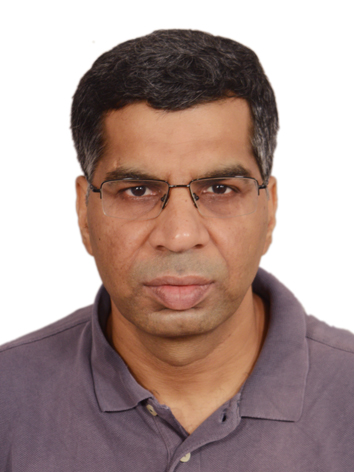
Om P. Damani is a Professor in the Department of Computer Science and Engineering at Indian Institute of Technology Bombay. He serves as Faculty In-Charge of the Sustainable Development unit of the Center for Policy Studies and is also associated with the Centre for Technology Alternatives for Rural Areas (CTARA). His work bridges computer science with social development challenges, focusing on practical applications for rural communities. Dr. Damani's research interests span Technology for Development of the bottom 80%, System Dynamics: Modeling and Simulation for Social Development, System Architecture, and Data Science. His work demonstrates how computational approaches can address complex development challenges through projects like GramDrishti (for detecting rural infrastructure in satellite images), JalTantra (for optimizing water distribution networks), and FAI (Farm Assessment Index for holistic farming practice evaluation). His publications reveal a consistent focus on applying computer science to solve real-world problems in water management, agricultural systems, and rural infrastructure. His research has been recognized with significant awards including the IIT Bombay Industrial Impact Award 2010, IIT Bombay Impactful Research Award 2019, and Best Poster Award at Agriculture Science Congress 2017. Dr. Damani has successfully translated theoretical research into practical tools that address development challenges, particularly in water resource management and agricultural systems. As an educator, he has mentored numerous PhD students including Chintan Tundia, Shreenivas Kunte, Nikhil Hooda, Sivamuthu Prakash Murugan, Dipak L. Chaudhari, Prateek Kapadia, and Manoj K. Chinnakotla. His teaching portfolio includes courses on System Dynamics: Modeling and Simulation for Development (CS 752), Program Derivation (CS 420), and ICT for Development. Dr. Damani's educational background includes a Ph.D. in Computer Sciences from the University of Texas at Austin (1994-1999), B.Tech. in Computer Science and Engineering from IIT Kanpur (1990-1994), and prior professional experience at IBM T J Watson Research Lab and Akamai Technologies.
Lukas Papritz is a Lecturer at the Department of Environmental Systems Science at ETH Zürich , Switzerland. He specializes in atmospheric dynamics, focusing on large-scale weather systems, Arctic climate processes, and air-sea interactions. Research Interests : Dynamics of extratropical cyclones and atmospheric blocking Arctic climate system, including air mass transformations Atmospheric and oceanic energy exchanges Physics of temperature extremes (cold/warm) Development of dynamical frameworks for weather system analysis His recent publications examine baroclinic wave energetics, heatwave thermodynamics, cold-air outbreak dynamics, and synoptic-scale moisture transport. These works integrate Lagrangian methods, climatological analysis, and regional climate modeling. Current Affiliation : Professorship for Atmospheric Dynamics (Professur für Atmosphärendynamik), ETH Zürich
Professor Trina Myers serves as the Head of School for the School of Information Technology at Deakin University's Faculty of Science Engineering and Built Environment. With extensive experience in academia and research leadership, she plays a pivotal role in shaping IT education and research directions at Deakin. She is also an active member of the Australian Council of Deans of ICT (ACDICT), having served as its immediate past President. Her educational background includes: Doctor of Philosophy in Computer Science from James Cook University Master of Business Administration from James Cook University Master of Information Technology from James Cook University Professor Myers' research focuses on semantic technologies, ontology engineering, Internet of Things, knowledge management, natural language processing, and human-computer interaction . Her work emphasizes interdisciplinary collaboration, bridging technology with fields such as healthcare, marine science, environmental conservation, and business. She has pioneered approaches in academagogy (academic gamification) to enhance online learning engagement, particularly for adult learners. Her IoT research has significant applications in healthcare space optimization, environmental monitoring, and resource management. Her recent publications demonstrate a strong trajectory in applying AI and IoT technologies to solve real-world problems, particularly in healthcare, education, and resource optimization. There's a clear pattern of interdisciplinary work connecting computer science with healthcare, education, and environmental science. Her research increasingly focuses on human-centered technology design, especially for vulnerable populations like adolescents with autism spectrum disorder. Her notable achievements include: Fellow of the Australian Computer Society (2023) Australian Awards for University Teaching (AAUT) Teaching Award (2020) Women in IT Professional Leadership Award Finalist (2020) Asia-Pacific International Triple E Entrepreneurial Educator of the Year Award (1st runner-up, 2020) Australian Computer Society, National Digital Disruptor ICT Educator of the Year (2019) Professor Myers actively supervises doctoral students across diverse research areas including gamification in language learning, brain tumor analysis using deep learning, AI in higher education, AI for refugee resilience, data integrity in edge environments, and quantum-driven satellite networking. She has secured significant research funding, including a recent grant for "Indiginizing ICT Curriculum: A Starter Framework for the Community of Practice" through the Australian Council of Deans of ICT. Her teaching philosophy emphasizes active learning methodologies, Process Oriented Guided Inquiry Learning (POGIL), blended learning, and collective intelligence approaches.
David Schramm serves as Associate Professor and Family Life Extension Specialist in the Department of Human Development and Family Studies at Utah State University, integrating academic research with community-focused programming to strengthen family relationships across diverse populations. His educational foundation includes: PhD in Human Development and Family Studies, Auburn University (2007) MS in Family, Consumer, and Human Development, Utah State University (2003) BS in Marriage, Family, and Human Development, Brigham Young University (2001) Research centers on evidence-based relationship and parenting education, with recent expansion into personal flourishing and well-being frameworks. His work emphasizes practical application through resources promoting gratitude practices, positive interactions, and resilience-building in marital and family contexts, while addressing unique challenges in stepfamilies, divorce transitions, and incarcerated populations. Publication analysis reveals consistent focus on divorce education effectiveness, co-parenting interventions, and family enrichment activities. The "Hidden Gems" series demonstrates innovative translation of research into accessible home-based resources, while peer-reviewed articles examine systemic factors including socioeconomic context, racial disparities, and pandemic impacts on family dynamics. Notable recognition includes: Western Region Extension Excellence Award (2019) Provost Award for Creative Extension Programming (2012) Early Career Achievement Award (2010) Multiple team awards for diversity initiatives and marketing excellence He actively mentors graduate students in Human Development and Family Studies while leading high-impact extension programs including Divorce Education, Strong Parents Stable Children, and the Road to Happiness initiative. Current projects address relationship education for incarcerated women and culturally responsive outreach to African American communities, demonstrating commitment to bridging research-practice gaps.
Dr. Sameer Mulani is an Associate Professor, Associate Department Head, and Director of Graduate Programs in the Department of Aerospace Engineering and Mechanics at the University of Alabama's College of Engineering. He leads the Stochastic Mechanics and Multi-Disciplinary Optimization Laboratory (SMO Lab) and is an integral part of the Remote Sensing Center and Alabama Materials Institute. Dr. Mulani's research spans uncertainty quantification, random vibrations, multi-disciplinary optimization, and composite structures' multi-scale analysis and design. His work combines computational methods with machine learning to develop innovative solutions for aerospace engineering challenges. He has made significant contributions to self-healing composite materials, uncertainty quantification techniques, and optimization of composite structures. His research group has published extensively on topics including polynomial chaos expansion for uncertainty quantification, self-healing composites, stochastic buckling analysis, and machine learning applications in structural mechanics. The publications demonstrate a strong trend toward integrating probabilistic methods with traditional engineering analysis to improve reliability and safety of aerospace structures. AIAA Associate Fellow, Class of 2025 2025 Department of the Air Force Summer Faculty Fellowship Program 2024 Department of the Air Force Summer Faculty Fellowship Program MSC Software Contest Winner (2011) Night on the Town: General Electric Award (2007) DAAD Fellowship (1999-2000) Dr. Mulani has advised numerous graduate students who have gone on to successful careers at institutions including Los Alamos National Laboratory, Cirrus Aircraft, L3Harris, and Lockheed-Martin. His lab collaborates with various research centers including the Remote Sensing Center where they work on antenna design, manufacturing, and integration for aircraft systems. The SMO Lab utilizes advanced software including MSC NASTRAN/PATRAN, ANSYS Mechanical/FLUENT, ABAQUS, SOLIDWORKS, and CATIA for their simulations and analyses.
Professor Spiridon Ivanov Penev is a leading academic in the School of Mathematics and Statistics at the University of New South Wales. He holds a PhD in Mathematical Statistics from Humboldt University (Berlin, Germany) and has been affiliated with UNSW since 1992, progressing from Lecturer to Professor in 2019. His research spans wavelet methods, saddlepoint approximations, structural equation models, and stochastic risk analysis. Education: PhD in Mathematical Statistics, Humboldt University Current Affiliation: Department of Statistics, School of Mathematics and Statistics, UNSW His work focuses on advanced nonparametric techniques, including wavelet-based signal recovery with adaptive sampling rates, and robust inference in structural equation models. He has developed bias-corrected reliability measures for psychometric applications and contributed to stochastic optimization problems in finance and engineering. Recent publications highlight his expertise in semiparametric regression, robust portfolio optimization, and marine engineering applications using machine learning. Key trends include the use of Bregman divergence for shape-preserving estimation and Markov chain methods for climate model weighting. Scientific Awards: DAAD award Elected member of the International Statistical Institute (ISI) He has supervised numerous grants as Chief Investigator, including Australian Research Council projects and industry collaborations. Administrative roles include membership in the School of Mathematics and Statistics Executive Committee. Teaching duties span advanced statistical inference, multivariate analysis, and data science applications.
Scott Staniewicz is a researcher at the University of Texas at Austin in the Department of Aerospace Engineering and Engineering Mechanics. His work focuses on geophysical applications of computer vision and remote sensing, particularly using Interferometric Synthetic Aperture Radar (InSAR) to detect surface deformation and tropospheric noise features. Academic Affiliation: University of Texas at Austin Research Focus: Surface deformation analysis, InSAR data processing, tropospheric noise mitigation Email: scott.stanie@utexas.edu Staniewicz's research employs computer vision techniques like Laplacian of Gaussian (LoG) filtering to identify spatially coherent deformation features (e.g., subsidence/uplift in oil-producing regions). His methods integrate noise spectrum estimation from real data and simulations to distinguish true deformation signals from atmospheric artifacts. Recent work includes software development for automated InSAR analysis and large-scale studies of anthropogenic deformation in the Permian Basin. He has contributed to open-source tools such as Blobsar (2025a) and Troposim (2025b) for deformation detection, and collaborated on studies analyzing seismic sequences (Skoumal et al., 2020), tropospheric delay corrections (Li et al., 2019; Yang et al., 2024), and statewide seismic networks (Savvaidis et al., 2019). His publications demonstrate expertise in combining computer vision with geophysical data analysis.
Jonathan Remo is a Professor in the Department of Geography and Environmental Resources at Southern Illinois University. His research focuses on river science, flood hazard assessment, and disaster mitigation planning, with expertise in fluvial geomorphology and hydraulic modeling. Education: Ph.D., Southern Illinois University (2008) M.S., West Virginia University (1999) B.S., Edinboro University of Pennsylvania (1997) Dr. Remo’s research investigates interactions between river systems and human activities, emphasizing floodplain dynamics, levee vulnerability, and climate impacts on hydrology. He employs geospatial tools and hydrodynamic modeling to address flood risk and ecosystem restoration. Recent publications highlight his work on nitrogen mitigation in floodplains, strategic levee reconnection, and sedimentation patterns in the Mississippi River basin, spanning topics from hydrological modeling to socio-hydrology and cultural geography. He has secured grants from The Nature Conservancy and American Rivers for projects like the Dogtooth Bend Floodplain Science Project , focusing on floodplain monitoring and restoration.
Joshua Camins , Ph.D., ABPP, is a Clinical Assistant Professor at the University of Illinois, Urbana-Champaign , affiliated with the Department of Educational Psychology and the Department of Clinical Sciences . He also serves as an Affiliate at the Disability Resources and Educational Services (DRES) within the College of Applied Health Sciences . Education: B.A. in Psychology, University of New Haven (2011) B.S. in Criminal Justice, University of New Haven (2011) M.A. in Clinical Psychology, Towson University (2013) Ph.D. in Clinical Psychology, Sam Houston State University (2020) ABPP Board Certification in Forensic Psychology (2024) Research Focus: Camins specializes in forensic psychology , competence to stand trial , and violence risk assessment . His neuroscience work on childhood adversity and brain structure, particularly hippocampal volume reduction due to maltreatment, has been published in PLoS ONE and other journals. Publication Trends: His recent articles explore telesupervision during the pandemic, PTSD in veterans , maternal influences on delinquency , and school-based mental health for immigrant youth . Scientific Awards: ABPP Board Certification in Forensic Psychology (2024) Postdoctoral Fellowship in Forensic Psychology, Mendota Mental Health Institute (2021) Grants & Collaborations: Co-authored a NIH-funded study on childhood socioeconomic status and brain structure (2017) and contributed to research on financial strain and neurodevelopmental outcomes.
Dr Lynette Pretorius is a Lecturer at Monash University's School of Curriculum Teaching & Inclusive Education, where she has established herself as an award-winning educator and researcher. With extensive experience teaching across undergraduate, postgraduate, and graduate research levels, she supervises PhD students while weaving together interdisciplinary expertise to create inclusive and transformative learning environments. Her work spans multiple academic contexts while maintaining a consistent focus on compassionate, equitable education. Dr Pretorius's research centers on doctoral education, academic identity, student wellbeing, and AI literacy, with particular emphasis on creating more just and creative academic spaces. Drawing from autoethnography and qualitative methodologies, her work interlaces personal narratives with institutional systems to understand how lived experiences and academic structures shape one another. She champions pedagogies of care that prioritize wellbeing, justice, and student growth through reflexive, relational ethics and methodological transparency. Her recent publications reveal a growing focus on AI literacy in higher education, with multiple 2024-2025 works developing frameworks for responsible AI use, examining AI's decolonial potential, and exploring how generative AI transforms academic communication and research practices. Alongside this emerging AI focus, her longstanding work on doctoral education continues through writing groups, wellbeing research, and investigations into academic identity formation. Dr Pretorius has received significant recognition for her contributions, including: Dean's Award for Teaching Excellence (2022) Global Impact Grant (Student Success) (2022) Senior Fellow, Higher Education Academy (2021) Dean's Citation for Outstanding Contribution to Student Learning (2019) Dean's Award for Programs that Enhance Learning (2019) Her research leadership extends to multiple funded projects including 'Behind the Academic Curtain: Doctoral Students and the Hidden Rules of Academia' (2025-2026) and 'Learning about Academic Publishing through Collaborative Online International Learning' (2024-2025). She actively supervises doctoral students and has developed innovative approaches to research and teaching, particularly through her work on doctoral writing groups as transformative spaces. Dr Pretorius maintains a strong public scholarly presence through her Scholar's Way Blog, University Study Made Easy YouTube Channel, and the AI Literacy Lab. These platforms extend her research impact beyond traditional academic boundaries, reaching broader educational communities and providing practical resources for students and educators navigating contemporary academic challenges.
Dr. Qian Zhang serves as Assistant Professor in the Robert M. Buchan Department of Mining at Queen's University's Smith Engineering, leading the Green Mining Value Chain (GreeMVC) Lab. His research develops strategic frameworks for sustainability and resilience throughout mining value chains, with emphasis on climate change mitigation and resource efficiency in global mineral systems. His academic foundation includes a Ph.D. in Urban Engineering from the University of Tokyo (awarded Japanese Government MEXT Scholarship), complemented by MSc and BSc degrees in Environmental Science plus a Minor in Economics from Peking University. Prior to his current role, he conducted postdoctoral research at the University of Victoria and University of Tokyo while consulting for the World Resources Institute on climate-energy initiatives. Dr. Zhang's expertise spans carbon footprint analysis , life-cycle assessment , and industrial ecology applied to mining systems. He employs advanced methodologies including input-output analysis and material flow accounting to model environmental pressures across urban infrastructure and mineral supply chains. His work specifically addresses greenhouse gas accounting, water-energy nexus challenges, and circular economy implementation in resource-intensive sectors. Recent publications reveal strong methodological convergence between artificial intelligence and environmental assessment, particularly in optimizing mining operations through reinforcement learning and geospatial analysis. Key thematic clusters include carbon accounting standardization, critical mineral sustainability, and policy-oriented modeling of environmental pressures throughout mineral value chains. His research program is supported by major competitive grants: NSERC Discovery Grant (2022-2027) SSHRC Institutional Grant (2023, 2025) NSERC Alliance Missions Grant (2023, 2024) Mitacs Accelerate Grant (2023, 2025) NFRF Exploration Grant (2025-2027) NRCan Energy Innovation Program (2025) Dr. Zhang actively mentors a dynamic research group comprising 10+ graduate students and postdocs, securing collaborative funding through institutional and federal channels. His GreeMVC Lab maintains active partnerships with industry leaders and government agencies to translate research into practical sustainability solutions for the mining sector, with current projects focusing on AI-driven fleet management and life-cycle assessment of mineral supply chains. The GreeMVC Lab operates as a multidisciplinary hub with structured mentorship programs, regular industry engagement events, and international collaborations including the COM symposium on sustainable circularity. The lab's physical space in Goodwin Hall supports advanced computational analysis of mining value chains while fostering innovation in green mining technologies through student-led research initiatives.
Prof. Dr. Hannes Taubenböck holds the Chair of Global Urbanization and Remote Sensing at the Julius-Maximilians University of Würzburg (Faculty of Philosophy, Institute of Geography and Geology) since 2022 and collaborates with the German Aerospace Center (DLR). His research bridges remote sensing with urban geography, focusing on: Global urbanization patterns and structural analysis Informal settlements (slums/refugee camps) Climate change and natural hazard vulnerability Migration dynamics via remote sensing and social media He obtained his PhD (2008) and habilitation (2019) at JMU Würzburg, preceded by geography studies at LMU Munich (1999-2004). His recent publications analyze: Climate impacts on African agriculture Urban permeability and walkability Border region disparities Heat exposure modeling Methodologically, he specializes in: Deep learning for earth observation Multi-modal data fusion Urban pattern classification Building stock analysis His work informs policy applications in: EU cohesion programs Disaster risk reduction Environmental justice Urban sustainability