Gabriel Parodi is a Lecturer in the Department of Water Resources at the University of Twente’s Faculty of Geo-Information Science and Earth Observation (ITC). He holds a Civil Engineering degree from the University of Buenos Aires, an MSc in Water Resource Management and Earth Observation from ITC, and postgraduate diplomas in Structural Engineering. His career includes over a decade at Argentina’s National Institute for Agricultural Technology (INTA), where he specialized in agroecology and remote sensing applications for water management. Currently, he coordinates remote sensing education at ITC and lectures internationally on water resources management, catchment modeling, and operational EO products. His research focuses on hydrological remote sensing, agro-hydrological systems, and the integration of GIS technologies with environmental monitoring. Contributions highlight the symbiosis between plants, soils, and water in flatland ecosystems, with emphasis on sustainable development goals. His work bridges technical innovations with policy frameworks addressing water scarcity and environmental governance.
Dr. Dimitrios Diochnos is an Assistant Professor in the School of Computer Science at the University of Oklahoma (OU) . His research focuses on theoretical and practical aspects of machine learning, including adversarial learning, semi-supervised learning, and imbalanced data classification. Prior to OU, he was a Hobby Postdoctoral Research Fellow at the University of Virginia and a Research Associate at the University of Edinburgh. He holds a PhD in Mathematics from the University of Illinois at Chicago, an MS in Mathematics from the University of Athens, and a BS in Informatics and Telecommunications from the University of Athens. Research Interests: Dr. Diochnos works on foundational aspects of machine learning, particularly under adversarial conditions. His current projects include developing semi-supervised learning techniques, analyzing online/streaming learning algorithms, and exploring theoretical guarantees for imbalanced classification. He is also involved in the NSF AI Institute for Research on Trustworthy AI in Weather, Climate, and Coastal Oceanography (AI2ES), focusing on trustworthy AI applications in environmental science. Awards and Recognition: He has received NeurIPS Top Reviewer awards (2023, 2019), NSF reviewer status, and the Teaching Award (2009). His postdoctoral fellowship at UVA was supported by the Hobby Endowment. He has held fellowships from the Zossima Brothers Foundation and the University of Illinois at Chicago. Service and Editorial Work: Dr. Diochnos serves as Managing Associate Editor of the Annals of Mathematics and Artificial Intelligence and has been a program committee member for major conferences like NeurIPS, AAAI, and IJCAI. He has organized events such as the Symposium on AI & ML at OU and served on the Scientific Committee for the International Olympiad in Informatics. Grants and Collaborations: His work is supported by NSF grants, including leadership in AI2ES. He collaborates with researchers in meteorology, oceanography, and climate science to address challenges in trustworthy AI for environmental systems. Labs and Affiliations: Dr. Diochnos is affiliated with the OU School of Computer Science and contributes to interdisciplinary initiatives like AI2ES. His research lab focuses on advancing machine learning theory with practical applications in adversarial robustness and environmental forecasting.
Dr. Bartosz Marcinkowski serves as Professor and Head of the Department of Business Informatics at the University of Gdańsk's Faculty of Management, concurrently holding the positions of Deputy Dean for Research and Head of the Doctoral School. His academic leadership spans departmental administration, faculty research strategy, and doctoral program oversight within Poland's prominent management education institution. Marcinkowski's research centers on the intersection of information systems and practical business applications, with dominant focus areas including agile software development methodologies, digital transformation frameworks, and facility management technology adoption. His work consistently addresses contemporary challenges such as post-pandemic recovery in IT projects, generative AI integration, and sustainable business practices through empirical industry-academia collaborations. Recent publications demonstrate particular expertise in scaling agile frameworks for distributed teams and implementing blockchain solutions in enterprise environments. Analysis of his 2022-2025 publications reveals a strategic research trajectory emphasizing practical solutions for complex business-technology challenges. His work shows increasing integration of sustainability considerations across domains, from facility management to corporate governance, while maintaining strong methodological focus on agile approaches and systems integration. The recurring industry-academia collaboration theme highlights his commitment to bridging theoretical research with real-world business applications.
Paula Figueiredo is a Professor at Universidade Lusófona, specializing in leadership development, human resource management, and integrating artificial intelligence into sustainable business practices. She holds a PhD in Management and an Integrated Master’s in Human Resource Management, with additional postgraduate qualifications in business consultancy and advanced HRM. Education: Doutoramento (PhD) in Gestão Mestrado Integrado in Gestão de Recursos Humanos Pós-Graduação in Consultoria de Empresas Pós-Graduação in Gestão Avançada de Recursos Humanos Her research explores AI dynamics in management, eco-leadership frameworks, psychological capital in multicultural teams, and business continuity resilience. Recent publications include works on diversity policies, green HRM, and leadership models in virtual environments. She actively contributes to edited volumes and conference proceedings, focusing on disruptive innovation and sustainability challenges. While no explicit awards or grants are listed, her extensive publication record demonstrates significant scholarly impact. She has not advised any named students in this dataset but maintains an active research profile through collaborations with institutions like IGI Global and Springer Nature.
Associate Professor Kunle Ola serves as the Interim Dean of the Thomas More Law School at Australian Catholic University and operates as Lead Consultant at Lordrock Migration Agency. His expertise spans academic, legal, regulatory, and administrative domains. LL.B, University of Benin LL.M, University of South Africa PhD, Australian Catholic University Graduate Certificate in Higher Education Graduate Diploma in Australian Migration Law Research focuses on: Intellectual Property Law and reform Open Access to knowledge frameworks Copyright Collective Administration Company Law innovations Migration Law solutions Publications demonstrate expertise in AI copyright challenges, health IP policy, digital music licensing, and pandemic-driven assessment technologies. Collaborations include WIPO, UNCTAD, and Ford Foundation. Scientific distinction: Senior Fellow of the Higher Education Academy (SFHEA). Grants include: Australian Leadership Award Fellowship ($100,000) UNODC/UNDP/PJSP Judicial Wellbeing studies ($29,026) ACU Teaching Innovation Grants ($26,475.65) Open Air Project ($20,000) IDRC/UNCTAD research partnerships ($150,000)
Renata Walczak is a Professor at Warsaw University of Technology (since 2014), serving as Dean of the Faculty of Civil Engineering, Mechanics and Petrochemistry and Vice-Rector for Branch in Plock. She holds a habilitation degree in Agricultural Engineering (2009) and has been with the university since 1987. Her academic roles include leading postgraduate programs in Project Management and Technical Diagnostics, and she has organized interdisciplinary studies collaborating with multiple universities and industries. Her research focuses on production engineering, project management, business analysis, logistics, and IoT applications in healthcare and urban systems. Notable contributions include over 70 publications, including key works like Fundamentals of Project Management (2014) and Selected Methods of Planning and Control of Projects (2013). She has also been recognized for leadership in international educational programs and Erasmus collaborations. Education: Graduated in Environmental Engineering (1995), followed by postgraduate studies in Management, Accounting, and Technology Commercialization. Leadership Roles: Director of the College of Economic and Social Sciences (2012–2016), Vice-Rector’s Representative for International Programs (1995–2012). Awards: Multiple honors for academic and administrative contributions, though specific awards are not listed. Collaborations: Partnered with institutions like PKN Orlen, Bruel & Kjaer, and universities in Denmark, the US, and across Poland. Recent work includes studies on telemedicine adoption during the pandemic, IoT-driven urban planning, and energy transition strategies. Her publications reflect a blend of theoretical frameworks and applied research in healthcare systems, industrial management, and digital transformation.
Assoc. Prof. Dr. Taylan Maral is the Head of New Media and Communications at the Faculty of Economics, Administrative and Social Sciences, Istanbul Gelişim University. His research focuses on media framing, political communication, digital transformation in education, and social media impact analysis. He has contributed to academic journals analyzing conflict reporting in Palestinian-Israeli contexts, social media strategies of political parties, and crisis communication during disasters. Education: No formal education details provided in the source text. Research Interests: Media framing analysis, political journalism, digital media's role in education, and communication strategies in crisis management. His most recent work includes a groundbreaking article on Palestinian-Israeli conflict framing in Turkish newspapers, featured in the Journal of Communication and Diplomacy . He also explores social media's role in political campaigns and pandemic-driven educational adaptations. Maral's work bridges theoretical communication studies with real-world political and societal challenges. Grants & Projects: Not explicitly mentioned in the provided texts. Labs/Teams: Associated with university labs like Applied Digital Communication Workshop and Radio and Television Studio facilities.
Elias Xidias is an Assistant Professor at the Department of Product & Systems Design Engineering, University of the Aegean. His academic focus is on Motion Planning of Autonomous Moving Units . He holds a Ph.D. in Robotics from the University of Patras and has worked as a Research Engineer in the Robotics Intelligent Transportation Systems (RITS) team at INRIA de Paris. His research interests span Robotic Logistics , Intelligent Transportation Systems , and Human-Robot Collaboration , aiming to enhance automation in manufacturing and transportation through advanced algorithms and autonomous systems. Education : Ph.D. in Robotics, University of Patras (2009) M.Sc./B.Sc. in Mathematics, University of Patras (2003) Research Interests : Xidias' work focuses on optimizing autonomous systems in dynamic environments, including path planning for car-like robots, energy-efficient task scheduling, and collaborative robotics. He explores applications in warehouse automation, maritime navigation, and multi-robot coordination. His methodologies often integrate fuzzy logic, genetic algorithms, and probabilistic models to tackle real-world challenges in logistics and manufacturing. Key Contributions : Developed algorithms for AGV routing and motion planning in flexible manufacturing systems. Advanced real-time autonomous navigation techniques for maritime and aerial vehicles. Pioneered the Aegean Ro-Boat Race , fostering innovation in marine robotics. Grants & Collaborations : Xidias has collaborated with institutions like INRIA Paris and contributed to projects such as the RITS team. His work bridges academia and industry, addressing challenges in smart logistics and autonomous systems. Labs & Teams : Associated with the Robotics & Intelligent Transportation Systems research groups, focusing on applied robotics solutions for industrial and urban environments.
Pooran Memari is a CNRS Researcher at the Laboratoire d'Informatique de l'École Polytechnique (LIX), UMR CNRS 7161, Institut Polytechnique de Paris, and an Affiliate Professor (part-time) at École Polytechnique. She leads research in geometric modeling within the GeomeriX team at LIX-Inria, focusing on theoretical foundations and applications in accessibility and neurocognition. Her academic journey includes: HDR (Habilitation à diriger des recherches), Institut Polytechnique de Paris, 2024 Ph.D. in Geometric Modeling, INRIA Sophia-Antipolis, 2010 Master in Image and Geometry, University of Nice-Sophia Antipolis, 2006 Engineering Degree, École Polytechnique, 2005 Bachelor in Mathematics, Sharif University of Technology, 2002 Dr. Memari's research bridges geometric modeling, computational geometry, and computer graphics with real-world impact. She pioneers techniques in shape representation, point pattern synthesis, and surface reconstruction, advancing proximity encoding and clustering algorithms. Her work extends to accessibility applications—developing geometric models for visually impaired navigation through multisensory perception—and neurocognition validation via tactile interfaces. This interdisciplinary approach integrates theoretical rigor with practical tools like the CGAL library. Recent publications (2024-2019) reveal a cohesive trajectory in geometric processing: advancing point pattern synthesis through image-based editing (Patternshop), stability-incorporated neighborhood graphs (SING), and multi-class disk distributions; innovating surface reconstruction via Voronoi-based methods (BallMerge); and expanding applications to virtual worlds simulation and neurocognitive accessibility. Key themes include bridging discrete geometry operators with high-dimensional data analysis and translating theoretical insights into tools for visual computing. Dr. Memari actively mentors the next generation of researchers, advising eight PhD students on topics ranging from generalized Voronoi diagrams to neurocognition-driven tactile navigation. She coordinates Computer Science Projects for École Polytechnique's Bachelor program since 2019 and co-leads the Interaction, Graphics & Design master's program at IP-Paris. Her leadership extends to editorial roles at Computer Graphics Forum and Graphical Models Journal, alongside prominent conference positions including SGP Program Co-Chair (2023) and Eurographics STARs Co-Chair (2025). As a core GeomeriX team member, she drives collaborative projects in geometric modeling and virtual environments. She coordinates the LIX Seminar since May 2025 and serves on the French Eurographics Chapter board, fostering community engagement through initiatives like the IGD master's program and Eurographics symposia.
Hartmut Gross, MD is a Professor at the Medical College of Georgia (Augusta University) , with dual appointments in the Departments of Emergency Medicine and Neurology . He directs the International and Event Medicine program and co-directs the International Medicine Fellowship. His work spans telemedicine , disaster response , and global health initiatives . Graduated from University of Alabama School of Medicine (1985) Emergency Medicine Residency at MCG (1992) Co-developer of the REACH telemedicine system for acute stroke treatment Research Focus : Telemedicine applications in rural emergency care, international disaster medicine, and stroke management. His work emphasizes operational medicine , event-based healthcare , and wilderness medical solutions . Academic Leadership : Immediate Past Chair, ACEP Telemedicine Section Inaugural Member, MCG Academy of Health Sciences Educators Notable Awards : Multiple MCG Exemplary Teaching Awards (2021–2022), Certificate of Appreciation for Teaching , and professional recognition as Fellow of ACEP.
David P. Roy is a Professor in the Department of Geography, Environment and Spatial Sciences at Michigan State University (MSU), where he was hired under the Global Impact initiative. He also serves as Director of the Center for Global Change and Earth Observations. With a distinguished career spanning institutions in Europe and the U.S., he remains an Adjunct Professor at both the University of Maryland and South Dakota State University. Ph.D. in Geography, University of Cambridge (1994) M.Sc. in Remote Sensing and Image Processing, University of Edinburgh (1988) B.Sc. in Geophysics, University of Lancaster (1987) His research focuses on developing remote sensing and computational methods to map and characterize the Earth system, particularly terrestrial global change, now termed environmental data science. He has been a key member of NASA Satellite Science Teams and led the MODIS Land Data Operational Product Evaluation group at NASA’s Goddard Space Flight Center for eight years. Post-doctoral Research Fellow, Natural Environment Research Council Unit for Thematic Information Systems, University of Reading (U.K.) Post-doctoral Research Fellow, Space Applications Institute, Joint Research Centre of the European Commission (Ispra, Italy) Adjunct Professor, University of Maryland (1998–present) Adjunct Professor, South Dakota State University (after 13 years as a full professor there)
Chris Brace is a Professor of Automotive Propulsion and Deputy Director of the Powertrain Vehicle Research Centre at the University of Bath. His work focuses on advanced measurement, analysis, and control of multi-cylinder engine systems under dynamic conditions, with extensive collaboration with industry leaders like Ford Motor Company and Jaguar LandRover. He contributes to the United Nations Sustainable Development Goals (SDGs), particularly in sustainable mobility and low-emission propulsion systems. Education : Sandwich degree at University of Bath (1990), PhD (1996). Research interests encompass powertrain systems , internal combustion engines , hybrid electric vehicles , battery technology , and low-emission propulsion . His projects integrate nonlinear control systems, fault-tolerant designs, and data-driven validation architectures. Recent publications highlight advancements in emission control algorithms, adaptive critic networks for rotary engines, fault-tolerant motor control, and battery parameter modeling. These works reflect trends in automotive electrification , hybrid systems , and environmental sustainability . Supervision : Supervised PhD research on hybrid electric vehicle control strategies (Christopher Vagg, 2015). Grants & Projects include Innovate UK-funded initiatives like Battery Integrated Wing (2025–2028) and EPSRC-supported JLR Prosperity Partnership (2021–2026). He also leads the IAAPS Institute for Advanced Automotive Propulsion Systems. Key Collaborations : Ford Motor Company, Jaguar LandRover, West of England Combined Authority.
Dr. Andrew Dansie is an Associate Professor and Academic Lead, Humanitarian Engineering at the University of New South Wales (UNSW) within the School of Civil and Environmental Engineering . With 18 years of expertise in water resources , air quality , and international development , Dansie's work addresses environmental challenges across Pacific Island Countries , Africa , and Asia . Education : Doctorate in Geography from the University of Oxford as a Clarendon Scholar Affiliations : Honorary Research Fellow at the University of Oxford; UNDP Expert Roster member for water resources Research Interests include atmospheric dust transport , water-energy-food nexus modeling , and plastic pollution mitigation . His Pacific-focused projects examine air quality impacts on respiratory health and floating mangrove plantations for coastal stabilization. Publications (2025-2017) span airborne particulate analysis , transboundary water modeling , and dust-phytoplankton dynamics , with recent work on microplastic monitoring and regional policy development . Key journals include Science of the Total Environment , Atmospheric Environment , and Aeolian Research . Scientific Awards : Full Clarendon Fund Scholarship (2012-2016) Thomas Linacre Studentship (2014) ISAR Special ICAR-8 Conference Award (2014) Global Engagement includes leading UNDP/GEF policy briefs, coordinating a 100+ scientist transboundary water assessment , and directing UNSW's Humanitarian Engineering program with partners in Fiji , Vanuatu , and Ethiopia .
Dr. Andreu Català Mallofré is a Full Professor at the Universitat Politècnica de Catalunya (UPC), affiliated with the Department of Systems, Automatic and Industrial Informatics Engineering. He serves as the principal investigator at the CETpD - Centre d'Estudis Tecnològics per a l'Atenció a la Dependència i la Vida Autònoma (Technical Research Center for Dependency Care and Autonomous Living) and leads the TOC - Tecnologia Orientada a la Comunitat (Community-Oriented Technology) research group. With an academic career spanning over 30 years, he specializes in assistive technologies, human-computer interaction, and biomedical data analysis. His research interests focus on Wearable health monitoring systems Parkinson's disease management solutions Frailty assessment algorithms Emotion-driven computing Community-embedded technology Gerontechnology applications These areas have produced 367 academic outputs including 59 indexed journal articles, 148 conference papers, and 66 competitive R&D projects. Recent publications demonstrate a clear trend toward multimodal health monitoring combining inertial sensors with biometric data for aging populations . Key application areas include freezing-of-gait detection in Parkinson's patients and distress estimation during assisted mobility. His 2024 work explores agricultural sustainability through data-driven fertilizer optimization. Scientific recognition includes UPC Social Council Award (2013) 20+ years as conference committee member Multiple competitive R&D grants 23391773000 Scopus ID Orcid 0000-0001-8775-1955 As academic advisor, he has mentored 3 PhD candidates including Daniel Manuel Rodriguez-Martin (Human Movement Analysis, 2020) Leonid Ivonin (Physiological Signal Processing, 2014) John Neal Abram Brown (Calm Computing, 2014) His teams operate within Vilanova i la Geltrú's School of Engineering, with strong industry and healthcare sector collaborations.
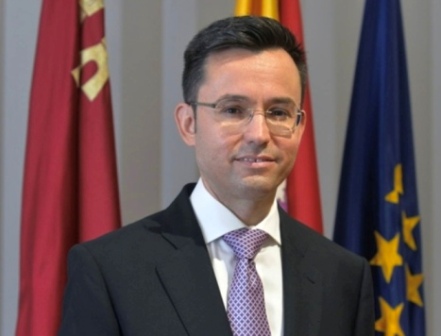
Pedro Soto Acosta is a Full Professor at the University of Murcia , holding the Department of Business Organization and Finance . He earned a European Doctorate in Business Administration, a Master’s in Technology Management, and dual bachelor’s degrees in Business Administration and Accounting & Finance from the University of Murcia and Manchester Metropolitan University. He has also completed postgraduate courses at Harvard University and participated in the Leonardo da Vinci program in Bradford. His research focuses on Digital Transformation Information Systems Management Knowledge Management Green Innovation Entrepreneurship E-business and has published extensively in Q1 journals like Journal of Knowledge Management and Technological Forecasting and Social Change . His work on AI, sustainability, and organizational change has earned awards such as the Premio ABG and Stanford University's Top 2% Influential Researchers . He serves as Editor-in-Chief of Benchmarking: An International Journal and holds editorial roles in 10+ journals. Pedro has held leadership positions including Chief Budget and European Funds Officer for the Region of Murcia and Vice-Chancellor Coordinator at the University of Murcia. With an h-index of 59 , his recent articles explore AI-driven innovation, pandemic digital acceleration, and social media's role in entrepreneurship, reflecting trends in digital resilience and sustainable ecosystems.