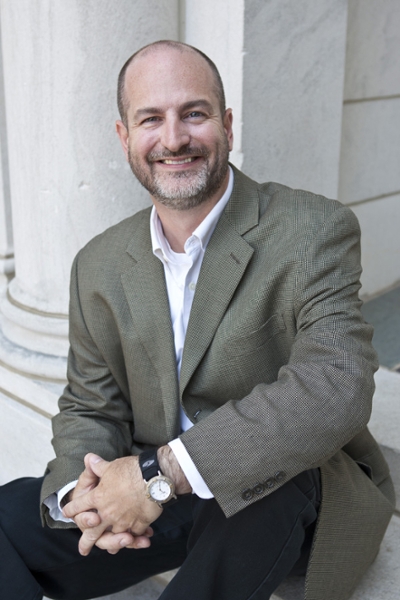
Jeffery M. Leonard is a Professor in the Department of Biblical and Religious Studies at Samford University's Howard College of Arts and Sciences. He specializes in Hebrew, the Hebrew Bible, and the ancient Near East, teaching courses like Elementary Hebrew and Creation and Covenant. A highly regarded educator, he has received multiple awards for teaching excellence, including the 2016 Joe O. Lewis Faculty Scholar Award and the 2019 Howard College Outstanding Teaching Award. Leonard's research focuses on inner-biblical allusions, particularly in historical psalms and the relationship between Torah traditions. His notable publications include Creation Rediscovered (2020) and a two-volume commentary on Exodus (2023). He also explores themes like biblical creation narratives and the intersection of theology with historical texts. His academic journey includes a PhD from Brandeis University (2006) and an MDiv from Alliance Theological Seminary (1995). Beyond academia, Leonard is an ordained minister and actively engages with local communities through lectures and presentations on biblical themes.
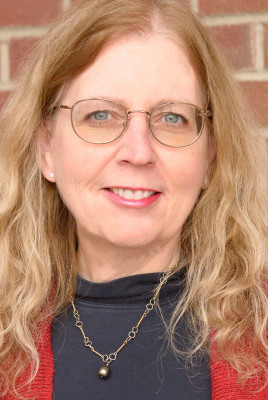
Naomi McAreavey is an Associate Professor in the School of English, Drama and Film at University College Dublin (UCD), where she has been a faculty member since 2006. Her research and teaching focus on early modern Irish literature and culture, particularly women's writing and the memory cultures of the 1641 rebellion. She is actively involved in academic leadership, having served as Head of Teaching and Learning and Vice Principal for Teaching and Learning in the College of Arts and Humanities, and currently serves as the University for All Faculty Partner for Arts and Humanities. PhD, Queen’s University Belfast MA, Queen’s University Belfast BA, Queen’s University Belfast Graduate Diploma in University Teaching and Learning, University College Dublin McAreavey specializes in seventeenth-century Irish literature , with a focus on women’s life writing , 1641 rebellion memory cultures , and aristocratic female networks . Her work bridges literary studies, history, and trauma theory, using archival sources like the 1641 Depositions and the letters of the Duchess of Ormonde. She advocates for inclusive pedagogy through Universal Design for Learning and has published on Shakespeare, Renaissance drama, and innovative teaching methods. Her recent publications explore themes of memory, trauma, gender, and political agency , particularly through the lens of women’s writing and testimony. She has edited major volumes such as Women's Life Writing and Early Modern Ireland (2019) and The Letters of the First Duchess of Ormonde (2023), and her articles appear in journals like Memory Studies , Irish Historical Studies , and Parergon . These works demonstrate a consistent engagement with historical trauma, female alliances, and editorial methodology . President's Teaching Award, UCD, 2012 Teaching Excellence Award, College of Arts and Humanities, 2017 McAreavey has supervised PhD and MA students, particularly in early modern women’s writing, and coordinates modules on Shakespeare, Renaissance literature, and primary source research. She is Principal Investigator of a SATLE-funded project on generative AI in Arts and Humanities education. Her professional roles include external examiner positions at Ulster University and Dublin City University. She is also active in curriculum development and tutor training programs. She is involved in multiple collaborative research projects and edited collections, including The Body in Pain in Irish Culture (2016) and current work on a monograph titled Memory, Trauma and the 1641 Depositions . Her research lab or team is not explicitly named, but she works closely with scholars like Julie Eckerle and participates in international academic networks.
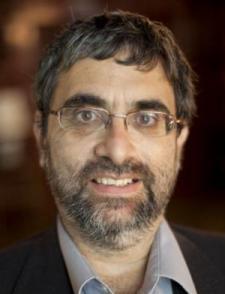
Adam J Teller is a Professor of History and Professor of Judaic Studies at Brown University, where he has been a faculty member since 2010. Previously, he taught in the Department of Jewish History at the University of Haifa from 1995 to 2010. He specializes in the history of early modern Polish-Lithuanian Jewry and its integration into broader European society. His research bridges Jewish and non-Jewish historical contexts, emphasizing comparative and integrative methodologies. Education: PhD, Hebrew University (1997) MA, Hebrew University (1990) BA, Oxford University (1984) His research interests include early modern Jewish history, economic history, the history of Hasidism, Jewish family history, and the social and cultural dynamics of Polish-Lithuanian Jewry. He emphasizes the interconnectedness of Jewish and non-Jewish societies, analyzing urban infrastructure, economic integration, and institutional development. His work often draws on both Jewish and state archival sources to reconstruct complex social realities. His recent publications reflect a sustained focus on the economic and cultural dimensions of Jewish life, the re-evaluation of rabbinic authority, and the geographic spread of religious movements. These works collectively highlight themes of integration, crisis, resilience, and transnational Jewish networks in early modern Europe. Scientific Awards: Order of Merit for Contribution to Polish Culture (2015) Senior NEH Fellow, Center for Jewish History (2012) Fellow, Center for Advanced Judaic Studies, University of Pennsylvania (2013) Bloomfield Prize for Outstanding Doctoral Dissertation (1998) Multiple fellowships from Harvard, Johns Hopkins, and Leipzig institutions He has advised several graduate students on topics ranging from the interwar Yiddish press to Jewish plutocracy in Tsarist Russia, reflecting his broad mentorship in modern and early modern Jewish history. His teaching includes courses on early modern globalization, Jewish-Christian relations, and the Holocaust. He is actively involved in scholarly communities, serving on editorial boards for Polin: Studies in Polish Jewry , Zutot , and as Associate Editor of Gal-Ed . His ongoing research on the 17th-century Jewish refugee crisis following the Chmielnicki uprising aims to reconstruct transnational Jewish networks across Europe, the Middle East, and North Africa, offering new insights into the global dimensions of early modern Jewish life.
Professor Peter Keegan holds a prestigious position at Macquarie University's Department of Ancient History within the School of Humanities. His academic journey includes roles such as Associate Dean Learning and Teaching (2015-2021) and interim Department Chair (2022). A Fellow of both the Royal Historical Society (UK) and the Royal Society of New South Wales, he specializes in Roman Republican/Imperial history, epigraphy, and gender studies. His research focuses on Pompeian graffiti, Roman social dynamics, and women's roles in antiquity. Keegan earned his doctorate from Macquarie University (2003) and held successive academic positions: Associate Lecturer (2009), Lecturer (2010-2011), Senior Lecturer (2012-2015), Associate Professor (2016), and full Professor (2021). He has supervised over 30 students across Honours, Masters, and PhD levels. His teaching portfolio includes courses like AHIS3201 Women and Gender in the Ancient World and AHIX8320 Under the Shadow of Vesuvius. Research highlights include two sole-authored books, co-edited collections, and extensive grants ($500k+ secured). Notable awards include a 2012 National Teaching Citation and 2024 Faculty Teaching Excellence Award. His work bridges archaeology and epigraphy, with recent projects analyzing Pompeii's spatial narratives and Roman women's agency in historical texts. Editorial roles include co-editing Brill's Inscriptions in the Private Sphere and contributing to Cultural History of Graffiti series. He has reviewed at institutions like La Trobe University and led projects such as the Macquarie University Archaeological Fieldwork Lab. Current research explores Livy's portrayal of women in Rome's foundational narratives and the socio-spatial dimensions of graffiti in Roman urban contexts.
K. Dawn Grapes is an Associate Professor of Music History at Colorado State University, holding academic roles including Director of Graduate Studies and Musicology Area Coordinator within the School of Music, Theatre, and Dance. She earned her Ph.D. in Historical Musicology from the University of Colorado at Boulder. Her research focuses on Early Modern English music, particularly John Dowland and funeral elegies, alongside innovations in music history pedagogy. Dr. Grapes has authored notable works such as *With Mornefull Musique: Funeral Elegies in Early Modern England* (2018), *John Dowland: A Research and Information Guide* (2020), and the upcoming *Dowland* (2024). She has contributed peer-reviewed articles and book chapters on topics ranging from Elizabethan court music to modern pedagogical practices. Her work has been recognized with awards including the 2022 Eva O’Meara Award and the 2020 Claude V. Palisca Fellowship. Active in professional organizations, she serves as Vice-President of the North American British Music Studies Association and is a member of the American Musicological Society and other scholarly groups. Beyond academia, Dr. Grapes performs on the flute and writes program notes for the Colorado Bach Ensemble and Fort Collins Symphony, hosting a *Composer Talks* series.
Miguel Tain Guzmán is a professor in the Department of Art History at the University of Santiago de Compostela, affiliated with the Faculty of Geography and History and the Humanities Research Institute (iHUS). His research focuses on Baroque art and architecture, the cultural and urban history of Santiago de Compostela, and the artistic heritage of the Way of St. James. He is a recognized scholar in the field of art historical studies, particularly in Galician and Spanish architectural heritage. His research interests include Baroque art and architecture , urban topography , pilgrimage studies , historical documentation of cities , and the cultural reception of European grand tours . He has conducted in-depth studies on lost architectural heritage in Galicia and the artistic documentation of 17th-century elite travel, such as the journey of Cosimo III de’ Medici through Iberia. The most recent articles highlight a consistent trend in analyzing visual and textual sources to reconstruct historical urban and religious life. His work often centers on Santiago de Compostela, examining its cathedral, festivals, pilgrimage infrastructure, and architectural evolution. These publications reflect a deep engagement with archival materials, artistic representations, and historical narratives, contributing significantly to the understanding of Spain’s cultural and religious landscape. He has not been explicitly mentioned as receiving scientific awards in the provided texts. Miguel Tain Guzmán advises and collaborates with other researchers, particularly in interdisciplinary projects involving architectural conservation and historical documentation. He has participated in major research initiatives such as the Programa Catedral, supported by the Fundación Barrié, and has led studies on architectural drawings and construction techniques in Baroque Spain. His work often involves collaboration with institutions like the Consorcio de Santiago and academic peers across Spain and Europe. He is associated with the research group IDEAHS (Research and Development in Arts and Humanities) and has contributed to projects involving the study of historical tracings (monteas) in Galician churches, such as at the convent of Santa Clara. These efforts highlight his involvement in both theoretical and practical aspects of architectural history and conservation.
Lucjan Świto is a Professor at the Department of Philosophy and Canon Law, Faculty of Theology, University of Warmia and Mazury in Olsztyn, Poland. His academic work bridges theology and legal studies, with a focus on the interaction between state law and religious normative systems. His research interests include: Mixed issues of state-church law Intersections between Polish civil law and canon law Legal frameworks governing churches and religious associations in Poland The publications listed reflect a consistent engagement with legal-theological discourse, particularly in the domain of church-state relations and canonical jurisprudence. Although specific titles are not provided in the source, the thematic focus suggests interdisciplinary scholarship combining theology, law, and public policy. Scientific recognition includes: Hirsch index (Google Scholar): 4 Total citations (Google Scholar): 59 He is actively involved in doctoral supervision, having promoted one doctor and currently guiding four doctoral students, both Polish and foreign. He confirms the availability of necessary infrastructure and resources in his department to support new research projects. He is associated with the Department of Philosophy and Canon Law, which provides academic and logistical support for his research in canon law and church-state legal dynamics.
Maria Korybut-Marciniak is a Professor in the Department of Church History and Heritage at the Faculty of Humanities, University of Warmia and Mazury in Olsztyn. She holds a habilitated doctorate (dr hab.) and is an active researcher and doctoral supervisor, focusing on 19th-century Polish and Lithuanian-Belarusian social and cultural history. Her work emphasizes gender, private life, bureaucracy, and charitable institutions under Russian rule. Research Interests: Her primary areas include gender history, women's roles in 19th-century Polish society, the history of private life, and the social dynamics of the Lithuanian-Byelorussian lands. She explores cultural mentality, everyday practices, and marginalized groups through personal documents, memoirs, and institutional records. The recent publications (2024–2014) reflect a consistent focus on 19th-century social and cultural history, particularly centered on Vilnius and the Russian Empire. Themes include humor, food culture, bureaucratic life, charitable activities, and biographical studies of forgotten figures—especially women in science and gentry women. Keywords span history, cultural studies, gender, and social history, with sub-fields like emotional history, material culture, and philanthropy. Scientific Awards: No scientific awards were mentioned in the provided text. Advising and Grants: Dr. Korybut-Marciniak is an approved doctoral supervisor, willing to mentor Polish doctoral students. She has confirmed access to funding and adequate research infrastructure for doctoral projects. While no specific grants are listed, her ability to support research financially is explicitly stated. Labs, Teams, and Collaborations: She is part of a research team contributing to the publication series Życie prywatne Polaków w XIX wieku (Private Life of Poles in the 19th Century), frequently co-authoring with Jarosław Kita and Karolina Studnicka-Mariańczyk. Her work is associated with the Institute of History and utilizes archival sources from Vilnius, including family correspondence and institutional records.
Assoc. Prof. Mehmet Ertan Yildiz is an academic at Akdeniz University , affiliated with the Faculty of Letters, Department of Ancient Languages and Cultures . With a focus on Classics, Greek Epigraphy, and Classical Archaeology , his research spans ancient Anatolia’s historical geography, inscriptions, and cultural practices. Current position: Associate Professor (2022–present) Previous roles: Assistant Professor (2015–2022) Non-academic background: Environmental Health Technician (1992–2015) Research Interests : Dr. Yildiz specializes in Greek and Latin epigraphy , Lycian and Phrygian archaeology , and ancient Anatolian transportation systems . His work integrates epigraphic, numismatic, and literary sources to reconstruct historical landscapes and social structures. Publication Trends : His recent articles (2019–2024) emphasize Lycian rock tombs , funerary practices , and epigraphic analysis in Anatolia . Key subfields include Roman provincial systems , ancient road networks , and gender studies in antiquity . Scientific Awards : 2219-International Postdoctoral Research Scholarship, TUBITAK (2016) Research Scholarship, University (2008–2009) Advising & Grants : Supervised PhD and postgraduate theses on Tlos inscriptions and Qadianda epigraphy . Collaborated on funded projects like Antik Coğrafyadan Modern Coğrafyaya (2020–2022) and Stadiasmus Patarensis (2015–2018), integrating GIS mapping and epigraphic surveys . Labs & Teams : Involved in long-term archaeological excavations at Tlos (2009–2024) and Kelainai-Apameia Kibotos (2020–2024), collaborating with international teams on epigraphic and historical-geographic field surveys .
Maria Juda is a Professor at the Department of Information and Digital Culture, Institute of Cultural Studies, Faculty of Languages, Literatures and Cultures, Maria Curie-Skłodowska University (UMCS), Lublin. She has held leadership roles including Director of the Institute of Information Science and Library Studies (2003-2019), Head of the Department of Digital Humanities (2019-2020), and Director of the Doctoral School of Humanities (2019-2022). Her work bridges historical bibliography, book culture, and digital humanities. Research Interests focus on: History of Polish printing (15th-18th centuries) Historical bibliography and book provenance Cultural heritage of Lublin and local communities Archival science and digitalization methodologies Interdisciplinary analysis of book culture Polonica collections in international libraries Key Achievements include: Monographs: Pismo drukowane w Polsce XV-XVIII wieku (2001) and Przywileje drukarskie w Polsce (1992) Editorial leadership for Folia Bibliologica and critical source editions Establishment of the Humanistic Laboratory of Digitalization and Information Visualization Active participation in Polish Academy of Sciences committees and cultural societies
Alfredo Andrés Martín García is a Full Professor (Profesor Titular) at the Department of History, Faculty of Philosophy and Letters, University of León. His research focuses on Early Modern History, Social History, Religious History, and Gender Studies. His academic work extensively explores the Franciscan Third Order (VOT) in the Iberian Peninsula and colonial Americas, analyzing its medieval origins, 18th-century revival post-Trent reforms, and socio-economic bases. He has coordinated monographic issues on secular Franciscanism and studied female transgressions in Iberian ecclesiastical records. Recent publications examine female sexual morality in Portuguese territories (2024), Trent-inspired relic cults in León (2019), and the role of printed propaganda in shaping Iberian religious identity (2017). His work often integrates quantitative analysis of archival sources, focusing on rural economies and communal land management. He is affiliated with the research group 'CONCEJO' and has secured funding from the Ministry of Science and Innovation for studies on violence, conflict, and social control in the Iberian Northwest (16th-19th centuries).
Mariusz Grzegorz Ausz is a Professor at the Department of Social History and Education within the Faculty of History and Archaeology at Maria Curie-Skłodowska University (UMCS) . His career spans decades of research and leadership in historical and educational studies. His academic journey began with a Master's degree in History (1996) from UMCS, followed by a PhD (2000) and Habilitation (2014) . He serves as President of the Lubelskie Towarzystwo Genealogiczne and holds leadership roles in organizations like the Towarzystwo Historii Edukacji . His research focuses on the history of Piarist schools , educational reforms , and multimedia in historical education . Recent work explores the 250th anniversary of the National Education Commission and virtual reality in teaching history . He has pioneered projects like www.praktyki.wh.umcs.pl , integrating modern technology with historical pedagogy. His publications include books on 18th–19th century Piarist education , co-edited volumes on regional education , and articles analyzing interwar pedagogy and religious tolerance in schools . He collaborates internationally, with studies on Lithuanian and Belarusian educational networks .
Professor Wiesław Partyka works at the John Paul II Catholic University of Lublin (KUL) in the Faculty of Social Sciences , affiliated with the Department of the History of Education, Care and Social Pedagogy . His research focuses on the historical development of educational systems, care institutions, and religious organizations in Poland, particularly during the 19th century and interwar period. Academic Role : Full Professor at KUL Research Themes : History of education, institutional care systems, religious educational organizations, Jewish medical professionals Scientific Contributions : Over 30 years of publications examining orphanages, hospitals, and welfare policies in partitioned Poland and the Zamość Ordynacja. Regular participation in Erasmus+ mobility programs and leadership roles in editorial committees. Awards : National Education Commission Medal (2014), multiple Erasmus+ scholarships Supervision : Mentored numerous thesis students studying topics like juvenile delinquency, foster care, and domestic violence intervention
Timothy McInerney is a Lecturer in British and Irish Civilization at Université Paris 8 since 2015. His research focuses on intersections between racist ideologies and hereditary nobility in 18th-century Britain, spanning natural history, literature, and political philosophy. His work examines how aristocratic concepts influenced racial categorization and colonial thought. Recent publications (2013–2023) include analyses of travel narratives, literary depictions of race, and the intellectual foundations of racial hierarchies. Key contributions explore how Enlightenment-era natural history and colonial encounters shaped modern racial thinking. No academic awards are explicitly listed, though his prolific publishing record indicates recognition in scholarly circles. Advising records and grant details are not provided in the source texts. His affiliation with Université Paris 8’s research group on Cognition, Society, and Language positions him at the intersection of interdisciplinary humanities scholarship. No specific lab or team affiliations are mentioned beyond departmental membership.
Asst. Prof. Mehmet Yılmaz AKBULUT is affiliated with Istanbul 29 Mayis University, where he holds the position of Assistant Professor. His academic journey includes an undergraduate degree from Boğaziçi Üniversitesi (2013), a graduate degree from the same institution (2015), and a doctorate from İstanbul 29 Mayıs Üniversitesi (2020). His research focuses on Ottoman history, particularly biographies of key Ottoman figures like Hekimoğlu Ali Paşa, diplomatic relations between the Ottoman Empire and other states, and military engagements during critical periods such as the Afghan occupation of Iran. His work bridges historical analysis with institutional and cultural studies, emphasizing the interplay between political structures and intellectual movements in the Ottoman context. Notable research interests include Ottoman diplomatic history, the dynamics of power in the 18th century, and biographical studies of influential Ottoman administrators. His publications analyze Ottoman-Austrian diplomatic relations, the role of elites in state administration, and responses to regional crises like the Afghan occupation of Iran. Methodologically, he employs cross-cultural sources (e.g., Yugoslav records) and engages with historiographical debates through critical responses to peer scholarship. His articles collectively highlight a focus on Ottoman institutional frameworks, elite networks, and geopolitical challenges. While no formal awards are listed, his scholarly contributions reflect a deep engagement with primary sources and interdisciplinary historical methodologies.