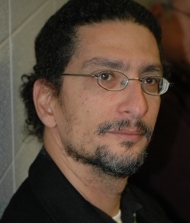
Bruno R. Giamba serves as Adjunct Faculty in the School of Bible & Ministry at Lancaster Bible College, leveraging over 25 years of pastoral and instructional experience to advance theological education in Lancaster, Pennsylvania. His academic credentials include: ThM from Dallas Theological Seminary, Dallas, TX BS in Biblical Studies from Cairn University, Langhorne, PA Giamba's research centers on essential doctrinal truths of Scripture, with specialized focus in Theology , Biblical Studies , and Practical Ministry . His work systematically explores soteriological foundations and eschatological perspectives to deepen believers' theological understanding, reflecting his commitment to doctrinal precision in Christian formation. His publications demonstrate consistent engagement with core theological tensions—particularly salvation theology and afterlife concepts—revealing a scholarly trajectory rooted in biblical exegesis and responsive to contemporary theological debates. No scientific awards or major research grants are documented in available sources. Through pastoral ministry and classroom instruction, Giamba has mentored countless believers, though specific graduate students aren't enumerated. His authorship of two significant theological works underscores his dual commitment to academic rigor and practical ministry application.
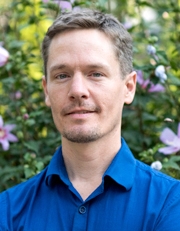
Alan Kirk serves as Professor of Religion in the Department of Philosophy & Religion at James Madison University, maintaining an active academic profile with research bridging religious studies and cognitive science. His office is located in Cleveland Hall 216 with primary contact kirkak@jmu.edu. His educational credentials include: Ph.D., University of Toronto M.A., University of Calgary B.A., University of Calgary M.A., Pepperdine University Diploma, Prairie Bible College Professor Kirk's research specializes in New Testament and Early Christianity with particular emphasis on cognitive and cultural memory theory applications to ancient gospel transmission. He investigates how memory mechanisms shaped the formation and historical development of Jesus traditions within early Christian communities, offering interdisciplinary perspectives that connect biblical scholarship with cognitive science. His publication trajectory demonstrates consistent focus on memory-theory applications to gospel studies, culminating in the 2023 monograph Jesus Tradition, Early Christian Memory, and Gospel Writing . These works collectively analyze the cognitive processes underlying oral and written transmission of religious traditions, revealing how memory frameworks influenced textual development in early Christianity. While specific grant funding and student advising details remain unspecified in available materials, Professor Kirk actively teaches New Testament and early Christianity courses, contributing to both undergraduate and graduate education within the department.
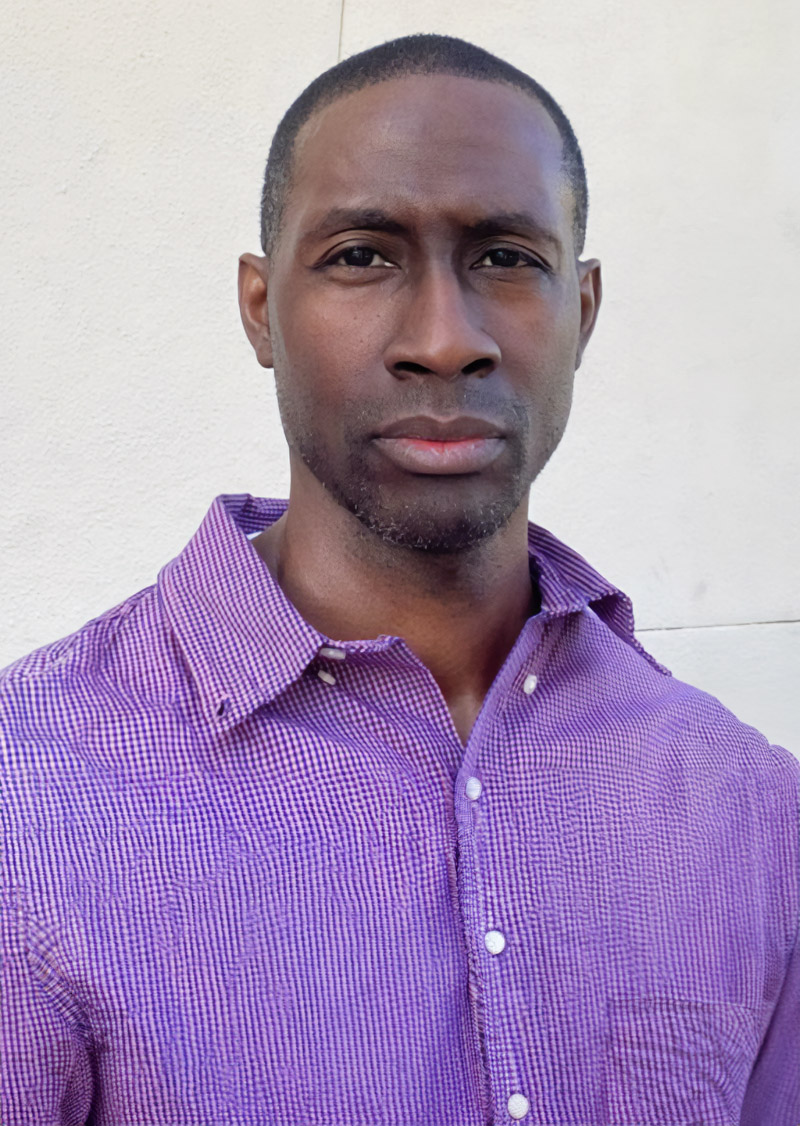
Dr. Khaled Keshk is an Associate Professor in the Religious Studies Department at DePaul University's College of Liberal Arts and Social Sciences. He holds a Ph.D. from the University of Chicago. His research focuses on early Islamic historiography, hagiography, Jewish-Muslim relations (622–1200 CE), and the historical imagination of modern Islamist movements. He teaches courses such as Introduction to Islam, Islamist Political Movements, and Shi'ite Islam. His work includes a monograph, *The Historians' Mu'awiya: The Depiction of Mu'awiya in the Early Islamic Sources* (2008), and peer-reviewed articles in journals like *Journal of Islamic Studies* and *Journal of Near Eastern Studies*. His research examines how early historians shaped narratives of key Islamic figures and events. No scientific awards or grants are explicitly listed. He advises no listed students, and no lab affiliations are mentioned. His office is located at LPC 2333 N Racine, Ste. 201, with contact via KKESHK@depaul.edu or 773.325.4466.
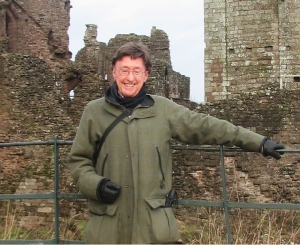
Professor Matthew J Strickland serves as Professor of Medieval History in the Department of History at the University of Glasgow's College of Arts. His office is located at R301 Level 3, History, 10 University Gardens, Glasgow G12 8QH, with contact information including telephone 01413306164 and email Matthew.Strickland@glasgow.ac.uk. Professor Strickland's research program centers on several interconnected themes within medieval military and political history. His primary areas of interest include chivalry and the conduct of war in medieval Britain and Europe, kingship and political culture in the Anglo-Norman and Angevin realms (11th-13th centuries), aristocratic rebellion and concepts of treason, and medieval warfare with particular attention to castles and fortifications. His scholarly approach integrates military, political, and cultural history perspectives to examine how warfare shaped medieval societies and political structures. His publication record reveals consistent engagement with themes of medieval warfare ethics, political rebellion, and the evolution of chivalric concepts. His work demonstrates particular expertise in the Anglo-Norman and Angevin periods, with numerous publications examining the conduct of war, concepts of treason, and aristocratic rebellion during these formative centuries of English and French history. His research often bridges British and continental European perspectives, highlighting the interconnected nature of medieval warfare and political culture. Saltire Society's Scottish History Book of the Year (2012) for 'A Military History of Scotland' Society for Army Historical Research's Templer Medal for 'A Military History of Scotland' Shortlisted for the Wolfson History Prize for 'Henry the Young King, 1155-1183' Professor Strickland has supervised numerous doctoral students whose research spans various aspects of medieval history, particularly focusing on military history, kingship, rebellion, and political culture. His supervision portfolio includes completed theses on topics ranging from King John's military campaigns to the grief of English kings, memory and crusading, fortified building in Northumberland, and the commemoration of deposed English monarchs. His collaborative approach to supervision is evident in his frequent co-supervision with colleagues both within and outside the University of Glasgow.
Prof. Matthijs Jasper de Jong is an Endowed Professor of 'Bible Translation in Contemporary Context' at the Faculty of Religion and Theology, Vrije Universiteit Amsterdam, and Head of Translation and Exegesis at the Nederlands-Vlaams Bijbelgenootschap (NBG). His work bridges academic research with practical Bible translation, emphasizing contextual, cultural, and linguistic dimensions. Education: PhD in Old Testament (Leiden University, 2006, cum laude) MA (Leiden University, 2000, cum laude) MSt in Oriental Studies (Oxford University, 2000/01) Research Interests: Dr. de Jong focuses on Bible translation methodology, contextualization of translation practices (historical and global), Old and New Testament exegesis, and the application of AI in translation. His recent projects include analyzing the Book of Job and critiquing the 'Transfer Paradigm' in translation theory. Awards: Praemium Erasmianum (2007) for his doctoral thesis Teaching and Supervision: He teaches courses on global Bible translation, translation theory, and exegesis. He supervises several PhD students and contributes to the Minor in Bible Translation in a Digital Age. Labs/Teams: Leads translation initiatives at NBG, collaborating on projects like the Dutch 'Bible in Plain Language' (2014) and the revised Nieuwe Bijbelvertaling (NBV21, 2021).
R. Khari Brown serves as a Professor in the Department of Sociology within Wayne State University's College of Liberal Arts and Sciences, teaching core courses including Understanding Human Society, Sociology of Religion, and Race Relations in Urban Society across undergraduate and graduate levels. His academic foundation includes: B.A. in Sociology from Wayne State University (1998) M.S.W. in Social Work from the University of Michigan (2001) Ph.D. in Social Work/Sociology from the University of Michigan (2004) Professor Brown's research centers on the dynamic intersections of race, religion, and politics in American society, with particular emphasis on how religious contexts shape political attitudes and behaviors. His work investigates racial justice movements like Black Lives Matter, environmental activism patterns across religious traditions, vaccination disparities, and health care policy attitudes, consistently examining the role of sermon content in influencing congregants' political engagement and social justice perspectives. Analysis of his 2019-2025 publications reveals a cohesive scholarly trajectory focused on religious institutions as political actors, with recurring themes including racialized policy attitudes, environmental conservation behaviors, and the translation of religious doctrine into political action. His methodology frequently employs congregation-level data to demonstrate how religious settings mediate responses to contemporary social issues. No specific scientific awards were documented in the provided materials. Information regarding student advising or research grants was not included in the source content. No laboratory affiliations or research teams were referenced in the available information.
Stefan Fiol is Professor of Ethnomusicology and Affiliated Faculty in Asian Studies at the University of Cincinnati's College-Conservatory of Music (CCM), where he joined the faculty in 2010. His academic home spans both music and area studies, reflecting his interdisciplinary approach to South Asian cultural production. Dr. Fiol received his Ph.D. in Musicology from the University of Illinois at Urbana-Champaign in 2008 after conducting extensive ethnomusicological research in India, with additional fieldwork in Chile, Paraguay, and Zimbabwe. His educational journey reflects deep engagement with both Western academic traditions and global musical practices. Fiol's research spans multiple interconnected domains: the music, dance, and ritual practices of the Uttarakhand Himalayas and North India; the histories of commercial and folkloric cultural representation; drumming as a historiographic tool; and the emerging field of music and mindfulness for cognitive health. His work consistently examines how musical practices intersect with social mobility, historical memory, and cultural representation. A trained classical pianist, Fiol also actively performs on the Indian sitar, Zimbabwean mbira dzavadzimu, and various central Himalayan instruments, embodying his commitment to both scholarly and practical musical knowledge. Analysis of Fiol's publication record reveals a consistent trajectory from early work on folk music commercialization and media representation toward increasingly sophisticated examinations of music's relationship to history, memory, and social structures. His recent scholarship demonstrates growing engagement with critical methodologies, including examinations of power dynamics in fieldwork and the intersections of music with cognitive science. Association for Nepal and Himalayan Studies Jim Fisher Book Award (Honorable Mention) for Recasting Folk in the Himalayas 2008 Nicholas Temperley Award for Excellence in a Dissertation in Musicology Fiol has secured substantial research funding from prestigious sources including Fulbright-Nehru, Wenner-Gren Foundation, American Institute of Indian Studies, National Endowment for the Humanities, and various University of Cincinnati research programs. His current work includes a service learning course that pairs music and medical students with individuals experiencing neurodegeneration, reflecting his commitment to applied research with tangible community impact. While specific advisees aren't listed in the available materials, his graduate seminars suggest active mentorship in specialized areas of ethnomusicology. As both scholar and performer, Fiol bridges academic research with practical musical engagement, maintaining active connections to the musical communities he studies while contributing to broader theoretical conversations in ethnomusicology and South Asian studies.
Larry L. Welborn is a Professor in the Department of Theology at Fordham University, specializing in New Testament Studies and Early Christian Literature. He holds a PhD from Vanderbilt University, MAR from Yale Divinity School, and BA from Harding College, with post-graduate studies at Universität Tübingen and the University of Chicago. His research focuses on Pauline epistles (especially Corinthians) and Apostolic Fathers like 1 Clement, exploring their engagement with Greco-Roman cultural contexts such as politics, theater, friendship, and emotion. A secondary interest examines the reception history of Romans. Welborn’s work often bridges ancient texts with contemporary critical theory, including Marxist analysis and political theology. Recent publications include volumes on ‘The First Urban Churches’ series (SBL Press) analyzing early Christian communities in Rome, Colossae, Philippi, and Ephesus. His scholarship critically reassesses Paul’s social and theological contributions while contextualizing early Christian texts within broader Roman imperial frameworks. He currently teaches courses like ‘Introduction to New Testament’ and ‘Greco-Roman Christianity’ at Fordham, demonstrating his commitment to both academic rigor and pedagogical engagement.
Britt P. Tevis is an Assistant Professor of History and the Phyllis Backer Professor of Jewish Studies at Syracuse University. She specializes in antisemitism in U.S. history, civil rights, and legal discrimination. University of Wisconsin-Madison (Ph.D. in History, 2016) University of Wisconsin (J.D., 2012) University of Florida (B.A. in Jewish Studies and Political Science, 2007) Her research focuses on antisemitism's historical intersections with civil rights, legal frameworks, and public accommodations. She examines how Jewish identity has been racialized in American legal contexts and contributes to discussions about discrimination documentation. Recent publications and presentations include work on the Johnson-Reed Act, federal housing policies, and the legal construction of Jewish stereotypes. Awards include the Jody Ellant and Howard Reiter Family Fellowship and the Wasserman Essay Prize. Assistant Professor, Department of History Phyllis Backer Professor of Jewish Studies Committee member, Association of Jewish Studies (2020-present) Podcast co-creator, 'Antisemitism, U.S.A.' (2024)
Professor Oskar Skarsaune is affiliated with MF University College of Theology, Religion and Society. A renowned scholar in early Christianity, his research focuses on Jewish-Christian relations, patristics, and biblical studies. His work critically examines themes like Messianic prophecy, the influence of Judaism on early Christian thought, and the writings of figures like Justin Martyr. He authored numerous studies on Jewish believers in antiquity and the historical Jesus. His contributions are highlighted in an anthology published in his honor in 2011. Research interests include: Early Christian communities and their engagement with Jewish traditions Patristic exegesis and apologetics Methodological approaches to studying ancient religious movements Key trends in his publications emphasize the interplay between Jewish and Christian thought in antiquity, with analyses of texts like Isaiah, Justin Martyr’s apologies, and the Ebionites. His work bridges theology, history, and biblical scholarship. No scientific awards are listed, though his scholarly impact is evident through peer recognition. No grants or advising roles are documented. His academic contributions remain central to studies on early Christian-Jewish dialogue and patristic literature.
Dr. Annika Mueller is an Associate Professor (with ius promovendi) at the Department of Economics, Econometrics and Finance within the Faculty of Economics and Business at the University of Groningen. She serves as an EEF Fellow at the FEB Research Institute, Program Coordinator for the MSc International Financial Management, and holds membership on the Board of Examiners and GrEELab Committee. Her research affiliations include being an Affiliate of the CESifo Research Network, Member of CoRE-IPD, and Member of the Dutch Development Economics Network (DUDE). Education: Ph.D. in Economics, University of Michigan (Awarded December 18, 2011) Dr. Mueller's research focuses on Development Economics, Experimental Economics, and Behavioral Economics, with particular expertise in financial inclusion, Islamic microfinance, and field experiments in developing countries. Her work examines how financial services can be structured to better serve marginalized populations, with specific attention to religious and cultural factors that influence financial behavior. She investigates savings behavior, intergroup relations in economic contexts, and the effectiveness of development interventions, particularly in Pakistan, Uganda, Ghana, and Malawi. Her research contributes directly to Sustainable Development Goals related to poverty reduction and economic development. Her publication record demonstrates a consistent focus on field experiments in developing economies, with recent work examining cash-transfer programs in Uganda, Islamic finance mechanisms in Pakistan, and survey methodology innovations. Mueller frequently collaborates with researchers including Lensink, Ahmad, and van Dongen, producing rigorous empirical work that bridges theoretical economics with practical development applications. Her articles appear in top journals across economics, finance, and development studies. Scientific Recognition: Impact Case - Financial Inclusion in Pakistan (2024) - recognized by 2 news outlets, referenced in 1 policy source, and widely discussed with 229 readers on Mendeley Dr. Mueller actively supervises research and has advised on multiple projects, though specific student names are not listed in available documentation. She leads current research projects including an Information Transparency system for farmers' access to credit in Ghana and the Nebbi Inclusive Development Project in Uganda, which demonstrates that universal basic income proves to be an effective method of development aid. Her work combines rigorous experimental methodology with practical applications for development policy. She is affiliated with the Development Economics Research Unit and contributes significantly to the understanding of how financial systems can be adapted to cultural contexts in developing countries, particularly through her work on Islamic finance mechanisms and their comparative effectiveness against conventional microfinance approaches.
Monika Lindbekk is an affiliated researcher and postdoctoral fellow at the Department of Sociology of Law at Lund University. Her work focuses on legal cultures, comparative law, and gender dynamics in judicial systems, particularly in Muslim-majority contexts. She leads the project Adjudicating Islamic Family Law in Egypt: Continuity and Rupture , analyzing Egyptian family court rulings before and after the 2011 revolution. Lindbekk also collaborates on initiatives like the CITIZENS LAW project (Dutch Research Council) and mentors scholars through the JUST SOCIETY interdisciplinary program. Her research interests include Islamic legal studies, children's rights, and the intersection of law with religion and technology. Notable projects include Gender and Judging (Law and Society Association) and the Uses of the Past HERA-funded project on shari'a discourse. She contributes to the Cairo Research Centre, fostering academic collaboration on Middle Eastern studies. Lindbekk's recent publications address topics like Egyptian personal status reform, shari'a legal frameworks, and gender dynamics in family law. Her work emphasizes judicial practices in Muslim-majority environments, legal mobilization, and post-revolution legal shifts. She has presented at conferences on child rights, Islamic inheritance law, and Middle Eastern legal sociology. Lindbekk previously held roles at the University of Oslo and the British University in Egypt. Her current projects explore child custody rights in comparative legal cultures and the evolving role of law in socio-political contexts.
Seydi Vakkas Toprak is a Professor of History at Adıyaman University's Department of History. His expertise spans Ottoman administration, demographic studies, and modern Turkish history. Research focuses on: Ottoman provincial governance in Iraq and Syria Migration and settlement patterns Military history of Hamidiye regiments Social transformations in Anatolia Publications predominantly analyze Ottoman archival documents, population registers, and military reforms. Recent works explore migration history, local press under occupation, and Tanzimat-era administration. He has supervised graduate research on Ottoman judicial records and demographic studies. Projects include transcription and analysis of Adıyaman judicial registries. Leads research on Ottoman-Russian geopolitical conflicts and edits historical chronicles like Nuri Tarihi.
Anders Fröjmark is an Associate Professor of History at Linnaeus University, based in Kalmar, Sweden, and teaches at the Växjö Campus. He holds a Ph.D. from Uppsala University (1992) and has conducted postdoctoral research at l'Université de Paris X-Nanterre. His research focuses on Scandinavian medieval history, particularly the cult of saints, female leadership, and medieval religious practices. He is a key member of the VR-funded project 'Mapping Lived Religion – medieval cults of saints in Sweden and Finland' (2019–2023) and previously contributed to the Erasmus-funded Baltic Sea History Project (BSHP). Fröjmark’s scholarly interests span medieval Scandinavian religious and social life, including studies of saints’ relics, pilgrimage routes, and gender dynamics. He collaborates with institutions in the Baltic States, Belarus, and the U.S., emphasizing transnational historical connections. He is affiliated with Medeltidsforum Linné, a research network for medieval studies, and serves on the editorial board of Historisk Tidskrift . His publications include over 50 articles and book chapters, with topics ranging from the canonization processes of medieval saints to the analysis of miracle narratives. Notable works address Queen Margaret I of Denmark’s leadership and the cultural impact of medieval Baltic relations. Fröjmark also engages in public outreach, such as a podcast on Ukrainian history and contributions to educational materials on historical methodology.
Holly L. Wilson is a Professor at Louisiana State University At Alexandria with a PhD from Pennsylvania State University (1989). Her academic career spans several decades with a primary focus on Kantian philosophy, particularly Kant's anthropology lectures and their relationship to critical philosophy. Professor Wilson's research interests include Applied Ethics, Normative Ethics, 17th/18th Century Philosophy, Continental Philosophy, and Ecofeminism. She has made significant contributions to understanding Kant's pragmatic anthropology, exploring its sources, development, and relationship to his critical philosophy. Her work often examines the connections between morality and anthropology in Kant's system. Her recent publications (2015-2022) have focused on Kant's anthropology lectures, analyzing their historical development, theoretical foundations, and implications for understanding freedom, prudence, and moral philosophy. Earlier work explored intersections between Kant's philosophy and ecofeminism, as well as topics in climate change ethics and the philosophy of marriage. Her dissertation at Penn State, "Kant's Pragmatic Anthropology and its Relationship to Critical Philosophy" (1989), established her scholarly focus on the relationship between Kant's anthropology lectures and his critical works, arguing against the view that anthropology developed from empirical psychology parts of Kant's metaphysics lectures.