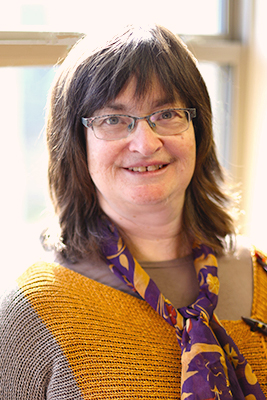
Anna Berge is a Professor of Linguistics at the University of Alaska Fairbanks, directing the Alaska Native Language Archive. She holds a PhD from the University of California, Berkeley (1997), specializing in the documentation, description, and historical analysis of Eskimo-Aleut languages, particularly Unangam Tunuu (Aleut). Her research integrates linguistics with archaeology, genetics, and environmental studies to explore prehistoric language contact and divergence patterns along the North Pacific Coast. Her work focuses on morphosyntax, discourse analysis, and language revitalization for highly endangered languages. She teaches courses in Morphology, Field Methods, Community Language Documentation, and Eskimo-Aleut Linguistics, emphasizing practical skills for language preservation. Berge's multidisciplinary approach addresses Aleut language divergence from Eskimoan branches, leveraging data from multiple disciplines to reconstruct linguistic prehistory. She actively collaborates with Indigenous communities in Russia, Alaska, Canada, and Greenland to archive linguistic materials and support language maintenance initiatives.
Professor Agnieszka Zabłocka-Kos is a faculty member at the Institute of Art History, University of Wrocław, specializing in Central European architectural history and urbanism. Her work focuses on 19th-20th century architecture, with particular emphasis on Wrocław/Breslau, including post-war reconstruction, national identity construction, and sacred space design. Professor, University of Wrocław Specialist in 19th-20th century Central European architecture Director of postdoctoral internships (NCN FUGA III) Recipient of multiple Rector's awards for research and teaching Research Themes: Urban development in Central Europe, political architecture in Poland/Germany, sacred architecture of the 19th century, post-war modernism, industrial architecture revitalization. Her students have produced award-winning theses on topics like Wrocław urban blocks, Silesian architects, and post-industrial adaptations. Scientific Contributions: Notable works include the edited volume Architecture in the 'long' 19th century (2019), multiple articles on Breslau's architectural conflicts, and international projects on Central European sacred architecture. She has supervised 33 master's and 5 doctoral theses, with several student works published as books. Dettloff Prize for dissertation (1992) Rector's awards for research and didactic achievements International projects with universities in Berlin, Freiburg, and Leipzig Advisor for Wrocław's Monument Office and City Development Bureau Her teaching integrates interdisciplinary approaches, linking art history with political, economic, and social contexts. She promotes student research popularization through conferences, exhibitions, and publications.
Andrew Ollett is an Associate Professor and Director of Graduate Studies in the Department of South Asian Languages and Civilizations at the University of Chicago , where he has taught since 2019. His research focuses on the literary and intellectual traditions of South and Southeast Asia, particularly through works in Sanskrit, Prakrit, Apabhramsha, and Kannada from the first millennium CE. Co-founder and editor of NESAR (New Explorations in South Asia Research) Director of NEH-funded edition/translation of the Kavirājamārga (earliest Kannada literary manual) Expert in Prakrit and Kannada literary traditions His work explores the 'question of language'—examining how language choice shaped cultural production and change in premodern India. Current projects include a monograph on context-sensitivity in Indian language theories and a study of manuscript technology's impact on early South Asian knowledge communities. He has authored The Mirror of Ornaments (Naples: Unior Press, 2025) and Language of the Snakes (UC Press, 2017), and co-authored Lilavai (Harvard, 2021). Recent publications include interdisciplinary studies on: Sanskrit-Prakrit campū genre reevaluation Pragmatics in Mīmāṁsā interpretive concepts Manuscript literacy's influence on literary forms Historical linguistics of Middle Indic syllable reduction Philosophy of language in Śālikanātha and Kumārila Bhaṭṭa Awarded the NEH 'Scholarly Editions and Translations' grant , he teaches classical South Asian literature courses covering Sanskrit, Prakrit, and Tamil traditions. He maintains digital resources including a Prakrit Digital Texts Project and Mīmāṁsādigdarśinī digital text repository, and actively contributes to open-access scholarship.
Timo Kaartinen serves as Professor of Social and Cultural Anthropology and Vice Dean for Research and Doctoral Education at the University of Helsinki 's Faculty of Political Science . Since 1992, he has conducted extensive research in Southeast Asia with a focus on Indonesia, exploring communicative practices, narratives, and cultural responses to uncertainty. His teaching spans social change in bachelor's, master's, and doctoral programs, covering environmental anthropology, political anthropology, cosmologies, religions, and linguistic anthropology. PhD in Anthropology, University of Chicago (2001) Docent (Adjunct Professor), University of Helsinki (2011) Research interests center on ethical discourse in Indonesian Islamic universities, resource politics in oil palm estates, and linguistic anthropology with emphasis on storytelling, folk poetry, and minority language revitalization. His work combines ethnographic focus on Southeast Asia with theoretical contributions to frontier studies and postcolonial anthropology. Recent publications examine frontier temporalities (2020-2025), Islamic transformations (2019), and oral narrative structures (2017-2013). Key projects include ARCTIC Research Centre (2025-2029), Diversity in Society and Life (DIVSOL) (2025-2030), and Religious Movements in Ethical Life (2019-2023). Grants from the Academy of Finland and University Profiling Funding support these initiatives. Academic activities include keynote speeches at international conferences (e.g., Empowering Local Wisdom 2014, Labor Migration in Asia-Pacific 2013) and editorial roles. He has conducted fieldwork in Indonesia since 1992, focusing on Bandanese cultural heritage and Maluku religious dynamics . His methodological approach combines ethnographic fieldwork with historical document analysis .
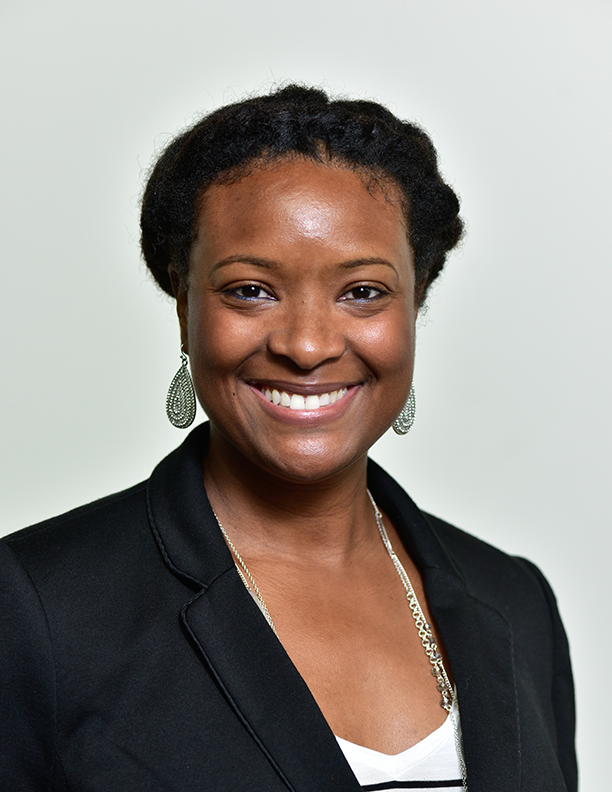
Tonya Sanders Thach, Ph.D., serves as Associate Professor in the Department of City and Regional Planning within Morgan State University's School of Architecture and Planning. A certified planner (AICP) with 17+ years of experience, she specializes in community engagement to address environmental, housing, transportation, and health disparities in marginalized communities through partnerships with faith-based organizations. Her academic credentials include: B.A. in Psychology from Truman State University (minor in Spanish) M.A. in Community Psychology and Social Change from The Pennsylvania State University Ph.D. in Urban Planning and Policy from the University of Illinois at Chicago Dr. Sanders Thach's research explores Faith-based Community Development, Curriculum Development, Health and Community Development, Community Engagement, and Climate Adaptation. She designs community engagement strategies and evaluates interventions for sustainability and equity, particularly in lower-income minority communities facing historic environmental injustice and housing disparities. Her work emphasizes dismantling structural barriers through faith-based partnerships while advancing public health and affordable housing solutions. Analysis of her 2014-2018 publications reveals consistent focus on power dynamics in faith-based cross-sector collaborations, climate adaptation in vulnerable urban settings, and community-driven historic preservation. Her work demonstrates how religious institutions can catalyze equitable development while navigating complex partnership challenges in marginalized communities. Her notable recognition includes: Civic Leadership Award, Proviso Action Committee (2011) Dr. Sanders Thach has secured significant grant funding including a $25 million Department of Energy grant for the Baltimore Social-Environmental Collaborative (2022-2027) as Co-PI, NIH-funded CBPR research on sanitation ($20,000), EPA green infrastructure projects ($60,000), and multiple community planning grants from local governments. Current initiatives involve partnerships with Enterprise Community Partners, Community Development Network of Maryland, and Southwest Partners to address housing, health, and climate resilience in Baltimore. She co-leads the Baltimore Social Environmental Collaboration (40+ researchers from 12 institutions), serves as Board Chair of Interfaith Partners for the Chesapeake, and contributes to national planning education through the Association of Collegiate Schools of Planning and American Planning Association.
Charles M. Stang is Professor of Early Christian Thought at Harvard Divinity School and Director of the Center for the Study of World Religions, positions he has held since joining the faculty in 2008 and becoming director in 2017 respectively. His academic home is firmly within Harvard University's religious studies ecosystem, where he has established himself as a leading scholar in ancient Christian thought and Mediterranean religious history. His educational background includes an AB from Harvard College, an MDiv from the University of Chicago, and a ThD from Harvard Divinity School. This rigorous training across prestigious institutions has equipped him with interdisciplinary perspectives that inform his boundary-crossing scholarship. Stang's research interrogates the intersections of early Christian thought with broader Mediterranean philosophical traditions, with particular emphasis on apophatic theology, Gnosticism, and Syriac Christianity. His work consistently challenges reductionist approaches to religious studies, advocating instead for what he terms an 'expansive anthropology, ontology and epistemology' that recognizes religion's capacity to transcend mundane frameworks. He has developed a distinctive theoretical framework around 'transcendence and transformation'—concepts he argues should form the core of religious studies in the contemporary academy. His publications reveal a trajectory from focused historical studies of early Christian texts toward more expansive theoretical interventions in religious studies methodology. While his early work centered on figures like Dionysius the Areopagite and Evagrius Ponticus, his recent scholarship increasingly engages with contemporary questions about religion's role in the humanities and the urgent need for what he calls 'superhumanities' that acknowledge dimensions of reality beyond conventional academic frameworks. Manfred Lautenschläger Award for Theological Promise (2013) for Apophasis and Pseudonymity in Dionysius the Areopagite As Director of the Center for the Study of World Religions, Stang has launched the 'Transcendence and Transformation' initiative, positioning the center as both a scholarly hub and a conceptual beacon for reimagining religious studies. His vision frames religious studies not as a marginal discipline but as essential to revitalizing the humanities through its unique capacity to engage with dimensions of reality that conventional academic frameworks often overlook. The Center functions as what Stang describes as 'a beacon, a harbour, and a record' for this reconceptualization of religious inquiry.
Roxane de la Sablonnière is a Full Professor in the Department of Psychology at the University of Montreal, affiliated with the Faculty of Arts and Sciences. She directs the CSI—Laboratory on Social Change and Identity and is a member of the CÉCD—Centre for the Study of Democratic Citizenship and the CIRCA—Interdisciplinary Research Centre on the Brain and Learning. Her research focuses on social change, cultural identities, intercultural relations, and the psychological impacts of crises like the COVID-19 pandemic. She has advised over 20 graduate students and led numerous research projects funded by agencies such as the Fonds de recherche du Québec (FRQ) and the Social Sciences and Humanities Research Council (SSHRC). Education & Research Focus : Her work examines how rapid societal changes affect individuals, particularly in contexts of immigration, policy shifts (e.g., multiculturalism, secularism), and Indigenous communities. Recent studies include longitudinal analyses of pandemic-related behaviors, identity integration processes, and the role of cognitive strategies in managing conflicting identities. Grants & Collaborations : She leads projects like "S'engager pour mieux aller!" (FRQS-funded) and contributes to strategic networks such as the Centre pour l'Étude de la Citoyenneté Démocratique (CÉCD). Her research integrates psychology with sociology, leveraging mixed methods (e.g., text mining, longitudinal tracking) to address societal challenges. Labs & Teams : As CSI director, she oversees projects on social change dynamics and identity reconstruction. Her work bridges academic and applied domains, influencing policy debates on integration, public health, and community resilience.
Catherine Guastavino is a Professor at McGill University's School of Information Studies (within the Faculty of Arts) and an Associate Member at the Schulich School of Music. She also contributes to the Centre for Interdisciplinary Research in Music Media and Technology (CIRMMT). Her roles include leading research projects and supervising graduate students in music technology and related fields. She holds a PhD in Psychoacoustics from Université Pierre et Marie Curie (Paris VI), an MSc from IRCAM (France), and a BSc in Mathematics from McGill University. Her research focuses on auditory perception, soundscape analysis, human-computer interaction, and urban acoustics. Notable projects include the 'Sounds in the City' partnership addressing urban noise policy and the development of immersive soundscape simulation tools. She leads or co-leads grants from SSHRC, NSERC, and MITACS, emphasizing interdisciplinary approaches to sound in urban environments. Guastavino's work bridges academic research with practical applications, such as designing sound installations for public spaces and improving acoustic environments in transportation and performance venues. She collaborates with city planners, musicians, and engineers, reflecting her commitment to making cities sound better through evidence-based strategies. Key Projects: SSHRC Partnership Grant for urban soundscape management (2018-2023) NSERC Discovery Grant on auditory localization (2019-2024) MITACS projects on Montreal festival soundscapes and noise policy Labs & Partnerships: Multimodal Interaction Laboratory (MIL) Collaborations with Ville de Montréal and Quartier des Spectacles Education: PhD: Psychoacoustics (Paris VI) MSc: Computer Science & Music Technology (IRCAM) BSc: Mathematics (McGill) Her teaching includes courses like Music Information Retrieval, integrating computational methods with artistic and scientific applications.
Prof. Dr. Julia A. B. Hegewald is a Professor of Oriental Art History at the University of Bonn, Germany, affiliated with the Institute of Oriental and Asian Studies (IOA) and the Department of Asian and Islamic Art History (AIK). Her research focuses on artistic expressions of dependency in Asian art, particularly South Asian, using 're-use' theory to explore cultural integration and creativity under adversity. She holds a Ph.D. from SOAS, University of London, and a Habilitation from RWTH Aachen. Key academic roles include founding the Cam-Kar Research Institute in Mysore (since 2002) and serving on editorial boards for journals like the Journal of Global Archaeology and Veranda . She has led major projects, including the Emmy Noether Junior Research Group on Jainism in Karnataka (2005–2014). Awards include the DFG Emmy Noether extension (2011–2014) and the Prix en études indiennes (2010). Hegewald has authored over 3 books, edited 6 volumes, and published 77 academic articles. Her work bridges art history with cultural studies, addressing themes like Jaina temple architecture, Indo-Islamic syncretism, and modern Indian urban planning. She actively contributes to global academic networks, including the European Association for Asian Art and Archaeology (EAAA).
Dr. Caoimhe Nic Lochlainn holds the rank of Professor at Dublin City University's Fiontar & Scoil na Gaeilge, the university's School of Irish and Celtic Studies. She earned her BA Joint Honours in Irish and French, MA in Irish, and PhD in Irish at Queen's University Belfast. Her research focuses on translation methodologies, children's literature, and cultural history with a particular emphasis on Irish-language texts. Her academic contributions include co-editing major volumes such as Laethanta Gréine & Oícheanta Sí (2013) and Thar an Tairseach (2014), as well as publishing extensively on children's literary culture and folklore adaptation. She has also authored children's books like Scéalta le hInsint don Ghealach (2018). Recent publications explore representation in Irish-language YA fiction (2025), Scottish cultural depictions in Irish prose (2023), and Gaelic translation challenges (2022). Awards include the 2025 Research Ally designation and 2019 IBBY Honour List recognition. Current supervision includes three PhD candidates: Dara De Poire, Eilis Neary, and Mohamed Yazjeen. She actively participates in academic committees such as the Irish Association for the Study of Children's Literature (EASCL) and serves on Rádio na Life's board.
Anya Bernstein is a Professor of Anthropology at Harvard University, affiliated with the Committee on the Study of Religion and the Department of Anthropology. Her research focuses on speculative futures, science/technology interfaces, religion, and death/immortality studies. She holds a BS in Linguistics (Georgetown), MA in Visual Anthropology (University of Manchester), and PhD in Anthropology (NYU). Currently on leave during AY 2025-26, she leads the Human Futures project funded by the Research Council of Norway. Key research themes include transhumanist immortality movements in Russia, Buryat Buddhist revitalization, and Pleistocene Park's ecological engineering. Her books Religious Bodies Politic (2013) and The Future of Immortality (2019) received major academic awards. Notable projects include ethnographic films like In Pursuit of the Siberian Shaman and ongoing work on Arctic ecosystem restoration. Grants include National Science Foundation, Fulbright, and Mellon Fellowships. Her work bridges anthropology of religion, sci-tech studies, and environmental humanities, with 30+ peer-reviewed articles in top journals like American Ethnologist and Cultural Anthropology .
Alessandra Maria Paola Broccolini is an Associate Professor at the Department of Social and Economic Sciences (DISSE), Sapienza University of Rome. She specializes in cultural anthropology, with a focus on intangible cultural heritage, ecomuseums, and urban/rural territorial studies. Since 2016, she has led the Italian Society for Museography and Demo-Ethno-Anthropological Assets (SIMBDEA) and coordinates national research projects like PRIN 2022 on local museums and PRIN 2020 on marginal Italian territories. Current affiliations: Sapienza University of Rome, Ecole Française de Rome [2021-2026] Research themes: Identity politics, festivals/rituals, traditional knowledge, migration-heritage intersections Key projects: Ecomuseo Casilino Ad Duas Lauros, UNESCO cultural heritage nominations Fieldwork: 5-year study in Naples' Pallonetto district (1994-1999), Bolsena Lake fisheries, Irpinia carnivals Collaborations: ICCD, Regione Lazio, Universidad de Huancayo (Peru) Her publications address heritage regimes in Italy, UNESCO's 2003 Convention implementation, and ethnographic case studies on Mediterranean festivals, urban ecomuseums, and agricultural biodiversity. She teaches Cultural Anthropology and Anthropology of Territory at Sapienza's Faculty of Political Science, Sociology, and Communication.
Gaston Bacquet is a Lecturer in Education Studies at the University of Glasgow's School of Education, specializing in Culture, Literacies, Inclusion & Pedagogy. A Chilean teacher trainer and educator based in Scotland, he also holds qualifications as a meditation and yoga instructor. With extensive international teaching experience across K-12 and higher education systems in Chile, Japan, Saudi Arabia, Myanmar, the US, and UK, his work bridges practical pedagogy and theoretical innovation. His educational background includes a DipTESOL from Trinity College London, an MA in TESOL from the Institute of Education (UCL), and a PhD in Education from the University of Glasgow. Bacquet currently teaches in the MSc/MEd Education Studies program and leads the undergraduate Asian Religions course, while supervising dissertation students across the School of Education. Research interests center on nonviolence as transformative educational practice, with emphases on decolonial approaches, contemplative pedagogy, and inclusion of minoritized groups. His work integrates Buddhist philosophy, indigenous wisdom traditions, and international perspectives to challenge Western epistemological dominance. Key methodological commitments include participatory action research and qualitative approaches that prioritize community voices. Recent publications reveal evolving trajectories from language education toward decolonial nonviolence frameworks, with increasing focus on Global South contexts, indigenous knowledge systems, and teacher preparation. His 2024-2025 work shows intensified engagement with Buddhist-Christian dialogue, indigenous contributions to peace education, and practical applications of nonviolence in classroom power structures. As a supervisor, Bacquet mentors Master's students in inclusion, nonviolence, and educational ethics, welcoming PhD proposals aligned with his research interests. His professional activities span editorial roles with Cogent Arts and Humanities and SAGE Open , alongside active participation in international scholarly networks including the Comparative and International Educational Society and the European Network for Buddhist-Christian Studies. Professional affiliations reflect his interdisciplinary reach: British Educational Research Association (2021-present), American Educational Research Association (2022-present), International Society for Contemplative Research (2023-present), and the International Society for the Scholarship of Teaching and Learning (2025-present). His conference presentations consistently address nonviolence pedagogy, decolonial curriculum development, and participatory research ethics across global contexts from Chile to New Zealand.
Robert France is an Associate Professor at Dalhousie University's Department of Plant, Food, and Environmental Sciences, part of the Faculty of Agriculture. He focuses on watershed management, environmental restoration, and the intersection of ecology with urban planning. His research spans aquatic ecosystems, land-use impacts, and climate change adaptation. He has authored numerous books and articles on topics like wetland design, restoration ecology, and the socio-cultural dimensions of environmental ethics. France has held positions at Harvard University and consulted globally on projects such as the Abu Dhabi Urban Planning Council’s master plans and Taiwan’s Aogu Ecotourism Park. His work emphasizes integrating ecological principles with human-centric design to address environmental challenges. Education: PhD in Ecotoxicology (University of Toronto), MSc in Zoology (University of Manitoba), BSc (First Class Honours, University of Manitoba) Research interests include riparian forestry impacts, urbanization effects on aquatic systems, and the ethical dimensions of environmental stewardship. He has pioneered studies on crayfish ecology, lake acidification, and stable isotope analysis to trace ecological interactions. Key contributions include books like Environmental Restoration and Design for Recreation and Ecotourism and edited volumes on regenerative landscape design. His recent work explores cryptozoological interpretations as historical indicators of environmental issues, linking folklore to ecological change. France has organized international conferences on watershed technology and urban agriculture, and his consultancy work spans North America, the Middle East, and Asia. He is a Series Editor for CRC Press' environmental series and a retained advisor for Cambridge, Massachusetts' stormwater management.
Dr Sim Innes is a Senior Lecturer in Celtic and Gaelic at the University of Glasgow's College of Arts, where he also serves as Senior Adviser of Studies for Arts & Humanities Academic & Student Administration. His work focuses on Scottish Gaelic literature, folklore, and drama across historical periods from medieval to contemporary contexts. Dr Innes's research centers on three primary areas: Medieval & Early Modern Gaelic Literature and Manuscript Culture Gaelic Folklore Gaelic Drama His scholarly work demonstrates consistent engagement with international influences on Gaelic poetry, transmission of cultural ideas, and evolution of Gaelic drama. He has made significant contributions to understanding the Book of the Dean of Lismore, McLagan Collection, and Ossianic/Fenian literature, with particular focus on how global ideas were incorporated into Gaelic poetic traditions across historical periods. Dr Innes has received notable recognition through various awards and funding including: Royal Society of Edinburgh Network Award for 'Gaelic Literature in Enlightenment Scotland' (£15,000) Bòrd na Gàidhlig funding for 'Seanchas: The Global Gaelic Jukebox' (£3,250) Scottish Gaelic Texts Society award British Academy International Partnership and Mobility Scheme participation As an educator, Dr Innes has supervised numerous PhD and MRes students working on diverse aspects of Gaelic literature, folklore, and manuscript studies. His teaching portfolio includes undergraduate and postgraduate courses on The Folklore of Gaelic Scotland, Introduction to Classical Gaelic, Gaelic Drama from 1790, and Translation Studies. He has also been actively involved in external engagement through board memberships with the Gaelic Books Council, Scottish Gaelic Texts Society, and Theatre Gu Leòr.