Emily Davenport Guerry is a Tutor in Medieval History at the University of Oxford , affiliated with St Peter's College . Her research explores the intersection of art, architecture, and religious devotion in the medieval period, with a focus on relic cults, visual culture, and the evolution of Christian iconography. Her research interests include the role of art in shaping devotional experiences, the transformation of Crucifixion imagery, and the cultural impacts of royal patronage and diplomatic exchanges. Current projects involve Gothic wall paintings in Paris/Angers, Westminster’s royal heritage, and the transnational spread of relic cults across Europe and the Mediterranean. Teaching spans medieval British, European, and world history, with specializations in visual culture and art/architecture. She supervises dissertations on medieval art, architecture, and devotional practices. Recent media contributions include analyses of the Notre-Dame fire’s historical significance (BBC History Extra) and Thomas Becket’s martyrdom (BBC History Magazine). No scientific awards are listed, and no grants/advising details are provided.
Maria Filomena Andrade is a Professor at the Open University and serves as Deputy Director of the Centre of Religious History Studies (CEHR) at the Universidade Católica Portuguesa since 2014. She is also a member of the Institute for Medieval Studies (IEM - FCSH-UN). Her academic career spans several decades with significant contributions to the field of religious history, particularly focusing on medieval Portuguese religious communities. Her educational background includes a degree in History from the Faculty of Arts of the University of Lisbon (1978), a master's degree (1994), and a PhD in Medieval History (2011) from the Faculty of Social and Human Sciences of the New University of Lisbon. Her doctoral thesis focused on In Oboedientia, Sine Proprio, Et In Castitate, Sub Clausura. A Ordem de Santa Clara em Portugal (séculos XIII e XIV) (The Order of Saint Clare in Portugal during the 13th and 14th centuries). Professor Andrade's research primarily centers on religious history, with special emphasis on female monasticism, religious archivists, and women's studies within medieval Portuguese society. She has authored numerous studies on Franciscanism and has worked extensively on inventories of monastic documentation. Her work often explores the intersection of religious communities, gender dynamics, and social structures in medieval Portugal. Her recent scholarly output demonstrates a continued focus on female religious institutes, Dominican foundations, and mendicant orders during the medieval period. The analysis of her publications reveals a consistent thematic thread examining women's roles and contributions within religious communities, particularly during the 13th and 14th centuries in Portugal. Her work bridges religious history with gender studies, providing nuanced perspectives on female spirituality and institutional religious life. Professor Andrade has been actively involved in multiple research projects, including UCP-CEHR: Centre of Religious History Studies (Pluriannual Project) , A life of research. Project for the publication and dissemination of António Domingues de Sousa Costa Archive , F-ATLAS: Franciscan Landscapes: the Observance between Italy, Portugal and Spain , and CONVEMOS: Convents and monasteries in Portugal (1096-1910): spatialities and temporalities . These projects highlight her leadership in collaborative research initiatives focused on religious history and heritage. As Deputy Director of the Centre of Religious History Studies, Professor Andrade plays a key role in guiding research activities and fostering scholarly collaboration. The CEHR serves as a hub for interdisciplinary research on religious phenomena throughout history, with particular attention to Portuguese religious traditions and their global connections.
David Quinter is an Associate Professor at the University of Alberta, holding a 50/50 joint appointment between the Department of East Asian Studies and the Program in Religious Studies. His primary research focuses on medieval Japanese Buddhism, particularly the Shingon Ritsu movement and its engagement with the Mañjuśrī cult. He examines intersections of narratives, rituals, and material culture in devotional practices, with special attention to outcasts and social welfare in Japanese religion. Teaching areas include East Asian religions, Japanese Buddhism, and methodological approaches to the study of religion. He has taught courses such as 'East Asian Religions,' 'Buddhism in Japanese History,' and 'Lived Religion in Asia.' Quinter's publications include the monograph From Outcasts to Emperors: Shingon Ritsu and the Mañjuśrī Cult in Medieval Japan (Brill, 2015) and numerous articles on topics like Eison's role in religious innovation, Manjusri iconography, and medieval Buddhist material culture. His work bridges textual analysis with material and ritual studies, emphasizing how religious practices shaped social and political dynamics in premodern Japan.
Dr. Juliet Mullins is an Adjunct Assistant Professor at the School of English, Drama and Film, University College Dublin. Her research focuses on Old English language and literature , with particular expertise in hagiography , homiletics , and cross-cultural translation practices between Latin, Old English, Middle Irish, and Old Norse-Icelandic traditions. BA, Oxford University MPhil, University of Cambridge PhD, University College Dublin Recent projects include the Dumbarton Oaks-funded three-volume edition of Aelfric of Eynsham's Lives of Saints (2019) and the IRCHSS-funded Envisioning Christ on the Cross (2013). She co-developed the UCD Teaching and Learning Grant-funded Wordloca Old English tool. Her current research explores Violence and Affective Devotion in Aelfric's Lives of Saints . Key Publications Three-volume edition of Aelfric's hagiography (2019) Envisioning Christ on the Cross (2013) St Martin translations analysis (2005) Anglo-Saxon asceticism studies (2003) Teaching ENG20410 Reading Medieval Literature ENG32740 King Arthur: History and Romance ENG31960 Apocalypse Then ENG20230 Advanced Old English She has supervised PhD theses on Anglo-Saxon Prayerbooks and Medieval Voice Conceptualization , along with MA work on Medieval Time Perception and Female Monstrosity in Travel Writing . Awards include the IRCHSS Grant (2008-2011) and the National Association for the Integration of Teaching and Learning Award (2008).
Prof. Dr. Tanja Michalsky is the Managing Director of the City and Space in Pre-Modernity department at the Bibliotheca Hertziana - Max Planck Institute for Art History in Rome. She previously held a professorship at the Berlin University of the Arts (2007-2015) and led the DFG Research Training Group 'Knowledge in the Arts' (2012-2014). Her work focuses on historical spaces, media theory, and the interplay between visual culture and spatial representation. Education : PhD in Art History from Ludwig Maximilian University Munich (1995), Habilitation at Heinrich Heine University Düsseldorf (2004). Research Interests center on media-critical analysis of historical spaces in Southern Italy (especially Naples), cartographic epistemes, and cinematic spatiality. She explores how texts, images, and maps produce space through epistemological frameworks, with a particular interest in transmedia approaches to spatial historiography. Scientific Awards include the Lise Meitner Fellowship (2001-2004). Students : Andrea Gelardi, Malvina Giordana, Kris Racaniello, Mariano Saggiomo, Elisabetta Scirocco. Email : michalsky@biblhertz.it
Professor Nicholas White is a leading scholar at the Faculty of Modern and Medieval Languages and Linguistics , University of Cambridge. He specializes in 19th-century French literature , focusing on war, friendship, marriage, and family dynamics through cultural and literary history methodologies. His research includes the Franco-Prussian War and Commune (1870-71), with a forthcoming book on this topic supported by a Leverhulme Trust Research Fellowship . He has supervised numerous PhD theses on themes like the sublime, ballooning history, and conspiracy narratives. Key Roles: Former Chair of the Faculty (2008-11), Director of the Cambridge Master's program (2018-20), Syndic of the University Library (2015-21) Collaborations: Led the Cambridge-Paris Sciences & Lettres network on Zola, co-organized international symposia Recent publications examine war literature , gendered social bonds , and postwar cultural identity . He has received the Scott Moncrieff Prize for translation and contributed to major journals like Romanic Review and Cahiers naturalistes .
Fabio Gygi serves as Senior Lecturer and Chair in the Department of Anthropology and Sociology at SOAS, University of London. Born in Switzerland, he spent formative years in Japan, Germany, and England before earning his PhD in social anthropology from UCL. Prior to joining SOAS, he worked for three years as an assistant professor of sociology at Doshisha University in Kyoto. MA in European Ethnology and Japanese Studies from University of Tübingen PhD in Social Anthropology from University College London (UCL) Dr. Gygi's research centers on material culture, particularly examining human-object relationships through three interconnected lenses: how people engage with possessions and the cosmologies they create, the cultural construction of hoarding as pathology (following its 2013 DSM-V classification), and the materialization of gender in Japanese contexts. His work bridges historical anthropology with contemporary ethnographic studies, often employing participant observation methods such as assisting with apartment clean-ups in Tokyo to study hoarding behaviors. His recent publications reveal consistent thematic trajectories across Japanese cultural studies, with particular emphasis on material agency, waste practices, and the social life of objects. The 2022-2023 publications demonstrate expanding interest in robotics and human-technology interaction alongside continuing work on gender performance and material culture in Japan. As a dedicated supervisor, Dr. Gygi currently guides fifteen PhD students across diverse topics including Japanese sex work activism, transgender existence in Kansai, assistive technology in Japan, and queer feminist kinship in Taipei. His supervision portfolio reflects his interdisciplinary approach connecting material culture studies with gender, technology, and mental health anthropology. His fieldwork primarily conducted in Tokyo informs his theoretical contributions to understanding materiality, while his earlier work on trench art from World War I established foundations for examining how traumatic experiences become embodied in material culture across historical and contemporary contexts.
Nikolas Jaspert is a Professor of Medieval History at Heidelberg University's Department of History, affiliated with the Faculty of Philosophy. As a HCIAS Joint Professor, he contributes to the HCIAS Research Focus 2 on Ibero-America and bridges the university's 'Cultural Dynamics in Globalized Worlds' research focus. His work emphasizes the Mediterranean region, transcultural relationships, and medieval Iberian language/literature. Research interests include medieval Mediterranean history, transcultural exchange, and material culture's role in cultural memory. Notable projects explore Jerusalem's symbolic presence in medieval Europe, Mediterranean ruler imagery, and the global dimensions of medieval history. He has authored/co-authored over 50 publications since 2016, focusing on themes like maritime history, crusade studies, and cross-cultural mediation. Teaching responsibilities include medieval history modules within Heidelberg's history degree programs. His academic network connects the Department of History with interdisciplinary initiatives in global history and cultural studies.
Sally J. Cornelison is a Professor and Director of the Florence Graduate Program in Italian Renaissance Art at Syracuse University's Department of Art and Music Histories within the College of Arts and Sciences. She holds a Ph.D. from the Courtauld Institute of Art (1998), an M.A. from Syracuse University (1993), and a B.A. from the University of Missouri (1988). Her research focuses on late medieval and Renaissance religious art, particularly the cult of saints and relics, and the works of Giorgio Vasari. She has curated major exhibitions such as 'Giorgio Vasari and Court Culture in Late Renaissance Italy' (2012–2013) and authored influential books including Art and the Relic Cult of St. Antoninus in Renaissance Florence (2012) and Vasari and the Sacred Image (forthcoming). Her recent articles explore Vasari's altarpieces, refectory art, and religious renovation projects in Arezzo. Cornelison has secured grants from the National Endowment for the Humanities, the Getty Research Institute, and the Samuel H. Kress Foundation. She teaches courses on Italian Renaissance art, sacred architecture, and global Renaissance studies, emphasizing interdisciplinary approaches to art history and material culture. Her academic contributions include co-editing Mendicant Cultures in the Medieval and Early Modern World (2016) and serving as a leading scholar on Vasari's artistic legacy. She actively participates in conferences and public lectures, bridging academic research with public engagement through initiatives like the Syracuse University Alumni Academy.
Blain Auer is a full professor in the Section of Slavic and South Asian Languages and Civilizations at the Faculty of Arts, University of Lausanne (UNIL), appointed on February 1, 2013. He previously served as a professor of Islamic studies in the Department of Comparative Religion at Western Michigan University. His academic expertise lies in South Asian Islamology and Urdu, with a focus on pre-modern Islamic history, particularly the Delhi Sultanate. His research centers on Islamic authority, expressed through Quranic interpretation, Hadith, exegesis, and historiography in medieval South Asia. A second major area involves ritual practices, modern pilgrimage, and relics associated with Islamic burial sites. He also investigates the intersections between Sufism and political power, Persianate court cultures, and interreligious encounters between Muslims and Buddhists in Central and South Asia. The thematic trends in his recent publications reveal a sustained scholarly focus on Indo-Islamic political legitimacy, Persian historiography in India, and the intellectual culture of pre-modern Islamic courts. His works often analyze how historical narratives were shaped by religious and political agendas, particularly in the context of Turkic and Afghan rule in South Asia. He has also contributed critical translations and studies of key Persian historical texts from the Delhi Sultanate era. Member, Board of the Medieval Institute, Western Michigan University Member, Center for the Humanities, Western Michigan University Blain Auer received his PhD in 2009 from Harvard University’s Department of Near Eastern Languages and Civilizations. His doctoral training has informed his rigorous textual and historical methodology. He continues to contribute actively to the academic community through publications, editorial work, and participation in scholarly networks focused on Islamic and South Asian studies.
Prof. Dr. hab. Zbigniew Treppa is a distinguished Professor at the Faculty of Social Sciences, University of Gdańsk , within the Department of Image Anthropology . His work bridges visual semiotics , religious iconography , and photographic theory , with a focus on acheiropoietos images (divine images not made by human hands). Education: Theology at Catholic University of Lublin, PhD from Poznań Academy of Fine Arts, Habilitation from Polish National Film, Television and Theatre School His research investigates the semiotics of photographic images , particularly analyzing sacred artifacts like the Turin Shroud , Manoppello Image , and Tilma of Guadalupe . Recent works explore the ecumenical potential of visual representation and theological interpretations of light in photography. Key trends in his publications include visual theology ( 8 entries ), acheiropoietos image analysis ( 6 entries ), and media-cultural intersections ( 4 entries ). His 2015 article in 'Więź' examines visual oppression vs. theological suffering , while 2016's 'Acta Humaniora' work debates iconographic functions in ecumenism . Scientific Awards: University of Gdańsk Rektor's Award for 'Całun turyński – fotografia Niewidzialnego?' First Prize & Honorable Mention in 'Vidical' International Photography Competition Treppa has received research grants for studies on the Manoppello Image (2008-2010) and conducted fieldwork in Italy, Mexico, and Poland. He serves on the National Centre for Culture expert panel in Warsaw and actively participates in international conferences on acheiropoietos images and visual theology . His artistic practice includes 25+ solo exhibitions of staged photography since 1982, notably 'Opera Infinita – Opera Aperta' (2012) and 'Corporale' (2013). Collaborative works appear in collective exhibitions across Poland and Italy, including the International Workshop on Acheiropoietos Images in Frascati (2010) and Toruń (2011).
Pierpaolo Polzonetti is a Professor of Music at the University of California, Davis , with a PhD in Musicology from Cornell University . His research bridges opera, eighteenth-century music, and interdisciplinary themes like food, social justice, and transcultural exchange. Research Interests include operatic gastromusicology, the intersection of music and cuisine, eighteenth-century social and gender dynamics in opera, Cuban popular music, and prison music education. He pioneers the study of gastronomic symbolism in operatic works, as seen in his 2021 book Feasting and Fasting in Opera . His publications reveal a focus on gastronomic codes in opera, political themes in Mozart and Haydn, and cultural identity in Italian opera. Awards include the Lockwood Book Award , Slim Award , and Latina International Prize . He has secured grants from the NEH , ACLS , and Earhart Foundation . Scientific Awards: Lockwood Book Award Slim Award Einstein Article Award Latina International Prize in Music Studies Grants: National Endowment for the Humanities American Council for Learned Societies Earhart Foundation Cuban Research Institute Kimberly Green Latin American and Caribbean Center Global Affairs UC Davis Seed Grant Polzonetti's teaching philosophy emphasizes social engagement, notably through programs like Don Giovanni Goes to Prison . His documentary El Sabroso (2024) explores Son music in Havana, aligning with his interests in marginalized cultural expressions.
Dr. Lucie Laumonier (she/her) is a historian specializing in late medieval France, particularly focusing on Languedoc and Montpellier. Holding a PhD from Université de Sherbrooke & Université Montpellier 3 (2013), she completed postdoctoral fellowships at Concordia University (2015-2016) and University of Minnesota - Twin Cities (2014-2015). Her research spans gender roles, family structures, fiscal systems, and religious practices in urban medieval contexts. 2020: Graduate Diploma in Journalism, Concordia University 2015-2016: FRQSC Postdoctoral Fellow, Concordia University 2014-2015: FRQSC Postdoctoral Fellow, University of Minnesota - Twin Cities 2013: PhD in History, Université de Sherbrooke & Université Montpellier 3 Her publication record (2010-present) demonstrates expertise in medieval urban economies, gendered labor dynamics, inheritance systems, and religious institutions. Recent works (2024) on "Women and Work" and "Women in Trade" highlight her ongoing analysis of economic participation in medieval societies. Earlier studies examine tax policies, childcare practices, and family networks across 14th-15th century France. Scientific contributions include fellowships from the Fonds de recherche du Québec – Société et culture. Her email address lucie.laumonier@concordia.ca indicates continued affiliation with Concordia University. While specific laboratory or team affiliations aren't detailed in available records, her collaborative editorial work (e.g., co-editing Montpellier au Moyen Âge ) suggests interdisciplinary engagement.
Vera Müller is a Senior Academy Scientist at the Austrian Academy of Sciences (ÖAW) since 2007, affiliated with the Egypt & Levant Department of the OREA Institute . She has held teaching positions at universities including Göttingen, Tübingen, and Vienna, and served as a Visiting Professor at Humboldt University Berlin in 2012–2013. Educational Background: Egyptology, University of Göttingen (PhD, 1996, summa cum laude) Prehistory and Early History, University of Freiburg Classical Archaeology, University of Vienna Physical Anthropology, University of Göttingen Research Interests: Dr. Müller specializes in early Egyptian state formation, cult practices, and material culture. Her work includes analyzing ritual relics, ceramic studies, and the significance of early writing in administration. She investigates trade dynamics between Egypt and the Levant and addresses chronology gaps in Egyptian history. Publication Trends: Her recent articles focus on Late Predynastic and Early Dynastic Egyptian burial practices, seal impressions, and ceramic analysis. Key themes include cultural exchange, chronological frameworks, and ritual deposition patterns in royal and sacred contexts. Awards & Grants: No explicit scientific awards are mentioned in the provided text. Leadership Roles: Dr. Müller served as Deputy Director (2013–2016) and Head (2014–2016) of the Institute, and since 2015 has coordinated the research group 'Tell el Daba Publications'. Labs & Teams: She collaborates with international teams on Austrian and German excavations at Tell el-Dab'a and Abydos , contributing to projects like 'Waste and Cultic Depositions' and 'Sacrificial Pit of ʿEzbet Rushdi'.
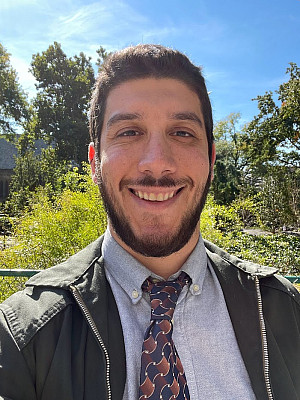
Daniel Berman is an Adjunct Lecturer in Art History at Purchase College, SUNY , affiliated with the School of Humanities, and currently teaches undergraduate introductory courses at both Purchase College and Brooklyn College, CUNY. Holding an MA in Art History with a Curatorial Certificate from Hunter College (2024), he plans to pursue a PhD in medieval art history at the Graduate Center, CUNY. His scholarly focus lies in the intersection of medieval Christian spirituality and visual culture, particularly non-narrative relic-like images of Christ’s body, blood, and wounds from 1250–1400 CE. Daniel’s research explores how medieval devotional practices shaped the emergence of cult-images capable of embodying Christ’s miracle-working presence, traditionally reserved for relics and the Eucharist. His work synthesizes methodologies from theology, mysticism, sensory studies, gender studies, semiotics, and modern cultural criticism, aiming to redefine the boundaries of medieval Latin Christian relic veneration. Recent presentations include research on 14th-century French Books of Hours at the 2024 Symposium on Medieval and Renaissance Studies (St. Louis, Missouri) and the scheduled 2025 International Congress on Medieval Studies (Kalamazoo, Michigan). Prior to academia, he worked at cultural institutions like the Metropolitan Museum of Art and the Cathedral Church of Saint John the Divine in New York City.