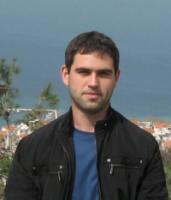
Rev. Prof. Dr. Hab. Tadeusz Guz is a Professor at the Institute of Philosophy, John Paul II Catholic University of Lublin. His work bridges philosophy, law, and theology, focusing on natural law, Christian personalism, and ideological critiques. University : John Paul II Catholic University of Lublin Academic Title : Professor Email : tadeusz.guz@kul.pl His research explores: Philosophy of Law and Natural Law Christian Personalism vs. modern reductionisms Gender ideology and its philosophical roots Ethical dimensions of state policies Papal social teachings (John Paul II, Benedict XVI) Critique of Marxist and totalitarian ideologies Key article trends include: Analysis of Marxist and neo-Marxist legal theories Philosophical foundations of Christian civilization Ethics of solidarity and national identity Ecological philosophy and bee conservation ethics Notable awards: Medal for 100th anniversary of Mother of God Queen of Poland Parish He has supervised numerous master's theses on: Legal and moral aspects of euthanasia State policy in Plato and Aristotle Communist-era human rights violations Church-state legal frameworks Philosophy of education and youth development
Gunner Mikkelsen is an Honorary Senior Research Fellow at the School of Humanities, Macquarie University. His academic work focuses on the intersection of Manichaeism, Buddhism, and Silk Road cultural exchange, with a particular emphasis on Chinese textual traditions. He has collaborated extensively with institutions like Aarhus University and SOAS University of London, contributing to critical editions and analyses of ancient religious texts.
Michael Berenbaum is a Distinguished Professor of Jewish Studies at the American Jewish University and Director of the Sigi Ziering Institute: Exploring the Ethical and Religious Implications of the Holocaust. He has authored or edited 24 books, served as Executive Editor of the Second Edition of the Encyclopaedia Judaica, and held leadership roles in major Holocaust institutions, including the United States Holocaust Memorial Museum and the Survivors of the Shoah Visual History Foundation. PhD, Florida State University B.A., Philosophy, Queens College Rabbinic Ordination, Jewish Theological Seminary Hebrew University Boston University Doctor of Humane Letters (Honoris Causa) — Denison University, College of Idaho, Gratz College Doctor of Divinity (Honoris Causa) — Nazareth College His research focuses on Holocaust studies, Jewish theology, and the ethical implications of historical trauma. He has curated major exhibitions, including Auschwitz: Not Long Ago, Not Far Away , and contributed to over 50,000 survivor testimonies through the Shoah Visual History Foundation. His academic work spans museum curation, comparative genocide studies, and ethical frameworks derived from Holocaust history. His recent publications and media collaborations analyze Holocaust memory, Jewish identity, and moral responsibility. These works often intersect with historical documentation, museum development, and ethical education. Emmy Award (1995) and Academy Award (1995) for 'One Survivor Remembers' Simon Rockower Memorial Awards (1986, 1987) for editorial and journalistic excellence Honorary doctorates from Denison University, Nazareth College, and others Berenbaum has advised and collaborated on numerous Holocaust museums and exhibitions globally, including projects in Mexico, Poland, and the United States. He has secured grants for Holocaust documentation and education, notably through the Shoah Visual History Foundation and museum curation initiatives.
Dr. Christian König is a researcher at the University of Regensburg , affiliated with the Institute of History under the Faculty of Philosophy, Arts, History and Social Sciences . He specializes in Early Modern History with a focus on political ideology, religious discourse, and cultural construction of reality. Research Themes: Historical Cartography Witchcraft Persecution Enlightenment Thought Nationalism Without Nations Confessionalization Processes Publications include a monograph on political concepts in early modern courtly behavior (2012) and studies on topics like religious Enlightenment in The Eighteenth Century (2015) and imaginary geographies in Prinzenrollen (2016). His work explores how collective discourses shape identities like nationalism and witchcraft. Teaching encompasses courses on the Holy Roman Empire, Reformation, Enlightenment, French Revolution, and social constructs in early modernity. He has collaborated on digital humanities projects, including a social media-based reconstruction of the Immerwährender Reichstag (2013).
Dr. hab. Sabina Bober, Professor at the John Paul II Catholic University of Lublin, is a leading scholar in Holocaust Studies and 20th-century Polish history. Her work focuses on Jewish communities, Church-state relations during the Holocaust, and national minorities. Head of Studio (2015-present) Organizer of International Holocaust Remembrance Day events (since 2019) Her research spans: Survival strategies during the Holocaust Role of Catholic clergy in WWII Communist-era indoctrination National minority dynamics Historical commemorations Recent publications analyze Jewish resistance in ghettos/camps, Polish ecumenical unity during independence, and minority rights in interwar legal frameworks. She leads research projects funded by the National Science Centre (NCN) and engages in editorial roles, including co-editing Eksterminacja w systemie niemieckim i sowieckim (2017).
Marco Impagliazzo is a Full Professor of Contemporary History in the Department of Educational Sciences at the University of Roma Tre, a position he has held since April 2018. Prior to this, he taught at the University for Foreigners of Perugia from 2001 to 2018, where he held significant academic and administrative roles, including Pro-Rector and President of the Board of Directors. Born in Rome in 1962 Full Professor at University of Roma Tre (2018–present) Previously taught at University for Foreigners of Perugia (2001–2018) Current extra-academic roles: President of the Community of Sant'Egidio; Member of the Vatican Dicastery for the Laity, Family and Life Impagliazzo's research spans a broad range of themes in contemporary history, with a focus on the Mediterranean region, religious coexistence, migration, and genocide studies. His early work examined the history of Algeria, particularly the role of the Catholic Church under Archbishop Duval, using ecclesiastical and diplomatic archives. He then expanded to the Armenian Genocide, producing award-winning works such as A Window on the Massacre and The Martyrdom of the Armenians . His research also includes the religious history of Rome and Italy, especially during the pontificate of Paul VI, and the reception of Vatican II. He has extensively studied ethnic and religious minorities in Italy and is currently focused on contemporary migration, integration, and citizenship in Europe. The most recent publications and research projects reflect a consistent engagement with themes of peace, interfaith dialogue, and humanitarian action. His books analyze the 'Italian model' of integration, the legacy of racial laws, and the role of religious communities in social cohesion. The articles and monographs demonstrate a deep interdisciplinary approach, combining archival research with social and religious analysis. His scientific contributions have been recognized with several awards: Minturnae National Prize for Non-Fiction (2003) Hrant Dink Journalism Prize for Freedom of Information (2011) Lao Silesu Prize for Nonfiction (1998) Impagliazzo has advised on public policy, notably as Advisor to the Minister for International Cooperation and Integration (2012–2013), and has coordinated research groups on minority histories and integration. He has participated in national research projects (PRIN 2006, 2008) and has edited numerous collective volumes, indicating mentorship and academic leadership. While no formal list of students is provided, his editorial and collaborative projects suggest a strong advisory role. He is actively involved in public intellectual life, serving as an editorialist for major Italian publications and a lecturer at institutions such as the National School of Administration and the Collège des Bernardins in Paris. His work bridges academic scholarship and humanitarian engagement, particularly through his leadership in the Community of Sant'Egidio, known for its peace and migration initiatives.
Prof. Christof Sauer is a Visiting Professor of Religious Studies and Missiology at ETF Leuven, Belgium, specializing in religious freedom and persecution studies. He concurrently serves as Research Director of the International Institute of Religious Freedom (IIRF) under the World Evangelical Alliance. His academic roles include professorships at institutions like the Freie Theologische Hochschule Giessen (2017–2022) and the University of Stellenbosch (South Africa), where he holds an Associate Professorship since 2011. Sauer’s research focuses on documenting global Christian persecution, religious demography, and interfaith dynamics, particularly between Christians and Muslims. Education: 2013: Habilitation (post-doctoral qualification) in Missiology and Intercultural Theology, Kirchliche Hochschule Wuppertal/Bethel. 2002: Dr. theol. in Missiology, University of South Africa. 1993: M.Div. (1. Theol. Dienstprüfung) from the Universities of Erlangen and Tübingen. Research Interests: Sauer’s work addresses modern challenges to religious freedom, including state persecution, societal discrimination, and migration issues faced by persecuted Christians. He develops methodologies for quantifying persecution severity and advocates for human rights frameworks aligned with international standards. His interdisciplinary approach combines theological reflection with sociological analysis, emphasizing the ethical implications of Christian witness in hostile contexts. Publications Trends: Recent articles (2020–2024) focus on refining persecution measurement indices, analyzing conversion-persecution linkages, and critiquing reconciliation practices in conflict zones. His work often intersects with policy advocacy, offering actionable insights for international organizations and church networks. Grants & Leadership: Directs the IIRF’s Cape Town office, editing its flagship journal International Journal for Religious Freedom . Co-directs the IIRF since 2006, coordinating global research on religious freedom violations. Active in academic networks like the International Association for Mission Studies and the Regnum Edinburgh Centenary Series. Labs/Teams: Oversees the Professur für Religionsfreiheit at ETF Leuven and collaborates with the IIRF’s global network to produce annual persecution reports and policy recommendations.
Dr. Daniel Franke is an Associate Professor of History at Richard Bland College of William and Mary, located in Petersburg, Virginia. He holds a Ph.D. from the University of Rochester (2014) and teaches courses in Western Civilization, World History, and specialized topics like Nazi Germany and the Crusades. His research focuses on medieval military history, including medieval warfare strategies, the Crusades, and the role of chivalry in medieval society. He currently directs the RBC History Club and oversees campus history program activities. Education: Bachelor’s: Rice University, 2005 Master’s: University of Rochester, 2008 Doctorate: University of Rochester, 2014 Research Interests: Medieval military strategy, Staufen Germany, Norman conquests, and the intersection of chivalry and warfare in medieval Europe. He is completing monographs on Frederick Barbarossa and medieval military intelligence. Dr. Franke is actively involved in academic organizations such as the Society for Military History and chairs the Henry Baxter Adams Prize Committee of the American Historical Association. His recent publications include edited volumes on medieval society and analyses of medieval military campaigns, emphasizing strategic decision-making and the socio-political contexts of warfare.
Étienne Pénard is a Lecturer at the University of Angers (UCO) within the Faculty of Sciences, affiliated with the IFEPSA research team. His primary research focuses on the history of sport and the Jewish communities of France, particularly their socio-cultural engagement through sport between the late 19th century and 1948. He holds a Doctorate in Sports History (STAPS) from the University of Rennes 2 (2020) and teaches courses such as 'History of Sport and the Contemporary Movement' and 'Methodology of Research.' Research interests include Jewish athletes' experiences during WWII, the role of sport in Jewish identity formation, and the intersection of antisemitism and sport. He has organized major conferences like the 2024 Sports History Crossroads and authored/co-authored over 35 publications, including a 2020 thesis on 'The "People of the Book" at the Crossroads of "Muscular Judaism": French Jewish Communities and Sport (Late 19th-1948).' He is a member of the editorial board for Sciences sociales et sport and the French Society for Sports History (SFHS). Awards include the 2016 Prix Pierre Arnaud for doctoral research excellence. Current projects include a history of the Stade Français football club funded by the club itself and the VIPS² laboratory. His work bridges sport history with Jewish studies, examining how sport served as both a site of resistance during persecution and a means of cultural preservation. Recent studies explore women's sport participation in interwar France and the legacy of Maccabi clubs in Zionist movements.
Amanda Pipkin is a Professor and Chair of History at the University of North Carolina at Charlotte, affiliated with the College of Humanities & Earth and Social Sciences (CHESS). Her research focuses on Early Modern Europe, particularly women and gender, sexuality, and identity formation in the Netherlands and Germany. She holds a Ph.D. from Rutgers University (2007), an M.A. from Leiden University (1999), and a B.A. from Wake Forest University (1997). Her current research explores the international spread of domestic advice books during religious persecution and trade, emphasizing women's roles in religious networks. Notable publications include Dissenting Daughters: Reformed Women in the Dutch Republic, 1572-1725 (Oxford UP, 2022) and co-editing Women and Gender in the Early Modern Low Countries, 1500-1750 (Brill, 2019). Her articles analyze themes like religious authority in the Dutch Revolt and depictions of sexual violence shaping Dutch identity. Pipkin has organized conferences such as 'Considering Early Modern Women in the Low Countries' (2015) and delivered keynotes at institutions like the Royal Institute of the Tropics in Amsterdam (2017). She has advised numerous master’s and honors theses, focusing on topics like witchcraft, early modern women writers, and historical narratives. Her work has been recognized with the National Book Award for Research on Women’s Role in the Dutch Reformed Church. Pipkin teaches courses on European history, gender, and historiography, reflecting her commitment to interdisciplinary scholarship and early modern cultural studies.
Davide Barba is a Full Professor in the Department of Law, Economics, Management and Quantitative Methods (DEMM) at the University of Sannio (UNISANNIO). He currently teaches General Sociology and Social Change and Sociology of Political Phenomena for the Digital Administration Sciences degree program in the 2025/2026 academic year. His academic career spans over two decades with a consistent research focus on social behavior, deviance, and legal sociology. Professor Barba's research interests center on the sociology of deviance, particularly examining bullying and cyberbullying in educational contexts. His work explores emotional dimensions of social behavior, historical and contemporary social control mechanisms, and the relationship between law and social phenomena. Significant research areas include the social inclusion of elderly populations, human rights frameworks, and the sociology of emotions during crisis situations like the COVID-19 pandemic. His methodological approach combines theoretical sociology with practical applications to address pressing social issues in contemporary Italian society and comparative international contexts. Analysis of his recent publications reveals a strong thematic concentration on understanding social deviance through multiple lenses. His work bridges historical perspectives (such as witchcraft studies) with contemporary analyses of digital-era challenges like cyberbullying. The emotional dimension of social behavior emerges as a consistent thread throughout his scholarship, connecting his work on bullying, pandemic responses, and social control mechanisms. His research demonstrates applied relevance to educational policy, public administration, and social intervention programs. Human rights and social change (2022): Examines the dynamic relationship between human rights frameworks and societal transformation Heretics and the Overpowered (2022): Analyzes historical social control mechanisms through the lens of witchcraft persecution Crossing Emotions, Bullying, and Cyberbullying (2020): Presents empirical research on emotional dimensions of bullying in Italian secondary schools From the epidemiology of emotions to the epidemiology of emotions (2020): Comparative analysis of emotional responses during the pandemic in Italy and France Bullying and school mediation (2021): Explores practical intervention strategies for addressing school violence Professor Barba's scholarly contributions demonstrate significant engagement with both theoretical sociological questions and practical applications of sociological knowledge. His work on anti-bullying interventions has informed educational practices, while his research on elderly social inclusion addresses critical demographic challenges. His geographical research impact spans multiple continents, with documented international collaboration and citation patterns showing substantial European, North American, and Asian engagement with his work. His scholarship exemplifies how sociological theory can be effectively applied to address contemporary social challenges, from developing evidence-based anti-bullying programs to understanding the complex relationship between individual rights and collective interests in modern societies.
Professor Dr. Konrad Vössing holds the Chair of Ancient History at the University of Bonn since 2005. His research focuses on Late Antiquity, the Vandal Kingdom, North African history, ancient education systems, and material culture studies. He has held visiting professorships (Collège de France 2013) and is co-speaker of the Bonn Cluster of Excellence 'Beyond Slavery and Freedom'. Studium in Berlin and Bordeaux (1978-1984) Promotion (RWTH Aachen, 1991) Habilitation (Düsseldorf, 2001) Specializing in Vandal history and Late Antique socio-cultural dynamics, he examines epigraphic evidence, religious conflicts, and educational systems through works like Das Vandalenreich and co-edited volumes on ancient banquets. His 2024 essay on Hermeneumata texts reveals educational practices in imperial schools. Recent publications (2019-2022) explore: Vandal royal residences (2019), Late Antique resistance philosophy (2021), Christianization patterns in Africa (2021), and Augustine's educational context (2020). 15+ articles analyze textile identity, religious persecution chronology, and Roman banquet symbolism. Awards : Gay Lussac–Humboldt Prize (2011) As co-editor of the Germanen und das Römische Reich lexicon (2024) and participant in the Masse und Integration Franco-German graduate college, he bridges classical and barbarian studies while maintaining active roles in the University of Bonn Senate.
Dr. James Alexander Kapalo is a Senior Lecturer in the Study of Religions at University College Cork (UCC), Ireland. He teaches courses on Christianities in the modern world, material religion, and theory and method in religious studies. His research spans 20 years of ethnographic fieldwork and archival work in Romania, Hungary, and Moldova. PhD in Religious Studies from School of Oriental and African Studies (SOAS) MA in Central and Eastern European Studies from School of Slavonic and Eastern European Studies His research focuses on religious/ethnic minorities in Central/Eastern Europe, informed by anthropology, history, folklore, and transitional justice. He explores gender dynamics in religious change, state repression impacts, and material religion under communism. His work with the Hidden Galleries ERC Project (2016-2021) transformed secret police archives into digital collections and exhibitions. His articles emphasize visual methodologies , material culture , and secret police archives to study religious survival strategies and state-minority interactions in post-Soviet contexts. 2023: Lapedatu Fellowship (New Europe College) 2016: Honorary International Member, Hungarian Ethnological Society 2014: Royal Irish Academy Mobility Grant As co-founder of UCC's Marginalised and Endangered Worldviews Study Centre (2013), he leads interdisciplinary efforts to document endangered belief systems. He serves on editorial/refereeing boards for journals like Numen and Incantatio , and is Managing Editor of Journal of the Irish Society for the Academic Study of Religions since 2014.
Assoc. Prof. Ivan Valchev serves as an Associate Professor specializing in Classical Archaeology at the Faculty of History, Sofia University St. Kliment Ohridski, Bulgaria. Based at 15 Tzar Osvoboditel, 1504 Sofia, he maintains office hours Mondays 14:00-16:00 and Thursdays 11:00-13:00 in Room 31, with contact via +359 2 9308/564 or vulchev@uni-sofia.bg. His academic foundation includes: High School: 'Yane Sandanski' High-school, Gotse Delchev (2001) Master's Degree: Archaeology, University of Sofia, Faculty of History (2007) PhD: University of Sofia, Faculty of History (2001), thesis 'Extraurban Sanctuaries in the Roman Province of Thrace (1st – 4th century)' Valchev's research centers on Classical Archaeology and Ancient Religion within Roman Thrace, examining sacred landscapes, religious syncretism, and Thracian-Roman cultural interactions. His specialized training at Aristotle University of Thessaloniki (2008) and the American School of Classical Studies at Athens (2011) underpins fieldwork on sanctuaries, votive practices, and epigraphic evidence. His 2008-2015 publications reveal consistent focus on religious topography in Thrace, analyzing sacred springs, urban cult sites, and imperial-era religious transitions. The 2015 monograph synthesizes decades of research on extraurban sanctuaries, while journal articles explore regional variations through epigraphic and archaeological evidence from sites like Hisarya and Dupnitsa. Scientific Awards: No documented awards or fellowships in source materials Available records indicate no formal PhD/Master's advisees or major research grants. His work appears institutionally embedded within Sofia University's Faculty of History without mention of dedicated laboratories or independent research teams, suggesting collaborative departmental engagement through the university's Department of Research Activity.
Nevine Abraham is an Associate Teaching Professor and Coordinator of Arabic Studies in the Department of Languages, Cultures & Applied Linguistics at Carnegie Mellon University's Dietrich College of Humanities and Social Sciences. She has been at CMU since 2012, initially as a French instructor before transitioning to her current role as a faculty member specializing in Arabic language and cultural studies. As Coordinator of the Arabic Studies program (2024-2027), she has developed comprehensive curricula including the first-semester online Arabic program that integrates Modern Standard Arabic with Egyptian and Levantine dialects. Abraham earned her PhD in Twentieth Century French Literature and Culture from The Ohio State University, an MA in French Literature from Kent State University, and her BA from Ain Shams University in Egypt. She is also a certified OPI Tester for Arabic. Her scholarly work is positioned at the intersection of literary-cultural studies, indigeneity, and issues of social justice and minoritization in the Arabic-speaking world. Abraham examines minorities in the intellectual, social, and political history of the Middle East and North Africa, with particular focus on Coptic studies and how institutions of power have marginalized groups. Her research illuminates how diasporic communities craft counter-narratives that subvert hegemonic systems while expanding understanding of minority groups in relation to the majority and the state. She has developed innovative approaches to teaching that integrate research into classroom practice, emphasizing cross-cultural literacy and critical examination of dominant narratives about the Arab world. Analysis of Abraham's publications reveals consistent thematic threads across her scholarly output: examination of Coptic identity within Egyptian national frameworks, exploration of diasporic memory and resistance, and culinary studies as sites of national reimagination. Her work consistently challenges reductionist cultural paradigms and examines how marginalized communities navigate complex power structures through literature, film, and food cultures. The interdisciplinary nature of her scholarship bridges literary analysis, cultural studies, and political theory to provide nuanced understandings of minority experiences in the Arab world. The Simon Initiative Seeds Grant (2023) The Maurice and Laura Falk Foundation Grant (2023) Harnessing Innovation through Virtual Exchange for Enhanced Results (HIVE/HIVER) (2018-2024) College of Arts and Sciences Online Course Initiative (2007) Ohio5 Technology Foreign Language (2001-2002) Abraham actively integrates her research into teaching practice, developing innovative courses that challenge students' preconceived notions about the Arab world. She has established interdisciplinary collaborations across CMU, notably co-teaching the Dietrich College Grand Challenge First-Year Seminar on Palestinian and Israeli Food Cultures with Michal Friedman from the Department of History. Her service extends to coordinating the Arabic Studies program, serving on the Artists and Scholars at Risk (ASAR) Program Committee, and co-moderating the Deeper Conversations series on topics like 'The Possibility of Peace' regarding the Israel-Hamas conflict. She also mentors graduate students teaching Arabic and serves as a mentor in the AAC Faculty-Student program. Abraham has cultivated extensive campus engagement through cultural programming, organizing events that bridge Arab and Jewish cultures including cooking workshops, film festivals, and conversations on food and national identity. Her 'Discover the Unexpected: Arabic-Hebrew CommUNITY' series and related programming demonstrate her commitment to building intercultural understanding through shared cultural experiences, particularly focusing on culinary traditions as sites of connection and dialogue.