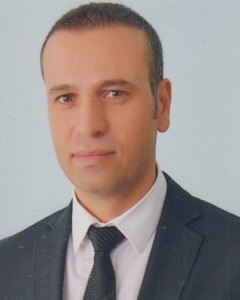
Celal Aslan is an Assistant Professor at Gaziantep University's Faculty of Arts and Sciences, Department of History. He specializes in General Turkish History, Turkish Cultural History, Central Asian History, and Turkish Steppe Culture, with a focus on pre-Islamic Turkic epics, Khazar studies, and Caspian trade networks. PhD in History from Gaziantep University (2020) Master's in History with thesis (2013) His research explores Turkic interactions with external civilizations, including analyses of: Military systems in Avar and Khazar societies Legal and cultural elements in historical travelogues (e.g., Hitaynâme) Religious movements like Bahâîlik and Nestorian Christianity in Turkic contexts Socio-political dynamics in Qajar Iran and Pahlavi-era Azerbaijan He has supervised two master's theses and contributed to 11 books/chapters, primarily focusing on Turkic heritage and historical continuity.
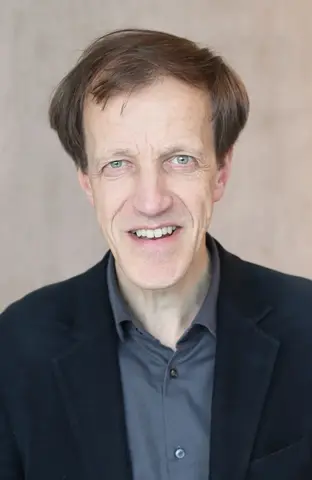
Prof. Dr. Christoph Bultmann serves as Professor of Biblical Studies (Evangelical Theology) at the University of Erfurt , where he has held this position since 2001. His academic journey includes roles as a Temporary Lecturer at King's College London (2000–2001), Visiting Fellow at Fitzwilliam College, Cambridge (1999–2000), and Acting Chair at the University of Giessen (1998–1999). He received his doctorate (1990) and habilitation (1997) at the University of Göttingen. Research Focus: Biblical hermeneutics, Enlightenment theology, interfaith dialogue, historical-critical method, and re-examination of Reformation-era texts. Key Publications: Contributions to debates on Luther's Jewish reception, Herder's biblical interpretation, and Gülen movement analysis. His recent articles explore Genesis 22 interpretations , Quranic exegesis , and Herder's 'natural religion' concept. Bultmann has received prestigious awards including the Feodor Lynen Fellowship (1999–2000) and German Research Foundation Scholarships (1991–1992, 1994). He actively engages in academic editing and public theological discourse , particularly regarding Turkey's political-religious dynamics.
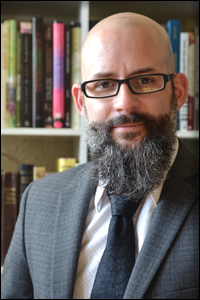
Marcell Steuernagel serves as Associate Professor of Church Music at Southern Methodist University, concurrently directing both the Master of Sacred Music Program and Doctor of Pastoral Music Program. His academic leadership bridges theological education with practical music ministry training. His educational trajectory includes a Ph.D. in Church Music (ABD) from Baylor University (2015-2018), Master of Music in Composition from Brazil's Federal University of Parana (2006-2008), and Bachelor of Music in Conducting and Composition from Parana School of Music and Arts (1998-2003), complemented by specialized Brazilian Guitar & Jazz Improvisation training. Steuernagel's research interrogates the intersections of music, theology, and cultural identity through ethnomusicological and performance studies frameworks. His work centers on decolonizing church music narratives by amplifying Global South perspectives, particularly examining how race, place, and embodiment shape congregational singing practices. He investigates pneumatological dimensions of popular worship music while analyzing cross-cultural transmission of hymns like 'Amazing Grace' across linguistic boundaries. His scholarship consistently challenges Western hegemony in sacred music through critical frameworks of intellectual property, ritual embodiment, and spatial politics. His publication pattern reveals a concentrated focus on Global South epistemologies since 2021, with recurring themes of decolonization, embodied ritual, and cross-cultural musical exchange. The research demonstrates methodological diversity spanning ethnographic observation, theological reflection, performance analysis, and critical theory application to congregational music practices worldwide. Member, Hymn Society (2019) Member, Performance Studies International (2017) Member, Society for Christian Scholarship in Music (2017) Member, Brazilian Studies Association (2017) Member, Society for Ethnomusicology (2017) Student Research Scholarship, Christian Congregational Music Conference (2017) Baylor Libraries Summer Teaching Fellowship (2017) Baylor Conyers Scholar (2016-2017) Gerald and Kathy Dunlap Endowed Internship (2016) Steuernagel maintains an extensive teaching portfolio across North and South America, having instructed at Baylor University, Baptist University of the Americas, and multiple Brazilian institutions including Federal University of Parana and Parana School of Music. His courses span church music history, composition, worship theology, and musical pedagogy. While specific grant details aren't documented in the source material, his Baylor fellowships and conference awards indicate sustained research funding for projects examining global congregational music practices and theological implications of embodied worship.
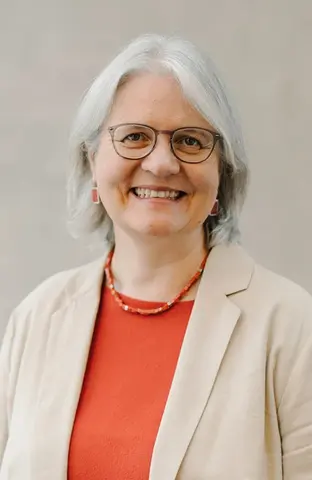
Prof. Dr. Katharina Waldner is Professor of General Religious Studies at the University of Erfurt, where she has held the professorship since 2009. She serves as Dean of Studies for the Faculty of Arts and Humanities and is the Seminar Speaker for Religious Studies. Additionally, she is an Associate Fellow at the Max Weber Center for Advanced Cultural and Social Sciences. Her academic journey includes a Licentiate (1993) and Doctorate (1997) from the University of Zurich in Greek Studies, Latin Studies, and Classical Archaeology, with her doctoral thesis focusing on gender and initiation rituals in ancient Greek polis culture. Waldner's research explores the intersection of religion, culture, and society in antiquity, with particular emphasis on: Early Christian martyrdom narratives and their cultural contexts Gender dynamics in ancient religious practices Ritual theory and performance in Greco-Roman traditions Spatial and temporal dimensions of religious experience The aesthetics of religious power and authority Transformation of religious identities in imperial contexts Her publications demonstrate consistent focus on martyrdom discourses, ritual practices, and the spatial organization of religious phenomena across the ancient Mediterranean world. Waldner maintains memberships in the German Association for Religious Studies (DVRW), Swiss Association for Religious Studies (SGR/SSSR), and the Network LehrehochN: The Alliance for University Teaching.
Maryl B. Gensheimer is an Associate Professor of Roman Art and Archaeology in the Department of Art History and Archaeology at the University of Maryland's College of Arts and Humanities. She holds a joint affiliation with the Department of Classics and specializes in the art, architecture, and urban spaces of ancient Rome and the broader Mediterranean world. Her educational background includes a B.A. in art history from Williams College (2005) and M.A. and Ph.D. in Classical art and archaeology from the Institute of Fine Arts, New York University (2013). Professor Gensheimer's research focuses on Roman imperial baths, particularly the Baths of Caracalla, examining how decoration functioned as political messaging for diverse audiences. Her scholarship extends to urban studies of Rome, the Bay of Naples, Asia Minor, and Roman Britain, with emphasis on the lived experience of ancient spaces. She has developed significant expertise in gender representation in Roman art, material culture studies, and the reception of Roman architecture in modern America. Her interdisciplinary approach combines archaeological evidence with art historical analysis and anthropological theory to reconstruct ancient visual experiences. Her publications reveal consistent themes across Roman decorative programs, particularly how visual elements communicated imperial power while accommodating diverse social classes. Recent work increasingly examines gender dynamics in Roman religious practices and the material culture of daily life, especially within bathing complexes. Her scholarship demonstrates how Roman visual culture functioned as both political propaganda and social infrastructure. Gustave O. Arlt Award in the Humanities (2020) from the Council of Graduate Schools Recognition from Archaeological Institute of America Center for Ancient Studies at NYU fellowship Mellon Foundation support US-Italy Fulbright Commission award Professor Gensheimer has directed graduate instruction on archaeological excavation on the Bay of Naples and secured the Pellegri Grant from the National Italian American Foundation to support teaching and research on Rome's legacy in America. She previously chaired the Women in Archaeology Interest Group for the Archaeological Institute of America (2015-2022), demonstrating leadership in professional service. Her teaching encompasses undergraduate courses on ancient and medieval European art and specialized graduate seminars including 'The Art and Archaeology of Roman Spectacle' and 'The Roman Dinner Party.' Her research activities intersect with multiple collaborative initiatives, including work with scholars like Elizabeth Greene on Roman Vindolanda artifacts and participation in symposia such as the AHAA Biennial Symposium and Middle Atlantic Symposium through the Michelle Smith Collaboratory for Visual Culture.
Dr. Ine Jacobs is the Stavros Niarchos Foundation Associate Professor of Byzantine Archaeology and Visual Culture at the Faculty of Classics, University of Oxford. She previously held a Chancellor’s Fellowship at the University of Edinburgh (2013–2015) and was a Lecturer in Roman Archaeology at the University of Brussels. Her research focuses on the Eastern Mediterranean during Late Antiquity and Byzantium, emphasizing urban development, the interplay between material evidence and literary sources, and the socio-religious impact of Christianity. Research Interests: Late Antique Urbanism Archaeology of Religion Material Culture Analysis Christianity in Byzantine Society Economic and Social History of the Eastern Mediterranean Post-Roman Transformation in Asia Minor Publications reveal sustained work on urban continuity, Christianization of civic spaces, and material culture spanning the 4th–7th centuries AD, with fieldwork in Turkey, Italy, and North Macedonia. Her supervision includes topics on Byzantine Dark Ages, hermitages in Cyprus, and urban resilience. She has received grants from the Flemish Research Foundation for her DPhil and postdoctoral work, including research stays in Munich. Scientific Awards: Flemish Research Foundation Grant for DPhil Flemish Research Foundation Postdoctoral Grant Chancellor’s Fellowship, University of Edinburgh Fieldwork Projects: Co-director, Kostoperska Karpa Regional Archaeological Project (FYROM) Field Director, Aphrodisias (Turkey) Member, Sagalassos Team (2003–2014) Director, British Archaeological Project at Grumentum (2012–2015)
Stefano Floris is a contract lecturer at the Department of Humanities , Ca' Foscari University of Venice. He specializes in Phoenician-Punic archaeology, focusing on religious practices, funerary rituals, and cultural interactions in the western Mediterranean, particularly in Sardinia. Ph.D. in Ancient World Studies, Ca' Foscari University (2020) M.A. in Archaeology and Cultures of the Ancient World, University of Bologna (2015) B.A. in Classics, University of Bologna (2013) His research integrates fieldwork at Tophet sanctuaries (e.g., Bithia, Tharros) with digital methodologies, non-destructive analysis, and archival re-evaluation. He co-directs the Tophet of Bithia Archaeological Project (since 2021) and has contributed to 3D reconstructions of sacred sites. Recent publications highlight trends in Punic religious iconography, stepped altars, and Tophet monumentality across the Mediterranean. Notable awards include the Alexander von Humboldt Postdoctoral Research Fellowship and Margo Tytus Visiting Scholar designation. Teaching : Phoenician-Punic Archaeology, Cultural Heritage Management Labs/Teams : Collaborates with international institutions; utilizes digital archaeology techniques
Satomi Yamamoto is a Professor at Waseda University's Faculty of Letters, Arts and Sciences, School of Humanities and Social Sciences. She holds a PhD in Literature from Waseda University and has served in significant leadership positions including Director of Waseda University's Research Institute for Letters, Arts and Sciences (2022-2024) and Deputy Dean for International Affairs (2022-2024). Previously, she was Dean of Kyoritsu Women's University's Faculty of Arts and Letters (2018-2019) and has held faculty positions at Kinjo Gakuin University, Oita Prefectural College of Arts and Culture, and Waseda University. Professor Yamamoto's research focuses on medieval Japanese Buddhist art, with particular expertise in the Nine Stages of Decaying Corpse, Illustrated Scrolls of Illnesses, Six Realms Paintings, and other forms of narrative painting. Her work bridges art history, religious studies, and literary analysis to explore how medieval Japanese artists visualized Buddhist concepts of disease, death, and the afterlife. She examines how these visual representations interacted with textual traditions and ritual practices, revealing complex cultural understandings of the human body, suffering, and spiritual transformation. Her recent publications demonstrate a progression from detailed iconographic studies of specific works like the Six Realms Paintings to broader investigations of cultural exchange, the history of collecting, and the transmission of Buddhist art across East Asia. Yamamoto's scholarship increasingly engages with interdisciplinary approaches, connecting art historical analysis with medical humanities, disability studies, and environmental history. Kadokawa Foundation Academic Award (2016.12) Ueno Satsuki Memorial Japanese Culture Research Encouragement Award (2016.03) Minister of Education, Culture, Sports, Science and Technology's New Artist Award (2016.03) Professor Yamamoto has secured multiple competitive research grants including major projects on the cultural history of ruins in medieval Japan and interdisciplinary studies of East Asian humanities knowledge. She serves on numerous academic committees including the Standing Committee of the Art History Society, the Management Committee of Fuchu Art Museum, and the Nagano Prefectural Council for the Preservation of Cultural Properties. Her international collaborations include work with Harvard University, Columbia University, and various Japanese national research institutions.
Professor Keiko Kusano is affiliated with Waseda University's Faculty of Letters, Arts and Sciences and School of Culture, Media and Society. Holding a PhD from Waseda University Graduate School, Division of Letters, she has dedicated her career (1994-present) to Russian literature, gender studies, and comparative cultural analysis. Waseda University Graduate School (PhD in Letters, 1996) Waseda University Graduate School (MA, 1992) Waseda University (BA, 1990) Her research focuses on Russian Modernism , feminist literary theory , and interdisciplinary cultural studies , particularly examining body narratives in Zinaida Gippius' works and the cultural impact of Ballets Russes . She has published extensively on gender and sexuality in Russian literature, with a special emphasis on narratives of bodily sensation . Recent publications analyze animality in Gippius' poetry , feminist comparisons with Monique Wittig , and corporeal metaphors in early 20th-century Russian texts . Fifteen-year trends show sustained investigation into symbolist aesthetics , intermediality , and gendered self-representation . Her 2023 work on 'Animality' marks the latest evolution in this trajectory. Japan Society of Russian Literature Academic Report Encouragement Award (1992) Contributing editor to Iwanami World Biographical Dictionary (20th-century Russian literature) As principal investigator, she has secured multiple Grants-in-Aid for Scientific Research focusing on Russian women writers and body/sexuality themes. Her teaching spans Graduation Research and World Literature Seminars , while NHK Radio 2 broadcasts have expanded her public intellectual contributions.
Professor Nobuaki Tochigi of Sophia University's School of Humanities and Social Sciences is a leading scholar in English literature and Irish studies. With a career spanning over three decades, he bridges Japanese and Irish literary traditions through translation, critique, and fieldwork. 1987-1982: Graduate and undergraduate studies at Sophia University His research focuses on English literature, particularly Irish poetry and translation studies, with a deep engagement in cultural memory and intertextuality. He has contributed extensively to modern poetry journals and newspapers, analyzing works by Seamus Heaney, Paul Simon, and W.B. Yeats. Recent publications explore poetic themes, Yeats' influence, and the intersection of song lyrics and literature. His fieldwork in Ireland (2002) involved collaborations with Irish poets and digitization of cultural landscapes, reflecting his interdisciplinary approach. 2014: Yomiuri Literary Prize for 'Irish Monogatari' 1996: Catholic Academic Research Incentive Award Tochigi mentors emerging scholars and contributes to academic projects, including translations of Irish authors and cultural reports. His teaching portfolio includes courses on English literature, Irish studies, and research seminars, emphasizing global literary connections.
Ildikó Horn is a Professor at the Eötvös Loránd University , where she serves as Director of the Institute of Historical Studies and works in the Department of Medieval and Early Modern History of Hungary . Her research focuses on Early Modern History , Renaissance Humanism , and the political elites of Transylvania , with particular emphasis on interdisciplinary networks and cultural exchange in divided Hungary (1541–1699). Her recent publications analyze the princely council under Gábor Bethlen , the construction of Transylvanian court culture , and the role of marriage alliances in elite power consolidation . She has contributed to comparative studies on European principalities and diplomatic information flow in the early modern period. Her work often intersects with digital humanities through the creation of databases on aristocratic networks . As an active participant in the academic community, she has published extensively in venues like the Hungarian Historical Review and Transylvanian Review , and her research has been cited in studies examining state formation , legal elites , and multi-ethnic societies in Central and Eastern Europe.
Prof. Dr. Piotr Kubasiak is an academic at the University of Regensburg and the Catholic Academy in Vienna, serving as Chair Deputy for Liturgical Studies since October 2024. He holds a doctorate in Catholic Theology from the University of Vienna (2019, with distinction) and a habilitation in progress at Albert-Ludwigs-Universität Freiburg (2025). His academic journey includes studies at the Päpstliche Universität des Johannes Paul II. in Krakau, Universität Regensburg, and Universität Wien. Education: Habilitation (2025, Freiburg), Dr. theol. (2019, Vienna), Master's (Wien, Regensburg), Päpstliche Universität Krakau. Kubasiak's research bridges political theology, liturgical dogmatics, and the interplay of existential philosophy with Christian traditions. His work examines historical theology, particularly through figures like Krzysztof Michalski and Jan Patočka, and explores themes of compassion, theodicy, and the Church's role in civil society. His recent publications and lectures focus on liturgical creeds, sacramental theology, and the Church's response to crises (e.g., pandemic, Ukraine war). Articles span topics from historical dogmatics to Nietzschean interpretations, emphasizing interdisciplinary connections between theology, philosophy, and cultural heritage. Scientific Awards: Dissertationspreis 2019 (University of Vienna), Krzysztof Michalski Junior Visiting Fellow 2018, Bronisław Geremek Fellow 2017. Kubasiak co-edited The Flame of Eternity (Nietzsche interpretations, 2022) and contributes to theological education through the "THEOLOGISCHE KURSE" program. He integrates liturgical practices with contemporary societal challenges, advocating for prayer and practical engagement during crises.
Professor Douglas Davies is a leading academic in the study of death and religion at Durham University , where he serves as Professor in the Study of Religion and Director of the Centre for Death and Life Studies. A Fellow of the Academy of Social Sciences, Learned Society of Wales, and British Academy, he combines anthropology with theology in his research. Specializes in death studies, funeral rituals, and religious identity Has published extensively on Mormonism, Anglicanism, and cremation practices Recipient of international academic recognition including honorary doctorates His research interests focus on the anthropology of death, religious studies, and the intersection between theology and social science. He has pioneered interdisciplinary approaches to mortality, examining emotional, cultural, and spiritual dimensions of death practices across historical and contemporary contexts. Publications show strong emphasis on funeral rituals, cremation culture, and religious perspectives on mortality. His work spans from detailed analyses of specific religious communities to broad cultural histories of death practices. In 2024 he completed the major six-volume Cultural History of Death project. Davies has supervised numerous postgraduate students in theology and anthropology, including PhD candidates examining specific religious communities and death practices. His academic career has been marked by extensive editorial work, including major reference works like The Encyclopedia of Cremation.
Dr. Earl Kellett is a Professor of Christian Studies and Dean of the College of Humanities and Social Sciences at Shorter University. He also serves as the Director of Institutional Effectiveness and Research and the SACSCOC Liaison , with a career spanning since 2006. Education: Ph.D., Th.M., M.Div., and B.A. from New Orleans Baptist Theological Seminary Non-degree studies at the University of Georgia (1999-2000) Dr. Kellett’s research focuses on New Testament textual criticism , particularly the impact of liturgical and lectionary practices on biblical manuscripts. He has contributed to projects like the International Greek New Testament Project and the New Testament Critical Apparatus software. His work explores intersections of archaeology, Semitic languages, and biblical interpretation . His recent publications and presentations highlight trends in digital humanities, biblical translation , and the socio-cultural context of early Christian identity . He has also authored reviews of theological commentaries and books. Teaching and Professional Affiliations: Adjunct (2006-2011) and full-time (2011-present) at Shorter University Adjunct Instructor at New Orleans Baptist Theological Seminary (2001-2011) Project Coordinator at the H. Milton Haggard Center for New Testament Textual Studies (1999-2009) Member of the Society of Biblical Literature (1999-present), Evangelical Theological Society (1999-present), and Theta Alpha Kappa Honors Society (2013-present) Dr. Kellett has led academic committees, including the Curriculum Committee and QEP Taskforce , and has taught courses in religious studies and Christian education.
Felix Biermann is a Research Fellow at the Department of Prehistory and Early History, Georg-August-University Göttingen. He holds a Heisenberg Fellowship from the German Research Foundation (DFG) since 2011, focusing on Slavic archaeology and the early history of East Central Europe. Education: Studied prehistory, early history, medieval archaeology, art history, and history at universities of Münster, Marburg, Bamberg, and Berlin Master's degree (1995) and doctorate (1997) from Humboldt University of Berlin Habilitation at Ernst Moritz Arndt University of Greifswald (2007) His research spans Slavic archaeology , castle and settlement structures , and medieval burial customs in East Central Europe. He has conducted extensive fieldwork on fortified cities, rural settlements, and religious architecture, particularly in Baltic regions. His publications reflect interdisciplinary approaches to topics like medieval conflict strategies , monastic history , and material culture analysis . Key themes include the transition from early to high medieval periods, Slavic-Germanic interactions, and Baltic cultural networks. Scientific Awards: Feodor Lynen Research Fellowship Heisenberg Fellow of the DFG Travel Grant from German Archaeological Institute