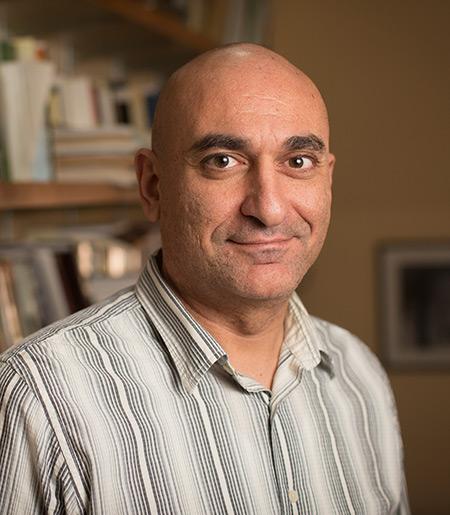
Mounira M. Charrad serves as Associate Professor in the College of Liberal Arts at The University of Texas at Austin, holding a courtesy appointment in the Department of Middle East Studies. She maintains active affiliations with the Center for Women’s and Gender Studies, Center for Middle East Studies, Rapoport Center for Human Rights and Justice, Center for European Studies, Center for Russian/East European/Eurasian Studies, and Plan II Honors Program. Additionally, she holds a non-resident fellowship at Rice University's Baker Institute for Public Policy. Her academic credentials include a Ph.D. from Harvard University and undergraduate studies at the Sorbonne in Paris. This foundation supports her interdisciplinary approach bridging sociological theory with regional expertise. Charrad’s research centers on gender politics within kin-based societies, examining how state formation processes interact with colonial legacies to shape women’s rights trajectories. Her work challenges religious textualism by emphasizing social solidarity structures—whether grounded in kinship, ethnicity, or associations—as decisive factors in political outcomes. Current projects investigate Tunisian women’s associations, secularism debates, and civil society development, extending her established focus on family law reforms across the Middle East and North Africa. Analysis of her recent publications reveals persistent engagement with post-Arab Spring transformations, particularly how revolutionary moments create opportunities and constraints for gender justice. Her scholarship consistently connects macro-level political economy with micro-level lived experiences, emphasizing women’s agency within religious and legal frameworks. Recurring themes include constitutional gender debates, inheritance law conflicts, and the strategic navigation of secular-religious tensions by women activists. Professor Charrad actively mentors doctoral students pursuing diverse research on U.S. and international topics while teaching core courses in political sociology, comparative historical sociology, social theory, and gender politics. Her research program has secured significant funding from the National Endowment for the Humanities, Mellon Foundation, American Association of University Women, and American Institute of Maghribi Studies, enabling extensive fieldwork and collaborative projects across the MENA region.