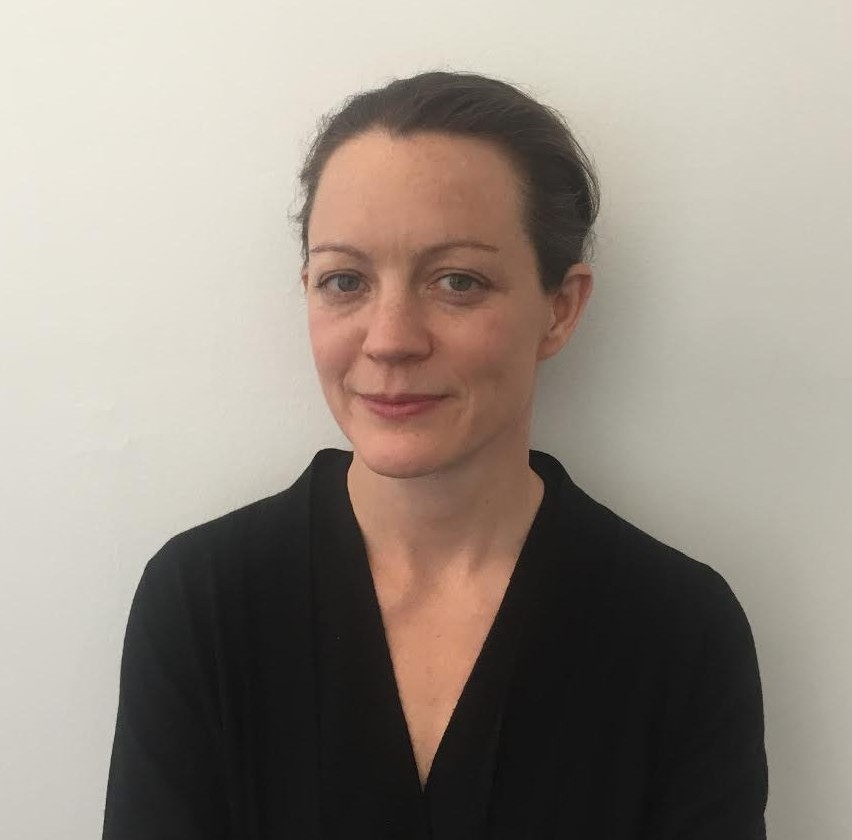
Molly Murray is an Associate Professor of English and Comparative Literature at Columbia University. She holds a B.A. from Columbia (1994), M.Phil. in Intellectual History from Cambridge (1996), and Ph.D. in English from Yale (2004). Her research focuses on 16th-17th century English literature, exploring intersections of religion, politics, and poetic form. Key interests include the English Reformation, metaphysical wit, and the reception of St. Augustine. She is author of The Poetics of Conversion in Early Modern Literature (2009) and contributes to journals like English Literary History and Renaissance and Reformation . Current projects examine literature and imprisonment in early modern Britain. Education: Columbia, Cambridge, Yale Primary Research Areas: Early Modern Poetry/Poetics, Political Theory, Religious History Recent Work: Monograph on Donne to Dryden, studies on literary imprisonment Her scholarship bridges literary analysis with intellectual history, emphasizing how poetic forms mediated religious and political change. Publications address topics like metaphysical wit's role in conversion narratives and Augustinian thought's influence on early modern writers.
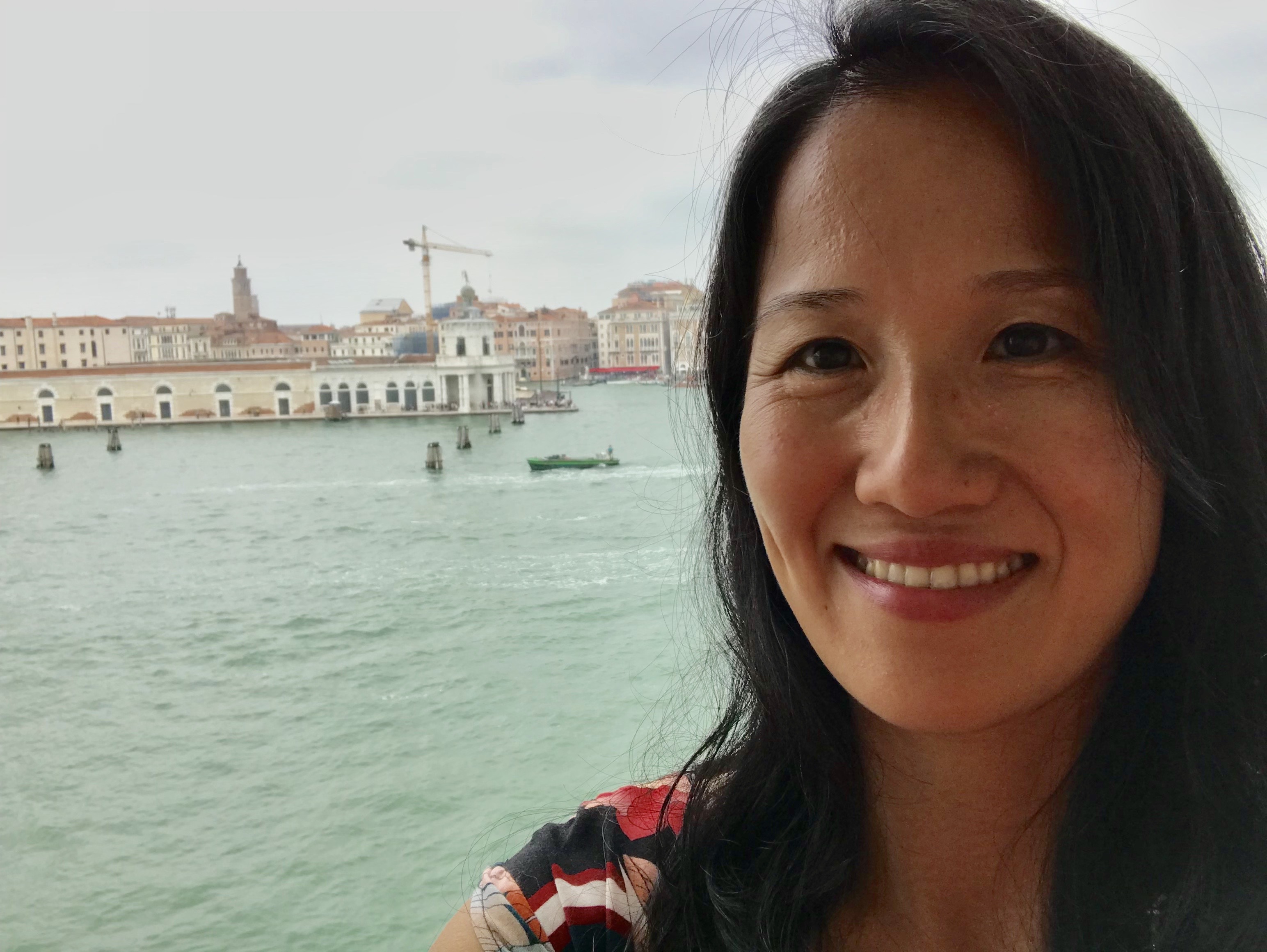
Ana Paulina Lee is an Assistant Professor of Writing and Digital Humanities in the Comparative Literature, English, and Creative Writing Department at the American University of Paris. She joined AUP in 2025 after teaching Latin American literature and culture at Columbia University for eight years and serving as a Mellon Postdoctoral Fellow at Tulane University. Her interdisciplinary scholarship bridges literature, history, law, and urban studies with particular focus on marginalized narratives in the Americas. Ph.D. from University of Southern California M.A. from New York University B.A. from Binghamton University Professor Lee's research examines how stories—archival, fictional, oral—shape legal imagination, social life, and urban experience in the Americas. She specializes in the intersections of magic, law, and literature in Latin America, with particular focus on Asian and African diasporas in Brazil. Her work traces how narrative functions as both historical record and catalyst for social transformation, exploring themes of slavery, emancipation, colonial legacies, and urban memory. She approaches these topics through interdisciplinary lenses combining literary analysis with histories of labor, migration, and performance. Lee's recent publications reveal a consistent focus on marginalized narratives and their impact on social structures. Her scholarship connects legal history with cultural production, showing how magical thinking and narrative practices shape urban spaces and social relations. Works like 'Urban Sorcery, Segregation, and Spectacle in Twentieth-Century Rio de Janeiro' and 'Black Magic City' demonstrate her innovative approach to understanding the relationship between occult logics and legal frameworks in Brazilian contexts. Her research on diasporic communities, particularly Chinese and Japanese experiences in Latin America, contributes significantly to transnational and comparative race studies. David B. Larson Fellowship in Health and Spirituality, Kluge Center, United States Library of Congress (2025-2026) National Endowment for the Humanities Fellowship (2025) Social Sciences Research Council, Inaugural Recipient of Interdisciplinary Projects in the Social Sciences (2020-2023) Institute for Ideas and Imagination Fellowship, Columbia University in Paris, France (2021-2022) Provost's Tsunoda Senior Fellowship, Visiting Scholar, Waseda University, Tokyo, Japan (2019) Heyman Center Fellow, The Heyman Center for the Humanities, Columbia University (2017-2018) Fulbright, Lisbon, Portugal (2013-2014) Professor Lee's scholarly activities have been generously supported by major research grants from the National Endowment for the Humanities, the Social Sciences Research Council, and the Library of Congress. Her work demonstrates a commitment to interdisciplinary approaches that bridge humanities and social sciences, particularly through projects examining intersections of race, migration, and cultural production in the Americas. Her publication 'Socially Engaged Oral History Pedagogy Amid the COVID-19 Pandemic' indicates a strong commitment to innovative teaching methods and community-based research. While specific details about current advisees aren't provided, her research program suggests engagement with graduate students interested in diaspora studies, urban history, and literary-cultural analysis. Though not explicitly mentioned in the available information, Professor Lee's research on urban spaces, magic, and law in Brazil likely involves collaborative work with scholars across disciplines. Her participation in centers like the Institute for Ideas and Imagination at Columbia University suggests engagement with interdisciplinary research communities focused on global cultural production and social transformation. Her work contributes to ongoing conversations about how narrative practices shape legal frameworks and social structures in the Americas, particularly regarding racial formation and diasporic experiences.
Michael W. Scott is a Professor of Anthropology at the London School of Economics and Political Science (LSE). His primary research focuses on Oceania, particularly Melanesia, with a theoretical emphasis on anthropological ontology, cosmology, and wonder studies. He has conducted extensive fieldwork in the Solomon Islands since 1992, focusing on the Arosi people and their poly-ontological cosmology. His work explores human-nonhuman relations, indigenous Christianities, and the interplay between Euro-American and Melanesian ontological frameworks. Education: PhD from the University of Chicago, influenced by mentors like Marshall Sahlins and Marilyn Strathern. He co-organizes the Melanesia Research Seminar at the British Museum. His major publication, The Severed Snake , examines Arosi matrilineages and place-making. Current projects include a comparative study of wonder as an ontological instrument and analysis of relationalist assumptions in ontology debates. Key interests include poly-ontology, ontological transformation, and the re-enchantment of modernity. His research challenges monolithic views of Melanesian sociality, proposing instead a nuanced engagement with diverse cosmological frameworks. Though no formal grants or labs are explicitly listed, his work intersects with LSE's broader anthropological research initiatives.
Stefanos Katsikas is an Associate Professor of Modern and Contemporary History of Southeastern Europe (18th-21st centuries) at the University of Cyprus. He holds tenure and is affiliated with the Department of History and Archaeology. Previously, he served as Associate Director of the Center for Hellenic Studies at the University of Chicago (2019–2023) and held roles at UIUC, Goldsmiths College, and other institutions. His research focuses on nationalism, religious conversion, minority policies, and diplomatic history in the Balkans. He earned his PhD from University College London (2006) and has authored multiple books including Islam and Nationalism in Modern Greece (Oxford UP, 2021). Key academic contributions include studies on Muslim conversions during the Greek War of Independence, post-1897 Greek political trauma, and Bulgarian foreign policy. He has been honored by Marquis Who's Who (2023) and the Scouloudi Foundation (2011). His teaching spans modern Greek history courses in both English and Greek, emphasizing nation-building, minorities, and Cold War dynamics. Administrative roles include program-building in Modern Greek Studies and fundraising for academic initiatives. Current projects include an Oxford Handbook of Modern Greek History and studies on post-civil war reconciliation in Greece and Cyprus.
Daryn Henry is an Assistant Professor in the Department of Religious Studies at the University of Virginia . His research focuses on the Religious History of the Americas, examining how Christian communities (Catholic, Protestant, Orthodox, Pentecostal) interact with modern/postmodern cultures. He holds a PhD from Boston College (2016), an MAR from Yale University (2009), and a BA from the University of Western Ontario (2007). Key research interests include enchanted modernity in 19th/20th century Evangelicalism, theological discourses on the Holy Spirit, and intersections between religion and contemporary culture. His books include AB Simpson and the Making of Modern Evangelicalism (2019) and The Freedom of God: A Study in the Pneumatology of Robert Jenson (2018). Publications reflect expertise in historiography, religious movements, and theological analysis. Awards include the UVA Undergrad Research Advisor Grant and Boston College Teaching Excellence Award . He teaches courses such as American Religious Historiography and Christian Nationalism . Grants include support from the UVA Dean’s Office and Boston College Summer Session. His work bridges historical analysis with contemporary religious praxis, emphasizing interdisciplinary engagement with cultural, philosophical, and scientific dimensions of faith.
Rakesh Peter-Dass serves as Associate Professor of Religion at Hope College, where he has been teaching since 2016. His academic journey spans multiple prestigious institutions including Harvard University, Yale University, and the University of Oxford, where he earned advanced degrees in theology, divinity, and business administration. His research focuses on the complex intersections of religion with business, language, law, and politics, particularly in the South Asian context. Dr. Peter-Dass examines how religious identities are shaped through linguistic choices, legal frameworks, and socio-political dynamics, with special attention to Hindu-Christian relations and religious rights. His work bridges theological scholarship with practical applications in interfaith dialogue and religious freedom advocacy. His publications reveal a consistent focus on South Asian religious contexts, particularly examining Hindi Christian literature, Hindu nationalism, and comparative theological approaches between Hindu and Christian traditions. The research demonstrates interdisciplinary connections between religious studies, political science, linguistics, and legal studies, with significant contributions to understanding religious rights in both Indian and American Supreme Court contexts. Among his notable honors are the Saïd Foundation Scholarship from Oxford University, multiple Harvard University fellowships, and the Selva J. Raj Endowed International Dissertation Research Fellowship from the American Academy of Religion. His teaching excellence has been recognized through Harvard University's Certificate of Distinction in Teaching. Dr. Peter-Dass has served in significant professional capacities including as Co-Chair of the Theology and Religious Reflection Unit at the American Academy of Religion (2018-2023) and on the Editorial Board of the Hindi Theological Literature Committee in India (2011-2015). His extensive consulting work with international development agencies, intergovernmental organizations, and religious bodies demonstrates his commitment to applying academic research to real-world religious and social challenges.
Susannah Heschel is the Eli M. Black Distinguished Professor of Jewish Studies at Dartmouth College , chair of the Jewish Studies Program, and faculty member of the Religion Department. She is currently the Joseph Engel Visiting Professor for 2025-2026 at Swartz Hall, Cambridge, and a Guggenheim Fellow researching European Jewish scholarship on Islam. Education: A.B. from Trinity College, M.T.S. from Harvard Divinity School, Ph.D. from the University of Pennsylvania. Research Interests: Her work bridges Jewish and Protestant thought (19th-20th centuries), focusing on biblical scholarship, antisemitism, and Jewish perceptions of Islam. She explores intersections of race, gender, and ethics, particularly in Nazi Germany and modern prophetic traditions. Publications Trends: Recent articles examine Holocaust-era biblical interpretation, prophetic leadership in civil rights, racial theology, and sensory dimensions of antisemitism. Her scholarship spans historical analysis, ethical critique, and interdisciplinary engagements with theology and politics. Scientific Awards: Guggenheim Fellowship National Humanities Center Fellowship Wissenschaftskolleg in Berlin Fellowship Moses Mendelssohn Prize (Leo Baeck Institute) Five Honorary Doctorates Elected Member, American Society for the Study of Religion and American Academy for Jewish Research Grants & Visiting Roles: Recipient of Ford Foundation and Carnegie Corporation grants. Visiting professorships at Universities of Cape Town, Frankfurt, Princeton, Edinburgh, and Lucerne. Convening a 2026 conference on 'Sexual Violence and Antisemitism' with Carnegie support.
Bonnie Effros is Professor and Head of the Department of History at the University of British Columbia since 2022. With a PhD from UCLA and BA from Brandeis, her academic journey spans prestigious roles at University of Liverpool, University of Florida, Binghamton University, and Southern Illinois University. A Fellow of the Royal Historical Society and recipient of the French Colonial Historical Society’s Alf Andrew Heggoy Book Prize, she shapes historical discourse through her work on archaeology, gender, and colonial legacies. PhD, History, UCLA (1994) MA, History, UCLA (1990) BA, History, Brandeis University (1987) Her research bridges late antique/early medieval archaeology and 19th-century antiquarianism , focusing on France and its colonial possessions. Recent projects examine Père Camille de la Croix ’s contested Christian archaeology in France and Salomon Reinach ’s assimilation politics. She connects material culture to gender dynamics, Christian conversion debates, and colonial power structures through extensive fieldwork in Vatican archives and French/British collections. Key trends in her 15 most recent publications include: analyzing 19th-century museum-building in Algeria; investigating gender through Merovingian burial practices; and exploring colonial narratives via artifact circulation. Her work often intersects with museum studies , gender archaeology , and historiographical critique . French Colonial Historical Society’s Alf Andrew Heggoy Book Prize (2019) SSHRC Insight Development Grants (2023-2025, 2025-2027) Royal Historical Society Fellowship University of Florida’s International Educator of the Year (2014) As a graduate supervisor, Effros mentors students in late antique/early medieval European history with colonial contexts, emphasizing Latin proficiency and multilingual research. She co-edits the Brill Series on the Early Middle Ages and Studies in Late Antiquity , while serving on the Medieval Academy of America’s Council. Her pandemic-era work on Liverpool silversmith Joseph Mayer’s collections demonstrates continued engagement with cultural patronage and museum provenance issues.
Kathryn Babayan is a Professor at the University of Michigan , affiliated with the Middle East Studies department. Her research focuses on the cultural, social, and political histories of the Persianate world, particularly Iran, Iraq, Anatolia, and Central Asia. Her work integrates gender and sexuality studies , Safavid dynasty analysis , and material culture approaches to explore historical narratives. She is currently researching literacy practices in early modern Isfahan through her book The City as Anthology , examining how anthologies (majmu'a/muraqqa') reshaped urban experience and individual sovereignty. Collaborations include co-authoring Slaves of the Shah with Susan Babaie, Massumeh Farhad, and Ena Baghdiantz-McCabe, and co-editing Islamicate Sexualities with Afsaneh Najmabadi. Her publications bridge historiography , religion , and visual culture .
Elizabeth (Lisa) Alexandrin is an Associate Professor in the Department of Religion at the Faculty of Arts, University of Manitoba . Her academic work bridges Islamic Studies , Sufism , and gender theory , with a focus on visual and textual representations of mysticism. Education: PhD in Islamic Studies, McGill University (2006) MA in Anthropology, University of Toronto (1993) BA in Anthropology, Boston University (1993) Research Interests: Islamic intellectual history Sufism Ismaili thought Body histories Visual piety Key Themes in Publications: Apocalyptic narratives in Fāṭimid Ismāʿīlī thought Qurʾanic calligraphy as spiritual practice Symbolism of walāyah (sainthood) in Sufi texts Intersection of dreams and mystical exegesis Awards: SSHRC Insight Development Grant (2018-2022) Explore SSHRC/University of Manitoba grant (2021-2022) SSHRC standard research grant (2011-2012)
Pamela Klassen is a Professor and Chair in the Department for the Study of Religion at the University of Toronto, with a cross-appointment in the Department of Anthropology. She has taught at the University of Toronto since 1997 and has been a full professor since 2011. Her academic leadership includes serving as Chair & Graduate Chair of her department (2020-present) and as Vice-Dean, Undergraduate & International in the Faculty of Arts & Science (2016-2020). In 2022-2023, she served as the William Lyon Mackenzie King Visiting Professor of Canadian Studies at Harvard University. Professor Klassen's research focuses on colonialism, treaties, museums, and public memory. Her work spans several interconnected areas: Anthropology of religion, secularism, and mediation (including digital humanities) Christianity, colonialism, and land in North America & Turtle Island Religion, ritual, and public memory (including museum studies) Religion, spirituality, and gender Her scholarship demonstrates a consistent engagement with how religious practices, memories, and institutions intersect with questions of power, land, and identity in settler colonial contexts. Klassen's work often bridges historical and ethnographic approaches, examining both contemporary religious practices and their historical formations. Professor Klassen's publications reveal a trajectory of increasingly focused attention on the intersections of religion, land, and colonialism, with recent work emphasizing Indigenous perspectives and decolonial approaches to religious studies. Her scholarship moves fluidly between theoretical interventions in religious studies and concrete engagements with public memory projects. Scientific Awards & Honors 2022-2023: William Lyon Mackenzie King Visiting Professor of Canadian Studies, Harvard University 2019: Fellow of the Royal Society of Canada 2015-2020: Anneliese Maier Research Award, Alexander von Humboldt Foundation 2015: Northrop Frye Award of Excellence for Integration of Research and Teaching 2014-2017: Distinguished Visiting Professor in Anthropology of Modern Religion, University of Tübingen 2012: American Academy of Religion Award of Excellence for Spirits of Protestantism Professor Klassen has successfully secured significant research funding, including the prestigious Anneliese Maier Research Award which supported her collaborative work with the Kay-Nah-Chi-Wah-Nung Historical Centre. She has supervised numerous graduate students in religious studies and anthropology, with many going on to successful academic careers. Professor Klassen leads several major collaborative projects including Kiinawin Kawindomowin Story Nations, a digital storytelling initiative with the Rainy River First Nations, and Treaty Conversations, an educational resource about treaty relationships in Ontario. These projects exemplify her commitment to community-engaged scholarship that bridges academic research with public education and reconciliation efforts.
Dr. Kevin N. Cawley is Senior Lecturer in Korean Studies and Director of the Irish Institute of Korean Studies at University College Cork since 2011. He is a founding member of the 'Society for the Study of Pre-modern Asia' at the University of Oxford and serves as editor of Korean Philosophy for the Stanford Encyclopedia of Philosophy. Originally from County Armagh, Ireland, he completed his undergraduate degree at Trinity College Dublin in French and Irish, and earned his Masters and PhD in Korean Studies from the University of Sheffield. Dr. Cawley's research focuses on Korea's intellectual history, examining philosophical and religious traditions through contemporary critical theory. His work explores the interplay between Buddhism and Neo-Confucianism, Christianity and Neo-Confucianism in the late 18th/early 19th century, and the complexities of translating religious concepts across East Asian languages and cultures. He has developed a unique methodological approach adapting Jacques Derrida's 'de-construction' to address inter-cultural translational challenges. His research also extends to gender and sexuality, ethnicity and identity in Korean contexts. His publications demonstrate significant scholarly impact, particularly his 2019 book Religious and Philosophical Traditions of Korea which reached No. 5 on Amazon's 'hot new releases' in religion and spirituality. His recent work has focused on transnational East Asian studies, Catholicism in pre-modern Korea, and contemporary Korean soft power. The publications show consistent engagement with both historical Korean thought and its contemporary relevance across multiple disciplines including religious studies, philosophy, gender studies, and cultural studies. Scientific Awards and Recognition: Korea Foundation Award for Korean Studies Language Program 2022-2024 Academy of Korean Studies: SEED Program - $120,000.00 One Asia Foundation Lecture Series: $40,000.00 Korea Foundation Fellowship for Korean Studies 2015-2017 $90,000.00 Dr. Cawley has secured over €400,000 in research funding throughout his career and has served as editor for multiple academic journals including the Irish Journal of Asian Studies and Asian Ethnicity . He has organized numerous international conferences, including the North American Korean Philosophy Association Annual Conference at UCC. His media engagement includes regular interviews with RTE, BBC, and Korean media outlets on Korean affairs, demonstrating his role as a public intellectual bridging academic scholarship and public understanding of Korea.
Averil Cameron is a distinguished Professor of Late Antique and Byzantine History at the University of Oxford, previously serving at King's College London from 1978–1994. Her research focuses on the intersection of political, religious, and cultural dynamics in late antiquity and Byzantium. She has held prominent roles such as President of the Council for British Archaeology in the Levant and has been honored with prestigious awards including the British Academy Kenyon Medal (2020) and DBE (2006). Her academic contributions include foundational texts on Procopius, Eusebius, and the Mediterranean world. Notable works like Byzantine Matters (2014) and Dialogues and Debates from Late Antiquity (2017) explore intellectual and religious discourses. She has edited volumes in the Cambridge Ancient History series, shaping scholarly narratives on Roman and Byzantine empires. Cameron’s publications consistently bridge micro-historical analysis with macro-historical trends, emphasizing how cultural and political shifts in late antiquity laid foundations for medieval Europe and the Islamic world. Her work integrates textual criticism, archaeological insights, and interdisciplinary approaches to reconstruct complex historical phenomena. Awards: Kenyon Medal, DBE, CBE, Fellow of British Academy Editorial Roles: Cambridge Ancient History series, British Archaeology Council Key Themes: Imperial governance, religious transitions, cultural continuity, and late antique socio-political structures
Amy G. Remensnyder is Professor of History and Giancarlo Family Provost's Professor of History at Brown University, where she has taught since 1993. She also holds the Royce Family Professor of Teaching Excellence title, reflecting her commitment to pedagogy. Her research focuses on medieval Europe, particularly the cultural and religious history of the Mediterranean, with emphasis on Muslim-Christian relations, monastic memory, and the global history of captivity. PhD, University of California, Berkeley (1992) A.B. summa cum laude, Harvard University (1983) Additional studies at Cambridge University and École des Hautes Études, Paris Her research interests include medieval Iberia, colonial Mexico, religious symbolism, transcultural history, and the role of memory in identity formation. She explores how religious figures like the Virgin Mary functioned as symbols of conquest, conversion, and interfaith entanglement. Her work bridges medieval and early modern periods, challenging disciplinary boundaries and incorporating insights from art history, anthropology, and literary studies. Her recent articles reveal a sustained engagement with themes of religious coexistence, sacred space, and cross-cultural devotion in the Mediterranean world. She examines how Muslim and Christian sailors shared shrines, how Moriscos developed their own Marian scriptures, and how Mary symbolized both war and diplomacy. Her scholarship combines deep archival research with theoretical sophistication, contributing to fields such as oceanic history, borderland studies, and the history of emotion. Van Courtland Elliott Prize (Medieval Academy of America) Fellow, Medieval Academy of America Berlin Prize, American Academy in Berlin Guggenheim Fellowship ACLS/SSRC/NEH Fellowship William G. McLoughlin Award for Teaching Excellence Remensnyder has directed major research initiatives and served on editorial boards, including Al-Masāq: Journal of the Medieval Mediterranean . She founded and directs the Brown History Education Prison Project, reflecting her commitment to engaged scholarship. She has received funding from the Swearer Center and has developed innovative courses on captivity and medieval lyric. Her leadership includes directing Brown’s Program in Medieval Studies (2010–2012) and serving on the Medieval Academy of America’s council. She is currently working on three book projects: Island of Trust in a Sea of Danger: Lampedusa , a maritime microhistory; Neighbors: Life in a Medieval Borderland , an archival study of Muslim-Christian relations in Iberia; and A Global History of Captivity , a synthetic overview of captivity across time and space.
Mattias Gassman is an Assistant Professor of Humanities at the University of Florida's Hamilton School for Classical and Civic Education. His research focuses on the transformation of Roman religious ideas by Christianity, particularly in late antiquity. Previously, he held postdoctoral fellowships at the University of St. Andrews and the University of Oxford. He earned a PhD in Classics from the University of Cambridge (2017), and prior degrees from Oxford, Minnesota, and Iowa State University. His research emphasizes critical analysis of modern concepts like 'paganism' and 'secularity' through ancient lenses. His first monograph, Worshippers of the Gods (Oxford, 2020), examined fourth-century Roman religious debates. His current book project, Citizens of the Earth , analyzes Augustine's engagement with Roman religion across his works. He also co-authored a general-audience textbook on fourth- and fifth-century theological controversies. His articles explore topics such as Augustine's anti-pagan rhetoric, late antique preacher techniques, and the reception of classical texts. Recent publications appear in Journal of Early Christian Studies , Historia: Zeitschrift für Alte Geschichte , and Augustinian Studies . He teaches courses on ancient texts and religious history, including Immortality (Quest 1) and Great Books of the Ancient World .