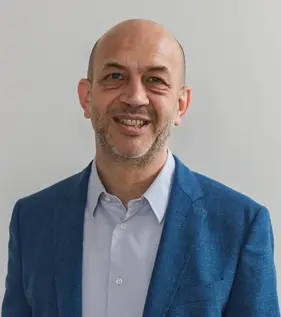
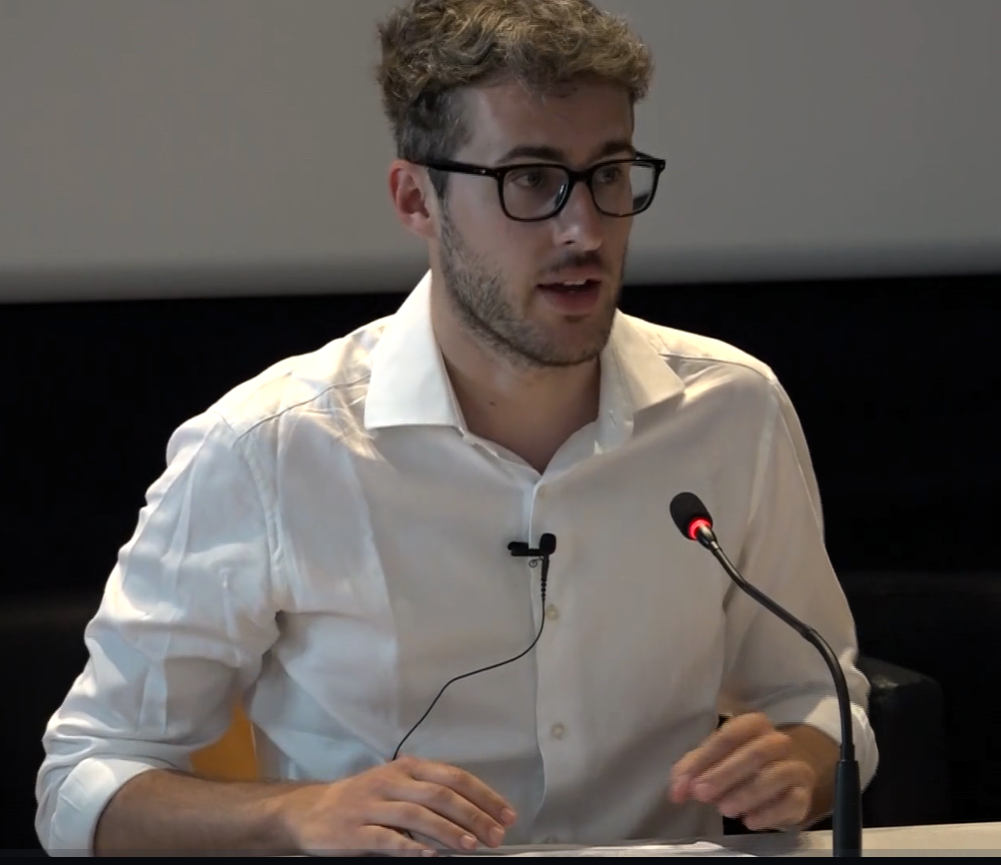
Dr. Sebastian Rimestad is a Research Fellow at the Institute for the Study of Religions , University of Leipzig. His work focuses on Orthodox Christianity, religious history of Eastern and Northern Europe, religious conversion, religion and politics in modern societies, and religious minorities in Europe. Current affiliation: University of Leipzig Education: Habilitation (2019), PhD (2011), MA in Religious Studies (2007) and Politics & IR (2004) Research interests include confessional identity formation in 18th-century Poland-Lithuania, religious conversion as political statement, and Russian Orthodox concepts of secularity. His work analyzes how religious identities have been shaped by external authorities and critiques of religious modernity. His scientific awards include the DFG Heisenberg Fellowship and Liselotte Kirchner Scholarship. He has taught courses on religious conversion and published extensively on Orthodox Christianity in Eastern Europe, Baltic states, and global contexts.
Prof. Dr. Christoph U. Werner is the Chair of Iranian Studies at Otto-Friedrich-University Bamberg since 2019, following his 12-year professorship at Marburg University (2007-2019) and previous academic roles. He specializes in Iranian Studies with focus areas in social history , legal institutions , Shiite religious structures , and Persophone literary history . As a Research Dean of Humanities and Cultural Studies (2023-2025) Managing Director of the Institute of Oriental Studies (2021-2025) President of Societas Iranologica Europaea (2019-2023) , he leads major academic initiatives. His research spans Qajar-era legal contracts Waqf (endowment) systems Persian-Ottoman-Georgian historical interconnections Manuscript studies of Persian documents , often combining archival analysis with interdisciplinary approaches. Recent publications focus on 20th-century Persian cultural politics, early modern Persian-Ottoman interactions, and legal epigraphy. He collaborates extensively with institutions like the University of Oxford's Invisible East and DFG Priority Programme Transottomanica . His editorial work includes Orientalistische Literaturzeitung (2022-) Persimone blog (2022-) Bamberg University Press publications and multiple Iranian academic journals.
Prof. Cornelia Richter is a Professor of Systematic Theology and Hermeneutics at the Protestant Theological Faculty of the University of Bonn since 2012. She serves as Chair of the Senate of the University of Bonn since 2024 and has held leadership roles such as Dean of the Faculty of Protestant Theology (2020–2024). Born in 1970, she earned her doctorate (summa cum laude) from the University of Marburg in 2002 and habilitation in 2010. Her research focuses on Philosophy of Religion, Hermeneutics, and Resilience in Religion and Spirituality, notably leading the DFG-funded project FOR 2686. She has held visiting professorships in Zurich and Giessen and contributed to theology through editorial roles in journals like International Journal of Philosophy and Theology . Her work bridges theology with interdisciplinary studies, addressing modern challenges like pandemic resilience and interfaith dialogue. Education: PhD (2002), Habilitation (2010) – University of Marburg Studies in Protestant Theology and Philosophy – Universities of Vienna and Munich Research Fellowship – Center for Subjectivity Research, Copenhagen (2003–2005) Research Interests: Her work explores hermeneutical approaches to religious meaning, resilience in crises, and the interplay between theology and modern challenges. Key areas include: - Critical analysis of resilience frameworks in theology and philosophy - Theological engagement with modern existential issues (e.g., hope, fear, powerlessness) - Interdisciplinary dialogue on religion’s role in human sciences. - Resilience studies in healthcare and pandemic contexts. Grants & Projects: DFG-FOR 2686 “Resilience in Religion and Spirituality” (2019–2022) Editorial leadership in multiple theological journals and book series Co-director of the Bonn Institute of Hermeneutics Labs/Teams: Department of Systematic Theology, University of Bonn; interdisciplinary research groups on resilience and theology.
Pamela Klassen is a Professor and Chair in the Department for the Study of Religion at the University of Toronto, with a cross-appointment in the Department of Anthropology. She has taught at the University of Toronto since 1997 and has been a full professor since 2011. Her academic leadership includes serving as Chair & Graduate Chair of her department (2020-present) and as Vice-Dean, Undergraduate & International in the Faculty of Arts & Science (2016-2020). In 2022-2023, she served as the William Lyon Mackenzie King Visiting Professor of Canadian Studies at Harvard University. Professor Klassen's research focuses on colonialism, treaties, museums, and public memory. Her work spans several interconnected areas: Anthropology of religion, secularism, and mediation (including digital humanities) Christianity, colonialism, and land in North America & Turtle Island Religion, ritual, and public memory (including museum studies) Religion, spirituality, and gender Her scholarship demonstrates a consistent engagement with how religious practices, memories, and institutions intersect with questions of power, land, and identity in settler colonial contexts. Klassen's work often bridges historical and ethnographic approaches, examining both contemporary religious practices and their historical formations. Professor Klassen's publications reveal a trajectory of increasingly focused attention on the intersections of religion, land, and colonialism, with recent work emphasizing Indigenous perspectives and decolonial approaches to religious studies. Her scholarship moves fluidly between theoretical interventions in religious studies and concrete engagements with public memory projects. Scientific Awards & Honors 2022-2023: William Lyon Mackenzie King Visiting Professor of Canadian Studies, Harvard University 2019: Fellow of the Royal Society of Canada 2015-2020: Anneliese Maier Research Award, Alexander von Humboldt Foundation 2015: Northrop Frye Award of Excellence for Integration of Research and Teaching 2014-2017: Distinguished Visiting Professor in Anthropology of Modern Religion, University of Tübingen 2012: American Academy of Religion Award of Excellence for Spirits of Protestantism Professor Klassen has successfully secured significant research funding, including the prestigious Anneliese Maier Research Award which supported her collaborative work with the Kay-Nah-Chi-Wah-Nung Historical Centre. She has supervised numerous graduate students in religious studies and anthropology, with many going on to successful academic careers. Professor Klassen leads several major collaborative projects including Kiinawin Kawindomowin Story Nations, a digital storytelling initiative with the Rainy River First Nations, and Treaty Conversations, an educational resource about treaty relationships in Ontario. These projects exemplify her commitment to community-engaged scholarship that bridges academic research with public education and reconciliation efforts.
PD Dr. Lutz Rzehak is an academic staff member at the Institute for Asian and African Studies (IAAW) within the Faculty of Humanities at Humboldt University of Berlin, serving as a Teacher for special tasks specializing in Modern Iranian languages and the ethnography and cultural history of Afghanistan and Central Asia. His educational background includes: Oriental Studies/History from the State University of Leningrad (1985) Doctorate in Iranian Studies, Humboldt University of Berlin (1991) Habilitation in Central Asian Studies / Iranian Studies, Humboldt University of Berlin (2001) Dr. Rzehak's research spans Central Asian Studies , Iranian Studies , Ethnography , and Linguistics , with fieldwork focusing on Baloch, Pashtun, and Tajik communities. His work examines language evolution, social structures, and cultural practices through historical and contemporary lenses, particularly regarding Soviet influence and post-Taliban Afghanistan. Key contributions include grammatical analyses of Iranian languages and ethnographic studies of religious rituals and tribal systems. His recent publications (2016-2021) reveal consistent focus on Iranian language dynamics (especially Dari and Pashto), ethnic identity politics in Afghanistan, and cultural history of Central Asia. These works address language change mechanisms, ethnic consolidation strategies, and the interplay between tradition and modernity, often utilizing comparative linguistic and ethnographic methodologies. His scientific awards include: Heisenberg Fellow of the German Research Foundation Dr. Rzehak has held significant research positions including Research Associate in the Crossroads Asia Competence Network (2011-2016) and Heisenberg Fellow (2002-2011). While his CV does not list formal PhD advisees, his language lecturing and research supervision have mentored numerous students in Central Asian and Iranian studies through course instruction and fieldwork guidance. He has been actively involved in the Crossroads Asia Competence Network, a major interdisciplinary research initiative examining transregional connections and historical trajectories across Central, South, and West Asia.
Detlef Pollack is a Senior Professor and Chair of Sociology of Religion at the Institute for Sociology, University of Münster. He has held this position since August 2022, following a distinguished academic career that includes serving as Professor of Sociology of Religion at the Westphalian Wilhelms University Münster from 2008 to 2022, and as Professor of Comparative Cultural Sociology at the Viadrina European University Frankfurt (Oder) from 1995 to 2008. Pollack has been a member of the board of the Excellence Cluster "Religion and Politics" at the University of Münster since 2023 and previously served as its deputy speaker (2019-2021) and speaker (2015-2018). Pollack's academic background includes a habilitation from Bielefeld University (1994) in Sociology, a doctorate in Sociology of Religion (summa cum laude) from Leipzig University (1984), and theological studies at Leipzig University (1976-1981). His academic journey reflects a deep engagement with both theological and sociological perspectives on religion. Professor Pollack's research focuses on religious change in Western and Eastern Europe and the USA, political culture in Eastern and Central Europe, GDR research, systems theory, and differentiation theory. His work bridges historical analysis with contemporary sociological theory, particularly examining how religious institutions and practices adapt to modern social structures. He has made significant contributions to understanding secularization processes, religious pluralism, and the relationship between religion and modernity. Pollack's extensive publication record demonstrates consistent engagement with major debates in the sociology of religion. His recent work explores religious responses to global crises, religious fundamentalism, and the complex relationship between religion, politics, and national identity in contemporary Europe. His research often employs comparative methodologies, examining religious phenomena across different cultural and national contexts. Among his notable achievements are the Karl-Polányi-Preis from the Hungarian Sociological Society (2018), his fellowship at the Lichtenberg-Kolleg in Göttingen (2011), and his Max Weber Chair at New York University (2003). He has also been recognized with fellowships at Princeton University (1993) and the Wissenschaftskolleg Berlin (1996). Pollack actively contributes to academic discourse through his leadership roles in professional organizations, including the International Society for the Sociology of Religion (since 1995) and the Sociology of Religion section of the German Sociological Association (since 1994). His teaching portfolio includes seminars on postcolonial theory, Western modernity in times of global crisis, religious fundamentalism, secularization, and the relationship between religion and politics in Russia, Germany, and the USA.
Prof. Dr. Heinz Streib is Professor of Practical Theology/Religious Education at the University of Bielefeld, affiliated with the Faculty of History, Philosophy and Theology and Department of Theology and Diaconal Studies. He directs research at the Research Center for Interdisciplinary Religious Studies specializing in Biographical Religious Studies, and is recognized as an expert in fundamentalism, religious psychology, spirituality, youth religion, and biographical approaches to religious experience. 1995: Habilitation (Venia Legendi in Practical Theology), University of Frankfurt 1989: Doctor of Philosophy (Ph.D.), Emory University, Atlanta 1984: Master of Sacred Theology (STM), Yale University, New Haven 1980: 2nd Protestant Theological Service Examination, Church of Württemberg 1977: 1st Protestant Theological Service Examination, University of Tübingen 1970: Abitur Streib's research centers on empirical studies of contemporary religion and spirituality, xenophobia and inter-religious prejudice, religious development theory, religious styles and schemata, psychology of religion, biographical analysis, deconversion, and deinstitutionalized religion. His work uniquely bridges theological inquiry with psychological and sociological methodologies, emphasizing longitudinal and mixed-method approaches to understanding religious transformation across the lifespan. He has developed influential frameworks for analyzing religious styles and faith development trajectories. Analysis of Streib's 15 most recent publications reveals a strong focus on deconversion processes, religious style transformation, and the psychological dimensions of xenophobia/xenosophia. His work increasingly employs mixed-method and longitudinal designs, combining quantitative analysis with in-depth biographical interviews. Recent research demonstrates particular attention to refugee attitudes, mystical experience measurement, and the developmental pathways between egocentric and xenocentric religious orientations. Editor-in-Chief, International Journal for the Psychology of Religion (since 2017) Former Editor-in-Chief, Archive for the Psychology of Religion (2008-2016) Member, American Psychological Association (APA) Member, International Association for the Psychology of Religion (IAPR) Member, International Seminar on Religious Education and Values (ISREV) Member, Society for the Scientific Study of Religion (SSSR) Streib's academic leadership extends through his editorial roles and professional memberships. His research methodology emphasizes biographical approaches combined with quantitative analysis, particularly through faith development interviews. The Research Center for Interdisciplinary Religious Studies serves as the primary hub for his ongoing investigations into religious transformation, with particular attention to deconversion trajectories and the psychological dimensions of religious openness. His current work increasingly addresses contemporary social challenges related to migration and interreligious understanding.
Eleanor Goerss serves as a Research Fellow at the Institute of Art History within the Faculty of Humanities at the University of Tübingen, working since 2023 on the DFG-funded project 'History as a Visual Concept: Peter of Poitiers’ Compendium historiae' under Prof. Andrea Worm’s direction. Her position involves reconstructing medieval visual epistemology through manuscript analysis and digital editing methodologies. Her academic foundation includes a PhD in History of Art and Architecture from Harvard University (2016–2023) and a dual BA in Art History and Mathematics from Columbia University (2012–2016). This quantitative-humanistic training informs her analytical approach to medieval diagrammatic systems. Goerss specializes in the visual representation of knowledge in 13th–14th century Europe, with particular focus on Lullian art, genealogical diagrams, and manuscript transmission networks. Her research interrogates how medieval thinkers encoded theological and philosophical concepts through recursive visual structures, examining the interplay between mathematical logic and religious epistemology in diagrammatic forms. This work bridges art history, cognitive science, and medieval studies through rigorous paleographic analysis. Her 2024 publications reveal a cohesive trajectory exploring recursive structures in Lullian figures, manuscript adaptation of dialogue forms, and Peter of Poitiers’ historiographical diagrams. Collectively, these works demonstrate how medieval visual systems functioned as cognitive tools for knowledge organization, with particular attention to the materiality of manuscripts and cross-institutional transmission patterns across European intellectual centers. Her scientific recognition includes: Kress Institutional Fellowship at Institut national d’histoire de l’art, Paris (2021–2023) DAAD Research Grant at University of Freiburg (2019–2020) Frederick Sheldon Traveling Scholar Grant from Harvard University (2019–2020) Certificate of Distinction in Teaching, Harvard University (2018–2019) Art History Senior Thesis Prize, Columbia University (2016) As lead researcher on the DFG project, Goerss directs manuscript digitization efforts and develops analytical frameworks for reconstructing Peter of Poitiers’ genealogical systems. Her grant portfolio demonstrates consistent success in securing competitive funding from German, French, and American institutions, reflecting the international significance of her work. Though no current advisees are documented, her Harvard teaching award indicates pedagogical excellence in undergraduate instruction. She operates within the DFG project team at Tübingen’s Institute of Art History, collaborating with Prof. Andrea Worm on the scholarly edition of Peter of Poitiers’ Compendium. This interdisciplinary team integrates codicology, digital humanities, and historical theology to produce critical editions and visual reconstructions of medieval knowledge systems.
Mouez Khalfaoui is Professor of Islamic Law at the Center for Islamic Theology at the University of Tübingen, where he has served since 2014. He previously held the position of Junior Professor for Islamic Law (2012-2014) and served as Deputy Director of the Center for Islamic Theology from 2021-2023. His administrative roles include Head of the Examination Board, Member of the Study Commission, and Member of the Center Council. Dr. Khalfaoui earned his Doctorate in Islamic Studies from the University of Erfurt in 2008 and completed his State Examination in Islamic Studies and Arabic Studies at Manouba University of Tunis, Tunisia in 1998. Prior to his academic career, he served in the Kuwaiti Embassy in Berlin (2010-2012) and worked as an Academic lecturer for Islamic and Arabic studies at the Free University of Berlin (2009-2012). His research focuses on Islamic law, normative theory and history, Islamic theology, minority rights, Islamic education, and social ethics with particular emphasis on Islam in European contexts. Dr. Khalfaoui has led major research projects including comparative studies of work ethics across Abrahamic religions, Islamic Law and Ethics from a European perspective, Islamic family law in Europe, and the normativity of the Quran in contemporary contexts. His work addresses critical issues such as Muslim minority rights, the role of women in Islam, Islamic family law in Europe, Sharia and secular law, and Islamic work ethics in global contexts. Analysis of his recent publications reveals a consistent focus on the intersection of Islamic legal tradition with contemporary European contexts, particularly examining how Muslim minorities navigate religious obligations within secular legal frameworks. His work demonstrates a methodological approach combining historical, sociological, philosophical, legal and theological perspectives to address current challenges facing Muslim communities in Europe. Dr. Khalfaoui has been awarded research funding for projects including the comparative study of work ethics across Abrahamic religions and research on Islamic family law in Europe. His work has been supported by institutions including the Akademie für Islam in Wissenschaft und Gesellschaft (AIWG) and the Deutsche Forschungsgemeinschaft (DFG), with a recent May 2024 application for research on 'The primacy of what is right in a plural and multi-religious society'. He supervises the interdisciplinary post-doc research group 'Religion and Rationality − Faith and Reason in the Life and Thought of Muslims, Christians and Jews in the Context of Plural Societies' and serves as consultant and reviewer for European foundations including DAAD, Humboldt Foundation, and Porticus Foundation. Dr. Khalfaoui is actively involved in academic organizations as co-founder of the German International Society for Theological Studies (DIGITS), founding member of the Berlin Institute for Public Theology, and founding member of the Tübingen School of Education.
Dr. Arndt-Walter Emmerich is a Lecturer in Sociology at the University of Hertfordshire and an active researcher in the fields of religious diversity, Muslim-Jewish relations, and urban ethnography. He is currently involved in the international research project ENCOUNTERS, which investigates Jewish-Muslim encounters in urban Europe. His academic journey includes postdoctoral fellowships at Heidelberg University’s Max-Weber-Institute of Sociology and the Max Planck Institute for the Study of Religious and Ethnic Diversity (MPI-MMG). He holds a DPhil and MPhil from the University of Oxford and a BA in Sociology from the University of Essex. Education: DPhil and MPhil (Oxford), BA (Essex) Current Affiliation: University of Hertfordshire (Lecturer in Sociology) Research Projects: ENCOUNTERS, Changing Structures of Islamic Authority, Dis/trusted Partners Former Positions: Postdoctoral Research Fellow (Heidelberg), Research Fellow (MPI-MMG), Postdoctoral Research Officer (Oxford) Emmerich's research focuses on the sociology of religion, particularly how Muslim and Jewish communities interact in urban Europe. He employs ethnographic methods to study symbolic boundary work, interfaith dialogue, and grassroots integration in neighborhoods like Frankfurt’s Bahnhofsviertel. His work challenges essentialist views of religious identity by showing how shared minority experiences, local solidarity, and business networks foster coexistence beyond formal interfaith structures. His publication record includes a monograph, Islamic Movements in India: Moderation and its Discontents (Routledge, 2020), and numerous peer-reviewed articles in journals such as Comparative Studies in Society and History , Politics and Religion , Social Compass , and Journal of Ethnic and Migration Studies . His research has been featured in international media including BBC, Al Jazeera, Frankfurter Allgemeine Zeitung, and Deutsche Welle. His recent articles explore topics such as Jewish-Muslim friendship networks, language use in mosques, Salafism in Germany, and the symbolic politics of urban renewal. Key Themes: Symbolic boundaries, intergenerational solidarity, minority alliances, urban conviviality, religious governance Methodology: Ethnography, discourse analysis, comparative case studies Geographic Focus: Germany, UK, India, urban Europe Emmerich also contributes to public discourse through blogs and podcasts, writing for platforms such as LSE Religion and Global Society, SozBlog, and Qantara.de. He is a guest researcher at the Max Planck Institute and affiliated with the Jewish-Muslim educational organization Maimonides in Mainz. His work bridges academic research and societal engagement, emphasizing the importance of long-term, grassroots relationships in fostering social cohesion in diverse urban environments. Scientific and Public Engagement: Regular contributor to public debates on religious diversity and integration Podcast appearances on Bayerischer Rundfunk and hr2 Kultur Media commentary in major outlets including Süddeutsche Zeitung and Times of India Active participant in interdisciplinary research networks across Europe Dr. Emmerich advises no formal students yet but is deeply involved in mentoring through collaborative research and public scholarship. His work continues to shape understanding of how religious communities negotiate identity, difference, and belonging in contemporary multicultural societies.
Prof. Dr. Franz Brendle is an Associate Professor (Apl. Professor) at the University of Tübingen's Faculty of Humanities, Department of History, Institute of Modern History, specializing in Early Modern European History. He has held this position since 2010 and has been an Academic Councilor (Akademischer Oberrat) at the same institution since 2009. His office is located at the Institute of Modern History, Wilhelmstraße 36, 72074 Tübingen, where he maintains regular office hours throughout the academic year, including during the 2025 semester break. Dr. Brendle's research focuses on the complex interplay between religion, politics, and society during the Early Modern period (16th-18th centuries). His work particularly examines the Reformation and confessionalization processes, the political and constitutional structures of the Holy Roman Empire, comparative regional histories, cultural aspects of warfare, and the history of the Imperial Church. His scholarly approach combines institutional analysis with cultural history perspectives, revealing how religious conflicts shaped political structures and social relations across German-speaking territories. Baden-Württemberg History Prize (1999) Prix de la Ville de Schongau from Académie d'Alsace (1998) As an educator, Dr. Brendle supervises numerous doctoral students in the field of Early Modern History, with current Doktoranden including Daniel Pfitzer, Ruth Egger, Johannes Gradel, and others. His teaching for the 2025 semester includes lecture courses on 'Rom, das Papsttum und die Jesuiten in der Frühen Neuzeit,' a main seminar on 'Die Jesuiten. Ein Orden des konfessionellen Zeitalters,' and various proseminars and exercises focused on German territorial princes during the confessional age and historical reading/writing skills. Dr. Brendle is actively involved in collaborative research projects, including participation in the Collaborative Research Center (CRC) 923 'Threatened Orders' and CRC 1070 'ResourceCultures,' demonstrating his engagement with interdisciplinary approaches to historical research. His work bridges traditional historical methods with contemporary theoretical frameworks, contributing to ongoing scholarly conversations about power structures, religious identity, and political development in early modern Europe.
PD Dr. Pavan Malreddy is a Professor (Privatdozent) at the Institute of English and American Studies, Goethe University Frankfurt, specializing in 20th and 21st-century comparative Anglophone literatures and cultures. His research focuses on conflicts, migration, populism, and postcolonial studies with regional expertise in East Asia, Africa, South Asia, and the Arab world. He co-edits Kairos journal and serves on advisory boards for Philosophy, Politics and Critique and The Journal of Alterity Studies and World Literature . His research explores the intersections of violence, identity, and narrative in global contexts, addressing themes like insurgencies, communal bonds, and postsecular dynamics. Malreddy's work bridges literary analysis with political theory, examining how literature reflects and shapes societal conflicts across the Global South. Recent publications demonstrate a consistent focus on global conflict narratives, postcolonial theory, and cultural representation. Trends include examinations of environmental politics (ecopolitics of waste), religious dissent in visual media, Brexit's colonial legacy, and theoretical frameworks for understanding populism and violence in literature. His scholarship frequently employs interdisciplinary approaches connecting literary studies with political science, anthropology, and film theory. Awards and Honors: Feodor Lynen Senior Fellowship Award, Alexander von Humboldt Foundation (2025) Nominee, Heinz Maier-Leibnitz Prize, DFG (2018) Faculty of Humanities' Best Dissertation Award, Chemnitz University of Technology (2011) Advising and Grants: Malreddy supervises doctoral candidates working on topics ranging from Nigerian historical films to Arab dissent literature. He secured significant funding including €4.2 million for the DFG Graduiertenkolleg 'Configurations of Film' and €9.7 million for the Excellence Cluster 'ConTrust: Trust in Conflict'. His projects examine political coexistence under uncertainty and aesthetic dimensions of conflict. Affiliations: He leads the 'Democratic Vistas' research group and has organized major conferences including 'Contested Solidarities' (2022) and 'Towards World Critical Theory' (2023). Malreddy collaborates with international networks like the Global Precarity Network and frequently hosts prominent authors and theorists at Goethe University.
Prof. Dr. Alexandra Cuffel is a leading scholar in medieval and early modern interreligious encounters, currently serving as Professor of Jewish Religion in Past and Present Times at Ruhr University Bochum's Center for Religious Studies and Director of the Käte Hamburger Kolleg 'Dynamics in the History of Religions'. Her research spans Jewish, Christian, and Muslim relations in the medieval Mediterranean and beyond, with particular expertise in religious polemics, gender studies, and environmental crises in premodern societies. Ph.D. in Medieval History, New York University (2002) M.Phil. in Medieval History, University of Cambridge (1990) B.A. in Medieval Studies, Indiana University (1988) Her recent work examines cross-religious festivals, medical theories, and environmental attitudes in premodern Afro-Eurasia, culminating in the 2024 monograph Shared Saints and Festivals among Jews, Christians, and Muslims in the Medieval Mediterranean and the forthcoming Religious Encounter and Environmental Crises . She also co-authors studies on Jewish warrior traditions and the Ten Lost Tribes with Prof. Adam Knobler. Dr. Cuffel's publications demonstrate deep engagement with sensory religious practices, bodily fluids in polemics, and apocalyptic narratives. She has held prestigious fellowships from ACLS, Harvard Divinity School, and Hebrew University, and currently leads the 'JewsEast' and 'The Ten Lost Tribes' projects at Ruhr University. ACLS Fellowship (2007) Harvard Divinity School Fellowship (2006) Dorot Foundation Fellowship (1996) Her research continues to reshape understanding of religious entanglement through material culture, ritual practices, and environmental challenges in premodern contexts.
Luca Burzelli is a Research Fellow at the University of Siegen , Faculty of Philosophy, specializing in medieval and Renaissance philosophy. His work bridges hylomorphism, element theory, and theological debates on free will and predestination. Current project: Nicholas of Cusa as Reader of Plato and Aristotle (DFG-funded) Editorial collaborations: Between Past and Modernity (2022), Chrysostom Javelli (2023) Research Themes : Comparative study of Nicholas of Cusa and Giovanni Pico della Mirandola Gasparo Contarini's theological and philosophical contributions Evolution of hylomorphic theory from Aristotle to the Renaissance Philosophical anthropology from dignitas hominis to Hegel Publications focus on Renaissance natural philosophy, theological causality, and the reception of Aristotelian and Platonic ideas. His edited works include Scritti teologici (2023) by Contarini.
Amy G. Remensnyder is an Associate Professor of History at Brown University, where she has served since 1993 after joining as an assistant professor, being named the Stephen Robert Assistant Professor in 1995, and promoted to associate professor in 1998. Her primary academic affiliation is with the Department of History at Brown University. Education: Ph.D. in Medieval European History from the University of California, Berkeley (1992) A.B. in History and Literature from Harvard University (1983) Professor Remensnyder specializes in the cultural and religious history of medieval Europe, with particular focus on medieval Spain and early Spanish America. Her research examines how Spanish Christians utilized the Virgin Mary as a symbol to advance the dual enterprises of conquest and conversion, analyzing identity formation dynamics between Christian and non-Christian communities within contexts of domination and religious devotion. This work bridges medieval European studies with colonial Latin American history through the lens of religious symbolism. Scientific Awards and Honors: Van Courtland Elliott Prize from the Medieval Academy of America William G. McLoughlin Award for Teaching Excellence (Brown University) Academic Advisor Award (Brown University) Institute for Advanced Study Fellowship (Princeton) American Council of Learned Societies Fellowship Guggenheim Fellowship KHK Visiting Research Fellowship (2009) As an educator, Remensnyder has received consistent recognition for teaching excellence and academic advising at Brown University. Her research has been substantially supported by prestigious external fellowships including the Guggenheim Fellowship and ACLS Fellowship, enabling her investigation into the Virgin Mary's role in Spanish Christian expansion across both Old and New World contexts during the period 1000-1700.