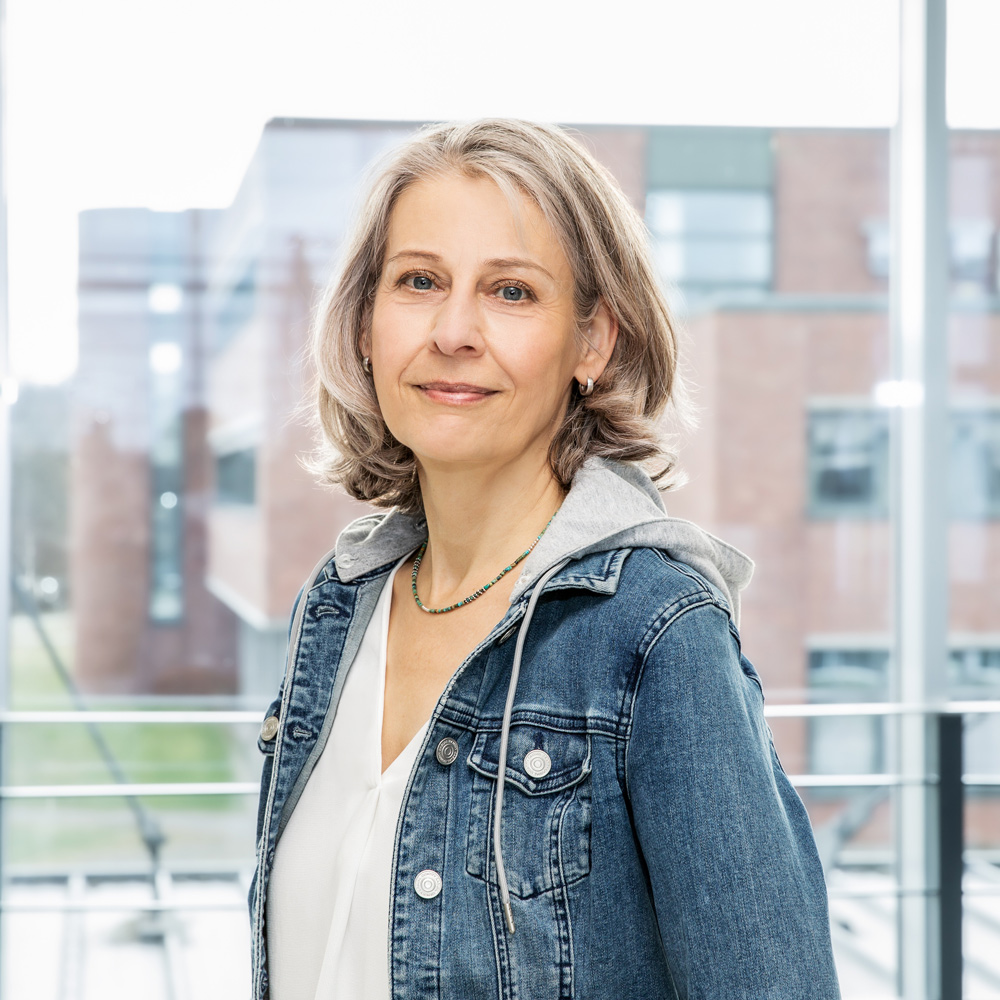
Prof. Dr. Eva Spies is a Professor for the Study of Religion with Focus on Africa at the University of Bayreuth within the Faculty of Humanities & Social Sciences . She holds a PhD in Cultural Anthropology from the University of Mainz and leads the Research Section Moralities in the Africa Multiple Cluster of Excellence (EXC 2052). Key Roles : Principal Investigator, Bayreuth International Graduate School of African Studies (BIGSAS) Vice Dean of Research Co-founder, German Association for the Study of Religion's Africa working group Research Interests span religious plurality, development cooperation, and transformative practices. She coined the concept of religious engineering to analyze how religious resources shape social/political worlds. Regional expertise in Niger/West Africa and Madagascar/Indian Ocean , with focus on: South-South mission Religion and pandemic response Intercultural hermeneutics Epistemological conflicts Material culture in development Projects : Africa Multiple Cluster of Excellence (2025): "Religious engineering. The making of moralities, development and religion in Niger" Humboldt Research Hub (2021): "Fighting pandemics with religion?" (with Moi University and University of Zimbabwe) Education : PhD in Cultural Anthropology, University of Mainz
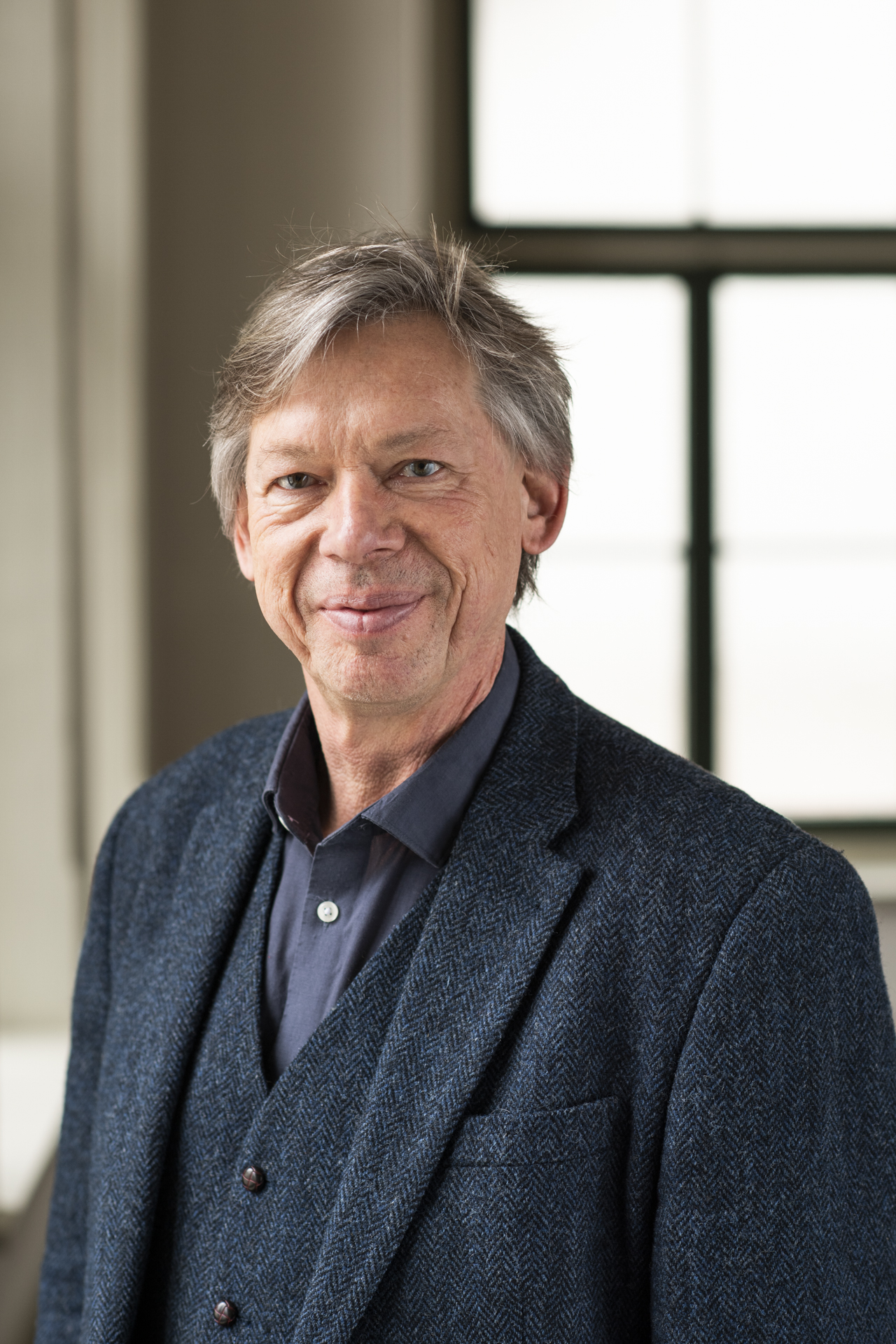
Thomas Schlag is Professor of Practical Theology with a focus on Religious Education, Church Theory and Pastoral Theology at the Faculty of Theology, University of Zurich. Since January 1, 2021, he has served as Director of the University Research Priority Program 'Digital Religion(s): Communication, Interaction and Transformation in the Digital Society.' He is also Chairman of the Board of the Center for Church Development (ZKE), which he co-founded in June 2010. Previously, he served as Dean of the Faculty of Theology (2014-2016) and Vice Dean for Teaching (2012-2014). 1965: Born in Stuttgart 1980-1985: Attended Protestant seminaries Maulbronn and Blaubeuren 1986-1993: Studied Protestant Theology and Political Science in Tübingen and Munich 1993-1996: Doctorate at University of Munich 2004-2005: DFG research fellowship at University of Tübingen 2005: Appointed Assistant Professor at University of Zurich 2009: Habilitation at University of Tübingen 2011: Appointed Professor at University of Zurich Professor Schlag's work centers on the intersection of theology, education, and digital transformation. His research examines how religious practices adapt to digital environments, with particular focus on religious education in schools, confirmation work, and church youth programs. He explores theological-anthropological interpretations of digital transformation and investigates the relationship between church, state, and civil society through the lens of 'Public Theology.' His current projects analyze digital media practices in church educational offerings and investigate how churches negotiate digital worship services and sacraments. His recent publications reveal a strong emphasis on digital religion, with numerous articles examining digital media in confirmation work, religious leadership in digital contexts, and the challenges churches face in adapting to digital transformation. His work spans practical theology, religious education theory, and ecclesiology, with a particular focus on Swiss religious contexts while maintaining international comparative perspectives. The research demonstrates increasing interdisciplinary collaboration, particularly with scholars examining digital innovation in religious contexts. As Director of the University Research Priority Program 'Digital Religion(s),' Professor Schlag leads a significant interdisciplinary research initiative exploring how digital technologies transform religious communication, interaction, and practices. His work has practical implications for church development, religious education, and theological reflection in the digital age. He actively collaborates with international research networks including the European Network for Confirmation Work and the International Academy of Practical Theology.
Professor Masooda Bano serves as William Golding Senior Research Fellow at Brasenose College and Professor of Development Studies at the University of Oxford's Department of International Development. She leads the five-year ERC-funded Changing Structures of Islamic Authority (CSIA) project examining Islamic scholarly debates and their societal impacts. Her academic credentials include an MPhil in Development Studies from Cambridge and a DPhil from Oxford. These qualifications underpin her expertise in development theory and field research methodologies. Bano's research centers on the interplay between ideas, beliefs, and material incentives in development processes . She investigates how psycho-social factors shape individual choices and collective outcomes, with particular focus on Islamic authority structures, female education movements, and aid effectiveness. Her work combines large-scale comparative studies using ethnographic and survey data across Muslim-majority contexts. Recent publications reveal a concentrated focus on education policy in developing nations , especially Pakistan, Nigeria, and Indonesia. Key themes include decentralized education planning, low-fee private tuition markets, community participation models, and Islamic education systems. The research consistently examines religion-development intersections and institutional responses to social change. Her scientific recognition includes: Two competitive ESRC Fellowships A 1.4 million euro ERC Starting Grant for the CSIA project ESRC Best Social Science Impact award for Nigeria education interventions Bano supervises MPhil/DPhil theses at Oxford and has advised major development agencies, notably designing DfID's education reforms in northern Nigeria. Her CSIA project coordinates a multinational team conducting textual analysis, surveys, and ethnographic fieldwork to map evolving Islamic authority structures.
Peter J. Boettke is a Distinguished University Professor of Economics at George Mason University, holding the BB&T Professorship for the Study of Capitalism. He directs the F.A. Hayek Program at the Mercatus Center. His academic roles include editorships of the Review of Austrian Economics and Journal of Economic Behavior & Organization . Boettke earned his Ph.D., M.A., and B.A. in Economics from George Mason University and Grove City College. Research interests span Austrian economics, institutional economics, comparative political economy, and the history of economic thought. He emphasizes market process theory, emphasizing how institutions and entrepreneurship shape social outcomes. His work critiques socialist systems and advocates classical liberal principles, informed by Hayek’s insights on knowledge and spontaneous order. Awarded for teaching excellence and academic contributions, Boettke has supervised over 30 doctoral students. His publications include authored books like The Struggle for a Better World (2021), Money and the Rule of Law (2021), and edited volumes on Hayek, Buchanan, and Tocqueville. His recent articles address monetary policy, socialism, and pandemic governance. Boettke’s work bridges theory and policy, advocating for rule-of-law frameworks in economics and institutions that foster decentralized decision-making. His intellectual contributions span academic entrepreneurship, policy analysis, and interdisciplinary collaboration across economics, philosophy, and political science.
Mashood Baderin is a Professor at SOAS University of London's School of Law, where he has established himself as a leading scholar in Islamic law, international law, and human rights. With over 90 publications spanning more than two decades, Professor Baderin has made significant contributions to bridging Islamic legal traditions with contemporary international legal frameworks. Professor Baderin's research interests focus on the intersection of Islamic jurisprudence with modern legal challenges. His work explores how Islamic legal principles can inform contemporary human rights frameworks, international criminal justice systems, and social reform initiatives in Muslim-majority countries. He has extensively examined Islamic legal theory (usul al-fiqh), the application of Islamic law in modern contexts, and the relationship between Islamic law and international legal norms. His most recent publications reveal a continued focus on the universality of international law from Islamic perspectives, the application of Islamic law in African contexts, and the relationship between Islamic principles and human rights frameworks. Professor Baderin has edited significant works including 'Islamic Legal Theory' (2014) and authored the widely recognized 'Islamic Law: A Very Short Introduction' (2021). Professor Baderin has supervised numerous doctoral students working on Islamic law topics with regional focus on Nigeria, Saudi Arabia, and the UAE. His students' research often examines gender issues, legal reform, and the practical application of Islamic law in contemporary settings.
Dr. Bahar Baser is a Professor in Politics and International Relations at Durham University's School of Government and International Affairs, where she joined in 2021. She is also a member of the Institute for Middle Eastern and Islamic Studies. Previously, she served as Associate Professor at Coventry University's Centre for Trust, Peace and Social Relations, leading the "Peacebuilding and Conflict Transformation Research Group," and was a postdoctoral research fellow at the University of Warwick. Dr. Baser completed her PhD in Social and Political Sciences at the European University Institute in Florence, Italy. During her doctoral studies, she was a Visiting Research Fellow at multiple institutions including Humboldt University in Berlin, REMESO in Sweden, and the Instituto de Ciencias Sociais in Lisbon. Dr. Baser is an expert in diaspora studies, peacebuilding, and conflict transformation with a regional focus on the Middle East. Her research examines diaspora engagement in peace processes, post-conflict reconstruction, and state-building in the Global South. She has extensively studied stateless diaspora activism in Europe, particularly regarding host states' counterterrorism policies, radicalization of diaspora members, and transnationalization of homeland conflicts. Her recent publications demonstrate a strong focus on Kurdish diaspora studies, diaspora governance by authoritarian states, intergenerational trauma in diaspora communities, and peacebuilding processes. Her work spans multiple disciplines including political science, international relations, migration studies, and Middle Eastern studies, with particular attention to how diasporas interact with homeland conflicts and host state policies. Dr. Baser serves as editor of the Kurdish Studies Series published by Lexington Books and co-editor of the Diasporas and Transnationalism Series published by Edinburgh University Press. She is also a senior associate research fellow at the Security Institute for Governance and Leadership in Africa (SIGLA), Stellenbosch University, South Africa, and a visiting professor at Tampere Peace Research Institute, Tampere University, Finland. Dr. Baser has supervised multiple doctoral students including Abdullah Al-Khonaini, Mengqi Sun, Nannan Li, and Shorooq Al Zaabi. She has secured numerous research grants including projects funded by the British Academy, Academy of Finland, Allan and Nesta Ferguson Trust, and Horizon 2020 Marie Curie Fellowship. Her research projects span topics such as diaspora engagement in peace processes, youth violence and conflict transformation, and diasporic identity formation. Dr. Baser is actively involved with the Institute for Middle Eastern and Islamic Studies at Durham University, contributing to research initiatives focused on the Middle East and Islamic studies. Her multilingual capabilities (Turkish, English, Italian, Spanish, French, Portuguese, Azerbaijani) support her extensive fieldwork and collaborative research across multiple countries.
Ruxandra Paul is a faculty member in the Department of Political Science at Amherst College, where they teach courses ranging from introductory to advanced levels including POSC 470: International Migrations and Politics and POSC 436: European Democracy. Their academic work bridges political science, migration studies, and European Union politics, with a particular focus on how mobility transforms national politics and international relations. Education: PhD (Government), Harvard University A.M. (Government), Harvard University B.A., summa cum laude, PBK (Political Science - International Relations; French), Williams College Paul's research examines how migrations transform national politics and international relations, with particular attention to European citizenship enabling free movement across borders. Their work explores political developments in a world where people's experiential space transcends national territories, especially focusing on Central and Eastern Europe. Current research projects include "Citizens of the Market: Free Movement and Political Change in Central and Eastern Europe" (under contract at Oxford University Press) and studies on pandemic politics, cyberpolitics, and aging/ageism. Paul's publications demonstrate consistent scholarly output in migration politics, with a concentration on European contexts. Their work spans theoretical contributions on transnational citizenship and practical analyses of migration crises, showing an evolving focus from foundational migration studies toward contemporary challenges including pandemic politics and digital governance. Scientific Awards and Affiliations: Minda de Gunzburg Center for European Studies, Harvard University - Visiting Scholar and Local Affiliate Harvard Academy for International and Area Studies Chateaubriand Fellowship of the French Government Weatherhead Center for International Affairs research grant Krupp Foundation research grant Certificate of Excellence in Teaching, Derek Bok Center for Teaching and Learning Paul has received multiple competitive research grants and teaching awards, demonstrating excellence in both research and pedagogy. Their teaching portfolio includes innovative courses like POSC 109: Pandemic Politics: Democracy versus Disease and POSC 239: Acceptable Prejudice: Age, Aging, Ageism, reflecting their commitment to connecting academic research with contemporary issues. Outside of formal academic work, Paul teaches fitness classes (Barre and Barre Cardio) at the Amherst Gym and maintains diverse interests including music, dance, art, and long-distance running.
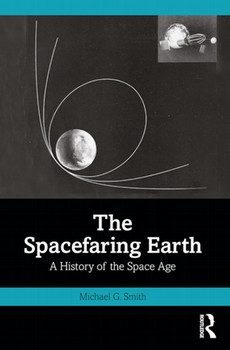
Michael G. Smith is a Professor of History at Purdue University's College of Liberal Arts, specializing in Russian History and Aerospace History. His office is located in BRNG 6170, where he holds office hours by appointment and before or after class. Dr. Smith teaches a diverse range of courses including History of Russia to 1861 (HIST 238), History of Russia from 1861 (HIST 239), History of Aviation (HIST 384), and History of the Space Age (HIST 387), along with numerous advanced seminars on Russian history, aerospace history, and global historical topics. Dr. Smith earned his Ph.D. from Georgetown University in 1991 and has established himself as a leading scholar in both Russian revolutionary history and aerospace history. His research demonstrates remarkable interdisciplinary breadth, connecting linguistic studies with political history in the Soviet context while simultaneously exploring the cultural dimensions of space exploration and aviation history. His scholarly output reveals two major research trajectories: deep investigations into the Russian Revolution with particular focus on language policy, nationalities issues, and revolutionary violence in Azerbaijan and the Caucasus region; and pioneering work on the history of aerospace, space exploration, and the cultural dimensions of the Space Age. These dual interests converge in his examination of how technological innovation intersects with political ideology and national identity formation. Dr. Smith has successfully mentored numerous undergraduate and graduate students whose research has resulted in publications in respected journals such as the Journal of Purdue Undergraduate Research, Quest: The History of Spaceflight Quarterly, and Astropolitics. His students have explored diverse topics including Purdue's aviation pioneers, NASA mission insignia, Shuttle-Mir program, and regional impacts of space programs. Working closely with the Purdue Archives, Dr. Smith has developed innovative archival-research seminars that have produced multiple student publications and special projects including Flight Paths: Purdue University's Aerospace Pioneers and Purdue Students Study Boilermaker Eugene Cernan's Remarkable Career. His commitment to connecting historical research with contemporary technological heritage has created unique opportunities for students to engage with primary sources related to aerospace history.
Priyank Chandra is an Assistant Professor at the University of Toronto's Faculty of Information and Director of the STREET Lab (SocioTechnical Resistance and Ethical Technologies Lab). His interdisciplinary research focuses on sociotechnical practices of marginalized communities, leveraging HCI, CSCW, STS, and development studies to design inclusive technologies. He holds a PhD in Information from the University of Michigan, along with MS in Economics and BE in Electronics Engineering. Chandra has received awards at ACM CHI and CSCW for his work on labor movements, digital resistance, and accessibility. Education: PhD in Information, University of Michigan (2019) MS in Economics BE in Electronics Engineering Research Interests: Chandra explores how marginalized communities reconfigure technologies to foster self-organization and resistance. His work bridges HCI/CSCW with theories from development studies and institutional analysis, emphasizing ethical, socially just systems. Recent projects include studying farmer movements in India, gig economy platforms, and weather risk communication for visually impaired Ontarians. Grants & Awards: SSHRC Grant: Repertoires of Contention in Digital Labour Platforms (2023-2024) NSERC Grant: Designing Inclusive Platforms for the Gig Economy (2022-2027) Connaught New Researcher Award (2023) ACM CHI/CSCW Awards for contributions to labor studies and accessibility Advising & Labs: Supervises students in ICTs, design, and marginality. Directs the STREET Lab at KMDI, focusing on ethical tech for vulnerable communities. Teaches courses on inclusive design and marginalized communities' ICT practices.
Thomas Banchoff is Director of the Berkley Center for Religion, Peace, and World Affairs and serves as Vice President for Global Engagement at Georgetown University, where he holds a professorship in both the Department of Government and the Walsh School of Foreign Service. His leadership combines academic scholarship with practical global engagement initiatives that address critical contemporary challenges. Georgetown University: Professor, Department of Government and Walsh School of Foreign Service Berkley Center: Director University Administration: Vice President for Global Engagement Banchoff earned his B.A. from Yale University (1986), M.A. from the University of Bonn (1988), and Ph.D. in Politics from Princeton University (1993). His scholarly development was enriched by prestigious fellowships including Harvard's James Bryant Conant Post-Doctoral Fellowship (1997-1998) and a Humboldt Fellowship at the University of Bonn (2000-2001). His research focuses on ethical and religious dimensions of global politics, with particular expertise in Catholic Social Teaching's application to contemporary challenges. Banchoff's scholarly trajectory evolved from European politics (evidenced by early works like The German Problem Transformed ) to contemporary analyses of religion's role in global governance. His current work emphasizes Pope Francis's "culture of encounter" concept across international relations, education, and interfaith dialogue. Recent scholarship increasingly addresses democratic erosion, AI ethics from religious perspectives, and Jesuit higher education's contribution to global citizenship. Analysis of his publication history reveals thematic progression toward practical applications of religious perspectives to global challenges. His recent work demonstrates engagement with urgent issues including democratic backsliding (as seen in his moderation of the 2025 IAJU Assembly panel on Nicaragua and Lebanon), AI ethics, and interfaith collaboration in conflict zones. DAAD Prize for Distinguished Scholarship in German studies (2003) Banchoff directs the IAJU Global Citizenship Fellows Program, which engages over 2,000 students across 60+ institutions in 20+ countries. His leadership extends to significant initiatives including Catholic Social Teaching and the Global Future of Development, Faith and the Global Agenda, and Religious Pluralism in World Affairs. Upcoming engagements include "Nostra Aetate at 60" (September 2025) and "Pope Francis: A Legacy of Human Fraternity" (August 2025), reflecting the continued relevance of his work at the intersection of religion, politics, and global challenges.
Ole Wæver is a Professor of International Relations at the Department of Political Science, University of Copenhagen. He founded the Centre for Advanced Security Theory (CAST) and directs the Centre for Resolution of International Conflicts (CRIC) . His work spans security theory, conceptual history, and sociology of science, with global recognition for developing the Copenhagen School of securitization theory. Primary Research Areas: International Relations, Security Studies, Climate Change, Religion/Secularism, Conflict Analysis Notable Contributions: Pioneering securitization theory, interdisciplinary analysis of security concepts, and theoretical developments in regional security complexes. His recent work explores the intersection of technology, philosophy of language, and security. Scientific Awards: Royal Danish Academy of Sciences and Letters (2007) Carlsberg Foundation Research Prize (2012) Knight of the Order of Dannebrog (2014) Hesbjerg Foundation Peace Prize (2015) Honorary Doctorate, University of Turku (2015) Publications: Authored and co-authored influential books such as Security: A New Framework for Analysis and Regions and Powers , and contributed to leading journals including International Organization , Security Dialogue , and Millennium .
Rakesh Peter-Dass serves as Associate Professor of Religion at Hope College, where he has been teaching since 2016. His academic journey spans multiple prestigious institutions including Harvard University, Yale University, and the University of Oxford, where he earned advanced degrees in theology, divinity, and business administration. His research focuses on the complex intersections of religion with business, language, law, and politics, particularly in the South Asian context. Dr. Peter-Dass examines how religious identities are shaped through linguistic choices, legal frameworks, and socio-political dynamics, with special attention to Hindu-Christian relations and religious rights. His work bridges theological scholarship with practical applications in interfaith dialogue and religious freedom advocacy. His publications reveal a consistent focus on South Asian religious contexts, particularly examining Hindi Christian literature, Hindu nationalism, and comparative theological approaches between Hindu and Christian traditions. The research demonstrates interdisciplinary connections between religious studies, political science, linguistics, and legal studies, with significant contributions to understanding religious rights in both Indian and American Supreme Court contexts. Among his notable honors are the Saïd Foundation Scholarship from Oxford University, multiple Harvard University fellowships, and the Selva J. Raj Endowed International Dissertation Research Fellowship from the American Academy of Religion. His teaching excellence has been recognized through Harvard University's Certificate of Distinction in Teaching. Dr. Peter-Dass has served in significant professional capacities including as Co-Chair of the Theology and Religious Reflection Unit at the American Academy of Religion (2018-2023) and on the Editorial Board of the Hindi Theological Literature Committee in India (2011-2015). His extensive consulting work with international development agencies, intergovernmental organizations, and religious bodies demonstrates his commitment to applying academic research to real-world religious and social challenges.
Quentin Gausset is an Associate Professor in the Department of Anthropology at the University of Copenhagen, Faculty of Social Sciences. His work bridges environmental anthropology, development studies, and climate action, with extensive fieldwork across West, Southern, and East Africa, as well as Southeast Asia and Denmark. He leads the SAMSKAB research project focused on green transitions and community-driven sustainability. His research interests include environmental anthropology, natural resource management, development, HIV/AIDS, ethnicity, autochthony, indigeneity, kinship, religion, and interdisciplinary field methods. He is a member of the Anthropological Research Group on Nature, Environment and Climate (NEC), reflecting his deep engagement with ecological and societal transformations. The recent scholarly output of Quentin Gausset demonstrates a strong shift toward climate action, citizen-driven environmental initiatives, and sustainable community models, particularly in Denmark. His publications analyze eco-villages, carbon footprinting, and collective behavioral change, emphasizing the cultural and social dimensions of the green transition. This reflects a broader interdisciplinary trend in his work, linking anthropological insight with sustainability science and policy. While no formal scientific awards are listed in the provided material, his editorial leadership in key books on climate mitigation and green transitions underscores his influence in the field. His collaboration with institutions such as Gulu University and participation in research networks highlight his international academic engagement. Quentin Gausset has advised or collaborated on numerous research initiatives and projects, including the Citizen Driven Environmental Action (CIDEA) project and initiatives on natural resource management in Africa. He has contributed to interdisciplinary teaching and capacity-building programs in Southeast Asia and southern Africa, demonstrating a commitment to collaborative and applied research. He is actively involved in the Anthropological Research Group on Nature, Environment and Climate (NEC) at the University of Copenhagen, which serves as a hub for interdisciplinary research on environmental change, sustainability, and community governance. His work often involves collaborative networks across Denmark and internationally, particularly in Africa and Southeast Asia.
Isabelle Pichon is an academic affiliated with the University of La Réunion (UCO), specifically within the Faculty of Human and Social Sciences. She holds a Doctorate in Psychological Sciences from the Catholic University of Louvain (2006) and serves as an Educational Manager for the 3rd Year Psychology Degree - PSTO Masters program. Her research focuses on prosocial behaviors, religion's impact on social dynamics, intergroup relations, stereotypes, and ethical behavior. She has authored and co-authored numerous peer-reviewed articles in journals like Le sociographe and Basic and Applied Social Psychology , exploring topics ranging from minority resilience to ideological conflicts. Her academic work bridges sociology and psychology, emphasizing societal norms, identity formation, and the psychological underpinnings of social actions. Recent studies include investigations into how religious priming influences prosociality and the ethical tensions between collective norms and individual behavior. Notable contributions include analyzing sexual minorities' resilience mechanisms and the interplay between personal and professional identity among social work students. Dr. Pichon has presented at conferences such as the XXème congrès AIPTLF (2018), addressing themes like work-life transition dynamics. Her research methodologies include experimental approaches and quantitative analyses. No scientific awards or grants are explicitly listed, but her extensive publication record underscores sustained scholarly engagement in social and psychological sciences.
Cristine H. Legare is a Professor of Psychology at The University of Texas at Austin, affiliated with the College of Liberal Arts. She directs the Center for Applied Cognitive Science and the Evolution, Variation, and Ontogeny of Learning Laboratory. Her work bridges cognitive science, cultural anthropology, and developmental psychology to explore how universal cognitive systems interact with cultural variability to shape learning and cultural evolution. Education: Ph.D. in Developmental Psychology from the University of Michigan (Culture and Cognition Program). Undergraduate studies at UC San Diego, double-majoring in Human Development and Cultural Studies. Research Interests: Cognitive development, cultural learning, global public health, STEM education, and the evolution of ritual behavior. Her projects span diverse populations, including studies in South Africa, Brazil, China, Vanuatu, and India. Grants & Funding: Supported by the National Science Foundation, John Templeton Foundation, and others. Her work addresses pressing issues in education and public health through interdisciplinary approaches. Recipient of the 2015 APS Janet Taylor Spence Award 2016 APA Boyd McCandless Award Labs & Initiatives: Founded the Center for Applied Cognitive Science to foster global collaborations between researchers and practitioners. Key projects include the RISE Project (healthcare rituals in India) and Thinkery Connect (museum-university partnerships). Teaching focuses on cognitive science of religion and coevolution of cognition/culture. Over 100 publications in top journals like Psychological Science and PNAS, with media coverage in NPR, Scientific American, and The Wall Street Journal.