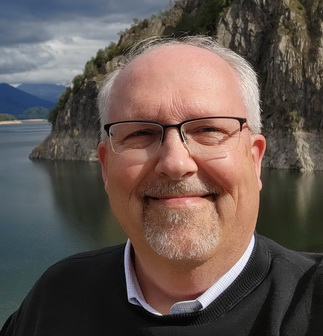
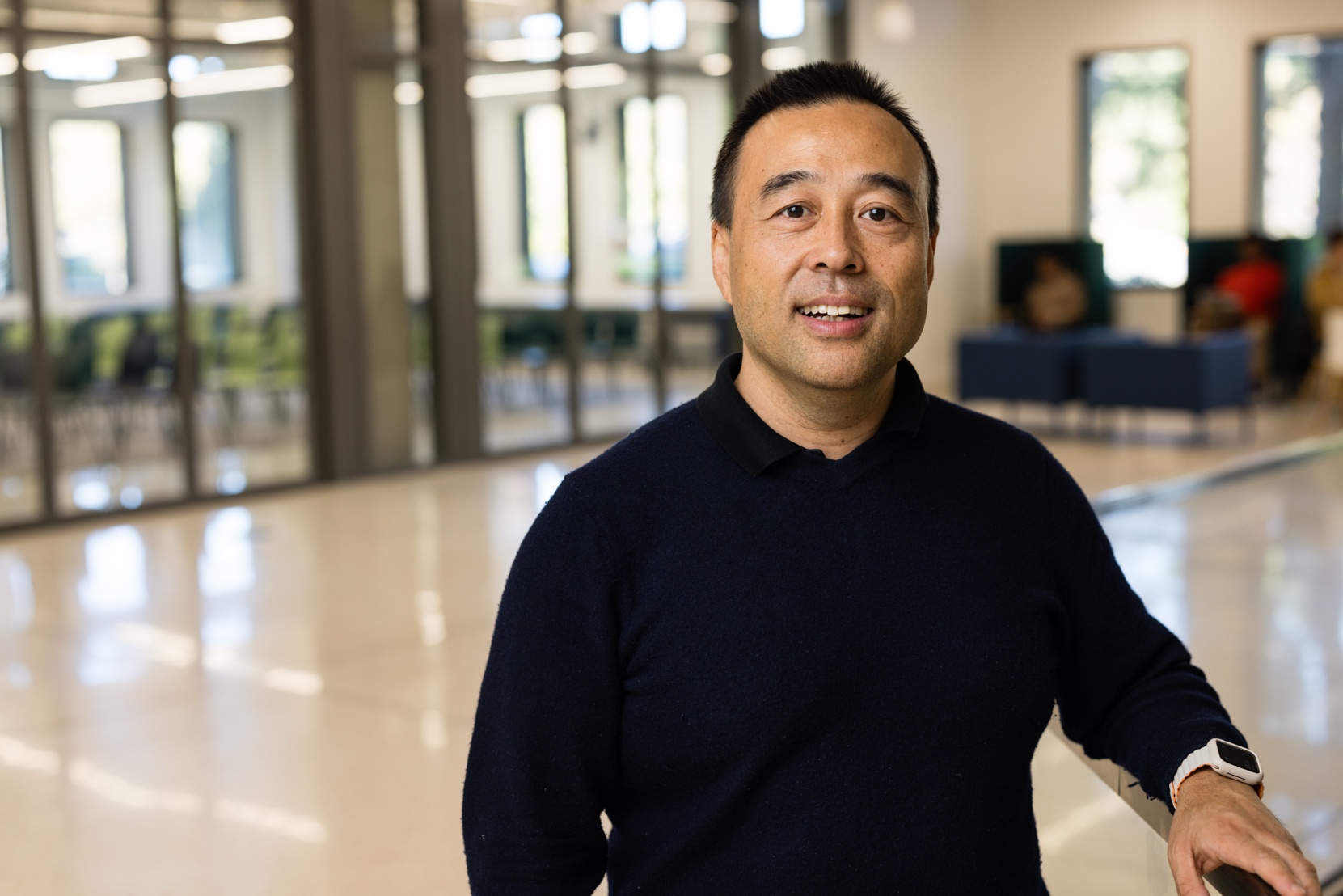
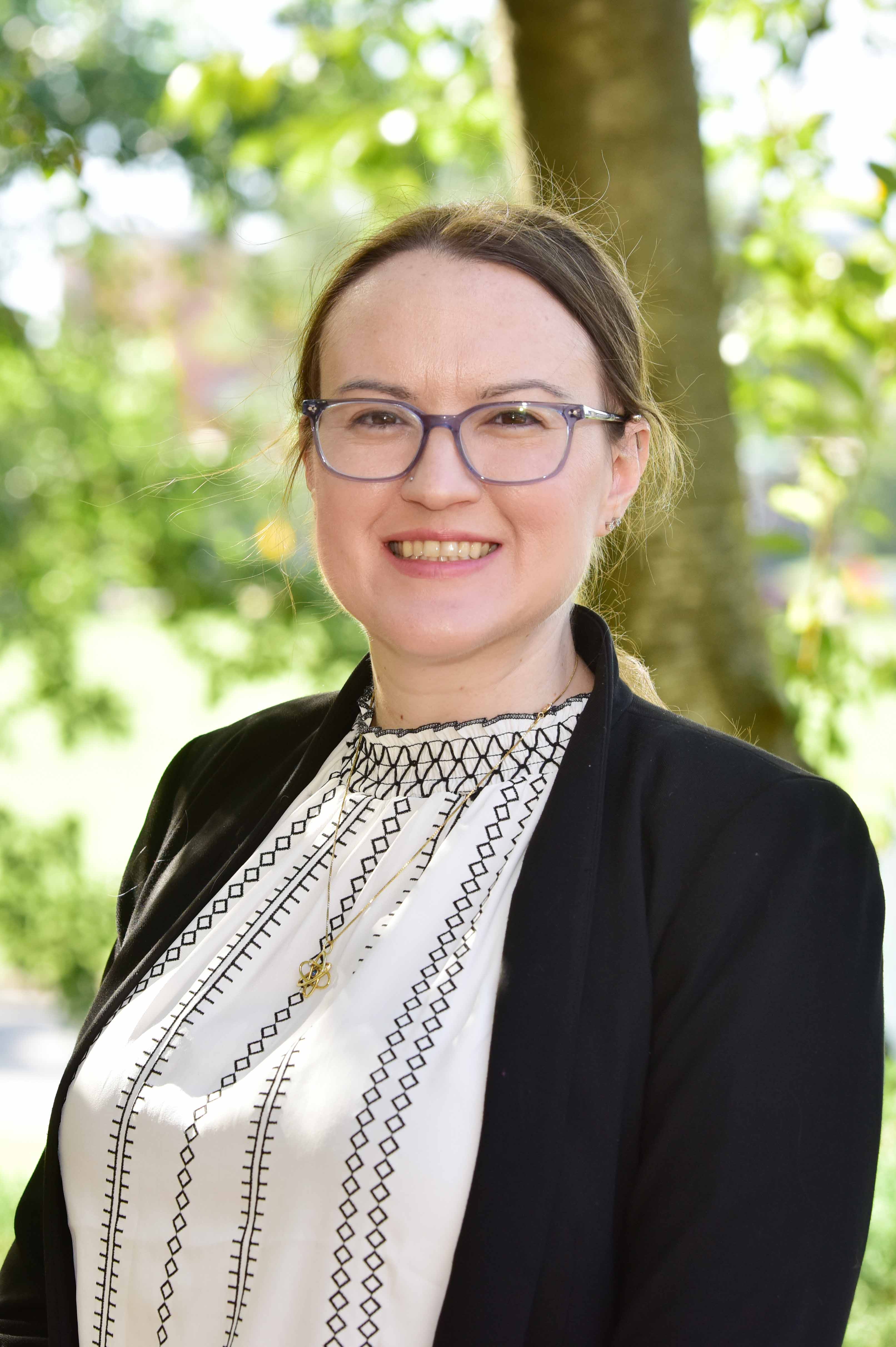
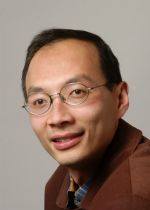
Jeffrey C. Suhling is the Quina Distinguished Professor and Department Chair of Mechanical Engineering at Auburn University . His research focuses on the mechanical and thermal behavior of lead-free solder alloys , particularly in automotive electronics and high strain rate applications . He has extensively studied the reliability of hybrid SAC-LTS solder joints under thermal cycling, vibration, and shock. Scientific awards : Quina Distinguished Professor His work integrates finite element modeling , microstructural analysis , and machine learning to predict solder joint failure and optimize material performance. Key areas include creep behavior , damage accumulation , and interfacial reliability in extreme environments.
Brian Horsak is a Professor and Head of the Center for Digital Health and Social Innovation at Fachhochschule Steyr. He holds an endowed professorship in Applied Biomechanics and Rehabilitation Research, focusing on integrating advanced technologies like VR/AR, machine learning, and wearable devices into clinical gait analysis and motor rehabilitation. His roles include leading the Institute of Health Sciences and contributing to the Department of Health Sciences and Media and Digital Technologies. Education: Dr. rer. nat. (2012, University of Vienna), Habilitation in Kinesiology (2020, University of Vienna), Master's in Sports Science (2002–2008, University of Vienna). Research interests revolve around improving patient care through biomechanical innovations, including musculoskeletal simulations, gait pattern analysis, and rehabilitation technologies. He leads projects like ReMoCap-Lab (motion capture for motor rehabilitation) and chairs the Applied Biomechanics in Rehabilitation Research initiative. Key achievements include the Lower Austria Innovation Prize (2021), multiple best paper awards, and grants for projects like TRUST AI and VReeze. His work bridges clinical practice with digital health solutions, emphasizing explainable AI (XAI) in gait classification and VR-based balance training. Notable contributions include developing the GaitRec dataset and studies on smartphone-based motion capture reliability. He collaborates internationally, publishing widely in Gait & Posture , Scientific Reports , and IEEE journals. Current projects focus on AI-driven gait analysis, musculoskeletal modeling, and XR applications in healthcare.
Guang Lin is the Associate Dean for Research and Innovation in the College of Science and a Full Professor in the School of Mechanical Engineering and Department of Mathematics at Purdue University. He leads the Data Science Consulting Services and has dual appointments in Statistics and Earth, Atmospheric, and Planetary Sciences. His research focuses on AI, machine learning, uncertainty quantification, and computational science, with applications in fluid mechanics, materials science, and healthcare. Lin holds a Ph.D. from Brown University (2007) and has received numerous awards, including the NSF CAREER Award and Purdue’s University Faculty Scholar distinction. He has authored over 250 publications and secured grants totaling millions, including DOE and NIH funding. His interdisciplinary work bridges academia and industry, emphasizing AI-driven solutions for complex systems. Education: Ph.D. Applied Mathematics (Brown, 2007), M.S. Applied Mathematics (Brown, 2004), M.S. Mechanics (Peking University, 2000), B.S. Mechanics (Zhejiang University, 1997). Research Grants: Includes DOE-funded projects on machine learning for plasma-wall interactions and NSF grants for multiscale modeling. Service: Editorships in SIAM MMS, ASME Journal, and leadership in Purdue’s AI initiatives. Teaching: Courses on Uncertainty Quantification, Fluid Mechanics, and Data Science.
Nickolai Zeldovich is the Joan and Irwin M. Jacobs Professor of Electrical Engineering and Computer Science at MIT, and a member of the Computer Science and Artificial Intelligence Laboratory (CSAIL). He received his PhD from Stanford University in 2008 and focuses on building practical secure systems, including encrypted databases, undefined behavior detection tools, formally verified file systems, and cryptocurrency protocols. His work spans both theoretical and applied aspects of computer security and distributed systems. Research interests include: Secure system design Distributed consensus mechanisms Formal verification of software/hardware Cryptographic protocols Privacy-preserving web technologies Publications & Verification Tools Recent work focuses on modular verification of complex systems, including: Shipwright (2025): Byzantine-fault-tolerant distributed system verification PoWER (2025): Crash consistency verification framework K2 Architecture (2023): Trustworthy hardware security modules Grove (2023): Separation-logic-based verification library Tiptoe (2023): Private web search protocols Major Awards Best paper award, ACM SOSP (2011, 2015, 2017) Sloan Research Fellowship (2010) NSF CAREER award (2011) MIT Jamieson Award for Teaching (2024) Active in multiple startup ventures including Algorand (cryptocurrency), MokaFive (virtualization), and PreVeil (end-to-end encryption).
Professor Mohan Lal Kolhe is a distinguished academic at the University of Agder , serving as a Full Professor in Smart Grid and Renewable Energy within the Faculty of Engineering and Science and the Department of Engineering Sciences . With over three decades of international academic experience, he has held positions at prestigious institutions including University College London, University of Dundee, and Hydrogen Research Institute in Canada. His career spans technical innovation, policy development (e.g., as a member of South Australia’s Renewable Energy Board), and extensive research leadership in sustainable energy systems. Research Leadership : Focus on Smart Grid integration, Electric Vehicles, Hydrogen Energy, Solar/Wind Systems, and Techno-Economic Energy Analysis. Global Recognition : Listed in the top 2% of scientists worldwide (2020-2023) by Stanford University, with 10 publications averaging 200+ citations. Recent publications emphasize advanced optimization techniques for renewable integration, EV charging infrastructure, hydrogen production, and power system stability. His work has secured competitive funding from entities like the Norwegian Research Council and EU programs. Awards and Expert Roles : Top 2% Global Scientist (Stanford, 2020-2023) Highly Cited Researcher (Top 10 publications, 200+ avg. citations) Expert evaluator for European Commission, Royal Society London, EPSRC, and Cyprus Research Foundation He actively contributes to international conferences as keynote speaker and editorial board member, with leadership roles in research groups like Autonomous and Cyber-Physical Systems and Energy Systems .
Karthik Dantu is an Associate Professor in the Department of Computer Science and Engineering at the University at Buffalo, State University of New York, within the School of Engineering and Applied Sciences. His research focuses on mobile sensor networks, robot networks, networked embedded systems, mobile computing, wireless networks, and embedded operating systems. He leads the Distributed Robotics and Networked Embedded Sensing (DRONES) Lab and has received significant funding including an NSF CAREER Award. Dr. Dantu's educational background includes: PhD in Computer Science from University of Southern California (2009) BE in Computer Science from Sri Jayachamarajendra College of Engineering (1999) His research interests center on algorithmic and systems challenges in Edge Computing Systems, with particular focus on enabling seamless vision sensing in cloud-edge environments. Dantu's work bridges mobile systems and robotics, developing novel approaches for UAV software, visual SLAM, and distributed sensing. His research addresses critical challenges in resource-constrained environments, security, and real-time performance for mobile and robotic systems, with emphasis on practical implementations that solve real-world problems in autonomous systems. Dr. Dantu's publication record shows a strong trajectory in mobile systems and robotics research, with increasing focus on edge computing applications for visual sensing. His recent work demonstrates expertise in adapting visual SLAM to edge environments, securing mobile systems through technologies like Rushmore, and developing novel approaches for UAV software reliability and depth sensing. The research spans theoretical algorithms and practical system implementations, with particular strength in bringing academic research to practical applications in robotics and mobile computing. Dr. Dantu has received several scientific honors: NSF CAREER Award on Enabling Seamless Vision Sensing in Cloud-Edge Systems Outstanding service award from the Office of International Services NSF Travel Grant for SenSys 2005 Conference Travel Grant for SIGCOMM 2002 As an advisor, Dr. Dantu has mentored numerous PhD students to completion, with graduates now working at companies like Samsung Research and Zoox Inc., or continuing academic careers as Assistant Professors. His research is supported by substantial grants including a DARPA OFFSET Sprint 4 award ($470k), an NSF CAREER award ($550k), and multiple NSF collaborative grants totaling over $1.5 million. He serves on numerous conference committees including Mobicom, MobiSys, and ICRA, demonstrating leadership in the mobile systems and robotics research communities. Dr. Dantu leads the Distributed Robotics and Networked Embedded Sensing (DRONES) Lab at UB, which focuses on developing algorithms and systems for mobile sensor networks, robot networks, and embedded sensing applications. The lab's work spans theoretical foundations to practical implementations, with particular expertise in UAV systems, visual SLAM, and edge computing for robotics, maintaining strong collaborations with industry partners and other academic institutions to advance the state of the art in mobile and robotic systems.
Dr. Arman Khoshghalb is a Senior Lecturer in Geotechnical Engineering at the School of Civil and Environmental Engineering, UNSW Sydney, where he has been a faculty member since 2012. His academic credentials include a PhD in Geotechnical Engineering from UNSW (2012), an MSc from Sharif University of Technology (2005), and a BSc in Civil Engineering from the same institution (2003). His research focuses on numerical modeling of multi-phase porous media , with emphasis on unsaturated soils, large deformation analysis, and dynamic soil behavior. Key areas include meshfree computational methods, soil-structure interaction, bio-cementation, and thermo-hydro-mechanical processes in geotechnical systems. His work bridges theoretical advancements with practical applications in slope stability, foundation engineering, and sustainable ground improvement. Dr. Khoshghalb's publications predominantly explore geomechanical modeling, experimental soil mechanics, and computational techniques. Recent trends highlight innovations in bio-cemented soils, thermal properties of unsaturated soils, and adaptive numerical methods for complex geotechnical simulations. Awards & Honors: IACMAG Excellent Paper Award (2017) UNSW Research Excellence Award (2012) Advising & Grants: He has supervised 7+ PhD students on topics ranging from weak rock mechanics to computational geomechanics. Funded projects include: ARC Discovery Project (2019–2021): "Non-isothermal dynamic strain localisation in unsaturated porous media" ($298,257) ARC Linkage Infrastructure Grant (2015): "Earthquake shaking table for soil-structure interactions" ($320,000) ARC Linkage Project (2014–2017): "Constitutive modelling of weak rocks" ($314,280) He leads research within UNSW's geotechnical engineering group, collaborating on large-scale experimental testing and computational frameworks for infrastructure resilience.
Timothy M. Jones is a Professor of Computer Architecture and Compilation at the University of Cambridge's Computer Laboratory, serving as Director of the Computer Architecture and Semiconductor Design Centre (CASCADE) and Fellow/Director of Studies at Gonville and Caius College. His research focuses on parallelism extraction in applications to enhance performance and address energy efficiency/reliability challenges in compilers, binary translators, and microarchitectures. Current work includes novel cache prefetching techniques, thread-level parallelism schemes, and advanced core prediction methods. He has an Erdős number of 4 and a Dijkstra number of 4 via collaborative networks. Research interests span computer architecture fundamentals, compiler optimizations, hardware security mechanisms, and fault tolerance strategies. Notable contributions include speculative vectorization, heterogeneous parallel error detection (MEEK/FireGuard), and security tools like MarkUs and MineSweeper. CASCADE oversees interdisciplinary projects addressing future microprocessor/system challenges. Jones supervises PhD students through CASCADE's 2025 intake program. Publications emphasize architectural innovations in memory systems, security, and energy efficiency. Key works include MASCOT (memory dependence prediction), Scalar Vector Runahead (2024), and Decoupled Vector Runahead (2023). His work integrates hardware-software co-design principles to tackle real-world processor bottlenecks.
Abdol-Hossein Esfahanian is a Professor and Chairperson of the Computer Science and Engineering (CSE) Department at Michigan State University (MSU), part of the College of Engineering. He joined MSU in 1983 and has held leadership roles, including Graduate Director for 10 years and Associate Chair. His research focuses on applying graph theory to computer networks, algorithm design, and fault-tolerant computing. He has published extensively in journals like IEEE Transactions on Computers and Discrete Applied Mathematics, and serves as an editor for professional journals. Education: Ph.D. in Electrical Engineering and Computer Science from Northwestern University (1983), M.S. in Computer, Information, and Control Engineering from the University of Michigan (1977), and B.S. in Electrical Engineering from the University of Michigan (1975). Research interests include graph theory applications in network design, distributed systems, and fairness-aware algorithms. Notable awards include the Withrow Teaching Excellence Award (2005, 2015) and recognition as an IEEE Senior Lifetime Member. Teaching includes courses like CSE 835 (Algorithmic Graph Theory). He has contributed to curriculum development, emphasizing computational competencies for engineering students. His work integrates theoretical foundations with practical applications in networking and distributed systems.
Katrina M. Groth is a Professor and Director of the Reliability Engineering Program at the University of Maryland, affiliated with the A. James Clark School of Engineering. She also serves as Associate Director for Research at the Center for Risk and Reliability and is part of the Maryland Energy Innovation Institute. Her expertise spans risk analysis, hydrogen safety, and nuclear safety, with notable contributions to probabilistic risk assessment (PRA) and human reliability analysis (HRA). Groth holds a Ph.D., M.S., and B.S. in Reliability Engineering from the University of Maryland (2009, 2008, 2004). Her research focuses on advancing safety practices for energy systems, including hydrogen technologies, nuclear power plants, and pipelines. Key innovations include the HyRAM toolkit for hydrogen risk assessment and the HyCReD database for reliability data. Groth has published over 175 papers and secured funding from DOE, NRC, and industry partners. She advocates for educational equity, mentoring women and first-generation engineering students. Award highlights include the NSF CAREER Award, USM Board of Regents Faculty Award, and ASME Rising Star of Mechanical Engineering. She leads initiatives such as the SyRRA Lab and serves on editorial boards for journals like Reliability Engineering & System Safety . Groth teaches graduate and undergraduate courses on reliability engineering and risk analysis, emphasizing practical applications in infrastructure and energy systems. Education: Ph.D., Reliability Engineering, University of Maryland, 2009 M.S., Reliability Engineering, University of Maryland, 2008 B.S., Engineering, University of Maryland, 2004 Professional Service: Board of Trustees, National Museum of Nuclear Science & History Associate Editor, ASCE-ASME Journal of Risk and Uncertainty in Engineering Systems Her work integrates Bayesian methods, deep learning, and causal reasoning to address complex system safety challenges, with global impact on engineering standards and practices.
David Tse is a Professor in the Department of Electrical Engineering and Computer Sciences at the University of California, Berkeley. He holds a Ph.D. in Electrical Engineering from the Massachusetts Institute of Technology (1994) and a B.A.Sc. in Systems Design Engineering from the University of Waterloo (1989). Education: B.A.Sc., Systems Design Engineering, University of Waterloo (1989) M.S., Electrical Engineering, MIT (1991) Ph.D., Electrical Engineering, MIT (1994) His research focuses on information theory , wireless communications , and networking , particularly on fundamental limits of communication systems, diversity-multiplexing tradeoffs, and capacity scaling in wireless networks. Selected work includes groundbreaking studies on MIMO channels , cooperative diversity , and spectrum sharing . Recent publications (2003–2007) analyze channel coherence, network capacity, and diversity-embedded coding, reflecting his emphasis on theoretical foundations of wireless communication. Key themes include fading channels, network optimization, and mathematical modeling using percolation theory and signal space approaches. Scientific Awards: IEEE Richard W. Hamming Medal (2019) National Academy of Engineering Member (2018) IEEE Information Theory Society Shannon Award (2017) IEEE Joint Paper Awards (2015, 2000, 2003) INFORMS Erlang Prize (2000) NSF CAREER Awards (1998) Okawa Research Grant (1997)
Michel Gendreau is a Full Professor in the Department of Mathematics and Industrial Engineering at Polytechnique Montréal . His research focuses on the application of Operations Research to Transportation , Telecommunications , and Energy Systems , with an emphasis on Stochastic Optimization and Real-time Planning . He co-directs the Intelligent Transportation Systems Laboratory and is affiliated with the CIRRELT , IVADO , and Trottier Energy Institute . Education : Ph.D. in Computer Science (1984), Université de Montréal His work includes developing metaheuristics for complex optimization problems and dynamic transportation systems . Recent projects address smart supply chains and real-time logistics . He has supervised over 40 doctoral and master's students, including notable graduates like Sanchez-Martinez, Guillen Reyes, and Parada Pradenas. Dr. Gendreau has been recognized with prestigious fellowships from IFORS (2022) and INFORMS (2010). His academic contributions span 420 publications, with recent studies appearing in Reliability Engineering and System Safety and Networks , focusing on stochastic programming , multiperiod routing , and UAV network design . He collaborates extensively with industry partners and has secured grants from organizations like FRQNT and CIRRELT . His research integrates machine learning with operations research to solve real-world challenges in transportation , energy , and logistics .
Navid Bayati is an Associate Professor at the University of Southern Denmark, affiliated with the Institute of Mechanical and Electrical Engineering and the Centre for Industrial Electronics. He leads the Control and Protection of Smart Grids (CAP-SG) group and focuses on renewable/hybrid power systems, microgrid protection, and grid code compliance. Education: Ph.D. in Power Systems & Microgrid Protection (2020, Aalborg University); M.Sc. in Power Systems (2017, Amirkabir University of Technology) His research spans renewable energy integration , transient analysis , grid interconnection , and digital twin applications . Recent work includes machine learning for carbon emission prediction, fault localization in DC microgrids, and supercapacitor resilience in hybrid systems. Collaborations include projects like IEA Wind Task 50 and RePoSys , addressing grid renovation, life cycle assessment, and digital twin resilience. His teaching portfolio covers power electronics , energy management , and microgrid control .
Prof. CHEN Shuming is a Tenured Professor and Doctoral Supervisor at the Department of Electronic and Electrical Engineering , Southern University of Science and Technology (SUSTech) . He has held academic positions since joining SUSTech in 2013 and was promoted to Professor in 2024. Education: PhD in Electronic and Computer Engineering (HKUST, 2012), Master in Optical Engineering (Sun Yat-sen University, 2008), Bachelor in Optoelectronics (South China University of Technology, 2005) Research Focus: Prof. Chen specializes in quantum dot light-emitting diodes (QLEDs) and organic light-emitting diodes (OLEDs) , with expertise in device engineering , device physics , and display/lighting applications . His work includes: Novel device structures (tandem, top-emitting, flexible) Charge transport and exciton dynamics Low-cost fabrication techniques (inkjet printing, laminating) Publication Trends: His recent papers address QLED stability , high-efficiency architectures , and AC-compatible devices , reflecting advancements in quantum dot technology and consumer electronics integration . Scientific Awards: Guangdong Natural Science Award (2024) Shenzhen Youth Science and Technology Award (2017) China Invention Association Innovation Award (2024) International Society for Information Display Outstanding Paper Award (2018) Advising and Grants: Prof. Chen has supervised 6 doctoral students, 5 master's students, and multiple undergraduates. He has led over 10 major projects, including National Natural Science Foundation grants and National Key R&D Program initiatives.
Phil Pavilionis is an Associate Professor of Kinesiology in the School of Public Health at the University of Nevada, Reno. With over 20 years of clinical experience as a Certified Athletic Trainer (ATC) and Certified Strength and Conditioning Specialist (CSCS), he bridges academic research with practical applications in sports medicine. His roles include teaching undergraduate/graduate courses, conducting research in the Neuromechanics Laboratory, and serving as an adjunct clinical athletic trainer for Nevada Sports Medicine. Education: Ph.D. in Neuroscience, University of Nevada, Reno (2024) M.S. in Exercise Science, California University of Pennsylvania (2007) B.S. in Health Science, University of Nevada, Reno (1995) Dr. Pavilionis specializes in head injury prevention and virtual reality applications for concussion evaluation. His research leverages clinical experience to develop standardized assessment protocols, focusing on vestibular-ocular motor screening (VOMS) using virtual reality to reduce administrator variability. Key investigations include oculomotor deficits following concussion, head impact biomechanics in football using instrumented mouthguards, and minimal detectable change metrics for neurocognitive tests like ImPACT. His work integrates neuroscience, kinesiology, and engineering to improve concussion diagnosis and management. Analysis of his 45 publications (2022-2025) reveals three dominant trends: (1) Virtual reality standardization of concussion assessments, particularly VOMS protocols; (2) Head impact monitoring using instrumented mouthguards to evaluate protective equipment like Guardian Caps; and (3) Machine learning applications for objective concussion detection through eye-tracking and biomechanical data. These studies consistently address the critical need for objective, standardized tools to overcome subjective symptom reporting in sports concussion management. Dr. Pavilionis actively collaborates with the Neuromechanics Laboratory and Nevada Sports Medicine, translating research into clinical practice. While no specific grants are documented in the provided materials, his extensive publication record (including 15 articles in 2023 alone) demonstrates sustained research productivity and interdisciplinary collaboration across neuroscience, engineering, and sports medicine disciplines.