Dag Hanstorp is a Professor at the Department of Physics, University of Gothenburg. His office is located at Fysikgränd 3, Göteborg (Room F8032), and he can be contacted via email or telephone. His research focuses on experimental atomic/molecular physics and laser applications, including: Quantum phenomena in levitated droplets Ultraprecise spectroscopy of radioactive molecules (e.g., radium monofluoride) Laser-induced dynamics in fuels and aerosols Electron affinity measurements of alkali metals Vacuum laser particle acceleration techniques Spin Hall nano-oscillator characterization Recent publications (2023-2025) demonstrate interdisciplinary work combining atomic physics, fluid dynamics, quantum optics, and nanotechnology. Common themes include advanced laser spectroscopy, quantum system control, and novel imaging techniques applied to fundamental physical processes.
Jennifer Ryan is a Professor of Numerical Analysis and Division Head of Numerical Analysis, Optimization, and Systems Theory at the Department of Mathematics, KTH Royal Institute of Technology. Her research focuses on designing and developing numerical schemes to extract accuracy from simulations, particularly through superconvergence properties and computational efficiency improvements. She applies these techniques to applications such as imaging, fluid visualization, and plasma dynamics. Education: PhD in Applied Mathematics, Brown University; MS in Mathematics, Courant Institute; BA in Applied Mathematics, Rutgers University. Professional Activities: Member of editorial boards for BIT Numerical Mathematics, ESAIM:M2AN, and Communications on Applied Mathematics and Computation; Steering committee member of AWM's Women in Numerical Analysis and Scientific Computing (WINASc). Her publications emphasize discontinuous Galerkin methods, SIAC filtering, and applications in fluid dynamics. She has served on multiple grant review panels and received awards for diversity and inclusion initiatives. Grants: Principal Investigator for projects funded by the Swedish Research Council, NSF, and US Air Force Office of Scientific Research. Awards: Fellow of UK Higher Education Academy, DAAD Fellowship, and Householder Fellowship.
Greg Kestin is Lecturer on Physics and Associate Director of Science Education at Harvard University's Department of Physics. He earned his Ph.D. in Physics from Harvard, specializing in theoretical particle physics and quantum field theory as a member of The Center for the Fundamental Laws of Nature. His research spans multiple physics domains including: Theoretical particle physics and quantum field theory Nuclear physics and heavy-ion collisions Fusion energy research Gravitational wave physics Science education methodology and technology His recent publications (2019-2022) focus on physics education research, exploring active learning strategies, educational video effectiveness, online learning comparisons, and multimedia tools. Earlier publications (2006-2016) concentrate on theoretical particle physics, including light-shell gauge theory, color fields, and hydrodynamic modeling of quark-gluon plasma. As Associate Director of Science Education, he leads educational initiatives and curriculum development at Harvard. His parallel career includes award-winning science communication work at NOVA | PBS, where he served as digital producer, director, and creator of the 'What the Physics?!' series.
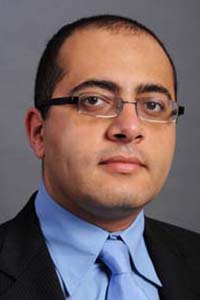
Ayman Abouraddy is UCF Trustee Chair Professor of Optics & Photonics, directing the Space-Time Optics and Photonics Lab at CREOL. He holds BE from Alexandria University (1994) and PhD from Boston University (2003), both in Electrical Engineering. His research develops space-time wave packets, omni-resonant imaging systems, and structured light for quantum information applications. Recent breakthroughs include universal propagation-invariant pulse structures, relativistic transformations of wave packets, and ultra-compact synthesis techniques using chirped volume Bragg gratings. Abouraddy pioneered multi-material optical fibers at MIT and authored 100+ publications. Honors include OSA Fellowship and UCF Research Incentive Award. His textbook contributions and patent portfolio advance mid-infrared optics and quantum photonics implementations.
T V Raziman is a Researcher in the Department of Mathematics at Imperial College London within the Faculty of Natural Sciences. He specializes in nanophotonics, focusing on light-matter interactions through theoretical models and simulations. His academic journey includes postdoctoral roles at Eindhoven University of Technology (2017–2021) and École Polytechnique Fédérale de Lausanne (2016–2017), and holds a PhD from EPFL and an Integrated MSc in Physics from IIT Kanpur. Raziman's research spans Optical Physics , Applied Mathematics , and Artificial Intelligence , with a strong emphasis on Nanophotonics . He explores cutting-edge topics like synthetic optical motion, retinomorphic machine vision, and topological optimization of nanostructures. His work bridges theoretical frameworks with practical applications in photonics and materials science. Key contributions include studies on semiconductor network lasers, surface lattice resonance lasers, and neural network-driven laser mode control. He collaborates within the Complex Nanophotonics Group , advancing interdisciplinary projects at the intersection of photonics and machine learning. No scientific awards are explicitly mentioned, but his prolific publication record highlights sustained innovation in photonics research. He has advised no recorded students, focusing primarily on independent and collaborative research efforts.
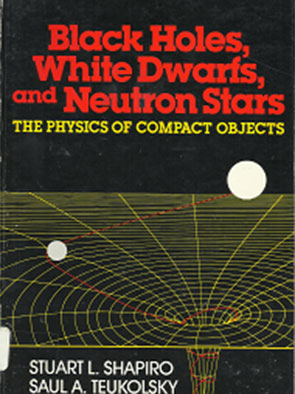
Stuart L. Shapiro is a Professor of Physics and Astronomy at the University of Illinois at Urbana-Champaign and a NCSA Senior Research Scientist. Previously, he held faculty positions at Cornell University from 1973 to 1995. He earned an A.B. in Astronomy from Harvard University (1969) and a Ph.D. in Astrophysical Sciences from Princeton University (1973). His research focuses on theoretical astrophysics and general relativity, including black holes, neutron stars, gravitational waves, and relativistic magnetohydrodynamics. Shapiro pioneered computational methods in numerical relativity, co-developing the BSSN formalism and advancing simulations of compact object mergers. He is renowned for coining terms like 'supramassive' and 'hypermassive' neutron stars and for exploring gravitational wave generation via LIGO/LISA. His work integrates supercomputing, analytical modeling, and visualization to address fundamental questions in astrophysics. Recipient of the Hans A. Bethe Prize (2017), he has authored a seminal textbook Black Holes, White Dwarfs and Neutron Stars (1983) and led a vibrant research group training undergraduates and graduate students. His research group’s simulations visualize phenomena such as black hole formation and neutron star mergers, bridging theory with observational astronomy.
Russell Thompson is an Associate Professor at the University of Waterloo, affiliated with the Waterloo Institute for Nanotechnology. His research focuses on theoretical physics, with expertise in self-consistent field theory, density functional theory, quantum foundations, and atomic physics. He holds a Doctorate in Theoretical Physics and Applied Mathematics from the University of Western Ontario (1998), complemented by a BSc (Honours Physics) from the University of Ottawa (1994) and an MSc in Physics from the University of Regina (1994). Thompson teaches advanced courses such as NANO 600 (Introduction to Nanotechnology), NE 216/217 (Advanced Calculus and Numerical Methods), and PHYS 234 (Quantum Physics 1). His recent publications (2020–2025) explore quantum foundations, polymer physics, and materials science, with a focus on integrating theoretical frameworks like DFT and SCFT into nanotechnology applications. His articles highlight advancements in quantum entanglement visualization, polymer foaming models, and atomic shell structure predictions. He has no listed scientific awards or grants in the provided data but remains active in interdisciplinary research at the intersection of quantum theory and polymer science.
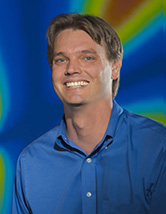
Dustin Froula serves as Assistant Professor in the Department of Physics and Astronomy at the University of Rochester and leads the Plasma and Ultrafast Physics group at the Laboratory for Laser Energetics (LLE). His research focuses on experimental plasma physics for inertial confinement fusion and high-energy-density science using major facilities including OMEGA, OMEGA EP, and the National Ignition Facility. His academic credentials include: MS in Physics, University of California, Davis (2000) PhD in Physics, University of California, Davis (2002) Froula's research centers on laser-plasma interactions , Thomson scattering diagnostics , and laser-plasma acceleration in inertial confinement fusion contexts. He investigates phenomena like stimulated Brillouin/Raman scattering, cross-beam energy transfer, and turbulent dynamos, with applications spanning fusion energy development and laboratory astrophysics. His work combines advanced experimental techniques with computational modeling to address fundamental plasma transport questions. Analysis of his 2023-2025 publications reveals dominant trends in flying-focus laser techniques for particle acceleration, laboratory dynamos for astrophysical modeling, and instability mitigation for fusion ignition. Key thematic clusters include high-resolution plasma diagnostics, advanced laser pulse shaping, and magnetized turbulence studies using multi-facility experimental platforms. His scientific recognition includes: Department of Energy's Outstanding Mentor Award (2007) APS Fellowship (2017) John Dawson Award (2019) Ernest Orlando Lawrence Award (2020) Thomas H. Stix Award (2023) Froula has mentored numerous students earning the DOE Mentor Award, with research funded by Department of Energy and National Science Foundation grants supporting his work on OMEGA, NIF, and OPAL facilities. His group develops novel diagnostic techniques like continuous angular-resolution Thomson scattering and flying-focus pulse systems for electron acceleration. He directs the Plasma and Ultrafast Physics group at LLE, operating the OMEGA 60-beam laser, OMEGA EP petawatt system, and MTW short-pulse facility while collaborating with Lawrence Livermore's Jupiter Laser Facility and National Ignition Facility. Current projects include dephasingless wakefield acceleration platforms and turbulent dynamo experiments for astrophysical analog studies.
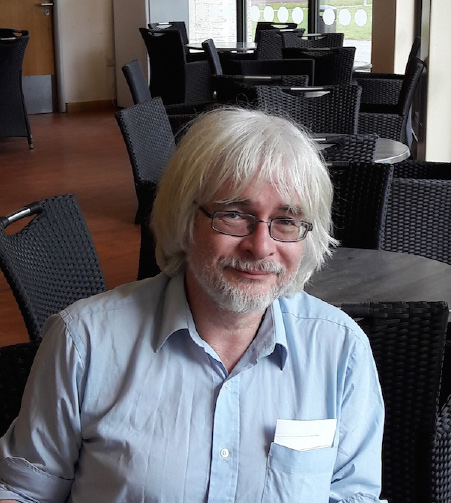
Dr Edwin Beggs is a Reader in Mathematics within the School of Mathematics and Computer Science at Swansea University, located at the Computational Foundry on Bay Campus. His research spans Algebra, Differential Geometry, Noncommutative Geometry, Theoretical Physics, and the computability of physical systems. He co-authored the influential 2020 Springer book Quantum Riemannian Geometry , contributing to the Grundlehren series. His work bridges mathematical formalism with physical applications, focusing on quantum structures, geometric frameworks, and computational models interfacing with physical systems. Research interests include noncommutative differential operators, quantum geodesic flows, and the interplay between algebraic topology and physics. Notable contributions address quantum gravity models, soliton dynamics, and the theoretical limits of measurement and computation in physical systems. He is actively involved in postgraduate supervision and has explored computational paradigms using physical oracles, such as the Wheatstone bridge and kinematic systems, to redefine computational boundaries. His interdisciplinary approach is reflected in publications spanning quantum geometry, analogue-digital computation models, and the mathematical foundations of measurement theory. Collaborations with Shahn Majid highlight his role in advancing noncommutative geometry's applications to modern physics.
Volodymyr Vovchenko is an Assistant Professor at the University of Houston in the Department of Physics. Since 2022, he has led the Nuclear Theory Group at UH, focusing on extreme QCD matter in heavy-ion collisions and neutron stars. PhD (2018) and MSc (2013) in Theoretical Physics, Goethe University Frankfurt BSc (2011) in Physics, Taras Shevchenko National University of Kyiv Research Interests include QCD theory and phenomenology , particularly under high baryon density and temperature. His work connects heavy-ion collision experiments (STAR, ALICE) to neutron star astrophysics , with a focus on phase transitions, cumulants, and scientific computing frameworks like Thermal-FIST. Recent Publications (2024–2025) explore the QCD critical point , quarkyonic matter , and factorial cumulant analysis in baryon-rich environments. These studies integrate hydrodynamics , molecular dynamics , and lattice QCD constraints . Group Members include PhD students Tripp Moss (Dense QCD Matter) and Volodymyr Kuznietsov (Critical Point Simulations), alongside postdocs G. Pihan and R. Poberezhniuk . His Quantum Oscillator and Thermal-FIST projects provide open-source tools for 3D visualization and thermal model analysis.
Luke Zoltan Kelley is an Adjunct Assistant Professor of Astronomy at the University of California, Berkeley . He holds a PhD from Harvard University (2018) and previously served as a Lindheimer Prize Postdoctoral Fellow (Northwestern University) and Cottrell Fellow (CIERA). His research focuses on theoretical astrophysics at the intersection of gravitational waves and cosmological environments, particularly using pulsar timing arrays (PTAs) to study massive black hole binaries (MBHBs). He chairs the Astrophysics Working Group in the NANOGrav Pulsar Timing Array collaboration. Research Interests: Multi-messenger astrophysics, low-frequency gravitational waves from MBHBs, stellar tidal disruption events, active galactic nuclei dynamics, and LISA mission science. He also develops software tools like kalepy and holodeck for analyzing gravitational wave signals and simulating MBHB populations. Key Achievements: Lead author on 13 papers including breakthroughs in Pulsar Timing Array analysis Advises 15 student-led studies on MBHB dynamics and gravitational wave detection Recipient of prestigious postdoctoral fellowships (Cottrell, Lindheimer) Publications: Over 87 papers with 8,926 total citations. Recent work includes detecting gravitational wave signals in NANOGrav data and modeling MBHB evolution in cosmological simulations. Labs/Teams: Leads the NANOGrav Astrophysics Working Group and collaborates with teams at NASA, CERN, and international observatories.
Robert J. Nemiroff , University Professor of Physics at Michigan Technological University's College of Sciences and Arts , is a distinguished astrophysicist and Fellow of the American Physical Society. Known for co-creating the Astronomy Picture of the Day (APOD) in 1995 and founding the Astrophysics Source Code Library (ASCL) in 1999, he has significantly advanced open science and public engagement. His research spans gamma-ray bursts, gravitational lensing, and cosmological constraints, with a focus on relativistic effects and observational innovation. Education PhD in Astronomy and Astrophysics, University of Pennsylvania Research Interests Nemiroff's work explores gamma-ray bursts as cosmological probes, gravitational lensing phenomena, and relativistic illumination fronts to orient nebulae. He pioneered CONCAMs , fisheye cameras deployed globally for all-sky monitoring, and investigated unconventional ideas like ultralight energy and dark energy-Higgs connections . His recent studies include Cherenkov radiation coherence and AI-generated astronomical imagery. Scientific Awards NSF CAREER Award (1997) MTU Research Award (2012) MTU University Professor (2021) Exceptional Graduate Mentor Award (2021) Advising and Grants Mentoring eight PhD students, including Bijunath Patla (Harvard) and Lior Shamir (Lawrence Tech), Nemiroff emphasized collaborative research. His NSF-funded projects included deploying CONCAMs at major observatories and developing the ASCL, which now lists 2600+ codes. He also led interdisciplinary efforts to post free online courses like 'Physics X' and 'Astro 101'. Labs and Teams He led the Night Sky Live (NSL) project, creating a global network of fisheye cameras for cloud and transient monitoring. The ASCL, now housed at MTU, remains a critical resource for code transparency. His work often involved partnerships with NASA, Kitt Peak, and institutions in Thailand, Chile, and Israel.
Carlos Alberto Miranda Duarte is a Full Professor at IADE - European University, where he serves as Vice-rector for Research & Quality and Accreditation and Vice-President of Europeia ID. His academic work centers on Industrial Design within the IADE School of Design, Technology and Business, focusing on simplicity versus complexity in design processes. His educational background includes: Ph.D. in Production Engineering (2001) from Universidade da Beira Interior Agregado (Habilitation) in Electromechanical Engineering (2012) from Universidade de Trás-os-Montes e Alto Douro Professor Duarte's research explores subjective assessment methods using perception and visualization, with emphasis on relativistic information measurement and long waves theory applied to design history. His work bridges Industrial Design with Sustainable Design practices, evidenced by his Gold Mercury Sustainability Award. He investigates how simplicity manifests as an engineering parameter and develops frameworks for evaluating design complexity. His publication trajectory (2013-2021) reveals two dominant threads: Design Education innovation through coworking spaces as stigmergic learning environments, and Design Simplicity quantification using relativistic information metrics. These areas converge in developing methodologies for sustainable design problem-solving and educational transformation. His notable recognitions include: Gold Mercury Sustainability Award 2010 for Most Sustainable Design Honorary Membership in Clube de Criativos de Portugal (2016) IADE's consistent ranking among Europe's top 50 design schools (2015-2017) As an academic leader, he has supervised four Ph.D. students on accessibility, assistive products, circular economy, and design education platforms. His current research leadership includes the MAR2020 "BLUE CIRCULAR POSTBRANDING PROJECT" and advisory roles with FCT, DGES, and IAPMEI. Ph.D. Supervisions: 4 completed theses on design accessibility and circular models Research Leadership: Co-responsible for maritime sustainability project Policy Influence: Member of national design accreditation committees He actively contributes to UNIDCOM/IADE research unit and chairs Europeia ID, which integrates multiple research groups across design, marketing, and communications disciplines to advance Portugal's design research ecosystem.
Dr. Shiuan-Ni Liang is a Lecturer at the Malaysia School of Engineering, Monash University, specializing in Biophysics, Biomedical Engineering, and Nonlinear Dynamics. Her research focuses on cardiac arrhythmias control, contributing to smart defibrillator development. She teaches first-year engineering mathematics, emphasizing visual learning through MATLAB animations. Education: PhD in Physics (Monash University), M.Sc. in Physics (National Central University), B.Sc. in Mathematics (National Central University). Research interests include understanding cardiac arrhythmia mechanisms and developing nonlinear control methods. She explores biomedical engineering applications, such as cardiac dynamics modeling and medical device innovation. Recent projects involve smart inventory management, photobiological effects on sleep cycles, and multimodal human physiological responses to stimuli. Collaborations span biometric security, traffic optimization, and machine learning applications. She has led or co-led projects like 'Control of Cardiac Alternans' and 'Ant Colony Optimization for Inventory Routing.' Awards: None explicitly listed, but her work contributes to UN SDGs related to health and innovation. Teaching evaluations are consistently high, with student praise for her pedagogical methods.
Prof. Diego Fernando da Silva Paschoal is an Adjunct Professor IV of Physical Chemistry at the Instituto Multidisciplinar de Química (IMQ) of the Federal University of Rio de Janeiro (UFRJ), since 2015. He is also a guest researcher at Vrije Universiteit Amsterdam (VU) under a CNPq Postdoctoral Fellowship. His research focuses on theoretical and computational chemistry, including computational protocols for molecular modeling, atomic basis sets, nonlinear optical properties, and sustainable drug design. He leads the Núcleo de Química Teórica e Computacional de Macaé (NQTCM) and Núcleo de Estudos em Química Energética e Ambiental de Macaé (NEQEAM), and coordinates research initiatives at UFRJ-Macaé. Notable contributions include studies on anticancer gold complexes, CO2 capture using graphene-based materials, and drug discovery against SARS-CoV-2. His work aligns with UN SDGs 3 (Health), 4 (Education), 7 (Energy), and 13 (Climate Action). Education: PhD in Chemistry (2014), Federal University of Juiz de Fora (UFJF); BSc and Licenciatura in Chemistry (2009/2008). Affiliations: Brazilian Chemical Society (SBQ), International Society of Theoretical Chemical Physics (ISTCP). Research interests span computational nuclear magnetic resonance (NMR) parameters, relativistic effects in quantum chemistry, and educational technology. He has authored over 47 publications, with recent work on drug design, sustainable materials, and computational methods for spectroscopic analysis. Awards: Young Scientist of Our State (JCNE) Fellowship from FAPERJ. He supervises research in the NQTCM and NEQEAM labs, focusing on interdisciplinary projects combining chemistry, materials science, and environmental sustainability. Collaborations include studies on solar cell development and digital education tools.