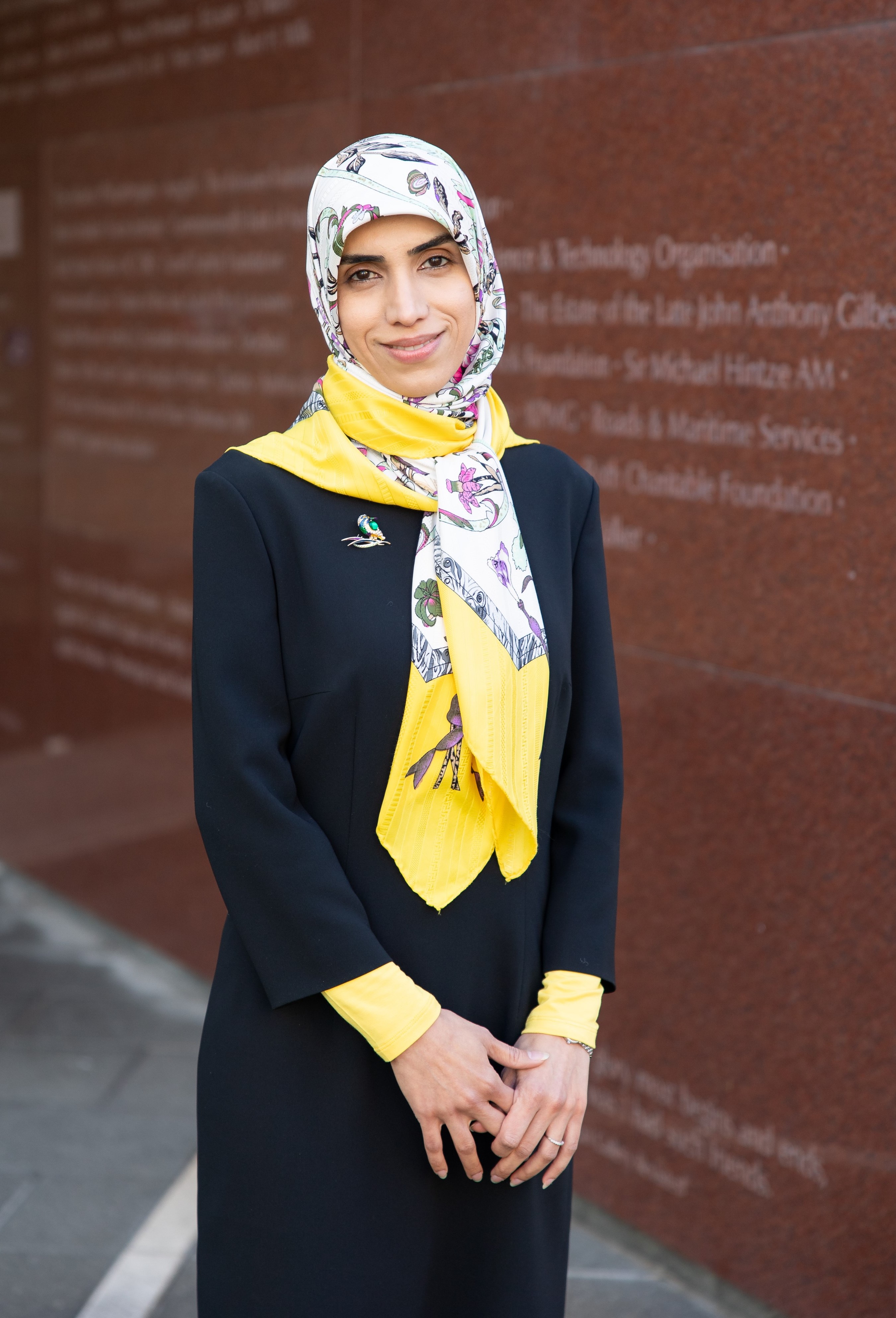
Lauren May is a Senior Lecturer and Group Leader in the Department of Drug Discovery Biology at the Monash Institute of Pharmaceutical Sciences, which is part of the Faculty of Pharmacy and Pharmaceutical Sciences at Monash University. Her research focuses on G protein-coupled receptors (GPCRs), with an emphasis on their roles in cardiovascular diseases, neurological disorders, and drug discovery. Key areas include adenosine receptor pharmacology, biased agonism, and the development of novel therapeutics targeting GPCRs for conditions such as heart failure and epilepsy. May has led and contributed to numerous research projects, including the development of adenosine A1 receptor modulators for epilepsy treatment and formyl peptide receptor agonists for myocardial infarction. She is also actively involved in advancing drug discovery methodologies, such as AI-driven approaches for molecular property prediction and drug-target interaction modeling. Her work contributes to UN Sustainable Development Goals related to good health and well-being (SDG 3), particularly through innovative therapeutic strategies. In addition to her research, May holds editorial roles in journals like British Journal of Pharmacology and Purinergic Signalling , demonstrating her leadership in the field. Her projects often involve interdisciplinary collaborations, bridging basic science with translational medicine to address unmet clinical needs.
Mirana Ramialison is a Professor at Monash University, affiliated with both the Australian Regenerative Medicine Institute and Victorian Heart Institute (VHI). She maintains an active research program with significant contributions to cardiovascular development and regenerative medicine. Her research interests focus on understanding the role of non-coding DNA regulatory elements in heart development and disease, formation of boundaries in developing embryos, and molecular mechanisms underlying cardiac function. She employs cutting-edge genomic, computational, and imaging approaches to investigate gene regulatory networks that govern cardiovascular development. Her recent publications demonstrate expertise in spatial transcriptomics, machine learning applications in epigenomics, and the use of vertebrate models like the African killifish to study aging processes. Her work spans developmental biology, genomics, and computational approaches to understand heart development and disease mechanisms. Professor Ramialison leads multiple significant research projects including 'Role of human non-coding DNA regulatory elements (REs) in heart development and disease' as Primary Chief Investigator, and collaborates on projects related to chemotherapy-induced heart damage prevention and bone growth mechanisms. She has produced 71 research outputs with notable recent publications in high-impact journals including Nature Cardiovascular Research, Genome Biology, and Communications Biology, demonstrating sustained scholarly productivity and impact in her field.
Prof. Wenyi Yan is a Professor in the Department of Mechanical & Aerospace Engineering at Monash University. His career includes research fellowships in Europe, roles at multiple Australian universities, and leadership in over 14 Australian Research Council (ARC) grants since 2006. He has supervised 19 PhD and 5 MSc graduates, currently mentoring 12 PhD students. Education: B.Eng. (Hons) from Beijing University of Aeronautics and Astronautics (1989), M.Sc. (1992), and Ph.D. (1995) from Tsinghua University. Research focuses on material behavior under cyclic loading, railway infrastructure optimization, laser cladding repair, and additive manufacturing. Key areas include fracture mechanics, tribology, and computational modeling for rail systems. Notable projects: Development of machine learning tools for structural analysis (2025–2028), ARC Hub for Smart Process Design (2024–2029), and rail component repair using laser cladding. His work addresses UN SDGs related to sustainable infrastructure and innovation. Awards: While no specific prizes are listed, his extensive grants and publications (3 book chapters, 176 journals, 68 conferences; h-index 42) reflect his impact. Current grants total over 10 projects, emphasizing industry collaboration with Rio Tinto, ANSTO, and others.
Professor Luming Shen is a distinguished academic in the School of Civil Engineering at The University of Sydney. With over two decades of experience in mechanical behavior of materials research, he leads cutting-edge investigations at the intersection of civil engineering, materials science, and computational mechanics. His work spans multiple scales from nano to macro, focusing on fundamental understanding that can be applied to real-world engineering challenges in water purification, structural safety, and sustainable infrastructure. Professor Shen's educational background includes: Bachelor's degree in Building Engineering from Tongji University, China Master's degree in Structural Engineering from Tongji University, China PhD in Civil Engineering from the University of Missouri-Columbia, USA Professor Shen's research focuses on the mechanics and behaviors of materials across multiple scales. His primary interest lies in understanding both brittle materials (concrete, rock, glass) and ductile materials (aluminum, titanium, metals). Two major thrusts of his work include nano-mechanics and materials research, particularly developing carbon nanotube membranes for water purification, and studying novel composite materials under impact and extreme loading conditions for applications in blast-resistant structures and vehicle safety. He employs high-performance computing for molecular and macro-level analyses, complemented by physical laboratory testing. Professor Shen's extensive publication record demonstrates a consistent focus on multiscale modeling of materials behavior, with recent work emphasizing granular materials dynamics, carbon nanotube applications, 3D-printed concrete technology, and energy storage systems. His research shows a clear evolution toward increasingly complex multiphysics problems that integrate mechanical, thermal, and fluid dynamics phenomena at multiple scales. The interdisciplinary nature of his work bridges civil engineering, materials science, computational mechanics, and environmental engineering, with applications spanning from fundamental material science to practical civil infrastructure solutions. Professor Shen actively supervises multiple research students, including Yifang Cao working on 3D printing concrete, Jiangshuai Meng studying granular materials under impact loads, and Runda Wang applying machine learning to rock burst prediction. His research is supported by access to advanced computational resources and laboratory facilities at The University of Sydney, particularly through his membership in The University of Sydney Nano Institute. The university has provided specialized space and equipment necessary for conducting physical tests on materials under high-speed impact conditions. Professor Shen maintains active laboratory facilities for conducting physical tests on materials under various loading conditions, particularly high-speed impact testing. His work is supported by computational resources for molecular dynamics and multiscale modeling. As a member of The University of Sydney Nano Institute, he collaborates with interdisciplinary researchers working at the nanoscale, particularly in applications related to water purification technologies using carbon nanotube membranes.
Associate Professor Fatemeh Vafaee is a leading researcher at the University of New South Wales (UNSW) , holding appointments as Associate Professor in the School of Biotechnology and Biomolecular Sciences (BABS) and Deputy Director (Science) of the UNSW AI Institute . She previously served as Deputy Director of the UNSW Data Science Hub (uDASH) and has held academic positions at the University of Toronto and the University of Sydney. PhD in Artificial Intelligence from University of Illinois at Chicago Postdoctoral Fellowships at University of Toronto and University of Sydney Founded the AI-Enhanced Biomedicine Laboratory in 2017 Her research focuses on deploying advanced AI techniques to address biomedical challenges through: Biomarker Discovery for cancer and neurodegenerative diseases Single-Cell Multi-Omics data integration and analysis Computational Drug Repositioning and network pharmacology Multi-Omics Data Fusion and temporal network modeling Recent publications demonstrate expertise in liquid biopsy development , single-cell imaging , and AI-driven cancer diagnostics . Her methodological contributions include novel deep learning architectures for omics data analysis and graph neural networks for drug synergy prediction. Scientific accolades include: Winner, Women in AI Asia-Pacific Health Award (2023) Runner-Up, WAI-APAC Innovator of the Year (2023) Top 10 Women in AI in Asia-Pacific (2023) Australian Bioinformatics and Computational Biology Society Research Excellence Award (2023) She supervises PhD candidates across computational biomedicine and AI in healthcare , with significant grant achievements exceeding $17M in competitive funding, including schemes from ARC Discovery , NHMRC , and Medical Research Future Fund .
Ariful Hoque is a Senior Lecturer in Finance at Murdoch University's College of Business. He holds a Doctor of Philosophy in Financial Engineering from Curtin University, a Bachelor of Civil Engineering from Bangladesh University of Engineering and Technology, and a Certified Oracle Database Administrator qualification from Oracle. His research focuses on finance, corporate governance, banking operations, FinTech, and sustainability, with a particular emphasis on green innovation, financial literacy, and market volatility analysis. Dr. Hoque's educational background includes civil engineering and financial engineering, reflecting his interdisciplinary approach to financial research. His work spans empirical studies on currency options pricing, Islamic finance resilience, and the impact of digital transformation on banks. His research interests include evaluating the role of institutional quality in green innovation, analyzing market efficiency in global financial contexts (e.g., S&P 500, Shanghai ETFs), and exploring FinTech's implications for sustainable development. He has also investigated how corporate governance structures influence banking practices, particularly in emerging economies like Vietnam and Bangladesh. His publications highlight trends in volatility analysis (e.g., implied volatility smirk prediction during crises), the interplay between financial literacy and microfinance access, and the application of big data in optimizing banking processes. His work often integrates quantitative methods with real-world policy and regulatory challenges. Dr. Hoque has not been explicitly mentioned as having received scientific awards, though his extensive publication record reflects scholarly contributions. His supervision record is not detailed here, but his research collaborations likely involve postgraduate students in finance and related fields. He has engaged in projects analyzing municipal financial conditions in Bangladesh and corporate governance in Australian firms. His affiliations include Murdoch University, where he contributes to teaching and research in finance, alongside his academic roles. His work bridges theoretical finance with practical applications in sustainability, technology, and global market dynamics.
Marco Fronzi is a researcher at the University of Sydney's Faculty of Science, focusing on advanced materials science and computational methods. His work spans thermoelectric materials, energy storage systems, and 2D crystal engineering. He has contributed to projects involving machine learning-driven material discovery, battery anode optimization, and photocatalytic applications. Fronzi leads the 2025 grant 'Conversion of CO into Methanol via an Innovative Photocatalytic and Electrocatalytic Process,' highlighting his expertise in sustainable energy technologies. Key research interests include van der Waals heterostructures, nanomaterials characterization, and predictive modeling for novel material design. His publications address challenges in thermoelectric efficiency, solar cell performance, and nanomaterial stability. While no awards are explicitly listed, his high-impact contributions to energy-related materials are notable. His research integrates experimental and computational approaches, with recent work exploring piezoelectric 2D crystals and lithium diffusion mechanisms in batteries. Collaboration with industry and international partners underscores his commitment to translating fundamental research into practical applications.
James Doherty is an Associate Professor in the Department of Civil, Environmental and Mining Engineering at The University of Western Australia (UWA), affiliated with the UWA Oceans Institute. His work focuses on geotechnical engineering and cloud computing technologies, emphasizing automation of data interpretation and optimization of engineering design workflows. He leads research in numerical methods, soil-structure interaction, and offshore wind infrastructure, with over 80 peer-reviewed publications. Doherty founded the open-access geocalcs.com platform, serving 1,000+ users globally with engineering design tools derived from his research. He has developed cloud-based platforms for companies like Fugro, achieving significant computational efficiency gains. His expertise aligns with UN Sustainable Development Goals related to infrastructure and sustainable energy.
Dr. Hao Wu is a Senior Lecturer in Property at the University of Melbourne's Melbourne School of Design. He holds dual affiliations with Ormond College (Senior Common Room member) and has served on professional committees for organizations like the Royal Institution of Chartered Surveyors (RICS) and the Australian Property Institute (API). His academic journey includes degrees from the University of Melbourne, University of Auckland, and Nanjing University. Research focuses on commercial property markets, urban economics, valuation theory, and sustainable land development. He applies new institutional economics and case study methods to explore property rights, policy design, and investment strategies. Spatial economics analyses in housing supply and brownfields redevelopment are key themes. Dr. Wu has taught at both undergraduate and graduate levels and serves on the editorial board of the Journal of International Housing Markets and Analysis. Professional activities include peer reviewing for academic journals and columnist roles in China Real Estate Business. His work bridges academic research with practical applications in property valuation, urban planning, and policy development. Recent collaborations involve developing quantitative frameworks for assessing brownfield redevelopment impacts and urban growth sustainability.
Professor Spiridon Penev is a faculty member at the School of Mathematics & Statistics , University of New South Wales (UNSW), Sydney. After completing his PhD in Mathematical Statistics at Humboldt University, Berlin, he worked at Technical University of Sofia (Bulgaria) for 10 years, becoming Associate Professor in 1991. He joined UNSW in 1992, progressing from Lecturer to Professor in 2019. His teaching focuses on Statistical Inference , Multivariate Analysis , Longitudinal Data Analysis , and related advanced courses. Research Interests: Wavelet Methods in Non-Parametric Curve Estimation, Edgeworth Expansions, Saddlepoint Approximation, Structural Equation Models, Inference in Semiparametric Models, and Stochastic Risk Modelling. Article Trends: His work spans from foundational wavelet methods (pre-2010) to modern applications in climate model ensembles , portfolio optimization , marine engineering , and machine learning . Keywords include Statistics, Finance, Climate Science, Structural Health Monitoring, and Optimization. Awards: DAAD Award, Elected Member of the International Statistical Institute (ISI). Grants: Led ARC Discovery Project (2016–2018), ARC Linkage Project (2018–2022), and industry collaborations like SCA water quality analysis (2014–2019). Location: School of Mathematics and Statistics, UNSW Sydney, Room 1038, The Red Centre.
Dr. Jonathan Ciofani is a Clinical Associate Lecturer at the Northern Clinical School within the Faculty of Medicine and Health at the University of Sydney. His research focuses on cardiovascular medicine, with a particular emphasis on aortic stenosis, interventional cardiology, and the application of statistical methods like Mendelian randomization in understanding disease mechanisms. He has published extensively on topics including lipid-lowering therapies for aortic valve disease, machine learning for risk prediction in STEMI patients, and the interplay between calcific aortic stenosis and atrioventricular conduction abnormalities. His work frequently integrates computational modeling of coronary hemodynamics and explores bidirectional relationships between cardiovascular diseases and comorbidities such as renal dysfunction. Recent studies highlight his interest in novel therapies and genetic epidemiology, particularly in East Asian populations. Dr. Ciofani’s research also extends to vaccine-related myocardial injury and cardiac complications in hospitalized patients with severe infections like SARS-CoV-2. Publications span high-impact journals such as the Annals of Thoracic Surgery , Journal of Clinical Medicine , and Internal Medicine Journal . His articles often combine observational studies with advanced analytic techniques to address clinical questions in cardiology. Notably, he has contributed to the development of decision-making algorithms for transcatheter aortic valve replacement and coronary flow assessment.
Trevor Chong is an Associate Professor in Cognitive Neuroscience at Monash University, leading the Cognitive Neurology Laboratory at the Turner Institute for Brain and Mental Health. He is a neurologist and cognitive neuroscientist with clinical appointments at St Vincent's Hospital Melbourne and Alfred Health. Chong holds an ARC Future Fellowship and an NHMRC Neil Hamilton Fairley Early Career Fellowship. His research bridges basic cognitive neuroscience and clinical neurology, focusing on decision-making, learning, and memory in neurological diseases. Education: BMedSc (Hons) and MBBS (Hons) from Monash University (2002), PhD in Neuroscience from the University of Melbourne (2007). Clinical training included neurology residencies at St Vincent's and Alfred Hospitals, culminating in FRACP certification (2013). He conducted postdoctoral research at Oxford with Masud Husain before establishing his lab at Monash. Key research areas include neurobiological mechanisms of cognitive impairments in neurological disorders, leveraging methodologies like EEG, fMRI, and computational modeling. Current projects address curiosity neurobiology, decision-making pharmacology, and statin impacts on cognition. He supervises students in psychology, biomedical science, and honors programs. Notable awards: NHMRC Fellowship (2013), ARC Future Fellow. External roles include Board Director of the Cure for MND Foundation and senior staff specialist roles at major hospitals. His work contributes to UN SDGs related to health and well-being.
Seth Lazar is a Professor of Philosophy at the Australian National University (ANU), holding roles as an Australian Research Council (ARC) Future Fellow and a Distinguished Research Fellow at the University of Oxford Institute for Ethics in AI. He leads the Machine Intelligence and Normative Theory (MINT) Lab, focusing on the ethical implications of AI and computing. His research spans AI governance, political philosophy, and the ethics of war, with a strong emphasis on normative frameworks for emerging technologies. Education: D.Phil. (Doctorate in Philosophy) M.Phil. BA (Honors) Research Interests: Lazar’s work bridges philosophy and technology, examining how AI structures social relations (the 'Algorithmic City') and governs digital interactions. He explores algorithmic power dynamics, communicative justice in the public sphere, and the ethical challenges posed by AI agents. His recent projects, funded by the ARC, Templeton World Charity Foundation, and others, address topics like AI safety, democratic values, and the moral responsibilities of AI systems. Key Contributions: Authored Connected by Code: How AI Structures and Governs the Ways We Relate (Oxford UP, 2023). Delivered the 2023 Tanner Lecture on AI and Human Values at Stanford University. Edited special issues on AI ethics for journals like Canadian Journal of Philosophy and Philosophical Studies . Awards & Grants: ARC Future Fellowship Templeton World Charity Foundation grants Schmidt Futures funding Insurance Australia Group collaborations Future Directions: Lazar advocates for 'agent advocates' to empower users over platform-controlled AI systems. His work on anticipatory AI ethics and normative theory seeks to ensure AI aligns with democratic and moral values, addressing risks like cyber threats and algorithmic bias.
Associate Professor Abbas Zeinijahromi holds a position at the University of Adelaide's School of Chemical Engineering within the Faculty of Sciences, Engineering and Technology. He serves as the Discipline Lead of Mining and Petroleum Engineering and holds the Chevron Chair in Carbon Storage Engineering. His expertise lies in GeoEnergy and GeoStorage, focusing on reactive multi-phase flow in porous media with applications in CO2 storage, hydrogen storage, and enhanced oil recovery. He leads the GeoEnergy and Storage Laboratory and co-leads the Formation Damage & EOR Research Group. Research Interests include CO2 Storage (CCUS), Underground Hydrogen Storage (UHS), Low Salinity Waterflooding, and Fines Migration phenomena. His work integrates mathematical and laboratory modeling to address challenges in subsurface energy systems. Publications span advanced modeling techniques for CO2 and hydrogen solubility, permeability impairment during CO2 injection, and mechanisms of fines migration in reservoirs. These studies emphasize environmental and energy sustainability through innovative subsurface engineering solutions. Awards and recognitions are not explicitly listed in the provided data. Teaching and supervision focus on energy resources engineering. He collaborates on grants related to carbon storage, hydrogen storage, and enhanced recovery technologies. Laboratory and team activities include the GeoEnergy and Storage Lab, emphasizing experimental and computational studies of subsurface processes.
Ean Hin Ooi is an Associate Professor in the School of Engineering at Monash University Malaysia, where he leads the Computational Modelling team. He holds a PhD in Mechanical Engineering from Nanyang Technological University, Singapore, and a Bachelor's degree in Mechanical Engineering from the University of Technology, Malaysia. His research spans biomedical engineering, computational modeling, and numerical methods, with applications in cancer therapy and medical diagnostics. Doctor of Philosophy, Mechanical Engineering, Nanyang Technological University (NTU), 2009 Bachelor's Degree, Mechanical Engineering, University of Technology, Malaysia Dr. Ooi’s research focuses on the application of mathematical and computational modeling to understand biophysical phenomena in healthcare. His work targets improving cancer treatments such as thermal ablation (radiofrequency, cryoablation, photothermal), developing diagnostic tools like shear wave elastography for kidney disease, and advancing numerical techniques including meshless and boundary element methods. He is a pioneer in the radial basis integral equation method, contributing significantly to computational mechanics. The recent publications reflect a strong trend in interdisciplinary research combining engineering, medicine, and materials science. Key themes include thermal therapy optimization, nanomedicine (gold nanorods, graphene), microfluidics, and machine learning integration in sensor systems. His modeling expertise extends from organ-level simulations (liver, kidney) to nanoscale heat transfer, demonstrating versatility across scales and applications. Dr. Ooi serves as an Associate Editor for Computer Methods and Programs in Biomedicine and Journal of Mechanics in Medicine and Biology , highlighting his scholarly impact. He has received research funding for projects such as photothermal therapy for liver cancer and thermochemical ablation, indicating sustained grant support. He mentors students and is currently accepting PhD candidates in areas related to wound healing mechanics and computational prediction tools for thermal therapy. He is actively involved in professional service, including participation in the Asia-Pacific Society for Artificial Organs and visiting researcher roles at institutions like the University of Nottingham Malaysia. His lab, the Computational Modelling team, focuses on developing predictive frameworks for medical interventions, aiming to bridge computational science with clinical applications.