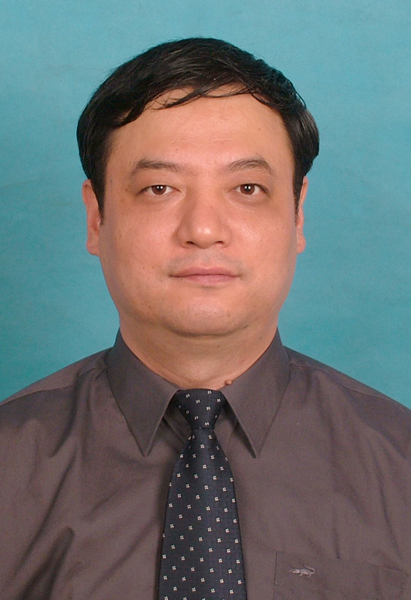
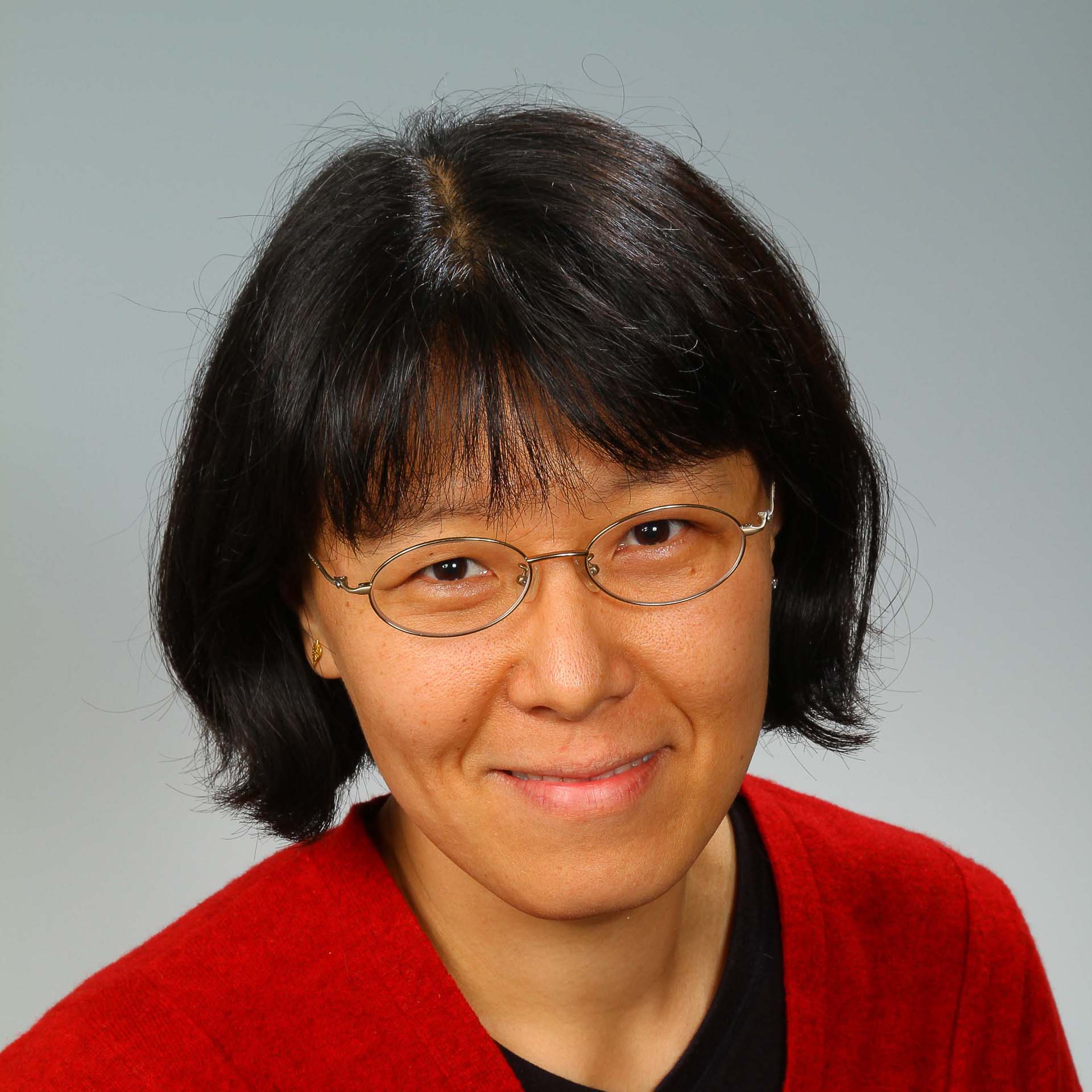
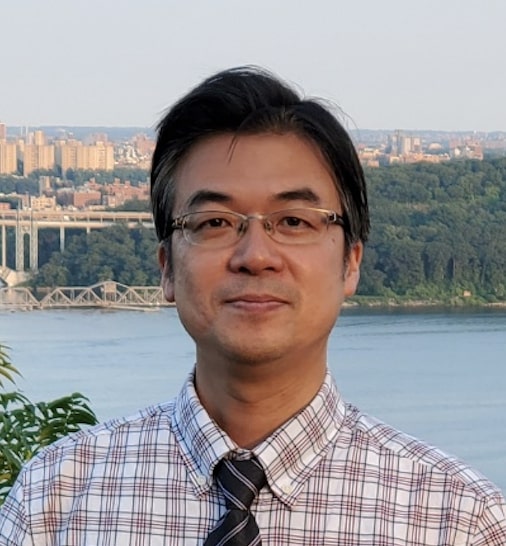
Prof. Maosong Sun is a Professor at the Department of Computer Science and Technology, Tsinghua University, China. He holds additional leadership roles including Executive Vice Dean of the Institute for Artificial Intelligence and Deputy Director of the National Engineering Laboratory for Cyberlearning and Intelligent Technology. His research focuses on natural language processing (NLP), artificial intelligence, machine learning, and computational education. He leads interdisciplinary projects in computational humanities, knowledge graphs, and MOOC platforms like XuetangX, which has over 58.8 million registered learners. Key contributions include pioneering work in Chinese NLP tools, poetry generation systems like Jiuge, and large-scale research initiatives funded by Chinese and Singaporean programs. Awards include the Tsinghua University Education Award (2019) and the National Outstanding Practitioner Award (2007). Established NLP and Computational Humanities & Social Sciences Lab (2008) Co-director of the Joint Research Center for Extreme Search (2011-present) Over 200 publications with 11,000+ citations (h-index 47)
Dr. Keisha April is an Assistant Professor at Rutgers University's School of Criminal Justice. She holds a Ph.D. in Clinical Psychology from Drexel University, J.D. from Benjamin N. Cardozo School of Law, and A.B. in Psychology from Princeton University. Her research focuses on juvenile justice systems, policing practices, mental health intersections with crime, community-based interventions, and racial/ethnic disparities. Using mixed methodologies, she examines justice system interactions to inform policy reforms. Recent publications explore police-youth dynamics, treatment-to-prison pipelines, and community participatory research. Her work integrates public health models with restorative justice approaches.
Mi Shih is an Associate Professor and Director of the Urban Planning and Policy Development Program at the Edward J. Bloustein School of Planning and Public Policy, Rutgers University. She holds a Ph.D. from the same institution and prior academic roles include Assistant Professor at the University of Alberta (Canada) and postdoctoral research fellow at the University of Technology Sydney (Australia). Her research focuses on Chinese urbanization, land politics, displacement, and social conflicts arising from urban development. She employs ethnographic and mixed-method approaches to analyze state roles in urban-rural dynamics, planning regulations, and value capture mechanisms. Key themes include land development rights, property rights, and the socio-spatial impacts of urban policies in Taiwan and China. Publications highlight critical topics such as TDR systems, urban governance, and the commodification of land. Her work bridges legal geography, urban sociology, and policy analysis, offering insights into global urban challenges. Education: B.S. and M.S., National Taiwan University Ph.D., Planning and Public Policy, Rutgers University Teaching includes graduate courses on international urbanization and planning methods, and undergraduate courses on global urban systems.
Dr. Teresa Wang is a Senior Lecturer in Data Science at Monash University's Faculty of Information Technology, specializing in entity/user modeling, relational/structural machine learning, and graph/network analysis. She holds a Ph.D. from the University of Queensland and degrees from Nanjing University. Currently, she directs the Master of Data Science Program and teaches courses like FIT5201 Machine Learning. Her research focuses on social, e-commerce, and health data modeling, with notable projects including the Knowledge Enriched Approach for Effective Personalization (2025–2027) and collaborations on AI in Mental Health and Site Safety. Dr. Wang has co-authored over 59 publications, emphasizing areas like ontology matching and multimodal data analysis. She actively supervises PhD students and contributes to initiatives like the CSIRO Next Generation Graduates Program for clean energy and sustainability. Education: Ph.D. in Computer Science (2017), University of Queensland Master of Computer Science (2013), Nanjing University Bachelor of Software Engineering (2010), Nanjing University Research Interests: Entity modeling, spatio-temporal data analysis, graph mining, recommender systems, and health/medical records mining. She explores applications in social media, e-commerce, and healthcare sectors. Projects: "Knowledge Enriched Approach for Effective Personalization" (2025–2027) "AI for Clean Energy and Sustainability" (2023–2027) "CSIRO Next Generation Graduates Program: AI in Mental Health" (2023–2027) "Large-scale multimodal knowledge management" (2022–2025) Grants & Collaborations: Engaged with CSIRO, Crank Group, and Pola Practice Pty Ltd. Her work aligns with UN SDGs in education and sustainable energy systems. Labs/Teams: Part of the Monash Energy Institute and Monash Data Futures Institute, contributing to interdisciplinary AI and energy research.
Overview Dr. Adnan Husain is an Associate Professor in the Department of History at Queen’s University, with a cross-appointment in Cultural Studies at the School of Graduate Studies. He holds positions as Queen’s National Scholar and Graduate Chair. His primary research focuses on cross-cultural and inter-religious encounters among Muslims, Christians, and Jews in the Medieval Mediterranean (10th–15th centuries). Education PhD in History, University of California, Berkeley (1998) MA in History, University of California, Berkeley (1992) BA in History, University of California, Berkeley (1991) Research Interests Dr. Husain investigates religious phenomena in pre-modern societies, including Franciscan spirituality and Sufi mysticism. His work explores how religious identities were shaped through polemics and exchanges in the Mediterranean. He is completing a study on Muslim diasporic minorities in the pre-modern West and co-editing a volume on the Qur'an's translation history. Additional Contributions He co-hosts Radio Bandung , a weekly program on Queen’s campus radio (CFRC 101.9 FM), addressing contemporary issues like Islam in Western societies, Middle East politics, and multiculturalism. He also edits the Islam and the West academic series. Supervision Current postdoc: Johan MacKechnie (Department of History)
Sara Zaniboni is an Associate Professor in Work and Organizational Psychology at the University of Bologna's Department of Psychology 'Renzo Canestrari'. Her research focuses on workplace diversity, age-related issues, and organizational inclusion. She holds a PhD and has led international research initiatives, including the 'Age in the Workplace Meeting' conference. Her work bridges psychological theory with practical applications, addressing challenges like age discrimination, mental health, and work design. She has contributed to EU and national grants (e.g., PRIN, PNRR), and serves on editorial boards such as Work, Aging and Retirement . Awards include the 2015 outstanding paper award and 2018 outstanding author contribution award. She has held visiting roles at institutions like ETH Zurich and the University of Essex, emphasizing global collaboration. Her research explores how organizational policies can enhance diversity outcomes, reduce stereotypes, and support older workers. Key areas include uncertainty mindset development, workaholism effects, and workplace accommodations for people with mental health challenges. She advocates for policies promoting sustainable careers and inclusive work environments. Key Projects: LeverAge (EU network), Age in the Workplace Meeting Grants: PRIN, PNRR, EU grants International Collaboration: Visiting positions at 6+ universities, including ETH Zurich Editorial Roles: Work, Aging and Retirement , among others
Scott P. Barnicle is an Associate Professor of Practice in Sport Psychology at the University of Tennessee, Knoxville, within the College of Education, Health, and Human Sciences. He holds a PhD in Sport and Exercise Psychology from the University of Idaho, an MA in Counseling Psychology from Boston College, and a BA in Psychology from Clemson University. His professional experience spans roles at West Virginia University (Teaching Professor and Assistant Professor) and the United States Army’s Comprehensive Soldier & Family Fitness Program as a Performance Enhancement Consultant. He has also served as a volunteer assistant coach in collegiate golf programs, including the University of Idaho, Nebraska, and South Carolina. His research focuses on applied sport psychology, emphasizing mental skills training, athlete enjoyment, and performance enhancement across diverse sports like soccer, golf, and powerlifting. He explores topics such as autonomy in training, resilience (hardiness), and the intersection of sport psychology with business and military contexts. Courses taught include Exercise Psychology, Professional Practice in Sport Psychology, and field placements in applied settings. His work bridges theoretical frameworks (e.g., Self-Determination Theory) with practical interventions to improve athlete well-being and performance. Barnicle’s publications span journals in sport psychology, education, and kinesiology. His recent work includes integrating collaborative online learning in kinesiology education and studying hardiness in baseball athletes. He has contributed to textbooks on career pathways in sport psychology and case studies in applied settings. His research consistently emphasizes the psychological factors that optimize athlete performance and enjoyment across competitive and recreational domains.
Kristin Oliveira, MD, is an Assistant Professor in the Department of Surgery at Yale University School of Medicine, specializing in General Surgery, Trauma, and Surgical Critical Care. She serves as Program Director for the General Surgery Residency Program following her role as Associate Program Director. Dr. Oliveira completed her medical degree at the University of Texas Southwestern Medical School (2008) and a Surgical Critical Care Fellowship at Yale (2016). Her research focuses on surgical education, including resident training and end-of-life communication. She has published extensively on topics like surgical resident financial well-being, nonoperative appendicitis management, and critical care epidemiology. Dr. Oliveira actively participates in committees such as the Quality and Safety Committee of the Surgical Intensive Care Unit and the Graduate Medical Education Committee. She received the prestigious C. Elton Cahow Teaching Award in 2020. Clinically, she provides care at Yale New Haven Hospital’s Surgical Intensive Care Unit and Chapel Street campus, prioritizing care for underserved populations.
Jeong Mun Heo is a Lecturer of Jewish Studies and Head of Development for South Korea at Yeshiva University's Bernard Revel Graduate School of Jewish Studies. He holds a PhD from Yeshiva University (2021), alongside degrees from Boston College, Hebrew University of Jerusalem, Korea Theological Seminary, and Kosin University. His research focuses on the phenomenology of religion, Jewish-Christian theological discourse, and ancient Jewish thought. Education: PhD, Yeshiva University, 2021 ThM, Boston College MA, Hebrew University of Jerusalem MDiv, Korea Theological Seminary BA, Kosin University He teaches courses on ancient Jewish and Christian thought and has authored scholarly works like Images of Torah (Brill, 2023). His recent fellowship at the Hebrew University (2022-2023) supported his research. He has also published in Korean on biblical studies and education. Awards: Golda Meir Postdoctoral Fellowship (2022-2023). He leads the Advanced Certificate Program in Jewish Studies for Korean-speaking students and collaborates on interfaith theological dialogues.
Dr. Kevin N. Cawley is Senior Lecturer in Korean Studies and Director of the Irish Institute of Korean Studies at University College Cork since 2011. He is a founding member of the 'Society for the Study of Pre-modern Asia' at the University of Oxford and serves as editor of Korean Philosophy for the Stanford Encyclopedia of Philosophy. Originally from County Armagh, Ireland, he completed his undergraduate degree at Trinity College Dublin in French and Irish, and earned his Masters and PhD in Korean Studies from the University of Sheffield. Dr. Cawley's research focuses on Korea's intellectual history, examining philosophical and religious traditions through contemporary critical theory. His work explores the interplay between Buddhism and Neo-Confucianism, Christianity and Neo-Confucianism in the late 18th/early 19th century, and the complexities of translating religious concepts across East Asian languages and cultures. He has developed a unique methodological approach adapting Jacques Derrida's 'de-construction' to address inter-cultural translational challenges. His research also extends to gender and sexuality, ethnicity and identity in Korean contexts. His publications demonstrate significant scholarly impact, particularly his 2019 book Religious and Philosophical Traditions of Korea which reached No. 5 on Amazon's 'hot new releases' in religion and spirituality. His recent work has focused on transnational East Asian studies, Catholicism in pre-modern Korea, and contemporary Korean soft power. The publications show consistent engagement with both historical Korean thought and its contemporary relevance across multiple disciplines including religious studies, philosophy, gender studies, and cultural studies. Scientific Awards and Recognition: Korea Foundation Award for Korean Studies Language Program 2022-2024 Academy of Korean Studies: SEED Program - $120,000.00 One Asia Foundation Lecture Series: $40,000.00 Korea Foundation Fellowship for Korean Studies 2015-2017 $90,000.00 Dr. Cawley has secured over €400,000 in research funding throughout his career and has served as editor for multiple academic journals including the Irish Journal of Asian Studies and Asian Ethnicity . He has organized numerous international conferences, including the North American Korean Philosophy Association Annual Conference at UCC. His media engagement includes regular interviews with RTE, BBC, and Korean media outlets on Korean affairs, demonstrating his role as a public intellectual bridging academic scholarship and public understanding of Korea.
Dr. Timothy Fraser is a Computational Social Scientist serving as Ezra Systems Research Associate in Cornell University's Systems Engineering Program and Coordinator for the Center for Transportation, Environment, & Community Health (CTECH). Holding a PhD in Political Science from Northeastern University (2022), he focuses on climate change adaptation, disaster resilience, and energy policy using big data analytics, GIS, and AI. His work bridges computational methods with societal challenges, emphasizing community engagement and policy impact. Education: PhD in Political Science, Northeastern University (2022) MA in Political Science, Northeastern University BA in International and Global Studies, Middlebury College Research Interests: Fraser’s research integrates computational social science with environmental policy, exploring how social networks and governance structures influence cities' climate adaptation strategies. Key areas include renewable energy adoption, disaster evacuation dynamics, and pandemic response mechanisms. He employs mixed methods such as network analysis, statistical modeling, and fieldwork. Grants & Awards: Fulbright Fellowship (2016), Kyushu University Japan Foundation Doctoral Fellowship (2020) USDOT Multimillion Grant Administrator (2022-2023) Teaching & Mentorship: Fraser teaches statistical methods and research design at Cornell, advising over 30+ students in projects published in leading journals. He coordinates capstone teams and mentors researchers in data science and policy analysis. Labs & Projects: Leads the Climate Action in Transportation dashboard initiative (Gao Labs), developing tools for emissions visualization. Collaborates on UNDP social capital mapping projects in Mexico and Paraguay, applying spatial analysis techniques for vulnerable communities.
Prof. Tobias Plieninger holds dual appointments as Professor of Social-Ecological Interactions at the Universities of Kassel and Göttingen, Germany, and currently serves as Dean of Research at Kassel’s Faculty of Organic Agricultural Sciences. He specializes in sustainability science focusing on rural landscape dynamics, ecosystem services, and transformative change processes. His work examines intersections between agriculture, forestry, nature conservation, and natural resource management. Education: PhD in Forest and Environmental Sciences (2004, University of Freiburg), Habilitation in Landscape Ecology (Humboldt-Universität zu Berlin). Prior roles include Associate Professorships at the University of Copenhagen and leadership at the Berlin-Brandenburg Academy of Sciences. Research focuses on biocultural landscapes, agroforestry systems, and participatory methods. Notable projects include coordination of the EU’s HERCULES initiative and leadership in IPBES’ Transformative Change Assessment. Recognitions include Clarivate’s Highly Cited Researcher (2019–2022) and the Henriette Herz Fellowship (2022). Editorial roles: Lead Author for IPBES, Associate Editor at Landscape and Urban Planning and People and Nature . Over 200 publications span topics like ecosystem service synergies, high nature value farming, and rewilding strategies. Active in policy engagement through Germany’s Leopoldina Academy and the Joint Programming Initiative on Cultural Heritage. Research Themes: Landscape sustainability, participatory governance, biodiversity in agricultural systems Key Projects: SINCERE (forest ecosystem services), AGFORWARD (agroforestry innovation) Awards: Clarivate’s Highly Cited Researcher, Alexander von Humboldt Foundation fellowship Current initiatives emphasize transdisciplinary approaches, integrating local knowledge with scientific frameworks to address global sustainability challenges.
Amy G. Remensnyder is Professor of History and Giancarlo Family Provost's Professor of History at Brown University, where she has taught since 1993. She also holds the Royce Family Professor of Teaching Excellence title, reflecting her commitment to pedagogy. Her research focuses on medieval Europe, particularly the cultural and religious history of the Mediterranean, with emphasis on Muslim-Christian relations, monastic memory, and the global history of captivity. PhD, University of California, Berkeley (1992) A.B. summa cum laude, Harvard University (1983) Additional studies at Cambridge University and École des Hautes Études, Paris Her research interests include medieval Iberia, colonial Mexico, religious symbolism, transcultural history, and the role of memory in identity formation. She explores how religious figures like the Virgin Mary functioned as symbols of conquest, conversion, and interfaith entanglement. Her work bridges medieval and early modern periods, challenging disciplinary boundaries and incorporating insights from art history, anthropology, and literary studies. Her recent articles reveal a sustained engagement with themes of religious coexistence, sacred space, and cross-cultural devotion in the Mediterranean world. She examines how Muslim and Christian sailors shared shrines, how Moriscos developed their own Marian scriptures, and how Mary symbolized both war and diplomacy. Her scholarship combines deep archival research with theoretical sophistication, contributing to fields such as oceanic history, borderland studies, and the history of emotion. Van Courtland Elliott Prize (Medieval Academy of America) Fellow, Medieval Academy of America Berlin Prize, American Academy in Berlin Guggenheim Fellowship ACLS/SSRC/NEH Fellowship William G. McLoughlin Award for Teaching Excellence Remensnyder has directed major research initiatives and served on editorial boards, including Al-Masāq: Journal of the Medieval Mediterranean . She founded and directs the Brown History Education Prison Project, reflecting her commitment to engaged scholarship. She has received funding from the Swearer Center and has developed innovative courses on captivity and medieval lyric. Her leadership includes directing Brown’s Program in Medieval Studies (2010–2012) and serving on the Medieval Academy of America’s council. She is currently working on three book projects: Island of Trust in a Sea of Danger: Lampedusa , a maritime microhistory; Neighbors: Life in a Medieval Borderland , an archival study of Muslim-Christian relations in Iberia; and A Global History of Captivity , a synthetic overview of captivity across time and space.
Dr. Salwa El-Awa is a Senior Lecturer in Arabic and Islamic Studies at Swansea University's School of Culture and Communication. She previously held positions at the University of Birmingham (2001-2010) and Ain Shams University in Cairo (2010-2015). Her academic roles include teaching Arabic linguistics, Qur’anic studies, and Hadith analysis, alongside supervising PhD students in translation and religious studies. Her research focuses on Qur’anic textuality, discourse markers, and Islamic movements. Key areas include textual coherence in the Qur’an, Arabic linguistic analysis, and the intersection of religion and counter-terrorism policy. Recent projects explore governance strategies engaging moderate Islamic groups to combat jihadism. El-Awa has published extensively on Qur’anic linguistics, including monographs like Textual Relations in the Qur'an (2005) and Al-Wujuh Wa al-Naza’ir (1998). Her work bridges religious studies, linguistics, and security studies, with notable contributions to Yale’s Dictionary of the Qur'an (2024) and interdisciplinary journals like International Journal of Law, Crime and Justice . She has secured £20,000 for the International Qur’anic Text Linguistics Conference (2020-2021) and served as an External Examiner for Westminster University’s Translation program (2019–2022). Her teaching includes advanced translation, healthcare interpreting, and world cinema studies.
Virginia Ferreiro Basurto is an Assistant Professor in the Department of Psychology at the University of the Balearic Islands (UIB), where she teaches undergraduate and postgraduate courses in psychology, with a strong focus on gender equality and gender-based violence. She is actively involved in postgraduate coordination, including the Chair of Gender Violence Studies and the Summer University of Gender Studies at UIB. Assistant Professor, Department of Psychology, University of the Balearic Islands Coordinator, Chair of Gender Violence Studies, UIB Coordinator, Summer University of Gender Studies, UIB Member, Gender Studies Research Group (ESTUDEGE), UIB Education: Degree in Pedagogy, University of the Balearic Islands Master’s in Inclusive Education, University of the Balearic Islands Doctoral Candidate in Interdisciplinary Gender Studies, University of the Balearic Islands Dr. Ferreiro Basurto’s research centers on gender perspectives in the Information Society, with emphasis on ICT-related social-digital exclusion of women and sexist cyberviolence. Her work explores implicit and explicit attitudes toward gender-based violence, bystander intervention, street harassment, and the myth of romantic love as a justification for abuse. She has contributed extensively to academic discourse through publications and participation in national and international conferences. The trend in her recent scholarly output reveals a consistent focus on gender-based violence in both physical and digital environments. Her articles analyze youth perceptions of cyberaggression, the role of bystanders in intimate partner violence, and methodological advancements in measuring supportive attitudes toward violence. The interdisciplinary nature of her work spans psychology, sociology, gender studies, and digital humanities, often informed by empirical data from Spanish populations. Scientific Awards: No specific awards listed in the provided text. She has been involved in multiple research projects funded by national and international institutions, including the Ministry of Science, Innovation and Universities, FECYT, Ministerio de Economía y Competitividad, Fundación BBVA, and Instituto de la Mujer. These projects cover themes such as critical thinking development in education, citizen involvement in violence prevention, and intervention programs for abusers. She also advises and supervises master’s theses and final degree projects, particularly in gender-focused postgraduate programs. Dr. Ferreiro Basurto is a member of the Gender Studies Research Group (ESTUDEGE) at UIB, a consolidated R&D&I group dedicated to advancing interdisciplinary research on gender, violence, and digital society. Her collaborative work involves designing and evaluating gender-sensitive educational and intervention programs.