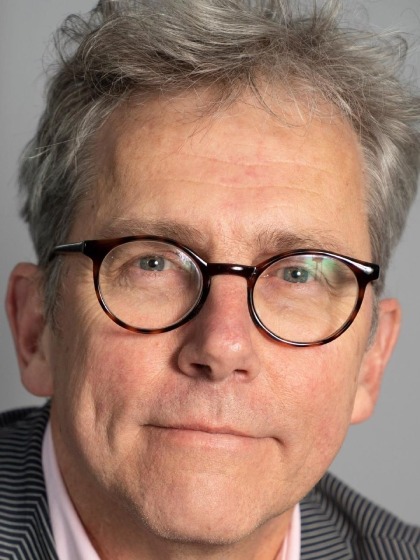
Dr. Samuël Kruizinga , an Associate Professor of Contemporary and Military History at the University of Amsterdam , is a leading scholar on conflict, neutrality, and transnational warfare. His research spans World War I/II blockades, postcolonial conflicts (e.g., Indonesian Independence War), and the role of small states in international relations. He leads the €10.2 million BLOCKADE: The Hidden Weapon project, funded by the European Research Council (ERC) and NTNU, exploring blockades' impact on violence, humanitarianism, and global order. Education: Leiden University, Sorbonne (Paris), University of Oxford, Ph.D. from University of Amsterdam (2011) Research Themes: Conflict resolution, resilience in crises, foreign fighters (e.g., Ukraine, Spanish Civil War), grey zone warfare, occupation studies His work bridges disciplines like international history, econometrics, and war studies. Recent publications analyze blockades, intelligence failures, and the moral ambiguities of colonial military operations. Kruizinga also contributes to debates on neutrality, historical memory, and the transformation of warfare. Scientific Awards: ERC Synergy Grant (€2.3 million) for the BLOCKADE project (2024)
Sible Andringa is Professor of Second Language Pedagogy at the University of Amsterdam's Faculty of Humanities, officially inaugurated on June 16, 2023. Dr. Andringa serves as Academic Director of the Institute for Dutch Language Education (INTT), Coordinator of the Language Learning, Literacy and Multilingualism research group, and Coordinator of the Master's program in Dutch as a Second Language and Multilingualism. Dr. Andringa's research focuses on second language acquisition and bilingualism, specifically investigating the added value of explicit instruction, how input distribution affects language learning outcomes, and the role of awareness in language learning trajectories. Key ongoing projects include the Meta-LLL project examining how literacy shapes language learning, the SLA4All initiative for reproducing SLA research with non-academic samples, and the OASIS project creating accessible research summaries for practitioners. Previously, Dr. Andringa led Project MIND studying bilingual daycare effects and contributed to the Stilis project on listening proficiency. As General Editor of the Dutch Journal of Applied Linguistics (DuJAL), Dr. Andringa promotes open science principles in language research. Recent publications demonstrate a focus on addressing sampling biases in SLA research, open access publishing ethics, and practical applications of language acquisition research for educational settings. Academic Director, Institute for Dutch Language Education (INTT) Coordinator, Language Learning, Literacy and Multilingualism research group Coordinator, Master's program Dutch as a Second Language and Multilingualism General Editor, Dutch Journal of Applied Linguistics (DuJAL) Member, Mastery Team for Modern Foreign Languages Member, OASIS project team Member, IRIS database advisory group Dr. Andringa supervises PhD candidates including Kyra Hanekamp and Darlene Keydeniers, particularly in research related to bilingual daycare environments and language development. The research program has received funding from the Dutch ministry of Social Affairs for Project MIND and continues to secure support for ongoing projects examining language learning mechanisms. Dr. Andringa leads the Language Learning, Literacy, and Multilingualism research group which investigates language and literacy acquisition across the lifespan, with emphasis on how language skills are learned, maintained, and used in educational contexts. The group meets weekly to discuss projects, plans, funding opportunities, and research topics while promoting collaboration, methodological innovation, and open science principles.
Prof. Dr. Lex Heerma van Voss is a Special Professor in Economic and Social History at Utrecht University's Faculty of Humanities. His research focuses on the history of social security, labor, and the North Sea region during the early modern period. He is also Director of the Huygens Institute for the History of the Netherlands (KNAW) and a Research Associate at the Humanities Research Institute for History and Art History. He studied Social and Economic History at Utrecht and Paris, with a research agenda that includes comparative global history of occupations such as dockworkers, textile workers, and sex workers. His work emphasizes the Dutch Republic's role as the first modern economy and its influence on the North Sea region. Expertise : History of labor, North Sea, social security Key Collaborations : Co-editor of Selling Sex in the City and contributor to The World and the Netherlands His publications span from 2000–2023, featuring works on prostitution, elderly provisions, and Dutch economic development. While no explicit awards are mentioned, his leadership roles and editorial contributions underscore his academic impact.
Willem Jonker is a Full Professor at the Digital Society Institute, specializing in Semantics, Cybersecurity & Services. His research focuses on encryption schemes, access control, and privacy-preserving technologies. He has contributed to over 120 publications, with recent work addressing CVE-to-CWE mapping, anomaly detection in network traffic, and functional encryption systems. His expertise aligns with UN Sustainable Development Goals related to secure digital systems and privacy. Jonker has supervised 10 students and actively participates in academic conferences, presenting on topics like secure data management and cryptographic protocols. Research interests include cryptographic protocols, secure data management, and cybersecurity solutions. Notable projects involve developing methods for detecting covert channels, enhancing data privacy in healthcare, and improving secure search over encrypted data. He has also contributed to standards in digital rights management and forensic image recognition.
Andreas Weber is an Associate Professor at the University of Twente's Digital Society Institute , specializing in the Knowledge, Transformation & Society (KiTeS) research group . His work examines the long-term historical and global relationship between Science, Technology, and Society , with particular focus on colonial histories of natural history, chemistry, and sustainability , as well as computational technologies for contextualizing digitized archives . He leads the HAICu project (2023–2029) on digital cultural heritage and coordinates STS PhD training for the Netherlands Graduate Research School (2019–2024). MA & PhD in History (2005 & 2012), Leiden University Assistant Professor (2017–2023), University of Twente Andreas' research integrates digital humanities with colonial science history , emphasizing global histories of minerals , digital humanism , and AI's societal context . His 15 most recent publications (2016–2025) explore topics like colonial bias in natural history collections , FAIR data implementation , and semantic annotation of handwritten archives , spanning disciplines from history of science to computer science and museum studies . He has received 7 scientific awards , including multiple Best Teacher Awards (2020–2023) and the IEEE eScience Best Poster Award (2018). Andreas supervises PhD and postdoctoral projects while engaging in media commentary on colonial heritage issues and co-organizing international conferences like Hydrogen Pasts and Futures (2024).
Prof. Dr. Onno van Nijf is a Professor of Ancient History at the University of Groningen's Faculty of Arts, leading the Ancient History department. His research focuses on the political, cultural, and social history of Greek cities under Hellenistic and Roman rule, with particular expertise in sport history, Greek festivals, epigraphy, citizenship, and funerary culture. He has held significant roles, including Head of the Classics Department (2016-2017) and Head of the History Department (2007-2011). Van Nijf earned his MA (1988) and PhD (1996) from Leiden and Amsterdam Universities. He has been a visiting professor at institutions like the University of Paris and the École Pratique des Hautes Études in Paris. His international research includes directing projects on civic honours and Greek cities post-Classical Age. His work emphasizes interdisciplinary approaches, blending archaeology, religion, and politics. Notable projects include the 'Ancient History Profile' on political culture and the 'Anchoring Innovation' initiative. He co-founded CRASIS, an interdisciplinary research group at Groningen. Van Nijf has supervised numerous PhD students and organized conferences on topics like civic identity and ancient festivals. His awards include NWO and Leverhulme grants. He teaches courses on Greek athletics, Roman religion, and the cultural history of death, and maintains the Saxa Loquuntur epigraphy database.
Thomas Spijkerboer is Full Professor of Migration Law at the Faculty of Law, Vrije Universiteit Amsterdam, where he has been employed since 2000. He also holds positions at the Kooijmans Institute and established the Amsterdam Centre for Migration and Refugee Law, which has grown to become one of the largest research groups on migration worldwide. His academic career includes significant appointments as Raoul Wallenberg Visiting Professor of Human Rights and Humanitarian Law at Lund University (2017-2020) and International Franqui Professor at Ghent University (2020-2021). His educational background includes law studies at the Universiteit van Amsterdam. Before his academic career, he gained practical experience working at the Rechtswinkel Amsterdam legal clinic (1982-1986), specializing in housing law, and at Advokatenkollektief Zaanstreek (1986-1993), where he specialized in asylum cases. He completed his dissertation Gender and Refugee Status at the Catholic University Nijmegen, where he worked as a lecturer in Migration Law from 1993 to 2000. Professor Spijkerboer's research centers on the intersection of migration law, human rights, and border policies, with particular emphasis on the right to life of irregular migrants and the human costs of border control. His work critically examines European migration policies, especially their externalization and the resulting mortality among migrants attempting to reach European territory. He has pioneered research on border deaths, developing databases that document migrant fatalities along European borders, and has extensively analyzed the legal and moral implications of European border policies. His scholarship combines legal analysis with sociological and empirical approaches, addressing issues such as gender in refugee status determination, LGBTQ+ asylum claims, and the impact of migration policies on family life. His extensive publication record, including over 450 research outputs, demonstrates a consistent focus on the human rights dimensions of migration control. Recent work explores the bifurcation of migration law in Europe, asylum systems as instruments of containment, and the legal frameworks governing European border enforcement. His publications reveal a trajectory from detailed legal analysis of Dutch asylum procedures toward broader critiques of European and global migration governance. Scientific Awards and Distinctions: Praemium Erasmianum Studieprijs (2001) for his dissertation Gender and Refugee Status Elected member of the Koninklijke Hollandsche Maatschappij der Wetenschappen (2016) Elected member of the Koninklijke Nederlandse Academie van Wetenschappen (2017) Raoul Wallenberg Visiting Professorship at Lund University (2017-2020) International Franqui Professorship at Ghent University (2020-2021) Professor Spijkerboer has supervised 17 PhD theses and led multiple major research projects funded by NWO and the EU, including the significant five-year project Border Policies and Sovereignty. Human rights and the right to life of irregular migrants (2013-2018) and Fleeing Homophobia. Asylum claims related to sexual orientation and gender identity in the EU (2010-2011). His research has been instrumental in establishing the field of border death studies, influencing both academic discourse and policy debates on migration. He serves on the editorial boards of the Nederlands Juristenblad and the European Journal of Migration and Law, contributing significantly to the scholarly discourse in his field. He directs the Amsterdam Centre for Migration and Refugee Law, which functions as a hub for interdisciplinary research on migration law, bringing together legal scholars, sociologists, and political scientists. The center has become internationally recognized for its innovative approach to migration law research, particularly its focus on the human costs of border policies and the intersection of migration law with other legal domains such as family law and human rights law.
Michel Vols is a Professor of Public Order Law at the University of Groningen's Faculty of Law. He earned his degrees in Law and Philosophy from the same university and completed his PhD in 2013 on housing-related anti-social behavior across jurisdictions. As an academic researcher at the Centre for Public Order and Public Security (linked to the University of Groningen), he focuses on public order law, housing law, and human rights. His work includes founding the International Research Network on Law and Anti-social Behavior and conducting research for the Dutch Ministry of Interior and Kingdom Relations. Key roles include: Chair in Public Order Law Academic Researcher at the Centre for Public Order and Security Visiting Scholar at universities in Ghent, Bristol, Puerto Rico, Cape Town His research interests span public order, anti-social behavior mitigation, housing rights, and legal methodologies involving AI. Notable achievements include launching the free legal advice website overlastadvies.nl in 2019 and securing an ERC Starting Grant (€1.5M) in 2020 to study eviction protections under human rights frameworks. He has been awarded the Nicolaas Muleriusstipendium (2016) and has authored over 150 publications, including books on housing law and comparative jurisprudence. His work bridges legal theory and practice, often using interdisciplinary approaches like data science in legal analysis. He advises on policy reforms, such as exclusion orders for nuisance neighbors and drug-related property closures, and collaborates with government bodies on urban safety strategies. His research also explores the impact of evictions on vulnerable populations, including minorities and children.
Dr. Franziska Pannach is an Assistant Professor at the Faculty of Arts of the Rijksuniversiteit Groningen (Netherlands), affiliated with the Centre for Language and Cognition (CLCG) . She specializes in Computational Linguistics , Digital Humanities , and Semantic Web Technology , focusing on modeling narratives and mythological texts using NLP and ontologies. Her work emphasizes Open Science and cross-cultural comparisons of folktales and myths. Education : Dr. rer. nat. (PhD) in Applied Computer Science (Digital Humanities/Computational Linguistics), University of Göttingen, Germany (2024) MSc in Applied Computer Science (Digital Humanities), University of Göttingen (2019) BSc in Applied Computer Science (Computational Neuroscience), University of Göttingen (2013) Research Interests include computational approaches to mythological and folkloristic analysis, shallow ontologies for narrative comparison, and semantic web applications in cross-cultural studies. She leads the GOLEM (Graph Ontologies for Literary Evolution Models) project and contributed to the STRATA (Stratification Analyses for Mythic Narrative Materials) project. Teaching : Semantic Web Technology (MSc), Database-driven Web Technology (BSc), Digital Humanities: Tools and Methods (MSc), Analysing Data (MSc) Supervision : PhD students Pritha Majumdar (RUG) and Kristina Schneider (RUG/University of Mainz) Publications focus on narrative ontologies, mythological event annotation, and NLP for under-resourced languages. Her recent work includes the GOLEM Triple Store and shallow ontologies for myth comparison. Networks & Memberships : Member, Digital Humanities Association of Southern Africa (DHASA) since 2019 Co-founder and editor of the Journal of Digital Humanities Association of Southern Africa (JDHASA) Collaborations with institutions in Germany, South Africa, and Denmark
Arno Siebes is Professor of Algorithmic Data Analysis in the Department of Information and Computing Sciences at Utrecht University's Faculty of Science. His research focuses on data mining methodologies, particularly pattern mining and Minimum Description Length (MDL) principles. Key research areas include: Developing efficient algorithms for pattern discovery Applying MDL to data characterization Creating interpretable models for complex datasets Addressing challenges in data science education Recent publications demonstrate applications in diverse domains including mobility analysis, genomic screening, and pandemic response. His work combines theoretical foundations with practical implementations for knowledge discovery.
Roel Loonen is an Associate Professor at the Unit Building Physics and Services within Eindhoven University of Technology's Department of the Built Environment. Since October 2024, he has joined the EIRES Management Team, leading the Energy Transition in the Built Environment focus area alongside Lenneke Kuijer. His work emphasizes integrating energy efficiency with occupant comfort through advanced building simulation techniques. Academic Affiliation: Eindhoven University of Technology Management Role: EIRES Management Team Research Focus: Adaptive facades, building-integrated renewable energy, and occupant behavior modeling Loonen’s research explores modeling and simulation strategies for buildings that reconcile high indoor quality with minimal environmental impact. Key projects include collaborations with eyrise on solar shading glass and TNO on the ZIEZO project, which experiments with insulated glazing units that combine solar shading with bifacial photovoltaics at the SolarBEAT facility. His work spans computational methods for urban irradiation, occupant-facade interaction frameworks, and multi-domain thermal comfort modeling. The ZIEZO project exemplifies his approach to energy-efficient design by redirecting reflected light to enhance photovoltaic output while maintaining daylight comfort. His publications address challenges in adaptive façade systems, PV integration, and sensitivity analysis for heating demand. Loonen advocates for interdisciplinary collaboration to bridge technical innovation with societal implementation needs. Loonen’s educational contributions include co-teaching the interdepartmental master course Sustainable Energy Technology and developing interactive simulation-based teaching tools. He emphasizes connecting energy-related research to practical implementation through stakeholder engagement with municipalities, building companies, and grid operators. Key facilities involved in his research include SolarBEAT (for testing solar technologies) and TU/e’s simulation laboratories. His work addresses urban energy transitions by combining building physics with grid interactions, occupant behavior, and scalable PV system optimization.
Caroline Margaux Gevaert serves as Associate Professor in the Department of Geo-information Processing at the University of Twente's Faculty of Geo-Information Science and Earth Observation (ITC), while also holding an appointment at the Digital Society Institute. Her academic career spans geospatial information systems, remote sensing, and the ethical applications of AI in geographical contexts. Dr. Gevaert earned her PhD in Informal Settlement Mapping with Unmanned Aerial Vehicles from the Faculty of Geo-Information Science and Earth Observation (ITC) in 2018, following Master's degrees in Geospatial Information Systems from Lund University (2014) and Remote Sensing from Universitat de Valencia (2013), and a Bachelor's in International Land and Water Management from Wageningen University & Research (2011). Her research focuses on the intersection of artificial intelligence and geospatial science, with particular emphasis on ethical dimensions of AI, algorithmic fairness in geo-intelligence workflows, and applications of machine learning for environmental monitoring. She has developed expertise in UAV applications for informal settlement mapping and flood vulnerability assessment, bridging technical innovation with societal impact. Analysis of her recent publications reveals a strong trend toward addressing ethical challenges in geospatial AI, with increasing focus on algorithmic fairness, explainable AI systems, and accountability frameworks. Her work demonstrates a consistent evolution from technical remote sensing applications toward socio-technical systems that consider both technological capabilities and societal implications. PhD Cum Laude (2018) Professor J.M. Tienstra Onderzoeksprijs 2020 Student Paper Competition Finalist (2017) Dr. Gevaert serves as Chair of De Jonge Akademie (2022-2027) and the International Society for Digital Earth (ISDE), while participating in the Frontier Technology Livestreaming Programme. Her external engagement includes consultancy for the World Bank and presentations on accountability in digital humanitarianism, demonstrating her commitment to applying geospatial intelligence for global development challenges. Her research activities center around geo-intelligence workflows, with particular focus on developing accountable and fair AI systems for spatial analysis. Current projects investigate causality frameworks for bias detection in flood vulnerability assessments and explainable workflows for ecological monitoring, positioning her at the forefront of ethical geospatial AI research.
Maarten Vink is a Full Professor of Political Sociology at Maastricht University’s Department of Political Science and holds the Chair in Citizenship Studies at the European University Institute in Florence. He leads the ERC-funded MiLifeStatus project on migrant legal status transitions and co-directs the Global Citizenship Observatory (GLOBALCIT). His research focuses on citizenship policies, immigrant integration, and Europeanization. Education and Career: PhD in Political Science, Leiden University (2003) Professorships at Malmö University (2017–2018) and European University Institute (Part-Time, 2011–2016) Postdoctoral Fellowships: FCT Portugal (2007–2010), Jean Monnet Fellow (2003–2004) Research Interests: Citizenship regimes and their global comparison via the GLOBALCIT dataset Naturalization effects on economic integration (e.g., employment, housing) EU policy influence on national citizenship laws Publications Trends: Focus on dual citizenship dynamics, naturalization barriers, and refugee integration Recent work includes analyses of citizenship fees’ impact and global citizenship law databases Awards: ERC Consolidator Grant (2016–2021) Advising and Grants: Directed MACIMIDE (Maastricht Center for Citizenship, Migration and Development) Principal Investigator of MiLifeStatus (€2.5M ERC grant) Labs/Teams: GLOBALCIT: Tracks citizenship laws globally MACIMIDE: Focuses on migration, citizenship, and development
Michal Onderco is a Full Professor of International Relations in the Department of Public Administration and Sociology at the Erasmus School of Social and Behavioural Sciences, Erasmus University Rotterdam. His academic work focuses on nuclear non-proliferation, informal cooperation in international institutions, and the domestic drivers of European foreign and security policy. His research interests include: Nuclear non-proliferation and disarmament Informal state cooperation in international politics Public opinion and foreign policy European security and defense policy Political party positions on energy and security International treaty compliance and multilateralism His recent publications (2024–2025) demonstrate a strong thematic focus on the global and European implications of Russia’s invasion of Ukraine, particularly on nuclear policy shifts (notably the German 'Zeitenwende'), public attitudes toward nuclear weapons, and energy security in Europe. He frequently collaborates with scholars such as Tomáš Bunde, Michal Smetana, and Valeria Vignoli, publishing in leading journals like The Nonproliferation Review and Review of International Organizations . He has contributed to significant research datasets, including the International Treaty Ratification Votes Database and replication data for studies on Slovak parliamentary politics. Michal Onderco has held several prestigious academic fellowships: CISAC Junior Faculty Fellow, Stanford University (2018–2019) Max Weber Fellow, European University Institute (2014–2015) Fulbright Visiting Researcher, Columbia University (2012–2013) He earned his PhD in political science from Vrije Universiteit Amsterdam in 2014. He has delivered academic presentations on topics such as nuclear diplomacy in the Global South, the Iran nuclear crisis, and the impact of global crises on international cooperation.
Erik Dietzenbacher is a Full Professor of Interindustry Economics at the University of Groningen's Faculty of Economics and Business. He specializes in input-output analysis, climate change, and regional economics. He holds honorary positions at institutions like the University of the Chinese Academy of Sciences and has been a visiting professor at Rutgers University and UIBE in Beijing. Education: MSc in Econometrics (1982) and PhD in Economics (1991) from the University of Groningen. His academic career spans over three decades, with leadership roles including Chair of the Board of Examiners at FEB and former President of the International Input-Output Association (2013-2018). Research focuses on global value chains, environmental impacts of trade, and structural decomposition analysis. He coordinates large projects like the WIOD (World Input-Output Database), funded by the EU. Notable awards include the Ricardo Torres Gaitán Chair (2023), Officer in the Order of Orange-Nassau (2021), and An Zijie International Trade Research Award (2014). Teaching contributions include pioneering courses on academic writing and research methodology. He has supervised 15 PhD students and developed modular courses on input-output analysis worldwide. His work bridges academia and policy, influencing EU trade and climate policies through frameworks like the FIGARO MRIO database. Leadership roles include Chair of the University Committee for Academic Practice and past Head of the Global Economics and Management department. His research extends to ecological economics and sustainability, with over 100 refereed articles and 15 books, reflecting a H-index of 30 (Web of Science) and 48 (Google Scholar).