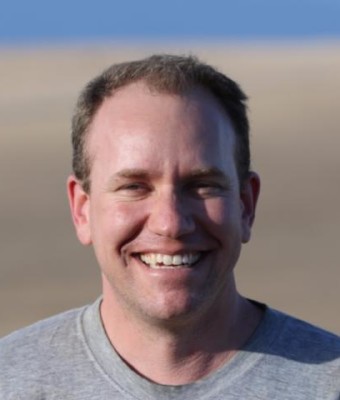
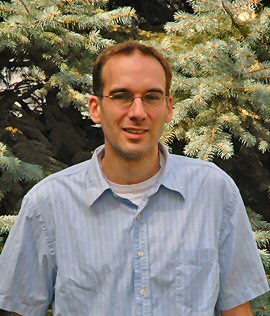
Dr. Jeroen Jansen is a Postdoctoral Research Associate at the School of Natural Sciences, University of Tasmania (UTAS). His research focuses on ecosystem function, biosecurity science, and microbial ecology, with an emphasis on invasive species management and conservation biology. He investigates ecological interactions, predator-prey dynamics, and the impacts of invasive species on native ecosystems. Key research areas include understanding ecological factors influencing invasive predator survival, spatial distribution of invasive species, and conservation strategies for endangered species. Dr. Jansen has contributed to continental-scale studies on feral cats and rabbit control in Australia, advancing methods for targeted conservation management. His work bridges field observations with advanced modeling to address ecological challenges, particularly in semi-arid and invasive-dominated landscapes. Collaborations emphasize practical solutions for biodiversity protection and ecosystem resilience.
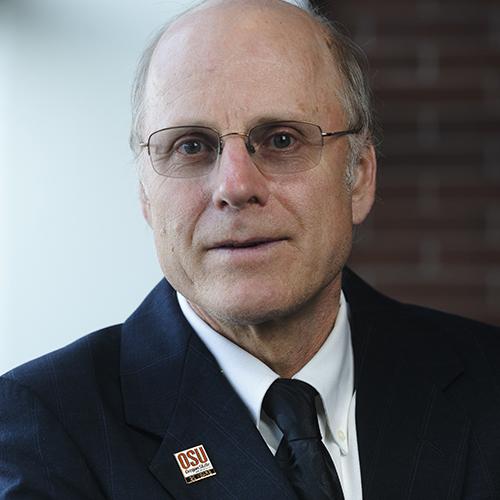
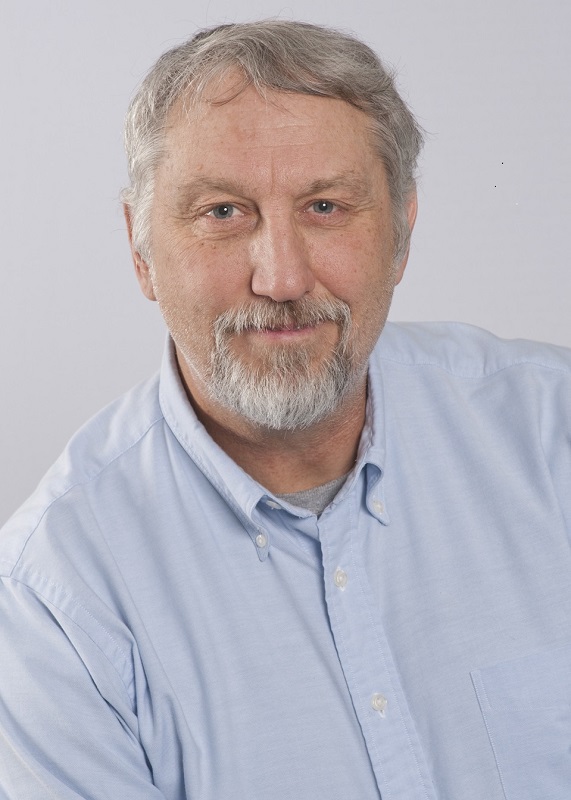
William Ripple is a Distinguished Professor of Ecology and Richardson Chair at Oregon State University's College of Forestry , leading the Trophic Cascades Program . He holds a B.S. (1974, South Dakota State University), M.S. (1978, University of Idaho), and Ph.D. (1984, Oregon State University). His research focuses on conservation biology, trophic cascades, climate change impacts, and wildlife ecology, with a particular emphasis on large carnivores and their ecological roles. Ripple has pioneered studies on Yellowstone's wolf reintroduction effects and global climate emergency advocacy. His research interests span wolf-ungulate-aspen dynamics , mesopredator release , ecology of fear , and historical ecology . Recent work addresses climate change threats to biodiversity, fossil fuel policy critiques, and planetary-scale sustainability challenges. Ripple co-authored landmark 'Scientists’ Warning' papers, emphasizing interdisciplinary solutions to ecological crises. Ripple teaches courses like Trophic Cascades and Large Carnivores in Ecology . He directs strategic initiatives such as Strategic Forest Reserves to protect biomass carbon and biodiversity. His work bridges academia, policy, and public action, advocating for transformative climate and conservation measures.
Dr. Christine M. Mayer is a Professor of Ecology in the Department of Environmental Sciences within the College of Natural Sciences and Mathematics at the University of Toledo. She serves as a Resident Faculty Member at the UToledo Lake Erie Center, where she conducts extensive research on aquatic ecosystems of the Great Lakes region, with particular focus on Lake Erie and its tributaries. Her work bridges ecological theory with practical conservation and management applications. Dr. Mayer received her Ph.D. from Cornell University in 1998 and completed both her B.S. and M.S. at the University of Illinois at Urbana-Champaign. Her educational background in ecology and environmental sciences has provided a strong foundation for her research career focused on freshwater ecosystems. Dr. Mayer's research centers on applied community and ecosystem ecology in aquatic systems, with emphasis on conservation and management of aquatic species and habitats impacted by human activities. Her primary research areas include fish and invertebrate ecology, aquatic habitats, and invasive species. She leads projects investigating critical fish habitat in Western Lake Erie and tributaries, nearshore community dynamics related to shoreline features, grass carp spawning and ecological impacts, and the role of dreissenid mussels as ecosystem engineers. Her work combines field studies, modeling approaches, and collaborative research to address pressing ecological questions in freshwater systems. Analysis of Dr. Mayer's recent publications reveals a consistent focus on Great Lakes ecology, particularly Lake Erie and its connecting rivers. Her research shows increasing attention to invasive species management, especially regarding grass carp, and habitat restoration efforts for native fish species like walleye and lake sturgeon. Methodologically, her work integrates traditional field ecology with advanced statistical approaches and modeling techniques to address complex ecological questions. Dr. Mayer has received significant research funding from multiple agencies supporting her work on Great Lakes ecosystems: NOAA SeaGrant for research on fish habitat and spawning Ohio Department of Natural Resources (DNR-DOW) for various projects US Geological Survey (USGS) for ecological studies Great Lakes Restoration Initiative (GLRI) for habitat restoration work New York SeaGrant for dreissenid mussel research Lake Erie Protection Fund for ecosystem studies Environmental Protection Agency (EPA-GLRI) for Great Lakes research Throughout her career, Dr. Mayer has mentored numerous graduate students who have contributed significantly to her research programs. Her former graduate researchers include Jeremy Pritt, Mark DuFour, Brian Schmidt, Jason Ross, Rachel Kuhaneck, Martin Simonson, Kristen DeVanna, and Patricia Armenio. These students have worked on diverse projects ranging from walleye habitat assessment to dreissenid mussel impacts on benthic communities. Dr. Mayer collaborates extensively with researchers from other institutions including DOW, USGS, NOAA, Bowling Green State University, and Ohio State University, demonstrating her commitment to interdisciplinary and collaborative science. Dr. Mayer leads the Aquatic Ecology Lab at the University of Toledo, which is closely affiliated with the UToledo Lake Erie Center. Her research team conducts field work throughout the Great Lakes region, with particular focus on Lake Erie and its tributaries including the Maumee, Sandusky, and Detroit Rivers. Current projects involve assessing barriers to migratory fish, documenting invasive species spawning, evaluating habitat restoration efforts, and studying the ecological impacts of dreissenid mussels. The lab employs a range of methodologies including field surveys, experimental studies, hydrodynamic modeling, and statistical analysis to address complex ecological questions with management relevance.
Dr. Luke Gibson is an Associate Professor at the School of Environmental Science and Engineering, Southern University of Science and Technology (SUSTech). He leads transboundary research projects in tropical forests across China and Southeast Asia, focusing on biodiversity conservation amid anthropogenic disturbances like forest fragmentation, wildlife trade, and green energy development. His work has been published in Science and Nature , and widely covered by international media such as the New York Times and BBC . PhD, National University of Singapore (2014) MSc, University of California, San Diego (2010) BA, Princeton University (2005) His research program centers on mitigating human impacts on tropical biodiversity. Key projects include quantifying mammal extinction rates post-forest fragmentation, analyzing green energy's ecological trade-offs, and resolving conservation conflicts around introduced species. Publications span topics like ivory trade policies, ecological monitoring methodologies, and conservation ethics. Selected articles demonstrate expertise in tropical forest ecology, wildlife trade, and sustainable development. Themes include assessing biodiversity gradients in disturbed ecosystems, evaluating renewable energy's environmental costs, and pioneering transboundary conservation strategies. 2015 Wang Gung Wu Medal & Prize 2015 World Future Foundation PhD Prize in Environmental and Sustainability Research 2013 President’s Graduate Fellowship, NUS 2012 Best Graduate Researcher Award, NUS 2012 Top Graduate Researcher Award, NUS
John Durrus Linnell is Professor at the Department of Forest and Nature Management, Faculty of Applied Ecology, Agriculture and Biotechnology, Inland Norway University of Applied Sciences (Evenstad campus). His career centers on human-wildlife coexistence dynamics, particularly large carnivores in anthropogenic landscapes across Europe, Asia, and Africa. Linnell's research integrates ecological and social dimensions to address human-wildlife conflict. He leads major projects including CoCo (Co-creating coexistence) and WILDCOM (Ecological communities in change) , developing frameworks for sustainable coexistence through stakeholder engagement and policy innovation. His work spans predator ecology, wildlife management, and conservation policy, with emphasis on large carnivores like wolves, lynx, and leopards. Recent publications reveal interdisciplinary trends combining climate science, social anthropology, and landscape ecology. Key themes include climate-driven phenological mismatches, stakeholder perception mapping, and transboundary management frameworks. His research consistently bridges theoretical ecology with practical conservation implementation, particularly in human-dominated landscapes. As coordinator of the WILDCOM research group, Linnell supervises collaborative projects across 30+ institutions. He contributes significantly to international conservation policy through IUCN SSC guidelines on human-wildlife conflict, authoring chapters on cultural dimensions, economic incentives, and legal frameworks for coexistence.
Carlos A. Peres is a Professor of Tropical Conservation Ecology at the School of Environmental Sciences, University of East Anglia (UK), and the lifetime Science Director of Instituto Juruá, a non-profit conservation NGO in the Amazon. He currently serves as the Edward Bass Distinguished Visiting Environmental Scholar at Yale University until July 2026, splitting his time between Norfolk, UK and Amazonian forest sites while advising the Brazilian government on Amazon conservation issues. His educational background includes: PhD in Wildlife Research from University of Cambridge (1987-1991) MSc in Forest Ecology & Conservation from University of Florida (1984-1986) BSc in Biology from Universidade Federal do Pará, Brazil (1980-1983) Peres has dedicated over 40 years to studying wildlife community ecology in Amazonian forests, population ecology of neotropical forest resources, biological criteria for nature reserve design, and community-based conservation-development frameworks. His research spans multiple neotropical biomes including the Amazon, Atlantic Forest, Caatinga, Cerrado, and Pantanal wetlands. He currently leads the largest multi-taxa biodiversity inventory program in any tropical forest region, working across over 120 forest sites in six Amazonian countries. His recent publications reveal strong research trends across tropical ecology, conservation biology, and environmental science, with particular focus on Amazonian biodiversity patterns, deforestation impacts, habitat fragmentation consequences, species conservation strategies, ecosystem service valuation, and climate change effects on tropical ecosystems. His work consistently integrates field ecology with conservation policy applications. Notable scientific awards include: Biodiversity Conservation Leadership Prize Award from Bay and Paul Foundation (1995) Environmentalist Leader for the New Millennium by Time Magazine and CNN Network (2000) Inaugural Frontiers Planet Prize as International Champion (2023) Peres has supervised over 140 postgraduate students from 22 countries across South America, Africa, Southeast Asia, Europe, and North America. He currently co-directs four major ecology and conservation research programs throughout Amazonian forests, focusing on timber/non-timber forest resources, vertebrate assemblage structure, fragmented landscape dynamics, and land-use change impacts. His research is supported by significant grants including the Frontiers Planet Prize which recognizes his global conservation leadership. His laboratory and research team infrastructure includes extensive field operations across Amazonia, with particular strength in multi-taxa biodiversity monitoring, community-based conservation initiatives, and policy-relevant conservation science. The Instituto Juruá serves as a key operational base for his Amazonian research activities, facilitating long-term ecological studies and community engagement programs.
Dustin Rubenstein is a Professor of Ecology, Evolution and Environmental Biology at Columbia University's Faculty of Arts and Sciences, where he serves as Director of the Center for Integrative Animal Behavior and Chair of the University Seminar in the Integrative Study of Animal Behavior. He holds additional affiliations as an Affiliate Member of the Zuckerman Mind Brain Behavior Institute, Faculty Mentor in the Doctoral Program in Neurobiology and Behavior, and Affiliated Member of Computing Systems for Data-Driven Science and Education initiatives. His educational background includes: A.B. from Dartmouth College (1999, Reynolds Scholar) Ph.D. from Cornell University (2006, Howard Hughes Medical Institute Predoctoral Fellow) Postdoctoral work at UC Berkeley (2006-2009, Miller Research Fellowship) Rubenstein's research employs an integrative approach to unravel why complex animal societies form and how organisms adapt to environmental change. His work bridges behavioral ecology , evolutionary biology , and molecular mechanisms across diverse taxa—from reptiles and birds to crustaceans and insects—studied across Central/South America, Asia, Australia, and Africa. Key focuses include cooperative breeding systems , social evolution dynamics , and neuroendocrine responses to environmental stressors , with increasing emphasis on climate change impacts. Analysis of his 15 most recent publications (2023-2025) reveals three dominant trends: (1) Environmental variability as a driver of social evolution in cooperative breeders (starlings, beetles, shrimps), (2) Molecular mechanisms (DNA methylation, HPA axis) linking stress to behavioral plasticity, and (3) Conservation applications addressing habitat suitability and climate resilience. His work consistently integrates field studies with genomic techniques across multiple continents. Scientific recognition includes: Young Investigator Awards from Animal Behavior Society, American Ornithologists’ Union, Society for Behavioral Neuroendocrinology, and University of Michigan Fellow of the American Ornithological Society National Academy of Sciences Kavli Fellow and Education Fellow Columbia University's Lenfest Distinguished Faculty Award Society of Columbia Graduates' Great Teacher Award As an educator, Rubenstein co-created Columbia's Program in Tropical Biology and Sustainability (Africa study abroad) and the sTEAM Fellows Program for underrepresented first-year students. He serves as Faculty Mentor in Neurobiology and Behavior doctoral training and previously lectured in Columbia College's Frontiers of Science core curriculum. His grant leadership includes Howard Hughes Medical Institute and Miller Research Fellowships, with ongoing projects examining climate-social evolution interfaces. Rubenstein directs the Center for Integrative Animal Behavior, which coordinates interdisciplinary research across Columbia's ecology, neuroscience, and evolution groups. His field teams operate in Kenya (National Museums), Costa Rica, Australia, and the Caribbean, integrating behavioral observation with molecular labs at Columbia and the American Museum of Natural History.
Dr. Shandra Nicole Frey (Nicki Frey) is a Professor in the Department of Wildland Resources at Utah State University, specializing in Human-Wildlife Interactions. She collaborates with federal, state, and local partners to research sensitive species and develop strategies for reducing wildlife damage while promoting positive human-wildlife coexistence. Her work spans species including small mammals, ringtails, sage-grouse, and free-roaming horses. She also leads youth education programs engaging high-school students in natural resources research. Education PhD, Wildlife Biology (Human-Wildlife Interactions), Utah State University, 2004 MS, Wildlife Biology (Human-Wildlife Interactions), Utah State University, 2001 BS, Wildlife Management, West Virginia University, 1996 Research Focus Dr. Frey's research integrates wildlife ecology with human dimensions, emphasizing: Predator-prey dynamics in managed landscapes Conservation strategies for species like sage-grouse and prairie dogs Anthropogenic impacts on wildlife behavior and habitat use Her publications consistently address wildlife responses to human activities including mining, energy infrastructure, and hunting. Awards & Honors Innovative Extension Program Award (2023) The Wildlife Society Fellow (2021) Goldwater Scholarship (2019) Award of Excellence, Western Extension Directors’ Association (2015) Professional Achievement Award, Central Mountain and Plains Section of TWS (2013) Advising & Outreach Dr. Frey mentors graduate students in wildlife management and leads extension programs on human-wildlife conflict resolution. She develops educational materials for landowners and manages youth initiatives like the National Wildlife Habitat Evaluation Program. Collaborations She works with the Jack H. Berryman Institute and partners with agencies including US Forest Service, BLM, and Utah DWR on field research and conservation implementation.
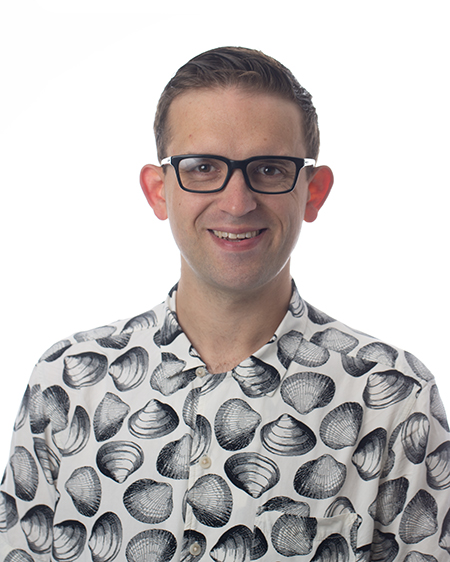
David Elzinga is an Assistant Professor of Statistics at the University of Wisconsin-La Crosse , where he also directs the Coulee Data Center , a pro bono data analysis initiative supporting local nonprofits. He holds a Ph.D. and M.S. in Mathematics and an M.S. in Statistics from the University of Tennessee Knoxville (2023), and a B.S. in Mathematics from Wichita State University (2018). His research focuses on mathematical ecology , applying statistical and computational models to wildlife management, conservation, and resource systems. Elzinga’s work encompasses modeling pest control in prairie dogs, climate impacts on moose populations, and reintroduction strategies for extinct species like the passenger pigeon. He uses agent-based, differential equation, and matrix projection models to address ecological challenges. Recent projects include analyzing pollen competition in plants and vaccination tactics against bat diseases. Awards include the SIAM Project NExT Fellowship (2024). He actively mentors student researchers through programs like REUs and federal scholarships, emphasizing interdisciplinary collaboration. The Coulee Data Center collaborates with local partners like Habitat for Humanity, empowering data-driven decision-making in the Coulee Region. Elzinga’s teaching spans statistics courses from introductory to advanced levels, including Environmental Statistics and Biostatistics. He balances academic rigor with real-world applications, frequently integrating student projects into community service and conservation efforts.
Professor Owen T Nevin serves as Chief Executive Officer of the Western Australian Biodiversity Science Institute (WABSI) within The University of Western Australia's School of Biological Sciences. An experienced conservation biologist with over 25 years in global large carnivore conservation and senior academic leadership, he previously held roles as Head of the National School of Forestry (UK) and Associate Vice-Chancellor at CQUniversity Australia. He maintains active adjunct positions at Central Queensland University (2020-2026) and the University of Cumbria (2017-2026). His educational foundation includes a BSc (Hons) in Biology and Ecology from the University of East Anglia (UK) and a PhD in Wildlife Ecology from Utah State University (USA). His research integrates behavioral, spatial, and economic methodologies to advance threatened species conservation, focusing on human impacts like ecotourism and resource exploitation across diverse ecosystems from Yellowstone to Australian cloud forests. Recent publications demonstrate interdisciplinary trends spanning carnivore ecology, policy analysis, and cultural conservation frameworks. His 2021-2025 works reveal strong emphasis on trophic cascades, translocation biology, and cross-continental conservation debates, frequently intersecting ecological science with socio-political dimensions of species management. His scientific recognition includes: Stokes-Leopold Memorial Scholarship (2002-2003) Fellowship of the Zoological Society of London (2008) Anniversary Visiting Professorship at University of Cumbria (2017) He currently serves as specialist director on the Society for Conservation Biology's Oceania Board. Nevin directs major industry-funded research initiatives including CRC TiME projects with Fortescue Metals Group, BHP Billiton, and Rio Tinto (2021-2025), focusing on environmental assessment frameworks. He actively supervises PhD candidates through UWA's HDR program while leading WABSI's strategic research agenda across Western Australia's biodiversity hotspots. His work directly contributes to UN Sustainable Development Goals for life on land and climate action.
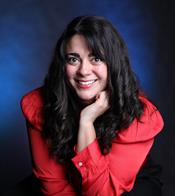
Zoe Diaz-Martin, Ph.D., is an Assistant Professor of Biology at Spelman College since 2023. Her research bridges molecular ecology, conservation biology, and evolutionary genetics to address challenges in plant population conservation. Education: Ph.D. from Tulane University, Postdoctoral Research at Chicago Botanic Garden, B.A. from Connecticut College Dr. Diaz-Martin employs genetic and genomic tools to study how habitat fragmentation, climate change, and human activities influence gene flow and genetic diversity in tropical plant species. Her work emphasizes practical conservation strategies and eco-evolutionary dynamics. Recent publications highlight her focus on ex situ conservation, plant reintroduction programs, and the impacts of defaunation and climate variability on plant populations. Collaborative projects involve endangered species management, pollination ecology, and genomic monitoring frameworks.
Professor Rachel McCrea holds a Chair in Statistics at Lancaster University's School of Mathematical Sciences and is a core member of the Data Science Institute. She actively supervises PhD students in statistical methodology development for real-world ecological and conservation challenges, with current research focusing on statistical ecology, multiple systems estimation, and illegal wildlife trade applications. Her research program centers on: Advanced capture-recapture and state-space modeling for population dynamics Multiple systems estimation for hidden populations (wildlife trade/human trafficking) Integrated population modeling for conservation decision-making Bias correction in translocation management and extinction inference Bayesian methods for ecological time-series and demographic analysis Recent publications (2021-2025) reveal strong methodological innovation in ecological statistics, with key contributions to integrated population models, multi-system estimation frameworks, and conservation applications. Her work bridges theoretical statistics with urgent biodiversity challenges, particularly in extinction risk assessment and wildlife trade monitoring. Current research projects include 'New stochastic models to quantify illegal trade' (2023-2024), 'A transdisciplinary approach to inferring the end of political violence' (2022-2023), and 'Modelling removal and re-introduction data for improved conservation' (2022-2023). She supervises PhD student Lucas Howell through the STOR-i Centre for Doctoral Training. Professor McCrea collaborates extensively through Lancaster's Centre of Excellence in Environmental Data Science, Environmental and Ecological Statistics group, Social and Economic Statistics group, and STOR-i Centre for Doctoral Training, driving interdisciplinary approaches to ecological data science.
Jess Jones is an Associate Professor in the Department of Fish and Wildlife Conservation at Virginia Polytechnic Institute and State University, affiliated with the College of Natural Resources and Environment. She holds a Ph.D. (2009), M.Sc. (2004), and B.Sc. (1996) in related fields from the same institution. Her research focuses on freshwater mussel conservation, including aquaculture, restoration ecology, ecotoxicology, and genetics. Jones collaborates extensively with agencies like the US Fish & Wildlife Service on high-impact projects such as mussel population restoration in the Clinch and Powell Rivers and contaminant studies in river systems. Her work emphasizes developing innovative propagation techniques and assessing environmental threats like major ion contamination from coal mining. Projects include a 20-year Population Viability Analysis for endangered mussels and taxonomic assessments of rare species. Jones also engages in international collaboration with Brazilian researchers to advance global mussel restoration strategies. She teaches Applied Conservation Genetics and directs the Freshwater Mollusk Conservation Center, contributing to both academic and applied conservation efforts.
Dr. Joseph Duchamp is a Professor in the Biology Department at Indiana University of Pennsylvania (IUP), affiliated with the John J. and Char Kopchick College of Natural Sciences and Mathematics. He holds a PhD in Wildlife Science from Purdue University, an MS in Ecology from Indiana State University, and a BS in Biology from the University of Michigan. His research focuses on wildlife population dynamics, community ecology, mammalogy, and biostatistics, with an emphasis on improving human-wildlife coexistence through conservation and management strategies. Dr. Duchamp's work spans diverse taxa including birds, mammals, amphibians, and insects, addressing habitat use, species interactions, and conservation challenges in fragmented landscapes. Recent projects include studies on elk resource selection, endangered species translocations, and tick-borne disease ecology. He has published extensively on topics such as golden-winged warbler habitat requirements, Allegheny woodrat genetics, and bat ecology in human-altered environments. His research integrates field observations with advanced analytical techniques, contributing to evidence-based management practices. He collaborates on initiatives like ungulate exclusion fencing studies and translocation programs for endangered species. Dr. Duchamp's office is located in Kopchick Hall, Room 112, with regular office hours Monday-Friday 9:30 AM–4:00 PM.
Thomas Dowling is a Professor in the Department of Biological Sciences, College of Liberal Arts and Sciences, Wayne State University, specializing in evolutionary and conservation genetics of North American freshwater fishes with emphasis on river systems in arid regions. Education: BS in Zoology, University of Michigan, Ann Arbor (1980) PhD in Biological Sciences, Wayne State University (1984) His research focuses on phylogeography, population genetics, and conservation strategies for endangered fishes, particularly examining hybridization, habitat fragmentation, and evolutionary responses in desert river ecosystems. He integrates molecular techniques including mitochondrial DNA analysis and genomics to address critical conservation challenges. Analysis of his 2017-2025 publications reveals consistent concentration on Colorado River basin species like Razorback Sucker, utilizing genomic methods to study population structure, adaptive radiations, and conservation hatchery impacts. His work bridges genetic theory with practical management for imperiled freshwater fishes. Scientific Awards: No scientific awards were mentioned in the provided text. Advising and Grants: Teaches graduate Population Genetics (BIO6090) indicating active mentorship Undergraduate courses include Evolution (BIO2700) and Basic Life Diversity (BIO1500) No specific grants or student names listed in source material Labs and Teams: No laboratory or research team information was provided in the source text.