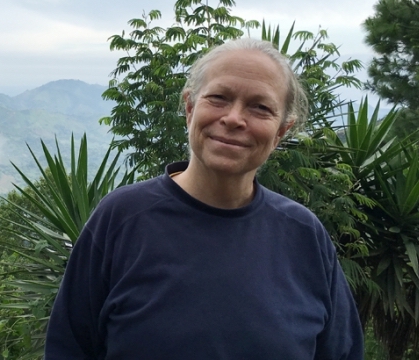
معرفی
Carlos A. Peres is a Professor of Tropical Conservation Ecology at the School of Environmental Sciences, University of East Anglia (UK), and the lifetime Science Director of Instituto Juruá, a non-profit conservation NGO in the Amazon. He currently serves as the Edward Bass Distinguished Visiting Environmental Scholar at Yale University until July 2026, splitting his time between Norfolk, UK and Amazonian forest sites while advising the Brazilian government on Amazon conservation issues.
His educational background includes:
- PhD in Wildlife Research from University of Cambridge (1987-1991)
- MSc in Forest Ecology & Conservation from University of Florida (1984-1986)
- BSc in Biology from Universidade Federal do Pará, Brazil (1980-1983)
Peres has dedicated over 40 years to studying wildlife community ecology in Amazonian forests, population ecology of neotropical forest resources, biological criteria for nature reserve design, and community-based conservation-development frameworks. His research spans multiple neotropical biomes including the Amazon, Atlantic Forest, Caatinga, Cerrado, and Pantanal wetlands. He currently leads the largest multi-taxa biodiversity inventory program in any tropical forest region, working across over 120 forest sites in six Amazonian countries.
His recent publications reveal strong research trends across tropical ecology, conservation biology, and environmental science, with particular focus on Amazonian biodiversity patterns, deforestation impacts, habitat fragmentation consequences, species conservation strategies, ecosystem service valuation, and climate change effects on tropical ecosystems. His work consistently integrates field ecology with conservation policy applications.
Notable scientific awards include:
- Biodiversity Conservation Leadership Prize Award from Bay and Paul Foundation (1995)
- Environmentalist Leader for the New Millennium by Time Magazine and CNN Network (2000)
- Inaugural Frontiers Planet Prize as International Champion (2023)
Peres has supervised over 140 postgraduate students from 22 countries across South America, Africa, Southeast Asia, Europe, and North America. He currently co-directs four major ecology and conservation research programs throughout Amazonian forests, focusing on timber/non-timber forest resources, vertebrate assemblage structure, fragmented landscape dynamics, and land-use change impacts. His research is supported by significant grants including the Frontiers Planet Prize which recognizes his global conservation leadership.
His laboratory and research team infrastructure includes extensive field operations across Amazonia, with particular strength in multi-taxa biodiversity monitoring, community-based conservation initiatives, and policy-relevant conservation science. The Instituto Juruá serves as a key operational base for his Amazonian research activities, facilitating long-term ecological studies and community engagement programs.