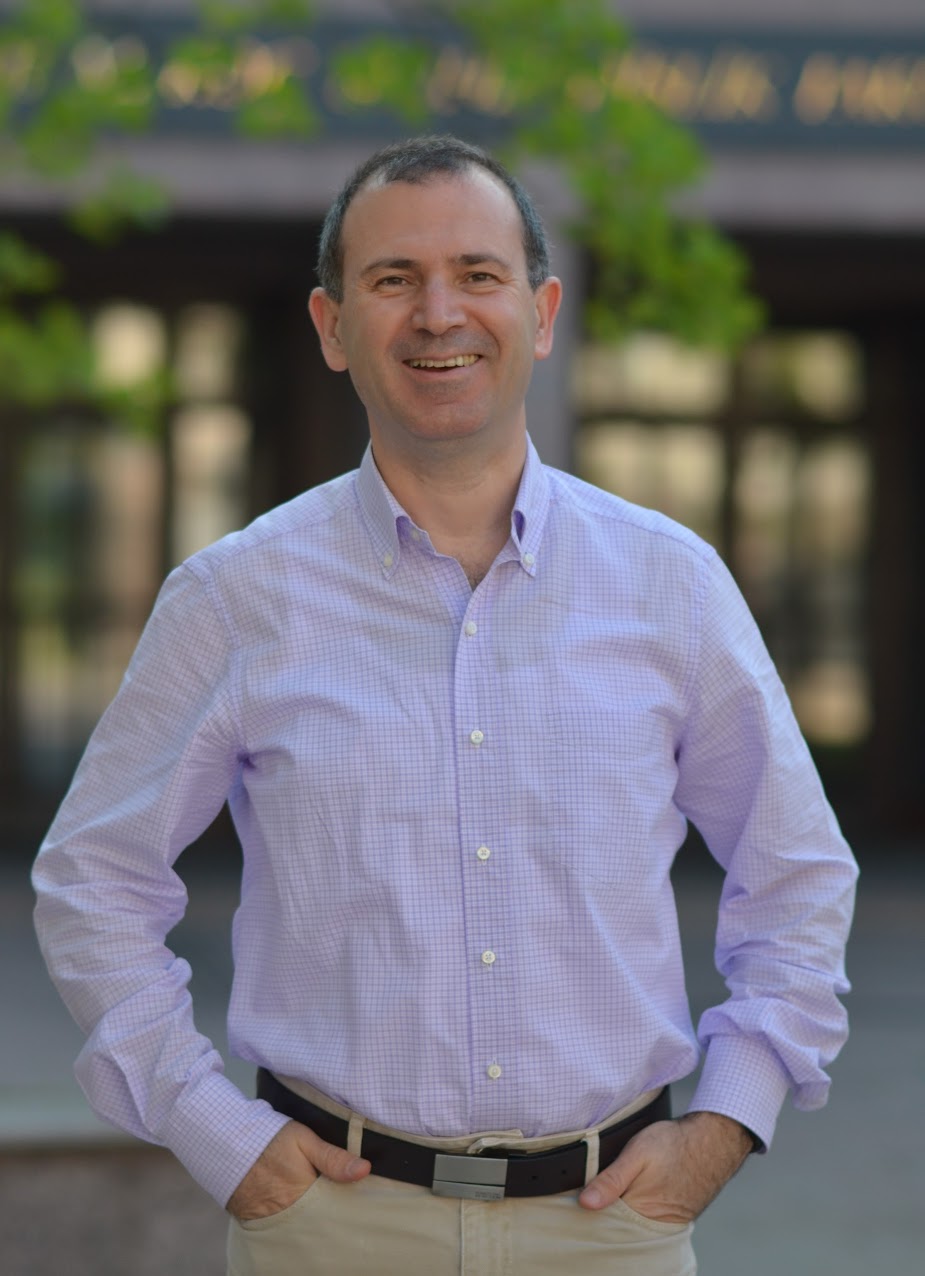
Metin Sitti is a Professor and currently serves as a part-time adjunct professor at Koç University's Faculty of Medicine and Engineering. He is also the President of Koç University and Director of the Max Planck Institute for Intelligent Systems since 2014. His research spans robotics , micro/nanorobotics , physical intelligence , bio-inspired robotics , and materials science . Undergraduate: Boğaziçi University (Electrical and Electronics Engineering, 1992) Master's: Boğaziçi University (1994) PhD: University of Tokyo (Electrical Engineering, 1999) His research focuses on small-scale robotics for biomedical applications, including magnetic microrobot swarms , biohybrid systems , and functional materials . Recent publications emphasize 3D control , wireless actuation , and clinical translation of robotic systems. Scientific Awards : 2020 Scientific Breakthrough of the Year 2018 Koç University Rahmi M. Koç Science Medal 2014 IEEE/ASME Best Mechatronics Paper Award 2013/2012 World RoboCup Micro-Robotics First Prize He has advised numerous students and collaborates with institutions like Carnegie Mellon University and University of Stuttgart. His work integrates physical intelligence into miniature robots for medical imaging , drug delivery , and autonomous systems .
Professor Hakan Ali Çırpan is a distinguished faculty member at Istanbul Technical University's Faculty of Electrical and Electronics Engineering, where he serves as Professor in the Department of Electronics and Communication Engineering. He also holds the position of Vice Dean at Istanbul Technical University since 2021. With over three decades of academic experience, Professor Çırpan has established himself as a leading researcher in signal processing and communications. His educational background includes: PhD from Stevens Institute of Technology (1993-1997) Master's degree in Electrical-Electronic Engineering (with thesis) from Istanbul University (1989-1992) Bachelor's degree in Electrical and Electronic Engineering from Uludağ University (1985-1989) Professor Çırpan's research spans multiple domains within signal processing and communications. His primary interests include wireless communications, radar systems, machine learning applications in communications, and electronic warfare. His work on channel estimation, orthogonal frequency division multiplexing, and maximum likelihood methods has been particularly influential. He has pioneered research in areas such as source localization, spectrum sensing, and physical layer security. His recent work focuses on 5G/6G networks, AI-enhanced communications, and integrated sensing and communication systems. Analysis of his recent publications (2023-2025) reveals a strong focus on next-generation wireless technologies, particularly 5G/6G networks, AI integration in communications, and electronic warfare applications. His research demonstrates a consistent pattern of addressing fundamental challenges in signal processing while adapting to emerging technological needs. A significant portion of his recent work involves machine learning applications for spectrum management, optimization techniques for radar systems, and novel approaches to network slicing and resource allocation. His notable scientific achievements include: ASELSAN ACADEMY THESIS COMPETITION WINNER (2020) Professor Çırpan has supervised 59 theses throughout his career, mentoring numerous graduate students in the fields of signal processing and communications. He has secured significant research funding, including the "AI-Enhanced 5G/6G Networks with Integrated Camera and ISAC Systems" project (2023-2024) and the "Railway Vehicle Infrastructure New Generation Secure Communication Systems" TÜBİTAK project with a budget of ₺955,000. His research has practical applications in defense systems, railway communications, and next-generation wireless networks. His laboratory work focuses on wireless communications systems, radar signal processing, and AI-enhanced communication technologies. Professor Çırpan leads research teams working on projects related to 5G/6G networks, electronic warfare countermeasures, and secure communication systems. His group collaborates with industry partners like ASELSAN and conducts research with practical applications in national defense and critical infrastructure.
Ozgur S. Oguz is an Assistant Professor at Bilkent University , Faculty of Computer Engineering, and the lead of the Learning for Intelligent Robotic Agents (LiRA) Lab . His research focuses on enhancing autonomous agents' capabilities in learning, reasoning, and planning, particularly for robotics applications. Education : PhD in Computer Science from TU Munich , studies at University of British Columbia (UBC) and Koç University , postdoctoral work at University of Stuttgart and Max Planck Institute for Intelligent Systems . His research explores algorithms for autonomous decision-making, with emphasis on deep learning , reinforcement learning , and robotics . Recent work includes diffusion-based reinforcement learning , hindsight experience prioritization , and hybrid manipulation planning , often addressing challenges in sequential task execution and tactile-based control. Key trends in his publications revolve around robotic manipulation , motion planning , and human-robot interaction . He has contributed to conferences like NeurIPS , ICRA , IROS , and journals such as IEEE TRO and Scientific Reports .
Sinan Yıldırım is a Researcher in the Faculty of Engineering and Natural Sciences at Sabancı University, Turkey. His primary research focuses on Bayesian Statistics, Monte Carlo methods, and data privacy, with interdisciplinary applications in machine learning and signal processing. He holds a BSc and MSc in Electrical and Electronics Engineering from Boğaziçi University, followed by a PhD in Mathematical Statistics from the University of Cambridge. Postdoctoral research (2013-2015) at the University of Bristol’s School of Mathematics involved the EPSRC-funded project 'Intractable Likelihood: New Challenges from Modern Applications (i-like).' His work bridges theoretical statistics with practical problems in privacy, control systems, and energy optimization. Research interests emphasize Bayesian methodologies for privacy-preserving data analysis, dynamic modeling of complex systems, and stochastic optimization algorithms. Recent publications explore differential privacy in machine learning, Monte Carlo techniques for high-dimensional inference, and applications of Bayesian methods in robotics and energy systems. Advising and grants include contributions to multi-party resource sharing frameworks and privacy-aware algorithms. His work integrates computational methods with real-world challenges in engineering and policy modeling.
Dr. Cem Demir is a Lecturer in the Department of Civil Engineering at Istanbul Technical University (ITU), specializing in Structural Engineering with a focus on earthquake engineering, reinforced concrete structures, and historical building restoration. He holds a PhD in Structural Engineering from ITU (2004) and has extensive experience in seismic assessment, retrofitting, and failure analysis of existing buildings. His research emphasizes sustainable structural solutions, including the use of FRP composites and novel mortars for enhancing seismic resilience. He has contributed to major projects like the Istanbul Building Stock Seismic Risk Assessment and post-earthquake analyses of recent Turkish earthquakes (e.g., 2023 Kahramanmaraş). His work bridges historical preservation and modern seismic safety, with notable studies on structures like the 13th-century Divrigi Hospital and Hirka-i Serif Mosque. Education: PhD (Structural Engineering, ITU, 2004); Master's (Structural Engineering, ITU, 2001); Bachelor's (Civil Engineering, ITU, 1997). Research Interests: Seismic retrofitting of sub-standard RC columns, masonry structures, historical monuments, and cost-benefit analyses for urban resilience. His studies integrate experimental testing (e.g., full-scale building tests) with computational modeling to improve structural performance under seismic loads. Recent Work: Focus on sustainable materials (e.g., glass fiber-reinforced mortar), rapid assessment frameworks (PERA method), and post-disaster damage evaluation. He collaborates internationally, presenting at conferences like WCEE 2024 and SMAR 2024. His contributions address critical issues like Istanbul's seismic vulnerability and post-2023 earthquake building performance.
Prof. Erdem Günay is a full Professor in the Department of Energy Systems Engineering at Istanbul Bilgi University, where he has been serving since 2013, rising through the academic ranks. He holds a Ph.D. in Chemical Engineering from Bogazici University, where he also completed his B.S. and M.S. degrees, and conducted postdoctoral research. His academic journey reflects a deep commitment to energy systems and sustainable technologies. B.S. in Chemical Engineering, Bogazici University, 2002 M.S. in Chemical Engineering, Bogazici University, 2005 Ph.D. in Chemical Engineering, Bogazici University, 2012 Postdoctoral Research Associate, Catalyst Design and Reaction Engineering Laboratory, Bogazici University, 2013 Prof. Günay’s research centers on the integration of machine learning and artificial intelligence with energy systems engineering. His work spans renewable energy (solar, wind, bioenergy), hydrogen production, CO₂ utilization, fuel cells, and energy demand forecasting. He employs advanced data mining, neural networks, and explainable AI to model, simulate, and optimize complex energy processes, contributing significantly to sustainable energy solutions. His interdisciplinary approach bridges chemical engineering, environmental science, and computational modeling. His recent publications demonstrate a strong trend in applying machine learning to sustainable bioenergy, catalysis, and environmental management. From optimizing biochar production to forecasting global temperature anomalies and enhancing microbial fuel cells, his research leverages AI to address pressing energy and environmental challenges. The articles reflect a consistent focus on sustainability, efficiency, and innovation in energy technologies, with a growing emphasis on explainability and real-world applicability of AI models. Prof. Günay has not been mentioned to have received any specific scientific awards, but his extensive publication record in high-impact journals indicates strong recognition in his field. He has advised several Master’s students, including Muaaz Jnani, Duru Akalın, and co-advised Ahmet Coşgun and Meltem Baysal. He actively supervises senior design projects in areas such as biogas production, biodiesel from shea butter, pyrolysis, and solar desalination, fostering hands-on learning and innovation among students. While no external grants are explicitly mentioned, his research output suggests active involvement in funded projects. His teaching portfolio includes core courses such as Thermodynamics, Fluid Mechanics, Fuels and Combustion, and Energy Systems Modeling and Simulation. Although specific lab or research team names are not provided, his frequent collaborations with researchers like Ramazan Yıldırım, N. Alper Tapan, and Ahmet Coşgun suggest active participation in a research group focused on AI-driven energy and catalysis research at Istanbul Bilgi University.
Engin Erzin is a Professor at Koç University's College of Engineering, leading the KUIS AI Lab and Multimedia, Vision and Graphics Lab . His research focuses on AI-driven human-centric systems, affective computing, and multimodal interaction analysis. He has contributed extensively to robotics, speech processing, and human-robot interaction through over 70 peer-reviewed publications since 2008. Research interests include: Affective computing and emotion recognition from speech/gestures Human-robot interaction and socially engaging agents Speech-driven animation and gesture synthesis Multimodal data fusion for interaction analysis Deep learning applications in robotics and biomedical engineering Recent work emphasizes: Developing adaptive pHRI controllers for manufacturing tasks Creating engagement measurement frameworks for human-machine interfaces Advancing Turkish speech recognition through self-supervised learning Designing multimodal databases for interaction studies Labs: KUIS AI Lab : Focuses on AI applications in robotics and human-computer interaction Multimedia Lab : Specializes in vision, graphics, and audiovisual analysis
Prof. Alper SEZER is a faculty member at Ege University's Department of Civil Engineering (Faculty of Engineering), specializing in Geotechnics. His research focuses on geotechnical engineering, earthquake effects, soil mechanics, and sustainable development. He has conducted extensive studies on soil liquefaction, seismic site effects, and post-earthquake damage assessments in regions like Antakya, Izmir, and Adıyaman. His work integrates computational methods (e.g., genetic algorithms, artificial neural networks) with experimental geotechnics to improve soil characterization and disaster resilience. He has collaborated on projects analyzing valley effects, ground motion amplification, and the mechanical behavior of soils under cyclic loading. Education: Details not explicitly provided in text, inferred through academic publications and position. Research interests include geotechnical hazard mitigation, soil stabilization techniques (e.g., polymer-modified soils), and the application of fractal analysis to soil properties. His studies address practical challenges such as sulfate resistance in cement-stabilized soils and freeze-thaw resistance of fiber-reinforced materials. He has contributed to microzonation studies and seismic risk assessments in urban areas like Izmir Bay. Publications emphasize field reconnaissance findings from major earthquakes (e.g., 2020 Samos, 2023 Türkiye earthquakes) and laboratory experiments on soil behavior under dynamic loading. Awards and recognitions are not explicitly listed in the text. Grant activities and advising details are not provided, but his extensive publication record suggests sustained research funding. He is affiliated with geotechnical laboratories at Ege University, focusing on experimental testing and computational modeling in geotechnical engineering.
Prof. Dr. Murat Dener is a full Professor in the Department of Information Security Engineering at the Institute of Science and Technology, Gazi University, where he also serves as the Head of Department since 2020. He has been continuously affiliated with Gazi University since 2005, progressing from Research Assistant to full Professor in 2023. He is also a Member of the Gazi University Rectorate Quality Commission and a Researcher at the High Performance Computational Neuroscience Laboratory at the Neuroscience and Neurotechnology Excellence Joint Application and Research Center. His educational background includes a BSc, MSc, and PhD, all from Gazi University, with his doctoral studies partially conducted at Georgia Tech University, USA. He completed English language training at Georgia State University and has participated in multiple EU-funded international projects across Greece, Portugal, Belgium, Germany, and Kazakhstan. His research focuses on cutting-edge areas such as cyber security, artificial intelligence, internet of things, blockchain, big data analytics, and computational neuroscience. His work bridges theoretical research with practical innovation, exemplified by the development of Turkey’s first domestically produced wireless sensor node, "WiSeN", through a company he founded in 2014. The analysis of his recent publications reveals a strong trend toward integrating AI and deep learning into cyber defense, secure IoT systems, blockchain applications, and computational neuroscience. His work emphasizes real-world applicability, security, scalability, and innovation in smart city and critical infrastructure technologies. Academic Achievement Award, Georgia State University (2011) Second Prize, Gazi University Business Idea Competition (2014) Turkish First Prize, Junior Chamber International 'Ten Successful Young People of Turkey' (2014) World Top 20 Finalist, Junior Chamber International (Japan, 2014) First Prize, Young Entrepreneurship Category, Liyakat Association (2015) First Prize, Smart Buildings and Environment, TET R&D Project Market (2018) Prof. Dener actively advises master’s and doctoral students and has led numerous national and international research projects, including EU-funded collaborations. His leadership extends to editorial and peer-review roles in multiple journals. He is deeply involved in academic quality improvement as a member of the Rectorate Quality Commission and leads advanced research in computational neuroscience using high-performance computing platforms. He founded a technology company in 2014 under the Technopreneurship Capital Support Program, producing the first Turkish-made wireless sensor node (WiSeN), which led to several national innovation awards. His lab work centers on the High Performance Computational Neuroscience Laboratory, where he contributes to neurotechnology research, combining AI and neuroscience for brain-computer interface applications.
Tuğçe Bilen is an Assistant Professor at Istanbul Technical University's Department of Artificial Intelligence and Data Engineering, within the School of Computer and Informatics. Her research focuses on Artificial Intelligence and Computer and Communication Networks, particularly Digital Twin technologies, 6G wireless systems, and smart IoT applications. PhD in Computer Engineering (2017-2022), Istanbul Technical University Master's in Computer Engineering (2016-2017), Istanbul Technical University Licence in Computer Engineering (2010-2015), Istanbul Technical University Her research explores Digital Twin middleware for smart farms, energy-aware task scheduling in 6G edge networks, aeronautical ad-hoc network optimization, and cloud-based protocol enhancements. Recent work addresses metaverse-driven supply chain optimization and secure routing for aircraft networks. Key publication trends show strong focus on: Digital Twin integration across domains 6G wireless network architectures Adaptive routing algorithms Energy-efficient IoT systems Security in airborne communication Machine Learning for network management Scientific recognition includes: Serhat Özyar Young Scientist of the Year Honorary Award (2023) Doctoral Thesis Award from Istanbul Technical University (2023) TÜBA Doctoral Science Awards-Teknofest (2023) She serves as Principal Investigator for the Unsupervised Learning-Based Management of Ad Hoc Airborne Network Topology project (2024-2026) and holds a patent for Parametric Parsing Based Routing System in Content Delivery Networks (2021). As IEEE member since 2015, she contributes to telecommunications standards.
Sanem Sarıel Uzer is a Professor at Istanbul Technical University (ITU) in the Department of Artificial Intelligence and Data Engineering, part of the College of Computer and Informatics. She has been a faculty member at ITU since 2007, progressing from Instructor to Associate Professor in 2016 and achieving full Professor status in 2024. She is the founder and coordinator of the ITU Artificial Intelligence and Robotics Laboratory and leads multiple research initiatives in cognitive robotics, planning, and machine learning. Ph.D. in Computer Engineering, Istanbul Technical University (2002–2007) M.Sc. in Computer Engineering, Istanbul Technical University (1999–2002) B.Sc. in Control and Computer Engineering, Istanbul Technical University (1995–1999) Her research focuses on artificial intelligence, robotics, and machine learning, particularly in enabling cognitive systems and robots to reason, plan, and learn in complex environments. She investigates lifelong learning methods, multi-robot team strategies, and safe robot manipulation using deep reinforcement learning. Her recent work emphasizes failure anticipation, multimodal detection, and knowledge distillation to improve robot safety and autonomy. The trend in her recent publications (2023–2024) shows a strong focus on enhancing the safety and reliability of robotic manipulation through AI techniques such as deep reinforcement learning, adversarial learning, and multimodal perception. Her work spans both theoretical algorithm development and practical applications in service and industrial robotics. Scientific Awards: Siemens Turkey Excellence Award (2004) TÜBİTAK 13th Technology Award – Best Product (2018) TÜBİTAK 13th Technology Award – University-Industry Collaboration Mention (2018) Best Visual Presentation Award, IEEE SIU (2016) ITU Project Performance Award (2020) TÜBİTAK Ufuk 2020 (2019) Necdet Eraslan Project Competition Mention (2007) She has supervised numerous students in RoboCup competitions and led multiple funded research projects, including two TÜBİTAK projects on lifelong learning for cognitive robots and the development of the open-source Violet system for robot vision. She has also served as a consultant on AI projects with companies like Triodor, Artı Teknoloji, and Analitik Bilişim. Her grants include funding from TÜBİTAK, ITU Scientific Research Projects, and the Ministry of Science, Industry and Technology. She leads the ITU Artificial Intelligence and Robotics Laboratory and is actively involved in national and international collaborations, including with Georgia Tech, University of Pennsylvania, and University of South Florida. She also contributes to professional communities such as IEEE, AAAI, RoboCup, and EUCog.
Professor Hakan Temeltaş is affiliated with Istanbul Technical University , where he serves in the Department of Control and Automation Engineering . His research focuses on robotics, control systems, and autonomous technologies. He has contributed to advancements in motion planning, localization, and deep reinforcement learning for robotic systems. Research Interests: Robotics, Autonomous Systems, Control Engineering, Machine Learning Current Projects: Deep reinforcement learning for quadrupedal robots, localization frameworks, multi-agent systems His recent work includes autonomous exploration strategies using Rapidly-Exploring Random Trees (RRT), multi-stage localization for mobile robots, and quaternion-based orientation estimation in robot manipulators. He supervises projects involving adversarial attack mitigation and self-recovery mechanisms in quadrupedal robots. Publications highlight applications of deep reinforcement learning in robotics, with a focus on dynamic stability, sensor fusion, and simulation environments. His research outputs span conferences like IEEE RAAI and journals such as Robotica and Unmanned Systems . Scientific Awards : None explicitly mentioned in the provided data. As a principal investigator, he leads projects on ground reaction force balancing, autonomous navigation, and swarm robotics. His collaborations extend to simulation frameworks and real-time control systems for mobile robots.
Dr. Yıldıray Yıldız is an Associate Professor in the Mechanical Engineering Department at Bilkent University. He received his Ph.D. in Mechanical Engineering with Mathematics minor from the Massachusetts Institute of Technology in 2009. Previously, he worked at NASA Ames Research Center as a postdoctoral scholar and Associate Scientist before joining Bilkent University in 2014. His research focuses on prediction and control of complex dynamical systems, including: Adaptive control methods for aerospace applications Game-theoretic approaches to multi-agent systems Reinforcement learning for autonomous systems Robust control under uncertainty Dr. Yıldız has received recognition including an ASME student paper award and NASA Group Achievement Award for technology development supporting aviation initiatives. He serves as an Associate Editor for IEEE Control Systems Magazine and has been a member of the AIAA Guidance, Navigation and Control Technical Committee.
Prof. Dr. Sanem Sariel Uzer is a Professor at Istanbul Technical University's Department of Artificial Intelligence and Data Engineering within the Faculty of Computer and Informatics. He holds a PhD in Computer Engineering from ITU and has been teaching since 2007, specializing in Artificial Intelligence, Robotics, and Algorithms. He leads the ITU Artificial Intelligence and Robotics Laboratory and coordinates the Game and Interaction Technologies Master's Program. Education: B.Sc. in Control and Computer Engineering (1995-1999), M.Sc. and Ph.D. in Computer Engineering (1999-2007), all from ITU. He conducted research at Georgia Institute of Technology (2004-2006) and served as a visiting researcher at the University of South Florida (2008) and University of Pennsylvania (2011). Research focuses on cognitive robotics, multi-robot team strategies, lifelong learning for robots, and reinforcement learning applications. His work includes developing open-source robot vision systems and safety-critical manipulation techniques. He has led TUBITAK projects on artificial learning methods and humanoid robotics. Awards include TÜBİTAK's 2018 Technology Award for collaborative robotics software and multiple project performance recognitions. He is an active member of IEEE, AAAI, and RoboCup's executive board, co-founding Turkey's Robotics Conference (ToRK). Advising over 30 graduate students, his lab has contributed to RoboCup competitions and developed systems for robot vision and environment modeling. Current projects explore deep reinforcement learning for daily task automation in humanoid robots.
Hulya Yalcin is an Assistant Professor in the Department of Mechanical Engineering at Istanbul Technical University. Her research focuses on artificial intelligence applications in robotics, computer vision, and precision agriculture. She leads projects in musculoskeletal modeling, plant phenology monitoring, and assistive technologies for elderly care. Her work contributes to UN Sustainable Development Goals related to innovation, health, and sustainable agriculture. Key projects include using deep learning for crop yield estimation and developing exergaming systems to improve elderly health. She has authored 52 research outputs and secured funding for initiatives like AISENSE (EU-funded exergames) and plant classification via computer vision. Publications span robotics control, medical engineering, and agricultural informatics. Notable contributions include knee orthosis gait learning via deep reinforcement learning and low-resource Turkish speech recognition improvements. As Principal Investigator, she manages projects on plant classification using CNNs, drone-based depth mapping, and multimodal assisted living systems. Her research bridges AI with practical applications in healthcare, agriculture, and robotics.