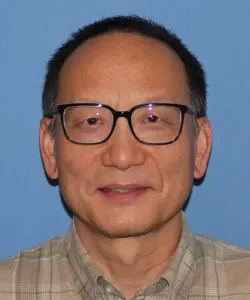
Diego Fernandez Prado is a Researcher at the Chair of Media Technology, Technical University of Munich (TUM). He earned a B.Sc. in Physics from the University of Santiago de Compostela (2018) and an M.Sc. in Applied and Engineering Physics from TUM (2021). Since March 2021, he has pursued doctoral research in Robotics and Machine Intelligence. His research intersects Machine Learning , Computer Vision , and Teleoperation , with a focus on Reinforcement Learning for virtual fixture estimation Digital Twin environments Haptic data applications in bandwidth-limited systems Time-domain passivity control . Recent publications highlight his work in Robotics and Artificial Intelligence , particularly in teleoperation , virtual fixtures , and human-robot interaction . His articles analyze reinforcement learning integration, haptic codec optimization, and semantic segmentation for robotic tasks.
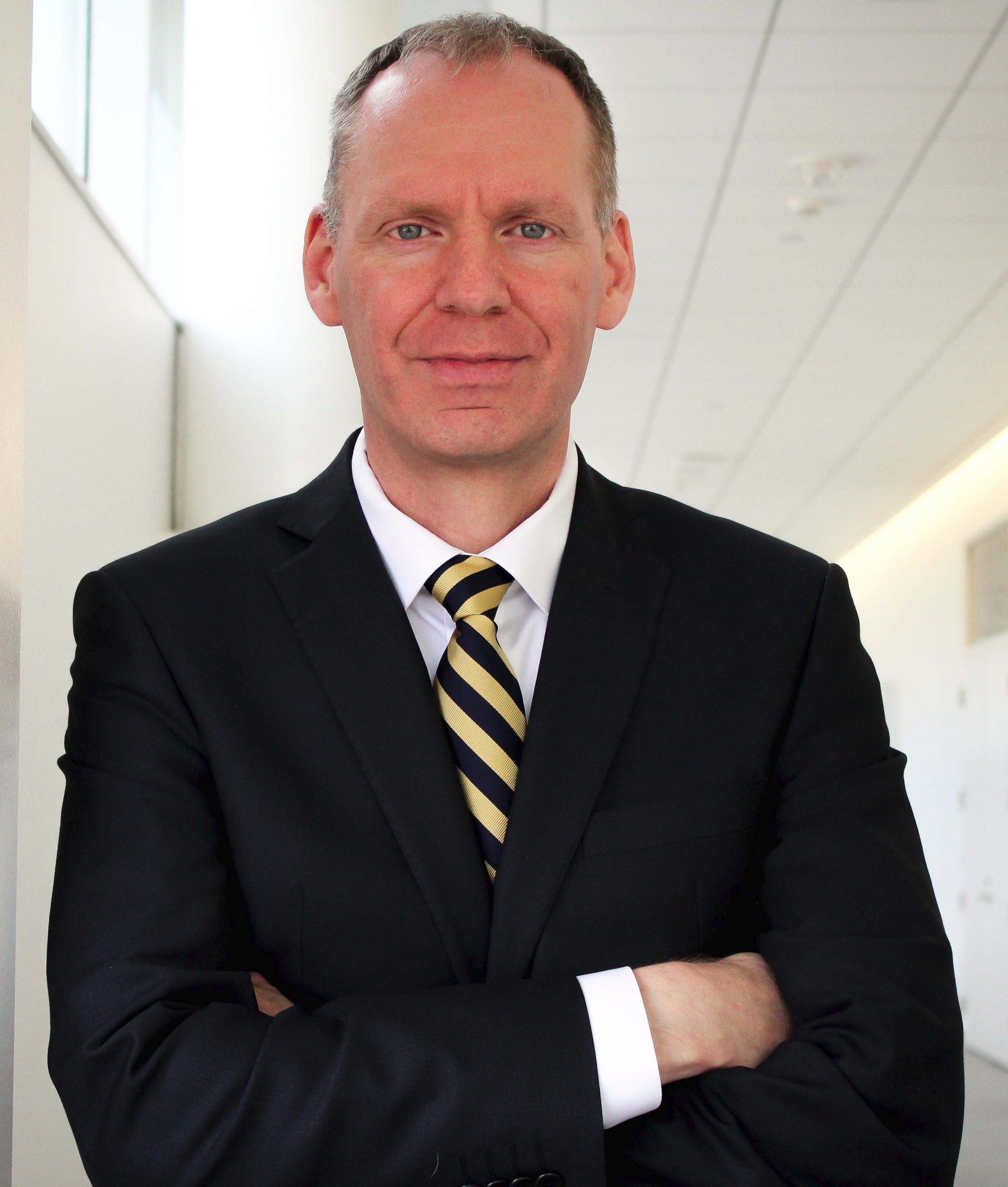
Joakim Jaldén is a Professor at the Division of Information Science and Engineering, School of Electrical Engineering and Computer Science (EECS), KTH Royal Institute of Technology. He holds a Ph.D. in Electrical Engineering from KTH (2007) and completed post-doctoral studies at Vienna University of Technology (2007-2009). With affiliations at Stanford University and ETH Zürich, his academic journey reflects global expertise. 2002: M.Sc. in Electrical Engineering, KTH 2007: Ph.D. in Electrical Engineering, KTH 2007-2009: Post-Doctoral Researcher, Vienna University of Technology Jaldén's research spans Signal Processing , Wireless Communications , and Biomedical Data Analysis . He pioneered MIMO communications and later developed ELISpot/FluoroSpot analysis algorithms commercialized by Mabtech AB. His work on cell migration tracking (IEEE ISBI 2012) and distributed optimization (ECO-PANDA method) demonstrates interdisciplinary impact. Key publication trends include Hidden Markov Models for DNA sequencing, Reinforcement Learning in communication systems, and Low-Complexity Beamforming for MU-MIMO networks. His 2024 work on mmWave MIMO beam coherence showcases continued leadership in wireless channel modeling. Scientific recognition includes: IEEE Signal Processing Society 2006 Young Author Best Paper Award Ingvar Carlsson Career Award 2009 (Swedish Foundation for Strategic Research) IEEE ISBI 2012 Best Paper Award Bitplane Awards (2013-2015) for cell tracking challenges As Program Director of KTH's 5-year Electrical Engineering Degree Program (CELTE) since 2016 and Vice-Chair of EECS Faculty Board , Jaldén leads academic initiatives. His collaborations with industry (e.g., Mabtech AB) and roles as examiner for advanced courses in communication systems highlight his educational impact.
Kim Hammar is a postdoctoral researcher at KTH Royal Institute of Technology, with affiliations at the University of Melbourne (2025-2028) and Imperial College London. He works under Prof. Tansu Alpcan and Prof. Emil Lupu, focusing on the intersection of game theory, control theory, and large-scale systems for networking and security applications. Previously, he completed his Ph.D. at KTH under Prof. Rolf Stadler and Prof. Pontus Johnson. His research spans cybersecurity, networked systems, and adaptive control mechanisms. Key contributions include applying optimal stopping reinforcement learning conjectural online learning causal modeling to intrusion response and network security. His 2025-2024 publications highlight advancements in automated security through game-theoretic and control-theoretic approaches, with a focus on dynamic environments. Kim received the VR International Postdoctoral Fellowship in 2025. He has served as an assistant for Computer Networks (EP111U) Computer Systems (EP121U) at KTH.
Peter Bach Andersen serves as Head of Section and Senior Researcher at the Department of Wind and Energy Systems, Technical University of Denmark (DTU). Based at Elektrovej 329A in Kgs. Lyngby, he leads research in electric vehicle integration and prosumer energy systems with an ORCID identifier 0000-0002-5202-3584. His work spans grid services, battery storage, and smart charging infrastructure within DTU's EV Lab ( www.evlab.dk ). Andersen's research focuses on electric vehicle grid integration , specializing in charging infrastructure planning, battery energy storage systems, and virtual power plant concepts. His fingerprint analysis reveals dominant expertise in Electric Vehicle Engineering (100%), Battery Engineering (13%), Ancillaries (12%), and Power Engineering (11%). Current projects emphasize flexibility quantification, grid service delivery through EV clusters, and Nordic grid characteristics. His work contributes significantly to UN Sustainable Development Goals related to clean energy and sustainable cities. His publication portfolio shows strong trends toward grid-interactive EV systems with recent emphasis on conditional connection agreements, fast-charging urban impacts, and data-driven battery health prognosis. The research demonstrates increasing focus on practical implementation challenges and market integration aspects of vehicle-grid systems. Andersen actively supervises four PhD students (Menchaca, Striani, Unterluggauer, Sevdari) across projects including charging infrastructure planning, EV clustering methods, and urban charging infrastructure impacts. He leads the FLOW project (2022-2026) investigating flexible energy systems for optimal EV integration while participating in multiple EU-funded initiatives. His research group maintains strong industry connections through DTU's EV Lab, focusing on real-world validation of grid services using commercial EVs and chargers.
Anastasios Zafeiropoulos serves as Assistant Professor at Harokopio University of Athens, specializing in Spatial Data Management and Analysis within the Postgraduate Studies Program for “Applied Geography and Spatial Management” (Direction C: Geoinformatics). His academic role encompasses teaching “Spatial Databases” and advancing research at the intersection of geospatial technologies and distributed computing systems. His research program focuses on Spatial Databases, Internet of Things (IoT), Cloud/Edge Computing, and 6G Network Orchestration, with significant extensions into Knowledge Graph applications for Sustainable Development Goals (SDGs) and socio-emotional learning in education. Key innovations include the EduCardia methodology for student competency assessment and frameworks for climate vulnerability analysis using knowledge graphs. Analysis of his 2024-2025 publications reveals three dominant thrusts: (1) AI-driven orchestration of 6G services across the computing continuum using reinforcement learning; (2) Knowledge Graph applications for SDG interlinkage analysis and materials science; (3) EU-funded IoT/Edge Computing project ecosystems. His work consistently bridges theoretical networking concepts with practical sustainability and educational applications. Dr. Zafeiropoulos actively contributes to EU-funded initiatives in IoT and Edge Computing standardization, particularly through AIOTI WG Standardisation. His project portfolio includes NEPHELE multi-cloud ecosystem development and O-RAN slice admission control research, demonstrating strong industry-academia collaboration in next-generation networking. He leads the development of innovative tools including Palindrome.js for distributed system visualization and the EmoSocio open-access emotional intelligence model, reflecting his commitment to translating research into practical educational and environmental solutions.
Jinming Zhang is a Professor at the University of Illinois at Urbana-Champaign , affiliated with the College of Education and the Educational Psychology department. He also holds appointments in Statistics and the Center for East Asian and Pacific Studies . His research focuses on advanced statistical methodologies for educational and psychological measurement. Research Interests: Dr. Zhang specializes in multidimensional item response theory (MIRT) , dimensionality assessment , large-scale assessments , generalizability theory , and test security . His work addresses critical challenges in psychometric modeling, including bias correction, item compromise detection, and standards alignment for English Language Learners (ELL). Notable Contributions: He developed the DETECT procedure for dimensionality analysis and pioneered real-time item monitoring systems for computerized adaptive testing (CAT) security. His empirical studies span applications to the National Assessment of Educational Progress (NAEP) and Law School Admission Test (LSAT) analysis.
Abhinav Verma is an Assistant Professor in Computer Science and Engineering, focusing on reinforcement learning, neural networks, and formal verification of control systems. His research bridges machine learning, program synthesis, and theoretical computer science to ensure interpretable and verifiable AI. Research Interests : Reinforcement learning, neurosymbolic AI, policy synthesis, formal guarantees in control systems. Key Contributions : Developed frameworks combining neural networks with formal methods for verifiable sequential decision-making, contributed to explainable AI through programmatic policy learning. Article Trends : Recent work emphasizes temporal logic constraints, counterfactual experience replay, and reduced-variance reinforcement learning. His publications highlight compositional approaches, differentiable programs, and neurosymbolic integration. Collaborations : Collaborates with institutions and researchers in computer science, with a focus on stochastic systems and interpretable machine learning.
Rainer J. Hebert is a Professor in the Department of Materials Science and Engineering at the University of Connecticut, serving as Director of the Pratt and Whitney Additive Manufacturing Center and Associate Director of the Institute of Materials Science. His research focuses on advancing additive manufacturing technologies with particular emphasis on materials development and process optimization for industrial applications. Education Ph.D., University of Wisconsin-Madison, 2003 Postdoctoral Fellow, University of Wisconsin-Madison, 2003-2005 Post Doctoral Fellow, Research Center Karlsruhe, Germany (now Karlsruhe Institute of Technology), 2003-2005 Research Interests Professor Hebert's research spans multiple areas within materials science and additive manufacturing. His primary focus is on developing new alloys specifically designed for additive manufacturing processes, with particular attention to how microstructures form during rapid solidification and laser processing. He investigates powder characteristics and their effects on the final manufactured products, aiming to improve quality and performance. His work on quasicrystal-reinforced aluminum alloys has shown promising results for high-performance applications, and he has made significant contributions to understanding the fundamental mechanisms of laser powder bed fusion. Hebert's research bridges fundamental materials science with practical industrial applications, particularly in aerospace and high-temperature environments. Publication Trends Analysis of Professor Hebert's recent publications reveals a strong focus on advancing additive manufacturing technologies, particularly laser powder bed fusion. His work spans from fundamental materials science (microstructure formation, phase transformations) to practical applications (alloy design, process optimization). A notable trend is the increasing integration of computational methods with experimental work to predict and optimize material behavior. His research shows a progression from basic microstructure characterization to more complex systems involving multi-material interactions, intelligent manufacturing systems, and the development of specialized alloys resistant to cracking and other defects. The consistent theme across his publications is improving the reliability and performance of additively manufactured components for demanding applications. Awards Materials Science and Engineering Program Teaching Award, 2010-2011 Advising and Grants As Director of the Pratt and Whitney Additive Manufacturing Center, Professor Hebert oversees significant research initiatives funded by both government agencies and industry partners, particularly in aerospace applications. His leadership in the Institute of Materials Science provides opportunities for student research and collaboration across multiple disciplines. His extensive publication record suggests active mentorship of graduate students in materials science and engineering. His research program likely involves multiple PhD and Master's students working on various aspects of additive manufacturing, from fundamental materials science to process development. Laboratories and Teams Professor Hebert directs the Pratt and Whitney Additive Manufacturing Center at UConn, which serves as a hub for collaborative research between academia and industry. The center focuses on advancing metal additive manufacturing technologies, particularly for aerospace applications. He also plays a key leadership role in the Institute of Materials Science, one of UConn's premier research centers. His research teams likely include graduate students, postdoctoral researchers, and industry collaborators working on projects related to powder characterization, laser processing, microstructure analysis, and alloy development. The collaborative nature of his work is evident from the multi-institutional authorship on many of his publications.
Laxmidhar Behera is a Professor in the Department of Electrical Engineering at the Indian Institute of Technology Kanpur, specializing in Intelligent Systems and Control. With over two decades of academic experience at IIT Kanpur and international research experience at institutions including Fraunhofer Institute of Autonomous Intelligent Systems in Germany, ETH Zurich, and University of Ulster, he has established himself as a leading researcher in cognitive robotics and intelligent control systems. Dr. Behera's research spans multiple cutting-edge domains including Cognitive Robotics, Nano-robotics, Vision based Control, Soft Computing, Information Retrieval in music and language, Semantic Information Processing, Physics of Complex Systems, Cyber Physical Systems, Formation Control of UAVs, Brain-Computer Interface (BCI), and Sanskrit Computational Linguistics. His interdisciplinary approach bridges traditional control theory with modern computational intelligence techniques, creating innovative solutions for complex real-world problems. His extensive publication record in top-tier journals like IEEE Transactions demonstrates his leadership in areas such as brain-computer interfaces, visual servoing, multi-robot systems, and music information retrieval. Notably, his work on quantum neural networks for EEG filtering and multisatellite formation control has received significant attention in the research community. UKIERI Standard Research Award 2008 Best Paper at International Conf. on Intelligent Sensors and Information Processing (ICISIP-2004) Best Paper at WoSco,02, Int. Conf. High-Performance Computing (HiPC, 2002) AICTE career award for young teacher (1997) Senior Member IEEE Multiple IEEE top accessed articles (2009-2010) As an Associate Editor for Autosoft Journal and Technical Committee Member for Intelligent Control at IEEE Control System Society, Dr. Behera actively contributes to the academic community. His laboratory in the Western Lab - 212A of the Department of Electrical Engineering serves as a hub for research in intelligent systems, where he mentors students and collaborates with researchers worldwide on cutting-edge projects in robotics, control systems, and computational intelligence.
Dr. Carrie Weidner is a Senior Lecturer at the University of Bristol, affiliated with both the School of Physics and the School of Electrical, Electronic and Mechanical Engineering. Her research spans quantum control, atom interferometry, and quantum technology education, with a focus on robust control techniques in optical lattices and spin networks. Principal Investigator for Quantum Positioning, Navigation, and Timing Hub (2024-2029) Lead on EPSRC-funded project EP/Y004728/1 for trapped ultracold atom interferometry (2023-2025) Her recent work includes energy landscape shaping for quantum systems, deterministic generation of squeezed states, and innovative educational tools like the Quantum Composer. Publications analyze robustness metrics, control algorithms, and quantum-classical system comparisons. Collaborations span international institutions in quantum physics and engineering domains. She contributes to quantum outreach through gamification and interactive platforms, targeting improved education and community inclusivity. Current research trends emphasize precision measurement, error mitigation, and AI integration in quantum control systems.
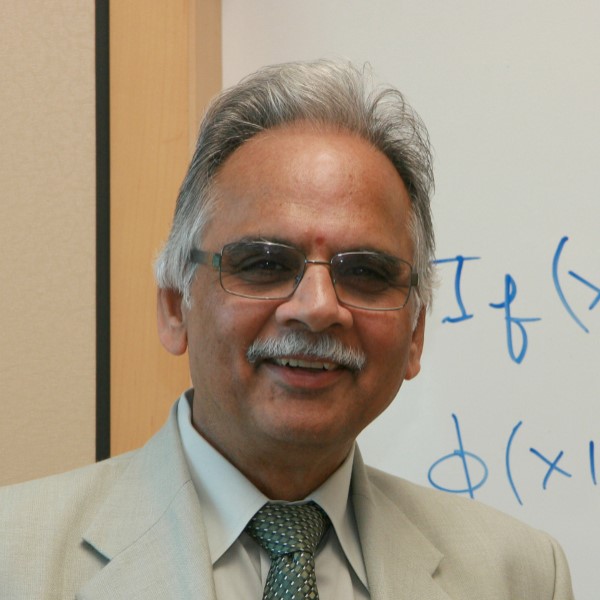
Mathukumalli Vidyasagar is a Distinguished Professor at the Indian Institute of Technology Hyderabad and previously held the SERB National Science Chair and Cecil & Ida Green Chair in Systems Biology Science at the University of Texas at Dallas. He earned his Ph.D. from the University of Wisconsin, Madison, and has authored 13 books and over 160 peer-reviewed papers.
Michale Fee is the Glen V. and Phyllis F. Dorflinger Professor of Neuroscience at the Massachusetts Institute of Technology (MIT) , where he serves as Department Head of Brain and Cognitive Sciences and Investigator at the McGovern Institute for Brain Research . His research focuses on understanding how the brain generates and learns complex sequential behaviors using songbirds as a model system. Education: B.E. in Engineering Physics, University of Michigan (1985) Ph.D. in Applied Physics, Stanford University (1992) Research Interests: Fee’s work combines advanced electrophysiological techniques , optical imaging , and computational modeling to study neuronal circuits underlying sequence learning and motor control in songbirds. His lab investigates how neural circuits support vocal learning, temporal coordination, and behavioral adaptation. Scientific Awards: MIT Fundamental Science Investigator Award (2017) MIT School of Science Teaching Prize (2016) BCS Award for Excellence in Teaching (2015) Lawrence Katz Prize (2012) Dart Scholar (2003) Advising and Grants: Fee has mentored numerous PhD students , Masters students , and postdoctoral researchers . He leads the Fee Laboratory at MIT, which develops innovative neurotechnologies and contributes to global neuroscience collaborations , including the Simons Collaboration on the Global Brain.
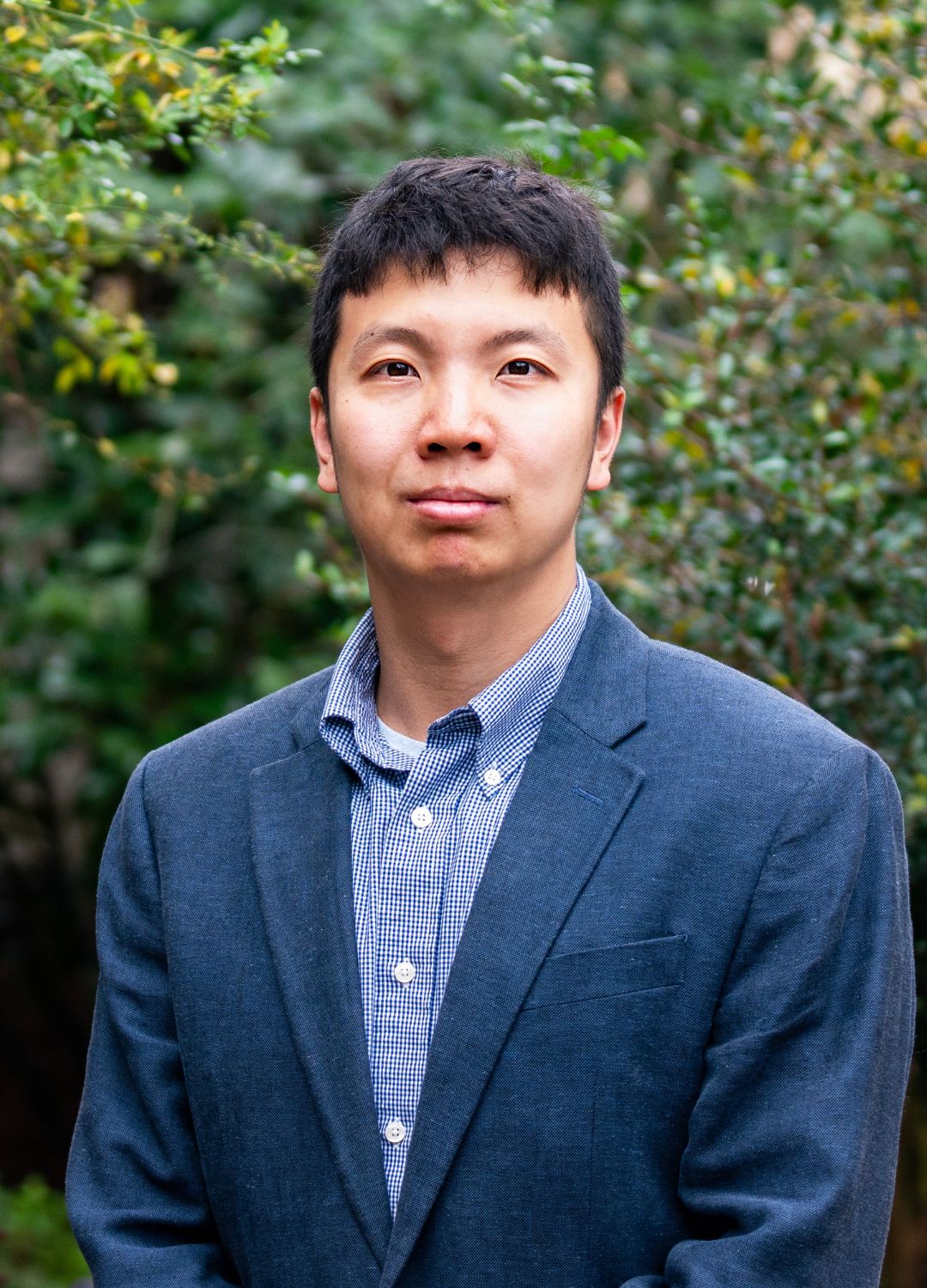
Kaiming Bi, Ph.D., is an Assistant Professor in the Department of Management, Policy & Community Health at the University of Texas Health Science Center at Houston (UTHealth Houston) School of Public Health . As an affiliated member of the Center for Health Care Data , his research bridges quantitative methods and public health, focusing on infectious disease modeling , epidemic forecasting , and data-driven health policy . B.S. in Mathematics from Northeastern University (2015) Ph.D. in Industrial Engineering from Kansas State University (2020) Postdoctoral training at University of California San Diego School of Medicine (2020-2021) and University of Texas at Austin (2021-2024) His methodological expertise spans mathematical modeling , machine learning , and optimization , applied to diverse public health challenges including respiratory infections , vector-borne diseases , STIs , and the opioid epidemic . Recent work includes modeling SARS-CoV-2 Omicron subvariants , population immunity dynamics , and multi-pathogen burden projections for the 2023-2024 US winter season. Dr. Bi has received prestigious accolades such as the Pencis Best Researcher Award (2021) and IISE Best Paper (2018). He previously taught graduate courses in Integer Programming , Information Systems , and Industrial Simulation at Kansas State University. Currently leading the Big-data and Infectious Disease Modeling Lab (BI Lab) , he seeks STEM-motivated PhD students to develop computational solutions for epidemic control.
Dr. He Xu is a Visiting Professor in the Department of Engineering Science at the University of Oxford, with a focus on Biomaterials , Tissue Engineering , and Biomechanics . She previously worked at Shanghai Normal University, rising from lecturer (2014) to associate professor (2018) and full professor (2024). Education: BEng in Materials Science and Engineering (China University of Geosciences), DPhil in Biomedical Engineering (Shanghai Jiao Tong University, 2014) Her research explores: Biomaterials : Smart hydrogels, piezoelectric systems, and nanogenerators for therapeutic applications. Tissue Engineering : Innovations in intervertebral disc and tendon regeneration. Drug Delivery : Targeted activation, nitric oxide therapy, and bioelectronic systems. Her publications span 2021–2025 , combining Biomaterials , Nanotechnology , and Medical Imaging to address challenges in Diabetes , Cancer , and Cardiovascular Disease . Key collaborations include the 3DMed Interreg 2 Seas Consortium and work on rapid Covid-19 testing .
Massi Pontil is a part-time Professor of Computational Statistics & Machine Learning in the Department of Computer Science at University College London (UCL). He joined UCL as a lecturer in 2003 and was promoted to Professor in 2010. Since 2016, his primary appointment has been at the Istituto Italiano di Tecnologia (IIT), where he leads the CSML research group. His work bridges theoretical machine learning with practical applications in physical sciences. His research interests span a wide range of topics in machine learning theory and algorithms: Machine Learning Theory and Statistical Learning Algorithmic Fairness and Ethical AI Kernel Methods and Reproducing Kernel Hilbert Spaces Transfer Learning, Multitask Learning, and Meta-Learning Operator Learning and Dynamical Systems Sparsity Regularization and Optimization Pontil's recent work focuses on the intersection of machine learning with numerical simulations of physical systems, particularly in molecular dynamics and climate science. His publications demonstrate a strong emphasis on theoretical foundations while addressing practical challenges in high-dimensional systems, symmetry-aware learning, and uncertainty quantification. Among his notable honors are: Best Paper Runner Up Award from ICML 2013 EPSRC Advanced Research Fellowship (2006-2011) Edoardo R. Caianiello Award for the Best Italian PhD Thesis on Connectionism (2002) Professor Pontil has served on program committees for major machine learning conferences (COLT, ICML, NeurIPS) and on editorial boards of prestigious journals including Machine Learning Journal, Statistics and Computing, and JMLR. He teaches Advanced Topics in Machine Learning at UCL, with a focus on convex optimization and statistical learning theory.