
Barbara Kaltenbacher is a Professor at the Institute of Mathematics, University of Klagenfurt. She serves as Deputy Head of the Institute and is actively involved in academic governance through roles in curricular commissions for Information Technology and Mathematics. Her research focuses on nonlinear acoustics , inverse problems , and partial differential equations , particularly in modeling wave propagation and parameter identification. Her work spans theoretical and applied domains, including Acoustic nonlinearity parameter tomography Fractional regularization techniques Optimization of imaging and ultrasound models Well-posedness of nonlinear PDEs Her recent publications address advanced mathematical challenges in nonlinear acoustics and inverse problems, with applications in medical imaging and materials science. She contributes to academic leadership through committee memberships and maintains active research collaborations across disciplines.
جستوجوی استاد و پژوهشگر
استاد راهنما، استاد دانشگاه یا پژوهشگر مناسب برای مسیر پژوهشیتان را پیدا کنید و با او ارتباط بگیرید.
نمایش ۷۰۶-۷۲۰ از ۱۱٬۶۰۶ استاد راهنما
اطلاعات این پروفایلها از صفحات عمومی دانشگاهها جمعآوری شده و ممکن است بهروز نباشد.
- Jazz Studies
- Popular Music History
- Music Sociology
- +۴ مورد دیگر
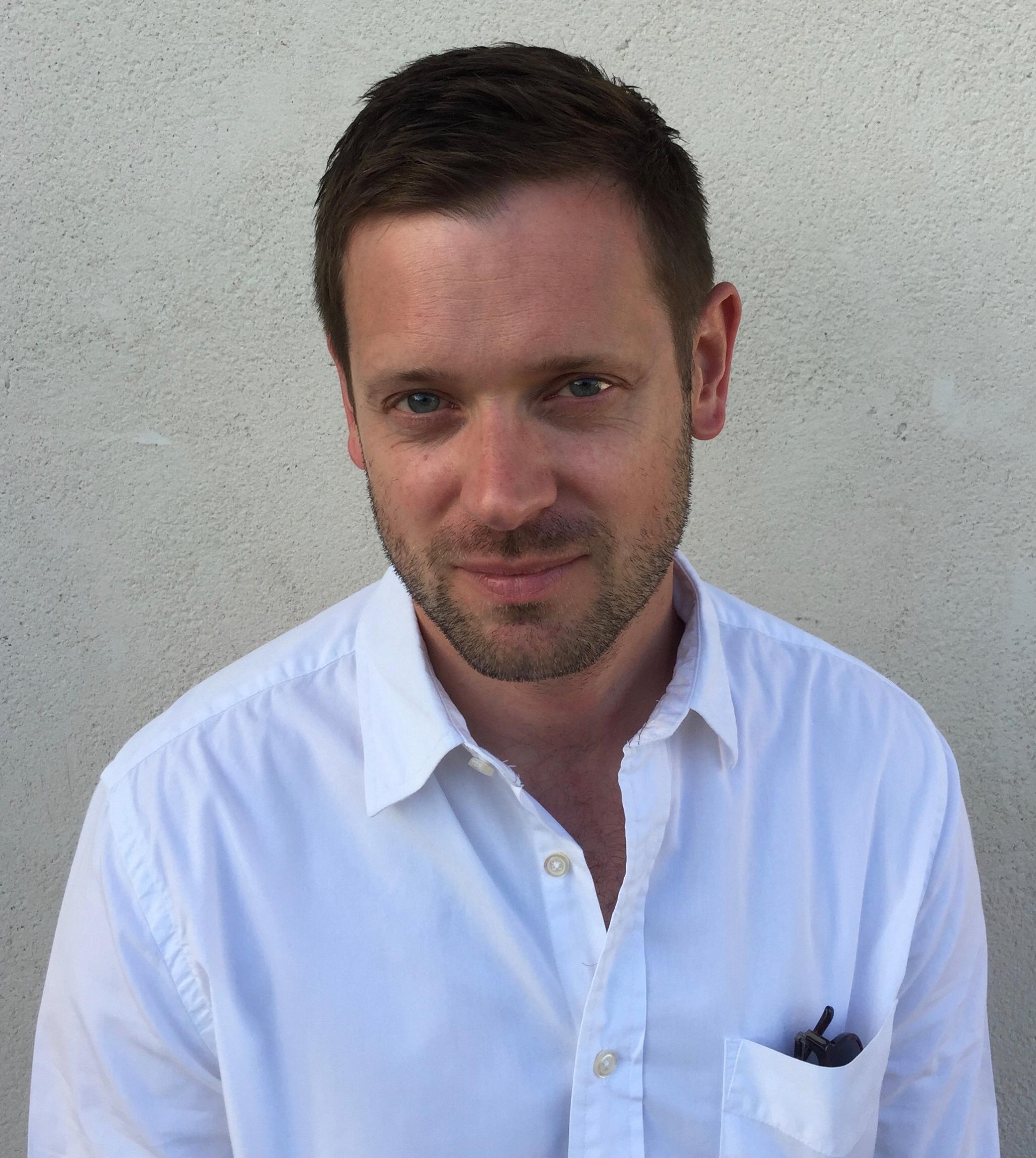
Tom Perchard is a Professor of Music and Head of the Department of Music at Goldsmiths, University of London. He specializes in jazz and popular music history, with a focus on cultural and social contexts, postwar domestic audio practices, and interdisciplinary musicology. His research examines the intersection of music with technology, politics, and identity. Education: PhD in Music (2002–2005), funded by AHRB/C Research Interests: Professor Perchard explores how music shapes and is shaped by cultural movements, domestic environments, and historical narratives. Key themes include: Jazz’s role in 20th-century French cultural politics Technological impacts on listening practices in postwar Britain Interdisciplinary approaches to music historiography Racialized theories in music scholarship Grants & Awards: Leverhulme Trust Major Research Fellowship (2020–2023) for studying popular music in mid-20th-century British homes AHRC Early Career Fellowship (2015) for research on jazz in mid-20th-century France Professional Activities: Editorial Board member of Jazz Research Journal , regular referee for Popular Music , and contributor to The Wire (2001–2007). He has also advised BBC projects like Rock ‘n’ Roll Guns for Hire and Jazz Now . Labs/Teams: Leads research on domestic music experiences and collaborates with international institutions on cultural history projects.
- Electromagnetics
- Numerical Analysis
- Optimization
- +۳ مورد دیگر
Prof. Dr. Irwin Yousept is a Full Professor of Mathematics at Universität Duisburg-Essen, leading the research group AG Optimal Control of Partial Differential Equations. His work focuses on the mathematical analysis and numerical solutions of electromagnetic problems, particularly in superconductivity and inverse problems. He holds a PhD from TU Berlin (2008) and has held academic positions at TU Darmstadt and TU Berlin. His research includes PDE-constrained optimization, numerical analysis, and applications in high-temperature superconductivity and electromagnetic shielding. Affiliations: Universität Duisburg-Essen, Fakultät für Mathematik Education: Diplom (2005), PhD (2008) in Mathematics from TU Berlin Research interests span Maxwell's equations, numerical methods for PDEs, and optimal control, with applications in superconductivity, electromagnetic shielding, and induction heating. He has authored over 40 publications and received awards including the Richard-von-Mises-Preis GAMM (2014). Current grants include DFG-funded projects on inverse problems and superconductivity.
- Military History
- Nordic History
- Finnish History
- +۷ مورد دیگر
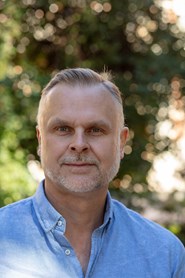
Martin Hårdstedt is Professor of History at Umeå University's Department of Historical, Philosophical and Religious Studies, specializing in Nordic military and political history with particular focus on Finland. He serves as Head of Advanced Level (Master's) and maintains strong connections with Åbo Akademi University in Finland. His research spans military, social and political history from the 18th century through the Napoleonic era to World War II, with special expertise in the Finnish War 1808-09 and Norwegian collaboration during WWII. Current projects include analyzing Nordic behavior during the Crimean War (1854-56) and preparing a 2026 book on Trondheim collaboration 1940-45. Hårdstedt's publications reveal consistent thematic focus on war as a human phenomenon and civil-military interactions. His work shows increasing emphasis on contemporary relevance, particularly drawing parallels between historical Nordic conflicts and modern Ukrainian-Russia dynamics. Recent scholarship demonstrates methodological evolution from traditional military history toward interdisciplinary approaches incorporating social history and geopolitical analysis. Clio Prize (2009) for 'The Finnish War 1808-1809' Regular contributor to Nordic bilateral leadership programs (Sweden-Finland, Sweden-Latvia, Sweden-Lithuania) Co-founder of Militärhistoriepodden (2019), reaching 150+ episodes by 2025 Hårdstedt actively supervises doctoral students and has taught at all academic levels since 1995. His public engagement includes lecturing for the Swedish Royal Family, media commentary, and collaboration with historical associations like Oravais Historical Association. He contributes significantly to historical popularization through radio, television, and major publications including 'Swedish Battlefields' (2003).
- Graphics
- Augmented Reality
- Game Design
- +۳ مورد دیگر
Craig Caldwell is a Professor in the Department of Film & Media Arts at the University of Utah and serves as a USTAR Professor. He is also an Adjunct Professor in the School of Computing (2011–2016). He co-founded the Master’s in Games Program within the Entertainment Arts & Engineering at the University of Utah. Caldwell has extensive industry experience, including roles as Head of Creative Training at Electronic Arts (Tiburon Studio) and 3D Technology Specialist at Walt Disney Feature Animation, contributing to films like Mulan , Tarzan , and Bolt . Academically, he previously led the largest film school in Australia at Griffith University and chaired the Media Arts Department at the University of Arizona. Research Interests: Focus on graphics, augmented reality, game design, virtual reality, and storytelling in media. His book, Story Structure and Development: A Guide for Animators, VFX Artists, Game Designers, and Virtual Reality (CRC Press), underscores his expertise in narrative frameworks for digital media. Presentations & Engagement: Regular presenter at global conferences including SIGGRAPH (2014–2023), FMX (2013–2024), Sundance, and Comic-Con. His work bridges academic research with industry applications in animation and interactive media. Education: BFA in Art, Florida Southern College, 1972 MFA in Art, University of Florida, 1974 PhD in Advanced Computing Center for Art and Design, Ohio State University, 1989 Labs/Teams: Co-founder of the Games Program, fostering interdisciplinary education in entertainment arts and engineering.
Prof. Karl Kunisch is the Scientific Director at RICAM (Johann Radon Institute for Computational and Applied Mathematics) and a Full Professor of Mathematics at the University of Graz, Austria. He has held academic positions worldwide, including visiting roles at Brown University, INRIA, and Technical University Berlin. His research focuses on Optimization and Optimal Control, Partial Differential Equations (PDEs), Inverse Problems, and their applications in mathematical imaging, medicine, and computational science. Education: 1975: Diploma Degree, Technical University of Graz, Austria 1975: Master Degree, Northwestern University, Evanston, Illinois, USA 1978: Ph.D. Degree, Technical University of Graz 1980: Habilitation, Technical University of Graz Research Interests: Prof. Kunisch’s work spans theoretical and applied aspects of optimal control, including stabilization of PDEs, infinite horizon control problems, and feedback design. He explores numerical methods for PDE-constrained optimization and their applications in medical imaging, cardiac electrophysiology, and machine learning. His projects also address shape optimization and mathematical models for fluid dynamics and quantum systems. Publications Trends: His recent articles emphasize feedback stabilization for nonlinear systems, sparse control approaches, and the intersection of optimal control with machine learning. Key themes include robust algorithms for uncertainty handling, efficient numerical methods for high-dimensional problems, and applications in biomedical engineering. Awards: Pro Scientia-Scholarship (1974–1977) Research Award of Theodor-Körner-Fonds (1979) Fulbright Travel Scholarship (1979/80, 1985) Max Kade Scholarship (1982–83) Japanese Society for the Promotion of Science Fellowship (1990) Christian Doppler Laboratory Fellowship (1992) Advising & Grants: Prof. Kunisch leads the Optimization and Optimal Control research group at RICAM and has directed projects on mathematical data science and inverse problems. His work involves collaborations with institutions globally and has been supported by grants from NASA, the European Union, and national funding bodies. He has advised numerous researchers, though specific student names are not listed here. Labs/Teams: Group Leader of the Group "Optimization and Optimal Control" at RICAM since 2004, contributing to interdisciplinary research in computational mathematics and its applications.
Karl Kunisch is a Professor at the Department of Mathematics and Scientific Computing at the University of Graz and serves as Scientific Director of the Radon Institute of the Austrian Academy of Sciences in Linz. With a distinguished career spanning several decades, he has established himself as a leading researcher in optimization and control theory. Prof. Kunisch completed his PhD and Habilitation at the Technical University of Graz in 1978 and 1980, respectively. His academic journey includes significant positions at Brown University's Lefschetz Center for Dynamical Systems, INRIA Rocquencourt, Universite Paris Dauphine, and he previously served as a professor of numerical mathematics at the Technical University of Berlin. Research Interests: Prof. Kunisch's research focuses on optimization and optimal control, inverse problems and mathematical imaging, numerical analysis and applications, with current emphasis on life sciences applications. His specific areas include Optimal Control of Partial Differential Equations, Nonsmooth Optimization in Function Spaces, and Applications of Optimization and Control in the Life Sciences. His work bridges theoretical mathematics with practical applications across various scientific domains. His recent publications demonstrate a continued focus on advancing the theoretical foundations of optimal control while developing practical numerical methods. Key trends include work on infinite horizon control problems, feedback stabilization techniques, applications to PDE-constrained optimization, and the integration of machine learning approaches with traditional control theory. His research group actively explores connections between theoretical developments and applications in the life sciences. Scientific Recognition: W.T. and Idalia Reid Prize 2021 SIAM Fellow (2017) European Research Council Advanced Grant (2015) Alwin Walther Medaille (2008) SIAM Outstanding Paper Prize (2006) Prof. Kunisch has made substantial contributions to the mathematical community through his editorial work, serving as editor for prestigious journals including SIAM Journal on Control and Optimization, SIAM Journal on Numerical Analysis, and the Journal of the European Mathematical Society. He leads the Research Group on Optimization and Optimal Control at the Johann Radon Institute for Computational and Applied Mathematics (RICAM) and is involved in the ERC-Project OCLOC "From Open to Closed Loop Control".
David Barrett is a Professor and Associate Chair for Education-Personnel & Curriculum at the Department of Mathematics , University of Michigan . His research focuses on complex analysis , projective duality , and function theory on complex domains . Education: Ph.D., University of Chicago (1982) Barrett's work explores the interplay between holomorphic function theory and geometric properties of complex hypersurfaces , particularly through the Leray transform and Bergman projection . He investigates projective duality and Levi-flat hypersurfaces , often collaborating with researchers like Luke Edholm and Dusty Grundmeier. His 15 most recent publications highlight advancements in complex geometry , harmonic analysis , and integral operator theory , with notable contributions to Bergman kernel behavior, holomorphic extension , and duality on complex domains . The work spans topics such as Fourier modes , conformal metrics , and topological properties of Levi-flat surfaces .
Zhou Zhouمشاهده پروفایل
مدرس ارشد
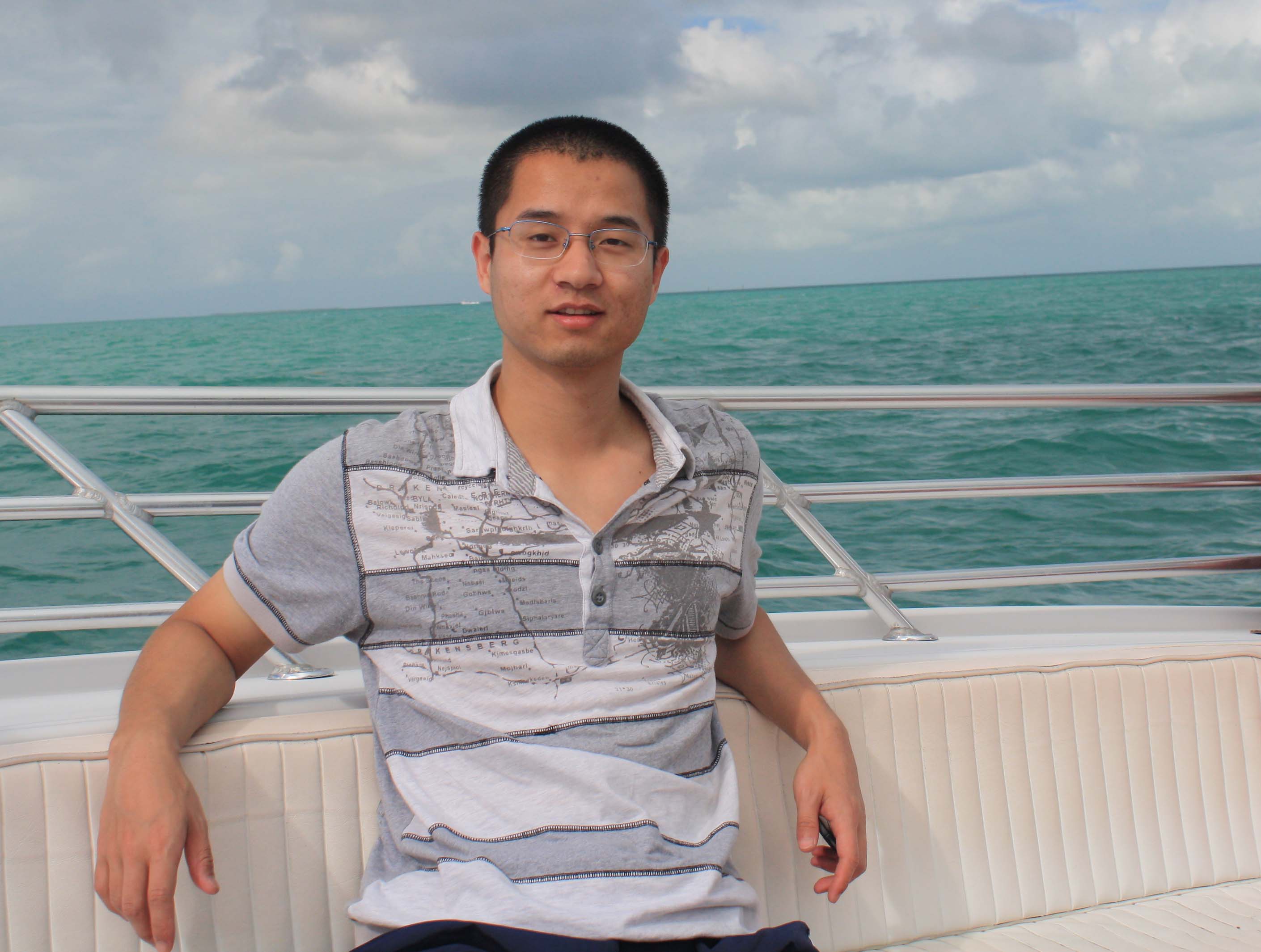
Zhou Zhou is a Senior Lecturer in the School of Mathematics and Statistics at the University of Sydney. His academic roles include Senior Lecturer (2022–present) and Lecturer (2018–2021) at the University of Sydney, as well as postdoctoral positions at the University of Michigan and University of Minnesota. He holds a Ph.D. in Applied & Interdisciplinary Mathematics from the University of Michigan (2015) and a B.S. in Mathematics from Nankai University (2010). His research focuses on stochastic control, mathematical finance, and game theory, with particular emphasis on time-inconsistent problems, optimal stopping, and equilibrium strategies. Key areas include applications in financial mathematics, stochastic processes, and dynamic optimization. His work has been published in journals such as Mathematical Finance, SIAM Journal on Control and Optimization, and Finance and Stochastics. Zhou has secured grants including the 2023 Faculty of Science Startup Scheme for time-inconsistent control research and the 2022 Australian Research Council grant on green investment impacts. He teaches courses like Arbitrage Pricing in Continuous Time and supervises research students in financial mathematics. His academic contributions span over 50 publications, with notable work on binomial-tree approximations for stopping problems, equilibrium strategies in mean-field games, and policy iteration for stochastic control. Presentations include talks at international conferences and universities worldwide, emphasizing interdisciplinary applications of stochastic analysis.
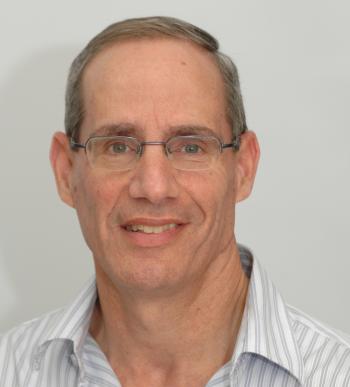
Noga Alon is a Professor of Mathematics at Princeton University, affiliated with the Mathematics Department. He is renowned for his contributions to Combinatorics, Graph Theory, and Theoretical Computer Science. His research emphasizes algebraic and probabilistic methods, with applications in circuit complexity and combinatorial geometry. Education & Affiliations Current position: Professor at Princeton University. Active in the Princeton Discrete Mathematics Seminar and has led conferences like the Noga60 Birthday Conference. Research Interests Focus areas include Combinatorics (e.g., Ramsey Theory, Graph Coloring), Theoretical Computer Science (e.g., Algorithms, Complexity), and probabilistic and algebraic methods in discrete mathematics. His work bridges combinatorial structures and algorithmic applications, with contributions to expander graphs, randomized algorithms, and extremal graph theory. Publications Over 300 papers, including foundational work on the probabilistic method, expander graphs, and combinatorial algorithms. Notable recent topics include graph coloring, path-finding algorithms (e.g., Color-coding), and spectral techniques for graph problems. Grants & Awards No specific grants or awards listed in available texts, though his academic stature implies prestigious recognition in combinatorics and computer science. Labs & Collaborations Involved in collaborative research through Princeton’s Mathematics Department and international conferences. Leads seminars and co-authors work with prominent researchers like M. Naor, J. Spencer, and others.
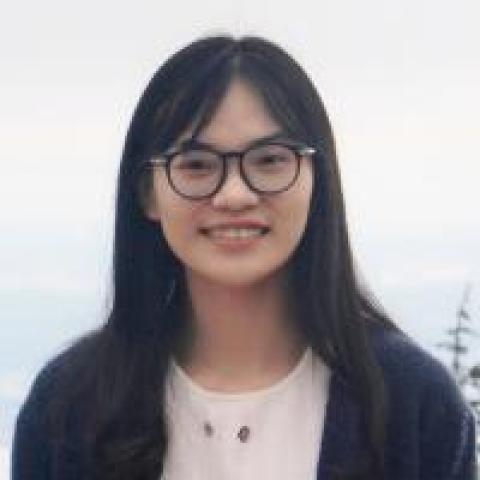
Shan Yuمشاهده پروفایل
استادیار
Shan Yu is an Assistant Professor in the Department of Statistics at the University of Virginia. His research focuses on developing statistical and machine learning methods for large-scale, complex data, with applications in neuroimaging, genomics, spatial epidemiology, and health disparities. He employs advanced techniques including non/semi-parametric regression, functional data analysis, and distributed learning while emphasizing data privacy. Yu received his Ph.D. in Statistics from Iowa State University (2020), advised by Professors Lily Wang and Dan Nettleton, following a B.S. from the University of Science and Technology of China. His work bridges statistical methodology and real-world problems, addressing challenges in environmental science (e.g., nitrogen dioxide inequalities), public health (e.g., pandemic forecasting), and computational biology (e.g., genotype-environment interactions). He collaborates on tools like the GgAM R package for generalized geoadditive models and contributes to open-source projects such as fFLM for functional linear regression. Key research trends include spatially varying coefficient models, fusion learning for heterogeneous data, and integration of satellite data with environmental health studies. His publications span journals in statistics, epidemiology, and environmental science, reflecting interdisciplinary impact.
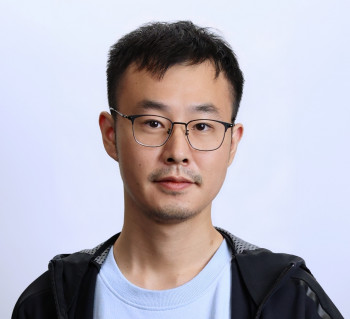
Dr. Ziquan Liu is a Lecturer (Teaching & Research) at Queen Mary University of London's School of Electronic Engineering and Computer Science, affiliated with the Centre for Multimodal AI. He holds a PhD from City University of Hong Kong (2023) and dual B.Sc./B.Eng. degrees from Beihang University (2017). His research focuses on trustworthy machine learning, adversarial robustness, and uncertainty quantification in foundation models. He has served as a reviewer for top conferences like NeurIPS, ICLR, and CVPR, earning an Outstanding Reviewer Award in 2021. His teaching includes modules on machine learning for visual data analysis and principles of machine learning. He supervises PhD students in AI safety and reliability, with notable work on conformal prediction, adversarial attacks, and multimodal learning. His research outputs span top venues such as ICML, CVPR, and NeurIPS, addressing challenges in algorithmic fairness, model certification, and cross-modal alignment.
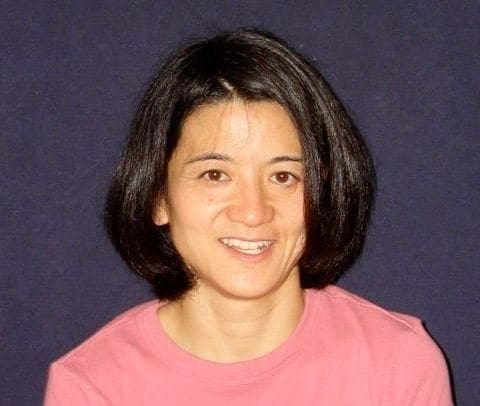
Chikako Mese is a Full Professor in the Department of Mathematics at Johns Hopkins University (JHU), part of the Krieger School of Arts & Sciences. She served as Department Chair (2008-2011) and Director of the Graduate Program (2014-2017, 2018-2019). Her research focuses on differential geometry and geometric analysis , with contributions to harmonic maps, Teichmüller theory, and CAT(k) spaces. She holds a PhD from Stanford University (1996), advised by Richard Schoen. Education: PhD in Mathematics, Stanford University, 1996 M.S., Stanford University, 1993 B.S. in Mathematics & Physics, University of Dayton, 1991 (Summa Cum Laude) Research Interests: Mese explores geometric structures in singular spaces, harmonic maps, and applications to Teichmüller theory. Her work bridges differential geometry with analysis of metric spaces, addressing questions of rigidity, regularity, and variational problems. Notable areas include CAT(k) spaces, minimal surfaces, and Higgs bundles in geometric group theory. Grants & Awards: Fellow of the American Mathematical Society (AMS) Simons Fellowship (2017-2018) Multiple NSF DMS grants (2003–2023) for geometric analysis research Woodrow Wilson Career Enhancement Fellowship (2001-2002) Advising & Mentoring: Mese has advised doctoral students including Benjamin Dees (current), Duncan Sinclair (2014), Jonathan Dahl (2010), and Patrick Zulkowski (2009). She mentors junior faculty and leads research groups in minimal submanifolds at workshops like the Women in Geometry series (Banff 2015, Oaxaca 2019). Labs/Teams: Collaborates with leading institutions globally (e.g., Brown University, CNRS, Tohoku University) on projects involving geometric rigidity, harmonic maps, and moduli spaces. Active in editorial roles, including Notices of the AMS.
Yang Shenمشاهده پروفایل
دانشیار
- Algorithms for modeling biological molecules
- Optimization and machine learning
- Systems and control
- +۵ مورد دیگر
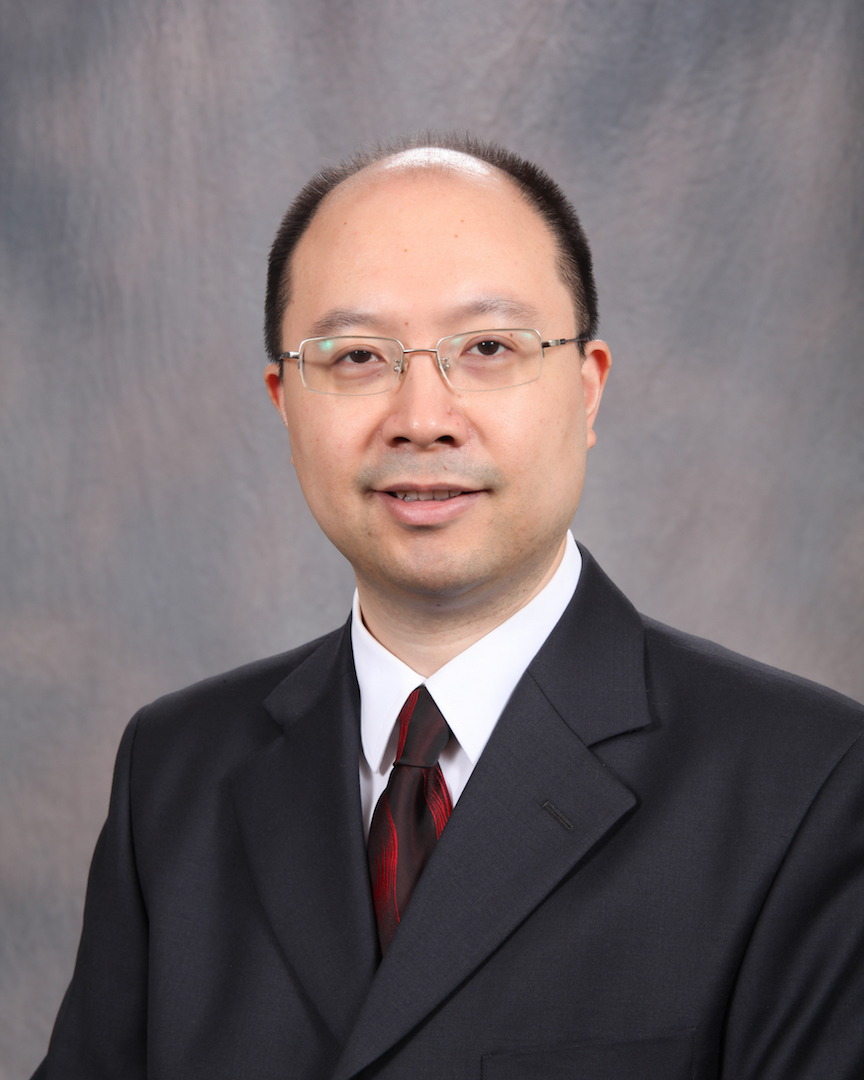
Yang Shen is an Associate Professor in the Department of Electrical and Computer Engineering at Texas A&M University, affiliated with the Department of Computer Science and Engineering and the Institute of Biosciences and Technology. He holds a B.E. in Automation from the University of Science and Technology of China (2002) and a Ph.D. in Systems Engineering from Boston University (2008). His research focuses on algorithms for modeling biological molecules, systems, and data, with applications in protein docking, drug design, systems biology, and omics. He has received prestigious awards such as the NSF CAREER Award (2020) and MIRA Award (2017). His work integrates machine learning, optimization, and graph theory to address challenges in computational biology. Notable contributions include generative AI for protein design, interpretable models for compound-protein affinity prediction, and Bayesian active learning for protein docking. Shen has advised numerous students, including Yuning You, Mostafa Karimi, and Arghamitra Talukder, who have received awards like the Chevron Scholarship and NSF Graduate Fellowships. His lab actively collaborates on projects in drug discovery, synthetic biology, and precision medicine. Shen has led funded projects totaling over $3.5 million from NIH and NSF, exploring topics like molecular mechanisms of cancer mutations and AI-driven drug design. He serves on editorial boards for journals like the Journal of Biological Systems and has organized workshops such as the International Workshop on Biomedical Informatics with Optimization and Machine Learning (BOOM). His research bridges computational methods and biological systems, advancing both theory and practical applications in healthcare and biotechnology.

Sharmistha Guhaمشاهده پروفایل
استادیار
Sharmistha Guha is an Assistant Professor in the Department of Statistics at Texas A&M University, part of the College of Arts & Sciences. Her research focuses on Bayesian methods for analyzing complex, high-dimensional data, with applications in neuroscience, network security, and social sciences. She develops techniques for supervised network data analysis, causal inference, and data privacy preservation. Education: Ph.D. in Statistical Science (Duke University, implied by dissertation recognition). Research Interests: Bayesian high-dimensional regression, object-oriented regression, causal inference in randomized trials, probabilistic record linkage, Bayesian nonparametric mixture models, and integration of heterogeneous data types like networks and functional data. Her work addresses challenges in neuroimaging (dMRI/fMRI) and big data analytics. Recent Contributions: Her articles span Bayesian methodologies for network analysis, differential privacy in treatment effect estimation, and applications in environmental health (e.g., PM2.5 exposure studies). Notable trends include leveraging Bayesian hierarchical models for complex data structures and advancing causal inference frameworks. Awards: 2022 Blackwell-Rosenbluth Award (ISBA) 2021 Savage Award Honorable Mention 2024 NSF-DMS Grant 2413721 Grants & Advising: Secured NSF funding for heterogeneous data integration research. Mentored students like Jose Rodriguez-Acosta (NSF GRFP Fellow) and Jacob Pagel (NIH-funded CoSIBS participant). Lab/Team: Leads a research group integrating statistical method development with domain collaborations in neuroscience and network security. Active in organizing workshops and serving on panels to foster academic engagement.
فقط ۷۵۰ نتیجه اول نمایش داده میشود. برای رسیدن به نتایج دقیقتر، جستوجو را با فیلترها محدودتر کنید.