Prof. Tom M. Mitchell is a Professor of Earthquake Geology & Rock Physics at University College London, part of the Rock and Ice Physics Laboratory. His research focuses on experimental rock deformation, fault zone dynamics, and field geology, with applications to earthquake mechanics, geothermal systems, and lunar geology. Education: Ph.D. in Geology (2007), University of Liverpool B.Sc. (1st Class Honors) in Geology (2003), University of Liverpool Associate Fellow of the Higher Education Academy (2014) Research Interests: Experimental rock deformation under simulated geological conditions Field studies of fault zones and their seismic properties Integration of laboratory and field approaches to understand fault mechanics and fluid flow Lunar and planetary geology, including regolith analysis Geothermal energy and fluid migration in fractured systems Labs/Teams: Rock and Ice Physics Laboratory (UCL) SeismoLab Collaborations with international institutions including INGV (Rome), Brown University, and Hiroshima University Grants/Advising: Contributor to London NERC Doctoral Training Partnership programs Supervised numerous postdoctoral researchers and visiting scholars globally Active in interdisciplinary projects linking geophysics, structural geology, and planetary science
Steven Ruff is an Associate Research Professor in the School of Earth and Space Exploration at Arizona State University (ASU). His research focuses on planetary geology, specifically the mineralogy of Mars derived from thermal infrared spectroscopy. He investigates Mars' geologic history and potential for past habitability through fieldwork in Mars analog environments and laboratory analysis of samples. Ruff earned a B.S. in Geology from the University of Wisconsin, Madison (1985) and a Ph.D. in Geology from ASU (1998), with expertise in spectral data analysis from Mars missions. He has been involved in major Mars missions including the Mars Global Surveyor Thermal Emission Spectrometer and the Mars Exploration Rover's Mini-TES instrument. His work combines field studies in volcanic regions like Chile with lab-based spectral analysis to better interpret Martian data. Current research emphasizes hydrothermal systems, ignimbrite deposits, and hot spring sinters as markers for ancient habitability. Ruff's contributions include pioneering spectral techniques and advancing understanding of Martian dust and carbonate/olivine-rich bedrock. His lab and fieldwork provide critical insights for future Mars exploration and astrobiology.
Dr. Kevin Worrall is a Senior Lecturer in Robotics and Control at the University of Glasgow's School of Engineering, Aerospace Sciences division. He holds affiliations with both the Space Engineering and Technology group and the Centre for Medical and Industrial Ultrasonics. His academic journey includes a BEng in Electronics and Electrical Engineering from Glasgow (2003), an MSc in Robotics and Embedded Systems from the University of Essex (2004), and a PhD from Glasgow (2008) focusing on optimization algorithms for mobile robot guidance. Research interests span mechatronic systems for extreme environments (space, underground, Antarctica), precision medical applications, and agricultural robotics. His work integrates control theory, machine learning, and hardware development across: Spacecraft attitude control and satellite systems Ultrasonic drilling and granular material handling Medical ultrasound classification using ML Autonomous planetary exploration technologies Publications demonstrate strong focus on aerospace control systems (inverse simulation, attitude control), planetary drilling technologies, and medical imaging AI. Recent work shows increasing emphasis on machine learning applications in both space systems and healthcare diagnostics. Grant leadership includes: ERC: Interglacial Collapse of Ice Sheets (£339k, CoI) ESA: Drill for Extensive Exploration of Planetary Environments (£253k, CoI) UKSA: Roving with Rosalind (£30k, CoI) EC H2020: Robot for Underground Operations (£477k, CoI) Multiple PI-led industry collaborations in positioning systems and image testing Current PhD supervision covers fault-tolerant space algorithms, planetary rover navigation, spacecraft plume interactions, and infrastructure monitoring. He leads research within the Space Engineering and Medical Ultrasonics research groups.
Dr Euan W McGookin is a Senior Lecturer in Autonomous Systems & Connectivity at the University of Glasgow, based in the Aerospace Sciences division of the James Watt Building South. He coordinates Glasgow-delivered aerospace degree programmes in Singapore and serves on the IFAC Technical Committee on Marine Systems, underlining his sustained engagement with both local and international academic activities. Education: 1st Class Honours Master of Engineering in Avionics, University of Glasgow PhD in Optimisation of Sliding Mode Controllers for Marine Applications, University of Glasgow (1997) Research Interests Dr McGookin’s core expertise lies in the design, simulation, control and physical realisation of autonomous robotic systems. His work spans Autonomous Underwater Vehicles (AUVs) , Unmanned Aerial Vehicles (UAVs) , Planetary & Terrestrial Rovers , and Biomimetic Robotics . He is particularly recognised for applying biologically inspired principles to robotic locomotion, navigation and control. Complementary themes include advanced control methodologies—Sliding Mode Control, H-infinity, Inverse Model Control—optimisation heuristics, guidance & navigation, fault detection & isolation (FDI), and system health monitoring for both terrestrial and space applications. Publication Trends Across 80 publications from 1995 to 2025, his work has evolved from early genetic-algorithm-based controller optimisation for marine vessels to cutting-edge multi-rover mission planning and health monitoring for planetary exploration. Recent outputs (2022–2025) concentrate on micro-rover coordination, friction modelling for planetary soils, reinforcement-learning-driven sensor fusion, and robust health-monitoring architectures, reflecting a strategic pivot toward space robotics while retaining strong roots in control theory and autonomous systems. Scientific Awards & Fellowships Member, IFAC Technical Committee on Marine Systems Grant & Advising Narrative While specific grant values are not disclosed, his continuous funding stream is evidenced by sustained publication output, international conference leadership, and ongoing supervision of postgraduate projects. Dr McGookin advises a steady cohort of PhD and MSc students whose theses align with his research themes—ranging from rover fault diagnosis to biomimetic AUV coordination—thereby fostering the next generation of control and robotics engineers. Laboratory & Team Dr McGookin heads research activities within the James Watt Building South, leveraging interdisciplinary laboratories that integrate simulation suites, rapid-prototyping facilities for AUV and UAV subsystems, and dedicated test rigs for biomimetic propulsion and rover mobility studies. Collaborative networks extend across the University of Glasgow’s Aerospace Engineering group, Singapore Institute of Technology partners, and international consortia such as ESA and IFAC.
Benjamin Weiss is the Chair of the Program in Planetary Science and Robert R. Shrock Professor of Earth and Planetary Sciences at the Massachusetts Institute of Technology (MIT). He leads research in planetary magnetism and serves as Deputy Principal Investigator on NASA's Psyche mission, while also contributing as a Co-Investigator on the Mars Perseverance rover and Europa Clipper missions. Department of Earth, Atmospheric and Planetary Sciences MIT Planetary Magnetism Laboratory Director NASA Psyche Mission Deputy Principal Investigator Mars Perseverance Rover Co-Investigator Europa Clipper Mission Co-Investigator Weiss earned his bachelor's degree in physics from Amherst College before pursuing graduate studies in planetary science and geology at the California Institute of Technology, where he received his master's degree in 2001 and PhD in 2003. His doctoral dissertation on Martian meteorite ALH 84001 provided groundbreaking insights into ancient Martian climate and magnetic fields, demonstrating how meteorites could transfer materials from Mars to Earth without heat sterilization. As a specialist in magnetometry, Professor Weiss investigates the formation and evolution of planetary bodies through laboratory analysis, spacecraft observations, and fieldwork. His research spans nebular magnetic fields in the early solar system , planetesimal structures and dynamos , lunar magnetism and the early lunar dynamo , Hadean Earth and the origins of Earth's magnetic field , the Martian dynamo and changes in Mars' paleoclimate , and innovations in magnetic microscopy . The MIT Planetary Magnetism Laboratory, which he directs, develops high-sensitivity techniques to image magnetic fields in rock samples from meteorites, the lunar surface, and terrestrial sites. Analysis of Weiss's recent publications reveals a strong focus on Mars exploration through the Perseverance rover mission, lunar magnetism studies, and research on asteroid Psyche. His work increasingly integrates data from multiple NASA missions while advancing paleomagnetic techniques to understand planetary evolution and habitability throughout the solar system. Professor Weiss has received numerous prestigious honors including the James B. Macelwane Medal from the American Geophysical Union (2009), election as an AGU Fellow (2009), the Visiting Miller Professor Award from UC Berkeley (2014), and having Asteroid (8069) named 'Benweiss' by the International Astronomical Union (2012). Most recently, he was elected to the National Academy of Sciences (April 29, 2025). James B. Macelwane Medal, American Geophysical Union (2009) Fellow, American Geophysical Union (2009) Visiting Miller Professor Award, UC Berkeley (2014) Asteroid (8069) Benweiss named by IAU (2012) Elected to National Academy of Sciences (2025) As an academic leader, Weiss chairs MIT's Program in Planetary Science and mentors numerous graduate students in the Planetary Magnetism Laboratory. His research is supported by multiple NASA grants related to the Psyche mission, Mars exploration, and lunar science investigations. Weiss also contributes to international collaborations including missions with JAXA (Hayabusa 2), ESA (Rosetta), and SpaceIL (Beresheet). The MIT Planetary Magnetism Laboratory under Weiss's direction develops cutting-edge instrumentation for magnetic analysis, including the Quantum Diamond Microscope. His research team collaborates with scientists across multiple institutions and space agencies to analyze samples from meteorites, lunar missions, and Mars rovers, advancing our understanding of planetary formation and evolution.
Ross Friel is a Professor at Halmstad University's School of Information Technology, where he serves as Programme Manager for the Master's Programme in Electronics Design (TAELD) and is responsible examiner for courses DT4030, DT2019, and ET8012. His academic career includes previous positions as an Engineer at Lund University's MAX IV Laboratory (2016-2018) and as a Lecturer at Loughborough University (2012-2015). His educational background includes: PhD in Mechanical Engineering from Loughborough University (2006-2011) MSc in Engineering Design from Loughborough University (2005-2006) BEng (Hons) in Manufacturing Engineering and Management from Loughborough University (2001-2005) Ross Friel's research focuses on cutting-edge digital manufacturing processes, specifically in Additive and Hybrid Manufacturing techniques, material and surface optimizations, and applications in Space, electromagnetic components, and X-ray synchrotron uses. His practical interests include Industry 4.0 and 5.0 development, embedding electronics within components, developing mechatronic and fluidic systems, and creating scientific instrumentation based on in-situ monitoring and adaptation. His work explores advanced digital manufacturing to enhance engineering capabilities in electronics, composites, sensors, and devices through direct cyber-to-physical manufacturing processes for high-demand environments. Analysis of his recent publications reveals a strong focus on applying additive manufacturing to specialized fields including automotive radar technology, microfluidic devices for synchrotron applications, space resource utilization, and electromagnetic component design. His work demonstrates a consistent integration of manufacturing innovation with practical applications across multiple high-tech sectors. His notable scientific achievement includes being awarded Docent status in 2020, recognizing his significant contributions to research and academic development. Ross Friel has secured research funding for projects such as "AdaptoCell for MAX IV Laboratory Users," "Quantifying Sensor Surface Contamination for Safe Vehicle Automation (QonSense)," and "Millimeter-wave Graphene Enabled Wireless Communication." His teaching encompasses Mechatronic Construction with CAD, Introduction to Engineering Studies, Perspectives on Mechatronic Systems, Design of Mechatronic Systems, and Innovative Electronics Design, Construction and Production. He maintains active research collaborations with MAX IV Laboratory, a synchrotron radiation facility providing high-quality X-ray sources that support advanced scientific research across multiple disciplines.
Dr. Andrew Beck is an Associate Professor of Geology at Marietta College, appointed in 2019. He holds a BA in Philosophy from Albion College (2004) and a PhD in Geology from the University of Tennessee (2011). His roles include developing the Planetary Science major at Marietta and teaching courses in mineralogy, petrology, and field geology. He co-teaches a 5-week Yellowstone National Park field mapping course. Previous roles include Senior Staff Scientist at Johns Hopkins Applied Physics Laboratory (NASA missions) and Adjunct Professorships at multiple institutions. He is a key member of NASA/JAXA's MMX mission (launch 2024) and founded a geology consulting firm advising Fortune 500 companies. His research focuses on planetary materials, meteorites, and mission instrumentation, with 30+ peer-reviewed publications and an h-index of 16. Research interests: Planetary surface composition, meteorite analysis, planetary exploration technology Citations: 1,582 total, averaging 98/year Awards: GSA Pellas-Ryder Award, Meteoritical Society Nininger Medal His work bridges academia and industry, with contributions to space mission design and litigation consulting in mineralogy/petrology cases.
Thomas Orlando is a Regents' Professor in the School of Chemistry and Biochemistry at the Georgia Institute of Technology, where he leads the Orlando Research Group. His work focuses on electron- and photon-stimulated interface and surface processes with applications spanning planetary science, environmental chemistry, and biophysics. He maintains laboratory facilities in the Molecular Science and Engineering Building (MoSE G209C) and collaborates extensively with researchers across Georgia Tech and other institutions. His educational background includes a B.S. from Southampton College, a Ph.D. from State University of New York-Stony Brook, and postdoctoral work at Sandia National Labs and the Institut fur Physikalische Chemie. He was also a NATO Collaborative Research Fellow and Visiting Professor at CNR/University of Rome, La Sapienza from 1997-2000. Professor Orlando's research explores three primary areas: Electron- and Photon-stimulated Interface and Surface Processes, Environmental Chemistry and Planetary Surface Science, and Biophysical Chemistry. His group utilizes state-of-the-art ultra-high vacuum surface science systems with UV-laser sources and low-energy electron beams to study reactions on various substrates. They investigate water-related processes in terrestrial and planetary environments, DNA damage mechanisms, and develop new analytical techniques for mass spectrometry imaging. The group's work spans from fundamental molecular physics to applied areas relevant to atmospheric chemistry, catalysis, and human spaceflight. His recent publications reveal a strong focus on lunar and planetary surface chemistry, particularly water formation and detection on airless bodies like the Moon and Mercury. The research combines experimental surface science with theoretical modeling to understand radiation-induced processes, space weathering effects, and volatile formation mechanisms. Key themes include electron-stimulated desorption, photon-induced reactions, and the role of water in planetary environments. Fellow of the American Physical Society Fellow of the American Association for the Advancement of Science NIH Young Investigator Award (1998) NATO Collaborative Research Fellowship Associate Editor, Journal of Geophysical Research-Planets Professor Orlando has mentored numerous graduate students and postdoctoral researchers who have gone on to successful careers in academia and industry. His research has been supported by multiple grants from NASA, NSF, NIH, and other agencies focused on planetary science, radiation chemistry, and analytical instrumentation development. The Orlando Group maintains state-of-the-art facilities for ultra-high vacuum surface science, microplasma development, and advanced mass spectrometry. The Orlando Research Group operates within Georgia Tech's Electron- and Photon-Induced Chemistry on Surfaces (EPICS) laboratory, which features multiple ultrahigh vacuum systems equipped with electron and photon sources, mass spectrometers, and laser detection systems. The group collaborates with researchers at Argonne National Laboratory's Advanced Photon Source and maintains partnerships with planetary scientists studying data from missions to Mercury, the Moon, and outer solar system objects.
Dr. Michael Jones is a Senior Research Infrastructure Specialist in Synchrotron Science at Queensland University of Technology (QUT), working within the Faculty of Science, School of Chemistry & Physics. He is an expert in synchrotron-based X-ray techniques with extensive experience conducting experiments at major facilities worldwide, including the Australian Synchrotron. His work spans multiple disciplines from planetary science to materials characterization. Dr. Jones completed his PhD in nonlinear optics at QUT in 2010 under the supervision of A/Prof Esa Jaatinen. He subsequently held an ARC Super Science Fellowship at La Trobe University with Professors Andrew Peele and Leann Tilley in the ARC Centre of Excellence for Coherent X-ray Science, where he gained significant experience in Synchrotron Science. In 2014, he was appointed to the Australian Synchrotron, working as an Australian Synchrotron Fellow on the X-ray Fluorescence Microscopy beamline. In 2018, he joined QUT as a Research Infrastructure Specialist in Synchrotron Science. Dr. Jones's research focuses on advancing synchrotron-based X-ray techniques, particularly X-ray Fluorescence Microscopy, X-ray Ptychography, and X-ray Imaging. His work has significant applications in planetary science, particularly in analyzing Martian geology through NASA's Perseverance rover mission where he contributes to the Planetary Instrument for X-ray Lithochemistry (PIXL) team. He also applies these techniques to materials science, electrochemistry, and biomedical imaging. His interdisciplinary approach bridges physics, chemistry, geology, and engineering to solve complex scientific problems. Dr. Jones has made significant contributions to understanding Martian geology through the analysis of data from the Perseverance rover mission. His work on X-ray fluorescence and diffraction techniques has provided crucial insights into the mineralogy, geochemistry, and potential habitability of Jezero Crater on Mars. He has also advanced methodologies for X-ray beam characterization, sample preparation, and multimodal imaging that have broad applications across scientific disciplines. ARC Super Science Fellowship As an Associate Supervisor, Dr. Jones mentors PhD students in projects related to synchrotron-based techniques and materials characterization. His collaborative approach is evident in his extensive publication record, which includes numerous interdisciplinary projects with researchers from around the world. He is actively involved with the Centre for Materials Science at QUT and contributes to major research initiatives involving synchrotron radiation and planetary science. Dr. Jones works closely with the Planetary Instrument for X-ray Lithochemistry (PIXL) team on NASA's Perseverance rover mission, analyzing Martian geology. He also collaborates with researchers at the Australian Synchrotron and other international facilities to advance X-ray imaging techniques. His laboratory work focuses on developing novel methodologies for X-ray fluorescence microscopy and ptychography, with applications spanning planetary science, materials characterization, and biomedical imaging.
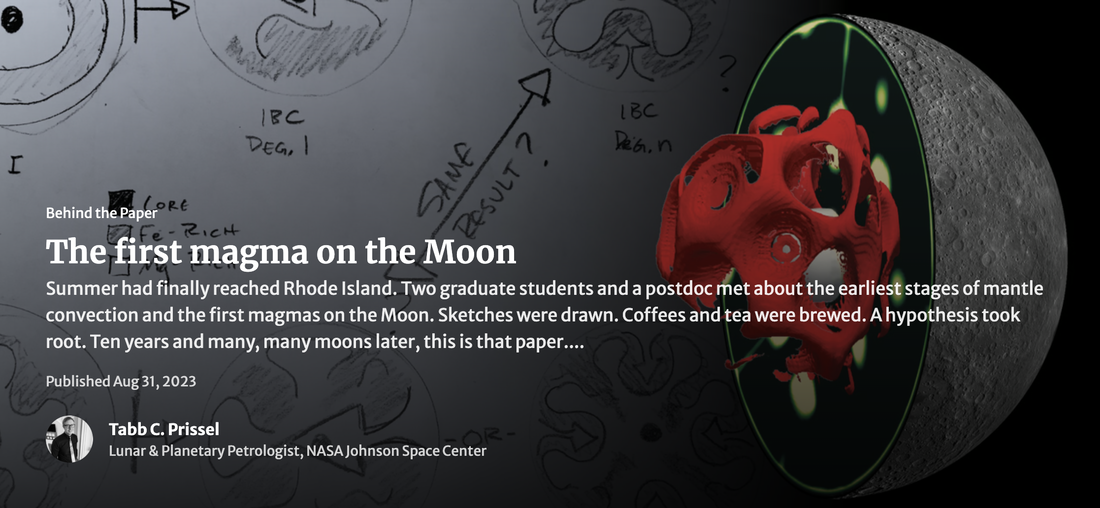
Dr. Tabb Prissel is an Assistant Professor in the Department of Earth, Atmospheric, and Planetary Sciences at Purdue University, part of the College of Science. Previously, he served as a NASA civil servant research scientist at the Johnson Space Center. His research integrates natural sample analysis, experimental petrology, and orbital data to study the igneous evolution of Earth, the Moon, and rocky planets. Key focus areas include planetary crust evolution, magma-rock interactions, and mission-driven science. Research interests: Evolution of planetary crusts, primary magmas, magma oceans, impact melt seas, and field studies. He emphasizes interdisciplinary approaches combining lab experiments with remote sensing data. Recent work includes studies on lunar Mg-suite magmatism, mantle overturn, and Artemis mission-related sample analysis. Publications highlight advancements in lunar petrogenesis, impact melt crystallization, and sample curation. His findings contribute to understanding early planetary differentiation and mission planning for lunar exploration.
Evgenia Salin is a Postdoctoral Researcher at the Department of Geology and Mineralogy, Faculty of Science and Engineering, Åbo Akademi University. Her research focuses on lunar geology, planetary materials, and Precambrian crustal evolution. She investigates impact processes, volcanic glass formation, and the interplay between Svecofennian crust and rapakivi granites in southern Finland. Key research areas include analyzing lunar glass beads from Apollo missions, studying regolith composition, and exploring Proterozoic geological systems in the Baltic Sea region. Collaborations involve institutions like Uppsala University and Université de Lausanne, with presentations at international conferences such as Goldschmidt 2023. Salin’s work spans petrology, geochemistry, and geochronology, with a focus on extraterrestrial materials and terrestrial crustal dynamics. Her recent studies include U-Pb dating of volcanic and impact glass beads, and textural analysis of lunar regolith beads. She has conducted fieldwork in Gotland and the Baltic Sea region, contributing to understanding Paleoproterozoic tectonic frameworks. Education background not explicitly stated in provided texts. Active in peer-review for journals like Bulletin of the Geological Society of Finland . Visiting researcher at Uppsala University (June 2023) and Université de Lausanne (July 2023).
Dr. Prateek Tripathi serves as a Postdoctoral Scholar in the Department of Physics at the University of Central Florida, specializing in planetary surface characterization through advanced spectroscopic techniques and lunar mission data analysis. His academic foundation includes: Bachelor of Engineering (Electronics and Communication) from ITM Gwalior, India (2016) Master of Technology (Remote Sensing and GIS) from Indian Institute of Remote Sensing, ISRO, India (2018) Ph.D. in Geomatics Engineering (Civil Engineering) from Indian Institute of Technology Roorkee (2023) Tripathi's research centers on planetary science and remote sensing , employing near-infrared, thermal, Raman spectroscopy, and hyperspectral imaging to analyze lunar surface composition. His work integrates data from Chandrayaan-1/2, LRO, PRISMA, DESIS, and Hyperion missions to map minerals and characterize physical properties of planetary surfaces. He conducts critical experiments on lunar samples at DLR's Planetary Spectroscopy Laboratory and field studies at terrestrial impact craters in India, establishing vital terrestrial analogs for lunar exploration. His publication portfolio reveals strong focus on lunar volcanism (particularly Gruithuisen domes), Artemis mission support through astronaut traverse planning, and spectral library development for Lunar-VISE. The research spans planetary geology, spectroscopy, and mission-critical exploration planning, with increasing emphasis on in-situ analysis techniques for future lunar missions. As an active contributor to the Lunar-VISE team at UCF, Tripathi collaborates with Dr. Donaldson Hanna and Dr. Dove laboratories, utilizing FTIR and ASD spectrometers to build spectral libraries for lunar materials. His work bridges laboratory analysis, field studies, and mission operations to advance understanding of lunar silicic volcanism and support NASA's Artemis program objectives.
Dr. Randy L. Korotev is a Research Professor Emeritus in the Department of Earth, Environmental, and Planetary Sciences at Washington University in St. Louis. He specializes in lunar geochemistry, using the chemical composition of lunar materials to understand lunar geology, impact history, and early crust formation. His research focuses on analyzing lunar meteorites and samples from Apollo and Luna missions to study how meteorite impacts have shaped the Moon's surface. Dr. Korotev has developed techniques for precisely determining chemical compositions of lunar samples using instrumental neutron activation analysis, and integrates data from Clementine and Lunar Prospector missions to contextualize lunar samples within regional and global frameworks. Dr. Korotev maintains extensive online educational resources about meteorites, including identification guides and lunar meteorite databases. His recent publications focus on isotopic analysis of Apollo samples, lunar regolith processes, and developing new methodologies for lunar surface sampling. He has conducted field research in Antarctica at Meteorite Moraine near Lewis Cliff and maintains an active role in educating the public about meteoritic science through his university website.
Dr. Margaret Hartley is an Associate Professor in Earth and Environmental Sciences at the University of Manchester. She holds a PhD from the University of Edinburgh (2012) and a BA/MSci in Natural Sciences from the University of Cambridge (2007). Her research focuses on volcanic systems, investigating processes from mantle melting to surface eruptions using field studies, geochemical analysis, and modeling. Key themes include magmatic gas budgets, mantle geochemical heterogeneity, and volatile recycling. Her work contributes to UN SDGs related to climate action and sustainable resource use. Current projects include the Magmatic volatiles in the fourth dimension (2023–2026) and Unlocking the C and N budget of the Earth (2021–2024). She has supervised 3 PhD students and collaborated on 8 research projects, including the EUROVOLC network (2018–2021). Hartley has served on the Natural Environment Research Council (NERC) grants review panel and organized the VMSG 2022 conference. Her research outputs span 53 peer-reviewed articles, with recent contributions on clinopyroxene iron valence systematics, lunar granulite protoliths, and volcanic gas dynamics. Datasets include melt inclusion imaging and thin section scans from Iceland and Papua New Guinea. She has provided expert commentary on volcanic eruption risks for LiveScience and Sky News.
Joshua Snape is a Royal Society University Research Fellow in Earth and Environmental Sciences, specializing in planetary evolution, particularly the Moon. His research focuses on analyzing lunar samples, meteorites, and impact processes to understand the Moon's magmatic history, impact chronology, and mantle evolution. He leads the Planetary Science research project exploring lunar samples, regolith, and impact dynamics. His expertise includes U-Pb isotope dating, experimental petrology, and isotopic compositional analysis. Key achievements include determining the age of the South Pole-Aitken Basin and studying Chang’e-5 samples. Snape collaborates globally on lunar and Martian meteorite studies, contributing to UN Sustainable Development Goals related to planetary protection and scientific discovery. Research Interests: Lunar impact history, magma ocean crystallization, isotopic dating, and regolith evolution. Projects: PI of Planetary Science project investigating lunar samples and regolith. Media Impact: Featured in 30+ news outlets for Chang’e-5 research and lunar rock studies. Labs/Teams: Part of international teams analyzing Apollo and lunar meteorite samples.