Professor Jason Rentfrow is a Professor of Personality & Individual Differences and Director of Graduate Education at the University of Cambridge's Department of Psychology. His research focuses on geographical psychology, exploring how regional environments shape personality, cultural differences, and societal outcomes. He also serves as Director of Studies in Psychology at Fitzwilliam College, Cambridge. Key research interests include the psychological effects of geography on traits like openness, conscientiousness, and neuroticism; the role of music preferences in personality expression; and the impact of socioeconomic status on self-concept. He has pioneered studies linking personality to political behavior, urban planning, and public health responses to crises like the 2020 pandemic. His work combines large-scale data analysis with spatial methodology, examining datasets from over 133 nations. Notable contributions include frameworks for measuring regional personality differences and their implications for innovation, entrepreneurship, and electoral outcomes. He has also developed psychometric tools like the Test of Attribute Preferences (TAP) for studying musical preferences. Recent research highlights include analyzing how Roman historical legacies influence modern German well-being disparities, the psychological roots of Brexit and Trump voter behavior, and the link between childhood trauma and adult empathy levels. His interdisciplinary approach spans psychology, sociology, economics, and geography. Professional activities include supervising graduate students, reviewing for top journals, and advising on cultural policy. He maintains an active lab focused on personality-environment interactions and their societal consequences.
Professor Alexander Ilin-Tomich serves as an Acting Professor at the Institute of Egyptology within the Department of History and Cultural Studies at the Free University of Berlin. His academic career spans multiple prestigious institutions including Johannes Gutenberg-Universität Mainz and the Russian Academy of Sciences. His educational background includes: 2022: Habilitation in Egyptology at Johannes Gutenberg-Universität Mainz with thesis "Egyptian name scarabs from the 12th to the 15th Dynasty: Geography and chronology of production" 2007-2011: Doctoral studies at Lomonosov University Moscow, earning "kandidat istoriceskich nauk" (equivalent to PhD) 2002-2007: Undergraduate studies in Ancient History (including Egyptology) at Lomonosov University Moscow Professor Ilin-Tomich specializes in Egyptian stelae, offering tables, scarabs, personal names, prosopography, and administration during the Middle Kingdom and Second Intermediate Period. His research combines philological, archaeological, and historical approaches to examine ancient Egyptian society, with particular focus on administrative structures, material culture, and regional variations. His work on scarab production and distribution has established him as a leading expert in this specialized field. His publication record demonstrates consistent focus on Middle Kingdom administration, with recent expansion into material analysis of Egyptian blue pigment and methodological approaches to studying small archaeological finds. He has developed significant digital resources including the open-access "Personen und Namen des Mittleren Reiches" database. Professor Ilin-Tomich has secured multiple competitive research grants: Fritz Thyssen Foundation project "Ancient Egyptian titles in official and familial contexts, 2055-1352 BC" (2021-2024) Fritz Thyssen Foundation project "Transformation and variability in the corpus of ancient Egyptian personal names 2055-1550 BC" (2017-2021) Alexander von Humboldt Foundation postdoctoral fellowship (2015-2017) Russian Foundation for the Humanities research grant (2013-2015) He actively contributes to the academic community through editorial work, including co-editing the 2023 Festschrift "Schöne Denkmäler sind entstanden. Studien zu Ehren von Ursula Verhoeven," and has established himself as a key researcher in Middle Kingdom studies through his monographs and numerous journal articles.
James Tilley is a Professor of Politics at the University of Oxford's Department of Politics and International Relations (DPIR) and a Fellow and Tutor in Politics at Jesus College. His research focuses on public opinion, electoral behavior, and political identity, particularly in the context of Britain and the EU. He explores themes like voter responsibility attribution, class voting dynamics, and the emergence of post-Brexit political identities. Tilley has published influential works such as Blaming Europe (2014) and The New Politics of Class (2017), examining issues ranging from working-class political exclusion to the role of social cleavages. His media contributions include BBC Radio 4 documentaries on topics like political polarization and generational political attitudes. Teaching responsibilities include Political Sociology (PPE/HP) and Prelims Politics tutorials. His research spans over three decades, addressing evolving political identities, the impact of echo chambers on polarization, and the intersection of personality traits with political engagement. Tilley collaborates widely, with co-authors such as Sara Hobolt and Geoff Evans, and his work often intersects with contemporary issues like Brexit's societal effects and Northern Irish electoral behavior. Recent publications (2023–2025) analyze regional EU spending impacts, narcissism's role in polarization, and neighborhood effects on political divisions. His work bridges academic rigor with public engagement, contributing to debates on democracy, identity, and governance.
Georgia Zellou is an Associate Professor in the Department of Linguistics at the University of California, Davis, where she co-directs the Phonetics Lab and conducts award-winning research at the intersection of phonetics, speech perception, and human-AI interaction. Her work investigates how phonetic detail is cognitively represented through variations in speech production, with significant contributions to understanding speech alignment with voice assistants, face-masked speech intelligibility, and cross-linguistic perception of synthetic voices. Her academic credentials include a Ph.D. in Linguistics from the University of Colorado at Boulder (2012), an M.A. in Linguistics from Stony Brook University (2007), and a B.A. in Linguistics & Anthropology from the University of Florida (2005, Cum Laude, Phi Beta Kappa). Ph.D., Linguistics, University of Colorado at Boulder (2012) M.A., Linguistics, Stony Brook University (2007) B.A., Linguistics & Anthropology, University of Florida (2005) Professor Zellou's research program centers on laboratory phonology approaches to real-world communication challenges, examining how acoustic-phonetic details influence speech perception across contexts. Her studies span speech alignment with voice-AI systems (e.g., Amazon Alexa), sociophonetic variation in bilingual speech, and the cognitive mechanisms underlying perceptual compensation for coarticulation. She employs experimental methods including eye-tracking, acoustic analysis, and perceptual testing to uncover how phonetic variation functions pragmatically in human communication and human-machine interaction. Analysis of her 15 most recent publications (2023-2025) reveals three dominant research trajectories: (1) human-AI voice interaction dynamics, including prosodic alignment and social evaluation of TTS voices; (2) intelligibility optimization in challenging contexts (face masks, clear speech for diverse listeners); and (3) cross-linguistic phonetic variation in vowelless words and consonant clusters. These works consistently bridge theoretical phonology with applied speech technology, demonstrating how fine-grained phonetic detail influences communication effectiveness in both human-human and human-machine contexts. Her scientific recognition includes: Fulbright Scholar (2022) for research in France Chancellor’s Award for Excellence in Undergraduate Mentoring (2019) Fellow of the Linguistic Society of America (2020) Amazon Faculty Research Award (2019) for Alexa-related speech studies Dean’s Fellow designation at UC Davis (2020-2023) Professor Zellou maintains an active mentoring practice recognized with the Chancellor’s Award, supervising undergraduate researchers in the Phonetics Lab while teaching core linguistics courses from introductory to advanced graduate levels. Her research program is supported by competitive grants including NSF funding, Amazon Research Awards, and UC Davis internal grants (Hellman Foundation, ISS Junior Faculty Grant), reflecting the translational value of her work for speech technology development. She has co-directed major initiatives including the 2019 LSA Linguistic Institute. The Phonetics Lab she co-leads serves as a hub for experimental phonetics research, focusing on speech production-perception relationships through projects investigating vocal accommodation to voice assistants, nasal coarticulation dynamics, and cross-linguistic prosody. Current collaborations with industry partners aim to implement human speech adaptation principles into voice assistant design to enhance naturalness and engagement.
Jose Luis Belmonte Postigo is an active researcher and faculty member at the University of Seville, specifically in the Department of American History within the Faculty of Philosophy, Arts and Humanities. His academic career spans over a decade, with research activity documented from 2010 to the present. He earned his doctorate from the Pablo de Olavide University with a thesis on slavery in Santiago de Cuba (1780-1803), supervised by Dr. Juan Marchena Fernández. Belmonte Postigo's research focuses on the history of slavery in the Spanish Caribbean and Latin America, with particular attention to Cuba, Puerto Rico, Peru, and the broader Atlantic World. His work examines the social, economic, and cultural dimensions of slavery, including enslaved people's resistance strategies, social mobility, and the complex relationships between masters and slaves. He has conducted extensive research on how enslaved individuals navigated systems of power, sought freedom, and maintained cultural practices across the colonial period. His publications reveal a strong interest in the microhistories of enslaved individuals and communities, analyzing how they negotiated their circumstances within rigid colonial structures. Belmonte Postigo has made significant contributions to understanding the regional variations of slavery across the Spanish Empire, particularly examining how local contexts shaped slave societies in different parts of the Caribbean and Latin America. Belmonte Postigo has received recognition for his scholarly work, with a substantial following on academic platforms like Academia.edu where he has 938 followers. He collaborates with scholars across Latin America and Spain, contributing to edited volumes and participating in international research projects focused on slavery and colonial history. In addition to his research, Belmonte Postigo has demonstrated commitment to academic service through peer reviewing and contributing to scholarly journals. His expertise in colonial slavery has positioned him as a key contributor to ongoing scholarly conversations about the legacy of slavery in Latin America and the Caribbean.
Patrick Rérat is a Professor at the University of Lausanne, affiliated with the Institute of Geography and Sustainability within the Faculty of Geosciences and Environment. He is a prominent researcher at LIVES (Interdisciplinary Centre of Excellence for Research on Life Course Changes), where he focuses on urban mobility, transportation patterns, and sustainable mobility transitions. His research interests span transportation studies, urban mobility, sustainable transportation systems, cycling research, residential mobility, and the geography of daily mobility practices. Rérat employs interdisciplinary approaches to examine how individuals navigate urban spaces across different life stages, with particular attention to cycling infrastructure, e-mobility adoption, and the relationship between transportation modes and broader social patterns. Rérat's recent work demonstrates a strong focus on cycling practices, with numerous publications examining cargo bike adoption, e-bike usage patterns, and the effects of cycling infrastructure. His research employs various methodological approaches including user segmentation, longitudinal mobility studies, and spatial analysis of urban transportation patterns. He has made significant contributions to understanding how transportation choices evolve across the life course, particularly during youth transitions. His scholarly output includes numerous publications in leading transportation and geography journals, with recent work focusing on contemporary mobility challenges including pandemic-era transportation changes, telework impacts on mobility patterns, and the political dimensions of cycling infrastructure. As a professor at the University of Lausanne, Rérat contributes to advancing research on sustainable urban mobility while training the next generation of geographers and transportation specialists. His work bridges theoretical geographic concepts with practical urban planning applications, making significant contributions to both academic scholarship and urban policy development.
Magnus Liebherr is a Professor at the University of Duisburg-Essen , focusing on Technology Acceptance , Artificial Intelligence , and Sustainable Transportation . His work bridges Business Administration with Human-Computer Interaction , exploring how users adapt to emerging technologies like autonomous vehicles and AI systems. Key research areas include: Acceptance of AI applications in mobility Business model development for climate-neutral transportation Cognitive and psychological factors in technology interaction Digital media effects on adolescent well-being Trust calibration in automated systems His recent publications examine Large Language Model dependency , gamified language learning , and mental workload metrics for autonomous vehicles. While no formal awards are listed, his interdisciplinary work spans psychology , engineering , and business strategy .
Dr. Friedrich Götz is an Associate Professor of Psychology in the Department of Psychology at the University of British Columbia (Faculty of Arts). His research focuses on geographical psychology, exploring the causes and consequences of regional personality differences through an interdisciplinary Big Data approach. PhD, University of Cambridge (UK), 2021 MPhil, University of Cambridge (UK), 2017 BSc, University of Konstanz (Germany), 2016 Dr. Götz’s work bridges social and personality psychology with behavioral science, examining topics like mobility, migration, wanderlust, courage, and entrepreneurship. He co-developed large-scale survey studies with TIME Magazine, attracting over 3 million participants. His research often involves experience sampling methods and open science. His recent publications emphasize geographical psychology, personality-environment interactions, and methodological advancements. Articles span 2020–2025, with key themes including regional personality differences, misinformation susceptibility, and the psychological impact of environmental features. Rising Star Award (Association for Psychological Science), 2025 SAGE Emerging Scholar Award (Society for Personality and Social Psychology), 2025 Top 40 under 40 – Germany (CAPITAL Magazine), 2024 President’s New Researcher Award (Canadian Psychological Association), 2024 Best Dissertation Prize (German Psychological Society), 2021 Leading Scholar (Green College), 2021 Dr. Götz teaches undergraduate and graduate courses, including Personality Psychology and Contemporary Conceptual Issues in Personality, with a focus on geographical dimensions. He is based in the Personality and Geographical Ambiance (PANGEA) Lab, which prioritizes inclusivity and collaboration in studying person-environment interactions.
Denise Head is Professor of Psychological & Brain Sciences and Associate Chair at Washington University in St. Louis, with an additional appointment as Associate Professor in Radiology. Her research integrates cognitive neuroscience and neuroimaging to study cognitive aging and Alzheimer's disease. PhD, University of Memphis MS, University of Memphis BS, University of New Orleans Her research focuses on age-related cognitive changes and their neural underpinnings. Key areas include spatial navigation deficits in aging, the role of lifestyle factors (exercise, sleep, stress) in brain aging, and interventions to support cognitive function in older adults. She uses virtual reality, mobile eye-tracking, and neuroimaging techniques such as fMRI and DTI. The recent publications highlight a consistent trajectory in cognitive neuroscience and aging research, with emphasis on neuroimaging biomarkers, structural brain changes, and cognitive performance in normal and pathological aging. Her work bridges psychology, neurology, and radiology, contributing to early detection and understanding of Alzheimer's disease. Scientific Awards: No awards listed in the provided text. Dr. Head advises graduate students and leads a research lab focused on cognitive aging, though specific student names are not listed. Her lab investigates mediators of brain aging and develops methods to support spatial navigation in older adults. While specific grants are not mentioned, her ongoing research and recent publications suggest active external funding. She leads a research team in the Department of Psychological & Brain Sciences, utilizing advanced neuroimaging and behavioral methods to study aging and dementia. The lab integrates real-world and virtual experimental designs to understand spatial cognition and brain health in older populations.
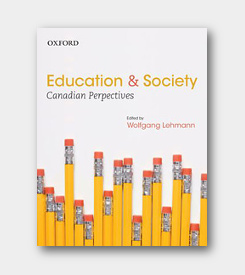
Wolfgang Lehmann is a Professor and Acting Chair of the Department of Sociology at Western University, where he also serves as Undergraduate Program Chair and Assistant Dean for Student Experience in the Faculty of Social Science. He holds a Ph.D. in Sociology from the University of Alberta, an MBA from the City University of New York, and additional degrees from the University of Toronto/OISE and the University of Mannheim. His research focuses on social inequality, social class, and educational transitions, particularly examining how class impacts access to education and employment opportunities. Lehmann’s academic career includes extensive grant funding, including SSHRC grants totaling over $750,000 for studies on youth apprenticeships, first jobs, and educational inequality. He has supervised numerous graduate students and authored/edited influential books such as Education and Society: Canadian Perspectives (Oxford University Press) and Choosing to Labour? School-Work Transitions and Social Class (McGill-Queen’s University Press). His research highlights the challenges faced by working-class students in higher education and their transitions to employment. Key contributions include analyses of social capital, habitus, and vocational training systems. Lehmann has received recognition for his teaching, including multiple USC Teaching Honour Roll placements and a nomination for the USC Teaching Award. Lehmann’s work extends to international collaborations and policy advocacy, addressing issues like skilled labor shortages and the status of vocational education in Canada. He actively participates in academic leadership roles, including editorial boards for journals like the British Journal of Sociology of Education and the International Journal of Lifelong Learning .
Scott Garman is Professor of Biochemistry at UMass Amherst, focusing on structural biology of glycoproteins in human diseases. PhD from Harvard University. Research areas: Lysosomal enzyme mechanisms in storage diseases (Fabry, Schindler); Malaria surface protein structures; Antibody-receptor interactions. Utilizes X-ray crystallography to study enzyme mutations causing disease. Key findings: Determined structures of α-galactosidase (Fabry disease) and α-NAGAL (Schindler disease), revealing molecular bases for enzyme dysfunction. Developed models for enzyme trafficking and substrate processing. Laboratory: Investigates protein folding diseases and develops therapeutic strategies. Collaborates on malaria vaccine development and antibody engineering.
Ivon Arroyo is a Professor in the Department of Teacher Education & Curriculum Studies (TECS) at the University of Massachusetts Amherst. Her research focuses on integrating novel technologies into math and computational thinking education, emphasizing affective and metacognitive states. She develops intelligent tutoring systems, such as COVES, which personalize learning in real-time and utilize facial expression recognition to enhance engagement. Her work on WearableLearning explores embodied, physically active multiplayer games for K-12 classrooms, leveraging mobile devices and wearable technologies to create immersive learning experiences. Dr. Arroyo holds an Ed.D. (2003) and M.S. (2000) from UMass Amherst and a B.S. from Universidad Blas Pascal in Argentina (1995). She has been recognized with multiple awards, including Best Paper Awards at the 2009 International Conference on Artificial Intelligence in Education and the 2010 Educational Data Mining Conference, a Fulbright Fellowship (1996), and a 1994 undergraduate prize for computer vision research. Her research interests span interdisciplinary areas such as Learning Sciences , Computer Science , Data Science , and Psychology . She prioritizes culturally responsive pedagogical agents and cross-cultural studies in educational technology, particularly in Argentina, India, and the U.S. Her projects often address challenges in developing countries, including localization of tutoring systems to Spanish. Advising and grants are central to her work, with grants like the NSF CAREER Award (2020) supporting embodied math classrooms. She collaborates on teacher dashboard frameworks and explores ethical AI integration in education. Her labs focus on creating tools that merge computational innovation with theoretical learning science principles, emphasizing real-world applications like the WearableLearning Cloud Platform.
Rev. Dr. hab. Waldemar Żurek, Professor at the John Paul II Catholic University of Lublin, serves at the Center of Ecclesiastical Archives, Libraries and Museums (ABMK) within the Faculty of Theology. His academic career spans decades of dedicated research and publication in church history, particularly focusing on Eastern European Catholicism and the Salesian Order. As an active scholar, he continues to contribute significantly to ecclesiastical documentation and historical research. Professor Żurek's research interests center on ecclesiastical archives, parish documentation, and the history of religious orders, with particular emphasis on the Salesian Order's activities in Poland and Eastern Europe. His work explores the intersection of religious life with historical events, particularly during challenging periods like the communist era in Poland. He has developed expertise in analyzing parish inventories, visitation records, and chronicles to reconstruct religious life and administration across different historical periods. His extensive publication record demonstrates a consistent focus on documenting church history through meticulous examination of primary sources. The most recent works reveal trends toward comprehensive chronicles of religious institutions, detailed parish records analysis, and biographical studies of clergy members. His research spans multiple disciplines including religious studies, historical documentation, and Eastern European studies, with particular attention to regions like Pinsk, Lutsk, and Volhynia that have complex religious histories across changing political borders. Scientific Awards: Gold Medal for Long Service Professor Żurek has supervised numerous diploma theses including master's work on topics such as 'Social activities of Bishop Adolf Piotr Szelążek.' His editorial work includes significant publications like 'Kult Matki Bożej Ostrobramskiej w historii narodu polskiego' (The Cult of Our Lady of the Gate of Dawn in the History of the Polish Nation) and 'Ojciec Profesor Henryk Damian Wojtyska 1933-2009. Pasjonista, historyk Kościoła i dydaktyk' (Father Professor Henryk Damian Wojtyska 1933-2009. Passionist, Church Historian and Educator). He serves on the Scientific Council of the biannual journal 'Archives, Libraries and Church Museums' and is a member of the Theological Society of Józef Bilczewski in Ukraine. His work with the Center of Ecclesiastical Archives, Libraries and Museums represents a significant contribution to preserving and analyzing religious heritage. Through his leadership and scholarship, Professor Żurek has helped establish important methodologies for working with ecclesiastical documentation and has fostered international collaboration in church historical studies, particularly between Polish and Ukrainian scholars.
Joe Stock is an Assistant Professor in Kinesiology at East Carolina University's College of Health and Human Performance. He operates the Human Performance Lab, focusing on cardiovascular wellness in aging and at-risk populations. B.S. in Exercise Science, Slippery Rock University M.S. in Health, Physical Activity and Chronic Disease, University of Pittsburgh Ph.D. in Kinesiology and Applied Physiology, University of Delaware His research examines aortic hemodynamics, vascular function, and lifestyle interventions through echocardiography, blood vessel ultrasound, and non-invasive blood pressure analysis. He explores sex differences in neurocardiovascular responses and salt sensitivity mechanisms. Recent publications demonstrate expertise in chronic kidney disease adaptations, exercise-induced vascular changes, and central sodium sensing. Collaborations span cardiovascular physiology, nephrology, and autonomic neuroscience. National Heart, Lung, and Blood Institute grant (2021-2023) University of Delaware Dissertation Fellowship (2019) University of Delaware Summer Doctoral Fellowship (2018) Professional service includes American Heart Association membership, ACSM regional committee work, and development of clinical exercise programs for renal patients. His work integrates applied physiology with translational medicine.
Hernando Rojas is the Helen Firstbrook Franklin Professor of Journalism and Director of the School of Journalism and Mass Communication at the University of Wisconsin-Madison. His academic roles include teaching courses such as Media Effects, Public Opinion, and Global Communications. He holds courtesy research affiliations with institutions in Colombia, Chile, and Singapore. Rojas earned a Ph.D. in Mass Communication from UW-Madison (2005), an MA from the University of Minnesota, and a law degree from Universidad Externado de Colombia. His research focuses on political communication, particularly the impact of new technologies on social mobilization, audience perceptions of media, and media's role in democratic governance. His work has been recognized with awards from ICA, WAPOR, and AEJMC, and he became an ICA Fellow in 2020. His professional service includes editing the International Journal of Public Opinion Research , leadership roles in the Latin American, Caribbean, and Iberian Studies Program, and contributions to professional associations like ICA and AEJMC. His career also includes roles as a media publisher, UNDP consultant, and public opinion advisor. Rojas' research demonstrates a global focus, addressing issues from China's crisis communication to Latin American polarization. His publications span over 100 articles and six books, emphasizing theoretical and applied insights into media's societal impact.