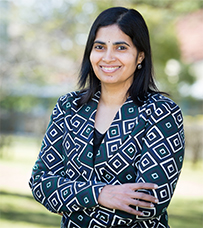
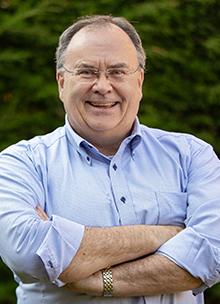
Anastasia Semykina is a Professor of Economics and Deputy Dean (Research and Innovation) at RMIT University's School of Economics, Finance & Marketing. She holds a PhD from Michigan State University (2006) and previously served as Charles and Joan Haworth Professor of Economics at Florida State University. Her expertise spans theoretical and applied econometrics, with a focus on panel data models, missing data estimation, and their application in labor economics, education economics, transition economies, and economic psychology. She teaches advanced econometrics and microeconomics courses at both undergraduate and graduate levels. Research Interests: Theoretical and Applied Econometrics Labor Economics Economics of Education Transition Economies Economics and Psychology Health Economics Her recent publications address topics such as panel data methodologies, healthcare cost-effectiveness analysis, and educational policy evaluation. She is actively involved in supervising PhD and Master's research students in econometrics and applied economics.
Dr. Alyas Widita is an Assistant Professor in the Urban Design program at Monash University, Indonesia. He is actively involved in research and teaching, focusing on urban planning, transportation, and smart city technologies. He serves as the Program Coordinator for Urban Design and teaches courses such as Urban Design Studio: Smart City and Smart City Technologies. Education: Ph.D. in City and Regional Planning, Georgia Institute of Technology, United States Dr. Widita's research centers on the built environment, transportation systems, and urban analytics, with a strong emphasis on developing Asian cities. His work explores congestion impacts of mass transit, ride-hailing effects on vehicle ownership, rural-urban migration, walking behavior, and spatial patterns of MSMEs. He employs advanced data analytics and causal evaluation methods to inform urban policy. His recent publications span high-impact journals such as Transport Reviews , Journal of Planning Education and Research , and Travel Behaviour and Society . The research trend shows a consistent focus on data-driven urban policy, sustainable mobility, and equity in urban development across Indonesia and Southeast Asia. Scientific Awards and Recognition: No specific awards listed, but research widely cited and featured in media outlets. Dr. Widita has secured and contributed to multiple research projects funded by international and national agencies, including the World Bank, Korea Transport Institute (KOTI), Central Bank of Indonesia, and Georgia Department of Transportation. He is currently leading or co-leading projects on Jakarta’s subsidence, flood risk management using remote sensing, and the Citarum River revitalization. He collaborates extensively with researchers across disciplines and institutions. His work contributes to UN Sustainable Development Goals, particularly those related to sustainable cities and communities. He is accepting PhD students interested in the built environment, transportation, and urban analytics in developing Asia. He is involved in key labs and research teams including the Citarum Action Research Program (CARP), Intelligent and Dynamic Remote Sensing for Flood Risk, and interdisciplinary urban analytics initiatives at Monash Indonesia.
Dr. Xue Dong (Sarah Dong) serves as a Research Fellow at the Arndt-Corden Department of Economics within the Crawford School of Public Policy at the Australian National University. Her work focuses on Indonesian socio-economic development, particularly labor markets, gender equality, and policy interventions in education and business formalization. Education: PhD in Economics from the University of Western Ontario Research Focus: Dr. Dong employs empirical methods including randomized controlled trials to investigate electoral impacts on public spending, financial aid accessibility for low-income students, and microenterprise registration barriers. Her fingerprint analysis reveals 100% concentration on Indonesian contexts with strong emphasis on labor markets (90%) and gender equality (71%). Publication Trends: Recent outputs (2023-2025) demonstrate methodological rigor in causal analysis of policy reforms, with consistent regional specialization in Indonesia. Her work bridges academic research and practical development solutions through partnerships with Indonesian institutions. Project Leadership: As Co-Investigator on three major grants, she examines corporate social responsibility in emerging economies (2022-2026), tax registration for MSMEs (2018-2020), and foreign aid effectiveness (2016-2021). These projects involve multi-institutional collaborations across Australia and Indonesia. Academic Service: Registered to supervise graduate students at ANU, she contributes to gender equality discourse through editorial work including the 2023 ISEAS-Yusof Ishak Institute publication on Indonesian gender dynamics.
Professor Sujana Adapa is a Professor and Head of the UNE Business School at the University of New England. She specializes in Management (Strategy & Marketing) and teaches courses such as Strategic Marketing and Consumer Behaviour. Her research focuses on SMEs, corporate social responsibility (CSR), technology adoption, and gender diversity. She holds a BSc (Ag), MSc (Ag), MBA (India), and PhD (UNE). **Education**: BSc (Agriculture) MSc (Agriculture) MBA (India) PhD (University of New England) **Research Interests**: Consumer studies, gender research, technology adoption, regional entrepreneurship, SMEs, sustainability, and CSR. Current projects include studies on women’s career progression in accounting firms and CSR practices in SMEs across Australia, Malaysia, and India. **Awards**: 2016 ANZAM Educator of the Year 2016 Australian Awards for University Teaching Citation 2016 HEA Senior Fellowship (UK) Multiple LearnX Awards (2015–2016) **Grants and Roles**: Grants totaling over $1M in areas like workplace safety, innovation ecosystems, and inclusive workplaces. Deputy Head of School (2019), Course Coordinator (2017–2019), and equity committee roles. Editorial roles for journals like Small Enterprise Research . **Teaching and Leadership**: Awards include the 2017 UNE Teaching Excellence Award for multimedia-enhanced teaching. She supervises HDR students in marketing, consumer behavior, and SME innovation.
Pascal Scherrer is Associate Dean (Research) and Professor within the Faculty of Business, Law and Arts at Southern Cross University . Based in Lismore, Australia, he combines an administrative leadership role with active research in sustainability, regional development, tourism and visitor management. His work bridges academia, industry and government, having jointly secured over AUD $2 million in competitive funding and delivered high-impact projects for clients such as the NSW National Parks & Wildlife Service and the Australian Meat Processor Corporation. Education BSc – Griffith University BSc (Hons) – Griffith University Graduate Certificate TESOL – Bond University PhD – Griffith University Research Interests Dr Scherrer’s scholarship centres on sustainability science applied to tourism and regional development. His current flagship project is a circular-economy partnership with the Australian Meat Processor Corporation aiming to reduce plastic packaging waste across red-meat supply chains. Earlier work includes sustainable-visitor-capacity assessments on Rottnest Island , alternatives to summiting Wollumbin-Mt Warning that informed a AUD $7.4 million NSW government trail investment, and longitudinal monitoring of visitor experiences at Point Fraser artificial wetland in Perth. Cross-cutting themes include visitor risk perception in remote alpine and coastal settings, community engagement in protected-area governance, Indigenous tourism business models , and the intersection of digital culture (e.g., selfie-taking) with tourism safety. Scientific Awards 2023 – Southern Cross University Research Award 2014 – Southern Cross University Vice-Chancellor’s Award for Excellence in Community Engagement Grants & Advising Scherrer has jointly attracted over AUD $2 million in research and consultancy funding from state and federal agencies, industry bodies and NGOs. He currently supervises Honours and PhD candidates across topics in sustainable tourism, regional development and visitor management, and teaches undergraduate and postgraduate units covering sustainable tourism, visitor-economy management, and planning & policy. Professional Affiliations & Service Member, IUCN World Commission on Protected Areas Member, North Coast Regional Advisory Committee, NSW National Parks & Wildlife Service External facilitator for community and local-government projects
Amir Aryani is an Associate Professor at the School of Business, Law and Entrepreneurship , Swinburne University of Technology . He leads the Social Data Analytics (SoDA) Lab within the Social Innovation Research Institute , focusing on data-driven solutions for health and social challenges. His work involves large-scale cross-institutional projects with international collaborators including the British Library , ORCID , and NIH . Research Focus: Data modeling, real-time analytics, and information retrieval for social-good initiatives Collaborations: CERN, Data Archiving and Networked Services (DANS), and Global Information Systems (GESIS) His research explores data science applications in mental health, community resilience, and sustainable development. Key trends in his publications include: Mapping research to United Nations Sustainable Development Goals Developing hybrid expert-finding models using NLP and graph algorithms Creating interoperable research graphs for cross-platform discovery Assessing social impact of data projects in non-profit sectors Amir is actively involved in PhD supervision and has secured funding from Australian Research Council , National Health and Medical Research Council , and philanthropic foundations . He also contributes to community data projects through the SoDA Lab , which builds tools for social connection analysis and humanitarian response optimization.
Associate Professor Alfred Huah-Syn Wong is a finance and economics academic at Charles Sturt University's School of Business. With a PhD in Finance from RMIT University and Masters in Financial Management from the University of Queensland, he teaches undergraduate courses in Financial Management, Financial Planning, and Treasury Risk Management, plus postgraduate courses in Corporate Treasury Management and Financial Planning. His research spans Asset Pricing, Risk Management, ESG Finance, Renewable Energy Economics, and Regional Healthcare Economics . Wong actively contributes to UN Sustainable Development Goals through sustainable finance research and regional development projects. Recent work focuses on renewable energy microgrids for regional Australia and healthcare access disparities during the pandemic. His publication trends reveal growing emphasis on sustainable finance (2023-2025), with key themes in corporate governance, ESG integration, and regional economic resilience. Recent articles address MENA environmental governance, Australian healthcare access, and Industry 4.0 workforce adaptation. CSU PhD Writing Up Award 2010 ($5,000) CSU Competitive Grant Award 2010 ($10,191) RMIT University Research Prize 2010 ($1,000) CSU Seed Grant 2007 ($3,000) MRFF Rapid Applied Translation Grant 2024 Vice Chancellor’s Research Awards 2024 Wong supervises research aligned with regional development, evidenced by his role in the Ageing Well Research Group and Aspro Ageing Well projects. His grants portfolio includes the $3,000 CSU Seed Grant (2007), multiple 2023-2024 sustainability grants, and industry partnerships with Mid North Coast Health District. Current work focuses on renewable energy microgrids and Parkinson's disease nursing advocacy. He leads the Business Workforce Wellness Research Unit and collaborates with the Regional Entrepreneurship Research Group. Recent activities include the 2024 Regulating for Decent Work Conference and 2023 launch of Australian Microgrids research, demonstrating strong industry engagement in regional economic development.
Professor Massimiliano Tani Bertuol is a distinguished academic specializing in economics at UNSW Canberra's School of Business, where he has served as Professor since 2015. His professional affiliations extend beyond UNSW as he is an Associate Investigator/Member at CEPAR; Ageing Futures; uDASH; AI Institute; and Cyber security (IFCYBER). Additionally, he maintains international connections as a Research Fellow at the Institute for the Future of Labor (IZA) in Germany since 2005, an Associate Member at Macquarie University's Centre for Workforce Futures since 2018, and a Research Fellow at the Global Labor Organization (GLO) in Maastricht since 2016. His educational background reflects a strong foundation in economics and business, having earned a PhD in Economics from the Australian National University (2003), a Master of Science in Economics from the London School of Economics (1992), and a Bachelor's degree in Business/Economics from Bocconi University in Milan, Italy (1989). His academic journey has positioned him as a leading researcher in human capital economics with international recognition. Professor Tani Bertuol's research centers on human capital development and its economic implications. His work examines how human capital can be fostered, efficiently transferred internationally through migration, and how it affects productivity, innovation, and economic growth at both firm and national levels. His research spans multiple regions including Australia, Europe, the US, Africa, and China, with particular focus on migration economics, labor market outcomes, and the economic impacts of education and skills. His current research agenda includes non-pecuniary incentives, behavioral/financial decisions in China, occupational licensing, language skills and economic assimilation, AI-human interactions in health contexts, and labor mobility and productivity. Analysis of his recent publications reveals significant interdisciplinary trends bridging economics with public health, environmental science, and technology. His work connects migration dynamics with economic outcomes, examines household financial behaviors through gender lenses, and investigates the complex relationships between environmental factors like air pollution and economic activities including education investment and entrepreneurship. More recent work explores AI applications in health and the economic implications of pandemic responses, demonstrating his ability to address contemporary challenges through rigorous economic analysis. 2023: UNSW ARC Postgraduate Council (Arc PGC) award for excellence in research supervision 2011: Vice-Chancellor Award for Teaching Excellence 2011: Faculty Award for Teaching Excellence for teaching economics Professor Tani Bertuol has successfully supervised 4 PhD students to completion, with 1 submitted dissertation and 5 currently under supervision. His active research program is supported by significant grant funding including an ARC Linkage Project (2023-27) on regional Australia's skills shortages and high-skill refugees' employment ($354,811), an ARC Discovery Project (2019-23) on migrant aging and wellbeing ($478,000), and a NUW Alliance grant (2021-23) on hearing screening and academic outcomes ($73,367). He serves as Associate Editor for Social Indicators Research and Higher Education Research & Development, contributing to scholarly discourse in his fields of expertise. His teaching portfolio includes courses in data analytics, finance, and professional executive education focused on cost-benefit analysis and data communication. He teaches ZBUS2333 Data Analytics and Visualisation, ZBUS8105 Finance and Investment Appraisal, and ZBUS8149 Introduction to Finance, demonstrating his commitment to developing the next generation of economics professionals with both theoretical knowledge and practical skills.
Rafiuddin Ahmed is a Professor at James Cook University , specializing in Accounting . With over two decades of academic contributions, his work focuses on management accounting, financial governance, and educational pedagogy, particularly in the Australian service sector and South Asian contexts. Key research areas: Accounting Education, Management Accounting, Sustainability, Educational Technology His publications span topics like cost allocation systems, capital structure dynamics, and innovative teaching methods such as LEGO® Serious Play. Recent work explores intersections between eco-control systems, sustainable development goals (SDGs), and digital entrepreneurship in Bangladesh. Google Scholar highlights 35+ works, including 2024 studies on Halal cloud kitchens and eco-control systems, showing evolving interests in digital transformation and climate-responsive accounting practices. Earlier works (2003-2015) analyze public sector accounting reforms, group learning, and cost shifting strategies. Collaborations include scholars in accounting, finance, and management across Australia, Bangladesh, and Singapore. No explicit awards or student advisement information is documented in available sources.
Professor Maggie Chuoyan Dong is the Head of School and Professor at the School of Marketing, University of New South Wales (UNSW). Her research focuses on business-to-business marketing, the marketing-operations interface, and supply chain resilience, with emphasis on digital transformation and crisis management. University: UNSW Sydney School: School of Marketing Academic Rank: Professor Email: c.dong@unsw.edu.au Her work employs diverse methods such as field experiments, lab experiments, surveys, and data analytics to ensure empirical rigor and practical relevance. She has published in premier journals like Journal of Marketing Research , Production and Operations Management , and Industrial Marketing Management . Recent publications examine disaster response strategies, reward systems in supply chains, and B2B crisis management. Grants include funding from the Hong Kong Research Grant Council, National Natural Science Foundation of China, and UNSW Business School for projects on customer loyalty, AI impacts in home-sharing, and social media in B2B marketing. Scientific Awards: Australian Marketing Institute – ANZMAC Grant Award (2023) She serves as Associate Editor for the Decision Sciences Journal and Editorial Board Member for the Journal of Academy of Marketing Science . Her engagements include roles in the Australia Research Council’s College of Experts and the Hong Kong PhD Fellowship Scheme Selection Panel.
Aurora Elmes is a Research Fellow at Swinburne University of Technology, affiliated with the School of Business, Law and Entrepreneurship and the Centre for Social Impact Swinburne. She holds a PhD from Swinburne, a Master of Social Work from RMIT University, and a Bachelor of Contemporary Arts from Deakin University. Her research is deeply interdisciplinary, bridging business, public health, and social policy to explore how work environments and social enterprises can promote mental health and inclusive participation. Doctor of Philosophy, Swinburne University of Technology Master of Social Work, RMIT University Bachelor of Contemporary Arts, Deakin University Her research interests focus on mental health and wellbeing in the context of social enterprise, inclusive employment, and organizational culture. She investigates how policies and workplace practices can support social and economic participation, particularly for people with lived experience of mental illness or psychosocial disability. Her work often employs mixed-methods and longitudinal designs to evaluate real-world interventions, such as employment-focused social enterprises and NDIS psychosocial recovery coaching. The recent publications reflect a strong trend toward evaluating the impact of social enterprises and public policy on mental health. Her work spans academic journals, comprehensive reports, and book chapters, consistently emphasizing the intersection of social justice, health, and organizational design. She frequently collaborates with not-for-profits, government agencies, and foundations, indicating a strong applied and policy-relevant research orientation. She has been recognized for her scholarly contributions, including a Literari Awards 2020 - Highly Commended Paper from Emerald Publishing. Her research is supported by a robust portfolio of grants from organizations such as Support Act Limited, ACHIEVE FOUNDATION LIMITED, and the Department of Jobs, Skills, Industry and Regions (Vic). These grants fund projects on mental health in creative industries, disability employment, and financial wellbeing in social enterprises. Aurora Elmes actively supervises research and is available to supervise PhD candidates. She leads major evaluations and research studies, often in collaboration with multidisciplinary teams. Her work is embedded in real-world settings, such as Vanguard Laundry and NDIS service providers, demonstrating a commitment to impactful, community-engaged scholarship. She is also affiliated with research groups including the Centre for Social Impact Swinburne and contributes to public discourse through platforms like The Conversation and The Power to Persuade.
Thomas Wilkins is a Senior Lecturer in the Department of Government & International Relations at the University of Sydney. He specializes in Asia-Pacific/Indo-Pacific security affairs, with a focus on Australian and Japanese strategic policies, alliance politics, and international power theories including middle powers and awkward powers. Education: PhD in International Security (University of Birmingham); MPhil in Asian Studies (University of Sydney, part-time); BA (Hons) and MA in History and International Studies (University of Birmingham) Regional Experience: Held fellowships at University of Tokyo, National Taiwan University, and Nanyang Technical University. Visiting roles at University of Hong Kong and Keio University His research examines security architecture, strategic partnerships, and power dynamics in the Indo-Pacific. Recent work analyzes trilateral cooperation, economic security, and Taiwan Strait stability. He supervises HDR students on topics like China-India security alignment and US foreign policy in the South China Sea. Scientific Awards: Senior Visiting Fellowship at Japan Institute for International Affairs JSPS Long-Term Research Fellowship Japan Foundation Japanese Studies Fellowship Australia-Japan Foundation grants As Program Director for the Master of International Relations and Dalyell Mentor, he contributes to academic leadership. His publications span books like Awkward Powers: Escaping Great and Middle Power Theory and journals such as Pacific Affairs and The Pacific Review .
Julienne Senyard is an Associate Professor at Griffith University's Department of Management, affiliated with the Griffith Business School and the Centre for Work, Organisation and Wellbeing. She holds roles such as Program Outcomes Director for Griffith Business School and has over two decades of academic and entrepreneurial experience. She earned a PhD in Entrepreneurship from Queensland University of Technology (2015), with earlier degrees in Business Communication/Marketing and Arts from QUT and Griffith. Her research focuses on entrepreneurship, innovation, resourcefulness, and social impact, including refugee entrepreneurship and circular economy initiatives. Recent projects include evaluating waste management in First Nations communities and exploring AI's role in entrepreneurship education. Dr. Senyard has secured over $1.5M in research funding, including grants from the Queensland Government and Australian Research Council. Notable awards include the 2024 Vice Chancellor’s Innovation Engagement Award and Senior Fellow status from the Higher Education Academy. Teaching responsibilities include undergraduate courses like Innovation, Creativity, and Entrepreneurship (2043IBA) and postgraduate leadership modules. She supervises doctoral research on topics like social ventures, humanitarian integration, and agri-food systems. Her work emphasizes culturally grounded policy pathways and community-led solutions in circular economy frameworks.
Alison Preston is a Professor of Economics at the UWA Business School, The University of Western Australia. She holds leadership roles including Associate Editor of the Industrial Relations Journal and Vice-President of the WA Branch of the Economic Society of Australia. Her research focuses on gendered employment dynamics, wage structures, and financial literacy, with particular attention to policy implications. She has advised government bodies on labor market reforms and conducted high-profile reviews, including the 2022 Fair Work Amendment review. Education: BA (Hons) from Strathclyde University, MBA from Curtin University, and PhD from the University of Western Australia. Research Interests: Gender pay gap and labor market segmentation Economic security through financial literacy Public-private wage differentials Impact of policies on employment equity Key Awards: 2023 Best Paper in Economic Papers for work on financial literacy and self-employment 2025 Nomination for Journal of Consumer Affairs Best Article Award Advising & Grants: Lead researcher on multiple government-funded studies, including reviews of workplace reforms and submissions to parliamentary committees on cost-of-living pressures and superannuation equity. Her work frequently engages with UN Sustainable Development Goals, particularly gender equality and decent work (SDGs 5 & 8). Labs/Teams: Active in interdisciplinary teams at the UWA Business School, collaborating with institutions like the International Labour Organization (ILO) and the Committee for Economic Development of Australia (CEDA).
Pierre van der Eng is an Associate Professor and Reader in International Business and Business History at the Australian National University (ANU), Research School of Management. He is recognized as Australia's research leader in economic history, with expertise spanning economic and business history, international business, and development economics. His work focuses on Indonesia's economic development, Australia's business history, European integration, and EU-Australia relations. His research has been funded by the Australian Research Council and the Shibusawa Foundation. Van der Eng holds a PhD, MA, and BA, and has advised AusAID on development projects. His research emphasizes Indonesia's economic challenges, including historical famines, CSR evolution, and post-colonial business dynamics. He has contributed to major projects like the 'Indonesia Project' phases IV and V, exploring foreign MNE strategies in Australia and EU-Australia trade relations. His awards include the 2021 nomination as Australia's economic history research leader. He has published widely in top journals and edited volumes, with a focus on long-term economic trends, multinational enterprise strategies, and historical crisis responses. His work bridges historical analysis with contemporary policy implications, particularly in Asia-Pacific economic contexts.