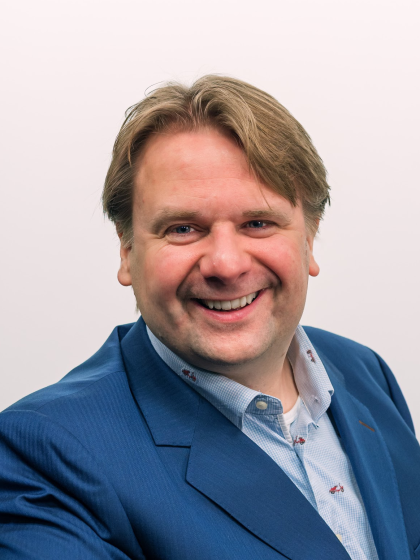
Tom Veldkamp is a Professor and Rector Magnificus at the University of Twente. His research focuses on Quaternary geology, geomorphology, and coupled human-ecological systems. He has supervised 32 PhD theses and currently advises 2 ongoing projects. His fieldwork spans over 30 countries, including Indonesia, Turkey, and Rwanda. Editorial Roles: Editor-in-Chief of Agriculture Ecosystems and Environment , former editorial roles at Landscape Ecology , Ecosystems , and others. Research Themes: Land use change modeling, soil dynamics, and sustainable development. Key regions of study include Sundaland (Indonesia), Mediterranean landscapes, and Rwanda. Recent Contributions: Over 230 publications, including landmark studies on hominin fossils in Java and landscape evolution models. His work addresses global challenges like environmental sustainability and land-use transitions, with a focus on integrating natural and social sciences.
Confidence Duku is a researcher at Wageningen University & Research, specializing in climate resilience and agricultural systems. Their work integrates climate science, hydrology, and machine learning to address food security, deforestation impacts, and flood forecasting in data-scarce regions. Research Interests: Climate change modeling in Eastern Africa Hydrology-guided neural networks for flood forecasting Agricultural resilience (common bean, green gram) under climate stressors Economic impacts of deforestation in Brazil Climate services for financial institutions and SMEs Notable Contributions: Developed frameworks for climate-smart business planning and flood prediction, with a focus on regions like East Africa and Brazil. Their work emphasizes ecosystem services and adaptation strategies. Collaborations: Active in multi-institutional projects, including partnerships with SNV and Copernicus. Led LVVN projects on cascading climate risks and reforestation impacts.
Arjan F. Kirkels is an Assistant Professor and University Lecturer in the Department of Technology, Innovation & Society within the School of Industrial Engineering and Innovation Sciences at Eindhoven University of Technology (TU/e). His work focuses on sustainability assessments, decision-making in transitions, and interdisciplinary education for sustainable innovation. His research interests include Life Cycle Assessment (LCA), Multi-Criteria Assessment (MCA), sustainability transitions, industrial ecology, and systems engineering. He applies these to emerging technologies such as batteries, hydrogen systems, and heat pumps, with a strong emphasis on integrating stakeholder values and addressing deep uncertainties in sustainability decisions. The recent articles highlight a consistent focus on assessing emerging technologies, particularly in renewable energy and circular economy applications. Trends include prospective LCA, experience curves in solar technology, socio-technical impact assessment, and educational innovations in sustainability. His work bridges technical analysis with social and governance dimensions of sustainability transitions. Best Teacher Award, 1st year Bachelor Sustainable Innovation, for course 0SV20 'Industrial Ecology' (2013) Best Teacher Award, 1st year Bachelor Sustainable Innovation, for course 0SV20 'Industrial Ecology' (2018) Best Teacher Award, 1st year Bachelor Sustainable Innovation, for course 0SV20 'Industrial Ecology' (2020) Educational award nomination, bachelor Sustainable Innovation, course 0SK30 Inter-University Sustainability Challenge (2023) Education Award 2024 - master Innovation Sciences (2025) Arjan F. Kirkels has supervised over 100 thesis students and more than 100 interdisciplinary student groups. He has developed and taught over 20 courses and co-authored 4 textbooks and 7 publications on educational innovation. He is currently supervising four researchers: Huiying Liu, Prapti Maharjan, Rishi Bhatnagar, and Seyed Mousavi. His research is supported by projects such as the EU-funded cVPP (Community-based Virtual Power Plant) and studies on Dutch sustainability transitions. He is actively involved in educational initiatives, including MOOC development and challenge-based learning, and contributes to public discourse through media appearances and workshops on sustainability education and systems thinking.
Dr. Thijs Broekhuizen is an Associate Professor at the University of Groningen's Faculty of Economics and Business, specializing in Innovation Management & Strategy. He currently serves as Scientific Director of the University of Groningen Business School, Coordinator of the Northern-Netherlands Innovation Monitor, and Programme Director of the Executive MBA. His research focuses on digital transformation, value creation in innovation, and digital business models, with interdisciplinary insights bridging strategy, innovation, and digitalization. Education: PhD in Marketing (University of Groningen, 2006) MSc in Marketing (University of Groningen, 2001) Research Interests: Broekhuizen explores value appropriation in technology-driven contexts, digital business models, and strategic responses to disruptive technologies. His work emphasizes SMEs' digital transformation challenges, organizational identity during technological change, and AI-driven innovation management. Key areas include digital platforms, motion picture industries, and social media dynamics. Grants & Projects: TALENT4S3 (€165K, Interreg 2024-2028) SIRM (€189K, Interreg 2023-2027) NWO-funded studies on construction industry profitability and online customer journeys Awards: Best Paper Award at ISoF 2021 Best Short Paper Award Nomination 2021 Teaching & Leadership: Broekhuizen teaches strategy and digitalization in executive programs and has led the MScBA and EMBA initiatives. His educational roles include Programme Director of the Executive MBA (Energy Transition, Health, Sustainable Business Models tracks) and member of the Groningen Digital Business Centre. Labs/Teams: He coordinates the Northern-Netherlands Innovation Monitor (surveying 10,000+ SMEs) and collaborates with the Groningen Digital Business Centre to advance digital strategy research.
Arie van Steensel is an Assistant Professor of Medieval History at the University of Groningen's Faculty of Arts. His research focuses on the social and economic history of the European Middle Ages, with particular emphasis on urban history of England, Italy and the Low Countries, and the history of nobility in the Low Countries. His scholarly profile demonstrates deep expertise in late medieval urban development and nobility structures across European regions. His research examines how political and economic structures shaped community formation in pre-modern European cities, with particular attention to social boundaries, networks, and identities within urban environments. His publication record shows consistent focus on urban communities, nobility studies, and regional history, with significant contributions to understanding the dynamics of power, wealth, and social status in medieval Dutch society. His work bridges traditional historical research with contemporary methodological approaches including digital humanities. Editor of Stadsgeschiedenis Editor of BMGN - Low Countries Historical Review Secretary of the European Association for Urban History Van Steensel actively contributes to academic discourse through conference organization, editorial work, and public engagement. His current project editing a volume on Leiden's premodern history represents a significant effort to make Dutch urban history accessible to an international scholarly audience.
Dr. Renske Hijbeek is an Associate Professor at the Plant Production Systems group of Wageningen University & Research. Her research focuses on nutrient management in arable farming systems, emphasizing soil fertility improvement through organic waste recycling, legume cultivation, and minimizing environmental impacts like greenhouse gas emissions. She teaches courses including 'The Carbon Dilemma - A Soil Perspective' and 'Analysing Sustainability of Farming Systems'. Key projects include the GRA Benchmarking Nutrient Circularity and EDF Soil Carbon Sequestration initiatives. Her work integrates agronomy with ecological principles to achieve sustainable agricultural practices globally. Research Contributions: Dr. Hijbeek's projects address nutrient circularity, soil carbon dynamics, and organic amendment efficiency across temperate and tropical regions. Recent work explores dietary impacts on nitrogen fertilizer dependency and systemic redesign of food production systems. Collaborations: Active in international collaborations like the Global Crop Nutrient Removal Database and the CATCH-C Legumes project in Tanzania. Her interdisciplinary approach bridges crop science, environmental management, and policy analysis.
Dr. Jennifer Koch is an Associate Professor at the Laboratory of Geo-information Science and Remote Sensing, part of Wageningen University & Research. Previously, she served as an Associate Professor and Associate Research Director at the University of Oklahoma's Data Institute for Societal Challenges. Her research integrates data-driven methods like simulation modeling to address socio-economic and climate change challenges, focusing on sustainable urbanization and environmental management. Education: She holds a Diplom (Univ.) in Geoecology from the University of Bayreuth and a Dr.-Ing. in Electrical Engineering/Computer Science from the University of Kassel. She teaches courses on geo-information management and data analytics. Research emphasizes multi-scale modeling, stakeholder engagement, and participatory approaches to socio-ecological systems. Recent work explores urban growth in Africa, methane emission monitoring, and renewable energy siting. Articles highlight interdisciplinary methods in GIS, climate policy, and community geography. Professional service includes roles with iEMSs, IALE, and the AAG. No ancillary activities reported. Her work bridges technical geospatial tools with societal challenges, emphasizing practical policy applications.
Alfons Oude Lansink is a Professor and Chairholder in Business Economics at Wageningen University, Netherlands. He holds adjunct professorships at Universitas Padjadjaran (Indonesia) and the University of Florida (USA), and serves on the Dutch Ministry of Agriculture's CDM committee and Rabobank's scientific advisory board. His academic career spans roles as director of Wageningen School of Social Sciences (WASS) and Secretary-General of the European Association of Agricultural Economists. Education: MSc and PhD in Agricultural Economics from Wageningen University Leadership: Head of Business Economics group since 2003 His research focuses on dynamic technical and economic efficiency , sustainable performance of food supply chains , and economics of plant health . Recent work examines climate adaptation strategies, circular economy applications, and cross-border agri-food innovation dynamics using advanced econometric models. Key projects include MINDSTEP (modeling farm decisions), Closing the Loop (insect-based agriculture), and Food Pro-tec-ts (transboundary food technologies). Publications address topics like: Technical efficiency in dairy and arable farming Economic impacts of climate change on agriculture Corporate social responsibility in food manufacturing Policy evaluation for biogas and organic farming He serves as: Secretary/Treasurer of agricultural economics journal foundation Advisor to Universitas Padjadjaran (Indonesia) on policy and PhD supervision Editorial board member of Agronomy Journal and European Review of Agricultural Economics
Yuleng Zeng is an Assistant Professor of International Political Economy at the Faculty of Arts, University of Groningen. He is affiliated with the Center for International Relations Research (CIRR). His work focuses on the security implications of economic interdependence, tools of economic statecraft, major power competition, and contemporary Chinese foreign policy. He holds an associate editor position at Political Research Exchange . Research interests include international relations, security studies, and the intersection of economic policies with geopolitical strategies. His studies analyze how trade dynamics influence state power and interstate relations, including topics like sanctions, trade networks, and Chinese investment patterns. Publications span journals such as Journal of Law and Courts , Conflict Management and Peace Science , and Journal of Contemporary China . Recent work examines U.S. sanctions impacts, judicial independence models, and EU-China trade dynamics. No scientific awards are explicitly mentioned in the provided texts. Advising and grants information is not detailed here. Zeng contributes to academic networks through editorial roles and research collaborations, focusing on advancing theoretical frameworks in international political economy.
Nelly V. Litvak is a Full Professor in Algorithms for Complex Networks at Eindhoven University of Technology (Mathematics and Computer Science). She works on mathematical methods and algorithms for complex networks (social networks, WWW) using random graph models. She joined TU/e as a part-time professor in 2017 after being an Associate Professor at the University of Twente since 2012. Affiliations: 4TU Applied Mathematics Institute, Data Science Center Eindhoven, CTIT Industry Partners: ABN-AMRO Bank, Philips Lighting, Thales Editorial Role: Managing Editor of Internet Mathematics Her research focuses on extracting value from network data across three areas: (1) Information extraction and prediction, (2) Mathematical analysis of network characteristics, and (3) Efficient algorithms for incomplete network data. Key topics include PageRank, HITS algorithm, random graphs, homophilic networks, and network epidemiology. Recent work (2022-2025) spans network growth mechanisms, fairness in ranking algorithms, educational pedagogy, and pandemic forecasting dashboards. She contributes to SDGs through data-driven approaches to societal challenges. Teaching activities include course development at TU/e and earlier institutions, with innovative methods for computer engineering students' statistical understanding.
Amsterdam University of Applied SciencesNetherlands
Miguel Mujica Mota is a Senior Lecturer at the Faculty of Technology, National Autonomous University of Mexico (UNAM), and a member of the Centre of Applied Research Technology. His research focuses on airport operations, multimodal transport systems, and simulation modeling. He has expertise in analyzing capacity challenges in multi-airport systems, particularly in Mexico City, and developing decision support systems for airport security and resource allocation. His work integrates sustainability and efficiency, addressing topics like environmental reporting in airlines and post-pandemic airport recovery strategies. Research Contributions: Dr. Mujica Mota has published extensively on airport capacity optimization, multimodal transport integration, and simulation-based methodologies. Key projects include the X-TEAM D2D initiative for door-to-door travel and the IMHOTEP project for smart passenger flow management. His work often involves collaboration with institutions like Schiphol Airport and the H2020 EU framework. Research Interests: Airport terminal design, air traffic management, simulation modeling, multimodal logistics, and sustainable aviation. Awards: A-BOOST Research Fund (2020) Beste paper award EMM2018 X-TEAM D2D Project Recognition (2020) Activities: Organized conferences like the 2023 EUROSIM Simulation Seminar and served on committees for events such as the 2024 Multilog Conference. Grants & Projects: Involved in EU-funded initiatives like H2020, focusing on multimodal integration and sustainable transport solutions. His research also explores climate change impacts on infrastructure and simulation-based validation approaches.
Hannah van Zanten is a Full Professor in Earth Systems and Global Change at Wageningen University & Research, specializing in sustainable food systems, regenerative agriculture, and biodiversity conservation. Her work emphasizes circular food systems, livestock production optimization, and environmental impact mitigation. She has received multiple awards, including the Storm-van der Chijs award (2015) and several Best Oral Presentation accolades at academic conferences. Her research spans topics like protein upcycling, soil biodiversity, and the environmental implications of livestock feed. She supervises PhD projects on regenerative agriculture, circular food transitions, and ecosystem services in South American grasslands. Recent projects include redesigning European food systems to enhance food security under climate change and modeling circularity impacts. Key research interests include: sustainable diets, land-use efficiency, and the integration of biodiversity conservation with agricultural practices. She has published extensively on topics like earthworm farming, circular protein systems, and the compatibility of animal-sourced foods with circular principles. Awards: 5 major prizes for academic contributions, including innovation in animal sciences and sustainability. Grants/Projects: Leading 19 active projects, including EU-funded initiatives on sustainable livestock and circular food system modeling. Labs/Teams: Collaborates with interdisciplinary teams on projects like SUSFANS (Sustainable Food Systems) and Re-Livestock (resilient livestock systems).
Dr. Debraj Roy is a Visiting Professor at the University of Amsterdam (UvA), affiliated with the Faculty of Science, Mathematics and Computer Science and the Informatics Institute. His research focuses on agent-based modeling, socio-economic dynamics, environmental resilience, and blockchain technology. He investigates complex systems such as urban slums, disaster recovery, and climate adaptation using computational methods like remote sensing and machine learning. His work bridges theory and practice, offering insights into policy design for sustainable development and social equity. Key research interests include slum dynamics, poverty traps, and the application of blockchain oracles for decentralized systems. He employs advanced techniques such as global sensitivity analysis and manifold learning to explore multi-scale socio-environmental challenges. His recent articles highlight trends in carbon pricing, flood risk valuation, and multi-agent systems. Earlier work concentrated on urban inequality in cities like Bangalore and Mexico City, leveraging geospatial and statistical tools. No scientific awards or grants are explicitly listed. His advising and team collaborations are unspecified in the provided text.
Prof. Iris F.A. Vis is a Professor of Industrial Engineering at the University of Groningen's Faculty of Economics and Business. She specializes in logistics and operations management, focusing on optimizing processes through quantitative and qualitative methods. Her work intersects logistics with sectors like healthcare, education, and energy. She leads major projects such as SMiLES (sustainable mobility-logistics integration) and designs logistics solutions for personalized learning systems in schools. She has advised over a dozen PhD students and collaborates with industry partners globally. Awards include Fellowship in the Netherlands Academy of Engineering. Education: M.Sc. Mathematics (Leiden University), PhD in Operations Management (Erasmus University Rotterdam) Roles: Captain of Science for Topsector Logistics, Member of multiple national advisory boards Research interests span sustainable transportation networks, port optimization, healthcare logistics, and educational logistics. Key projects include LNG supply chain design, offshore wind farm maintenance planning, and synchromodal transport networks. Over 45 peer-reviewed publications and 18 media engagements highlight her impactful contributions. Teaching includes courses on supply chain network design, technology-enabled innovation, and operations management at all academic levels. She advises on industrial partnerships and digital transformation initiatives in the Northern Netherlands region.
Dr. Dirk Oudes is an Assistant Professor in the Department of Landscape Architecture and Spatial Planning at Wageningen University. His research focuses on the intersection of renewable energy transitions and landscape transformation, particularly solar power plants and agrivoltaics in the Netherlands. He explores how solar energy systems interact with agricultural landscapes, urban planning, and policy frameworks, emphasizing sustainable land use and climate adaptation. Recent trends in his publications highlight spatial analysis of solar infrastructure, regulatory challenges in energy projects, and circular economy principles in agrivoltaics. His work often bridges academic research with practical implementation, as seen in reports and media engagements addressing landscape aesthetics, public acceptance, and policy-relevant findings. Dr. Oudes collaborates with researchers like Sven Stremke and actively participates in workshops, keynote speeches, and expert consultations. He supervises PhD projects on landscape-inclusive energy transitions and spatial quality frameworks, contributing to both academic discourse and professional practice in sustainable design.