Ove Axner is a Professor at the Department of Physics, Umeå University, leading the Quantum Pascal Group. His research focuses on developing laser-based measurement techniques for ultra-sensitive detection of atoms and molecules in gas phase, particularly in analytical laser spectroscopy and refractometry. He has contributed to advancements in Fabry-Pérot cavity-based refractometry for precision pressure and density assessments, including collaborations with European national metrology institutes. Key research areas include gas modulation refractometry (GAMOR), sub-Doppler double-resonance spectroscopy using frequency combs, and the realization of SI units (e.g., the pascal) via optical methods. His work emphasizes high-precision instrumentation, such as transportable refractometers and dual-cavity systems using Invar alloys for thermal stability. Publications span high-impact journals like Nature Communications , Optics Letters , and Applied Spectroscopy , with a focus on cavity-enhanced spectroscopy, molecular transition analysis, and metrological applications. Current projects include the 'Quantum Molar Density' and 'Quantum Pascal' initiatives (2021–2024) aimed at advancing optical pressure standards and molar density measurements.
Romain Gaume is an Associate Professor at CREOL, The College of Optics and Photonics, University of Central Florida. His research focuses on optical ceramics, particularly transparent polycrystalline materials for high-power lasers, scintillator detectors, and nonlinear optics. He leads the Optical Ceramics group, which investigates applications in laser technology, nuclear detection, and advanced materials processing. Education details are not explicitly listed, but his work emphasizes interdisciplinary research at the intersection of materials science and photonics. Key areas of interest include sintering behavior of nanomaterials, surface hardening of optical windows, and dopant engineering in laser ceramics. Publications highlight innovations in transparent ceramics fabrication, including methods like chemical vapor deposition (CVD) and additive manufacturing. His group employs advanced characterization techniques such as XPS, Raman spectroscopy, and SIMS for material analysis. Collaborations involve researchers from institutions like Lawrence Livermore National Laboratory and University of California. Current projects involve developing tunable phosphor ceramics for lighting and optimizing scintillator performance under high radiation environments. His lab includes research scientists (e.g., Anna Zachariou) and graduate students (e.g., Andrew Howe, Hayat Soufiani) focusing on both fundamental and applied aspects of optical materials. Notable facilities include CREOL's state-of-the-art fabrication and characterization labs located at 4304 Scorpius Street, Orlando. His work bridges academic research with industrial applications in photonics and materials engineering.
Dr. Oscar Ochoa is Professor of Physics at The College of New Jersey's School of Science, specializing in optical physics and experimental methodology development. His educational background includes a Ph.D. and M.S. from Catholic University of America, and a B.S. from Universidad Catolica del Peru. Research focuses on innovative physics pedagogy through instrumentation design, including pioneering applications of consumer technology (Wiimotes, smartphones) in laboratory settings. Additional work explores Raman spectroscopy of materials and optical trapping techniques. He directs the Optics and Photonics Lab, mentoring students in experimental physics projects since 1993. Courses taught span the physics curriculum including General Physics, Modern Physics, Classical Mechanics, Electromagnetic Waves, and Condensed Matter. His pedagogical innovations have been published in The Physics Teacher and American Journal of Physics.
Torgom Yezekyan is a Research Assistant at the Center for Nano Optics (University of Southern Denmark), specializing in plasmonics, nanophotonics, and quantum optics. His work focuses on quasi-bound states in the continuum, valley polarization of 2D materials, and sensing technologies. He joined POLIMA in 2024 after postdoctoral research at SDU's Center for Nano Optics. Education : Master's (2016) and PhD (2019) in Physics from Yerevan State University, studying atom-plasmonic interactions under Prof. Khachatur Nerkarayan. Research Interests : Plasmonic nanostructures, waveguide optics, 2D materials, and optoelectronic device engineering. Publications : Key contributions include tunable electro-optic metasurfaces, valley polarization in dichalcogenide monolayers, and wavelength-selective metamirrors.
Prof. Vladimir Mirsky is a faculty member in the Department of Nanobiotechnology within the Faculty of Natural Sciences at Brandenburg University of Technology. His research is centered on the development and application of advanced sensor systems, particularly those based on nanoparticles and conductive polymers. Institution: Brandenburg University of Technology School: Faculty of Natural Sciences Department: Nanobiotechnology Academic Rank: Professor His research interests span sensor design, electrochemistry, surface plasmon resonance, nanoparticle behavior, and polymer-based detection systems. He focuses on analyte recognition mechanisms, especially for diol-containing compounds like glucose, using boronic acid-functionalized materials. His work integrates physical chemistry with materials science to develop novel analytical tools. The recent publications highlight a strong trend in studying individual nanoparticles, electrochemical interfaces, and functional polymer coatings. His work frequently involves gold and TiO₂ nanoparticles, conductometric sensing, and molecular interactions at surfaces. The research bridges analytical chemistry with nanotechnology, emphasizing precision measurement and material stability. Prof. Mirsky actively collaborates with researchers across Europe, including institutions in Serbia and Germany, as evidenced by his co-authorship network. While no formal advising or grant information is provided, his extensive publication record suggests active mentorship and research funding. He has published in high-impact journals such as Analytical Chemistry , ACS Applied Nano Materials , and Nanoscale Advances . He is involved in the development of chemosensors and functional nanomaterials, likely operating within a research lab focused on nanobiotechnology and analytical instrumentation. His contributions are significant in the field of electroanalytical chemistry and smart sensing materials.
Dr. Ipsita Chakraborty is a Researcher at Forschungszentrum Jülich's Institute for Biological Information Processes (IBI), specifically within the Bioelectronics department (IBI-3). Her work is centered at the intersection of optical physics, biomedical engineering, and diagnostic technology development. Based in Building 02.4u / Room 99 at Wilhelm-Johnen-Straße 52428 Jülich, she maintains an active research profile with continuous publication output through 2025. Her research focuses on surface plasmon microscopy and refractive index-based sensing for biomedical applications, with particular emphasis on Malaria species detection and quantification through hemozoin crystal analysis Non-invasive diagnostics using saliva biomarkers for diabetes and liver cirrhosis Birefringence characterization of biological and synthetic materials Optimization of plasmonic substrates for enhanced sensing capabilities Her technical approach integrates optical physics, materials science, and clinical diagnostics to develop label-free, high-sensitivity detection systems. Analysis of her publication record (2017-2025) reveals consistent innovation in plasmonic sensing methodologies, with increasing clinical translation focus in recent years. Her work spans fundamental optical physics (birefringence analysis, refractive index dynamics) to applied diagnostics (malaria, diabetes, liver disease), demonstrating strong interdisciplinary connectivity between physics, engineering, and medicine. The progression shows movement from material characterization toward clinical applications, particularly in point-of-care diagnostic development. Her technical expertise encompasses phase-shifting interferometry, focused surface plasmon sensing, polymer thin-film engineering, and super-resolved microscopy techniques. The research has significant implications for resource-limited diagnostic settings due to its label-free nature and potential for miniaturization.
Mark Brongersma is a Professor of Materials Science and Engineering at Stanford University and serves as the Director of the Geballe Laboratory for Advanced Materials (GLAM). He also holds a courtesy appointment in Applied Physics. As the Stephen Harris Professor, he leads cutting-edge research in nanophotonics and plasmonics at the intersection of materials science, electrical engineering, and physics. Brongersma received his PhD in Materials Science from the FOM Institute in Amsterdam, The Netherlands, in 1998, followed by postdoctoral research at Caltech from 1998-2001. His academic journey demonstrates a strong foundation in both European and American research institutions, positioning him at the forefront of nanoscale optical research. His research interests span plasmonics (a field he coined during his postdoc), nanophotonics, metasurfaces, and the development of nanostructured materials for electronic and photonic applications. Brongersma's work focuses on manipulating light at the nanoscale to create novel optical devices with applications in communications, sensing, and computing. His group develops innovative approaches to control light-matter interactions through engineered nanostructures, pushing the boundaries of what's possible in optical science. Analysis of his recent publications reveals a strong focus on metasurface technologies, excitonics in 2D materials, dynamic optical control systems, and novel approaches to optical modulation. His work increasingly integrates multiple physical phenomena (acoustic, electronic, optical) to create multifunctional nanoscale devices with unprecedented capabilities. National Science Foundation Career Award Walter J. Gores Award for Excellence in Teaching International Raymond and Beverly Sackler Prize in the Physical Sciences Fellow of the Optical Society of America Fellow of SPIE Fellow of the American Physical Society MRS Fellow (2023) Brongersma leads an active research group working on the MURI project focused on integrated hybrid nanophotonic circuits. His team collaborates with leading researchers across multiple institutions including Stanford, Caltech, Harvard, and Berkeley. The Geballe Laboratory for Advanced Materials under his direction serves as a hub for interdisciplinary materials research at Stanford, fostering collaboration between physicists, engineers, and materials scientists.
Prof. Dr. Cornelius Neumann is a Professor at the Karlsruhe Institute of Technology (KIT), leading the Lighting Technology Department within the Department of Electrical Engineering and Information Technology (ETIT). His research focuses on automotive lighting technology, optical systems, sensor integration, and advanced metrology techniques. He holds positions in both the Faculty of Electrical Engineering and the Light Technology Institute (LTI), contributing to interdisciplinary projects in automotive innovation and optical engineering. Key research areas include high-radiance light sources, adaptive automotive lighting systems, and optical communication interfaces. His work bridges fundamental optics with practical applications in vehicle safety and automation, addressing challenges like glare reduction, dynamic light distribution, and sensor-based environmental detection. Prof. Neumann has published extensively in journals like Advanced Optical Technologies and SPIE Proceedings, with recent contributions focusing on 6DOF metrology, laser-based systems, and machine learning-enhanced positioning. His academic roles include teaching courses on lighting technology and supervising interdisciplinary projects at LTI. Collaborations involve automotive industry partners and international conferences such as the International Symposium on Automotive Lighting. Consultation hours are held at LTI Room 221 during winter semester 2023/24.
Xiaodong Zhang is Professor and Endowed Chair in the Division of Marine Science at the University of Southern Mississippi. Previously at the University of North Dakota for 17 years, he develops optical methods for aquatic environmental analysis. His research bridges theoretical light scattering/radiative transfer with applications in ocean color remote sensing. Work focuses on characterizing marine particles, developing inversion algorithms, and advancing satellite oceanography capabilities through NASA missions like PACE. Recent publications demonstrate broad methodological scope: from nanoparticle tracking (2022) to gas flaring detection (2024) and oyster larval modeling (2023-2024). Core themes include particle optics, sensor calibration, and ecological applications of remote sensing.
Anna Celebanska is a researcher affiliated with Université du Québec en Outaouais. Her work focuses on sensors and biosensors, particularly leveraging electrochemical and optical transducers. She has contributed to advancements in surface modification, biomolecule immobilization, and thin film deposition for enhanced sensing capabilities. Her research integrates nanomaterials and microfabrication techniques to develop high-resolution detection systems for biomedical, environmental, and forensic applications. Education: M.Sc. from the Faculty of Chemistry, University of Warsaw (2009); Ph.D. from the Institute of Physical Chemistry Polish Academy of Science (2015). Her publications span optical fiber aptasensors, Mach-Zehnder interferometry, and electrochemical biosensors for detecting bacteria, pesticides, and biomolecules. She has also contributed to patents in sensor technology. Research highlights include label-free bacteria detection using long-period fiber gratings and microcavity interferometers, as well as stripe-shaped electrochemical sensors for organophosphate pesticides. Her work emphasizes cost-effective, high-resolution platforms for trace analysis in liquids and small volumes.
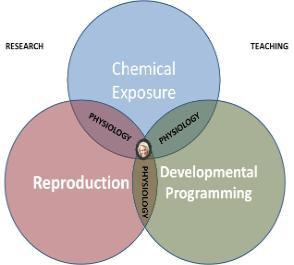
Michelle Bellingham is a Senior Lecturer at the School of Veterinary Medicine , University of Glasgow , specializing in Physiology, Ageing & Welfare . Her research focuses on the transgenerational effects of maternal exposure to environmental chemicals, particularly endocrine disrupting compounds (EDCs), on reproductive and metabolic health in sheep and human models. Key Roles: Chair of Grants Panel & Trustee Board (British Society for Neuroendocrinology), Member of Diversity & Inclusion Committees, Media Ambassador (Society for Endocrinology). Research: Integrates hormonal, molecular, and 'omics approaches to study prenatal programming of adult diseases, effects of biosolids-treated pastures, and maternal smoking on fetal development. Her recent publications examine sexually dimorphic cardiovascular impacts, liver transcriptome changes, and testicular dysgenesis syndrome-like phenotypes in sheep models exposed to real-life chemical mixtures. She has contributed to policy changes in prenatal care and led Athena SWAN award initiatives. Supervision includes PhD students on topics like transgenerational effects of EDCs, biosolids impacts, and oxidative stress in marine species. Grants from NIH, Wellcome Trust, and BBSRC support her work.
Dr. Frederic Surre is a Lecturer in Autonomous Systems & Connectivity at the University of Glasgow. His academic journey includes a PhD in Electronic Engineering (Computational Electromagnetics) from Toulouse INP, France, followed by postdoctoral research at Queen Mary University of London, Trinity College Dublin, and Dublin City University. He has held visiting roles at institutions like the University of British Columbia (2017) and has been an invited professor at INPT (France) and Universidad San Francisco de Quito (Ecuador). His research focuses on photonic integrated sensors for vibration/gas detection, optical fiber sensors for structural health monitoring (strain, humidity, pH), sapphire-based systems for extreme environments, and IoT-enabled digital instrumentation. Recent work includes advancements in SiN-based refractometers and biomedical diagnostic tools. Grants include leadership in the €415k PICSONDE project (ANR-funded) and collaborations like the Learning with Wearables initiative (£10k). He teaches courses in Digital Circuit Design, Dynamics & Control, and Wireless/Optical Transmission Systems. Professional memberships include Senior IEEE and AAAS. He contributes to IEEE standards committees and has advised on elderly monitoring devices via consultancy projects like Acticheck.
Randi Rotne is a Senior Lecturer in Small Animal Surgery at Charles Sturt University, affiliated with the School of Agricultural, Environmental and Veterinary Sciences. She holds a BVSc and PhD, and has over 20 years of clinical experience in veterinary practice, including running her own clinic in the Hawkesbury region. Her academic work spans teaching, research, and clinical supervision, with a focus on surgical education and small animal orthopedics. BVSc, University of Sydney PhD, University of Sydney (2017) – Biomechanical study on locking plates and bone blood supply Her research interests center on small animal surgery , clinical skills training , orthopedic biomechanics , and perioperative complications . She has developed innovative surgical teaching models and investigated outcomes in desexing and fracture repair. Her work bridges clinical practice and academic rigor, emphasizing evidence-based veterinary medicine. The recent articles show a strong focus on small animal surgical outcomes , diagnostic imaging , and educational tools . Key themes include ultrasound-guided procedures, bone healing assessment via CT and histopathology, and neonatal immunity in camelids. Her research integrates clinical data with educational innovation, particularly in surgical training models and pain management strategies. Canine interdigital grass seed foreign body retrieval using ultrasonography (Grant, 2021) Determining the incidence of perioperative acute kidney injury in dogs undergoing routine surgery (External Award, 2017) Investigations into locking plates and bone blood supply (Internal Award, 2016) Winner of early stage HDR presentation, The University of Sydney (2010) Winner of mid stage HDR presentation, The University of Sydney (2012) Randi Rotne actively supervises HDR students and contributes to research grants focused on surgical outcomes and educational tools. She is involved in peer review for journals such as the Journal of Veterinary Medical Education and collaborates with national initiatives like VetCompass Australia. Her work extends to community engagement through public events and media interviews on veterinary health topics. She is actively involved in developing teaching models for ultrasonography and clinical skills training. Her research team collaborates on projects related to surgical innovation, diagnostic validation, and veterinary education. She participates in professional networks such as VetEd Down Under and contributes to curriculum development in veterinary surgical training.
Abdellatif Akjouj is a Professor at the University of Lille's Faculty of Science and Technology, affiliated with the Physics Department. He conducts research at the UMR 8520 Institute of Electronics, Microelectronics and Nanotechnology (IEMN), focusing on advanced photonics and nanotechnology. His work bridges fundamental physics with applications in sensing and materials science. His research explores: Nanoscale light-matter interactions in plasmonic systems Development of high-sensitivity optical sensors for biomedical and environmental applications Theoretical and experimental studies of photonic crystals and nanostructures Quantum phenomena in engineered nanomaterials Thermal and nonlinear effects in nanophotonic devices Akjouj's recent publications (2023-2025) demonstrate strong focus on: Advanced plasmonic sensor designs using novel materials like black phosphorus and bimetallic structures Theoretical frameworks for exotic photonic states (Tamm plasmons, BIC states) Nanostructure optimization for medical diagnostics and energy applications Experimental validation of topological photonics concepts
Dr Phil Birch serves as Associate Professor in the Department of Engineering and Design within the School of Engineering and Informatics at the University of Sussex. He holds dual leadership roles as Head of Research for his department and Impact Lead for REF Unit of Assessment 12. His academic foundation includes a BSc and PhD from Durham University (awarded 1999), along with professional certifications as Chartered Physicist (CPhys) and Chartered Scientist (CSci). Dr Birch's research spans three interconnected domains: Computer Vision & Deep Learning: Specializing in object tracking (drones, humans), medical image analysis, and low-light enhancement Optical Physics: Focusing on liquid crystal devices, computer-generated holograms, and optical metrology Applied AI Systems: Developing practical implementations for UAV navigation, medical diagnostics, and security systems His recent publications (2024-2025) demonstrate strong activity in transformer-based tracking, diffusion model augmentation for medical imaging, and drone-based agricultural monitoring, with 15+ papers in high-impact venues including IEEE Transactions and SPIE conferences. Current funding includes an Innovate UK grant (2020-2024) for multi-modal security systems combining camera and sensor data. He leads the Industrial Informatics and Signal Processing research group, maintaining active industry collaborations while supervising PhD projects in optical AI systems. His lab resources include optical instrumentation, UAV testbeds, and access to high-performance computing for deep learning development.