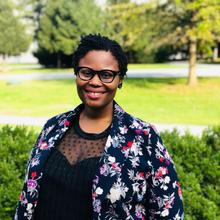
Emma Trentman is an Associate Professor of Arabic at the University of New Mexico (UNM) and Director of the Language Learning Center. Her research focuses on Applied Linguistics, particularly on language learning during study abroad programs, virtual exchange, and the impact of language ideologies on multilingual approaches. Research Interests: Multilingualism, Language Ideologies, Study Abroad Programs, Intercultural Communication, Arabic Language Education, and Curriculum Development. Key Publications: Co-editor of Language Learning in Study Abroad: The Multilingual Turn (2021), with works featured in The Modern Language Journal , Foreign Language Annals , and Critical Multilingualism Studies . Teaching: Offers Arabic language courses and the Languages Capstone class, integrating critical perspectives into language pedagogy. Editorial Work: Co-editor for Critical Multilingualism Studies Journal , advocating for plurilingual practices in education. Publications: Explores topics such as translanguaging, sociolinguistic competence, and decolonizing language learning frameworks across diverse contexts (Egypt, Tanzania, China). Advocacy: Engages in critical discussions on equity, identity, and sociocultural dimensions in language education.
Stephen Billings is an Associate Professor of Finance at the Leeds School of Business, University of Colorado Boulder, where he holds the Global Real Estate Capital Markets Chair position. He serves as the faculty director of the MS in Real Estate program and research director for the CU Real Estate Center. His work spans multiple research centers including the Center for Research on Consumer Financial Decision Making and the Michael A. Klump Center for Real Estate. Billings received his PhD in Economics from the University of Colorado, a MS in urban planning from the University of North Carolina, and a BS in economics from Georgetown University. Prior to joining CU Boulder in 2016, he was faculty at the University of North Carolina Charlotte with appointments in both economics and public policy, where he also served as faculty director for the real estate center. His research focuses on the intersection of housing, schools, neighborhoods and crime, addressing critical policy issues including the impact of public investment in light-rail transit on neighborhoods, school segregation's influence on academic achievement and crime, neighborhood gentrification causes, lead-based paint in low-income housing, and the effects of sea level rise and natural disasters on neighborhood sorting and household finances. Billings employs sophisticated analysis of large micro-datasets with studies based on data and policies in Charlotte, NC and Denver, CO. His work connects urban economics with public policy, demonstrating how neighborhood environments shape individual outcomes across multiple dimensions. Billings' recent publication record demonstrates a consistent focus on neighborhood effects, school choice impacts, crime economics, and housing market dynamics. His work frequently examines the intersection of race, housing, and economic outcomes, with particular attention to policy implications. He has developed innovative methodological approaches to studying residential amenities and neighborhood spillovers, with increasing attention to climate change impacts on housing markets. His research appears in top journals including The Quarterly Journal of Economics, American Economic Review: Insights, and Journal of Urban Economics. As an educator, Billings teaches undergraduate and masters classes in real estate finance and economics, as well as doctoral and masters level courses on cost-benefit analysis and statistical methods. He has extensive consulting experience conducting economic impact studies, including assessments of North Carolina's public higher education system, affordable housing needs in Colorado communities, and the economic effects of marijuana legalization on property markets. His practical policy work complements his academic research, creating a bridge between theoretical insights and real-world applications. Billings leads significant research initiatives through the CU Real Estate Center, where he directs studies examining the impact of business improvement districts and other urban development policies. His work bridges academic research with practical policy applications, making substantial contributions to our understanding of how housing, education, and neighborhood environments shape individual outcomes and community development. His December 2023 memo on the HUD Officer Next Door Program exemplifies his engagement with current housing policy issues.
Jonathan Levine is a Professor of Urban and Regional Planning at the University of Michigan's Taubman College of Architecture and Urban Planning, where he has been faculty since 1991. His work focuses on transportation planning, housing and equitable development, and land use and environmental planning, with a particular emphasis on shifting from mobility-based to accessibility-based planning paradigms. Levine's educational background includes: Ph.D. in City and Regional Planning from the University of California, Berkeley M.C.P. in City and Regional Planning from the University of California, Berkeley M.S. in Engineering (Civil Engineering-Transportation focus) from the University of California, Berkeley B.S. in Political Economy of Natural Resources from the University of California, Berkeley His research centers on the potential and rationales for policy reform in transportation and land use. Levine argues that a shift in the transportation and land-use planning paradigm from a mobility to an accessibility basis is compelled by transportation theory and would be transformative to planning practices. His current work includes sponsored projects and the book "From Mobility to Accessibility: Transforming Urban Transportation and Land-Use Planning" (Cornell University Press, 2019), co-authored with Joe Grengs and Louis Merlin. He previously authored "Zoned Out: Regulation, Markets, and Choices in Transportation and Metropolitan Land Use" (Resources for the Future, 2006), which argued for policy reform based on expanding households' effective range of choices. Levine's recent publications demonstrate a clear trend toward accessibility-based evaluation of transportation systems and land-use planning. His articles explore topics such as comparing bus rapid transit and light rail, project-level accessibility analysis, overcoming the last-mile problem, and the effects of automated transit systems. His work consistently challenges traditional transportation planning paradigms and advocates for approaches that prioritize access to destinations rather than mere mobility. Levine's contributions to the field have been recognized with several prestigious awards: 2010 Chester Rapkin Award for best paper in the Journal of Planning Education and Research 2011 Residential Fellowship at the Rockefeller Foundation Center in Bellagio, Italy 2001 Excellence in Urban Policy Scholarship Award from the Association of Collegiate Schools of Planning and U.S. Department of Housing and Urban Development 1996 Best of Association of Collegiate Schools of Planning Award Levine has led significant research projects including Implementation of Accessibility-Based Evaluation for Transportation and Land-Use Planning funded by NEXTRANS, Sustainable Transportation for a 3rd Century addressing the last mile problem, and Accessibility Evaluation from Laboratory to Practice. His teaching portfolio includes Transportation and Land-Use Planning, Public Economics for Urban Planning, Research Design, and the MUP Capstone studio, where he guides students through real-world planning challenges. As a thought leader in urban planning, Levine regularly contributes to public discourse on zoning policies, housing diversity, and transportation planning. He has been featured in numerous media outlets discussing how land use policies impact sustainability, affordability, and racial justice, emphasizing that "zoning is behind all of it, and is not only the cause, but exacerbates it." His insights on the historical role of single-family zoning in perpetuating racial segregation have been particularly influential in contemporary housing policy debates.
Dr. Miemie Winn Byrd is an Adjunct Professor at the Daniel K. Inouye Asia-Pacific Center for Security Studies (DKI APCSS), where she researches, teaches, and publishes on security dynamics in Myanmar/Burma & Southeast Asia, economics & security linkages, and organizational development. A retired US Army Lieutenant Colonel with 28 years of distinguished service, she brings extensive experience from military, private sector, and nonprofit organizations to her academic work. Dr. Byrd earned her educational credentials from prestigious institutions: Bachelor of Arts in Economics and Accounting from Claremont McKenna College Master of Business Administration with emphasis in Asia-Pacific Economics and Business from University of Hawaii Doctorate in Education Leadership from the University of Southern California Her research focuses on the complex interplay between security, economics, and social development in Southeast Asia, with particular expertise in Myanmar's political and security landscape. Dr. Byrd examines how civil-military operations, women's roles, and educational approaches impact socioeconomic development and security outcomes in the region. She investigates the strategic implications of Myanmar's internal conflicts for broader Indo-Pacific security dynamics, and analyzes how private sector engagement can contribute to poverty alleviation and stability. Dr. Byrd serves on multiple advisory boards that extend her influence in policy and research: Board of Governors of the Keck Center for International and Strategic Studies at Claremont McKenna College Regional Advisory Committee for Knowledge for Democracy Myanmar Initiative of the Asia Regional Office, International Development Research Centre The Oxford-Thanakha International based in Chiang Mai, Thailand Myanmar Policy Institute based in Washington, D.C. Her military career included significant roles such as Deputy Economic Advisor and Civil-Military Operations Plans Officer at U.S. Pacific Command, where she supported Operations Enduring Freedom. She served as a linguist and cultural advisor for U.S. delegations at the Association of Southeast Asian Nations Regional Forum and during POW/MIA recovery negotiations in Myanmar. Her civilian career spans 16 years in auditing, accounting, and financial management with multinational corporations.
Ira Lit is a Teaching Professor at the Graduate School of Education at Stanford University. They serve as Faculty Director of the Stanford Teacher Education Program (STEP) and are affiliated with the Stanford Woods Institute for the Environment . Their work bridges teacher education, elementary education, and educational equity. Key research areas include: Equity in education systems Design of schooling models Experiences of marginalized students Family-school partnerships Recent publications analyze teacher preparation programs, voluntary desegregation, and multilingual education. Lit has supervised doctoral students like Elena Darling Hammond and Nallely Aceves , with a focus on race, identity, and policy in California schools. They hold a Ph.D. from Stanford in Curriculum Studies and Teacher Education (2003) and have taught at Stanford since 1986.
Ryuko Kubota is a Professor in the Department of Language and Literacy Education at the University of British Columbia (UBC), Faculty of Education, since 2009. Her research spans critical applied linguistics , race and language education , and decolonial pedagogies . She has contributed extensively to understanding language ideologies , multicultural education , and critical literacies . Education: BA in English Linguistics, Rikkyo University (1980) MAT in TESOL, School for International Training (1987) PhD in Education, OISE/University of Toronto (1992) Her research interests focus on the intersection of race, language policies, and critical pedagogies. She examines neoliberal paradoxes in language learning, translingual practices , and antiracist engagement in global contexts. Her work addresses systemic inequities in English language education and immersion programs . Recent publications highlight critical approaches to World Englishes , AI-assisted writing , and raciolinguistic hegemony . These studies span interdisciplinary sub-fields including critical race theory , decolonial education , and language teacher identity . Scientific awards include the DSSA Award 2020 . She supervises graduate students like Charu Gupta (PhD) and collaborates with institutions such as the Language Sciences Institute at UBC. Her teaching includes courses on critical multicultural education and language politics .
Dr. Andrea R. English is a Senior Lecturer in Philosophy of Education at the Moray House School of Education and Sport, University of Edinburgh. She holds significant academic leadership roles, including President-Elect of the John Dewey Society and Editor-in-Chief of IMPACT: Philosophical Perspectives on Education Policy . Her research focuses on productive struggle in learning, dialogic pedagogy, and decolonizing education. She earned her doctorate from Humboldt University Berlin and has taught globally, including at Mount Saint Vincent University and Humboldt University Berlin. Dr. English leads the Productive Struggle Lab and the Listening Study Group, emphasizing anti-oppressive and democratic educational approaches. She coordinates teacher education initiatives and supervises PhD students exploring critical thinking, inclusive education, and decolonization. Her work bridges philosophy and practice, addressing how teachers foster student resilience through pedagogical listening, particularly in STEM education. She actively contributes to Scotland’s anti-racist curriculum project and collaborates internationally on transformative learning and ethical teaching practices. Dr. English’s teaching spans undergraduate and postgraduate programs, including courses on critical thinking, inclusive pedagogy, and John Dewey’s educational philosophy. Her funded research explores AI tools for identifying student struggle and the role of negativity in transformative learning. She frequently presents at global conferences, advocating for dialogic teaching and moral education reform.
Gustavo J. Bobonis is a Professor in the Department of Economics at the University of Toronto, with affiliations at the Munk School of Global Affairs and Public Policy. He holds a Ph.D. from the University of California, Berkeley (2005) and a B.A. from the University of Puerto Rico at Rio Piedras (2000). He co-directs the Forward Society Lab and is actively involved in research on development, labor, political economy, and economic history. Research Interests: His work focuses on development economics, particularly the impact of public policies on poverty, violence, education, and governance. He employs rigorous empirical methods, including field experiments and quasi-experimental designs, to analyze issues such as intimate partner violence, corruption, clientelism, and human capital accumulation. His research is geographically concentrated in Latin America and Puerto Rico. Recent Research Trends: His recent publications and working papers (2022–2025) demonstrate a strong focus on institutional reform, including anti-corruption audits, domestic violence courts, and education management. He also investigates long-term social impacts of welfare programs and climate adaptation strategies. His interdisciplinary approach bridges economics, public policy, and social science. Scientific Awards: U of T Department of Economics Faculty Award for Excellence in Undergraduate Teaching, 2015 John C. Polanyi Prize in Economic Science, 2009 National Academy of Education / Spencer Foundation Postdoctoral Fellow, 2008 Advising and Grants: While specific student names are not listed, he advises graduate students through the Honours Essay and research workshops. He leads collaborative research projects funded through grants and affiliations with J-PAL and BREAD, often involving large interdisciplinary teams. His work includes randomized evaluations and long-term follow-ups, suggesting sustained funding and research support. Labs and Teams: He co-directs the Forward Society Lab, which likely supports policy-relevant research on social development. He frequently collaborates with economists such as Paul Gertler, Marco Gonzalez-Navarro, Simeon Nichter, and Luis R. Cámara Fuertes. His affiliations with J-PAL and BREAD indicate integration into major global research networks focused on development and poverty alleviation.
Dr. Jennifer Katz serves as an Associate Professor in the Department of Educational and Counselling Psychology, and Special Education (ECPS) at the University of British Columbia's Faculty of Education. She joined UBC in July 2016 after previously holding an Associate Professor position in Inclusive Education at the University of Manitoba. Renowned for creating the Three Block Model of Universal Design for Learning (UDL), her framework is now implemented across Canadian school divisions to advance inclusive educational practices. Dr. Katz's research centers on inclusive education K-12 , social and emotional learning (SEL) , and mental health promotion in schools . Her work integrates the Three Block Model of UDL to address diverse student needs while emphasizing indigenous perspectives through extensive collaboration with First Nation elders and communities in Manitoba, Alberta, and Quebec. This intersectional approach reimagines inclusive education through reconciliation frameworks and culturally responsive practices. Analysis of her recent publications reveals consistent focus on mental health literacy programs for students with developmental disabilities, UDL's impact on academic achievement and teacher efficacy, and the integration of Indigenous knowledge systems. Her research bridges theory and practice through classroom-based interventions, cluster-randomized trials, and transformative learning frameworks that prioritize student well-being and social inclusion. Scientific Awards: No scientific awards were documented in the provided sources. Advising and Grants: While specific graduate students and research grants aren't detailed in the text, Dr. Katz's extensive publication record and community partnerships indicate active research leadership. Her work with school divisions across Canada suggests significant program implementation funding, though grant specifics remain unreported. Labs and Teams: Dr. Katz maintains critical partnerships with First Nation communities, embedding Indigenous knowledge into educational frameworks. Her Three Block Model implementation involves multi-school division collaborations nationwide, creating practitioner-researcher networks focused on inclusive classroom transformation.
Maisha T. Winn serves as the Excellence in Learning Graduate School of Education Professor at Stanford University and is Faculty Director of the Stanford Accelerator for Learning's Equity in Learning Initiative. She leads the Futuring for Equity Lab as Principal Investigator and holds significant leadership positions including President-Elect of the American Educational Research Association and membership in the National Academy of Education. Dr. Winn's research examines how non-dominant youth and communities develop literate trajectories across historical and contemporary settings. As an ethnographer by training, she investigates how communities depicted as under-resourced create their own educational practices, processes, and institutions. Her scholarship bridges historical analysis with contemporary educational practice to build more just, collaborative, and equitable futures in education. Her work spans restorative justice in education, Black literacy studies, and transformative justice approaches, with particular attention to the school-to-prison pipeline, independent Black institutions, and futures-oriented educational frameworks. Dr. Winn analyzes how historical educational models can inform contemporary practices that center community knowledge and cultural identity. Andrew W. Mellon Fellow at CASBS (2022-23) American Educational Research Association Fellow Member of the National Academy of Education Dr. Winn advises doctoral students including Christina Hewko and Misbah Naseer, and leads research initiatives focused on educational equity. Her Futuring for Equity Lab develops frameworks for understanding how marginalized communities have historically created educational spaces that affirm their identities and knowledge systems, with direct implications for contemporary educational practice and policy. Her research team collaborates with community organizations and schools to translate scholarly insights into practical applications that promote educational justice, particularly in areas of school discipline reform and literacy education for marginalized youth.
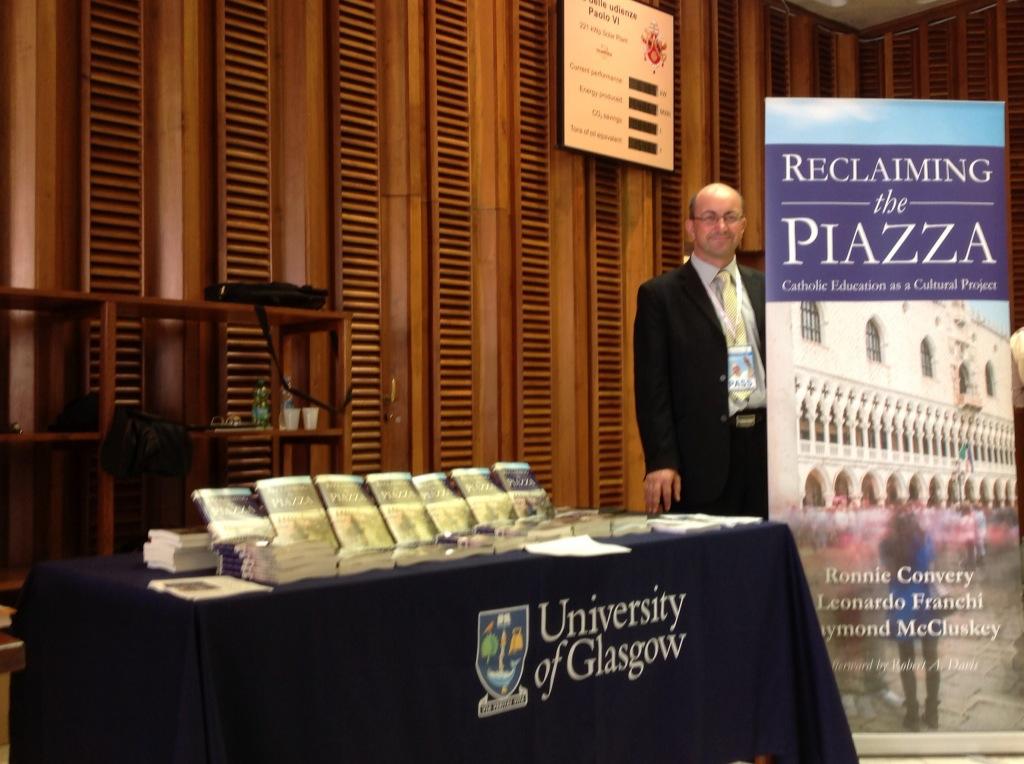
Dr. Leonardo Franchi serves as a Senior Lecturer in Pedagogy, Praxis & Faith at the University of Glasgow's School of Education. He is an internationally recognized scholar in Catholic education, holding significant editorial roles including Series Editor for both Catholic Education Globally - Challenges and Opportunities (Springer) and Education and Integral Human Development (Catholic University of America Press). In September 2024, he was appointed co-convenor of the Scottish Catholic Historical Association and maintains an active role as Executive Member of the Association of Catholic Institutes of Education. Franchi's educational background includes a Master of Arts (Hons), Post Graduate Certificate in Education, Master of Education, Post Graduate Certificate in Academic Practice, and a PhD. His academic journey reflects both theoretical depth and practical teaching experience in educational settings. His research interests center on Catholic education with particular focus on religious education, teacher formation, and the integration of liberal arts in higher education. Franchi has made significant scholarly contributions through the Reclaiming the Piazza series and numerous publications exploring how Catholic educational philosophy can address contemporary challenges while maintaining theological integrity. His work consistently examines the intersection of faith, culture, and educational practice, with increasing attention to character formation, intercultural dialogue, and the application of Catholic social teaching to educational policy. Analysis of his recent publications reveals a consistent trajectory examining Catholic educational identity in pluralistic contexts, with growing emphasis on character formation, teacher professional identity, and the integration of Catholic intellectual tradition with contemporary educational challenges. His 2023-2025 work shows increased focus on Scottish Catholic educational history, the application of papal encyclicals to educational practice, and the role of music and arts in religious formation. Series Editor for Catholic Education Globally - Challenges and Opportunities (Springer) Series Editor for Education and Integral Human Development (Catholic University of America Press) Co-convenor of Scottish Catholic Historical Association (since 2024) Executive Member of Association of Catholic Institutes of Education (since 2016) Academic Adviser to Academic Advisory Forum for Religious Education Reform in England and Wales (2019-2022) Franchi actively supervises doctoral students on diverse topics including professional identity of Catholic school teachers, music and religious education, Jesuit educational charism, and solidarity in Jesuit higher education. His supervision portfolio demonstrates his commitment to both theoretical exploration and practical application in religious educational contexts. He has received grant funding, including £10,000 from Porticus UK to support academics from developing countries attending the ACISE 2018 conference. Franchi also serves on multiple editorial boards including Review of Religious Education, Formation and Theology, and Studia Pedagogica Ignatiana. His professional activities extend to international presentations, with keynotes at institutions including Australian Institute of Theological Education and Radboud University, demonstrating his global influence in Catholic educational discourse. Franchi also serves as Director of Mater Christi Multi Academy Trust in Lancaster and holds a 0.5 FTE position as Professor of Catholic Education at the University of Notre Dame Australia.
Monica Bell is a tenured Professor of Law and Associate Professor of Sociology at Yale University, holding joint appointments across Yale Law School and the Department of Sociology. Her office is located at 127 Wall Street, New Haven, CT. As the first Black woman to serve as a junior faculty member and the second Black woman to receive tenure at Yale Law School, she is deeply committed to advancing diversity in academia. Education: B.A. in Political Science and Sociology, Furman University (Truman Scholar) M.Sc. in Equality Studies, University College Dublin (Mitchell Scholar) J.D., Yale Law School Ph.D. in Sociology and Social Policy, Harvard University Bell's research examines structural inequality through interdisciplinary lenses, focusing on policing, legal estrangement, housing segregation, welfare policy, and racial-spatial dynamics. She employs qualitative methodologies to analyze how marginalized communities experience legal institutions, with emphasis on urban poverty and systemic exclusion. Her conceptual framework of 'legal estrangement' redefines understandings of community-law enforcement relationships. Her publications consistently engage with themes of racial justice, institutional reform, and community agency. Recent work demonstrates a strong focus on reimagining policing systems, analyzing residential segregation patterns, and developing democratic approaches to poverty governance. Articles frequently intersect law, sociology, and urban studies while incorporating critical race theory. Awards and Honors: Jane Addams Article Award (American Sociological Association) Derrick A. Bell, Jr. Award (AALS) Yale Law Women Faculty Excellence Award Russell Sage Foundation Visiting Scholar Fellowship Truman Scholarship & Mitchell Scholarship Bell teaches Constitutional Law and Law & Sociology, exploring governmental power structures and sociological applications to legal analysis. She previously clerked for Judge Cameron McGowan Currie (U.S. District Court) and served as an Arthur Liman Fellow at Legal Aid Society of D.C., focusing on TANF policy. No current grants, labs, or student advisees are detailed in available materials.
Dr. Limin Jao is an Associate Professor in the Department of Integrated Studies in Education (DISE) at McGill University’s Faculty of Education. Her research focuses on exemplary teaching practices in mathematics and STE(A)M education, emphasizing interdisciplinary approaches, project-based learning, and student engagement. She holds leadership roles including Vice-President of the Canadian Mathematics Education Study Group and Editorial Board member of the Canadian Journal of Science, Mathematics, and Technology Education. Her expertise spans teacher education, pedagogy, and research-practice partnerships. Education: Ph.D., Curriculum Studies and Teacher Development, Ontario Institute for Studies in Education, University of Toronto M.A., Curriculum Studies and Teacher Development, OISE, University of Toronto B.Ed., Secondary Biology and Mathematics Education, Queen's University B.Sc.H., Biology and Mathematics, Queen's University Research Interests: Limin explores how interdisciplinary and inquiry-based methods foster student engagement and teacher development. Her work bridges theory and practice, advocating for inclusive classrooms and educator collaboration. She has pioneered projects linking community artifacts to STEM learning and co-edited volumes on transdisciplinary education and teacher training borders. Publications Trends: Recent work examines gender perspectives in mathematics, pre-service teacher experiences, and professional learning communities in STEM. Her research emphasizes equity, pedagogical innovation, and the intersection of cultural contexts with educational practices. Awards: 2023 Award for Distinguished Teaching, McGill University Faculty of Education Advising & Grants: Limin supervises graduate students in mathematics education and collaborates on research-practice initiatives. She leads the Jao Research Team and contributes to the Chandaria Research Centre’s advisory board at Branksome Hall. Labs/Teams: The Jao Research Team focuses on innovative teaching strategies and STE(A)M education, with projects addressing student agency and interdisciplinary curriculum design.
Dr. Nemanja Stanišić is a Full Professor at Singidunum University's Faculty of Business, with a distinguished academic career spanning over 15 years. He holds a Ph.D. in Corporate Finance from Singidunum University (2010), an MBA in Finance from Lincoln University (2007), and a Bachelor's in Accounting from the University of Belgrade (2005). His expertise focuses on Corporate Finance, Banking, Audit, and Applied Statistical Analysis. His research integrates quantitative methods with economic theory, addressing topics such as audit opinion prediction using AI, tourism destination competitiveness, financial distress dynamics, and air pollution health impacts. He co-authored textbooks including Contemporary Exchange and E-business (2010) and Financial Statement Analysis (2024), and served as Editor-in-Chief of The European Journal of Applied Economics . He teaches courses from Financial Accounting to Advanced Financial Engineering at undergraduate, master's, and Ph.D. levels. The 15 most recent publications highlight his interdisciplinary approach: 7 in Finance/Audit, 5 in Tourism/Hospitality, and 3 in Environmental Health. Key trends include applying machine learning to audit quality (2023), multilevel modeling for hospitality satisfaction (2015-2019), and air pollution mortality analysis (2016). His work appears in high-impact journals like Tourism Management (IF 10.125) and Environmental Health (IF 4.986). He held administrative roles including Rector (2020-2021) and Vice President of Singidunum University. He served as Vice Dean for Student Affairs (2010-2011) and participated in TEMPUS projects for educational reform. He mentors graduate students extensively, advising 100+ bachelor's, 57 master's, and 4 doctoral theses, including international candidates. His visiting professorship at Bangkok's ICO NIDA and teaching in Austria-Singidunum joint programs reflect global engagement. Professional development includes advanced training at Utrecht University (Bayesian Modeling, 2019), Stanford (Mentoring, 2010), and NYU (Valuation, 2012). He reviews for top journals like Annals of Tourism Research and Cornell Hospitality Quarterly , with 1017 Google Scholar citations and 349 Scopus citations. Current research involves the Science Fund of Serbia's TOURCOMSERBIA project evaluating tourism competitiveness models.
Prof. Dr. Nadine Hartmann serves as Visiting Professor for Future Philosophy and Scenarios in the Field of Art and Media Philosophy at the Karlsruhe Academy of Art and Design (Hochschule für Gestaltung Karlsruhe), a reform university founded in 1992 in collaboration with the ZKM | Center for Art and Media in Karlsruhe. Her position aligns with the institution's mission of connecting traditional arts with media technology and electronic production processes. Hartmann holds a doctorate in cultural studies with her thesis titled 'Thinking Like a Girl: Figuration, Fil(l)iation, and Sexual Difference' (forthcoming with Turia & Kant). Her academic journey includes significant appointments across German institutions, demonstrating her expertise in philosophical and theoretical approaches to art and media. Hartmann's research focuses on the intersection of psychoanalysis, aesthetics, and feminist philosophy of difference. Her work examines how gender, identity, and philosophical frameworks shape artistic production and media theory. She approaches philosophical questions through the lens of contemporary art practices, exploring how theoretical concepts manifest in creative processes and media technologies. Her research contributes to ongoing dialogues about sexual difference, figuration, and filiation within contemporary philosophical discourse. Throughout her career, Hartmann has maintained strong connections with Berlin's academic institutions, particularly the Berlin University of the Arts (UdK Berlin), while also contributing to philosophical discourse at other major German universities. Her teaching spans multiple disciplines within the arts and humanities, reflecting the interdisciplinary nature of contemporary media philosophy. Hartmann has been actively involved in research networks, including the DFG network 'Dispositiv der Menge' and the DFG network 'Other Knowledge' in artistic research and aesthetic theory, demonstrating her commitment to collaborative scholarly work at the intersection of art and philosophy. Her academic trajectory shows consistent engagement with theoretical frameworks that bridge artistic practice and philosophical inquiry, particularly through the lens of feminist thought and psychoanalytic theory. Hartmann's work contributes to expanding philosophical discourse within art education and practice-based research contexts.