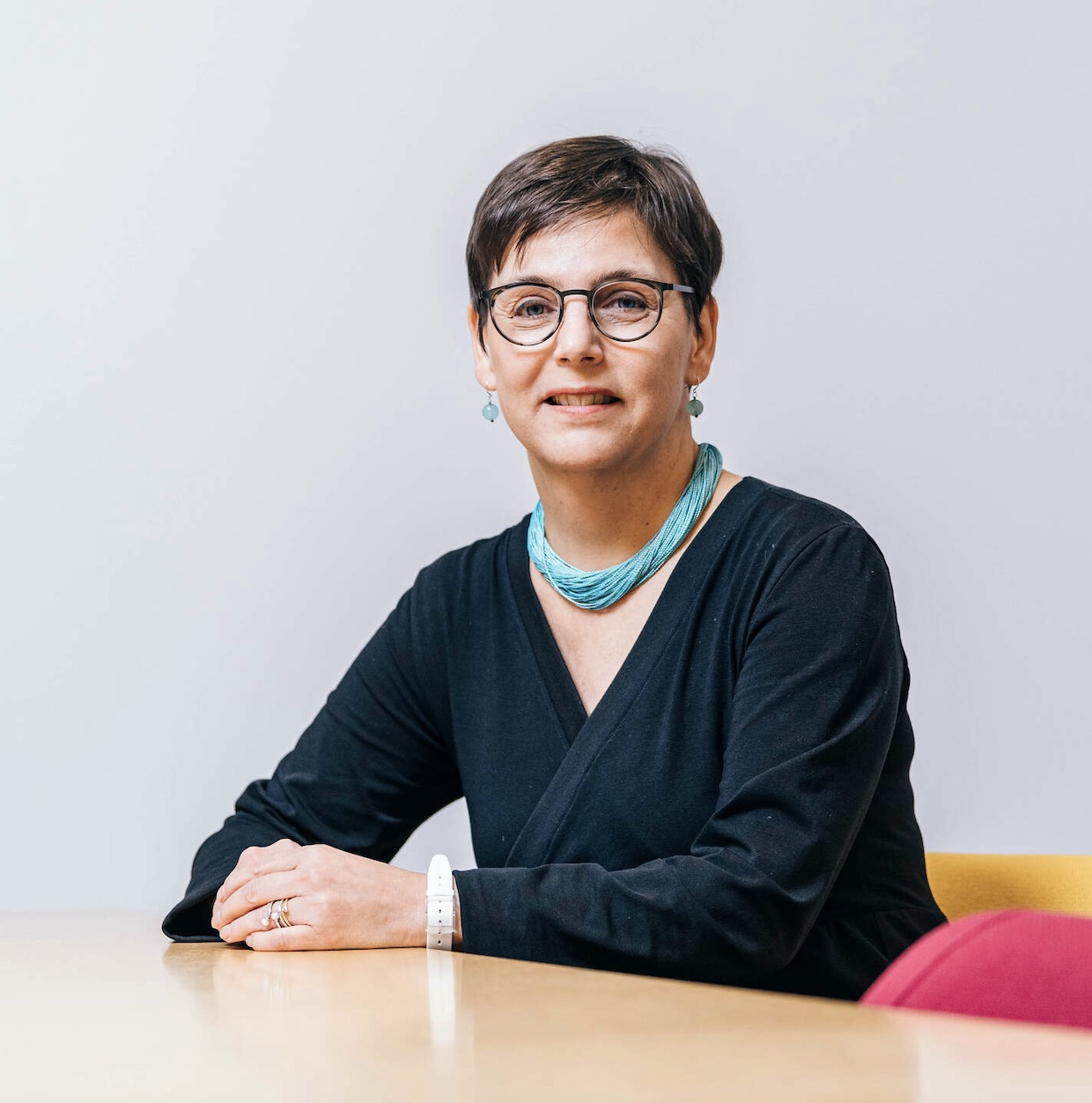
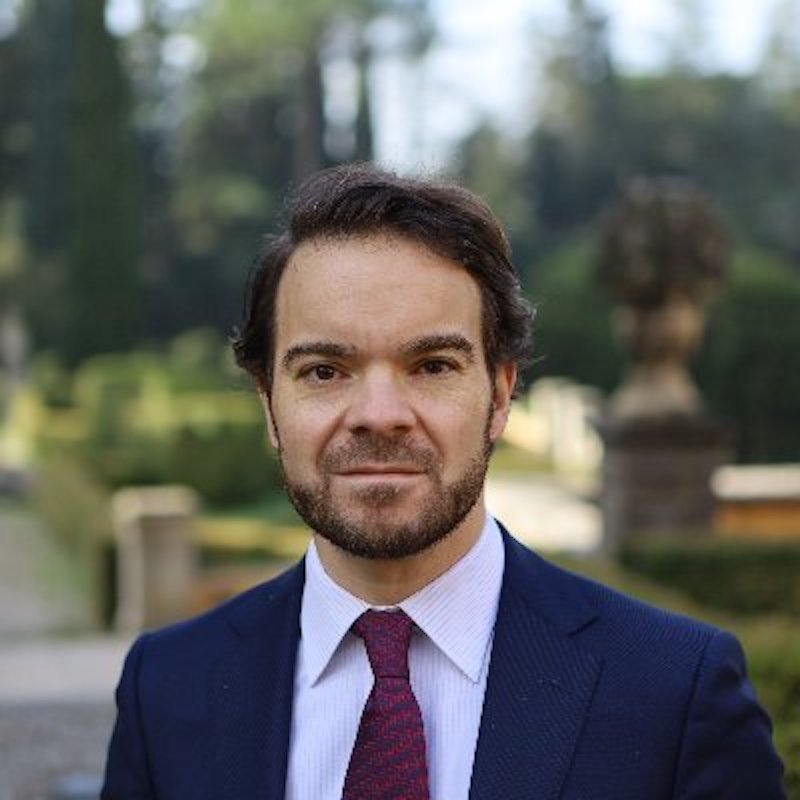
Clare Hemmings is a Professor of Feminist Theory at the Department of Gender Studies, London School of Economics and Political Science (LSE), where she has been since 1999. Her work bridges feminist theory, queer studies, and sexuality studies, with a focus on how these fields are institutionalized and narrated. She holds a PhD and has authored seminal works like Why Stories Matter (2011) and Considering Emma Goldman (2018), which explore feminist historiography and political ambivalence. Her research emphasizes interdisciplinary methods, including archival interventions and creative writing to challenge dominant narratives. Hemmings’ research interests include feminist epistemology, queer of color critique, and anarchist thought. She has been active in countering 'anti-gender' movements and is currently developing a project on 'Feminist Knowledge Struggles.' Her work is marked by attention to form, affect, and the intersection of nationalism, feminism, and sexuality. She supervises PhD students Senel Wanniarachchi and Rawda Elaskary and has received the FWSA Book Prize 2012 for Why Stories Matter . Hemmings’ articles span feminist theory, political mobilizations, and affect studies. Her recent work engages with family memory archives and decolonial methodologies. She is a prolific scholar, contributing to journals like Memory Studies , Feminist Studies , and Radical Philosophy . Her interdisciplinary approach integrates literary criticism, sociology, and activism, offering transformative frameworks for feminist praxis.
Mary Bucholtz is a Professor in the Department of Linguistics at the University of California, Santa Barbara (UCSB). She holds affiliations with multiple departments including Anthropology, Feminist Studies, Spanish and Portuguese, the Gevirtz Graduate School of Education, Comparative Literature, and Latin American and Iberian Studies. Her research integrates sociocultural linguistics with anthropological, gender, and social justice frameworks. Education: PhD in Linguistics, University of California, Berkeley (1997) Bucholtz's work examines how language shapes and is shaped by social identities, particularly among youth, through dimensions like race, gender, and cultural practices. She emphasizes community-centered research , linguistic activism , and interdisciplinary methodologies to address systemic inequalities. Recent publications explore affective agency in Latinx youth, educational equity, and antiracist linguistics. Her collaborative projects often involve partnerships with educational institutions and youth communities in California, focusing on translanguaging , Black language justice , and raciolinguistic ideologies . Grants from the National Science Foundation, Spencer Foundation, and Wenner-Gren Foundation support her research. She co-edited the open-access volumes Decolonizing Linguistics and Inclusion in Linguistics (Oxford University Press, 2024), alongside authoring White Kids: Language, Race, and Styles of Youth Identity (Cambridge, 2011) and Talking College: Making Space for Black Language Practices in Higher Education (Teachers College Press, 2022).
Elisabeth Jean Wood is a Professor of Political Science at Yale University and holds a concurrent professorship at the Santa Fe Institute. Her research focuses on political violence, particularly sexual violence during war, civil war dynamics, and social movements. She is renowned for her work on insurgent transitions in South Africa and El Salvador, as well as her analysis of variation in wartime sexual violence. Wood has authored influential books including Forging Democracy from Below (2000) and Insurgent Collective Action and Civil War in El Salvador (2003). Her recent work examines the Myanmar military's sexual violence against the Rohingya, emphasizing ideological motivations and institutional frameworks. Wood teaches courses on comparative politics, political violence, and qualitative research methods at Yale. She serves on editorial boards for Politics and Society , American Political Science Review , and the Contentious Politics series. Her research emphasizes ethical fieldwork practices and transparency in qualitative studies, addressing challenges in conflict zones. Her work bridges theoretical contributions with policy implications for understanding and preventing conflict-related atrocities.
Tuuli Mattelmäki is a Professor at Aalto University's School of Arts, Design and Architecture , affiliated with the Department of Design . Her work centers on co-design , service design , and creative practices , with a focus on empathic approaches and societal transformations. Research Interests : Empathic Design : Human-centered methodologies in public sector innovation Transformational Futures : Exploring creative practices for sustainability Service Design : Cross-organizational B2B innovation and prototyping Design Probes : Experimental tools for participatory engagement Recent Articles (2022-2025) reflect expertise in service design , sustainability , and creative interventions , spanning subfields like co-laboratories, inner conditions in co-design, and climate-responsive design. Collaborations include institutions such as University of Sussex, RMIT, and Utrecht. Scientific Awards : Ziman Award (2024) for the CreaTures project Industrial Designer of the Year (2008) by TKO and ORNAMO Dean's Publication Bonus (2012) for the Encore team Teams & Labs : Principal Investigator of the CreaTures (Creative Practices for Transformational Futures) project, leading a multidisciplinary team with partners including Superflux, Kersnikova, and RMIT University.
Deval Desai serves as Reader in International Economic Law at the University of Edinburgh's Edinburgh Law School, a position he has held since 2020 after serving as Lecturer from 2020-2023. His academic career includes research positions at Harvard Law School and the Geneva Graduate Institute. Dr. Desai also brings extensive practical experience from a decade working with the World Bank on rule of law and governance in sub-Saharan Africa, as well as advising the United Nations on rule of law issues. Dr. Desai's educational background includes an MA in History and French Literature from Oxford University, followed by legal training at City University/BPP Law School (PGDipL and PGDipLP), and advanced law degrees (LLM and SJD) from Harvard Law School. At Harvard, he held prestigious fellowships including the Byse Fellowship, Program on Negotiation Next Generation Fellowship, and Institute for Global Law and Policy Fellowship. MA (Oxon), History and French Literature PGDipL, PGDipLP, City University/BPP Law School LLM, Harvard Law School SJD, Harvard Law School Dr. Desai's research centers on law and development, administrative law and regulation, theories of the state, and patterns of knowledge and authority across the Global North and South. His work examines institutional reform processes, particularly how expertise and knowledge operate within rule of law initiatives. His interdisciplinary approach draws from legal and social theory, development studies, international relations, and performance studies, as evidenced in his monograph Expert Ignorance (Cambridge University Press). His recent work focuses on fiscal sociology, administrative law in the Global South, and the politics of social welfare provision. Dr. Desai's publications span leading journals in law, political science, and development studies, revealing a consistent focus on the intersections between legal institutions, governance, and development. His work demonstrates increasing engagement with comparative methodologies and critical perspectives on knowledge production in global governance. Recent articles show particular attention to fiscal policy, welfare systems, and responses to global crises like the Covid-19 pandemic, with comparative studies between India and European contexts. Dame Muriel Spark Medal (2024, Royal Society of Edinburgh) Chancellor's 'Rising Star' Award (2023, University of Edinburgh) Member of the Young Academy of Scotland Fellow of the Royal Society of Arts Fellow of the Young Academy of Europe Dr. Desai has secured significant research funding from diverse international sources, including a £2.1 million Swiss National Science Foundation Sinergia grant titled 'Reversing the Gaze: Towards Post-Comparative Area Studies' where he serves as PI. He also leads projects funded by the British Academy, University of Edinburgh's Big Ideas Accelerator, Scottish Funding Council, and Foreign, Commonwealth, and Development Office. His commitment to mentoring is evident through his recognition with the Susan Manning Award for Inspiring Mentor and his leadership in establishing programs like the Global Scholars' Academy at the Geneva Graduate Institute and the Global Justice summer school at CEU. As editor-in-chief of the Cambridge University Press book series 'Elements in Legal Theory and the Global South' and serving on multiple editorial boards, Dr. Desai plays a significant role in shaping scholarly discourse. His current research projects examine 'loss' in legal institutions guiding transitional processes, constitutional implications of fiscal arrangements in fragile contexts, and social welfare provision in India and Italy.
Mohamed Bouri is a Senior Lecturer and Researcher at École Polytechnique Fédérale de Lausanne (EPFL), where he is affiliated with the School of Engineering (STI) and specifically the Microengineering Department (SCI-STI-MB). He is part of the ReHAssist research group (http://rehassist.epfl.ch), which focuses on rehabilitation robotics and human-robot interaction. His office is located in the MED Building (MED 3 1016) at Station 9, 1015 Lausanne. Dr. Bouri's research spans several key areas in robotics and rehabilitation engineering. His primary focus is on the development and control of exoskeleton systems for mobility assistance and rehabilitation. He has made significant contributions to hip exoskeleton technology, adaptive control strategies, and human-robot interaction paradigms. His work bridges engineering principles with clinical applications, particularly for individuals with mobility impairments and neurological conditions. Additional research interests include sensory substitution techniques, balance control systems, and astronomical instrumentation involving robotic fiber positioners for multi-object spectrographs. Analysis of Dr. Bouri's recent publications reveals a strong emphasis on practical applications of robotics in rehabilitation settings. His work increasingly focuses on user-centered design, adaptive control systems that respond to individual user needs, and ecological validity in testing environments. There's a clear trend toward developing systems that can function effectively in real-world scenarios rather than controlled laboratory settings. His research also shows growing integration of physiological feedback mechanisms and multimodal sensing to enhance human-robot cooperation, with applications spanning from Parkinson's disease rehabilitation to astronomical instrumentation. Dr. Bouri has supervised numerous doctoral students whose theses reflect the breadth of his research interests, including work on lower-limb exoskeletons, robotic control systems, and rehabilitation technologies. His collaborative approach is evident in the extensive list of co-authored publications across multiple institutions and disciplines, demonstrating his ability to bridge engineering with clinical and astronomical applications. Based at EPFL's Microengineering Department, Dr. Bouri leads research activities within the ReHAssist laboratory, which specializes in rehabilitation assistance technologies. The lab focuses on developing innovative robotic solutions for mobility assistance, with particular expertise in exoskeleton design, control algorithms, and human-robot interaction paradigms. His work on projects like TWIICE One has demonstrated real-world impact in assistive technology development.
Mikael B. Skov is a Vice Dean and Professor at the Technical Faculty of IT and Design of Aalborg University , Denmark. His research spans human-AI interaction, robotics, and user experience, with a focus on trust signaling in clinical AI, swarm robotics, and sound zones for domestic environments. Role: Vice Dean for Research Department: Computer Science Research Interests: Skov investigates how humans interact with AI and robots in healthcare and domestic settings, emphasizing trust calibration, alert design, and acoustic comfort. His work includes developing frameworks for UX maturity in robotics organizations and studying long-term adoption of sound zone systems. Recent Projects: As principal/co-investigator, he leads the HERD project on human-AI collaboration in robot swarms (2021–2025) and supervises Data og Bæredygtig Mad (2020–2023), an HCI perspective on sustainable food systems. Publications: His 2024 work includes studies on AI explanations in clinical training, music applications with intermittent interactions, and multi-robot supervision. Earlier projects (2001–2020) focused on mobile device usability, UX practices, and context-aware computing.
Pieter Desmet serves as Professor of Design for Experience at Delft University of Technology's Faculty of Industrial Design Engineering, specifically within the Department of Human-Centered Design. He directs the Delft Institute of Positive Design, focusing on advancing knowledge for designing human flourishing. His research centers on emotional design mechanisms, particularly how product design evokes emotions and contributes to individual and community well-being. Key interests include Positive Design frameworks, mood-regulation interventions, AI-emotion alignment, and multisensory experiences in packaging and museum contexts. Recent work explores liminal spaces in exhibits, autoethnography ethics, and group mood dynamics in workplaces. Analysis of his 275+ publications reveals consistent focus on emotional design theory with expanding applications in AI, healthcare, and sustainability. His work bridges academic research with practical design tools for emotional well-being. No scientific awards are documented in the provided materials. Desmet actively supervises doctoral candidates (evidenced by PhD thesis datasets) and secures research grants through institutional collaborations. His leadership in organizing major conferences like IASDR 2023 and Design & Emotion events demonstrates significant academic influence. He leads the Delft Institute of Positive Design research group, which investigates user experience aspects through interdisciplinary projects integrating psychology, design, and technology.
Stephanie Creary is an Assistant Professor of Management at The Wharton School , University of Pennsylvania. She serves as the Faculty Director of the Relationships Across Differences (RADs) Roundtable , a collaborative initiative with Harvard Business School, INSEAD, and NYU Stern. Research Focus: Identity, diversity and inclusion, emotional dynamics, and leadership in diverse organizations. Teaching: Offers courses on leading across cultural and relational differences (MGMT2240, MGMT6240) and advanced organizational effectiveness (MGMT8920). Key Contributions: Conceptualizes DEI work through emotional ambivalence transformation and workplace allyship frameworks (LEAP). Her work appears in top journals like Academy of Management Review , Organization Science , and Harvard Business Review . Scientific Awards: Thinkers50 Radar Class of 2023 NACD Directorship 100 Award Dorothy Harlow/McGraw Hill Best Paper Award (2023) Phillips and Nadkarni Outstanding Paper Award (2022) Multiple Best Reviewer Awards Additional Roles: Visiting Faculty Fellow at Harvard Business School (2022-2024) Host of Knowledge at Wharton Leading Diversity at Work Podcast (4 years)
Dr. Anna Bagnoli is a Tutor and Director of Studies for Human Social and Political Sciences (HSPS) at Wolfson College, University of Cambridge. She is affiliated with the Department of Sociology and contributes to methodological training in qualitative and visual research methods. Her research bridges social sciences and arts, focusing on identity processes, migration, and gender. Alma Mater: PhD from University of Cambridge (2001) Research: Methodological innovation, narrative analysis, migration of Southern Europeans Her methodological expertise includes creative arts-based methods , visual research , and autobiographical narratives . She has led projects like Picturing Identities and Wolfson’s Worlds , exploring migration, belonging, and cultural capital reconstruction. Anna’s recent publications emphasize gendered migration experiences , arts-based research , and identity construction through visual methods . Key topics include the interplay of migration with science career aspirations, narrative ethics, and longitudinal youth studies. Scientific Awards EC Marie Curie TMR Fellowship (1998-2000) ESRC Postdoctoral Fellowship (2002-2003) Nuffield Foundation Grant (2010) She supervises doctoral students in migration, gender, and narrative research, with a focus on participatory and arts-driven approaches. Anna is also involved in the Cambridge Migration Research Network (Cammigres).
Janice McGregor is an Associate Professor of German Studies at the University of Arizona, affiliated with the College of Humanities and the Interdisciplinary PhD program in Second Language Acquisition and Teaching (SLAT). She holds a PhD in German Applied Linguistics from Penn State and previously served as Assistant Professor of German at Kansas State University (2012–2018). Her research focuses on three core areas: ideologies in language learning/teaching, discourses around intercultural learning in study abroad, and reflexive qualitative research methods in applied linguistics. She emphasizes the importance of examining social interactions and authentic language use patterns across communities. Her work critiques traditional methodologies in study abroad research, advocating for more reflexive and decolonized approaches. Notable contributions include analyzing interactions in study abroad contexts, the role of authenticity in language learning, and the ethical dimensions of global mobility programs. Current courses include GER 244 (Real Talk: Why Language Matters) and GER 508 (Approaches to German Studies). Her research methodologies often integrate autoethnography and critical discourse analysis. McGregor’s articles consistently address themes of agency, authenticity, and methodological innovation. Recent work explores ungrading practices and the use of technology in L2 learning. She actively participates in academic discourse through her contributions to conferences like the Tucson Humanities Festival and her involvement in curricular decolonization initiatives.
Nicolas Petit is a Full-time Professor and Head of the Department of Law at the European University Institute (EUI). His expertise lies in EU and US competition law, law and economics, and the intersection of law and technological change. He co-founded the Dynamic Competition Initiative (DCI) with UC Berkeley in 2022. Petit holds a PhD from the University of Liège, Belgium, where he was previously a Full Professor. He has held visiting roles at Harvard Law School, Stanford University, and the College of Europe. His research focuses on dynamic competition, digital markets, and the 'more economic approach' to antitrust. Key projects include analyzing platform regulation, AI governance, and the EU Digital Markets Act (DMA). Petit has advised the European Commission’s High-Level Expert Group on Artificial Intelligence and contributed to policy submissions for India, Brazil, and the EU. Publications span top journals like the Antitrust Law Journal and European Law Review , with an SSRN ranking of 23 among top legal scholars. He regularly engages in public discourse through platforms like Bluesky, addressing topics such as antitrust limits, AI regulation, and digital market dynamics. Current roles include Project Director at the EUI and leadership in initiatives like the Competition Law and Policy Workshop. His work integrates doctrinal, economic, and empirical methods to address modern regulatory challenges.
Dr. Abby Haynes is a Research Fellow at the Sydney School of Public Health, University of Sydney, affiliated with the Institute for Musculoskeletal Health and Faculty of Medicine and Health. Her work focuses on physical activity for healthy ageing and people with disability, employing qualitative research, systems thinking, and realist evaluation. Key research themes include: Healthy Ageing Disability and Physical Activity Implementation Science Knowledge Mobilisation Her recent publications analyze: Inclusive sports programs for children with disability Fall prevention in acute hospitals Telehealth physiotherapy for aged care Realist evaluations of yoga and dance interventions Systems thinking in public health policy These emphasize public health, gerontology, and health equity approaches. Grants include MRFF-funded projects on traumatic brain injury rehabilitation (2024), fall prevention (2023), and aged care mobility (2022).
Academic Profile Christina Harrington is an Assistant Professor at Carnegie Mellon University with dual appointments in the School of Computer Science (Human Computer Interaction Institute) and School of Design. She directs the Equity and Health Innovations Design Research Lab , focusing on community-centered technology design. Her work bridges industrial design, interactive systems, and human factors psychology to advance health equity through technology. Research Focus Harrington's research employs participatory and speculative design methods to address systemic inequities in technology. She examines how design can support health autonomy for older adults, people with disabilities, and historically excluded communities (particularly Black and Latinx populations). Her work actively challenges corporate design paradigms through frameworks like design justice and community collectivism , with recent emphasis on ethical AI and conversational technologies. Research methodologies include: Community-based participatory research Speculative co-design Critical race and disability frameworks Intersectional analysis of technology impacts Publications Focus Her recent publications (2023-2025) demonstrate strong focus on equity-centered design with three dominant themes: 1) Health technology disparities affecting Black older adults, 2) Participatory AI and algorithmic justice, and 3) Design justice pedagogy. Over 60% of recent works explicitly examine racial equity in AI systems, health interfaces, and design education. Honors & Recognition Google Award for Inclusive Research (2022) for "Transforming theory into practice: eliciting cultural imaginaries and design thinking to understand Black-Centered Design" Skip Ellis Early Career Award (2022) Data & Society Faculty Fellow (2022-2023) Leadership & Impact As lab director, Harrington leads community-engaged projects that translate design justice principles into practice. She serves on committees for community tech initiatives and has industry experience at Apple, Lenovo, and Motorola. Her work influences both academic discourse (ACM CHI, CSCW, DIS) and industry practices in ethical design.
Dr. Lauren Hammond serves as Lecturer in Teacher Education at the Institute for Education, Teaching and Leadership within the Moray House School of Education and Sport at the University of Edinburgh, a position she assumed in August 2022 after eight years at IOE, UCL's Faculty of Education and Society. Her academic career bridges secondary school teaching in London and Singapore with higher education expertise in geography teacher education, curriculum development, and doctoral supervision. Her educational background includes a PhD in Geography Education from University College London (2020), an MA in Geography Education from the Institute of Education (2009), a PGCE in Secondary Geography from the University of Bristol (2006), and a BA (Hons) in Geography from King's College London (2004). This foundation supports her interdisciplinary research at the intersection of children's geographies, geography education, and geographies of education. Dr. Hammond's research centers on children's rights, urban educational spaces (particularly London), and empowering young people through geography. She employs participatory methods including storytelling and mapping with youth, investigating how educational spaces reproduce social injustices and how geographical concepts illuminate educational processes. Her work critically examines geography's construction in schools and universities while exploring teacher education for complex socio-political contexts. Her recent publications reveal strong thematic continuity in children's geographies and geography education, with growing emphasis on race, climate change, and pandemic research ethics. Key trends include participatory methodologies, urban justice frameworks, and critical analyses of teacher development in volatile educational landscapes. Dr. Hammond holds significant professional recognition including: Fellow of the Royal Geographical Society (FRGS) Senior Fellow of the Higher Education Academy (SFHEA) She actively supervises postgraduate students and has secured competitive research funding including UCL's Centre for Teachers and Teaching Research grant (£3,500) for race and educational spaces (2023), an IOE Early Career Impact Fellowship (£1,000) on children's urban rights (2021), and seed funding for PGCE mentoring evaluation (£8,317.50, 2017). Her collaborative approach extends to organizing major conferences and leading cross-institutional networks. As deputy secretary of the RGS's Geography and Education Research Group and membership officer of the Geographies of Children, Youth and Families Research Group, she actively shapes research communities. Her leadership extends to the Geography Education Research Collective and Geographical Association's special interest groups, fostering national and international scholarly collaboration.