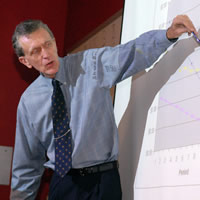
Darrall Thompson is an Adjunct Fellow at the School of International Studies & Education , University of Technology Sydney. With a PhD in Education and a Masters in Design , he has pioneered innovations in assessment technologies and pedagogical frameworks, including the development of the ReView software and the CAPRI (Capability that Respects Individuality) framework. His work focuses on integrating graduate attributes and technology-enhanced learning to foster student self-assessment and evaluative judgment . Education: PhD, Macquarie University Master of Design (Research), University of Technology Sydney His research spans design thinking , education reform , and 21st-century skills , with over 30 peer-reviewed publications. Key themes include transdisciplinary assessment , student agency , and individualized learning . Articles demonstrate a shift from traditional exams to software-driven evaluative systems (ReView), self-assessment calibration , and community-based interdisciplinary projects . Scientific Awards: UTS Equity, Diversity and Social Justice Award He supervises Masters Research and PhD students and leads funded projects like the Business and Education Creative Hub and implementations of the ReView system in secondary education and aviation science. His work bridges design pedagogy , business education , and technology-enhanced learning , with collaborations across universities, schools, and government bodies.
Arantza Arruti Gomez is a researcher at the Department of Didactics and Curriculum Development, Faculty of Psychology and Education, University of Deusto, where she has worked since 1996. She specializes in Pedagogy, Leisure Education, and Entrepreneurship Training. Her roles include coordinating Language Policy, teaching in Primary Education and Social Education programs, and managing the 'Learning to Teach' blog in the Teaching Innovation Unit. Education: PhD in Pedagogy (University of Deusto) Her research focuses on Curriculum Innovation , Entrepreneurship Education , and Sustainable Leisure . Recent work explores digital mentoring, entrepreneurial competence assessment, and pandemic-era educational adaptations. She collaborates internationally on projects like UEB2 and MERGE , with publications in journals such as Education Sciences and Frontiers in Education . Scientific Awards : Premio Extraordinario Ignacio Ellacuría a la tesis doctoral (2011)
Professor Yoshiyuki Mikoshiba is a distinguished scholar of Kantian philosophy and ethics at Waseda University's Faculty of Letters, Arts and Sciences, School of Culture, Media and Society. With over three decades of academic contributions, he has established himself as a leading authority on Kant's practical philosophy, particularly focusing on deontology, duties to oneself, and the relationship between ethics and global citizenship. His educational background includes a Master's degree from Waseda University Graduate School, Division of Letters (1995). Professor Mikoshiba has held significant leadership positions in academic societies, serving as President of the Japan Kant Society (2020-2024) and currently as Committee Member (2024-present). He is also actively involved with the Japanese Society for Ethics, The Philosophical Association of Japan, and several German philosophical societies including Max-Scheler-Gesellschaft eV and Japanische Fichte-Gesellschaft. Professor Mikoshiba's research primarily centers on Kantian philosophy, with special focus on ethical theory, peace philosophy, and the application of Kant's ideas to contemporary global challenges. His work explores concepts such as moral self-awareness, duties to oneself, cosmopolitanism, and the relationship between law and morality in a globalized world. He has made significant contributions to understanding Kant's 'duties to oneself' as foundational to ethical theory and has examined how Kant's philosophy can inform contemporary environmental ethics and human rights discourse. His scholarly output reveals a consistent trajectory of deep engagement with Kant's practical philosophy, with recent work showing increasing focus on connecting Kantian ethics with contemporary issues of trust, responsibility, and global citizenship. Professor Mikoshiba has published extensively in both Japanese and German academic journals, demonstrating his international scholarly reach. Committee Member, Japan Kant Society (2024-present) President, Japan Kant Society (2020-2024) Standing Committee Member, Japan Kant Society (2007-2020) Councillor, Japanese Society for Ethics (2011-2017) As an educator, Professor Mikoshiba teaches courses on practical ethics, human relations, and Kantian philosophy at both undergraduate and graduate levels at Waseda University. His teaching reflects his research interests, emphasizing the practical application of philosophical concepts to contemporary ethical dilemmas. He has supervised numerous graduate students and contributed to the development of ethics education in Japanese higher education.
Professor Gary PAN is a full-time faculty member at the Singapore Management University (SMU), where he serves as Professor of Accounting (Education), Associate Provost for Lifelong Learning, and Associate Dean for Undergraduate Admissions and Student Development at the School of Accountancy. He previously held the position of Senior Lecturer in Accounting at the University of Melbourne, Australia. Education: Doctor of Philosophy (PhD) in Information Systems, University of Manchester, United Kingdom Master of Professional Accounting (MPA), Singapore Management University Bachelor of Business Administration (BBA) with Honors, National University of Singapore His research centers on Accounting Information Systems , with a strong emphasis on Innovative Pedagogy and Adult Learning . His work explores how digital transformation, data analytics, and project-based learning can enhance accounting education and professional readiness. He investigates the integration of technology in fraud detection, governance, and risk management within the evolving digital economy. His recent publications reflect a consistent focus on the intersection of accounting, education, and technology. Key themes include capstone course design , trust in fair value accounting and cryptocurrencies , forensic analytics , and university-industry collaboration . These works span journals in accounting education, information systems, and corporate finance, demonstrating interdisciplinary impact. Scientific Awards: Multiple teaching awards both locally and internationally Professor PAN has served as principal and co-principal investigator on multiple research grants, including funding from the Singapore Ministry of Education (MOE) through the Decentralised Gap Funding (MDGF), Academic Research Fund (AcRF) Tier 2, and Tertiary Education Research Fund (TRF), as well as grants from CPA Australia and ISCA. He advises on curriculum and workforce development through his roles on the ACRA’s Implementation Committee for Accountancy Workforce Development (ICAWD) and the Business Management Advisory Committee at Nanyang Polytechnic. He is actively involved in shaping accounting education and lifelong learning initiatives at SMU and beyond, contributing to strategic priorities in digital transformation and technology-enhanced pedagogy.
Dale Rude is an Associate Professor in the Department of Management & Leadership at the C. T. Bauer College of Business, University of Houston. His academic work spans organizational behavior, decision-making, and human resource management, with a strong methodological foundation. His research interests include behavioral finance , investor decision making , and modeling of decisions , reflecting a deep engagement with cognitive and behavioral aspects of managerial choices. Areas of expertise also extend to creativity, problem solving, and mediation. The publications referenced in his profile span top-tier journals across management, psychology, and operations, indicating interdisciplinary impact. These include the Academy of Management Review , Journal of Applied Psychology , Human Relations , and Journal of Operations Management , suggesting a consistent focus on behavioral phenomena in organizational and managerial contexts. Dale Rude developed the Decision Analysis System , a software package that supports analytical decision-making, bridging theory and practical tools. His teaching includes courses in organizational behavior and behavioral finance at both undergraduate and graduate levels. He earned his Ph.D. from The University of Iowa in 1984, with a focus on Organizational Behavior, Organization Theory, Research Methods, and Personnel. His contact email is drude@uh.edu , and his office is located in MH 310J. He maintains a professional website, though the URL is not provided in the text.
Dr. Matthew Aernie is an Associate Professor in the School of Biblical and Theological Studies within the College of Adult and Graduate Studies at Colorado Christian University. He teaches in the Master of Arts in Biblical Studies program and has previously taught at Southeastern Bible College and Colorado Christian University earlier in his career. Education: Ph.D., New Testament – University of Wales, Lampeter Th.M., New Testament – Trinity Evangelical Divinity School M.Div. – Midwestern Baptist Theological Seminary B.A., Christian Education – Hannibal La-Grange College Dr. Aernie's research focuses on New Testament studies, particularly Greek grammar and exegesis, biblical theology, gospel studies, the Pauline epistles, Pauline theology, New Testament textual criticism, and hermeneutics. His work reflects a strong commitment to evangelical scholarship and deep textual analysis. The recent publications show a consistent focus on Pauline theology, especially the theme of the 'Day of the Lord,' and textual-critical issues in the Gospels, particularly Mark. His contributions to reference works like the Lexham Bible Dictionary demonstrate engagement with lexical and historical details of biblical figures and terms. Professional Memberships: Institute for Biblical Research Society of Biblical Literature Evangelical Theological Society Dr. Aernie is actively involved in mentoring students and integrating faith with academic rigor. Though no formal advising list or grants are mentioned, his long-standing teaching career and scholarly output indicate sustained academic leadership. He is committed to Christian education and discipleship, both personally and professionally. He is part of scholarly teams contributing to digital theological resources such as the Lexham Bible Dictionary and Lexham Theological Workbook , reflecting collaborative engagement in contemporary biblical scholarship.
Dr. Nancy Thomas is an Associate Professor and Director of the M.A. in Clinical Mental Health Counseling program at Colorado Christian University (CCU), within the College of Adult and Graduate Studies – School of Counseling. She is a Licensed Professional Counselor-Supervisor and EMDR-trained clinician based in Wylie, Texas, with extensive experience in private practice and community mental health settings. Ph.D. in Counselor Education and Supervision – Texas A&M University at Commerce M.A. in Biblical Counseling – Dallas Theological Seminary B.A. in Psychology – University of Texas at Dallas Dr. Thomas is deeply committed to multicultural competence, trauma-informed care, and the integration of spirituality in counseling and education. Her research and practice emphasize advocacy for minority populations, creative therapeutic techniques, and ethical responsibility in clinical training. She actively promotes mental health awareness through community outreach, faith-based consultation, and professional development. Her recent scholarly work explores the impact of culture and spirituality on counseling practices, with publications focusing on experiential learning, distance education, trauma recovery, and provider wellbeing. The articles reflect a strong trend toward innovation in counselor training, emphasizing creativity, cultural sensitivity, and holistic wellness. Scientific Awards: AHC’s Humanistic and Social Justice Award (2021) Dr. Thomas has received research grants and provides active mentorship to emerging clinicians and faith-based organizations. She has supervised research projects and contributed to curriculum development in counselor education. Her advising philosophy centers on nurturing professional identity through grace, truth, and cultural humility. She is actively involved in professional communities, presenting at conferences such as the Association for Counselor Education and Supervision (ACES), Texas Counseling Association (TCA), and international forums including the European Branch of the American Counseling Association (EB-ACA). Her work bridges academic scholarship with real-world application in churches, community centers, and governmental agencies like the Dallas FBI Office.
Gunnar Schmidtmann is an Associate Professor of Optometry and Vision Science at the School of Health Professions, University of Plymouth, where he has been employed since 2017, first as a Lecturer and promoted to Associate Professor in 2021. He holds a PhD in Vision Science from Glasgow Caledonian University and completed postdoctoral research at McGill University in Montreal, Canada. He is actively involved in teaching, research, and supervision, with a focus on visual perception and clinical vision science. Education: PhD in Vision Science, Glasgow Caledonian University, UK (2008–2013) BSc in Optometry, University of Applied Sciences, Lübeck, Germany (2005–2008) Medical School, University of Lübeck, Germany (2001–2005) Research Interests: His research spans visual neuroscience, shape perception, object recognition, visual psychophysics, and face perception. He investigates contour and curvature encoding, spatial and probability summation, peripheral vision, visual illusions, and the visual functions of patients with traumatic brain injury, stroke, and glaucoma. His work combines computational modeling with experimental psychophysics. Publication Trends: His recent articles (2023–2025) focus on sensorimotor aging, tablet-based vision testing, letter identification biases, and visual illusions such as the 'Pint Glass Illusion'. These reflect a strong trend toward developing accessible, quantitative tools for clinical and research use, while maintaining a deep theoretical interest in visual perception mechanisms. Scientific Engagement: Active member and elected committee member of the Applied Vision Association (AVA) Principal contributor to the McGill Face Database for complex mental state recognition Regular presenter at AVA and ECVP conferences Supervision and Grants: He supervises PhD students and is a Co-Investigator on an active NHS-funded project Portable Low-Cost Haptic Interfaces for Motor Injury Assessment (2025–2026). His teaching includes module leadership in Visual Perception, Human Anatomy, and Applied Quantitative Research Methods at both undergraduate and postgraduate levels. Labs and Teams: He leads research within the Eye and Vision Research Group at the University of Plymouth and collaborates with the Centre for Cognitive Neuroscience at Brunel University London. His lab focuses on psychophysical experiments and computational modeling of visual perception.
Felix Klotzsche is a Research Scientist at the Max Planck Institute for Human Cognitive and Brain Sciences, Department of Neurology, and an affiliated researcher at the Berlin School of Mind and Brain, Humboldt-Universität zu Berlin. His work focuses on cognitive neuroscience, with a particular emphasis on short-term memory, attention, and virtual reality (VR) applications in clinical and experimental settings. Education: B.Sc. Psychology & B.A. Philosophy (2009–2015), Universität Regensburg M.Sc. 'Mind and Brain' (Track 'Brain', 2015–2017), Berlin School of Mind and Brain | Humboldt-Universität zu Berlin Research Interests: Neural mechanisms of visual short-term memory EEG analysis in VR environments Clinical VR applications for neurological assessment Emotional arousal decoding via neurophysiological signals 3D face perception and deep encoding models Cardiac-phase modulated perception Publications reflect a focus on integrating VR with neuroscience methodologies, particularly in evaluating spatial memory, threat perception, and emotional processing. Key tools include Python, R, Unity3D, and advanced EEG signal processing. No scientific awards explicitly noted. No listed advisees or grants. Active in the Research Group Mind-Body-Emotion, contributing to labs and teams developing VR-based cognitive assessment tools.
Matt Wagers is a Professor of Linguistics at the University of California, Santa Cruz (UCSC), where he serves as Faculty Director for Curriculum and Enrollment in the Division of Humanities (2025-2026). His research focuses on language processing, particularly the role of syntactic information in memory management, and spans experimental syntax, psycholinguistics, and cross-linguistic studies. He holds a Ph.D. in Linguistics from the University of Maryland (2008), supervised by Colin Phillips, and a B.A. in Molecular Biology from Princeton University (2003), with Certificates in Neuroscience and Linguistics. Wagers teaches courses on psycholinguistics, experimental methods, and syntax. His work investigates how linguistic features guide memory access during sentence processing, with emphasis on interference effects, syntactic prediction, and the universality of parsing principles. Notable projects include studies on Chamorro and Tagalog syntax, Zapotec sentence processing, and the NSF-funded research on animacy and resumption. He collaborates extensively, mentoring over 30 graduate and undergraduate students, many of whom have contributed to groundbreaking studies in experimental syntax and psycholinguistics. His lab, z/lab, explores sentence processing in under-researched languages, while his Spencer Foundation-funded project examines generative AI's impact on linguistics education. Recent grants include NSF support for cross-linguistic research (2020-2024) and a UCOP MRPI Planning Grant (2025-2027) on leveraging linguistic diversity to improve AI models. Wagers has supervised numerous dissertations and theses addressing topics like subject encodings, agreement attraction, and resumptive pronouns, reflecting his commitment to bridging theoretical linguistics and empirical research.
Robb Rutledge is an Assistant Professor of Psychology and Psychiatry at Yale University, where he directs the Rutledge Lab within the Department of Psychology. He is also a member of the Wu Tsai Institute at Yale. His research combines computational modeling with neuroimaging, pharmacology, and smartphone-based data collection to study the relationship between decision making and emotion across the lifespan. Dr. Rutledge completed his BSc in Biology at Caltech and his PhD in Neural Science at New York University under Paul Glimcher. He conducted postdoctoral research at University College London's Wellcome Trust Centre for Neuroimaging with Ray Dolan and Peter Dayan. Prior to joining Yale, he was a Group Leader at the Max Planck Centre for Computational Psychiatry and Ageing Research at UCL. His research focuses on computational models of subjective feelings, particularly happiness. His lab developed the influential equation that happiness depends not on absolute outcomes but on whether events exceed recent expectations. This work has been extended to understand relationships between happiness, learning, social inequality, major depression, intrinsic reward, and neural mechanisms including dopamine signaling. Current projects examine how happiness relates to effort, music, language, and decision-making processes. His lab uses innovative methods including smartphone apps like Happiness Quest, which has engaged over 100,000 participants worldwide. Recent publications demonstrate how language sentiment predicts depressive symptoms and how surprising sounds influence risky decision making, reflecting his lab's focus on computational psychiatry approaches to understanding mood disorders. MRC Career Development Award Society for Neuroeconomics Early Career Award APS Janet Taylor Spence Award for Transformative Early Career Contributions The Rutledge Lab actively mentors numerous PhD students, postdoctoral researchers, and technicians, with alumni now holding positions at institutions worldwide. The lab collaborates extensively with researchers at Mount Sinai, UCL, Trinity College Dublin, and the University of Minnesota, and regularly participates in the Computational Psychiatry Conference. Dr. Rutledge's work bridges computational neuroscience, clinical psychiatry, and real-world applications through digital mental health tools.
Nils Baratella is Professor of Social Philosophy and Social Ethics with a focus on Political Philosophy and Theories of Justice at Hochschule Düsseldorf (University of Applied Sciences Düsseldorf) since September 1, 2022, affiliated with the Faculty of Social Sciences and Cultural Studies. Previously, he served as Research Associate at the Chair of History of Philosophy at the University of Oldenburg (2013-2022), where he managed the Hannah Arendt Center research facility and participated in multiple research groups including the Adorno Research Center and the Scientific Center 'Genealogies of the Present.' He has also held teaching positions at the University of Bremen's Institute of Sports Science and the Free University of Berlin's Institute of Philosophy. Baratella earned his Magister Artium in Philosophy, History, and Modern German Literature from the Free University of Berlin in 2009. He was awarded a NaFöG scholarship from the State of Berlin and joined the DFG-funded Graduate College 'Self-Formations. Practices of Subjectification' in 2010, completing his doctorate in 2014 with the dissertation 'The Combatant Subject: Combat as a Subtext of Modern Subject Philosophy and Its Performance in the Boxing Ring.' From 2017-2022, he pursued part-time teacher training studies for philosophy and history at the Free University of Berlin. His research program centers on the history of philosophy, particularly the anthropological presuppositions of political philosophies and the possibilities of distanced and critical judgment. He focuses on historically and culturally contingent constitutions of subjectivity and their manifestations in popular cultural forms like sport, employing a phenomenologically grounded and application-oriented approach. His systematic interests span social philosophy, political philosophy, philosophical anthropology, German Idealism, and political phenomenology, with historical engagements ranging from Augustine through Hegel, Nietzsche, and Plessner to Arendt and Blumenberg. Interdisciplinary work includes theories of violence, justice theories, subjectification research, and sports philosophy. Baratella's publication record demonstrates consistent engagement with political phenomenology, Hannah Arendt studies, and the philosophical dimensions of sport and competition. Recent works show increasing attention to contemporary political challenges including conspiracy narratives and pandemic ethics while maintaining deep connections to historical philosophical traditions. His editorial leadership on 'The Routledge Handbook for Political Phenomenology' (2024) reflects his growing influence in shaping contemporary philosophical discourse. DFG reviewer Studienstiftung des deutschen Volkes reviewer Rosa-Luxemburg-Stiftung reviewer HannahArendt.net reviewer Human Studies reviewer Journal 360° reviewer Zeitschrift für praktische Philosophie reviewer History of the Human Sciences reviewer Zeitschrift für Erziehungswissenschaften reviewer Sport und Gesellschaft reviewer As an academic mentor, Baratella has supervised research within the DFG Graduate College and contributed to multiple collaborative projects. His editorial work includes co-editing special journal issues on Hannah Arendt, conspiracy narratives, and subjectivation. He maintains active membership in numerous scholarly societies including the Adorno Research Center, Hannah Arendt Center Research Center, German Society for Philosophy, Helmuth Plessner Society, International Hegel Society, Karl Jaspers Society, and the Society for Phenomenological Research, reflecting his interdisciplinary approach bridging philosophy, political theory, and cultural studies. Baratella's academic work is complemented by his background in social work and pedagogy, having worked with Lebenshilfe Berlin eV from 1998-2013 and led violence prevention programs at Berlin-Friedrichshain's 'Liebig 19' youth club. His office is located at Building 3, Floor 2.014, Münsterstraße 156, 40476 Düsseldorf, with office hours by appointment via email.
Jen Munson serves as Assistant Professor in the Department of Learning Sciences at Northwestern University, where her research centers on mathematics teacher development through innovative coaching models and professional learning systems. Her work specifically investigates how teachers grow their pedagogical expertise through side-by-side coaching and video-based reflection practices. Her educational background includes a PhD in Teacher Education from Stanford University (2018) and a BS in Elementary Education from the University of Maine (2000), establishing a foundation for her current focus on elementary mathematics instruction. This trajectory reflects a deliberate shift from classroom teaching to teacher education research. Dr. Munson's research program examines critical tensions in mathematics education reform, particularly how micropolitical forces impact coaches' classroom access and how teachers develop professional vision through noticing student thinking. She pioneers side-by-side coaching methodologies where coaches work alongside teachers during live instruction, studying how these interactions foster responsive teaching and adaptive expertise. Her recent publications reveal increasing sophistication in analyzing coach-teacher discursive reasoning during real-time teaching moments. Analysis of her 2023-2025 publications shows consistent emphasis on three interconnected strands: (1) micropolitical navigation of coaching access, (2) video-based professional development for strengthening teacher noticing, and (3) rehearsal debriefs for developing pedagogical empathy. The work demonstrates methodological rigor through detailed discourse analysis of coaching interactions and teacher reflection processes. Scientific Awards: No scientific awards explicitly mentioned in source materials Advising and Grants: While the provided profile doesn't list current advisees, Dr. Munson's research on teacher learning pathways suggests strong mentoring capacity. Her publication record indicates active grant-supported work, particularly in elementary mathematics coaching interventions, though specific funding sources aren't detailed in the scraped text. Labs and Teams: The materials don't specify formal lab structures, but her research implies collaboration with school-based mathematics coaches and teacher educators across multiple districts, particularly through her side-by-side coaching studies and video analysis projects.
Dr Costa Avgoustinos is a Lecturer at the Faculty of Law, University of Technology Sydney (UTS). His primary teaching responsibilities include Constitutional Law, Administrative Law, Foundations of Law and Ethics, and Law and Justice courses. As a legal academic, he contributes significantly to the understanding of constitutional implications and the intersection of climate change with constitutional frameworks in Australia. Dr Avgoustinos completed his PhD in Law at UNSW Sydney, following undergraduate studies at UTS where he earned both a Bachelor of Law (Honours) and a Bachelor of Communications (Media Arts and Production). His research focuses primarily on the intersection between climate change and constitutional law, with particular attention to developing the concept of an "Ecological Limitation" within the Australian constitutional framework. His work explores how constitutional interpretation can adapt to address environmental challenges, examining the role of external sources in deriving constitutional implications, and investigating climate litigation strategies including negligence claims against government entities. Dr Avgoustinos also has interests in administrative law, public law, and the philosophical dimensions of judicial decision-making, particularly regarding compassion in legal judgment. His publication record demonstrates a consistent trajectory from earlier work on student participation in school decision-making and education law toward his current focus on climate change and constitutional law. This evolution reflects both a deepening specialization in constitutional matters and an increasing urgency in addressing climate-related legal challenges through constitutional mechanisms. Dr Avgoustinos actively contributes to legal scholarship through publications in reputable journals including the Monash University Law Review, Federal Law Review, and Carbon & Climate Law Review, as well as through book chapters and other scholarly outputs that advance understanding of constitutional adaptation to environmental challenges. As a lecturer, Dr Avgoustinos supervises students in constitutional law research and contributes to the development of legal education at UTS. His expertise in constitutional interpretation and climate change law provides valuable guidance to students exploring these evolving areas of legal scholarship.
Sonja Kunz is a University Assistant (Post-Doc) at the Department of Occupational, Economic and Social Psychology within the Faculty of Psychology at the University of Vienna. Her work focuses on applying social cognition theories to consumer behavior, particularly in food perception and sustainability-related judgments. Current Position: University Assistant (Post-Doc), University of Vienna Research Focus: Consumer behavior, health-taste beliefs, sustainability attributes Email: sonja.kunz@univie.ac.at Research Interests Sonja investigates how consumers form misbeliefs about food by integrating environmental cues. Her SoKo Lab research explores the paradoxical relationship between health and taste perceptions, and she leads the ComMEATted project on promoting meat alternatives through behavioral insights. Key themes include cognitive illusions, product differentiation, and contextual influences on dietary choices. Publication Trends Her recent work centers on novel food adoption, sustainability communication, and environmental cue effects. Articles address topics like package color saturation, menu frequency biases, and traffic light labeling, reflecting interdisciplinary approaches combining psychology and marketing.