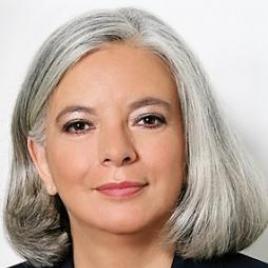
Noomi Christine Linde Matthiesen is an Associate Professor at the Department of Communication and Psychology, Faculty of Humanities and Social Sciences, Aalborg University. Her research focuses on family life, cultural care practices, and families' interactions with welfare state institutions like daycare and school. She co-leads the Psychology of Culture, Humanity and Education and SSH Children and Youth Research Network groups. Academic Background: M.A. in Psychology, Ph.D. Key Projects: BEST: Best Interests of the Child , TROLD: Wellbeing and Play Participation , and Præstationsfrigørende Rum (Performance-Free Spaces). Her work examines how adults foster children's development, emphasizing trust, emotional labor, and subjectivity. Publications often intersect psychology, education, and cultural studies, addressing parental coaching, leisure time pedagogy, and normative ideals in child protection. Media contributions highlight critiques of performance-driven parenting and solutions for wellbeing. Recent articles (2024–2025) explore situated psychology, trust theory, and leisure pedagogy, with subfields spanning emotional labor, child protection, and cultural adaptation. Collaborations with scholars like S. Brinkmann and T. Szulevicz reflect interdisciplinary engagement.
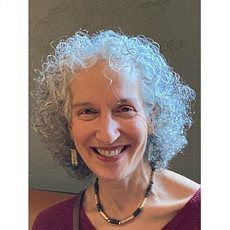
Cristina Sá Carvalho is an Adjunct Professor at the Universidade Católica Portuguesa (UCP), Faculty of Theology, specializing in Religious Pedagogy and Curriculum Development. She holds a PhD in Political Science and International Relations (Security and Defense) from IEP-UCP, an MA in Educational Psychology from ISPA, and a Psychology degree from ISPA. Her career includes leadership roles such as Director of the National Catechetics Department (2003–2021) and Chair of Psychology at Colégio do Sagrado Coração de Maria (1988–2003). She coordinates national religious education curricula and manuals, and actively researches at LIPS (Line for Peace and Civil Society Research). Her work bridges political science, education, and religious studies, focusing on public policies, mental health promotion, and interreligious dynamics. She contributes to media through the Grupo Renascença and serves as a jury for anticorruption initiatives. Her publications span educational materials, policy analysis, and interfaith dialogue studies. Education: PhD: Political Science & International Relations (Security and Defense), IEP-UCP MA: Educational Psychology, ISPA Licenciatura: Psychology, ISPA Key Roles: 2003–2021: Director, National Catechetics Department & Editorial Formation Department, Portuguese Episcopal Conference 2014–2016: Coordinator of National Religious Education Curriculum (1st–12th grades) 2003–present: Teaching at UCP’s Faculty of Theology Research Interests: Integrating religious pedagogy with secular educational frameworks, analyzing public policies on aging populations and social welfare, promoting mental health through education, and fostering interreligious dialogue to address societal challenges. Her work emphasizes curriculum development, democratic education models, and the ethical dimensions of policymaking. Publications: Over 30 books and articles, including curriculum manuals for Portuguese schools, policy analyses on elderly care, and studies on religious identity formation. Recent work explores Pope Francis’ peacebuilding strategies and the role of mercy in political ethics. Awards & Recognition: While no explicit awards are listed, her contributions to educational policy and anticorruption initiatives reflect sustained recognition in civic engagement and academic leadership. Grants & Advising: Her work is funded through institutional research programs at UCP-IEP. She mentors students in supervised teaching practices and professional insertion in theology and pedagogy fields. Labs & Teams: Active researcher at LIPS, collaborating on peace studies and civil society research. Engaged with APA (American Psychological Association) as an affiliate member.
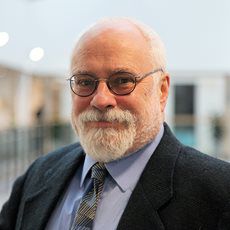
Professor Carl Thompson is a leading academic in applied health research at the University of Leeds' School of Healthcare within the Faculty of Medicine and Health. His roles include being a registered nurse with extensive NHS experience, from nursing assistant to NHS Trust non-executive director. Previously, he held a personal chair in health sciences at the University of York. His expertise spans clinical decision making, implementation science, and evidence-based healthcare. Research focuses include care home quality improvement, wearable technology applications, and computerised decision support systems. Notable projects include the £2m CONTACT study on Bluetooth wearables for contact tracing in care homes and the STaRQ study examining nurse staffing impacts on care quality. He collaborates internationally with institutions in Australia, the Netherlands, Canada, and the US. Education: DPhil in Social Policy (University of York, 1996), BSc Hons in Social Policy (1st class, 1993), RN qualification (York College of Nursing, 1989). Grants: Secured or collaborated on £20m+ projects from NIHR, MRC, and ESRC. Teaching: Covers medical informatics, decision making, and leadership in healthcare education. Awards: No specific awards listed, though his extensive funding and leadership roles reflect professional recognition. Leadership: Former Director of Research in the School of Healthcare and Pro Dean for Applied Health Research. His research emphasizes 'how people use information in clinical practice and policy making,' with a focus on translating evidence into practice. He advises on national funding panels (NIHR HSDR, Irish Health Research Board) and mentors PhD students in decision science and implementation research. Current initiatives include the Nurturing Innovation in Care Homes (NiCHE Leeds) collaboration and membership in the NIHR Yorkshire and Humber CLAHRC's Improvement Science theme. He actively supports implementation science through visiting professorships at the Universities of Alberta and East Anglia.
Professor Donna Marie Ladkin is a leading scholar in leadership and ethics at the Department of Management, Birmingham Business School, University of Birmingham. She holds the title of Professor of Inclusive Leadership and is internationally recognized for her critical, philosophically grounded contributions to leadership theory. Her academic journey includes prior roles at Cranfield University, Plymouth University, and Antioch University in the USA, where she contributed to doctoral programs in leadership and change. PhD in Organizational Psychology, Cranfield University (1992) MBA, Cranfield University (1988) MA in Environmental Ethics, Lancaster University (2004) BA in Music and Philosophy, Yale University (1981) Donna Ladkin’s research critically examines leadership through the lenses of continental philosophy, embodiment, aesthetics, and ethics. Her work challenges dominant paradigms such as authentic and transformational leadership by highlighting their cultural, racial, and epistemological biases. She is a pioneer in exploring how embodied practices, aesthetic sensibility, and critical race theory can enrich leadership understanding. Her current interests include decolonizing management research, fostering ecologically sustainable organizations, and developing culturally responsive leadership in education. Her recent publications reflect a strong trend toward critical, inclusive, and philosophically rigorous leadership scholarship. The 15 most recent works span topics such as whiteness in leadership theorizing, embodied sustainability practices, and the ethical implications of aesthetic leadership. These articles are published in premier journals like Leadership Quarterly , Business Ethics Quarterly , and Journal of Business Ethics , demonstrating consistent high-impact contributions. Among her scientific honors are being named a Fellow of the Royal Society of Arts and co-authoring one of the most influential articles of the 2010–2020 decade in The Leadership Quarterly . Her book Rethinking Leadership (2020) has received widespread acclaim for reimagining foundational leadership concepts. She actively supervises doctoral candidates and has designed leadership development programs for both academic and public sector clients. Her consulting work includes engagements with BT, the UK National Audit Office, Sony, and housing associations. As a sought-after keynote speaker, she has presented at major international conferences, including those of the International Leadership Association and the International Studying Leadership Conference. She also contributes to public discourse through podcasts, such as her appearance on the ILA’s Phronesis series discussing race in leadership. Donna Ladkin’s research is deeply collaborative and interdisciplinary, often involving scholars from philosophy, organizational behavior, and ethics. She has maintained long-standing affiliations with institutions like the University of Bath’s Centre for Action Research in Professional Practice, reflecting her commitment to applied, transformative scholarship.
Professor Mark NK Saunders is a distinguished academic at the University of Birmingham, serving as Professor of Business Research Methods within the Department of Management at Birmingham Business School. He holds visiting professorships at the Universities of Pretoria, Mälardalen, Surrey, and Worcester, reflecting his international academic standing. Education: PhD in Geography (1986) PGCE (1982) MSc in Urban Studies (1981) BA in Geography and Soft Systems (1980) Mark Saunders' research is centered on research methodology, particularly participant selection and methods for understanding organizational relationships. His work extends to human resource aspects of organizational change, with a focus on trust and organizational learning, as well as the success factors of small and medium-sized enterprises (SMEs). He is also deeply engaged in pedagogic practice, textbook writing, and the supervision of doctoral students. His extensive publication record includes over 150 research articles and book chapters, with recent works exploring themes such as social entrepreneurial identities in later life, trust dynamics in consulting, and the impact of generative AI on human resource management. His research is frequently published in top-tier journals like the British Journal of Management , Human Relations , and the International Small Business Journal . Scientific Awards and Fellowships: Fellow of the Academy of Social Sciences (2019) Fellow of the British Academy of Management (2014) British Academy of Management Medal for Leadership Fellow of the First International Network for Trust Fellow of the Chartered Institute of Personnel and Development (2006) Fellow of the Higher Education Academy (2007) Mark Saunders is a dedicated mentor and advisor, actively supervising doctoral students and contributing to doctoral capacity building. He has co-authored and edited over 30 books, including the highly influential Research Methods for Business Students , which is currently in its 9th edition. He holds significant editorial responsibilities as a consulting editor for the International Journal of Management Reviews and as an associate editor (Methodology) for the Human Resource Management Journal . His work is supported by his active involvement in key academic networks, including the British Academy of Management’s Research Methodology Special Interest Group, where he serves as Co-Chair, and the European Foundation for Management Development Doctoral Programmes Conference Committee.
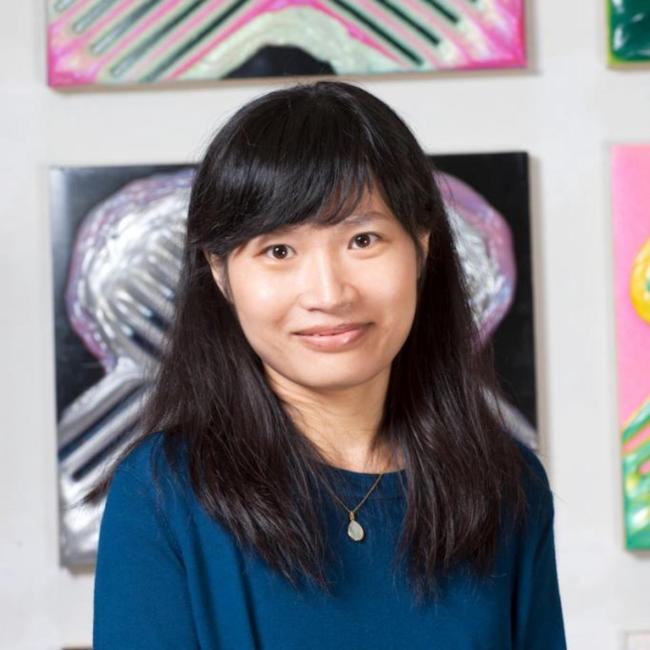
Ying Wang is an Associate Professor in English linguistics at Karlstad University since 2020, specializing in English for academic purposes, applied corpus linguistics, and second language writing. She holds a PhD from Uppsala University (2013) and has taught courses at both undergraduate and graduate levels focusing on academic writing, second language pedagogy, and corpus methodology. Her research explores rhetorical structures in disciplinary genres, evaluative language resources, and the impact of extramural English activities on L2 writing development. Notable projects include the Swedish Learner English Corpus (SLEC) initiative and analyses of predatory publishing practices in political science. She has also examined government communication strategies during the UK's COVID-19 pandemic response through corpus-assisted discourse studies. Key research contributions span formulaic language use in ELF contexts, methodological innovations in corpus linguistics, and linguistic comparisons between well-established and predatory journals. Her work bridges theoretical linguistics with practical applications in education and scholarly publishing ethics. Publications span prestigious journals like English for Specific Purposes , Text & Talk , and Journal of Second Language Writing , reflecting her interdisciplinary approach to language studies. Current projects emphasize corpus-driven research on academic communication practices and their pedagogical implications.
Jazlin Ebenezer is a Professor and Charles H. Gershensen Distinguished Faculty Fellow in the College of Education at Wayne State University, Detroit, MI, USA, where she has been since Fall 2001. Prior to this, she served for ten years at the University of Manitoba, Canada. Her academic journey includes a Ph.D. in Science Education from the University of British Columbia (1991), an M.Ed. and B.A. in Education (Physical Science) from Western Washington University, and a B.Sc. (Hons) in Chemistry from Madurai University, India. Her research is centered on conceptual change teaching and learning in science and technology-embedded scientific inquiry . She has made significant contributions to science teacher education through curriculum development, qualitative research, and international collaboration. Her work emphasizes student-centered, inquiry-based learning and the integration of technology to enhance scientific understanding. The 15 most recent publications reflect a strong focus on technology integration in science education, teacher and student conceptions, and innovative pedagogical models. Key themes include phenomenography as an assessment tool, discourse in science classrooms, cognitive development through multiple representations, and the use of environmental research to foster inquiry. Her research spans K-12 and higher education contexts, with a consistent emphasis on equity, holistic development, and reflective practice. Charles H. Gershensen Distinguished Faculty Fellowship (2019-21) Fulbright Specialist Award (2013-18) Marquis America Who's Who (2003) Rh Award (Research), University of Manitoba (2000) Research Merit, Faculty Association, University of Manitoba (1999) Outstanding Students Honoring Outstanding Teachers Award, University of Manitoba (1994) Dr. Ebenezer has been a principal investigator on multiple grants, including an NSF ITEST grant (PI, $1.2M) and a $1.2M NSF grant for integrating IT into Lake Erie ecosystem research. She has served as a consultant on international projects, such as a TÜBİTAK project in Turkey. Her advising includes mentoring pre-service teachers and guiding research on conceptual change and curriculum development. She has also been a member of advisory boards for large-scale educational initiatives. She has established and led research models such as the Common Knowledge Construction Model and the Technology-Embedded Scientific Inquiry (TESI) Model . She has conducted extensive international work, delivering keynotes and seminars across India, Turkey, Thailand, China, and Sri Lanka, often focusing on science education reform, qualitative research, and curriculum innovation.
Fabio Petito is Professor of Religion and International Affairs (International Relations) in the School of Global Studies at the University of Sussex. He is also the founding Director of the Religion & Foreign Policy Initiative at the University of Sussex, Non-resident Senior Fellow at the Atlantic Council’s Freedom and Prosperity Center, and Head of the Religions & International Relations Programme at the Italian Institute for International Political Studies (ISPI), supported by the Italian Ministry of Foreign Affairs and International Cooperation. His academic background includes a PhD in International Relations from the London School of Economics and Political Science, an MSc in International Politics from Aberystwyth University, and a Laurea in Economic and Social Disciplines from Bocconi University, Milan. He has taught at SOAS, ESCP-EAP, and L’Orientale University. Petito’s research centers on the role of religion and civilizations in International Relations. He has pioneered work on religious engagement in foreign policy, the postsecular in global politics, and interreligious dialogue as a strategy for promoting Freedom of Religion or Belief (FoRB). His influential publications include Religion in International Relations (2003), Towards a Postsecular International Politics (2014), and Human Fraternity & Inclusive Citizenship (2021). He has also contributed to civilizational dialogue theory and the political theology of Carl Schmitt. His recent publications reflect a strong policy orientation, focusing on FoRB, sustainable development (SDGs), interreligious peacebuilding, and the integration of religious actors into foreign policy. These works demonstrate a shift from theoretical critique to actionable policy frameworks, emphasizing dialogue, inclusion, and integral human development. Non-resident Senior Fellow, Atlantic Council’s Freedom and Prosperity Center Member, OSCE/ODIHR Panel of Experts on FoRB (2019–2022) Expert Adviser, German Federal Ministry for Economic Cooperation and Development (2019–2020) Expert Adviser, EU Special Envoy for FoRB (2019–2019) Petito has supervised numerous PhD students in International Relations, Law, and Philosophy, including topics on Chinese international thought, Islamic eschatology, and Christian-Buddhist dual belonging. His research has been funded by the ESRC, British Council, Luce Foundation, and Italian Ministry of Foreign Affairs. He is currently working on projects linking religious engagement to the 2030 SDGs, human fraternity in the Mediterranean, and the theoretical implications of religious engagement for IR. He leads the Religion & Foreign Policy Initiative at Sussex and has collaborated with institutions such as the Community of Sant’Egidio, Wilton Park, and OSCE/ODIHR. His work bridges academia and policy, creating platforms for transatlantic and multilateral dialogue on FoRB and religious engagement.
Darwyn Coxson is a Professor in the Ecosystem Science and Management Program within the Faculty of Environment at the University of Northern British Columbia (UNBC). As a founding faculty member of UNBC, he has played a pivotal role in shaping academic and research initiatives, including serving as past Director of the Natural Resources and Environmental Studies Institute and as a member of the UNBC Board and Senate. He is actively involved in graduate education, supervising students in the NRES (Natural Resources and Environmental Studies) graduate programs. Dr. Coxson’s research centers on lichen ecology , particularly the symbiotic relationships between fungi and algae, and has expanded into conservation biology of inland temperate rainforest ecosystems in British Columbia. His work emphasizes the ecological significance of old-growth forests and has directly influenced land management practices in the region. Key research areas include biodiversity, forest management, environmental physiology, and the conservation of critical habitats. His recent publications reflect a strong focus on the inland temperate rainforest and interior wetbelt biomes , with studies assessing the viability of protected areas for lichen conservation and the ecological roles of ancient western redcedar stands. These works span disciplines such as ecology, biogeography, and environmental management, with subfields including habitat fragmentation, climate resilience, and ecosystem engineering. Dr. Coxson has held leadership roles in academic governance, including serving as past-President of the B.C. Confederation of University Faculty Members (CUFA-BA), representing post-secondary institutions across the province. While no formal scientific awards are listed, his policy impact and editorial contributions to major scientific references underscore his recognition in the field. He is currently accepting graduate students in the MSc and PhD programs in Biology under the NRES umbrella and is available as a media expert on topics related to lichen ecology and forest conservation. His research continues to bridge science and policy, advocating for sustainable management of British Columbia’s unique forest ecosystems.
Maria Elena Cobas Cobiella is an Associate Professor in the Department of Civil Law at the Faculty of Law, University of Valencia. Her academic work is deeply rooted in civil and private law, with significant contributions to inheritance, family, mediation, and European private law. She is an active member of two research groups: the GPF Research Group on Person and Family and the GEDPED Study Group on European Private and Digital Law. Research Interests: Her research spans civil law, succession law, bio-law, legal mediation, reproductive rights, and legal education. She has explored the legal implications of posthumous reproduction, European succession instruments, Cuban property law, and innovative teaching methods such as concept mapping and cooperative learning in legal education. Her work often bridges doctrinal analysis with practical and ethical considerations. The trends in her scholarly publications from 2001 to 2017 reflect a sustained focus on succession law and legal modernization, with increasing attention to European harmonization, digital law, and interdisciplinary issues in bio-law. Her articles also reveal a strong commitment to pedagogical innovation and comparative legal analysis, particularly between Spanish and U.S. legal systems. Scientific Contributions: PhD from the University of Valencia (2001) on testamentary executorship. Active researcher in European private and digital law. Prolific author on mediation, inheritance, and legal education. Advising and Grants: While no specific grants are listed, she has supervised PhD research, as evidenced by her role as advisor to Dr. Lorenzo Prats Albentosa’s thesis. She actively contributes to academic discourse through publications and research group leadership. Her work in legal education suggests involvement in curriculum development and pedagogical projects. Labs and Teams: She collaborates with the GPF Research Group on Person and Family and the GEDPED Study Group on European Private and Digital Law, indicating active participation in team-based legal research focused on contemporary civil law challenges.
Heghnar Zeitlian Watenpaugh is Professor of Art History at the University of California, Davis, where she has been a faculty member since 2005. She is also a Faculty Associate in the Graduate Programs in Cultural Studies, Women and Gender Studies, Performance Studies, Jewish Studies, and Medieval and Early Modern Studies. Her research focuses on the visual cultures of the Middle East, particularly architectural preservation, museums, and cultural heritage. She earned her Ph.D., M.A., and B.A. (summa cum laude) from the University of California, Los Angeles, and an A.A. from Beirut University College. Her research has been supported by prestigious fellowships from the Guggenheim Foundation, the National Endowment for the Humanities, the J. Paul Getty Trust, Fulbright-Hays, and the Social Science Research Council. Watenpaugh’s research spans art and architectural history, cultural heritage, Islamic art, Ottoman urbanism, provenance and restitution, and the intersections of art, conflict, and human rights. Her work often centers on survivor objects—artifacts that endure genocide and displacement—and their role in justice and memory. She has published extensively in journals such as International Journal of Middle East Studies , Journal of the Society of Architectural Historians , and Muqarnas . Her recent publications, including The Missing Pages (2019) and several 2023 articles, reflect a strong trend toward the study of cultural survival, restitution, and the ethical dimensions of museum collections. Her scholarship bridges academic rigor with public engagement, appearing in The New York Times , Newsweek , and The Los Angeles Times , and featured in BBC podcasts. Spiro Kostof Book Award, Society of Architectural Historians (2006) Ömer Lütfi Barkan Article Prize, Ottoman and Turkish Studies Association (2015) Best Article Prize, Syrian Studies Association (2007) Gold Medal in World History, Independent Publisher Book Awards (2020) Book Award, Society for Armenian Studies (2020) Book Award, Ottoman and Turkish Studies Association (2020) Shortlisted, William Saroyan International Prize for Writing (Non-Fiction, 2020) Guggenheim Fellowship NEH Public Scholar Aga Khan Career Development Professor, MIT Watenpaugh has advised numerous scholarly initiatives and served on the boards of the Society of Architectural Historians, Historians of Islamic Art Association, and Syrian Studies Association. She is currently President of the American Research Institute of the South Caucasus. Her teaching includes courses on Islamic art, the Islamic city, arts of the Islamic book, and art, architecture, and human rights. She also leads seminars on visual theory, cultural conflict, and the exhibition of Islamic art. She is affiliated with multiple research centers and collaborates internationally on heritage preservation, particularly in post-conflict zones. Her public scholarship program at UC Davis reflects her commitment to bridging academic and public discourse on cultural heritage.
Prof. Dr. Marc de Vries is a Full Professor in the Department of Values, Technology and Innovation at Delft University of Technology (TU Delft), Faculty of Technology, Policy and Management. He also holds affiliate professorships at Eindhoven University of Technology and KTH Royal Institute of Technology, Stockholm. His academic journey began with an M.Sc. in Physics from the Free University Amsterdam (1982) and a Ph.D. in Science Education from Eindhoven University of Technology (1988). M.Sc. in Physics, Free University Amsterdam (1982) Ph.D. in Science Education, Eindhoven University of Technology (1988) His research focuses on the philosophy and ethics of technology , with particular interests in epistemology of technology, ethics of nanotechnology, and utopian thinking in technological development. He is a leading figure in technology and science education , especially in design-based learning, argumentation in science, and values in engineering. His work bridges philosophy, pedagogy, and practical engineering education. His recent publications reflect a strong trend in design education, spatial thinking in children, argumentation in physics, and biomimicry . These works emphasize student-centered learning, cognitive development, and the integration of ethical and philosophical reflection into science and engineering curricula. His editorial role in key journals and co-authorship of foundational textbooks like Philosophy of Technology: An Introduction for Technology and Business Students underscores his influence in the field. While no specific scientific awards are listed, his extensive publication record and leadership roles indicate significant scholarly recognition. Prof. de Vries has supervised numerous students and researchers, though specific names are not listed. He has led major research initiatives in technology education and contributed to national and international curriculum development. His work is supported by academic and educational institutions, and he actively collaborates with scholars across Europe. He is affiliated with the Section Ethics/Philosophy of Technology within his department and has been instrumental in shaping philosophy of technology courses at both bachelor's and master's levels. His research group focuses on values in technological development, design pedagogy, and the integration of philosophical reflection in engineering education.
Marius Korsnes is an Associate Professor at the Department of Interdisciplinary Cultural Studies, Faculty of Humanities, Norwegian University of Science and Technology (NTNU). He leads the ERC-funded 'MidWay' project on sufficiency in meat and milk consumption in China and co-leads the NFR INTPART project 'Sociomaterial Transformations in Norway and East Asia (SoMaT)'. He is actively involved in the MEATigation, COJUST, and GreenBlack projects, and previously led research in the FME NTRANS center on deep decarbonization. His work bridges energy, sustainability, and socio-cultural transitions with a strong focus on Norway and China. BA in International Studies, University of Oslo (2009) BA in History, University of Oslo (2011) M.Phil. in Culture, Environment and Sustainability, University of Oslo (2012) PhD in Technology, Innovation and Culture, NTNU (2015) His research centers on sustainability transitions , energy use , renewable energy systems , consumer practices , and sufficiency , particularly in the context of China and Norway. He explores how socio-material practices shape energy and food systems, with attention to justice, inclusion, and policy implications. His work integrates Technology, Innovation and Society (TIS) perspectives and public engagement. His recent publications (2022–2025) reflect a strong trend in energy citizenship , meat and dairy consumption , prosumerism , and sufficiency . These articles analyze low-income energy practices, policy injustices, and cultural dynamics in food and energy transitions. The research is interdisciplinary, combining social science, environmental studies, and policy analysis. ERC Starting Grant (MidWay project) Member, Academy for Young Researchers (AYF) NTNU Star Program Korsnes has advised Master’s students and contributes to transdisciplinary research, including using improvisational theatre for collaborative research. He has been involved in major research centers like FME ZEN and FME CenSES, and his work emphasizes public engagement and societal impact. His projects often involve international collaboration, especially between Norway and East Asia.
Philip Anderson is an Assistant Professor at the University of Birmingham Dubai within the School of Education. He holds a PhD in progress at Durham University and has extensive experience in both secondary and higher education, with leadership roles in curriculum and dissertation programs. PGCertHE, Middlesex University Dubai, 2021 MA Applied Professional Studies in Education, University of Sheffield, 2018 PGCE (Secondary Music), University of East London, 2012 BA Communication Studies, Sheffield Hallam University, 2001 His research focuses on music education, particularly primary teacher confidence in delivering classroom music. He explores the integration of creativity and the arts in learning, alongside technology adoption in higher education. A key interest is the impact of generative AI on educational content, especially regarding gender and racial representation. His work also examines hybrid learning environments and student information-seeking behaviors. His recent publications span from 2022 to 2025 and reveal a strong trend toward educational technology, equity in AI-generated imagery, and pedagogical innovation in transnational contexts. His research combines action research methodologies with behavioral theories to understand teacher and student experiences in evolving educational landscapes. Philip is a Fellow of the Higher Education Academy and actively contributes to the research committee at the University of Birmingham Dubai. He has led the Masters Dissertation Programme and served in academic coordination roles, indicating strong engagement in academic leadership and student supervision. He has not been mentioned as receiving any scientific awards or prizes in the provided text. He advises master’s students and has led dissertation modules, contributing to graduate education. While specific grants are not listed, his active research output suggests involvement in funded or institutional research initiatives. His work bridges practical classroom insights with scholarly inquiry, especially in the UAE’s higher education context. He is part of the research committee at the University of Birmingham Dubai, contributing to institutional research governance and academic development. His role reflects engagement with a broader educational research team focused on innovation and improvement in transnational education settings.
Dr. Panagiotis Andriotis is a Lecturer in Computer Science at the School of Computer Science, University of Birmingham, within the College of Engineering and Physical Sciences. He is also a GIAC Certified Forensic Examiner (GCFE, GASF) and a Senior Fellow of the Higher Education Academy (SFHEA). His interdisciplinary research spans Cyber Security, Human Factors, and Mobile and Ubiquitous Computing. He teaches courses in Computer Science, Cyber Security, and Digital Forensics. His educational background includes a PhD in Computer Science from the University of Bristol (2016), an MSc with Distinction in Computer Science from the same institution (2011), and a BSc in Mathematics from the National and Kapodistrian University of Athens (2004). Dr. Andriotis’s research interests focus on user-centered security, particularly in mobile environments. He investigates how users interact with Android’s permission systems, develops novel authentication mechanisms like Bu-Dash, and explores adversarial machine learning in cybersecurity. His work bridges technical and human aspects, aiming to improve both system robustness and user experience. His recent publications reflect a strong trend in adversarial machine learning, mobile malware detection, usable privacy, and the societal implications of AI in education. He has contributed to high-impact journals such as IEEE Transactions on Cybernetics, ACM Transactions on Privacy and Security, and Elsevier’s Journal of Information Security and Applications. Best Paper Award at HCI International 2020 Impact Award, UWE Bristol Student Union GIAC Certified Forensic Examiner (GCFE) GIAC Advanced Smartphone Forensics (GASF) SANS Lethal Forensicator Coin Dr. Andriotis has advised PhD students, including Andrew McCarthy, and has been involved in funded research projects such as those related to fuzzing, software security, and critical infrastructure protection in collaboration with Airbus. He has served as an External Examiner at Cardiff Metropolitan University and is currently on the editorial boards of Digital Threats: Research and Practice (ACM) and the Journal of Responsible Technology (Elsevier). He has held visiting roles at the National Institute of Informatics in Tokyo, including as a JSPS Fellow and Toshiba Fellow. He leads research in digital forensics and security, with a lab focus on mobile ecosystems, behavioral modeling, and AI-driven threat detection. His team explores both technical and human dimensions of cybersecurity, contributing to tools and frameworks that enhance mobile security and user awareness.