Professor Fergal Malone is the Chair of Obstetrics and Gynaecology at the Royal College of Surgeons in Ireland (RCSI) and a consultant in maternal-fetal medicine at the Rotunda Hospital, Dublin. He served as CEO of the Rotunda Hospital from 2016–2022, overseeing its operations as Ireland’s largest maternity hospital. His academic career includes roles at Columbia University and Tufts University, where he specialized in maternal-fetal medicine and ultrasound research. Malone has authored over 350 peer-reviewed papers and co-authored the seminal textbook Fetology: Diagnosis and Management of the Fetal Patient . Education: MD, Medicine (University College Dublin, 1991) Fellowship in Maternal-Fetal Medicine (Tufts University, 1996–1998) Research Interests: Focuses on prenatal diagnosis, fetal medicine, and ultrasound innovation. His work includes developing the Perinatal Ireland consortium and advancing fetal biometry standards. Key areas include fetal growth restriction, congenital heart disease, and outcomes of pregnancy termination laws. Grants & Awards: Recipient of the Roy M. Pitkin Award and multiple research distinctions Lead investigator in NIH-funded consortia and multicenter trials Fellowships from the Royal Colleges of Obstetricians and Physicians Teaching & Leadership: Academic head of RCSI’s largest obstetrics program, integrating advanced simulation and digital teaching tools. Supervised numerous clinical trials and training initiatives globally. Labs/Teams: Directs the Perinatal Ireland research group and collaborates internationally on fetal medicine protocols and AI-driven predictive models.
Jos van Hillegersberg serves as Full Professor in Industrial Engineering & Business Information Systems, demonstrating extensive scholarly contributions with 201 research outputs including 62 articles and 82 conference contributions. His academic profile shows consistent productivity across two decades with significant publication volumes in peak years like 2015 (19 outputs). Research interests center on Supply Chain Management (73% fingerprint weight), Enterprise Architecture, Business Information Systems, and emerging domains like Low-Code Development and AI applications. His work bridges computer science with practical business engineering challenges, particularly in supply chain optimization and digital transformation across multiple sectors. Recent publication trends (2023-2025) reveal strong interdisciplinary focus: agricultural data privacy systems, AI-driven healthcare solutions for diabetes, public sector DevOps optimization, and construction logistics control towers. These works consistently address real-world implementation challenges while maintaining theoretical rigor in enterprise modeling and systems engineering. With an h-index of 28 and 2900+ Scopus citations, Professor van Hillegersberg actively shapes academic discourse through leadership roles including chairing the 11th International Workshop on Enterprise Applications in Finance (FinanceCom 2022). His supervision of 32 students demonstrates commitment to developing next-generation researchers in business information systems.
Dr. hab. Grzegorz Michalski, prof. UEW is a Professor at the Department of Labor, Capital and Innovation, Wrocław University of Economics. His work focuses on corporate treasury management, financial liquidity optimization, risk management, and nonprofit financial strategies. He has extensively published on topics including Monte Carlo simulations for risk resolution, climate risk mitigation frameworks, and inventory management in turbulent markets. Education & Academic Background: While specific degrees are not listed in the text, his titles (dr. hab., prof. UEW) indicate he holds a habilitation (Polish equivalent of a DSc) and is a full professor. Research Interests: Michalski specializes in strategic financial management, particularly in nonprofit and manufacturing sectors. He explores how organizations balance liquidity, risk exposure, and sustainability goals. His research often integrates quantitative methods like Monte Carlo simulations and empirical case studies (e.g., Polish, Lithuanian, and German firms). Grants & Advising: No explicit grants or advisees are listed, though his publications suggest involvement in collaborative research projects. His work frequently references industry case studies, implying practical advisory roles. Labs/Teams: Not explicitly mentioned, but his research collaborations likely involve interdisciplinary teams focusing on financial engineering and corporate governance.
Sümeyye KAYNAK serves as an Assistant Professor in the Department of Computer Engineering at Sakarya University's Faculty of Computer and Information Sciences. Her academic profile demonstrates interdisciplinary expertise bridging computer science with environmental sustainability and educational technology through computational modeling and data-driven solutions. Her educational foundation includes: Doctorate (2019) from Sakarya University Institute of Science/Computer and Information Engineering with thesis on solar energy potential modeling using 3D data Master's degree (2014) from same institution focusing on AI-based student counseling infrastructure Bachelor's degree (2012) in Computer Engineering from Sakarya University Faculty of Engineering Dr. KAYNAK's research integrates advanced computational methodologies across multiple domains. Her primary focus areas include Artificial Intelligence applications for resource allocation in cloud manufacturing (utilizing genetic algorithms and AHP), Environmental Informatics for flood modeling and hydrological analysis, and Sustainable Energy systems through solar potential estimation tools. Recent work demonstrates significant expansion into geospatial web components for earth science agencies and digital twin frameworks for urban infrastructure resilience, reflecting growing emphasis on climate change adaptation technologies. Publication analysis from 2012-2025 reveals a clear research evolution: early work (2012-2018) concentrated on educational AI systems and solar energy tools, while current output (2023-2025) prioritizes environmental applications with city-scale flood impact modeling, hydroinformatics, and open data frameworks. This trajectory shows increasing sophistication in real-time data analytics and cross-domain integration, particularly between manufacturing systems and environmental monitoring. No scientific awards were documented in the source materials. Regarding academic mentoring, the available documentation contains no references to graduate student supervision or grant-funded research projects. No laboratory affiliations or research team leadership roles were specified in the provided information.
Helen Benton is an Associate Professor in Supply Chain Management and Project Management at Anglia Ruskin University, Faculty of Business and Law, School of Management, based in Cambridge. She is actively involved in research, teaching, and knowledge exchange, with a strong focus on sustainability and pedagogical innovation. Education: PhD in Management Research, Aston Business School Postgraduate Certificate in Teaching and Learning, Aston University BSc in Managerial and Administrative Studies (2.1), Aston Business School Her research interests span sustainable supply chains , digital supply chains , lifecycle assessment , net zero , circular economy , and technology-enhanced learning . She integrates sustainability into operations and supply chain management, with recent work in fashion and motorsports SMEs. Her pedagogical research focuses on team-based learning and student engagement. The recent publications and conference presentations show a strong trend toward applied sustainability research in supply chains, especially in niche sectors like fashion and motorsports, and a parallel focus on innovative teaching methods such as team-based learning and digital engagement tools. Keywords across her work include sustainability, operations, education, and digital transformation. Scientific Awards: Principal Fellowship of AdvanceHE University Teaching Fellow Helen has supervised multiple PhD and Master’s students and led significant research grants, including Knowledge Transfer Partnerships with Hexcel Composites Ltd funded by Innovate UK (totaling over £350,000), HEFCE Catalyst Fund projects on team-based learning, and low-carbon knowledge exchange initiatives. She has also led internal projects on student engagement using digital tools like Poll Everywhere. She is involved in knowledge transfer through consultancy and project leadership, including work with Russian Railways and the Higher Education Academy’s Go Green project. Her lab and team activities are primarily embedded in collaborative KTP projects and pedagogical innovation teams within the university.
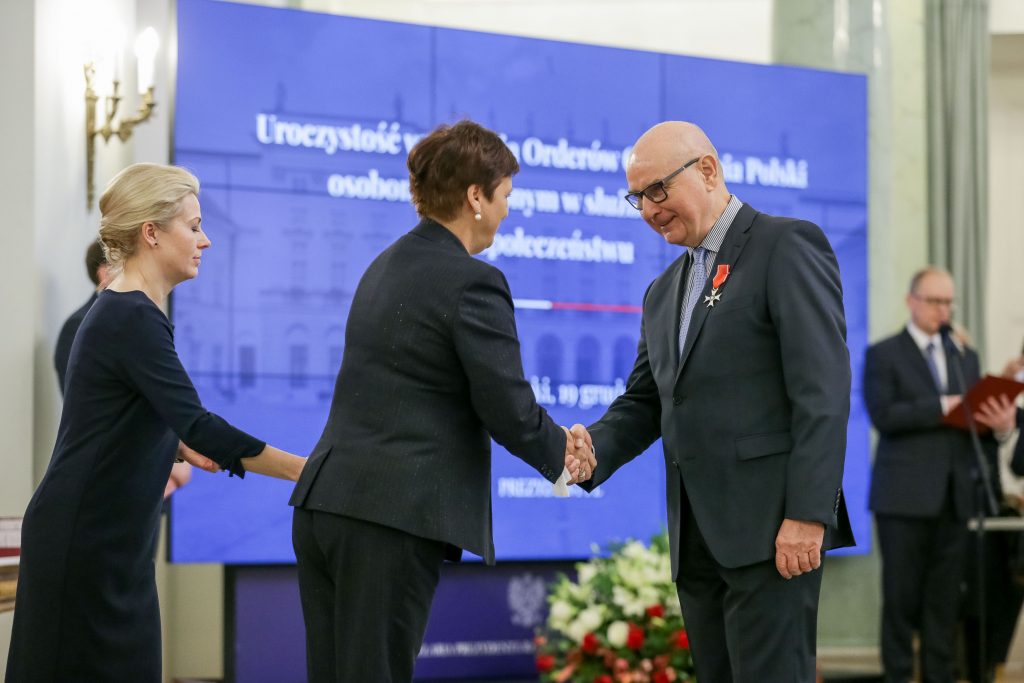
Prof. Witold Abramowicz , currently affiliated with the Department of Economic Informatics at Poznan University of Economics and Business, has made significant contributions to artificial intelligence, blockchain technology, and disinformation campaigns. His work bridges economic informatics with cutting-edge digital transformation, focusing on Fake news detection systems Blockchain-based business models Wikipedia multilingual analysis Recent publications highlight trends in generative AI , quantum computing applications, and maritime transport analysis . He leads the OpenFact project, achieving international recognition in fact-checking competitions. Awards include the Knight's Cross of the Order of Polonia Restituta (2019) and multiple honors for doctoral supervision. Active in academic debates since the 1990s, he continues to shape research through seminars, keynote speeches, and European cybersecurity initiatives.
Senthil Veeraraghavan is the Panasonic Professor of Manufacturing and Logistics and Professor of Operations, Information and Decisions at the Wharton School of the University of Pennsylvania. His research focuses on Revenue Management, Marketplace Design, and Global Supply Chain Operations, with a particular emphasis on customer behavior in queueing systems and strategic pricing. Indian Institute of Technology, Bombay (B.Tech) Carnegie Mellon University (Ph.D. in Operations) His recent work explores the intersection of fake news and consumer decision-making, dynamic pricing in sports ticketing, and equilibrium models in queueing systems. He has published in top journals such as Management Science , Operations Research , and M&SOM . Scientific Awards and Grants: Management Science Best Paper in Operations Award (2014) Wharton Teaching Excellence Awards (2019–2021) Dean’s Research Grant (2011) Wharton MACK Center Grant (2007) Carnegie-Bosch Grant (2004) He has contributed to major publications on topics like dynamic pricing , queueing games , and behavioral operations , and his insights have been cited in global media outlets including Knowledge@Wharton and Forbes .
Nevin Mutlu is an Assistant Professor in the Operations Planning, Accounting & Control (OPAC) Group within the School of Industrial Engineering at Eindhoven University of Technology (TU/e). She is affiliated with multiple research centers including the Data Science Center Eindhoven (DSC/e), Efficient Consumer Response (ECR) Community, Retail Operations Lab, and Freight Transport & Logistics Research Group. Her industry partnerships include Nike and the ECR Community, demonstrating strong connections between her academic research and practical retail applications. Dr. Mutlu received her PhD and MSc degrees in Industrial and Systems Engineering from Virginia Tech, USA in 2016 and 2013, respectively. She also holds a BSc degree in Industrial Engineering and a BA degree in Economics from University at Buffalo, State University of New York, USA. Prior to joining TU/e in 2016, she served as a graduate teaching assistant and instructor at Virginia Tech, teaching courses in operations research and working with the Office of Emergency Management on real-world applications. Her research bridges optimization, economics, and marketing to address industry-relevant problems in retail operations and logistics. She specializes in modeling how operational decisions impact consumer behavior, with particular focus on retail pricing, experiential retail, e-commerce adoption, and transportation systems. Her interdisciplinary approach combines theoretical optimization techniques with practical business considerations, resulting in impactful research that addresses current challenges in retail and supply chain management. Analysis of her publications reveals a strong trajectory in operations research with increasing focus on consumer behavior dynamics. Her work spans theoretical optimization methods (resource allocation, production-routing problems) and applied retail contexts (experiential retail, dual-channel strategies). Recent publications show growing interest in sustainability aspects of retail operations and transportation, reflecting contemporary industry challenges. Her research consistently addresses the complex interplay between operational decisions and consumer responses, providing valuable insights for both academia and industry. EU Horizon 2020 Marie Curie Individual Fellowship (2018-2020) Dr. Mutlu actively contributes to research funding through projects like SYNERCIZE: SYnchromodal Transport NEtworks for a Construction Industry towards Zero Emissions (2025-2027), where she serves as a project member. Her teaching portfolio includes Supply Chain Management, Revenue Management and Pricing Analytics, and Project and Process Management courses. She has also served on committees such as the AI Planner of the Future program, demonstrating engagement with emerging technologies in her field. Her research is supported by multiple affiliations including the Data Science Center Eindhoven, ECR Community, and Retail Operations Lab, providing collaborative environments for interdisciplinary work. Her industry partnerships, particularly with Nike, facilitate the translation of academic research into practical retail solutions. The SYNERCIZE project demonstrates her expanding research scope into sustainable transportation networks for construction industries.
Achal Bassamboo is the Charles E. Morrison Professor of Decision Sciences and Professor of Operations at the Kellogg School of Management, Northwestern University. He serves as Co-Director of the MMM Program and is affiliated with the Segal Design Institute at the McCormick School of Engineering. His expertise spans service systems, revenue management, and capacity planning, with research focusing on parameter uncertainty and information credibility in service operations. Education: PhD in Operations, Information, and Technology – Stanford University (2005) MS in Statistics – Stanford University (2004) BTech in Mechanical Engineering – Indian Institute of Technology (2000) Research Interests: Bassamboo investigates flexible service systems design, capacity planning, and the impact of information sharing on operational efficiency. His work addresses challenges in gig economy platforms, healthcare delivery optimization, and retail analytics. Recent studies explore dynamic pricing, inventory management, and the strategic use of availability information in markets. Key Contributions: His articles analyze optimal scheduling of heterogeneous customers, adaptive A/B testing frameworks, and the role of urgency in healthcare utilization. Bassamboo also examines equilibrium behaviors in advance-booking platforms and strategic buyer actions in B2B review systems. Professional Roles: Associate Editor for Naval Research Logistics and Management Science . Active in interdisciplinary research at the intersection of operations management, statistics, and economics.
Dr. Senevi Kiridena is a Senior Lecturer in Engineering Management at the University of Wollongong's School of Mechanical, Materials, Mechatronic and Biomedical Engineering. His academic career spans over 20 years, with experience in academia, industry, and the Australian public service. He is affiliated with the Faculty of Engineering and Information Sciences and serves as an Associate Editor for the Journal of Small Business and Entrepreneurship . Dr. Kiridena holds a PhD in Manufacturing Engineering and Management from the University of New South Wales (2009) and a Master's in Technology Management from the University of Queensland (1998). His teaching focuses on Project Management, Logistics, and Supply Chain Management, coordinating courses like ENGG439 and ENGG461. His research interests center on advanced analytics for supply networks, operations strategy, project complexity, and leadership. Current projects include configuring resilient supply chains, human-robot collaboration ergonomics, and ESG-driven risk frameworks. He has secured funding from ARC, OMAFRA, and industry partners, leading over 10 research projects. Dr. Kiridena has supervised numerous higher-degree research students, with active supervision in areas like underground mine logistics and strategic supply network modeling. His work bridges theory and practice, addressing challenges in manufacturing competitiveness, cross-border logistics, and sustainable agri-food systems.
J. Alex Thomasson is a Professor, Department Head, and William B. and Sherry Berry Endowed Chair in the Department of Agricultural and Biological Engineering at Mississippi State University. With expertise in precision agriculture, remote sensing, and agricultural robotics, he focuses on cotton production, drone-based monitoring, and sensor development for soil and fiber quality analysis. Education : Ph.D., M.S., and B.S. in Agricultural Engineering from University of Kentucky, Louisiana State University, and Texas Tech University Experience : Department Head at Mississippi State University (2020–Present), Endowed Chair at Texas A&M University (2005–2020), USDA Agricultural Research Service (1989–1997) His research spans optical sensing technologies, cotton fiber quality mapping, and UAV applications in crop phenotyping and disease detection. Recent work includes: Autonomous grain cart navigation using motion planning algorithms UAV thermal calibration via temperature-controlled references Adsorbent-SERS systems for plant volatile organic compound analysis Publications highlight advancements in: Drone-based cotton root rot classification Multi-scale frictional property analysis of cotton fibers Wavelet spectroscopy for soil and biomass characterization
James Stone serves as a Teaching Fellow within the Department of Engineering Systems & Supply Chain Management, part of the College of Engineering and Physical Sciences at Aston University, Birmingham, United Kingdom. His academic role focuses on teaching and research in supply chain and logistics domains. Stone's research spans several key areas in operations and supply chain management, including Supply Chain Management, Logistics, Manufacturing Systems, Operations Research, and Simulation Modeling. His work particularly addresses inventory service support levels in multinational companies, the modeling of local logistics management decisions, and the evaluation of supply chain strategy methodologies. He has contributed to the field through scenario-based simulation approaches for efficient manufacturing and low-cost solutions. Analysis of his recent publications (2006-2008) reveals a consistent theme of integrating simulation techniques to tackle complex supply chain challenges. His articles explore topics such as SCOR modeling tools, inventory management in global contexts, and the development of evaluation frameworks for supply chain strategies. These works highlight his expertise in applying operations research methods to real-world logistics problems.
Arjen A. Adriaanse is a Full Professor specializing in Building Information Modeling (BIM) and construction management, with research focused on digital transformation in the built environment. His work bridges construction engineering, sustainability, and information systems to optimize project delivery and resource management. His primary research interests include Building Information Modeling, circular economy integration, supply chain optimization, and collaborative project management. He investigates how BIM enables circularity assessments across project phases, manages maturity variations among partners, enhances team mental models, and develops logistics control towers. His studies frequently address data interoperability challenges and organizational dynamics in construction ecosystems. Recent publications demonstrate a clear trajectory toward predictive digital twins and sustainability-driven BIM applications, with increasing emphasis on circular economy metrics, partner capability development, and secure data-sharing frameworks within construction supply chains. Scientific recognition includes: RICS Best Paper On Sustainability (2019) Professor Adriaanse has supervised 8 research works and actively disseminates knowledge through invited talks on predictive twins and digital transformation, particularly in Dutch construction contexts as evidenced by media contributions and conference engagements.
Professor Sondoss El Sawah is a leading academic at UNSW Canberra's School of Systems & Computing, where she serves as Deputy Director of the Capability Systems Center. With over 90 publications including high-impact journal articles recognized by Web of Science, she has established herself as a prominent researcher in systems thinking and modeling. Her research focuses on advancing systems thinking methodologies to address complex socio-environmental-technical challenges. Key application areas include climate change adaptation, defense strategic decision-making, resource management, and the water-food-environment-energy nexus. She has led numerous ARC and industry-funded projects tackling high-stakes policy issues, with significant impact on defense asset management and sustainable resource planning. Professor El Sawah's recent work explores novel intersections between AI, education, and systems thinking, particularly through her ARC Discovery Project on 'Machine-education methodologies and algorithms for designing trusted multi-skilled evolutionary learners.' Her research has pioneered practical tools for promoting systems thinking in Australia's future force design and strategic asset sustainability. International Environmental Modelling and Software Society Research Award (2018) Australian Operations Research Society Rising Star Award (2016) - first female recipient Peter Cullen Trust Fellowship (Outstanding Fellow of the Year, 2014) Editor of the Journal of Environmental Modelling and Software (A*) Vice President of the Modelling and Simulation Society of Australia and New Zealand (2020-) She has significantly influenced policy through commissioned work for Queensland State Government and Department of Defence, developing good modeling practices for decision support. Her educational impact includes revitalizing systems thinking curriculum at UNSW and teaching at the European Summer School on decision making. Professor El Sawah also founded the IEEE Systems Modelling Conference and maintains strong international collaborations, including an honorary Associate Professor affiliation at Australian National University.
Dr. Hasan H. Turan is a Senior Lecturer and the Research Lead at the Capability Systems Centre, University of New South Wales (UNSW Canberra) within the School of Systems & Computing. Previously, he worked as a post-doctoral research fellow at Qatar University's Mechanical and Industrial Engineering Department from 2015 to 2017. His academic journey includes a Ph.D. in Industrial and Systems Engineering from Istanbul Technical University and a master's degree from North Carolina State University. Dr. Turan's educational background reflects his strong foundation in systems engineering and optimization: Ph.D. in Industrial and Systems Engineering, Istanbul Technical University Master's in Industrial and Systems Engineering, North Carolina State University Dr. Turan's research focuses on the development and application of data-driven optimization algorithms and simulation models across various domains including service and maintenance logistics, defense applications, energy capacity expansion, and telecommunications networks. His current work emphasizes integrating machine learning (particularly reinforcement learning), artificial intelligence, and computational intelligence techniques (such as genetic algorithms) with simulation models (discrete event and system dynamics) to address complex decision-making problems. His approach combines theoretical rigor with practical applications, particularly in defense contexts where robust decision support is critical. His recent publication trends reveal a strong focus on simulation-optimization techniques applied to defense resource planning, military fleet management, and logistics. There's a clear progression toward integrating AI and machine learning with traditional optimization methods, particularly in addressing uncertainty in defense and supply chain applications. His work spans multiple methodologies including differential evolution algorithms, deep reinforcement learning, and system dynamics approaches to tackle problems in maintenance planning, workforce allocation, and rare earth supply chains. Dr. Turan has demonstrated significant leadership in his field through professional activities: Guest editor for a special issue on simulation-based optimization in the Annals of Operations Research Editorial board member of the Journal of Business Analytics Convener of the 3rd and 4th IEEE Systems Modeling Conference Organizer of special sessions on simulation-based optimization at international conferences Committee member for leading international conferences on modeling, simulation, and management science As an educator, Dr. Turan has taught 15 different courses at bachelor's and master's levels to students from diverse backgrounds. He is actively involved in mentoring research students and seeks PhD candidates with strong programming skills and understanding of optimization and simulation modeling. He has secured competitive scholarships for high-achieving students in engineering, mathematics, or related sciences. His funded research projects have been supported by prestigious organizations including the Department of Defence, Qatar National Research Fund, The Scientific and Technological Research Council of Turkey, and Balassi Institute. Dr. Turan leads research activities at the Capability Systems Centre, focusing on developing advanced methodologies for complex decision-making problems. His team works on integrating AI with simulation-optimization approaches to address challenges in defense asset management, workforce planning, and logistics. The research environment he cultivates emphasizes both theoretical innovation and practical implementation to deliver actionable insights for defense and industry partners.