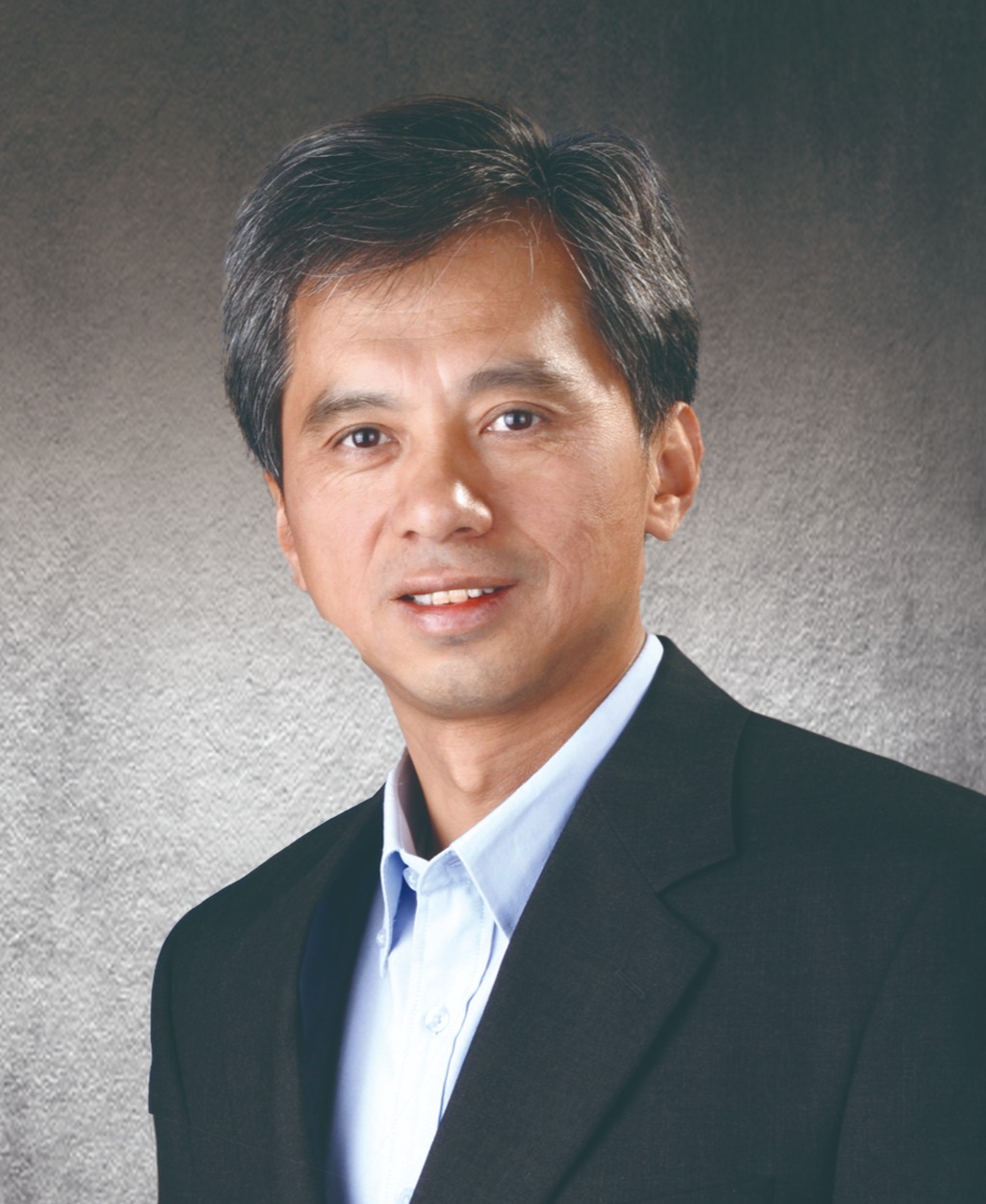
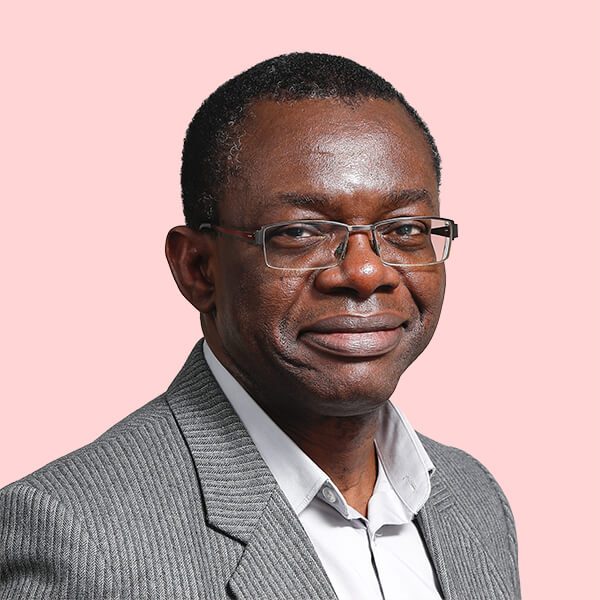
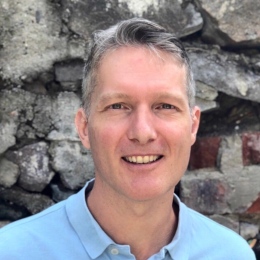
Evan Gray is a Professor at Griffith University's School of Environment and Science (Applied Mathematics and Physics). He leads the National Hydrogen Materials Reference Facility, specializing in hydrogen storage materials, superconductors, and energy systems modeling. His research focuses on deploying hydrogen energy technologies in Australia, particularly through the Sir Samuel Griffith Centre's integrated hydrogen ecosystem (electrolyser, storage, fuel cell). Key research interests include hydrogen storage materials characterization, energy system modeling, and infrastructure resilience. He has pioneered studies on hydrogen embrittlement in steels and advanced metal-hydride compressor designs. Awards include Fellow of the Australian Institute of Physics. Recent grants include a $728k Blue Economy CRC project (2024–2027) modeling hydrogen microgrids with a 700kW electrolyser. Supervision focuses on hydrogen storage alloys, nanomaterials for energy storage, and polymer-coated metal hydrides. His work bridges fundamental physics with applied energy solutions, emphasizing Australia's renewable energy transition.
Eline Visser is a Research Fellow at Uppsala University's Department of Linguistics, funded by the Wenner-Gren Foundations. She specializes in the endangered languages of eastern Indonesia, particularly Kalamang (Papuan) and Uruangnirin (Austronesian), and leads the Mapping Bomberai project (2024-2026) documenting understudied languages of the Bomberai peninsula. Her work bridges academic research with community-led language preservation initiatives. Her educational background includes: PhD in Linguistics from Lund University (2020), with a dissertation on Kalamang grammar Visser's research centers on language documentation and typology, with deep expertise in Austronesian and Papuan languages of eastern Indonesia. She investigates grammatical relations, narrative structures, prosody, and language contact phenomena through rigorous fieldwork. Her methodological contributions include integrating legacy materials with new field data and developing mobile dictionary apps for community use. She actively engages with ethical considerations in language documentation and promotes digital tools for endangered language preservation. Her publications from 2015-2025 reveal consistent focus on eastern Indonesian languages, particularly grammatical relations in Kalamang/Uruangnirin and methodological innovations in field linguistics. Key trends include the interplay between legacy data and new fieldwork, narrative analysis in Papuan languages, and applying computational approaches to language documentation. Her collaborative work spans syntax, phonology, and discourse analysis across diverse language families. Her scientific recognition includes: Wenner-Gren Fellowship for the Mapping Bomberai project Visser leads the Wenner-Gren-funded Mapping Bomberai project (2024-2026), supporting fieldwork on multiple Bomberai peninsula languages including Bedoanas, Erokwanas, Geser-Gorom, and Mbaham. She collaborates with researchers from Google on applying large language models to grammar reading and audio processing, and supports Wancho language documentation in India. Her community-oriented work includes developing mobile dictionary apps for Kalamang and Uruangnirin speakers. She is an active member of the 'Serial Verb Constructions across modalities' research group at the University of Amsterdam and previously contributed to the 'Where does grammar come from?' group. Her earlier work included the ExSynOp project at UiT The Arctic University of Norway on Scandinavian prosody, demonstrating her cross-linguistic research scope.
David Garcia serves as Head of the Research and Innovation Department at CESI South-East region, affiliated with the Digital Innovation Laboratory for Businesses and Learning to Support Territorial Competitiveness (LINEACT). His work focuses on industrial systems engineering, operational research, and numerical simulation with particular expertise in production systems modeling. Dr. Garcia earned his Doctorate from Ecole Supérieure de Chimie, Physique Electronique de Lyon (ESCPE) with his 2002 thesis on polymer injection process optimization (awarded highest honors). He also holds an Advanced Study Diploma in IMAGE from Joseph-Fourier University - Dijon (1998, with honors) specializing in instrumentation and image computing. His research spans production systems engineering, with evolving focus from fundamental polymer injection molding processes to contemporary applications in digital twin technology and Industry 4.0/5.0. Key interests include dynamic scheduling of flexible manufacturing systems, human-system interactions in production environments, and image processing for industrial applications. His work demonstrates a clear trajectory from material science fundamentals to advanced computational approaches for modern manufacturing challenges. Analysis of his publication history reveals consistent contributions to polymer processing optimization that evolved toward digital manufacturing systems. His recent work focuses on digital twin implementation for micro learning factories, affordance characterization in industrial work environments using deep learning, and scheduling frameworks for Industry 5.0 contexts that balance human creativity with machine precision. Dr. Garcia actively supervises research, currently guiding Sarah Ouarab's doctoral work on characterizing affordances in human cyber-physical production systems through multimodal perception of human-system interactions. He serves as Micro Learning Factory (MLF) platform referent and participates in thesis juries for related engineering disciplines. As the regional coordinator for research and innovation activities at CESI South-East, he leads the LINEACT research team focusing on management and decision-making in production systems, human-system interactions, and educational innovation through project-based learning approaches across preparatory and engineering cycles.
Chen Jian is the Lenovo Chair Professor at the School of Economics and Management, Tsinghua University , and Director of the Ministry of Education Key Research Base for Humanities and Social Sciences . With a career spanning over 30 years at Tsinghua, he has held multiple leadership roles in academic societies, including Vice Presidency in four top-tier Chinese academic societies and editorial positions in over ten international journals. Research Focus: Systems engineering, supply chain optimization, and decision theory Courses Taught: Dynamic systems analysis and control, operations management His scientific contributions include over 200 publications and 50 major projects, with significant impact in operations management, supply chain coordination, and emerging business models. He has trained numerous doctoral students and received prestigious accolades like the National Science Fund for Distinguished Young Scholars and IEEE Fellow status.
Reinhard Jung is a Full Professor of Business Engineering at the University of St. Gallen , where he also serves as Director of the IWI-HSG institute. Since 2021, he has held the role of Dean of the School of Management . Prior to this, he was a Full Professor at the University of Duisburg-Essen (2007-2009) and an Assistant Professor at the University of Bern (2002-2007). His research focuses on Digital Transformation , Blockchain Technology , Business Ecosystems , and Wearable Technology . Key areas include analyzing how technology impacts organizational processes, value creation in ecosystems, and behavioral change mechanisms driven by digital tools. His work bridges theoretical frameworks with practical applications in industries like healthcare, finance, and logistics. He advises students such as Tobias Mirsch and has contributed to over 100 publications since 2008, addressing topics ranging from social CRM to agile IT governance . His research emphasizes the intersection of technology, business strategy, and human behavior. Jung’s leadership roles include shaping the IWI-HSG as a hub for innovation in business engineering and driving strategic initiatives as Dean, focusing on interdisciplinary education and digital transformation strategies.
Prof. Jasper Veldman is a Professor of Operations Management at the Faculty of Economics and Business, University of Groningen. He holds a MSc (2004) and PhD (2011) from the same university. Previously, he served as an Assistant Professor at the University of Twente (2009–2013). His research focuses on asset management, maintenance strategies, strategic operations, and technology management, particularly in energy sectors like offshore wind farms. Notable projects include leadership roles in NWO-funded initiatives on sustainable service logistics for offshore energy production. Key contributions include studies on condition-based maintenance, supplier collaboration dynamics, and fleet electrification. Awards include a Highly Commended Award from the Journal of Quality in Maintenance Engineering and a runner-up in the Journal of Supply Chain Management’s best paper competition (2014). He supervises PhD students and teaches courses such as Asset Management and Sustainable Energy Supply. As former program coordinator for the MSc Technology and Operations Management (TOM), he emphasizes interdisciplinary education in logistics and operations strategy. Research Interests: Maintenance Management, Strategic Supply Chain Decisions, Energy Systems, Right-to-Repair Recent Projects: Service Logistics for Offshore Energy (NWO-funded), Strategic Fleet Replacement (2025) Teaching: Operations Management, Technology Management, Program Coordination for MSc TOM
Ashley Dees is Associate Professor and Associate Head of Research & Instruction Services at the University of Mississippi's J.D. Williams Library. She serves as liaison to the School of Business Administration, the School of Journalism and New Media, and the Department of Economics, while also leading initiatives in government information and student success programming. As Mississippi's Regional Depository Coordinator, she plays a key role in the Federal Depository Library Program (FDLP). Her educational background includes an M.L.I.S. from the University of Southern Mississippi and a B.A. from the University of Mississippi. Dees' research centers on academic librarianship, with a focus on information literacy, library instruction, student success, and user experience. She investigates how library spaces are used, how instruction can be improved through feedback, and how libraries can partner with academic support units to enhance retention. Her work emphasizes assessment, collaboration, and evidence-based practice in library services. Her recent publications (2020–2024) reflect a strong trend toward strategic library partnerships in student success, pandemic-era instructional adaptation, and the evaluation of large-scale library instruction programs. She frequently uses case studies, surveys, and collaborative research models. 2024 Mississippi Library Association (MLA) Outstanding Achievement Award 2022 Southeastern Library Association (SELA) Hal Mendelsohn Award 2019 MLA Past Presidents Award 2018 Federal Depository Library of the Year Beta Phi Mu Phi Kappa Phi Dees actively participates in grant-like initiatives through symposia and collaborative research projects, particularly with the National Symposium on Student Retention and ACRL. She has not advised formal graduate students but mentors colleagues and leads instructional teams. She coordinates large-scale library instruction across multiple courses and departments, managing complex instructional logistics and assessment frameworks. She is deeply involved in professional organizations such as MLA, SELA, and ACRL, and contributes to national conversations on library assessment, government information, and student engagement. Her work in the Methods & Analysis Lab and instructional initiatives demonstrates strong team leadership and innovation in academic support services.
Enrique Benavent López is an Associate Professor at the Universitat de València, affiliated with the Department of Statistics and Operations Research. His academic career has been dedicated to operations research, particularly in the area of arc routing and combinatorial optimization. Research Interests: Operations Research and Mathematical Programming Capacitated Arc Routing Problem (CARP) Rural Postman Problem (RPP) and its variants Vehicle Routing with Turn Penalties Integer Programming and Polyhedral Combinatorics Heuristic and Metaheuristic Algorithms His research spans theoretical algorithm development and practical applications in logistics and transportation. He has made significant contributions to the formulation and solution of hard optimization problems on networks, particularly through cutting-plane methods and branch-and-cut algorithms. Publication Trends: His work over the past four decades shows a consistent focus on arc routing problems. Early work addressed the quadratic assignment problem and basic postman problems, while later research concentrated on capacitated, windy, and mixed variants with additional constraints. The publications demonstrate a shift from exact methods to hybrid heuristics, reflecting broader trends in the field. His most cited works involve lower bounds, cutting planes, and branch-and-cut for CARP. Scientific Contributions: Developed foundational lower bounds for the Capacitated Arc Routing Problem Introduced exact algorithms based on cutting planes and branch-and-cut Contributed to the polyhedral analysis of arc routing problems Advanced heuristic methods for windy and mixed networks Pioneered work on turn penalties in directed rural postman problems Collaborations and Advising: He has collaborated extensively with leading researchers such as Ángel Corberán, José María Sanchis, and José-Manuel Belenguer. While specific students are not listed, his long-standing research activity suggests he has supervised PhD and Master's students in operations research. He has contributed to major reference works in arc routing and is frequently cited in the literature. Laboratories and Research Groups: He is part of a strong research group in combinatorial optimization at the Universitat de València, focusing on routing and scheduling problems. This group has produced influential work in both theoretical and applied aspects of operations research.
Soumitra Chowdhury is a Visiting Professor in Data-Driven Business Innovation at the Department of Informatics, Linnaeus University. He contributes to the Data-driven Business Innovation (DBI) research group and focuses on evolving business models through digital transformation. His research spans digital services, smart product-service systems, and remote diagnostics. Key themes include Business model adaptation in omnichannel retail Human-machine collaboration in AI Sustainability via industrial IoT His publications emphasize hybrid systems, digital platform generativity, and data analytics. He has co-authored works on SME resilience during crises and smart transportation diagnostics. He has collaborated with institutions like the University of Gothenburg and participated in international conferences such as CIRP, PACIS, and MCIS. His 2015 doctoral thesis on digital service innovation in the vehicle industry remains a foundational reference in embedded technology research.
Damian Tamburri is an Associate Professor (Part-time) at Eindhoven University of Technology and the Jheronimus Academy of Data Science (JADS) in s'Hertogenbosch, Netherlands. His work bridges technical, social, and organizational dimensions of DevOps, DataOps, and AI-driven data engineering. Affiliated with JADS' Data Governance group ACM TOSEM Associate Editor Secretary of TOSCA TC, IFIP TC2/TC6/TC8 WG Research Focus: His research explores the intersection of data-intensive systems, service-oriented architectures, and ethical AI. Key areas include: LLMOps and DevOps maturity in industry Federated Learning optimization via SOA principles Decentralized data architecture (data mesh) Dark web illicit content detection using neural networks Publication Trends: Recent work emphasizes operationalizing AI/ML systems in distributed environments, with 80% of 2025 publications addressing services computing challenges. Topics span federated learning (2025), dementia detection (2025), and data mesh governance (2025). Grants & Collaborations: Active in EU-funded research with involvement in Horizon Europe projects (grant 101137301) and Innovative UK partnerships. His studies combine academic rigor with industry insights from major logistics providers. Key Contributions: He has developed novel approaches to: SOA-enhanced federated learning frameworks Hybrid models for dementia early detection Reference architectures for data mesh Label-agnostic neural networks for dark web monitoring
OKONGWU Uche is a Professor at the Toulouse Business School within the Department of Information, Operations and Decision Sciences . His academic work focuses on the intersection of supply chain management, decision science, and operational optimization, with a particular emphasis on sustainability and responsiveness in complex systems. Supply Chain Management Operations Research Decision Support Systems Humanitarian Logistics Genetic Algorithms Order Fulfillment His research explores advanced methodologies like heuristic-based genetic algorithms for multi-project scheduling, robust humanitarian facility location models, and sustainable supply chain planning frameworks. He has contributed to empirical studies on how supply chain practices impact organizational performance and tactical planning determinants. Recent publications highlight trends in humanitarian logistics , emergency response systems , and supply chain sustainability . His work includes tools for optimizing order fulfillment in stock-out situations and improving the maturity of sustainability disclosures in supply chains. For detailed publications, refer to the articles section. Contact: u.okongwu@tbs-education.fr .
Rachel Dowty Beech serves as Senior Lecturer in Fire Science and Emergency Management and Coordinator of the M.S. Emergency Management Program at the University of New Haven, within the Henry C. Lee College of Criminal Justice & Forensic Sciences and the Department of Fire Science. Previously, she held positions at Louisiana State University as Director of the Disaster Science and Management Program, Assistant Professor-Research in the Department of Geography and Anthropology, and Assistant Professor-Research at the Stephenson Disaster Management Institute. Dr. Dowty Beech earned her Ph.D. in Science and Technology Studies from Rensselaer Polytechnic Institute, M.S. in Wetland Restoration Biology from Southeastern Louisiana University, and B.S. in Biology from Southeastern Louisiana University. Her research focuses on how environmental, social, and cultural factors shape disasters and emergency management. She examines cross-cultural emergency management approaches, organizational culture in disaster contexts, communication and coordination during crises, decision-making processes in disasters, and environmental disasters involving petrochemicals. Her work emphasizes environmentally and socially sustainable methods of mitigation and recovery, integrating cultural theory with practical emergency management applications. Dr. Dowty Beech's publications span disaster dynamics, anthropology of disasters, and pedagogy in emergency management education. Her recent work addresses vulnerability of resource users to environmental hazards, organizational culture in supply chains during disruptions, and cultural perspectives on humanitarian logistics. Scholarship of Teaching and Learning (SoTL) Advancement at the American Educational Research Association Conference (2019) for FEMA education research Advisor of the Year Award, Louisiana State University (2012-2013) Service Learning Scholars Award, Louisiana State University (2009) Dr. Dowty Beech has secured significant research funding from the National Science Foundation, U.S. Department of Homeland Security, Louisiana Sea Grant, and other organizations. She has served as a panel reviewer for NSF grant proposals and developed educational programs including online courses and graduate certificate programs in emergency management. Her teaching includes courses such as Principles of Emergency Management, Holistic Disaster Recovery, and Pandemic Emergency Management.
Denis Dauchy is a Professor of Business Strategy and Director of EDHEC Business School's Executive MBA Programme, holding the Leadership Development Chair and serving as Affiliate Researcher for the Management in Innovative Health Chair. With a Doctorate in Management Science from the University of Lille 2, he bridges academic rigor with extensive consultancy experience for industry leaders and corporate boards. Education Doctorate in Management Science, University of Lille 2 Dauchy's research centers on corporate strategy and business model innovation , exploring how organizations navigate complexity management and digital transformation through strategic pivots and governance reforms. His work emphasizes practical applications for executives facing market disruption, with particular focus on platform-based organizations, asset decentralization, and multi-model business strategies that balance innovation with operational stability. Analysis of his 15 most recent publications reveals consistent exploration of digital disruption's impact across sectors, with evolving emphasis from foundational business model design (2014-2018) toward contemporary challenges of market decline and platform organization (2024). His research demonstrates strong alignment between academic theory and executive education needs, frequently using real-world cases like Lego and Club Med to illustrate strategic transformation principles. As an active educator, Dauchy teaches across EDHEC's MBA and MSc programs while directing global executive seminars in Africa, India, China, Russia, and Europe. His consulting practice engages top executives on strategy formulation, governance optimization, and business model reinvention, informed by participation in IMD Lausanne's International Teaching Program and Harvard's Participants' Centered Learning Program. Dauchy contributes to EDHEC's strategic research ecosystem through the Leadership Development Chair and Management in Innovative Health Chair, producing influential thought leadership via Harvard Business Review France, ParisTech Review, and EDHEC VOX. His book 7 étapes pour un business model solide (Dunod, 2013 second edition) remains a key reference in business model literature.
Hugues Engel is an Associate Professor of French at Stockholm University , affiliated with the Department of Romance Studies and Classics . His academic career includes roles as Director of French Studies (2018-2021) , Coordinating Director of Studies (since 2022) , and currently serves as Director of Italian Studies and Director of Portuguese Studies . Engel’s research focuses on second language acquisition , student success , higher education pedagogy , and phonetics/phonology . He leads the Romance Linguistics (RomLing) and Romance Languages and Second Language Acquisition (RomSLA) research groups, exploring rhythmic characteristics in French L2 learners, online language learning strategies, and institutional factors affecting study completion. Key scientific contributions include the Pedagogical Ambassador titles (2017, 2021) for educational development work. His publications span topics like multilingual educational environments , dislocation in French L2 , and stylistic preferences in translated literature , with recent studies on digital learning tools and flipped classroom models in phonetics instruction.
Professor Fergal Malone is the Chair of Obstetrics and Gynaecology at the Royal College of Surgeons in Ireland (RCSI) and a consultant in maternal-fetal medicine at the Rotunda Hospital, Dublin. He served as CEO of the Rotunda Hospital from 2016–2022, overseeing its operations as Ireland’s largest maternity hospital. His academic career includes roles at Columbia University and Tufts University, where he specialized in maternal-fetal medicine and ultrasound research. Malone has authored over 350 peer-reviewed papers and co-authored the seminal textbook Fetology: Diagnosis and Management of the Fetal Patient . Education: MD, Medicine (University College Dublin, 1991) Fellowship in Maternal-Fetal Medicine (Tufts University, 1996–1998) Research Interests: Focuses on prenatal diagnosis, fetal medicine, and ultrasound innovation. His work includes developing the Perinatal Ireland consortium and advancing fetal biometry standards. Key areas include fetal growth restriction, congenital heart disease, and outcomes of pregnancy termination laws. Grants & Awards: Recipient of the Roy M. Pitkin Award and multiple research distinctions Lead investigator in NIH-funded consortia and multicenter trials Fellowships from the Royal Colleges of Obstetricians and Physicians Teaching & Leadership: Academic head of RCSI’s largest obstetrics program, integrating advanced simulation and digital teaching tools. Supervised numerous clinical trials and training initiatives globally. Labs/Teams: Directs the Perinatal Ireland research group and collaborates internationally on fetal medicine protocols and AI-driven predictive models.