Corinne PETIT is a 1st Class Research Officer at the Université Clermont Auvergne (UCA), affiliated with the CNRS UMR 6023 laboratory 'Microorganisms: Genome and Environment'. Her research focuses on microbial contributions to biogeochemical cycles, particularly the chlorine cycle in natural ecosystems, integrating genomic and environmental data to understand microbial roles in carbon sequestration and environmental preservation. Education: Doctorate in Parasitology (1993–1997), Université Clermont Auvergne, awarded highest honors. Research Themes: Environmental genomics, microbial ecology, biogeochemical cycles, and functional diversity of microorganisms in aquatic systems. Key Projects: Studying methane oxidation in Lake Pavin, developing DNA biochips for environmental monitoring, and analyzing microbial communities in volcanic soils and deep lakes. Awards: Highest honors with congratulations from the jury for her doctoral thesis on microsporidian genomics (1997). Grants & Funding: Technological Research Grant (BRT), Auvergne Region (2007). Prévoir regional grant (2006). Labs & Teams: Integrated Genomics of Microbial Interactions team (UMR CNRS 6023). Active in collaborative projects on microbial diversity and bioremediation.
Dr. Frank Loeffler is a Professor and the Goodrich Chair of Excellence in the Department of Civil and Environmental Engineering at the University of Tennessee, Knoxville, with a joint appointment in the Department of Biosystems Engineering and Soil Science. His research integrates microbiology, biochemistry, and environmental engineering to study biogeochemical processes related to contaminant degradation and bioremediation. Education: BS in Biology and Agricultural Sciences, University of Hohenheim, Germany, 1986 MS in Microbiology and Biochemistry, University of Hohenheim, Germany, 1990 PhD in Technical Biochemistry/Microbiology, University of Harburg/Hohenheim, 1994 Postdoctoral Training in Microbial Ecology, Michigan State University, 1994–1999 Dr. Loeffler’s research focuses on environmental microbiology , particularly the microbial degradation of chlorinated solvents via organohalide respiration. His lab employs a systems biology approach combining cultivation-based techniques with genetic, biochemical, meta-omics, and computational methodologies to understand microbial communities in soil, sediment, and water environments. Key research themes include bioremediation of anthropogenic contaminants, molecular biological tools for monitoring, natural organohalogens, and the cultivation of novel microorganisms. The publication trends reflect a strong focus on microbial ecology, biodegradation mechanisms, and environmental applications. His work bridges fundamental science with practical solutions for contaminated site cleanup and has substantial public relevance. Articles emphasize systems-level understanding, methodological integration, and field implementation. Scientific Awards and Recognitions: Fellow, American Academy of Microbiology (2016) ESTCP Project-of-the-Year Award for Environmental Restoration (2015) ASM Divisions N, Q, R Lecturer (2015) Shimizu Visiting Professorship, Stanford (2009) ITRC Bioremediation Team of the Year (2008) SERDP Cleanup Project of the Year (2004, 2006) NSF CAREER Award (2001) Feodor Lynen Research Fellowship (1994) Dr. Loeffler has secured significant research funding from programs such as SERDP and ESTCP, indicating strong support for his work in environmental restoration. He actively mentors students and postdocs, fostering the next generation of environmental scientists and engineers. His lab collaborates with remediation practitioners to ensure rapid translation of findings into real-world applications. The Löffler Lab is a multidisciplinary research group equipped with advanced facilities for microbial cultivation, molecular analysis, and computational modeling. It serves as a hub for innovation in environmental microbiology and bioremediation, contributing to both scientific advancement and environmental protection.
Yu Yang is an Associate Professor in the Department of Civil and Environmental Engineering at the University of Nevada, Reno. His research focuses on the redox and complexation chemistry of organic carbon in natural and engineering systems, with implications for carbon cycles, climate change, and water reuse. He can be contacted via phone at (775) 682-6609 or email at yuy@unr.edu . Key research areas include: Reactive organic carbon identification Quinones and organic ligands Chemical tagging and high-resolution mass spectrometry Metabolomics Current and recent projects address: Biochar-mediated dehalogenation Lignin-derived ligand identification Wildfire impacts on watershed functions Arctic pollutant exposure under climate change Emerging contaminants in rubberized asphalt systems Recent publications highlight his work on organic carbon dynamics, contaminant remediation, and environmental impacts of nanomaterials. The Yang Lab develops advanced methods for understanding organic carbon reactivity and its role in global environmental challenges.
Piotr Romańczyk serves as a Professor at Tadeusz Kościuszko Cracow University of Technology within the Faculty of Chemical Engineering and Technology and Department of Biotechnology and Physical Chemistry, teaching core courses including Biocoordination Chemistry, Physical Chemistry, and The Musical Canon of a Chemist. His academic credentials include: M.Sc. in General Chemistry from Jagiellonian University (2003) Ph.D. in Inorganic Chemistry/Coordination Chemistry from Cracow University of Technology (2007) Habilitation (Dr. hab.) in Chemical Sciences from Gdańsk University of Technology (2016) His research program integrates experimental and computational approaches to investigate electron transfer phenomena, with emphasis on: Mechanisms in mixed-valence compounds and electrocatalytic systems Non-covalent interactions in biomimetic electrocatalysis Reductive dehalogenation pathways for environmental pollutants Thermodynamic characterization of xenobiotic metabolites Recognition for his scholarly contributions includes: Rector's Team Award (1st degree, 2014) for significant scientific achievements Rector's Individual Award for scientific excellence (2017) Research leadership encompasses: Principal investigator for Iuventus Plus projects on scorpionate complexes of Mo/W (2010-2011, 2012-2014) Contractor for NCBR project on brominated flame retardant biodegradation (2010-2012) Additional scholarly engagement includes a research internship at Jagiellonian University's Department of Theoretical Chemistry (2009).
Dominique J. Tobler serves as Associate Professor in the Department of Plant and Environmental Sciences at the University of Copenhagen's Faculty of Science, where she leads research in the Section for Environmental Chemistry and Physics. Her work bridges fundamental chemical processes with practical environmental applications, focusing on material behavior in soil systems and innovative remediation strategies for contaminated environments. Her research program centers on three interconnected domains: Chemistry of synthetic and natural materials (iron oxides, silica, carbonates) in soil formation, (bio-)mineralisation, and pollutant transport, with emphasis on redox/sorption properties under reduced conditions Biochar applications for carbon sequestration, soil quality enhancement, and catalytic pollutant degradation through engineered surface properties Pioneering experimental methodologies using synchrotron radiation and advanced analytics to monitor nanomaterial dynamics in natural soil environments Analysis of her 2023-2025 publications reveals a concentrated research thrust on developing nitrogen-doped carbon catalysts and iron-mineral composites (particularly green rust) for degrading chlorinated/brominated pollutants. Key innovations include biochar activation techniques, ZVI-biochar granule synthesis, and understanding co-contaminant effects on mineral stability, demonstrating strong translational potential for field-scale remediation. No scientific awards were documented in the provided materials. While specific advising details are absent, her extensive publication record and international collaborations (visualized through country-level network maps) indicate active mentorship and research leadership. Her work leverages advanced analytical facilities and multidisciplinary team approaches, with recent studies emphasizing material-property-performance relationships for sustainable environmental solutions.
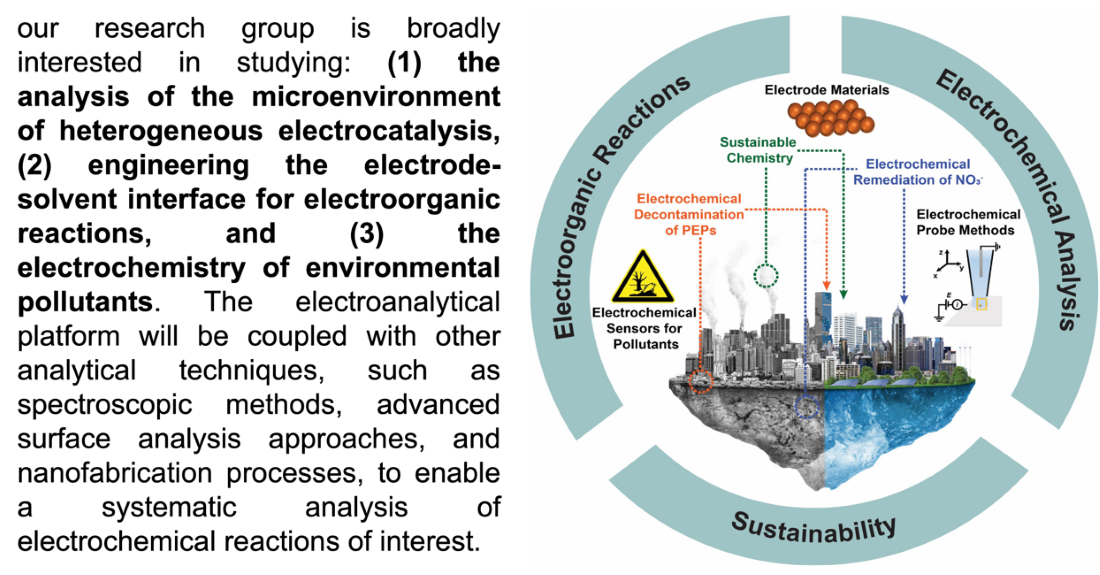
Dr. Seyyedamirhossein (Amir) Hosseini is an Assistant Professor of Chemistry at the University of South Carolina , affiliated with the McCausland College of Arts and Sciences and the Department of Chemistry and Biochemistry . He earned his B.Sc. from the University of Birjand (Iran), M.Sc. from Ball State University, and Ph.D. from Indiana University Bloomington. Research Interests: Electrochemical reactions, organic electrosynthesis, nano electrochemistry, material sciences, and redox processes Current Positions: Office at GSRC 432; Lab spaces at GSRC 211, 212, 234, 236 Contact: Hosseis@mailbox.sc.edu His recent publications focus on electrochemical sensing of PFAS, modified working electrodes for organic electrosynthesis, and peroxydisulfate-based autocatalytic reactions. The lab actively trains graduate students (Alex Reidell, Pavithra) and undergraduates (Chris LeBarron, Skylar Stewart, Abby Koczaja, Finleigh Callahan, Meredith Stewart, Mustafa Alameri, Yvette Hermann) in electrochemical methods and nanomaterial fabrication. Key research trends include: Electrocatalytic reduction of peroxydisulfate for alcohol oxidation Mechanistic studies of carbon-halogen bond cleavage Nanostructured tungstate-derived materials for water splitting Photoelectrochemical approaches to organic transformations Lab website: hosseinilab.com
Bruce H. Lipshutz is a Distinguished Professor in the Department of Chemistry & Biochemistry at the University of California, Santa Barbara (UCSB). He joined the faculty in 1979 as an Assistant Professor and has since become a leading figure in organic synthesis, particularly in green chemistry and catalysis. His research focuses on developing sustainable methodologies, including heterogeneous and homogeneous catalysis, micellar catalysis in water, and the design of 'green' surfactants. Lipshutz’s group emphasizes reducing reliance on organic solvents and minimizing environmental impact through innovative approaches like ppm-level palladium catalysis and biocatalytic integration. Research Interests: Lipshutz’s work centers on molecular design, cross-coupling reactions, and energy-related chemistry. Key projects include the development of designer surfactants (e.g., TPGS-750-M and Savie), ppm Pd-catalyzed reactions, and nanotechnology applications. His lab explores applications in pharmaceuticals, including syntheses of drugs like nirmatrelvir (Paxlovid) and antimalarial agents. The group collaborates with industries such as Takeda and the Bill & Melinda Gates Foundation to advance sustainable drug manufacturing. Grants & Collaborations: Lipshutz has secured significant funding for projects targeting green chemistry and sustainable synthesis. His collaborations span academia and industry, focusing on translating lab innovations into scalable industrial processes. Labs & Teams: The Lipshutz Research Group operates within the UCSB Chemistry Department, emphasizing interdisciplinary approaches. The lab’s infrastructure supports continuous-flow chemistry, nanoparticle synthesis, and advanced catalytic systems. Students and postdocs engage in projects ranging from surfactant design to total synthesis of complex natural products.
Daniel Buchner serves as Lab Manager at the Center for Applied Geosciences (ZAG) at the University of Tübingen since 2019, within the Faculty of Mathematics and Natural Sciences, Department of Geosciences. Previously, he was a Junior group leader for environmental isotope chemistry and microbiology (2015-2019) in the Environmental Mineralogy and Environmental Chemistry group led by Prof. Stefan B. Haderlein. Dr. Buchner specializes in environmental mineralogy and chemistry with a focus on stable isotope fractionation during biodegradation of chlorinated compounds. His research investigates how carbon and chlorine isotopes can track and verify degradation of chlorinated ethenes and other contaminants. He has developed analytical methods for compound-specific isotope analysis and applies these techniques to study microbial degradation pathways in environmental systems. Analysis of his publication record shows consistent contributions to environmental science, particularly in Environmental Science & Technology and Journal of Contaminant Hydrology . His work demonstrates expertise in stable isotope geochemistry, environmental microbiology, and contaminant hydrology, with a strong focus on practical applications for environmental remediation and monitoring. Dr. Buchner contributes to professional standards as a member of the expert committee for environmental isotope chemistry of the German Water Chemistry Society since 2016. He teaches several courses including Project seminar Environmental Chemistry, Environmental isotope chemistry of organic compounds, and Aquatic & Environmental Chemistry II Lab Course, providing students with hands-on experience in environmental analysis techniques. At the Center for Applied Geosciences, Dr. Buchner manages laboratory operations and supports research in environmental mineralogy and chemistry, working within the Environmental Mineralogy and Environmental Chemistry Laboratory.
David Leys is a Professor of Structural Biology at the University of Manchester, affiliated with the Manchester Institute of Biotechnology. He holds a PhD in Biochemistry from the University of Ghent (2000) and has held academic roles including a postdoctoral fellowship at the University of Edinburgh, a position as a Research Fellow at the University of Leicester, and a Reader in Molecular Enzymology before becoming a Professor in 2010. His work has been recognized with awards such as the Royal Society University Research Fellowship (2003–2011), EMBO YIP (2004), and the 2015 Wain Medal in Biochemistry. Leys' research focuses on understanding the atomic basis of biological processes through structural biology and biochemical techniques. Key areas include interprotein electron transfer, substrate channelling strategies, enzymatic H-tunnelling, and organohalide respiration. His group investigates protein structure-function relationships, particularly in enzymes relevant to biotechnology, such as those involved in biofuel production. Recent work has uncovered novel roles for vitamins B2 and B12 in enzymatic mechanisms. He leads an independent research group funded by BBSRC, ERC, and industry, comprising ~4 postdoctoral scientists and 5 PhD students. His projects include the High Resolution Cyclic Ion Mobility HDX Mass Spectrometry of Protein Dynamics (2022–2023), Manchester Synthetic Biology Research Centre (2014–2020), and Innovative Routes to Monoterpene Hydrocarbons (2014–2020). His contributions align with UN Sustainable Development Goals related to Biotechnology and Sustainable Futures. Notable datasets include crystal structure determinations and enzyme docking models, with widespread academic and industry engagement. His work bridges fundamental research and applied biotechnology, emphasizing protein engineering and structure-based drug design.
William Moe is the Marvin Rex Clemmons Professor in the Department of Civil and Environmental Engineering at Louisiana State University (LSU). He holds a Ph.D. from the University of Notre Dame (1999) and a B.S. (Magna Cum Laude) from Gonzaga University (1994). His research focuses on biological treatment of municipal, industrial, and hazardous wastes, including biofiltration of gas-phase contaminants, anaerobic processes for chlorinated organic compound remediation, microbial physiology, and molecular tools for microbial population analysis. He has pioneered work on Sequencing Batch Reactors (SBRs) and industrial waste treatment strategies. Education: Ph.D. Civil Engineering, University of Notre Dame, 1999 B.S. Civil Engineering (Magna Cum Laude), Gonzaga University, 1994 Dr. Moe’s research integrates engineering principles with microbiology to address environmental challenges. Key areas include microbial-driven bioremediation of groundwater contaminants, fungal applications in soil stabilization, and biofilter optimization for volatile organic compounds (VOCs). His work spans fundamental studies of microbial physiology to applied technologies like load equalization systems for biofilters. Research Trends: Recent studies emphasize fungal mycelium’s role in soil mechanics, microbial genome analysis for bioremediation potential, and unintended byproducts of dehalogenation processes. His articles highlight interdisciplinary approaches to environmental engineering and microbiology. Advising & Grants: While specific grants or advisees are not detailed here, his extensive publication record reflects sustained research funding and mentorship of graduate students. He has contributed to collaborative projects on biofilter design and anaerobic treatment systems. Labs/Teams: Active in LSU’s Civil and Environmental Engineering labs, focusing on environmental biotechnology and contaminant remediation. Collaborates with industry and federal agencies on applied environmental solutions.
Dr. Richard Whitfield is a Senior Scientist at ETH Zurich's Laboratory of Sustainable Polymers, working with Professor Athina Anastasaki. His research focuses on depolymerization methods for chemical recycling and sustainable polymer development. He holds a PhD from the University of Warwick where he developed copper-mediated polymerization strategies, including work on cationic polymers for gene delivery and a research fellowship at UC Santa Barbara. His current work explores advanced chemical recycling techniques including oxygen-tolerant depolymerization, thermal RAFT processes, and solvent-free recycling approaches. He has developed innovative methods for controlling polymer dispersity and network properties to enhance recyclability. Dr. Whitfield maintains an active publication record in polymer chemistry with recent work focusing on sustainable materials and circular economy principles.
Stefan Bernhard is a Professor of Chemistry at Carnegie Mellon University's Mellon College of Science. He holds a Ph.D. in Chemistry from Université de Fribourg, Switzerland (1996). His research focuses on renewable energy, particularly photocatalytic systems for hydrogen evolution and CO₂ conversion, leveraging transition metal complexes and high-throughput experimentation. His lab develops automated reactors using Raspberry Pi, 3D printing, and machine vision to streamline data collection for AI-driven science. Key research areas include energy conversion via light-to-electrochemical processes, optoelectronic materials, and chiral luminophores. He pioneered cost-effective hydrogen-sensitive films and has advanced understanding of structure-property relationships in transition metal complexes. Notable awards include the Scott Energy Center Fellowship (2019) and NSF CAREER Award (2005). The Bernhard Lab emphasizes automation and high-throughput methods, with projects spanning photocatalytic reaction screening, nanomaterials synthesis, and circularly polarized luminescence. Their work bridges synthetic chemistry with data science, enabling scalable solutions for sustainable energy challenges.
Priv.Doz.Dr. Daniel Tunega is a Senior Lecturer at the Institute of Soil Research within the University of Natural Resources and Life Sciences, Vienna (BOKU) . His research focuses on molecular-scale interactions between environmental pollutants and soil components, with a particular emphasis on clay minerals and iron-based nanoparticles. Principal Investigator on projects funded by the Austrian Science Fund (FWF) Active in interdisciplinary research combining soil science, computational chemistry, and environmental engineering Research Interests include: Theoretical modeling of: Adsorption mechanisms of hydrophobic organic chemicals on mineral surfaces Reductive dechlorination processes using modified nanomaterials Mechanical properties of clay minerals and hybrids Wettability and surface interactions in soil systems Environmental fate of persistent pollutants Geochemical reaction pathways His publication portfolio demonstrates expertise in Density Functional Theory (DFT) calculations, molecular dynamics simulations, and experimental validation through collaborations. Key themes across his 2023-2025 publications include: Pollutant adsorption on modified clays Nanoparticle-mediated contaminant degradation Soil mineral-water interactions Organic-inorganic composite materials Scientific Presentations reveal continuous engagement with international conferences like Goldschmidt, Euroclay, EGU General Assembly, and World Congress of Soil Science, focusing on: Mechanistic soil pollution remediation Molecular-scale interface analysis Computational environmental chemistry
Dr. Chang Ding is a Group Leader in the Department of Molecular Environmental Biotechnology at the Helmholtz Centre for Environmental Research - UFZ, Leipzig, Germany. He holds a Ph.D. in Civil and Environmental Engineering from the National University of Singapore (2014) and a Bachelor of Engineering in Environmental Science from Tsinghua University, China (2008). His career includes postdoctoral research at the National University of Singapore (2014–2015), a Humboldt Research Fellowship at UFZ (2015–2018), and a Scientist role at UFZ (2018–2023) before assuming his current leadership position. Ding's research focuses on anaerobic microbial processes critical to environmental sustainability, including: Anaerobic ammonium oxidation (anammox) and nitrogen cycle innovations Energy-efficient wastewater treatment with resource recovery Transformation pathways of trace organic contaminants in engineered ecosystems Development of automated bioreactor systems and proteomic methodologies (e.g., metaproteomics, protein stable isotope probing) His recent publications emphasize microbial detoxification mechanisms for pollutants like antibiotics, halogenated compounds, and artificial sweeteners, often leveraging cutting-edge techniques in genomics, enzymology, and reactor engineering. Articles consistently explore bioremediation strategies for wastewater and contaminated environments, with frequent collaborations across European and Asian institutions. Awards & Honors: Humboldt Research Fellowship (2015–2018) He leads the Anoxic Microbial Transformation group and contributes to EU-funded projects (e.g., RESPIMMOX, CLEANER) investigating anammox bacteria and micropollutant removal. Ding also develops open-source scientific tools, including a Raspberry Pi-based bioreactor control system and computational pipelines for protein stable isotope probing.