Matthew Walsh is an Indigenous Anaiwan man and Lecturer at the Faculty of Law, University of Technology Sydney . His work focuses on Indigenous policy engagement, legal ethics, and treaty processes across settler-colonial regimes. He actively contributes to embedding Aboriginal and Torres Strait Islander knowledges in education and serves on committees like the Vice-Chancellor’s Indigenous Advisory Committee. Key Research Themes: Indigenous nation building, native title systems, racial violence in legal contexts, and treaty negotiations. Teaching: Courses on Ethics Law and Justice (2020–present) and Indigenous Peoples and the Law (2022–present). Service: Former Executive Manager Research at UTS’s Jumbunna Institute (2018–2020) and Manager Indigenous Employment (2011–2017).
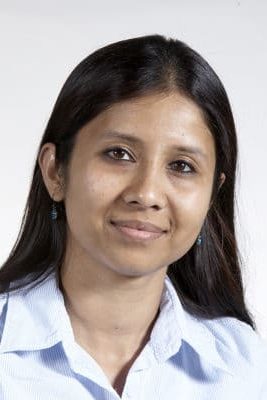
Vasudha Chhotray is a Professor of Politics and Development at the School of Global Development, University of East Anglia (UEA). She is a member of the Global Environmental Justice research group, the Water Security Research Centre, and the State, Governance and Conflict research cluster. Her interdisciplinary research bridges development studies, comparative politics, and political ecology, with a strong regional focus on India and South Asia. PhD in Development Studies, School of Oriental and African Studies (SOAS), University of London Professor, School of Global Development, University of East Anglia School Post-Graduate Research Director (Spring Semester) Her research focuses on the politics of natural resource use, extractive regimes, disaster recovery, citizenship, and environmental justice. She employs critical, interdisciplinary approaches to examine how development policies emerge in subnational contexts and how they affect marginalised populations. Key themes include extractive industries, coal transitions, citizenship documentation, and the governance of climate and disaster recovery. Her recent publications and research projects reveal a strong trend toward climate justice, just energy transitions, and long-term disaster recovery. She investigates how coal mine closures can support sustainable livelihoods and how dignity and social differentiation shape recovery processes in India. Her work emphasizes participatory methodologies and interdisciplinary insights. FORMAS-funded: 'The end of coal and the future of land' (2023–2025) British Academy-funded: 'Recovery with Dignity' (2018–2020) DFID, IDRC, NWO, ESPA, and UNDP-funded projects on governance, adaptation, and ecosystem services Felix Scholarship, ESRC and British Academy fellowships Vasudha Chhotray supervises PhD students on topics including agrarian change, wind power, transboundary hydropolitics, and Adivasi livelihoods. She has led research teams across India, South Africa, and Mexico. Her lab and collaborative work involve interdisciplinary teams focusing on global environmental justice, water security, and political governance in development contexts.
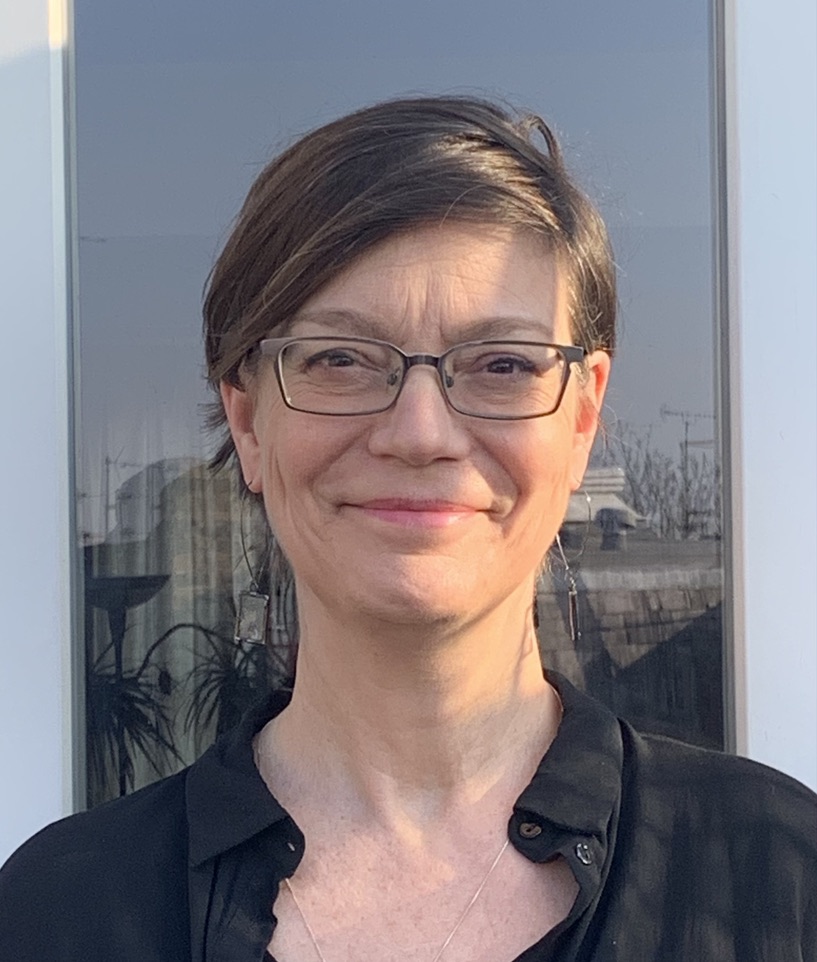
Naomi Burstyner is a Lecturer in Law at Swinburne Law School, affiliated with the School of Business, Law and Entrepreneurship at Swinburne University of Technology. She holds a Masters of Laws from the University of Melbourne and dual Bachelor degrees in Laws and Arts from Monash University. Her academic career includes teaching mediation, negotiation, and legal ethics at Monash University and other Australian universities since 2013. She is currently pursuing a PhD at Monash University Law Faculty on dispute resolution and coronial litigation. Her research focuses on Appropriate Dispute Resolution (ADR) , coronial matters , legal ethics , and access to justice . She explores themes such as mediation ethics, consumer vulnerability in dispute systems, and judicial delay impacts. Her work emphasizes practical applications of ADR in family law and workplace settings, supported by her certifications as a nationally accredited mediator and Family Dispute Resolution Practitioner. Naomi has published widely in law journals, focusing on technology in justice systems, consumer complaint mechanisms, and civil litigation efficiency. Her articles critically analyze pre-action protocols, litigation delays, and the ethical challenges in legal roles. Notable contributions include studies on dispute system design for vulnerable consumers and the role of technology in enhancing judicial transparency. She is a member of The Resolution Institute and has held leadership roles in mediation training programs. Currently, she is not available for student supervision but actively engages in policy discussions on improving access to justice through innovative ADR frameworks.
Anna Fiodorova is an Associate Professor at the Department of Criminal Law, Procedural Law and History Law at Carlos III University of Madrid. She serves as Deputy Director of the University Master's Degree in Criminal Law and Criminal Procedure. Research Focus: Victim rights, EU judicial cooperation, data protection in criminal proceedings, and sexual violence legal frameworks Key Projects: VISPRO (2024-2027), CHILD (2024-2026), RE-TREAT (2020-2022), FAIRCOM (2019-2021) Contact: anna.fiodorova@uc3m.es | afiodoro@der-pu.uc3m.es Her recent publications examine digital evidence exchange in EU criminal proceedings, child abuse prevention frameworks, and victim participation challenges in sexual violence cases. She contributes to the Alonso Martínez Institute for Justice and Litigation , working at the intersection of law, politics, and sociology. Her research explores transnational legal cooperation and modernization of criminal procedures , focusing on balancing human rights with effective law enforcement mechanisms across European jurisdictions.
Elisabeth Enoksen is an Associate Professor in the Department of Social Sciences at the University of Stavanger. Her research examines cultural education, youth identity in cross-cultural contexts, institutional abuse redress systems, and the sociocultural dimensions of alcohol consumption. She employs qualitative methodologies with a focus on Norwegian and Sámi cultural contexts, exploring how structural factors influence individual experiences and identity formation. Her educational background includes a doctoral degree focusing on social work and cultural studies methodologies, though specific degree details are not provided in the source materials. Research interests center on: Cultural transmission mechanisms in educational settings Identity negotiation among immigrant youth Restorative justice for institutional abuse survivors Alcohol's role in cultural belonging Pandemic impacts on childhood development Publications demonstrate consistent focus on vulnerability and resilience, with recent work analyzing cultural education through Sámi practices and institutional abuse redress processes. Methodological approaches emphasize narrative analysis and ethnographic fieldwork. No awards or prizes are documented in the source materials. Student advising focuses on doctoral candidates in social sciences, with supervision emphasizing qualitative methodologies and critical social theory applications. Research activities are conducted through the Faculty of Social Sciences research groups, collaborating on projects related to cultural sustainability and youth development.
Angelique M. Davis is a Professor of Political Science in the College of Arts and Sciences at Seattle University, holding associate appointments in African and African American Studies, the Pre-Law Program, and Women, Gender, and Sexuality Studies. She joined the faculty in 2005 after practicing law and serving as a federal law clerk, specializing in the intersection of race, law, and political systems. Her educational background includes: JD from the University of Washington School of Law (1999) BA in Law and Diversity (with Honors; minor in Business Administration) from Western Washington University (1995) Professor Davis's research centers on racial gaslighting, dehumanization, reparations, and the socio-legal construction of race, examining how systemic racism evolves through legal frameworks. Her work critically analyzes apologies for historical injustices and the persistence of white supremacy in modern institutions. Her expertise spans Constitutional Law, Race & Law, Law & Gender, and International Law, with publications addressing citizenship, civic engagement, and justice systems. She explores how racial categories are politically constructed and weaponized through legislative processes and judicial interpretations. Her publication history from 2007-2019 reveals consistent thematic focus on racial justice mechanisms, with landmark work on racial gaslighting demonstrating how systemic racism manipulates reality perception. Collaborative projects with Rose Ernst dominate her output, bridging political science, law, and sociology to dissect colorblind racism in policy formation. Her scholarly impact was recognized with: 2019 Best Paper Award from the Western Political Science Association for "Racial Gaslighting" Professor Davis actively mentors scholars through Exhale Academic Writing Retreats and the National Center for Faculty Development and Diversity (NCFDD), providing structured coaching for academic productivity. Her civic engagement includes service on the Seattle Civil Service Commission (2013-2022), where she addressed institutional equity. She founded Exhale Academic Writing Retreats to combat academic burnout, creating supportive environments for scholarly writing. Her NCFDD workshops focus on sustainable academic careers, particularly for underrepresented faculty navigating institutional barriers.
Daniel Butt is an Associate Professor of Political Theory at the University of Oxford's Department of Politics and International Relations (DPIR) and a Fellow and Tutor in Politics at Balliol College. He specialises in political theory, focusing on distributive and rectificatory justice, historical injustice, colonialism, and environmental ethics. Butt holds an MA, MPhil, and DPhil from Oxford University, with a BA in Philosophy, Politics, and Economics from Wadham College. His research explores reparations for historical injustice, cultural property ethics, and the intersection of law and morality. He has authored Rectifying International Injustice: Principles of Compensation and Restitution Between Nations (Oxford UP, 2009) and co-edited Political Philosophy, Here and Now: Essays in Honour of David Miller (Oxford UP, 2022). His work frequently addresses global justice, intergenerational equity, and the ethical implications of benefiting from past wrongs. Butt has received the Outstanding Graduate Supervisor Award (2018) and served in roles like Vice-Master of Balliol College and Chair of the Sub-Faculty in Politics. He advises students on topics like animal liberation and global justice, and his publications span journals in ethics, politics, and law. His current projects include examining reparations for colonialism and the ethics of cultural restitution.
Margaret Doyle is a Senior Visiting Research Fellow at the University of Reading, specializing in administrative justice, mediation, and human rights. She has extensive experience in mediating disputes involving disability, special educational needs, and older people's care. Her roles include membership in the Administrative Justice Council and the College of Mediators. Her academic background includes a Master’s in Law and Sociolegal Studies from Birkbeck, University of London, and a BA from Barnard College, Columbia University. She co-authored Reimagining Administrative Justice (2019) and contributed to foundational texts on mediation and dispute resolution. Margaret’s research focuses on rights-based mediation, redress mechanisms in public sectors, and the interplay between mediation, ombuds, and courts. She pioneered studies on mediation in judicial review and led projects funded by the Nuffield Foundation and ESRC, including a study on youth participation in educational disputes. Her current work explores therapeutic justice in medical treatment disputes through an ESRC-funded project. She has held roles with the Advice Services Alliance, KIDS, and UKAJI, contributing to policy development and awareness in administrative justice systems.
Kirsten E. McAllister is a Professor in the School of Communication at Simon Fraser University, where she has established herself as a leading scholar in interdisciplinary research at the intersection of memory studies, visual culture, and critical race theory. Her academic journey includes a PhD in Sociology from Carleton University, an MA in Communication from Simon Fraser University, and a BA in Geography from the same institution, followed by an SSHRC Postdoctoral Fellowship at Lancaster University. McAllister's research focuses on political violence, racism, migration and diaspora through interdisciplinary approaches drawing on Memory Studies, Visual Studies, Ethnography, Critical Race Studies, and Indigenous Studies. Her methodological toolkit incorporates Art History, Ethnography, Literary Studies, and Autoethnography, with significant community-based research projects examining WWII Japanese Canadian internment camps, asylum seekers, and contemporary Asian Canadian artists exploring sites of memory regarding war, military occupation, colonialism, and environmental disaster. Her scholarly output reveals consistent engagement with transnational memory practices, particularly examining how communities navigate trauma, memorialization, and cultural identity across borders. The trajectory of her work demonstrates increasing focus on the intersections between Indigenous and Japanese Canadian experiences, settler colonialism, and redress politics, with recent publications addressing questions of whiteness in communication studies and the limitations of state-led reconciliation processes. SSHRC Insight Grant (2013-2016): 'Transpacific Memories: Moving from the Trauma of Canada's National Past to the Transnational Present' SSHRC Standard Grant (2006-2010): 'Public Discourses of Fear and Containment: Refugees in Canada and Scotland' National Association of Japanese Canadians funding (2008): 'Tracing the Lines: A Symposium on Contemporary Poetics and Cultural Politics to Honour Roy Miki' SSHRC Post-doctoral Fellowship (2000-2002): 'Re-presentations of Everyday Life in Internment Camps: Hostile Environments or Familiar Landscapes?' McAllister actively contributes to academic discourse through conference participation, including organizing panels on #CommunicationSoWhite and participating in Scholarstrike Canada's 'Anti-Asian Racism Undone' symposium. She teaches courses including Design and Method in Qualitative Communication Research and The Media of Memory: Political Violence, mentoring the next generation of critical communication scholars.
Fadil Zendeli is a Full Professor at the Faculty of Contemporary Social Sciences, South East European University (Tetovo, North Macedonia). Holding a PhD in Public Administration (2007), his work focuses on administrative law, refugee reintegration, decentralization, and digital governance. He has published extensively on post-legislative scrutiny, social protection systems, and justice reform in the Balkans. Education: PhD in Public Administration (SEEU) His research bridges administrative law and practical policy challenges, evident in publications like "The Challenges of the Refugee Crisis in North Macedonia" (2025) and "Digital Governance Impact in Tirana District, Albania" (2024). Recent trends emphasize refugee integration, decentralized education finance, and digital transformation in public services. Zendeli has contributed to studies on judicial reform, anti-corruption, and cybercrime security policies since the early 2010s. Current projects include comparative analyses of public institutions in Albania and North Macedonia, alongside exploring nomoteknika (legal informatics) applications.
Paolo Mezzanotte is an Associate Professor of Constitutional and Public Law in the Department of Political Science at Sapienza University of Rome, where he has taught since 2009. His current courses include European Constitutionalism and Fundamental Rights, alongside previous instruction in Public Economic Law, Constitutional Justice, and Advanced Public Law. He holds a tenured position and was formally qualified as associate professor in November 2024. Education: Graduated cum laude in Law, Sapienza University of Rome (2003) PhD in State Theory, Sapienza University of Rome (2007) Admitted to the Italian Bar (2007) Qualified as Associate Professor (2024) Research Focus: Mezzanotte's scholarship centers on constitutional law with particular emphasis on administrative due process, dissenting opinions in constitutional courts, class actions, and territorial representation. His work examines how constitutional rights enable citizen participation in administrative decision-making, the evolution of public debate in legal systems, and the protection of fundamental rights through innovative procedural mechanisms. He investigates the tension between historical constitutional traditions and contemporary social challenges, especially regarding gender identity recognition and European integration. Publication Trends: Recent works (2023-2025) demonstrate consistent exploration of constitutional adaptation to modern societal shifts, including non-binary gender recognition, civil union dissolution following gender reassignment, and digital-era public discourse. His research reveals a methodological commitment to bridging theoretical constitutional principles with practical administrative applications, often through comparative analysis of Italian jurisprudence against European human rights standards. Research Leadership: Mezzanotte has coordinated two major university projects: "Due Procedure in Constitutional Law" (2013) and "Popular Sovereignty in a Supranational Perspective" (2017). He contributed to national PRIN projects on healthcare resource management (2009) and financial dispute resolution mechanisms (2017). His institutional service includes membership on the University Conferences and Conventions Commission, Faculty Executive Board, Department Council, and Orientation and Tutoring Commission, where he shapes academic governance and student mentorship frameworks.
Diane Orentlicher is Professor of International Law at American University's Washington College of Law, specializing in human rights, war crimes tribunals, and transitional justice. She holds a B.A. from Yale University (1977) and a J.D. from Columbia University (1981). Her distinguished career includes service as U.S. Deputy for War Crimes Issues (2009-2011) and UN Independent Expert on Combating Impunity. Her research examines: The societal impact of international tribunals (e.g., ICTY, Tokyo Tribunal) Universal jurisdiction and accountability mechanisms Transitional justice frameworks in post-conflict societies Human rights fact-finding methodologies Publications since 1997 consistently address war crimes jurisprudence, with recent works (2018-2020) critically analyzing ICC operations, historical tribunals, and sexual violence in conflict. Her scholarship emphasizes practical legal strategies for human rights enforcement. Awards: Pauline Ruyle Moore Scholarship Award for Some Kind of Justice (2018)
Richard Nisa is an affiliated faculty member in the School of Architecture at Carnegie Mellon University and serves as Program Lead for Sustainability in the IDeATe Program. He holds a PhD in Geography from Rutgers University and a BArch from Syracuse University, where he won the James A. Britton Memorial Prize for Outstanding Thesis. His research bridges infrastructure, technology, and architecture within historical and political contexts, with a focus on U.S. military-carcerality and transnational systems. Previously, he was an associate professor at Fairleigh Dickinson University, earning teaching awards including the 2018 Becton College Teacher of the Year and 2019 Outstanding Honors Faculty Award. He has taught transformative courses in New Jersey prisons through the NJSTEP program, exploring mass surveillance history. Nisa chairs the Urban Geography Specialty Group of the American Association of Geographers. His current book project, The Global Capture Chain: Infrastructures of U.S.-Managed Military Detainment from Truman to Trump , examines spatial tensions in military detention. His articles span journals like Journal of Historical Geography and Radical History Review , addressing topics like automated weapons, humanitarian law, and carceral legacies. Teaching focuses on ethics in architectural decision-making and research methodologies. Courses include 48-383 Ethics (architecture minors) and 48-620 Graduate Seminar: Situating Research.
Sara Amighetti is a Postdoctoral Research Fellow at the Chair of Political Philosophy, University of Zurich, since 2019. Previously, she served as a Research Assistant at the same institution (2017–2019). She holds a PhD (awaiting viva) in Political Philosophy from University College London (2017), alongside a Laurea Magistrale in African and Asian Studies (2009, University of Pavia), a Graduate Diploma in Social Sciences (2009, Institute for Advanced Study, Pavia), and a Bachelor’s degree in Political Science and International Relations (2006, University of Pavia). Education: PhD (awaiting viva) in Political Philosophy, University College London (2017) Laurea Magistrale in African and Asian Studies, University of Pavia (2009) Diploma die Licenza (Graduate Diploma in Social Sciences), Institute for Advanced Study, University of Pavia (2009) Laurea Triennale in Political Science and International Relations, University of Pavia (2006) Her research focuses on political philosophy, particularly colonialism’s legacy, historical justice, and democratic deliberation. She examines the ethical dimensions of territorial exclusion and collective redress mechanisms. Recent publications include analyses of nation-states’ rights to exclude and frameworks for addressing historical injustices through participatory democracy. Advising & Grants: No formal advisees or grant details are specified in the provided texts. Labs/Teams: Not explicitly mentioned in the profile.
Judy Walsh serves as Assistant Professor at University College Dublin's School of Social Policy, Social Work and Social Justice, where she holds the position of Head of Subject for Social Justice since 2018. Her academic career spans over two decades with significant contributions to equality law and social justice education. Walsh's research focuses on human rights law, discrimination law, and feminist socio-legal theory, with particular expertise in Irish equality legislation. Her work demonstrates strong interdisciplinary connections between legal frameworks and social justice movements, especially regarding LGBTIQ+ rights, disability rights, and socio-economic equality. She has developed influential conceptual frameworks for understanding and implementing equality in diverse social contexts. Her 15 most recent publications reveal consistent engagement with evolving equality challenges, progressing from foundational theoretical work on egalitarianism to contemporary analyses of intersectional discrimination and practical implementation of equality legislation. Key research trajectories include the application of EU non-discrimination law in Ireland, mechanisms for involving marginalized groups in research, and comprehensive reviews of equality acts. UCD College of Social Sciences and Law Award for Outstanding Contribution to Student Learning (2017) Marie Curie Visiting Research Scholar (2009) Visiting Research Fellowship: Gender, Sexuality and the Law (2004) As academic coordinator of UCD's Social Justice Minor program, Walsh has pioneered globally unique undergraduate social justice education. Her grant portfolio includes significant funding from the Irish Human Rights and Equality Commission and European Commission programs. She actively advises government bodies on equality legislation reform and serves as Vice-Chair of the Participation and Practice of Rights Project, whose human rights-based approach has been recognized by the UN High Commissioner for Human Rights. Walsh leads the UCD PPI Ignite program focused on embedding public and patient involvement in health research, with particular emphasis on engaging seldom-heard groups. Her collaboration network spans academic institutions, human rights organizations, and government bodies across Ireland and Europe.