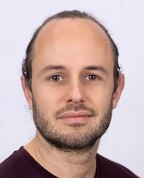
John Stachurski is a Professor at the Research School of Economics, Australian National University, specializing in economic dynamics, dynamic programming, and computational methods. His research focuses on optimal growth theory, stochastic processes, and asset pricing models. He has contributed to advancements in unbounded dynamic programming, Bellman equation transformations, and the computational efficiency of economic models. His work often bridges theoretical rigor with practical applications in finance and macroeconomics. Stachurski’s research spans projects such as the Next Generation Scientific Textbooks (2019–2025) and Advanced Computational Methods for Asset Pricing (2017–2021), emphasizing innovation in quantitative economics. He holds an h-index of 11 with over 563 citations across his 48 publications. His research interests include stability analysis of economic systems, recursive utility frameworks, and the interplay between financial markets and economic theory. Notable contributions include work on power-transformed affine systems, interest rate dynamics, and systemic risk in financial networks.
Zachary Sunberg is an Assistant Professor in the Ann and H.J. Smead Aerospace Engineering Sciences Department at the University of Colorado Boulder. He is affiliated with the Research and Engineering Center for Unmanned Vehicles (RECUV) and leads the Autonomous Decision and Control Lab (ADCL). His research focuses on artificial intelligence for autonomous systems, particularly in aerospace autonomy, decision-making under uncertainty (via POMDPs), and human-AI interaction. Sunberg holds a PhD from Stanford University (2018), an MS and BS from Texas A&M University (2013, 2011). His work spans algorithm development for autonomous vehicles, including safe and efficient driving, rotorcraft control, and game-theoretic planning. Notable contributions include the POMCP and POMCPOW algorithms for continuous POMDPs, and open-source frameworks like POMDPs.jl. He has received a NSF CAREER Award (2024) and a NSF Graduate Fellowship (2012). Academic roles include mentoring the AI4ALL program, teaching courses on decision-making under uncertainty, and advising projects at the intersection of robotics and AI. His lab collaborates on applications ranging from weather observation to human-centered autonomy in unmanned systems.
Bloise Gaetano is a Professor at the University of Rome Tor Vergata, specializing in Economics (SECS-P/01). His research focuses on Macroeconomic Theory, Financial Economics, and General Equilibrium. He teaches 'Teoria dei Mercati Finanziari' at the Master of Science level and holds office hours on Mondays from 14:00 to 16:00 or by appointment in Room 2B3-11. His work addresses nonconvex economic environments, robust efficiency, and dynamic programming with recursive utility. Macroeconomic Theory Financial Economics General Equilibrium Dynamic Programming Recursive Utility Nonconvex Economic Environments His research explores robust constrained social optima in nonconvex settings, dynamic inefficiency in overlapping-generations models, and the role of Bellman operators in recursive utility frameworks. He investigates the implications of unbounded returns and low safe interest rates for policy design, emphasizing the correlation between growth and marginal utility of wealth. Contact: gaetano.bloise@uniroma2.it | Phone: +39 06 7259 5691 | Personal Website: Profile Link
Markus Buehler is a Professor in the Department of Civil and Environmental Engineering at the Massachusetts Institute of Technology (MIT). His research focuses on bioinspired materials, generative AI, and multiscale materials modeling. He integrates principles from biology, engineering, and computation to address sustainability and material innovation challenges. Research interests include generative AI applications in materials design, protein mechanics, and nanotechnology. He develops frameworks like MechGPT and MechAgents to solve mechanics problems and accelerate discovery through multi-agent systems. His work also explores bio-inspired composites, such as spider silk and diatom-inspired structures, alongside sustainable solutions for energy storage and construction materials. Dr. Buehler has received the Foresight Institute Feynman Prize for nanotechnology advancements. His collaborative projects span industry and educational outreach, including a study on basalt fibers with MIT and JEOL USA. He emphasizes computationally driven approaches to bridge molecular and macroscopic scales, enhancing the design of adaptive and functional materials. His research teams, including SciAgents and ProtAgents , combine AI with physics-based models to advance protein discovery and materials informatics. These efforts aim to create robust, hybrid-living materials and improve fracture mechanics predictions through deep learning.
Prof. Dr. Martin Barbie is a Professor of Economics at the University of Cologne's WiSo Faculty (Economics and Social Sciences). He holds a PhD (Dr. rer. pol.) from the University of Bonn (2002) and previously served as an Assistant Professor at the University of Karlsruhe (2003–2009) and the University of Bonn (2003). His research focuses on mathematical economics, game theory, and dynamic economic models, with notable contributions to topics like Markov equilibria, voting theory, and optimal taxation. He is affiliated with the University's interdisciplinary research initiatives, including the Cluster of Excellence ECONtribute (Markets & Public Policy) and the Center for Social and Economic Behavior (C-SEB). His work bridges theoretical rigor with practical policy relevance, addressing challenges in public economics, sustainability, and social choice mechanisms. Education: PhD in Economics, University of Bonn (2002); prior academic roles include temporary research positions at Karlsruhe and Bonn universities. His research consistently emphasizes formal mathematical frameworks to analyze complex economic systems and policy interventions.
Immaculate Oliva is an Associate Professor at the Department of Methods and Models for Economy, Territory and Finance within Sapienza University of Rome's Faculty of Economics. She teaches Quantitative Finance, Methods and Models for Finance, and Financial Mathematics courses for undergraduate and graduate programs in Finance and Economics. Her office hours are held weekly on Mondays from 14:30 to 16:30, available both in-person and remotely via scheduled appointments. Her research specializes in mathematical finance with focus areas including: Optimal portfolio allocation in continuous-time models Derivative valuation and structured products design Counterparty credit risk management frameworks Portfolio insurance strategies (CPPI/TIPP) Stochastic processes with jumps and co-jumps Actuarial solutions for longevity risk Recent publications (2020-2025) demonstrate strong focus on portfolio insurance mechanisms, derivatives pricing under jump diffusion models, counterparty risk quantification, and computational methods for financial equations. Her work frequently combines theoretical rigor with practical applications in energy markets, pension systems, and cryptocurrency trading. She coordinates research projects including: Facing emerging risks: an actuarial perspective Actuarial and financial risk management solutions in a pandemic mortality framework and supervises thesis students through structured guidance documented in her Vademecum.
Mauricio D Martins is a cognitive neuroscientist and Group Leader at the Social, Cognitive and Affective Neuroscience Unit, University of Vienna, affiliated with Nicolas Baumard's Lab. He previously held a post-doctoral position at the Jean Nicod Institute in Paris. He holds an MD and PhD, with the latter focused on the evolution of language and hierarchical cognition. His research lies at the intersection of neuroscience, psychology, and cultural evolution, focusing on the cognitive mechanisms underlying hierarchies, recursion, and social cognition across domains such as language, music, and action. He employs fMRI, behavioral experiments, and computational text analysis of historical fiction to uncover psychological underpinnings of societal change. His work suggests that cultural artifacts, like literature, reflect underlying psychological states that may predict historical movements such as democratic revolutions. His recent publications highlight a shift toward cultural psychology and historical analysis, particularly examining prosociality in fiction and the evolution of romantic love. The majority of his empirical work investigates neural and cognitive mechanisms of hierarchical processing, with a strong emphasis on recursion as a domain-general capacity. His research is highly interdisciplinary, bridging neuroscience, linguistics, music cognition, and history. Hurford Prize (2014) - 10th International Conference on the Evolution of Language Best PhD Presentation - Science Day 2014 (Faculty of Life Sciences, University of Vienna) Martins leads a research group and collaborates extensively across Europe. He has advised or collaborated with researchers in cognitive biology, neurology, and psychology. His work is supported by access to advanced neuroimaging facilities and large-scale digitized text corpora. He is actively involved in methodological development, particularly in measuring hierarchical cognition and cultural evolution. He is part of Nicolas Baumard's research team, which investigates the psychological foundations of social norms and cooperation. His lab uses cultural artifacts as proxies for historical psychological states, pioneering the concept of 'cognitive fossils' to reconstruct changes in human cognition over time. The team combines evolutionary theory, cognitive science, and digital humanities to explore how biological and psychological constraints shape cultural variation.
Ronald de Haan is an Assistant Professor at the Institute for Logic, Language & Computation (ILLC) , University of Amsterdam, with primary affiliation in Theoretical Computer Science (TCS) and secondary affiliation in Mathematical & Computational Logic (MCL) . Since December 2019, he has held this position, following a postdoctoral role at the same institution from 2017 to 2019. He completed his PhD at the Algorithms and Complexity Group at Technische Universität Wien in 2016. Education: PhD in Computer Science, Technische Universität Wien (2016) MSc in Computational Logic, European Master's Program in Computational Logic (2010–2012) BSc in Cognitive Artificial Intelligence & BA in Linguistics, Utrecht University (2007–2010) Research Interests: His work lies at the intersection of theoretical computer science and artificial intelligence , with a strong emphasis on parameterized complexity theory . He explores the computational complexity of problems in AI, knowledge representation & reasoning, and computational logic. Specific areas include the Polynomial Hierarchy, subexponential-time complexity, the Exponential Time Hypothesis, and parameterized compilability. Scientific Awards: E.W. Beth Dissertation Prize 2017 for his PhD thesis "Parameterized Complexity in the Polynomial Hierarchy" Shortlisted for the Heinz Zemanek Prize 2018 Nominated for the GI-Dissertationspreis 2016 by the German Informatics Society Teaching & Supervision: He has taught a wide range of courses at the University of Amsterdam, including Computational Complexity , Knowledge Representation and Reasoning , and Recursion Theory for MSc Logic and MSc AI programs. He also supervises student research projects and theses, offering topics in ASP, complexity theory, and logic programming. Academic Service: He has served on the program committees of top-tier AI and logic conferences such as AAAI, IJCAI, KR, ECAI, and AAMAS, and co-organized events like PhDs in Logic VII.
Prof. Martin Herdegen is a Professor in Financial Mathematics at the University of Stuttgart, leading the Research Group Stochastics and Applications within the Department of Stochastics and Applications. Previously, he held positions as a Reader at the University of Warwick (UK) and a postdoc at ETH Zurich under Prof. Martin Schweizer. His research focuses on mathematical finance, including equilibrium theory, utility maximization, stochastic differential utility, and financial risk measures, alongside probability theory topics like stochastic optimal control and weak convergence of measures. Education: PhD in Mathematics from ETH Zurich (2014), supervised by Prof. Martin Schweizer. His academic journey includes postdoctoral research at ETH Zurich and Warwick. Research interests span mathematical finance and probability, with emphasis on frictions in financial markets, risk modeling, and stochastic processes. Recent work explores mean-variance equilibria, market making dynamics, and ρ-arbitrage frameworks. Publications (2020–2024) highlight contributions to equilibrium asset pricing under transaction costs, optimal portfolio strategies with frictions, and algorithmic trading models using reinforcement learning. His work bridges theoretical stochastic analysis with practical financial applications. Advising: Supervised multiple PhD students including Osian Shelley (JP Morgan), Nazem Khan (Dublin City University), and Joseph Jerome (Liverpool University), with current advisees focusing on stochastic finance and machine learning integration. Research Group: Includes postdocs and PhD students working on topics like risk measures, market microstructure, and computational finance. Collaborations span institutions across Europe and North America.
Prof. Dirk Becherer is a full professor at the Institute of Mathematics, Humboldt University of Berlin, within the Faculty of Mathematics and Natural Sciences. His research focuses on stochastic analysis, financial mathematics, and optimal control with applications in risk management and utility theory. He actively contributes to collaborative research initiatives such as the Berlin Mathematical School (BMS) and MATH+, Berlin’s mathematics excellence cluster. His academic work bridges theoretical stochastic processes with practical financial market challenges, addressing topics like optimal consumption, hedging strategies under price impact, and mean-field games. Becherer’s publications span advanced mathematical finance topics, including liquidity frictions, large investor strategies, and model uncertainty. He maintains a dedicated teaching portfolio in stochastic analysis and financial mathematics, supervising doctoral students through programs like the IRTG 2544 'Stochastic Analysis in Interaction.' Becherer’s research has been supported by grants from the German Research Foundation (DFG), including extensions to collaborative projects in stochastic dynamics and financial modeling.
Dr. James Paterson serves as a Senior Lecturer in the Department of Computing at Glasgow Caledonian University, where he has established himself as a prominent figure in computer science education research. His work spans multiple domains including computational thinking development, educational tool design, and the application of computing principles to logistics and vocational training. Dr. Paterson's research interests center on innovative approaches to computing education, with particular focus on computational thinking development through embodied activities , design patterns for teaching programming concepts , and cloud computing applications in educational settings . His work bridges theoretical computer science with practical educational applications, often exploring how visualization tools and physical activities can enhance learning outcomes for students at various levels. His publication record shows increasing productivity in recent years, with significant contributions in 2024-2025 spanning logistics data integration frameworks, computational thinking pedagogy, technology adoption in higher education, and adult apprenticeship motivations. These works demonstrate his ability to connect computing education with real-world applications across multiple disciplines. Dr. Paterson actively contributes to the academic community through service roles including: Chair of the 29th Annual Conference on Innovation and Technology in Computer Science Education (2024) Peer reviewer for ACM Transactions on Computing Education Invited speaker at numerous international conferences including Computing at School Scotland and EMIP'17 Spring Academy As a Co-Investigator on the Advanced Logistics Data Integration project with JOHN G. RUSSELL (TRANSPORT) LIMITED, he applies computing expertise to practical industry challenges, demonstrating the real-world impact of his research. His work aligns with UN Sustainable Development Goals, particularly those related to quality education and sustainable industry practices.