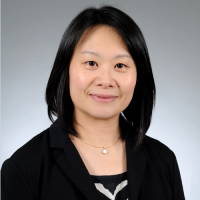
Anina Gruicaمشاهده پروفایل
پژوهشگر ارشد
- Coding Theory
- Combinatorics
- Error-Correcting Codes
- +۲ مورد دیگر
Anina Gruica is a Research Fellow in the Algebra group at the Technical University of Denmark (DTU), specializing in coding theory with emphases on density questions, combinatorial structures of error-correcting codes, and DNA-based data storage systems. Her work bridges theoretical mathematics and practical applications in next-generation storage technologies. Her research program centers on Coding Theory and Combinatorics, investigating the geometric and probabilistic properties of codes in metric spaces. Key interests include rank-metric codes, MRD codes, and combinatorial optimization for DNA storage efficiency, where she develops novel approaches to random access and coverage depth challenges through algebraic and geometric frameworks. Dr. Gruica's publication portfolio reveals a strong interdisciplinary trajectory, with increasing focus on DNA storage applications since 2022. Her work combines deep theoretical insights in combinatorial geometry with practical storage system design, resulting in high-impact publications across SIAM journals, IEEE conferences, and arXiv preprints that address both classical coding problems and emerging biological storage constraints. She has received competitive recognition including: ALCOCRYPT conference travel award (February 2023) DIAMANT PhD travel grant (2000 EUR, January 2023) DIAMANT visitor grant (1900 EUR, October 2021) SIAM Travel Award (August 2021) As co-organizer of the Postgraduate International Coding theory Seminar (PICS), Dr. Gruica actively mentors junior researchers while maintaining extensive collaborations with A. Ravagnani, J. Sheekey, and E. Yaakobi. Her conference presentations at venues like ISIT and SIAM AG23 demonstrate her leadership in translating theoretical advances to storage applications. She contributes to DTU's Algebra group research ecosystem, focusing on algebraic structures for coding theory and cryptography. Her current projects, evident from 2024-2025 preprints, explore combinatorial geometry for DNA storage efficiency and advanced rank-metric code constructions, positioning her at the forefront of coding theory's application to biological data systems.