Emilio ARNIERI is an Associate Professor at the Department of Computer, Modeling, Electronics and System Engineering (DEIS) of the University of Calabria , Italy. His research focuses on microwave engineering , antenna design , and satellite communication systems , with particular emphasis on phased arrays , dielectric spectroscopy , and 5G/6G technologies . Academic Rank: Associate Professor Key Research Areas: Antenna Design, Microwave Sensors, Millimeter-Wave Communication Current Affiliation: University of Calabria (DEIS department) His recent work explores K/Ka-Band systems for SatCom-on-the-Move , hybrid multi-band sensors for microfluidic applications, and low-profile antennas for automotive and satellite use. Publications from 2023-2025 reveal a focus on dielectric spectroscopy , beamforming , and SIW (Substrate Integrated Waveguide) technology. Notable projects include the QV-Lift Project for satellite ground segments and BiCMOS integration for high-frequency applications. Recent articles indicate expertise in transmitarray antennas , vector modulators , and reconfigurable intelligent surfaces for 5G backhaul systems. Collaborations span satellite communication , automotive radar , and millimeter-wave infrastructure .
Felice CRUPI is a Full Professor of Electronics at the University of Calabria since 2018, with prior roles as Associate Professor (2002-2018). He leads the Electrical Characterization of Semiconductor Devices section at the Nanoelectronics and Microsystems Laboratory (NML) and coordinates international collaborations with institutions like IMEC, IBM, and Purdue University. Education: PhD in Electronic Systems Engineering (University of Florence, 2001), MS in Electronic Engineering cum Laude (University of Messina, 1997) Research Interests focus on CMOS device reliability , low-frequency noise modeling , 2D material applications in electronics, and power-efficient circuits . His work spans device characterization, GaN/SiC power electronics, and hardware security through PUFs. Grant Leadership includes major European projects like GaN4AP (GaN power applications), Five2D (2D integrated electronics), and REACTION (SiC pilot lines). He has secured funding for radiation-hard memory design and international collaborations. Scientific Awards : Best paper, IEEE Ecuador Technical Chapters Meeting (2018) Best paper, IEEE International Conference on Microelectronics (2008) IEEE Senior Member (since 2014) Academic Service includes editorial roles (IEEE Transactions on Device and Materials Reliability), conference organization (INFOS 2021 General Chair), and PhD supervision of >10 students. He has taught internationally in Ecuador, China, Finland, Belgium, and Spain.
Fabio Frustaci is an Associate Professor in the ING-INF/01 scientific-disciplinary sector at the Department of Computer Engineering, Modeling, Electronics and Systems (DIMES), University of Calabria. Previously, he served as a Research Fellow (RTd A/RTd B), Assistant Professor, and Adjunct Professor at the same department. From 2011–2014, he was a Visiting Research Fellow at the University of Michigan, Ann Arbor. B.S. in Electronic Engineering (2003), University "Mediterranea" of Reggio Calabria Ph.D. in Electronic Engineering (2007), University "Mediterranea" of Reggio Calabria His research focuses on low-power electronic design , FPGA-based hardware acceleration , and approximate computing , with applications in image processing, wearable systems, and neural networks. He actively explores quantum-dot cellular automata , dynamic voltage scaling , and noise-tolerant logic circuits . Recent publications highlight his work in deep learning hardware , energy-efficient multipliers , and real-time imaging systems . He leads research groups in nanoelectronics and microsystems and collaborates on projects involving SRAM optimization , carry skip adders , and radiation-hardened FPGAs . National Scientific Qualification for Full Professor (2023) Frustaci is affiliated with the Nanoelectronics and Microsystems Lab at DIMES, contributing to advancements in power-aware design , embedded systems , and semiconductor device modeling .
Mario Roberto Casu is an Associate Professor in the Department of Electronics and Telecommunications (DET) at the Polytechnic University of Turin, where he also serves as a contact person for the Degree Course in Electronic Engineering. He is a member of the Interdepartmental Center SmartData@PoliTO - Big Data and Data Science Laboratory and actively contributes to the VLSILAB research group. Dr. Casu received his laurea degree summa cum laude in electronics engineering and his Ph.D. in electronics and communications engineering from the Polytechnic University of Turin in 1998 and 2001, respectively. He has held visiting researcher positions at Columbia University (2010-2011), National University of Singapore (2017), and CEA Grenoble (2001), as well as a visiting professorship at Chongqing Technology and Business University (2016). His research spans several interconnected domains focused on hardware implementation of advanced computing systems. Dr. Casu's work primarily addresses Embedded Machine Learning through heterogeneous embedded systems (ASICs, FPGAs, CPUs, GPUs), System-on-Chip design including latency-insensitive approaches and Network-on-Chip architectures, Microwave Imaging for both biomedical (breast cancer and stroke detection) and industrial applications (food contamination detection), and Ultra-Wide Band technologies for biomedical applications. His research bridges theoretical design methodologies with practical industrial applications across biomedical, automotive, and food sectors. Dr. Casu's recent scholarly output demonstrates a clear trajectory toward optimizing hardware implementations for machine learning workloads, particularly through FPGA-based solutions and precision-scalable multipliers. His work increasingly integrates microwave sensing technologies with machine learning for specialized applications like food contaminant detection, while maintaining strong foundations in traditional VLSI design and system-level optimization techniques. As an academic leader, Dr. Casu serves on the editorial board of IEEE TRANSACTIONS ON AGRIFOOD ELECTRONICS and regularly participates in program committees for major international conferences including DATE, ICCAD, DAC, and VLSI-SoC. He has been involved in 9 national academic research projects (2 as principal investigator), 2 European academic research projects, and 7 national and international industrial projects (2 as principal investigator). Dr. Casu actively mentors the next generation of engineers, currently supervising multiple PhD students including Lorenzo Lagostina, Edward Manca, Teodoro Urso, Fabrizio Ottati, and Luca Urbinati. His teaching portfolio includes courses such as Integrated Systems Technology, Microelectronics Digital Design, and Embedded Electronic Systems for AI/ML across both bachelor's and master's programs in Electronic and Computer Engineering. His laboratory work centers around the VLSILAB Group at DET, where his team develops innovative solutions in hardware acceleration for machine learning, microwave imaging systems, and system-level design methodologies. Current projects include the EU-funded GreenChips-EDU initiative for sustainable microelectronics education and industry collaborations with companies like Infineon Technologies on coarse-grained reconfigurable array architectures for machine learning applications.
Nawaz Ali is a Lecturer in the Department of Computer Engineering, Modeling, Electronics and Systems at the University of Calabria. His research focuses on edge computing, vehicular networks, and FPGA-based hardware acceleration, with applications in intelligent transportation systems and healthcare telematics. University of Calabria Department of Computer Engineering, Modeling, Electronics and Systems Research Interests: Specializing in edge-cloud continuum computing, mobility-aware routing protocols, and vehicular edge intelligence. His work bridges theoretical modeling with practical implementations in network optimization and hardware development. Recent Contributions: Developed enhanced simulators for urban vehicular edge environments, pioneered proximity-aware federated learning frameworks, and created GUI tools for optical signal compensation. His research also spans cognitive radio spectrum sensing and secure task scheduling in mobile edge clouds.
Donatella Sciuto is a Full Professor in Computer Engineering at the Department of Electronics and Information of Politecnico di Milano, where she conducts research in System Architectures. She serves as Deputy Director of Education at CEFRIEL, managing executive company education training programs. Her academic career spans multiple leadership roles in professional organizations including the Council of EDA (CEDA) where she served as VP of Finance (2008-2009) and is currently President Elect. Her research focuses on embedded systems design methodologies, with particular expertise in Multiprocessor System on Chip, reconfigurable systems, hardware/software co-design, and design space exploration techniques. She leads the Embedded Systems Design and Design Methodologies research group (sagroup.elet.polimi.it) and has contributed significantly to the field of Electronic Design Automation. Her publication record shows a consistent focus on reconfigurable computing and MPSoC design, with recent work emphasizing dynamic reconfiguration techniques, hardware/software synchronization in multiprocessor systems, and optimization algorithms for heterogeneous architectures. Her research demonstrates a progression from foundational work in embedded systems to more complex system-level design methodologies for modern reconfigurable architectures. She has held editorial positions with prestigious journals including IEEE Transactions on Computers, Journal of Design Automation of Embedded Systems, and IEEE Embedded Systems Letters. She has served on program committees for major conferences including DAC, ICCAD, DATE, and CODES+ISSS, and has held leadership roles including Publications Chair for IEEE/ACM ESWEEK 2007 and Co-General Chair of ESWEEK 2009. Prof. Sciuto has advised more than 10 PhD students and currently mentors 4 PhD candidates at Politecnico di Milano. She teaches courses in Computer Architecture, Operating Systems, and High Performance Processors and Systems. She has published 5 teaching books in Italian across multiple editions and maintains active research collaborations through European and national research projects she coordinates.
Roberto Proietti is an Associate Professor at the Department of Electronics and Telecommunications (DET) at Politecnico di Torino. He is a member of the PhotoNext Interdepartmental Center for Applied Photonics and coordinates the Laurea degree program in Electronic and Communications Engineering. His research focuses on optical networks , optical switching , silicon photonics , and quantum networking , with applications in machine learning-driven environmental sensing and smart infrastructure . He has led projects like Performance Tradeoff Studies of Copropagating QKD and Classical Signals in WDM Optical Networks (Scientific Director, 2023-2024) and contributes to SDG Goals 9 (Industry & Innovation) and 11 (Sustainable Cities). He advises PhD students Andrea Rosso and Hasan Awad. His teaching includes Quantum Communications and Networks , Optical Fiber Communications , and Open Optical Networks across multiple degree programs, including Electrical, Communications, and Quantum Engineering. Email: roberto.proietti@polito.it Phone: +39 0110904126 Projects: Quantum Wrapper Networking, Machine Learning for Earthquake Detection
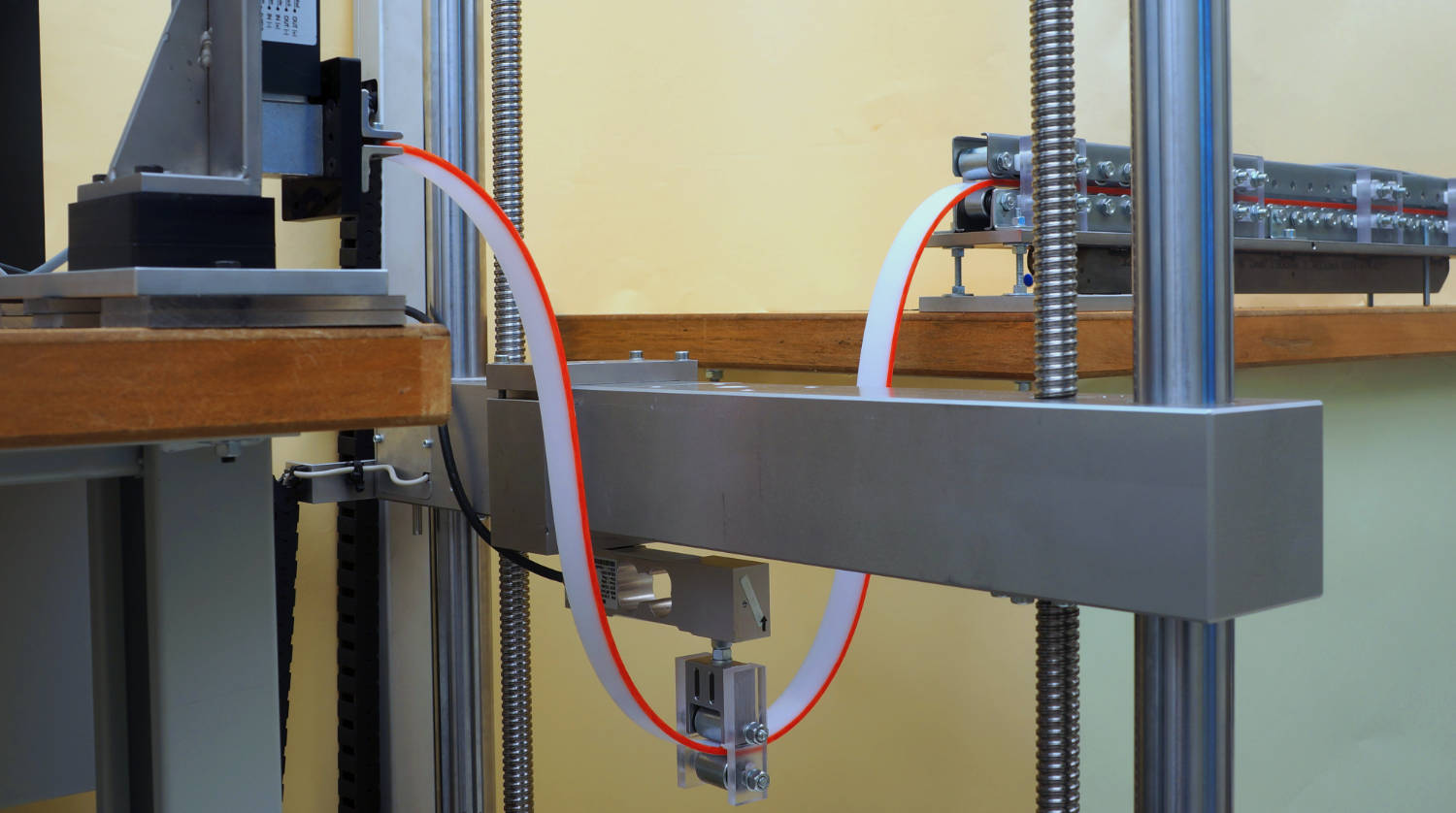
Diego Misseroni is a full Professor of Aerospace Structures at the Department of Civil, Environmental and Mechanical Engineering of the University of Trento, Italy. His academic career has progressed from Assistant Professor (2016-2022) to Associate Professor (2022-2023) and finally to Full Professor (2024-present). He has held prestigious visiting positions including a Fulbright Visiting Scientist at Princeton University (2023) and will serve as a Westlake Distinguished Fellow at Westlake University, China (2025-2026). Dr. Misseroni earned his PhD in Engineering of Civil and Mechanical Structural Systems from the University of Trento in 2013, following a Master's Degree in Civil Engineering with Full Honors from the same institution in 2010. His early career included a Marie Curie Experienced Researcher position at the University of Liverpool (2014-2015). His research focuses on the Mechanics of Solids and Structures, with particular emphasis on architected materials, metamaterials and origami engineering, buckling and instabilities of structures undergoing large deformations, and fracture mechanics. His innovative experimental approaches have led to significant theoretical advancements in understanding mechanical metamaterials and origami structures. Design and testing of mechanical metamaterials with extreme static and dynamic performance Development of novel experimental setups for studying Poisson effects in origami tessellations Creation of three-phase microstructured materials with tunable properties Investigation of flutter and divergence instability in viscoelastic rods Design of microstructured media with negative thermal expansion and negative Poisson's ratio His publication record shows a strong focus on mechanical metamaterials and origami engineering, with significant contributions appearing in high-impact journals including Nature Communications, PNAS, Advanced Materials, and Extreme Mechanics Letters. His work demonstrates expertise in bridging theoretical modeling with advanced experimental validation, particularly in the areas of reconfigurable structures and mechanical metamaterials. Dr. Misseroni has received numerous prestigious awards recognizing his contributions to the field: 2025: Member of the European Academy of Sciences and Arts (youngest ever admitted to Technical & Environmental Sciences class) 2025: SES Huajian Gao Young Investigator Medal 2025: Westlake Distinguished Fellowship 2024: ASME Young Investigator Award 2023: ERC Consolidator Grant for project 'Self-Foldable Origami-Architected Metamaterials' 12 journal covers featuring his research results He leads significant research funding including an ERC Consolidator Grant (€1.93M), HORIZON-CL4 project as Research Unit Coordinator (€513K), and Fulbright Research Fellowship. His laboratory at University of Trento is equipped with advanced testing systems including universal testing machines, vibration test systems, digital image correlation, and multiple 3D printers for prototyping mechanical metamaterials. His research group designs, realizes, and tests mechanical metamaterials, origami systems, flexible structures, and architected materials with extreme static and dynamic performance by combining mechanical modeling, computational analysis, and advanced experimental methods to create advanced, adaptive mechanical systems for a wide range of applications.
Carlo Gioia is a PhD researcher at Kunstuniversität Linz and Research Assistant at the Interuniversity Department of Regional and Urban Studies and Planning (DIST) at Polytechnic University of Turin. He serves as an external lecturer in Film and Media Engineering, teaching Interactive Media courses and delivering lectures on New Media Art and (S)low Technologies across multiple institutions including the University of Turin and A. Casella Conservatory. Educational Background: Master's degree in Cinema and Media Engineering from Polytechnic University of Turin Currently pursuing PhD at Kunstuniversität Linz Carlo investigates the intersection of art, science, technology, and marginal territories, examining computational cultures, landscape ecologies, and collective agency. His research engages strategies such as salvage, patchwork, and redundancy, exploring experimental models of (s)low-tech and benign computing that prioritize sustainability, accessibility, and the right to opacity in digital interactions. He approaches computation as a fragmented, relational, and context-aware practice deeply embedded within social and local fabrics, rejecting linearity in favor of iterative and collectively negotiated alternatives of experimental knowledge. His recent publications reveal a strong focus on rural technologies, sustainable computing practices, and the reimagining of traditional interfaces through contemporary digital technologies. A recurring theme is the exploration of how technologies reconfigure placemaking practices, community infrastructures, and spatial computing in marginal territories, with particular attention to the relationship between traditional knowledge systems and emerging technologies. His work often transforms vernacular tools into contemporary interfaces, creating what he terms 'technological disobedience' as a form of cultural and political resistance. Research Collaborations: Interuniversity Department of Science, Project and Policies of the Territory Department of Control and Computer Engineering at Polytechnic University of Turin Carlo co-founded the Radura collective in 2025, a research and open experimentation platform operating at the intersection of artistic practices, political ecologies, and emerging technologies in rural contexts. His work takes the form of multi-channel installations and experimental projects like 'Folk Interfaces' that explore the relationship between traditional rural practices and contemporary digital technologies, emphasizing sustainability, accessibility, and community-based knowledge systems.
Luca Cassano is an Associate Professor at the Department of Electronics, Informatics and Bioengineering (DEIB) at Politecnico di Milano, Italy. He leads the Hardware Forge research group, focusing on hardware security, RISC-V processors, and reliability of deep learning systems. He earned his Ph.D. in Information Engineering from the University of Pisa (2013), with prior postdoctoral research at CNR and Politecnico di Milano. His research spans hardware Trojans, microarchitectural attacks (e.g., Spectre/Meltdown), fault-tolerant design, and radiation-hardened systems. Notable achievements include winning the TTTC's E. J. McCluskey Doctoral Thesis Award (2014) and multiple best paper awards at IEEE conferences. He teaches courses on hardware accelerators and computer fundamentals, and collaborates with industry partners like TDS-Space and ESA on satellite systems and secure RISC-V cores. Research interests include: Hardware Security (Trojans, Side-Channel Attacks) Secure RISC-V Processor Design Deep Learning Reliability Fault-Tolerant Systems Selected articles highlight work on benchmarking deep learning resilience, transient execution attacks on RISC-V, and radiation effects mitigation. His work bridges theory and practice, addressing challenges in embedded systems, space computing, and cybersecurity. Grants and collaborations emphasize applied research in dependable and secure embedded systems.
Dr. Antinisca Di Marco is an Associate Professor in Computer Science at the University of L'Aquila's Department of Applied Clinical Science and Biotechnology. She specializes in Software Engineering, focusing on performance analysis, self-adaptive systems, and bioinformatics. Her work bridges software engineering with bio-inspired paradigms and context-aware applications. Education: PhD in Computer Science (2005), MSc in Computer Science (2001), both from the University of L'Aquila. Research Interests include Performance Antipatterns, Model-Driven Engineering, Bioinformatics, and Quality of Service (QoS) in autonomic systems. She leads projects like VISION (ERC grant) and iCARE (Microsoft Azure), and contributes to initiatives like the DISIM Living Lab and Off Site Art. Notable Awards: Best Paper (2010) and Best Poster (2010) awards for her work on performance modeling and self-adaptive systems. Teaching: Courses on Bioinformatics, Software Engineering, and programming in Data Science. Supervises PhD students in computer science and biotechnology. Labs/Teams: Director of the University of L'Aquila Node of InfoLife CINI Lab, member of the Bio-inspired Software Engineering Group, and collaborator with Middlesex University's SENSO Lab.
Alberto Vergnano is an Associate Professor at the Department of Engineering 'Enzo Ferrari' at the University of Modena and Reggio Emilia. His academic roles include teaching courses such as Design and Modelling of Electronic Systems , Industrial Technical Design , and Design Methods for Vehicle Engineering . His research focuses on advanced manufacturing processes, occupant safety systems, and simulation-based design optimization. Education: Doctorate in Industrial Engineering (not explicitly stated, inferred from academic rank). Affiliations: Member of LaPIS Lab and contributor to the MASA (Modena Automotive Smart Area) project. Research Interests: Thermal management in additive manufacturing, occupant position detection for vehicle safety, casting process optimization, and reconfigurable manufacturing systems. Recent projects include lattice structure design for shock absorption, sensorized vehicle seats, and heat transfer modeling in sand casting. Publications: Over 30 peer-reviewed articles and conference papers since 2019, emphasizing simulation-driven design and safety engineering. Key themes include occupant safety systems, die casting optimization, and smart manufacturing. Labs/Teams: Active in the LaPIS Lab, focusing on design tools and methods. Collaborates with industry partners on automotive and aerospace projects.
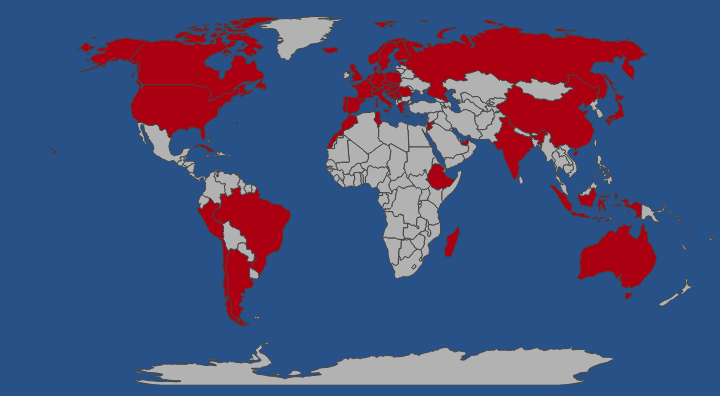
Maurice ter Beek is a Senior Researcher at the Formal Methods and Tools (FMT) Group of the Institute of Information Science and Technologies (ISTI) , part of the Italian National Research Council (CNR) in Pisa, Italy. He leads the FMT Lab since 2019 and coordinates critical projects like ADVENTURE (railway systems evaluation) and T-LADIES (typeful language adaptation). He serves as Editor-in-Chief of Formal Aspects of Computing and holds editorial roles in journals like Science of Computer Programming . His career spans academic leadership in international conferences (chair of ETAPS 2026 , RSSRail 2025 , etc.) and extensive collaborations in formal methods, railway systems, and software product lines. Research Interests: His work focuses on formal methods applied to industrial critical systems, particularly railways, with expertise in variability modeling, attack-defense trees, contract automata, and team automata. Publications address quantitative analysis of reconfigurable systems model checking for railway safety empirical studies on formal methods security risk modeling collaborative software engineering Scientific Awards: ERCIM Fellowship (2003, 2002) SegraVis Fellowship (2005) Best Paper at SPLC 2019 Best Paper at ICIW 2007 Socrates Grant (EU, 2000-2001) Additional Roles: He is a faculty member of the joint PhD program in Smart Computing (Florence, Pisa, Siena), member of ISTI’s Institute Council, and coordinates CNR’s involvement in the PNRR National Sustainable Mobility Centre . His global engagement includes over 50 conference organizing roles and editorial board memberships.
Patrizio Pelliccione is a Full Professor in Computer Science and Software Engineering at Gran Sasso Science Institute (GSSI) and an Associate Professor at Chalmers | University of Gothenburg. He holds a PhD in Computer Science from the University of L'Aquila. His research focuses on Software Architecture and Autonomous Systems, with applications in automotive and robotics domains. He has extensive international experience, including roles as Associate Professor at University of L'Aquila and Visiting Professor at Charles University. His research interests include software architecture design, autonomous systems, robotics, and automotive systems engineering. He actively collaborates with industry partners globally and has contributed to over 100 peer-reviewed publications across journals and conferences. Pelliccione chairs the Computer Science area at GSSI and leads research initiatives in value-based software ecosystems, continuous compliance, and architecture-driven development. He serves on program committees for major conferences like ICSE and ICSA, and has authored/co-authored books on software architecture and fault-tolerant systems. His work emphasizes practical industry applications, with contributions to automotive systems engineering frameworks, robotic mission specification languages, and safety-critical software development. Current projects explore AI integration in safety-critical domains like space systems and medical devices.
Prof. Valter Mariani Primiani is a Full Professor at the Polytechnic University of Marche within the Department of Information Engineering . His research focuses on electromagnetic fields, with expertise in reverberation chambers, wireless communication systems, and quantum computing applications. He holds office hours Monday to Friday from 9-13 at the Dipartimento di Ingegneria dell'Informazione (via Brecce Bianche, Ancona) and is reachable at v.mariani@univpm.it . His work emphasizes electromagnetic compatibility , 5G technology , and quantum-based simulations . Recent studies include optimizing reconfigurable intelligent surfaces for wireless networks and analyzing 5G signal propagation in controlled environments. He actively contributes to IEEE standards, such as the P2718 Working Group, and collaborates on open-source tools for electromagnetic measurement. His research integrates computational methods (e.g., FDTD simulations) with experimental setups in reverberation chambers, addressing challenges in dosimetry, channel emulation, and high-frequency performance. His work supports advancements in both theoretical and applied electromagnetics, with applications spanning from biomedical dosimetry to smart infrastructure.