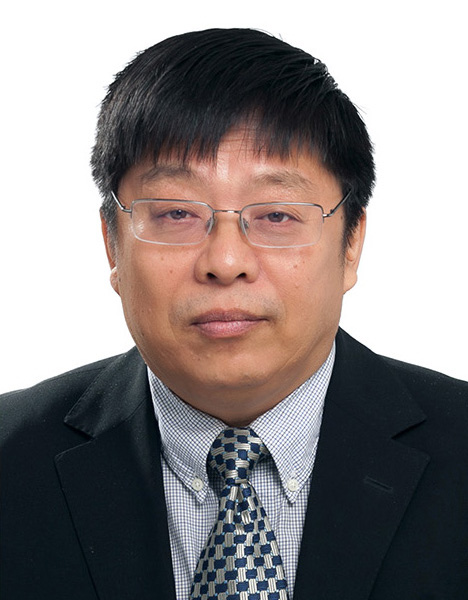
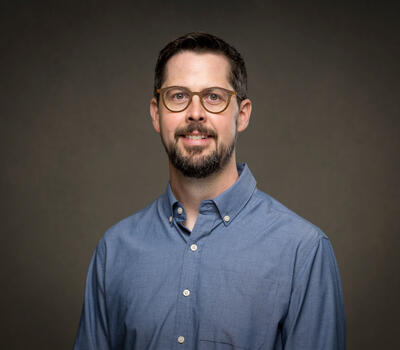
Alexandre PARANT is a Researcher at the University of Reims Champagne-Ardenne, affiliated with the School of Engineering and Digital Tools. His work focuses on cyber-physical systems, digital twins, and industrial automation, with a strong emphasis on the IEC 61499 standard for control architecture development. Research Themes: Model-driven engineering for production systems Digital twin implementation IEC 61499 standard application Modular cyber-physical systems Article Trends: Alexandre's publications span model-based development, robotics synchronization, and PLC identification. His work bridges theoretical modeling with practical automation solutions, particularly in educational contexts and industrial manufacturing. Labs & Teams: LINEACT research team Collaboration with CESI Campus Reims
Mike Rubenstein is an Assistant Professor with joint appointments in the Department of Computer Science and Department of Mechanical Engineering at Northwestern University. He holds the Lisa Wissner-Slivka and Benjamin Slivka Professorship in Computer Science and is affiliated with the Center for Robotics and Biosystems. His educational background includes a Ph.D. in Computer Science from the University of Southern California, an M.S. in Electrical Engineering from USC, and a B.S. in Electrical Engineering from Purdue University. Prior to joining Northwestern, he completed a postdoctoral fellowship at Harvard University's Self-Organizing Systems Research Group. Rubenstein's research focuses on advancing multi-robot systems to enable capabilities beyond traditional single robots, emphasizing parallelism, adaptability, and fault tolerance at scale (hundreds to millions of robots). His work spans swarm shape control, modular self-reconfigurable robotics, bio-inspired satellite constellations, and novel sensing for air vehicle swarms. Key themes include algorithmic control for large-scale systems and hardware innovations to overcome current limitations in swarm robotics. His advising has produced notable student achievements, including Petras Swissler's Best Student Paper Award at DARS 2021 and Drew Curtis's NDSEG Fellowship. Research trends across his publications reveal a consistent emphasis on scalability, real-world applicability, and bridging hardware constraints with algorithmic innovation in swarm systems. Rubenstein actively mentors graduate students and leads projects involving swarm robotics platforms like FireAnt and PCBot. His lab focuses on developing systems where simplicity in individual robots enables emergent complexity at the swarm level, with applications ranging from space exploration to medical imaging.
Lung-Pan Cheng is an Associate Professor in the Department of Computer Science and Information Engineering at National Taiwan University, where he leads the Human-Computer Interaction Laboratory. His research focuses on bridging the gap between physical and virtual realities through innovative interface technologies. Cheng's research expertise spans human-computer interaction, augmented/virtual reality, and tactile feedback systems. His work explores how people exist across three types of reality: physical reality governed by physics, imagined realities where things act by wishes, and programmable virtual realities. By examining the mismatches between these realities, Cheng develops novel interfaces, techniques, and devices that extend and interface these realities toward an ultimate unified experience. His recent publications reveal strong trends in haptic feedback systems, procedural generation in VR, and tangible interaction techniques. Cheng's work often involves creating physical props and mechanisms that enhance virtual experiences, with a particular focus on how humans can interact with and manipulate virtual objects through physical interfaces. His research has significant implications for VR training, gaming, and therapeutic applications. Best Paper Award at CHI 2022 for AirRacket: Perceptual Design of Ungrounded, Directional Force Feedback to Improve Virtual Racket Sports Experiences SIC People's Choice Award at UIST 2022 for Garnish into Thin Air Cheng has secured numerous research grants supporting his work in VR and haptic interfaces, with collaborations spanning multiple institutions. His laboratory develops working prototypes that demonstrate practical applications of his theoretical concepts, often resulting in award-winning publications at top HCI conferences. Current projects appear to focus on advanced fabrication techniques for interactive objects, perceptual illusions in VR, and novel haptic feedback mechanisms that don't require traditional grounded hardware. The Human-Computer Interaction Laboratory under Cheng's direction consists of graduate students and researchers working on various aspects of tangible and virtual interfaces. The team frequently publishes in premier venues like CHI, UIST, and IEEE VR, demonstrating consistent productivity and impact in the field. Current research directions include density-varying soft fabrication, polarized light mosaics, and systems for creating infinite virtual spaces within limited physical environments.
David Garlan is a Professor at the Software and Societal Systems Department within the School of Computer Science at Carnegie Mellon University , where he also serves as Associate Dean for Master’s Programs . He received his Ph.D. from Carnegie Mellon in 1987 after working in industry as a software architect. His research focuses on controlling complexity in large software systems through formalized architectural design, self-adaptive systems, and cyber-physical systems. He developed AcmeStudio , a widely used architecture design environment, and pioneered formal representation and analysis of software architecture. Education : Ph.D. in Computer Science (Carnegie Mellon, 1987) Research Interests include: Software Architecture: Formal methods for architectural design, end-user composition, and architectural styles Self-Adaptive Systems: Stochastic planning, model checking, security adaptation, and uncertainty reduction Cyber-Physical Systems: Multi-view design methods, consistency checking, and automotive systems Recent Article Trends address microservice resiliency, hybrid planning (combining formal methods and ML), simulation-augmented robotics, and sustainable machine translation. Themes include stochastic modeling , probabilistic verification , and adaptive decision-making . Scientific Awards : Stevens Award Citation (2005) ACM SIGSOFT Outstanding Research Award (2011) Allen Newell Award for Research Excellence (2016) IEEE TCSE Distinguished Education Award (2017) Nancy Mead Award (2017) Fellow of IEEE and ACM Advising and Grants : He has advised 25+ graduate students and collaborated on projects with Toyota and the Software Engineering Institute. His work includes model-based adaptation, automated planning, and formal verification of adaptive systems. Labs & Teams : Affiliated with the Institute for Software Research and works on tools like AcmeStudio, Rainbow, and IPL for architectural modeling and self-adaptation.
Prof. Laura Na Liu is a Professor and Director at the 2nd Physics Institute, University of Stuttgart, with a dual affiliation at the Max Planck Institute for Solid State Research. Her research bridges nanophotonics, DNA nanotechnology, and plasmonics, focusing on dynamic systems for biomedical applications, optical metamaterials, and synthetic biology. Key contributions include DNA-templated plasmonic architectures, reconfigurable metasurfaces, and synthetic cell components using DNA nanotechnology. Academic training includes advanced work in physics and materials science, with a career spanning leading institutions. Research interests emphasize the interplay between nanoscale structures and optical/chemical functionalities. Recent publications highlight innovations in programmable nanomaterials, real-time molecular tracking, and high-performance holography systems. Her work integrates experimental and theoretical approaches, addressing challenges in biophotonics, nanoelectronics, and smart materials. Awards and recognitions are listed in institutional records, while her lab actively collaborates with industry on applied photonics solutions.
Prof. Dr. Romain Quidant is a Full Professor in the Department of Mechanical and Process Engineering at ETH Zürich, where he also serves as Head of the Institute for Energy and Process Engineering. His research focuses on nanophotonics, optomechanics, and plasmonics with applications in quantum optics, biomedical engineering, and thermal control systems. He leads a multidisciplinary team exploring light-matter interactions at the nanoscale, particularly in levitated nanoparticles and plasmonic therapies. Key research interests include quantum optomechanical systems, plasmonic nanothermometry, and targeted photothermal therapies. His work bridges fundamental physics with practical applications such as precision measurement, medical imaging, and energy-efficient materials. Recent studies highlight advancements in optical trapping techniques, thermal wavefront shaping, and robotic surgery guidance using fluorescent nanothermometry. Prof. Quidant’s publications showcase innovations in reconfigurable meta-surfaces, optofluidic platforms for high-throughput analysis, and adaptive thermal microscopy for brain imaging. His lab develops integrated systems for medical diagnostics, environmental sensing, and quantum-enabled technologies. These efforts have been applied to cancer treatment optimization and novel materials for energy systems.
Kyoko Iwaki is a Senior Lecturer at the Department of Literature of the University of Antwerp, with a focus on Japanese theatre, performance studies, and post-catastrophe narratives. She actively engages in collaborative research and holds internal governance roles, including membership in the Departmental Council for Literature and the Education Committee for the Educational Master in Languages. Her research explores Japanese contemporary theatre's intersections with ethics, digital performance, and nuclear trauma. Key themes include collaborative methodologies, liminality, and the philosophical implications of post-Fukushima art. Her work spans classical adaptations, avant-garde practices, and interdisciplinary approaches to performance. Recent publications analyze experimental Japanese theatre (Okada Toshiki, Sankai Juku), post-disaster memory, and the politics of digital pandemic spaces. She contributes to global discourse through interviews with practitioners and critiques of institutional frameworks in theatre and academia.
Matt J. Rutherford is an Associate Professor in the Department of Computer Science at the University of Denver, with a joint appointment in the Department of Electrical and Computer Engineering. He is Deputy Director of the Unmanned Systems Research Institute and a faculty fellow of Project X-ITE. His research focuses on autonomous systems, embedded systems, and software engineering, with extensive contributions to UAV navigation, control systems, and robotics. Rutherford holds a Ph.D. in Computer Science from the University of Colorado Boulder (2006), an MS (2001), and a BS in Civil Engineering from Princeton University (1996). His work emphasizes practical applications of software engineering principles in distributed and embedded systems. Notable projects include radar-based collision avoidance for UAVs, self-leveling landing platforms, and studies on electric vehicle charging impacts on power grids. Rutherford's research bridges theoretical computer science with real-world engineering challenges, particularly in unmanned systems and robotic autonomy. Key publications explore UAV flight control using neural networks, ground/ceiling effects in rotorcraft, and GPU-based real-time pose estimation. His contributions to model-driven systems and distributed testbed automation highlight long-term engagement with software reliability and scalable experimentation frameworks. Rutherford collaborates widely, including with institutions like the University of South Carolina and Politecnico di Torino. His interdisciplinary approach integrates robotics, aerospace engineering, and software engineering to advance autonomous system capabilities.
Erik Demaine is a Professor in the Department of Electrical Engineering and Computer Science at MIT, affiliated with the Computer Science and Artificial Intelligence Laboratory (CSAIL), the Theory of Computation group, and the Algorithms Group. His research spans algorithms, computational geometry, folding, robotics, complexity theory, and interdisciplinary connections between mathematics and art. He received the MacArthur Fellowship ("genius grant") for his work on folding and computation. Demaine's work includes co-authoring books such as Geometric Folding Algorithms and Games, Puzzles, and Computation . His art collaborations with his father Martin Demaine, including curved-crease sculptures, are in the permanent collections of the Museum of Modern Art (MoMA) and the Renwick Gallery. He is also involved in software projects like Coauthor and Cocreate, supporting collaborative research and education. His research interests include folding and unfolding of geometric structures, computational complexity of games, protein folding, and algorithm design. He has contributed to areas like data structures, robotics, and network computing, with a focus on bridging theoretical computer science and tangible applications. Demaine holds patents and has been recognized with numerous awards, including the NSERC Doctoral Prize and the Gödel Prize. His work often involves supercollaboration, emphasizing open problem-solving and interdisciplinary approaches.
Liu Derong is a distinguished academic holding the position of Chair Professor at Southern University of Science and Technology (Shenzhen, China) since 2022. He is also a Full Professor at the University of Illinois at Chicago (UIC) since 2006. His academic journey includes roles as Professor at Guangdong University of Technology (2017–2022) and the Chinese Academy of Sciences' Institute of Automation (2008–2016). He earned his Ph.D. in Electrical Engineering from the University of Notre Dame (1994), M.S. from the Chinese Academy of Sciences (1987), and B.S. from Nanjing University of Science and Technology (1982). His research focuses on neural networks, reinforcement learning, intelligent control, and adaptive dynamic programming. He has authored 19 books and 260+ journal papers, contributing significantly to computational intelligence and control systems. Notable works include Adaptive Dynamic Programming with Applications in Optimal Control (2017) and co-editing volumes like Frontiers of Intelligent Control and Information Processing (2014). Liu Derong has held leadership roles in professional societies, including Editor-in-Chief of Artificial Intelligence Review , Deputy Editor-in-Chief of the IEEE/CAA Journal of Automatica Sinica , and President of the Asia Pacific Neural Network Society (2018). He has organized major conferences such as the IEEE World Congress on Computational Intelligence (2014) and received prestigious awards like the Dennis Gabor Award (2018) and membership in Academia Europaea (2021). His contributions span theoretical advancements and practical applications in control systems, with a focus on optimization, robotics, and energy systems. He has also served on editorial boards of leading journals and as a keynote speaker at 30+ international conferences.
Ramses Martinez is an Assistant Professor in the Department of Industrial Engineering and Biomedical Engineering at Purdue University . He holds a B.A. in Applied Physics from Universidad Autonoma de Madrid (2004) and a Ph.D. in Physics and Materials Science from the Spanish National Research Council (CSIC) in 2009. Prior to joining Purdue, he conducted postdoctoral research in the lab of Prof. George M. Whitesides at Harvard University, focusing on nanofabrication, microfluidics, and soft robotics. Education B.A. in Applied Physics, Universidad Autonoma de Madrid (2004) Ph.D. in Physics and Materials Science, Spanish National Research Council (CSIC) (2009) His research bridges soft robotics , flexible electronics , and nanofabrication , with a focus on creating self-powered e-textiles , omniphobic paper-based devices , and programmable mechanical metamaterials . His work has led to over 25 publications and 9 patents, emphasizing practical applications in health monitoring and industrial automation . Notable projects include waterproof electronic decals for biofluid monitoring, smart bandages for chronic wound detection, and laser nanoforming methods for scalable metallic structures. His research has been recognized through the Fulbright Fellowship and the Marie Curie IOF Grant .
Professor Ahmet Bindal is a faculty member in the Department of Computer Engineering at San José State University . He earned his B.S. in Electrical Engineering from Bogazici University, Turkey, followed by M.S. and Ph.D. degrees from the University of California, Los Angeles. Industry Experience : 20 years at IBM, Intel, Philips, and Cadence Design Systems. Current Research : Nano-scale electron devices, silicon nanowire transistors, robotics, and VLSI architecture. Research Trends : His work focuses on silicon nanowire transistors for VLSI, FPGA, and robotics. Key themes include low-power/high-speed integrated circuits , dynamic logic design , neuromorphic engineering , and advanced semiconductor processing . Patents and Publications : He holds four U.S. patents (three with IBM, one with Intel). His 30+ journal and conference publications span nanowire transistors, FPGA architecture, robotics, and semiconductor process modeling. Teaching Contributions : Developed an undergraduate System-on-Chip (SoC) course and a MOSFET design laboratory at SJSU. Books Authored : Fundamentals of Computer Architecture and Design (Springer, 2017). Electronics for Embedded Systems (Springer, 2017). Silicon Nanowire Transistors (Springer, 2017).
Muhammad Hussain is a Professor at the Elmore Family School of Electrical and Computer Engineering, Purdue University. His research focuses on futuristic electronics spanning healthcare, environment, energy, robotics, and defense applications, utilizing state-of-the-art CMOS technology for mass production of IoT and IoE devices. These systems range from rigid to flexible/stretchable electronics, emphasizing manufacturability and sustainability. Campus: West Lafayette Office: BRK 2042 Email: mmhece@purdue.edu Labs: DREAM (Device Research Engineering Applications and Manufacturing) Research Interests: His work in microelectronics and nanotechnology drives innovations like: Flexible hybrid electronics for extreme environments and defense applications Brain organoid electrophysiology tools Dissolvable chip packaging for sustainable e-waste reduction 3D heterogeneous integration of CMOS systems Wearable sensors for marine environments and robotics
Matthew Johnston is an Associate Professor in the School of Electrical Engineering and Computer Science at Oregon State University. His research focuses on integrating sensors with CMOS circuits, stretchable electronics, and bio-energy harvesting. He holds a B.S. from Caltech and a Ph.D. from Columbia University. Prior to academia, he co-founded Helixis, a biotech instrumentation startup, and worked in venture capital. His awards include the 2020 SRC Young Faculty Award and 2021 Teaching Excellence Award. Education : B.S., Electrical Engineering, California Institute of Technology, 2005 M.S., Electrical Engineering, Columbia University, 2006 Ph.D., Electrical Engineering, Columbia University, 2012 Research Interests : Johnston explores lab-on-CMOS platforms, stretchable sensor systems, and energy harvesting for low-power applications. His work bridges electronics engineering with biomedical and environmental fields, emphasizing practical applications through interdisciplinary collaboration. Awards : 2020 Semiconductor Research Corporation Young Faculty Award 2021 Oregon State University Teaching Excellence Award 2021 Provost Fellowship Advising & Grants : Johnston’s research is supported by grants from industry and federal agencies. His lab, the SIM Lab, develops innovative electronic systems for healthcare and environmental monitoring. Labs & Teams : He leads the SIM Lab , focusing on interdisciplinary projects in integrated circuits and biomedical applications.
Li Zhe is an Associate Professor and Doctoral Supervisor at the Department of Biomedical Engineering , Southern University of Science and Technology, since May 2024. He previously served as Assistant Professor at the same department from 2023 to 2024. His educational background includes a PhD in Analytical Chemistry from Purdue University (2019) under Prof. Chengde Mao, and a B.S. in Materials Chemistry from Peking University (2014). Research Focus: Protein design, DNA nanotechnology, bionanomaterials, and self-assembly Awards: 2023 National Natural Science Fund for Excellent Young Scientists (Overseas) 2019 Chinese Government Award for Outstanding Self-financed Students Abroad 2019 M.G. Mellon Award in Analytical Chemistry Publications: His 20+ works in high-impact journals like Science and Nature Materials emphasize computational protein design, DNA crystal engineering, and molecular actuation systems.